DD
MM
YYYY

PAGES

DD
MM
YYYY

spot_img

PAGES

Home Blog Page 3686

Resurging Price Signals for Ethereum Name Service (ENS) and Cosmos (ATOM), Everlodge (ELDG) Uniswap Listing Results In

0

Amid the uncertain price trajectories of major crypto tokens in the market, Ethereum Name Service (ENS) and Cosmos (ATOM) are displaying significant rallying signals. Meanwhile, Everlodge (ELDG) has recorded an increased number of investors since the token got listed on Uniswap. As a result, the ELDG token has become a talking point in the crypto market with experts adding it among the top crypto tokens with exponential growth potential in 2024. Find out more below.

Everlodge (ELDG) Token Airdrop Draws Closer as it Lists on Uniswap Exchange

The date for the Everlodge (ELDG) airdrop has been slated to be February 16th. This development is coming days after the ELDG token was listed on the Uniswap exchange. As a result, investors who’ve been skeptical about the project have started joining the project.

Notably, early presale investors have generated over 190% ROI from the project. Nonetheless, ELDG is a top crypto investment alternative, given the token has been backed by experts to generate over 100x returns within the year.

At the price of only $0.06, investors can buy the ELDG token and position themselves for future profits. Investors of Ethereum Name Service and Cosmos are adding the token to their portfolio based on the massive potential of the project.

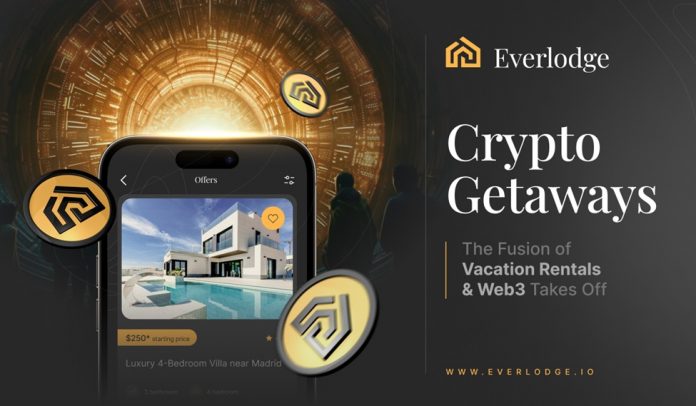
Everlodge as a platform, is the world’s first decentralized luxury property investment marketplace with a foolproof model to make investing in luxury assets affordable and secure. Everlodge achieves this by utilizing blockchain technology to mint fractionalized NFTs. These NFTs are tied to the value of fractions of the luxury apartments.

In view of this, investors who buy the NFTs will own part of the luxury properties and get any revenue that the apartments generate. With as little as $100, investors can buy these NFTs which are a digital representation of these luxury assets.

Overall, the Everlodge project is a revolutionary project that aims to positively change how the world invests in real estate assets while also providing one of the top crypto tokens with massive growth potential. It is not hard to see that Everlodge is a worthwhile investment gold mine for investors looking to make passive income in the year.

Ethereum Name Service (ENS) Experience Significant Price Gain

Ethereum Name Service (ENS) has gained over 32% within the last week in a significant resurging price turn. The bullish trajectory is coming after the Ethereum Name Service price dropped below the $16 mark in the last week of January, as per market stats.

The recent price rally of Ethereum Name Service is also seen in the trading volume and market cap which has been in the uptrend in the past week. At the current trajectory, analysts think the Ethereum Name Service price will likely reach the $25 benchmark before the end of February.

Cosmos (ATOM) Breaks Bearish Trend, Triggers a Rally

Cosmos (ATOM) is finally witnessing a rally in price value after experiencing extended bearishness in January. The price chart from CoinMarketCap shows that the Cosmos price has gained over 8% within the last week to rally within touching distance of the $10 mark.

Meanwhile, the Cosmos trading volume is yet to overturn its negative decline, having recorded an average day-to-day decline of 20% in the past week. In view of this, the negative trading volume could affect the Cosmos token’s surging momentum in the long run.

For more information about Everlodge (ELDG) please visit their website.

GLIF raises $4.5M to address capital inefficiency in file storage

0

GLIF, a decentralized protocol for file storage, announced today that it has raised $4.5 million in a seed round led by Placeholder, with participation from Electric Capital, CoinFund, and others. The funding will be used to further develop the GLIF protocol, which aims to solve the problem of capital inefficiency in the file storage market.

According to GLIF, the current file storage market is dominated by centralized platforms that charge high fees, lock users into their ecosystems, and have limited scalability and security. GLIF proposes a different approach, where users can store their files on a network of peer-to-peer nodes that are incentivized by a native token, GLF. Users can pay for storage with GLF or any other cryptocurrency, and benefit from lower costs, higher reliability, and greater flexibility.

GLIF is built on top of IPFS, a distributed file system that enables content-addressable and verifiable storage. GLIF extends IPFS with smart contracts, governance mechanisms, and economic incentives to create a decentralized marketplace for file storage. GLIF leverages the Filecoin network, a blockchain-based storage network, to provide an additional layer of security and durability for the stored files.

One of the challenges of developing decentralized applications (DApps) on the web3 platform is how to store files efficiently and securely. Unlike the traditional web2 model, where files are hosted on centralized servers and accessed through HTTP protocols, web3 relies on peer-to-peer networks and cryptographic protocols to store and share files. This has several advantages, such as censorship resistance, data sovereignty, and resilience to network failures. However, it also introduces some trade-offs and complexities that need to be addressed.

One of the main trade-offs is the cost of file storage. In web3, files are stored on distributed nodes that are incentivized to provide storage space and bandwidth. This means that users have to pay for the storage and retrieval of their files, either in cryptocurrency or in other forms of tokens.

The cost depends on various factors, such as the size of the file, the duration of the storage, the availability of the nodes, and the demand for the file. Moreover, since files are replicated across multiple nodes, there is a risk of over-provisioning and wasting resources.

Another trade-off is the performance of file storage. In web3, files are accessed through decentralized protocols, such as IPFS (Interplanetary File System) or Swarm, that use content-addressable hashes to identify and locate files.

This means that users have to resolve the hashes to find the nodes that store the files, which can take longer than using domain names or URLs. Additionally, since files are distributed across multiple nodes, there is a risk of under-provisioning and losing access to files.

One of the key features of GLIF is its incentive mechanism for node operators, who provide the storage capacity and bandwidth for the network. Node operators can earn GLF tokens by storing files for users, as well as by participating in the network governance and maintenance.

The amount of GLF tokens earned depends on factors such as the size, duration, and availability of the stored files, as well as the reputation and performance of the node operator. The GLF token also serves as a governance token, allowing node operators to vote on proposals and decisions that affect the network.

GLIF’s co-founder and CEO, said: “We believe that file storage is a fundamental need for the internet, and that it should be accessible, affordable, and censorship resistant. GLIF is designed to empower users with more control over their data and more options to store it. We are thrilled to have the support of our investors, who share our vision of creating a more open and decentralized web.”

GLIF’s seed round comes at a time when the demand for file storage is growing rapidly, especially in the Web3 space, where applications such as NFTs, DAOs, and DeFi require reliable and scalable storage solutions. GLIF aims to become the preferred choice for Web3 developers and users, as well as anyone who values their data sovereignty and privacy.

GLIF is currently in beta testing and plans to launch its mainnet in Q2 2024. The project is also actively looking for more node operators, developers, and community members to join its ecosystem.

IMF says degradation of Security context on the Border is Concerning

0

The International Monetary Fund (IMF) has issued a statement expressing its concern over the degradation of the security context on the border between two neighboring countries. The IMF said that the escalating tensions and violence pose a serious threat to the stability and prosperity of the region, as well as to the global economy.

The IMF urged both parties to respect the ceasefire agreement signed in 2019 and to engage in constructive dialogue to resolve their differences peacefully.

The International Monetary Fund (IMF) has issued a statement reaffirming its commitment to assist the parties involved in the ongoing negotiations to reach a mutually beneficial agreement that would ensure economic stability and development.

The IMF said that it stands ready to provide technical and financial support to the parties, as well as policy advice and capacity building, to help them address the challenges they face and achieve their economic objectives.

The IMF also urged the parties to engage in constructive dialogue and show flexibility and compromise, in order to reach a durable and sustainable solution that would benefit both sides and the region as a whole.

The IMF emphasized that a successful outcome of the negotiations would boost confidence, foster growth, create jobs, and improve living standards for the people of both parties.

The statement came after the IMF held a series of meetings with the representatives of both parties, as well as other stakeholders, to discuss the progress and prospects of the negotiations. The IMF said that it was encouraged by the willingness of both parties to work together and find common ground, despite the complex and sensitive issues involved.

The IMF also praised the efforts of the mediators and facilitators who have been instrumental in advancing the dialogue and building trust between the parties. The IMF said that it remains closely engaged with all parties and will continue to monitor the situation and provide its assistance as needed.

United Nations and other regional actors to facilitate a lasting solution to the conflict.

The IMF emphasized that the border dispute has negative impacts on the economic and social development of both countries, as well as on their ability to cope with the ongoing challenges of the COVID-19 pandemic.

The IMF said that it stands ready to provide technical and financial assistance to both countries, as well as to other affected countries in the region, to help them overcome the crisis and achieve inclusive and sustainable growth.

The International Monetary Fund (IMF) has issued a statement reaffirming its commitment to assist the parties involved in the ongoing negotiations to reach a mutually beneficial agreement that would ensure economic stability and development.

The IMF said that it stands ready to provide technical and financial support to the parties, as well as policy advice and capacity building, to help them address the challenges they face and achieve their economic objectives.

The IMF also urged the parties to engage in constructive dialogue and show flexibility and compromise, in order to reach a durable and sustainable solution that would benefit both sides and the region as a whole. The IMF emphasized that a successful outcome of the negotiations would boost confidence, foster growth, create jobs, and improve living standards for the people of both parties.

The statement came after the IMF held a series of meetings with the representatives of both parties, as well as other stakeholders, to discuss the progress and prospects of the negotiations. The IMF said that it was encouraged by the willingness of both parties to work together and find common ground, despite the complex and sensitive issues involved.

The IMF also praised the efforts of the mediators and facilitators who have been instrumental in advancing the dialogue and building trust between the parties. The IMF said that it remains closely engaged with all parties and will continue to monitor the situation and provide its assistance as needed.

Navigating the complexities of Identities

0

Identity is a multifaceted concept that encompasses how we see ourselves, how others see us, and how we relate to the world around us. Identity is not static, but dynamic and evolving, influenced by various factors such as culture, history, gender, sexuality, race, ethnicity, religion, class, age, disability, and more.

Identity can also be a source of pride, empowerment, belonging, and resilience, as well as a source of conflict, oppression, discrimination, and marginalization.

We will explore some of the complexities of identity and how they affect our personal and professional lives. We will also discuss some strategies for navigating identity issues in a respectful and inclusive way.

Some of the complexities of identity include:

Intersectionality: This term refers to the idea that different aspects of identity (such as gender, race, class, etc.) interact and overlap with each other, creating unique experiences and challenges for individuals and groups.

For example, a black woman may face different forms of discrimination than a white woman or a black man, due to the intersection of her race and gender. Intersectionality also recognizes that some identities are more privileged or oppressed than others in different contexts and situations.

Fluidity: This term refers to the idea that identity is not fixed or stable but can change over time and across different settings. For example, a person may identify as bisexual at one point in their life, but as gay or straight at another.

Fluidity also acknowledges that identity is not binary or categorical but can exist on a spectrum or continuum. For example, a person may identify as genderqueer or non-binary, rather than as male or female.

Diversity: This term refers to the idea that identity is not homogeneous or monolithic but varies widely among individuals and groups. For example, not all Muslims share the same beliefs or practices, nor do all Asians have the same cultural background or appearance. Diversity also implies that there is no single or correct way to express or experience one’s identity, but rather multiple and valid ways.

Context: This term refers to the idea that identity is not isolated or independent, but influenced by the social and environmental factors that surround us. For example, a person may feel more comfortable or confident about their identity in some situations than in others. Context also affects how others perceive and respond to our identity, which may differ from how we perceive and respond to ourselves.

These complexities of identity pose both opportunities and challenges for us in our personal and professional lives. On one hand, they can enrich our understanding of ourselves and others, foster empathy and compassion, and celebrate diversity and inclusion. On the other hand, they can also create confusion and uncertainty, trigger stereotypes and biases, and generate conflict and discrimination.

How can we navigate these complexities in a respectful and inclusive way? Here are some strategies to consider:

Self-awareness: This involves being mindful of our own identity and how it shapes our thoughts, feelings, behaviors, and interactions with others. Self-awareness also involves recognizing our own privileges and oppressions, strengths and weaknesses, biases and assumptions, and values and goals. Self-awareness can help us appreciate our own uniqueness and complexity, as well as identify areas for growth and improvement.

Self-expression: This involves being authentic and honest about our identity and how it affects our personal and professional lives. Self-expression also involves being respectful and responsible for our identity choices and actions. Self-expression can help us communicate our needs and preferences effectively, assert our rights respectfully, and cope with stress positively.

Self-care: This involves being attentive to our physical, mental, emotional, and spiritual well-being, and taking steps to maintain or enhance them. Self-care also involves seeking support from others when needed and offering support to others when possible. Self-care can help us manage our energy and emotions, prevent burnout and illness, and enhance resilience and happiness.

Honda recalls 750,000 vehicles in USA; And US museum returns Ghana’s looted artifacts after 150 years

0

Honda has announced a recall of about 750,000 vehicles in the US due to a defect in the airbag inflators. The recall affects certain models of the Accord, Civic, CR-V, Element, Odyssey, Pilot and Ridgeline from 2001 to 2011.

According to Honda, the airbag inflators may have been manufactured with an improper amount of propellant, which could cause them to deploy with excessive pressure and rupture the metal casing. This could result in metal fragments being sprayed into the vehicle interior and potentially injuring or killing the occupants.

Honda said it is aware of 29 incidents related to this issue, including two deaths in the US. The company said it will notify owners of affected vehicles by mail and instruct them to take their vehicles to an authorized dealer for inspection and replacement of the airbag inflators if necessary. The recall is expected to begin in late February.

Honda has announced a massive recall of about 437,000 vehicles across the Americas due to a defect in the airbag inflators. The recall affects certain models of Honda and Acura vehicles manufactured between 2010 and 2015. The defect could cause the airbags to rupture and spray metal fragments into the vehicle, potentially injuring or killing the occupants. Honda said it is aware of three injuries and one death linked to this issue.

The recall is part of a larger global recall of Takata airbag inflators that have been blamed for at least 24 deaths and hundreds of injuries worldwide. Honda said it is also recalling about 437,000 vehicles in Canada, Mexico and Central and South America for the same issue. The company said it will notify the affected owners by mail and urge them to schedule an appointment with an authorized dealer as soon as possible. The dealer will replace the front passenger airbag inflator free of charge.

If you own a car that was manufactured between 2002 and 2015, you might want to check if it is affected by the largest automotive recall in history. Millions of vehicles from various brands are being recalled replacing faulty airbag inflators made by Takata, a Japanese supplier.

These inflators can explode with excessive force and spray metal shrapnel inside the cabin, causing serious injuries or even death to the occupants. According to the U.S. National Highway Traffic Safety Administration (NHTSA), at least 24 people have died and hundreds more have been injured worldwide as a result of these defective airbags.

The recall process has been slow and complicated, as Takata went bankrupt in 2017 and was acquired by a Chinese-owned company. The NHTSA has been overseeing the recall and prioritizing the most at-risk vehicles based on factors such as age, location and exposure to humidity.

However, many consumers are still unaware of the recall or have not received a notification from their dealers. Some may also face delays in getting their airbags replaced due to parts shortages or logistical issues.

If you want to find out if your car is part of the recall, you can visit the NHTSA website and enter your vehicle identification number (VIN). You can also contact your dealer or manufacturer for more information.

Honda said it is committed to ensuring the safety and quality of its products and apologizes for any inconvenience caused by this recall.

US museum returns Ghana’s looted artifacts after 150 years

In a historic gesture of reconciliation, the Smithsonian National Museum of African Art in Washington, D.C., has announced that it will return 27 artifacts to Ghana that were looted by British soldiers during the colonial era.

The artifacts, which include gold jewelry, ceremonial swords, and musical instruments, were taken from the Asante Kingdom in 1874, after the British army invaded and burned the capital of Kumasi. The museum acquired the artifacts in 1964 from a private collector, who had bought them from a British auction house.

The decision to return the artifacts was made after a request from the Ghanaian government, which has been seeking the repatriation of its cultural heritage for decades. The museum said that it was motivated by its commitment to ethical stewardship and respect for the people of Ghana.

The museum also said that it hoped that the return of the artifacts would foster dialogue and collaboration between the two countries, as well as raise awareness about the history and significance of the Asante Kingdom.

The Asante Kingdom was one of the most powerful and influential states in West Africa from the 17th to the 19th centuries. It was known for its rich culture, art, and trade, as well as its resistance to colonial domination. The kingdom was eventually annexed by the British in 1901, after several wars and rebellions.

Many of its treasures were looted or destroyed by the colonial forces, while others were sold or donated to museums and private collectors around the world.

The return of the artifacts is expected to take place later this year, after the completion of legal and logistical procedures. The museum said that it would continue to work with Ghanaian authorities and experts to identify and document other items in its collection that may have been looted or acquired illegally.

The museum also said that it would support Ghana’s efforts to preserve and promote its cultural heritage, through exhibitions, research, education, and exchange programs.

The announcement was welcomed by Ghanaian officials and cultural activists, who praised the museum for its ethical leadership and goodwill. They said that the return of the artifacts would be a symbolic act of healing and justice, as well as an opportunity to celebrate and showcase the rich and diverse culture of Ghana.

They also expressed their hope that other museums and institutions around the world would follow suit and return other looted or stolen artifacts to their rightful owners.