DD
MM
YYYY

PAGES

DD
MM
YYYY

spot_img

PAGES

Home Blog Page 3694

Personal Economy and Planning a Multinational Career | Tekedia Mini-MBA

0

How do we make careers multinational? What are the ingredients in the 21st century knowledge economy? How do you begin in the village and land in the trading halls of New York City? How can we go international in this age?

Yes, you like to give speeches which pay $5,000 per hour. How can you expand that business, from Lagos, Nairobi, etc to Tokyo, London, etc. You sing in the community. Any aspiration to sing for the world? The world pays!

Join me at 7pm WAT today for Tekedia Mini-MBA Personal Economy class, focusing on Planning a Multinational Career, as we continue how you can build your own economy, not your company’s or Nigeria’s economy, but yours. That is why Tekedia Mini-MBA is unique: you are not just trained to make the company better. We put efforts on YOU and your Personal Economy.  Advance your leadership ascent and go global.

Zoom link in the board – this is the #best school and the winner of Mhagic Velocity  $60,000 Global Prize for Innovation in Business Education. Register for the next edition here. It remains N90k or $170 if you beat the early bird deadline.

October Crypto News Summary – Doge Uprising(DUP) Presale Surges While Solana (SOL) And Cardano (ADA) Stagnate

0

October has been a mixed bag for the crypto market. Market leaders Solana and Cardano restored much of the momentum lost in the previous months, but prices have stagnated after the initial pump. The momentum behind the Doge Uprising (DUP) presale contrasts with the lack of movement in the SOL and ADA prices. Let us delve into why SOL and ADA have stagnated and then explore how Doge Uprising has captivated investors with its presale.

Solana Hits the Speedbreaker

Solana has earned its reputation for lightning-fast processing times in blockchain, attracting institutional interest. Its hybrid protocol reduces validation times for transactions and smart contract execution, ensuring low transaction costs, scalability, and speed. Solana network’s immense potential has seen SOL become the 7th largest cryptocurrency with performance that sometimes overtakes the market.

Solana performed well in October, repairing damages incurred in August and September while gaining significant momentum. But coming to the second half of October, SOL has started displaying signs of fatigue. A fall in network activity has also added to SOL’s underperformance, with little price movement. The stagnation has caused investors to look beyond the asset and into new tokens.

Cardano Loses Steam on Upword Push

Cardano presents a different approach to blockchain technology compared to Solana’s emphasis on speed. Emphasising sustainability and scalability, Cardano’s multi-layered architecture separates computation from accounting, enhancing security and efficiency. This innovative design sets the stage for seamless integration of smart contracts, a feature that has long eluded other blockchains.

What truly sets Cardano apart is its commitment to research-backed development. With a team of academic experts at its core, Cardano’s approach is grounded in rigorous scientific methodology. This approach, while deliberate, ensures that each advancement is carefully considered, fostering a platform that prioritises security and stability. Cardano’s research-backed project and comprehensive ecosystem saw it gaining in October to lose steam midway as activity in its network development activity dropped.

Doge Uprising Surges Ahead

Doge Uprising is the crypto project that’s currently talk of the town. Powered by the $DUP token and cutting-edge blockchain technology, Doge Uprising’s narrative takes place in the year 2045, where mecha pilots fueled by $DUP tokens rise against the rule of Mark Zuckerberg.

What sets Doge Uprising apart is its immersive universe. Users can collect and trade unique Doge Mecha NFTs, which grant exclusive access to the uprising’s content and experiences. This project’s strong emphasis on community engagement is evident through regular Ask-Me-Anything (AMA) sessions, airdrops, and competitions, fostering connections among supporters.

The Doge Uprising roadmap outlines key phases, including team formation, involvement of visionary crypto influencers, smart contract auditing, strategic marketing efforts, NFT launches, and platform expansion. It’s more than a meme coin; it’s a revolution driven by blockchain technology, offering a unique world of resistance and community.

Doge Uprising takes the comprehensive project route with its narrative that is driven by blockchain technology. The project offers an intriguing story that unites its community. Its fixed total supply of 450 million tokens and the strong emphasis on community engagement position it as a promising project in the crypto market.

With the presale phase in full swing, Doge Uprising presents a unique opportunity for investors. The potential for this token to explode in value upon launch is undeniable. Its immersive universe, strong community engagement, and innovative approach make it an exciting addition to the crypto landscape.

Join the Movement

While Solana and Cardano have shown signs of fatigue, it’s Doge Uprising that’s capturing the imagination of crypto enthusiasts and investors. Its presale status presents the potential for substantial returns upon launch, and its commitment to community engagement adds to its allure. The cryptocurrency market is always full of surprises, and Doge Uprising may just be the most exciting one yet. It’s time to explore this uprising and consider the potential it holds for your investment portfolio. Don’t miss out on the Doge Uprising presale – it’s an opportunity you won’t want to let slip away.

For more information on Doge Uprising ($DUP):


Visit The Website

Join The Telegram

Follow On Twitter

Join The Discord Community


The Exodus of Nigeria’s Legal Minds and Call for Reform

0

Nigeria, a land of immense potential and promise, has been witnessing an exodus of legal professionals, a phenomenon that reflects the deep-seated issues plaguing the nation’s legal landscape. The departure of lawyers is not merely a symptom of a decaying profession; it is a reflection of the wider societal challenges facing Nigeria. In this piece, our analyst delves into the critical views expressed by various individuals followed by a piece written by Stanley Alieke. Our analyst employs a hermeneutics approach to dissect their perspectives.

The Hermeneutic Lens: Unveiling the Voices

Comment 1: “You cannot be a lawyer where there is no law and constitution. Please leave them alone, their profession is useless in Nigeria because there is no law.”

This comment points to the frustration many legal professionals feel when confronted with a system that often seems to lack the foundations necessary for their profession to thrive. While it may be tempting to blame lawyers for leaving, we must recognize the systemic issues that underlie this exodus. The absence of a robust legal framework is a cause for concern that demands government attention.

Comment 2: “Is the alleged absence of law in Nigeria why you can’t spell ‘cannot’? Did you notice also from the article that doctors, engineers, I.T professionals, bankers, and just about anybody who feels like it is leaving? Has your temerity allowed you to ask if Nigerians migrate more than Indians, Chinese, and citizens of other countries in the world?”

This response emphasizes the broader context of migration from Nigeria. It underscores that the issue is not limited to lawyers alone; various professionals are seeking opportunities elsewhere. While the departure of lawyers is a part of this trend, it is indicative of the overarching challenges that Nigeria faces in retaining its skilled workforce.

Comment 3: “Most of these law firms are not even paying a ‘living’ wage to those expected to hang in there with them… A function of ‘to whom less is given, nothing should be expected’ Everyone for themselves, God for us all.”

This comment brings forth the issue of remuneration and working conditions in law firms. The inadequacy of wages, coupled with the gruelling work environment, discourages legal professionals from staying. It’s a reflection of the harsh reality many face, where the pursuit of justice is hindered by unjust working conditions.

The Heart of the Matter: Legal Practice in Nigeria

Comment 4: “Law practice is not appealing in Nigeria. The court system is terribly bad. The remuneration is appalling. No justice for everyone, only those who can grease the palm of the judges have their way.”

This comment delves into the core problems within the legal profession. The inefficient court system, low pay, and corruption in the judiciary have eroded the appeal of legal practice. The assertion that justice is often elusive to those without means raises fundamental questions about the integrity of the legal system.

Comment 11: “Nigeria law firms are the hotbeds for unfair labour practices in the whole world. No leave, no pension remittance, long hours and no overtime compensation, poor remuneration, no clear career progression, the list is long. If you know what goes on in Nigerian law firms, you will not advise your enemy to study law.”

This comment spotlights the precarious working conditions within law firms, shedding light on the prevalence of unfair labour practices. The absence of benefits, excessive working hours, and lack of career growth prospects deter many from pursuing a legal career in Nigeria.

A Call for Change

Comment 9: “A time comes soon when the government of Nigeria will kneel down to beg the youth to come and take up jobs, which they refused to give them now because they don’t have people in job places to work their way into the employment arena… No youth, no nation.”

This comment serves as a powerful reminder that the departure of lawyers and other professionals reflects a deeper issue. Nigeria must address the systemic challenges driving this exodus, including unemployment, lack of meaningful wages, and fair labour practices. The youth, who represent the future, are looking for opportunities and justice within their homeland.

Charting a Path Forward

The departure of lawyers from Nigeria is not merely a matter of professional choice; it’s a reflection of systemic issues that plague the nation. A hermeneutic approach helps us unveil the multifaceted perspectives of those involved and affected. The challenges within the legal profession are interconnected with wider societal issues. Nigeria’s leaders must recognize the urgency of addressing these challenges to ensure the nation can retain its legal minds and talent. The exodus of legal professionals should serve as a catalyst for reform, fostering an environment where justice, fair labour practices, and opportunity thrive. It’s time for a reimagining of the legal landscape in Nigeria, one that beckons lawyers back to their homeland with the promise of a brighter future.

Nigeria lost N2.9trn through contract fraud within 2018-2020 by contractors

0

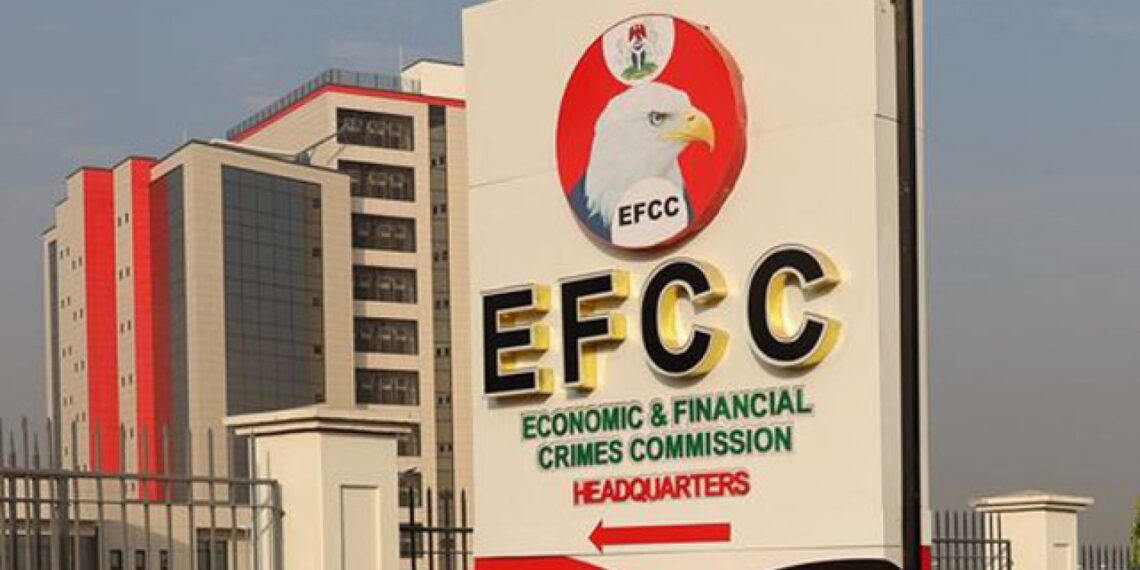
The Economic and Financial Crimes Commission (EFCC) has revealed that Nigeria lost a staggering N2.9 trillion to contract fraud in the last three years. This was disclosed by the EFCC Chairman, Ola Olukoyede, at a press conference on Monday.

According to Olukoyede, the commission uncovered several cases of contract fraud involving public officials and private contractors who colluded to divert funds meant for developmental projects for their personal enrichment. He said that some of the projects involved road construction, power generation, health care, education, and agriculture.

Olukoyede said that the EFCC was determined to recover the looted funds and bring the perpetrators to justice. He also urged Nigerians to report any suspicious activities or transactions involving public contracts to the commission. He said that the EFCC was working with other anti-corruption agencies and civil society organizations to ensure transparency and accountability in public procurement.

He said that contract fraud was one of the major challenges facing Nigeria’s development and economic growth. He said that the funds lost to contract fraud could have been used to provide basic amenities and services for millions of Nigerians who are living in poverty and deprivation. He said that the EFCC would not relent in its fight against corruption and would continue to protect the interest of the Nigerian people.

E-commerce business is good in Nigeria but the cost of everything mostly dollar rate

Nigeria is one of the fastest-growing e-commerce markets in Africa, with a projected revenue of $4.9 billion by 2025. Many entrepreneurs and businesses are tapping into the opportunities offered by online platforms, such as increased customer reach, lower operational costs, and improved efficiency. However, e-commerce in Nigeria also faces some challenges, especially in terms of currency fluctuations and exchange rates.

One of the major factors that affect e-commerce in Nigeria is the volatility of the naira against the dollar. The naira has depreciated significantly in recent years, due to various economic and political factors, such as low oil prices, foreign exchange shortages, inflation, and insecurity. This has made it difficult for e-commerce businesses to plan their budgets, manage their cash flows, and source their products and services from abroad.

For instance, many e-commerce platforms rely on imported goods, such as electronics, fashion items, and beauty products, to meet the demand of their customers. However, the high cost of importing these goods, due to the weak naira and high tariffs, has reduced their profit margins and competitiveness. Moreover, some e-commerce businesses have to pay their suppliers and service providers in dollars, which exposes them to exchange rate risks and increases their operational costs.

To cope with these challenges, some e-commerce businesses have adopted various strategies, such as:

Sourcing locally made products and services, which are cheaper and more accessible than imported ones. Hedging against currency risks by using forward contracts, futures contracts, or options contracts to lock in favorable exchange rates for future transactions. Diversifying their revenue streams by offering other services, such as logistics, digital marketing, or consulting, to complement their core e-commerce activities.

Partnering with other e-commerce platforms or aggregators to leverage their network effects, economies of scale, and bargaining power. Offering flexible payment options to their customers, such as pay-on-delivery, mobile money, or installment plans, to increase their affordability and convenience.

E-commerce in Nigeria has a lot of potential to grow and contribute to the economic development of the country. However, it also requires a stable and conducive environment to thrive. Therefore, it is important for the government and other stakeholders to address the challenges faced by e-commerce businesses, especially in terms of currency stability and exchange rate management.

Netflix gained 8.8 million subscribers in its latest quarter

0

Netflix is on a roll. The streaming giant added 8.8 million new subscribers in the fourth quarter of 2023, beating its own forecast and Wall Street’s expectations. This brings its total global membership to over 200 million, a milestone that few companies can match.

But Netflix is not resting on its laurels. The company announced that it will increase its prices in the US, Canada, and parts of Latin America, starting from February 2021. The standard plan will go up by $1 to $14 per month, while the premium plan will rise by $2 to $18 per month. The basic plan will remain unchanged at $9 per month.

Why is Netflix raising its prices? The company says it is investing more in content, technology, and customer service, and that the price hike reflects the value it provides to its subscribers. Netflix also faces increasing competition from other streaming services, such as Disney+, HBO Max, Amazon Prime Video, and Peacock, which are vying for a share of the growing online video market.

Netflix has a history of raising its prices every few years, and so far, it has not seen a significant impact on its subscriber growth or retention. In fact, some analysts believe that the price increase will boost Netflix’s revenue and earnings, and help it reduce its debt and dependence on external financing.

However, some customers may not be happy with the price hike, especially in the midst of a pandemic that has affected many people’s incomes and budgets. Some may decide to switch to cheaper alternatives, or share accounts with friends or family members. Others may simply cancel their subscriptions altogether.

Netflix says it understands that some members may find the new prices too high, and that it offers a range of plans to suit different needs and budgets. It also says it will notify its subscribers about the price change well in advance, and give them the option to change or cancel their plans.

Netflix is confident that its loyal fans will stick with it, and that its new and upcoming content will attract more viewers. The company has a strong slate of original shows and movies for 2021, including The Witcher season 2, Stranger Things season 4, The Crown season 5, Bridgerton season 2, Lupin season 2, and many more.

Netflix is betting that its quality and quantity of content will outweigh the cost of its service, and that its subscribers will see the value in paying a little more for a lot more entertainment. Whether this gamble pays off remains to be seen.

Chat API with Retrieval-Augmented Generation (RAG) is now available in a public beta

Chat API with Retrieval-Augmented Generation (RAG) is now available in a public beta. This means that you can start using our powerful and innovative chat technology to create engaging and natural conversations with your users.

RAG is a novel technique that combines two components: a retrieval system and a generative system. The retrieval system searches a large corpus of documents (such as Wikipedia) to find relevant passages that match the user’s query or context. The generative system then uses these passages as additional input to generate a response that is coherent, informative and diverse.

RAG enables our Chat API to produce high-quality responses that are not limited by the data used to train the model. Instead, the model can leverage the vast amount of knowledge available on the web to enrich the conversation and provide more value to the user.

Chat API with RAG is easy to use and integrate with your existing applications. You can simply send a user message and an optional context to our API endpoint and receive a response in JSON format. You can also customize various parameters, such as the number of retrieved documents, the length of the response, the tone of the response, and more.

You can use our Chat API with RAG for various use cases, such as customer service, education, entertainment, health, and more. You can create chatbots that can answer questions, provide information, give advice, tell stories, or just chat for fun.

To get started with the Chat API with RAG, you can sign up for our public beta here. You will receive an API key and access to our documentation and examples. We would love to hear your feedback and suggestions on how to improve our service.