DD
MM
YYYY

PAGES

DD
MM
YYYY

spot_img

PAGES

Home Blog Page 3699

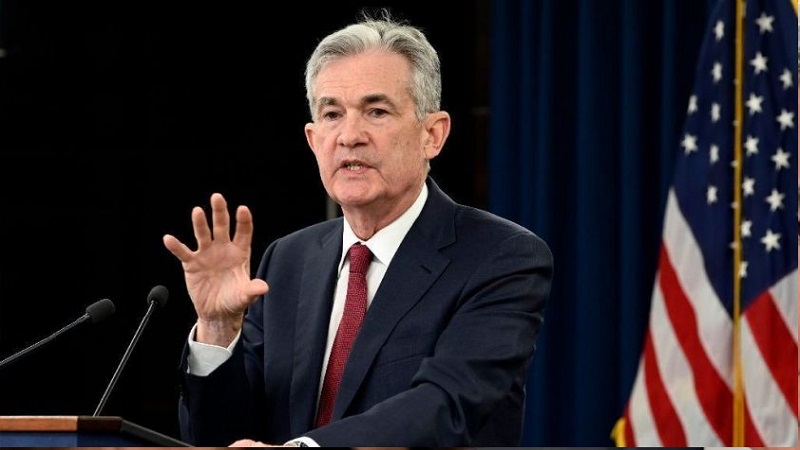
Federal Reserve governor throws cold water on future of CBDC in USA

0

The Federal Reserve is not in a hurry to launch a central bank digital currency (CBDC), according to one of its governors. In a speech at the Peterson Institute for International Economics, Lael Brainard said that the Fed is still studying the benefits and risks of a CBDC, and that there are many unresolved issues that need to be addressed before making a decision.

Brainard argued that a CBDC would have significant implications for the financial system, the economy, and the role of the dollar as a global reserve currency. She said that a CBDC would need to be designed carefully to ensure that it does not undermine financial stability, monetary policy, or consumer protection. She also said that a CBDC would need to be interoperable with existing payment systems and compatible with international standards.

Brainard acknowledged that there are potential advantages of a CBDC, such as enhancing financial inclusion, reducing costs and frictions, and improving cross-border payments. However, she also pointed out some of the challenges and risks, such as cyberattacks, privacy issues, illicit activities, and competition with private sector innovations. She said that the Fed is collaborating with other central banks and researchers to learn from their experiences and experiments with CBDCs.

Brainard concluded that the Fed is committed to ensuring that the US payment system remains safe, efficient, and inclusive, but that it does not see an urgent need to issue a CBDC at this time. She said that the Fed will continue to engage with stakeholders and the public to solicit feedback and input on this important topic.

Mountain Protocol to strengthen USDM liquidity.

Wintermute, a leading algorithmic market maker for decentralized finance (DeFi) protocols, has announced a strategic partnership with Mountain Protocol, a novel stablecoin issuer that aims to create a more resilient and scalable US dollar-pegged token. The partnership will enhance the liquidity and stability of USDM, Mountain Protocol’s flagship stablecoin, which is backed by a diversified basket of crypto assets and governed by a decentralized autonomous organization (DAO).

USDM is designed to address some of the challenges faced by existing stablecoins, such as over-collateralization, centralization, and regulatory uncertainty. By leveraging Mountain Protocol’s innovative mechanism of dynamic collateral rebalancing, USDM can maintain its peg to the US dollar even in volatile market conditions, while minimizing the risk of liquidation and governance interference. USDM holders can also benefit from the protocol’s revenue-sharing model, which distributes a portion of the fees generated by the system to the DAO treasury and the USDM community.

Wintermute will provide liquidity for USDM across multiple DeFi platforms, including decentralized exchanges (DEXs), lending protocols, and yield aggregators. Wintermute will also support the growth and adoption of USDM by participating in the protocol’s governance and collaborating with other ecosystem partners. Wintermute’s expertise and experience in market making and DeFi will help USDM achieve greater efficiency, security, and accessibility for users and traders.

Evgeny Gaevoy, CEO of Wintermute, said: “We are excited to partner with Mountain Protocol, one of the most innovative and promising projects in the stablecoin space. We believe that USDM has the potential to become a leading alternative to existing stablecoins, offering users more value, transparency, and control. We look forward to working with the Mountain Protocol team and community to make USDM a widely used and trusted stablecoin in DeFi and beyond.”

Co-founder of Mountain Protocol said: “We are thrilled to have Wintermute as our strategic partner and liquidity provider. Wintermute is a renowned and respected market maker in the crypto industry, with a deep understanding of DeFi and its challenges.

Their support will be instrumental in enhancing the liquidity and stability of USDM, as well as expanding its reach and adoption across various DeFi platforms. We are confident that together with Wintermute and our other ecosystem partners, we can build a more resilient and scalable stablecoin that can serve the needs of the global crypto community.”

Exchange rates are a manifestation of currency demand and supply

0

One of the most important concepts in international economics is the exchange rate, which is the price of one currency in terms of another. The exchange rate affects how much we pay for imported goods and services, how much we earn from our exports, and how much we can invest or borrow abroad. But what determines the exchange rate? And why does it fluctuate over time?

The answer lies in the interaction of currency demand and supply in the foreign exchange market. Currency demand is the amount of a particular currency that people want to buy at a given exchange rate. Currency supply is the amount of a particular currency that people want to sell at a given exchange rate. The exchange rate is determined by the point where currency demand and supply meet, or the equilibrium point.

There are many factors that can affect currency demand and supply, such as interest rates, inflation, economic growth, trade balance, political stability, and market expectations. For example, if a country has higher interest rates than another country, it will attract more foreign investors who want to earn higher returns on their deposits or bonds.

This will increase the demand for its currency and appreciate its exchange rate. Conversely, if a country has higher inflation than another country, it will make its goods and services more expensive and less competitive in the global market. This will reduce the demand for its exports and increase the demand for its imports. This will decrease the demand for its currency and depreciate its exchange rate.

The exchange rate is not fixed or constant but changes constantly in response to changes in currency demand and supply. Sometimes, these changes are gradual and predictable, reflecting long-term trends or cycles in the economy. Sometimes, these changes are sudden and unexpected, reflecting short-term shocks or events that affect market sentiment or confidence. The exchange rate can also be influenced by government policies or interventions, such as setting a target range or pegging to another currency.

Interest rates are one of the key factors that influence the demand and supply of currencies in the foreign exchange market. Interest rates are the cost of borrowing or the return on lending money. They reflect the opportunity cost of holding or investing in a particular currency.

The higher the interest rate of a country, the more attractive its currency becomes to foreign investors who want to earn higher returns on their deposits or bonds. This increases the demand for that currency in the foreign exchange market, as investors buy it with other currencies. This also reduces the supply of that currency in the foreign exchange market, as investors hold it instead of selling it. The result is an appreciation of that currency’s exchange rate, or an increase in its value relative to other currencies.

The lower the interest rate of a country, the less attractive its currency becomes to foreign investors who want to earn higher returns on their deposits or bonds. This decreases the demand for that currency in the foreign exchange market, as investors sell it for other currencies. This also increases the supply of that currency in the foreign exchange market, as investors borrow it instead of holding it. The result is a depreciation of that currency’s exchange rate, or a decrease in its value relative to other currencies.

Therefore, interest rates have an inverse relationship with exchange rates. When interest rates rise, exchange rates tend to appreciate. When interest rates fall, exchange rates tend to depreciate. This is because interest rates affect the demand and supply of currencies in the global market.

Understanding how exchange rates are determined and how they affect the economy is essential for anyone who is involved in international trade, finance, or business. Exchange rates are not just numbers on a screen, but a manifestation of currency demand and supply in the global market.

Judge orders Genesis to respond to subpoena issued by Terraform; Zodia Custody expands Services

0

A major development has occurred in the ongoing legal dispute between Terraform, a cloud computing company, and Genesis, a blockchain platform. A judge has ordered Genesis to respond in five days to a subpoena issued by Terraform, which seeks to obtain evidence of Genesis’s alleged infringement of Terraform’s patents.

Terraform filed a lawsuit against Genesis in June, claiming that Genesis had copied Terraform’s proprietary technology for creating and managing virtual machines on the cloud. Terraform alleged that Genesis had violated its patents on methods for optimizing cloud resources, securing data transmission, and scaling up computing power.

Terraform Labs is a startup that develops the Terra blockchain and payment platform, which uses algorithmic stablecoins to power various Web3 applications. Terraform Labs was founded in 2018 by Do Kwon and Daniel Shin in Seoul, South Korea. Terraform Labs has raised more than $200 million from investors such as Arrington Capital, Coinbase Ventures, Galaxy Digital and Lightspeed Venture Partners.

The Terra blockchain is a secure smart contract platform that supports a robust development suite and open-source tooling, guides, and tutorials. Terra has several stablecoins that are pegged to different fiat currencies, such as TerraUSD (UST), which is pegged to the U.S. dollar. The stablecoins are backed by Luna, a reserve asset cryptocurrency that also serves as a governance token for the Terra community.

Genesis denied the allegations and argued that Terraform’s patents were invalid and unenforceable. Genesis also claimed that it had developed its own technology independently and that it had no access to Terraform’s trade secrets.

In August, terraform requested a subpoena to compel Genesis to produce documents and data related to its blockchain platform, including its source code, design specifications, and user agreements. Terraform argued that the subpoena was necessary to prove its case and to show that Genesis had indeed copied its technology.

Genesis opposed the subpoena, saying that it was overly broad, burdensome, and irrelevant. Genesis also said that complying with the subpoena would expose its confidential information and jeopardize its competitive advantage.

The order was issued by Judge Jed Rakoff of the U.S. District Court for the Southern District of New York on October 13, after Genesis failed to produce the requested documents by the previous deadline of October 9. The judge said that Terraform Labs had shown a reasonable basis for its claims and that the subpoena was relevant and proportional to the issues in the case.

The judge, however, sided with Terraform and granted the subpoena on October 18. The judge said that terraform had shown a reasonable basis for its claims and that the subpoena was relevant and proportional to the issues in the case. The judge also said that Genesis had failed to demonstrate how the subpoena would harm its interests or violate its rights.

The judge ordered Genesis to respond in five days to the subpoena and to produce the requested documents and data by November 1. The judge warned Genesis that if it failed to comply, it could face sanctions, including contempt of court, fines, or default judgment.

This is a significant setback for Genesis, which has been trying to avoid disclosing its internal workings and to delay the litigation process. The subpoena could reveal crucial information about Genesis’s platform and its similarities or differences with Terraform’s technology. This could affect the outcome of the case and the future of both companies.

The case is expected to go to trial in early 2024. If Terraform wins, it could seek damages and injunctive relief from Genesis, which could force Genesis to stop using or modify its platform. If Genesis wins, it could clear its name and continue its operations without interference from Terraform.

Zodia Custody expands institutional digital asset services to Australia

Zodia Custody, a leading provider of institutional-grade digital asset custody solutions, has announced its launch in Australia, offering secure and compliant storage and transfer services for cryptocurrencies and other digital assets. Zodia Custody is a joint venture between Standard Chartered, a global banking and financial services group, and Northern Trust, a leading asset servicing provider.

Zodia Custody leverages the expertise and experience of both partners to deliver best-in-class solutions for institutional investors who want to access the emerging digital asset class.

Zodia Custody’s expansion to Australia comes at a time when the demand for digital assets is growing rapidly in the region, driven by factors such as regulatory clarity, innovation, and institutional adoption. According to a recent report by Finder, 17% of Australians own some form of cryptocurrency, making it one of the most crypto-friendly countries in the world.

Moreover, Australia has a robust and supportive regulatory framework for digital assets, with clear guidance from the Australian Securities and Investments Commission (ASIC) and the Australian Transaction Reports and Analysis Centre (AUSTRAC).

Zodia Custody’s Australian operations will be led by David Christie, who has over 20 years of experience in financial services and technology. Christie will oversee the development and delivery of Zodia Custody’s products and services in Australia, as well as building relationships with clients, regulators, and industry stakeholders. Christie said:

“We are thrilled to bring Zodia Custody’s innovative and secure digital asset custody solutions to Australia, where we see a strong appetite and potential for this emerging asset class. Zodia Custody combines the best of both worlds: the trust and reliability of established financial institutions, and the agility and flexibility of a fintech start-up. We look forward to working with our clients and partners in Australia to help them achieve their digital asset goals.”

Zodia Custody’s platform supports a range of digital assets, including Bitcoin, Ethereum, Litecoin, Bitcoin Cash, Stellar Lumens, and XRP. Zodia Custody also offers value-added services such as staking, lending, borrowing, and trading of digital assets. Zodia Custody is regulated by the UK Financial Conduct Authority (FCA) and adheres to the highest standards of governance, compliance, risk management, and security.

Zodia Custody’s mission is to enable institutional investors to participate in the digital asset ecosystem with confidence and peace of mind. By providing a safe and reliable custody solution, Zodia Custody aims to unlock the full potential of digital assets for its clients and the wider economy.

Microsoft veteran joins Matter Labs to unlock ‘holy grail’ of web3 with zkSync

Matter Labs, a leading developer of zero-knowledge proof technology, has announced the addition of a new team member: David Rousset, a former Microsoft engineer and web standards expert. Rousset will be working on Matter Labs’ flagship product, zkSync, a layer-2 scaling solution for Ethereum that leverages zero-knowledge proofs to achieve high throughput, low latency, and low fees.

Rousset has over 20 years of experience in the web industry, having worked on various projects such as Babylon.js, a 3D engine for the web, and WebAssembly, a binary format that enables high-performance applications on the web. He is also a co-chair of the W3C Immersive Web Working Group, which defines standards for virtual and augmented reality on the web.

Rousset said he was drawn to Matter Labs because of its vision to enable a more open, decentralized, and secure web, also known as web3. He said he believes that zero-knowledge proofs are the “holy grail” of web3, as they allow for privacy-preserving and scalable transactions without compromising on security or trust.

“I’m very excited to join Matter Labs and contribute to zkSync, which I think is one of the most promising technologies for web3,” Rousset said. “I’m looking forward to applying my web expertise and passion to make zkSync more accessible and user-friendly for developers and users alike.”

Alex Gluchowski, the co-founder and CEO of Matter Labs, welcomed Rousset to the team and praised his skills and achievements. He said he expects Rousset to play a key role in advancing zkSync’s development and adoption.

“David is a rare talent who combines deep technical knowledge, broad web experience, and a visionary mindset,” Gluchowski said. “He shares our mission to create a fairer and more inclusive web3 with zkSync, and we are thrilled to have him on board.”

Bitcoin could ‘easily’ reach $15 trillion market cap – Anthony Scaramucci

0

Bitcoin is on the verge of a massive breakthrough, according to Anthony Scaramucci, the founder and co-managing partner of SkyBridge Capital. In a recent interview with CNBC, Scaramucci said that Bitcoin could “easily” reach a $15 trillion market cap in the next decade, surpassing the combined value of gold and the S&P 500.

Scaramucci, who is also a former White House communications director, has been a vocal advocate of Bitcoin since launching a Bitcoin fund in December 2020. He believes that Bitcoin is the best way to store value in the digital age, and that more institutional investors will flock to the cryptocurrency as they realize its potential.

He said that Bitcoin is still in its early stages of adoption, and that it will benefit from the network effect as more people use it. He compared Bitcoin to Amazon, which started as an online bookstore and expanded into a global e-commerce giant. He said that Bitcoin will similarly evolve and innovate over time, and that it will become more user-friendly and accessible.

Scaramucci also dismissed the common criticisms of Bitcoin, such as its volatility, environmental impact, and regulatory uncertainty. He said that Bitcoin’s volatility is a natural consequence of its rapid growth, and that it will stabilize as the market matures. He said that Bitcoin’s environmental impact is overstated, and that it will become more energy efficient as it adopts renewable sources of power. He said that Bitcoin’s regulatory uncertainty is a temporary hurdle, and that it will eventually gain acceptance from governments and central banks.

He concluded by saying that Bitcoin is a revolutionary technology that will change the world for the better. He said that Bitcoin is not only a financial asset, but also a social movement that empowers people and promotes freedom. He said that Bitcoin is the future of money, and that he is confident that it will reach a $15 trillion market cap in the next 10 years.

As of October 16, 2023, the current market cap of Bitcoin is $526.36 billion USD, according to CoinMarketCap . This means that Bitcoin accounts for about 49.7% of the total cryptocurrency market cap, which is $1.06 trillion USD. The current price of Bitcoin is $28,239.34 USD, with a 24-hour trading volume of $5.3 billion USD. Bitcoin has increased by 0.33% in the last 24 hours, and by 3.16% in the last week.

Scaramucci also dismissed the common criticisms of Bitcoin, such as its volatility, environmental impact, and regulatory uncertainty. He said that Bitcoin’s volatility is a natural consequence of its rapid growth, and that it will stabilize as the market matures. He said that Bitcoin’s environmental impact is overstated, and that it will become more energy efficient as it adopts renewable sources of power. He said that Bitcoin’s regulatory uncertainty is a temporary hurdle, and that it will eventually gain acceptance from governments and central banks.

He concluded by saying that Bitcoin is a revolutionary technology that will change the world for the better. He said that Bitcoin is not only a financial asset, but also a social movement that empowers people and promotes freedom. He said that Bitcoin is the future of money, and that he is confident that it will reach a $15 trillion market cap in the next 10 years.

Tunisia returns 60m Euro of Aid from the European Union

0

In a surprising move, Tunisia has announced that it will return 60 million Euro of aid that it received from the European Union in 2019. The decision comes amid growing tensions between the North African country and the bloc over human rights and migration issues.

Tunisia is one of the main transit countries for migrants and refugees trying to reach Europe via the Mediterranean Sea. The EU has been providing financial and technical assistance to Tunisia to help it manage its borders, improve its asylum system, and prevent irregular migration. However, some critics have accused the EU of outsourcing its migration policy to Tunisia and other third countries, without ensuring adequate protection for the rights and dignity of the people on the move.

The Tunisian government said that it decided to return the aid money because it did not want to be seen as a “subcontractor” of the EU, and because it wanted to preserve its sovereignty and independence. The government also said that it was disappointed by the lack of solidarity and cooperation from the EU, especially after the political and economic crisis that followed the attempted assassination of President Kais Saied in July 2023.

The statement also expressed Tunisia’s gratitude for the EU’s support and partnership over the years and affirmed its willingness to continue cooperating with the EU on various issues of mutual interest. The statement added that Tunisia hopes to resume its dialogue with the EU once the situation stabilizes and a new government is formed.

The EU expressed its regret over Tunisia’s decision and said that it remained committed to supporting the country’s democratic transition and development. The EU also said that it hoped to resume a constructive dialogue with Tunisia on all areas of mutual interest, including migration and human rights.

The return of the aid money is likely to have a negative impact on Tunisia’s economy, which is already struggling with high unemployment, inflation, and debt. It may also affect the country’s relations with other international donors and partners, who may question its credibility and stability. Moreover, it could jeopardize the prospects of a new EU-Tunisia Association Agreement, which was supposed to be finalized by the end of 2023.

Some analysts have suggested that Tunisia’s decision to return the aid is a sign of its rejection of any external interference or pressure on its internal affairs, especially after some European officials and lawmakers criticized President Saied’s actions as a coup d’état and called for sanctions against Tunisia. Others have argued that Tunisia is trying to assert its autonomy and dignity in the face of the EU’s conditionalities and expectations, which are often perceived as intrusive and paternalistic by some segments of the Tunisian society.

Tunisia is facing a political and economic crisis that has been exacerbated by the COVID-19 pandemic and social unrest. The country, which is widely regarded as the only success story of the 2011 Arab Spring uprisings, has been struggling to secure foreign financing and implement reforms to revive its stagnant economy.

One of the main sources of external funding for Tunisia is the International Monetary Fund (IMF), which agreed in principle to provide a $1.9 billion loan last year. However, the loan has been delayed due to disagreements over the conditions attached to it, such as reducing public spending, cutting subsidies, and increasing taxes.

The IMF deal has also been a source of contention between Tunisia’s President Kais Saied and his Economy and Planning Minister Samir Saied, who are not related. The president, who seized sweeping powers from parliament in July, has repeatedly expressed his opposition to the IMF’s demands, calling them “foreign diktats” that would impoverish Tunisians and spark protests. He has also hinted that he would not seek parliamentary approval for the loan, which is required by the constitution.

The minister, on the other hand, has been a vocal advocate of the IMF deal, arguing that it is essential for restoring financial stability, attracting investors, and repaying debts. He has also warned that Tunisia faces a risk of default if it fails to secure the loan. He represented Tunisia at the annual meetings of the IMF and World Bank in Marrakech, Morocco, last week, where he reportedly discussed the progress of the negotiations with the IMF officials.

On Tuesday, October 18, President Saied decided to dismiss Minister Saied from his position, without giving any official reason. He assigned Finance Minister Sihem Boughdiri to temporarily run the economy ministry. The move came as a surprise to many observers, who saw it as a sign of escalating tensions between the president and his cabinet over the economic policy direction.

The dismissal of Minister Saied has raised concerns about the future of Tunisia’s relations with the IMF and other international donors, who have been waiting for clarity on the country’s reform agenda and political situation. Some analysts fear that the president’s decision could jeopardize the chances of reaching an agreement with the IMF before the end of the year, which could have serious consequences for Tunisia’s economy and social stability.

Others, however, hope that the president’s move could pave the way for a more constructive dialogue with the IMF and other stakeholders, based on Tunisia’s own capabilities and priorities. They argue that the president may have a different vision for addressing Tunisia’s economic challenges than his former minister, one that is more responsive to the needs and aspirations of the Tunisian people.

Tunisia’s budget bill for 2024, which was unveiled on Tuesday, reflects some of these differences. The bill proposes to maintain subsidies for fuel, electricity, and food, which are seen as vital for easing social pressures and protecting vulnerable groups. It also plans to increase taxes for banks, hotels, and liquor companies, which are perceived as profiting from the crisis. The bill does not mention any agreement with the IMF, or any specific reforms related to it.

Tunisia’s economy is expected to grow by 2.1% in 2024, after a modest recovery of 0.9% in 2023. The government aims to reduce its public wage bill from 14.4% of GDP in 2023 to 13.5% in 2024, and its fiscal deficit from 7.7% in 2023 to 6.6% in 2024. However, these targets depend largely on securing external financing and implementing structural reforms.

Tunisia’s economic future remains uncertain and challenging amid a complex political transition and a fragile social context. The dismissal of Minister Saied may have opened a new chapter in Tunisia’s economic policy debate, but it also poses new questions and risks for its economic outlook.