
DD
MM
YYYY

PAGES

DD
MM
YYYY

spot_img

PAGES

Home Blog Page 37

Bitmine Immersion Crosses Milestone of Holding 4% of Ethereum’s Total Supply

0

Bitmine Immersion Technologies (NYSE: BMNR), chaired by Fundstrat’s Tom Lee, has crossed a major milestone by holding over 4% of Ethereum’s total circulating supply. As of April 12, 2026, the company reported 4,874,858 ETH, equating to approximately 4.04% of the ~120.7 million ETH in circulation.

This came after its largest weekly purchase since December 22, 2025: 71,524 ETH roughly $157 million at the time, based on an ETH price around $2,206. The company described this as part of an accelerated buying pace over the past four weeks, viewing the period as the final stages of the ‘mini-crypto winter. Bitmine launched this ETH treasury approach about nine months ago. It is now ~81% of the way toward owning 5% of total ETH supply. Its average acquisition cost basis for the ETH stack is around $2,123 per token.

As of the latest update, Bitmine’s combined crypto, cash, and moonshot equity holdings totaled ~$11.8 billion. This includes the ETH position valued at ~$10.7 billion, 198 BTC, $719 million in cash, a $200 million stake in Beast Industries, and an $85 million stake in Eightco Holdings (ORBS).

A significant portion ~3.33 million ETH, or about 68% is staked via MAVAN, generating roughly $212 million in annualized staking revenue at a ~2.89% yield. This provides ongoing income even during price dips. Bitmine positions itself as the largest corporate Ethereum treasury holder. It continues aggressive accumulation even amid market volatility, contrasting with some other digital asset treasuries that have slowed or paused buying.

The news aligns with Bitmine’s consistent messaging: it sees ETH’s long-term fundamentals like potential in tokenization, finance, and AI applications as strong and treats pullbacks as buying opportunities rather than reasons to stop. Chairman Tom Lee has publicly called Ethereum a wartime store of value in this environment. Note that on the same day as these updates, Bitmine also reported a $3.82 billion quarterly net loss, driven primarily by unrealized losses on its ETH holdings due to fair-value accounting amid price weakness.

These are paper losses unless realized through sales; the company has continued buying and staking regardless. Staking revenue ~$10 million in the quarter offers some offset. This move reduces liquid ETH supply on the market, which some analysts view as potentially supportive for price over time if demand holds or grows—though corporate treasuries carry risks tied to volatility, regulatory shifts, or liquidity needs.

In short, Bitmine’s latest buy and 4%+ milestone underscore aggressive corporate conviction in Ethereum as a treasury asset, even through a challenging period for crypto prices. The strategy echoes Bitcoin treasury plays like MicroStrategy’s with BTC but focused on ETH. Market reaction will likely hinge on broader ETH sentiment, staking yields, and whether Bitmine sustains this pace toward its 5% goal.

Bitmine aims to use scale to create recurring income primarily through staking on the Ethereum network. The 5% threshold is not arbitrary: It represents a significant but achievable concentration that could make staking rewards material enough to potentially fund operations, dividends, share buybacks, or further growth.

At that scale, the company believes it can insulate itself somewhat from pure price volatility by generating protocol-level yield (native Ethereum staking rewards). It also positions Bitmine as a dominant institutional player in the Ethereum ecosystem, potentially acting as a toll booth for broader adoption in areas like tokenization, DeFi, and institutional finance.

Spotify Forges a Seamless Literary Ecosystem: Physical Books Arrive in the App Alongside Breakthrough Audiobook Innovations

0
London, UK - August 01, 2018: The buttons of Spotify, Podcasts, Netflix, WhatsApp and Music on the screen of an iPhone.

In a move that deftly blurs the boundaries between digital immersion and tangible ownership, Spotify has officially launched physical book sales within its app this week, transforming the platform from a premier audio destination into a comprehensive literary hub for readers across the United States and the United Kingdom.

First unveiled in February, the initiative underlines Spotify’s evolving ambition to serve as a one-stop shop for book lovers, capitalizing on the fluid way audiences already toggle between listening and reading while quietly bolstering independent bookstores in the process.

The feature is elegantly integrated: on dedicated audiobook pages, users now encounter a button labeled “Get a copy for your bookshelf,” which seamlessly redirects them to Bookshop.org, the online marketplace dedicated to supporting local, independent bookstores.

Bookshop.org handles all aspects of the transaction, pricing, inventory checks, and shipping, while Spotify earns an affiliate commission, creating a low-friction path from discovery to possession without the company needing to build its own warehousing or logistics operation. For the moment, the capability is exclusive to Android devices, with iOS users slated to gain access next week, ensuring a rapid but measured rollout.

This expansion goes beyond a convenient add-on to represent a calculated deepening of Spotify’s profitability playbook. Amid rising subscription prices in the U.S. and Europe, the company has positioned itself to extract greater value from its audience, recently celebrating a milestone of 751 million monthly active listeners.

By linking audiobook exploration directly to physical purchases, Spotify addresses a perennial reader frustration: the desire to own a printed edition of a title first encountered through audio, whether for annotation, gifting, or display. In doing so, it not only fosters higher lifetime user value but also carves out competitive territory against entrenched players like Amazon, whose dominance in both e-commerce and audiobooks has long gone unchallenged.

The physical book launch arrives hand in hand with a suite of audiobook enhancements first previewed in February and now fully live, each designed to heighten engagement and discovery. Foremost among them is the expanded “Page Match” feature, which now supports more than 30 additional languages, including French, German, and Swedish.

Users simply scan a page from a physical or e-book using their smartphone camera; the tool’s artificial intelligence instantly analyzes the content and transports them to the precise corresponding section in the audiobook.

Since its English-language debut, the impact has been remarkable: users who employ Page Match stream an average of 55% more audiobook hours each week compared to other listeners. Moreover, 62% of Page Matched audiobook titles on Spotify are books that users had never streamed before, revealing the feature’s power not merely as a convenience but as a potent discovery engine that bridges formats and surfaces fresh literary experiences.

Complementing this is the official rollout of “Audiobook Recaps” on Android devices, which deliver concise audio summaries tailored exactly to the user’s most recent listening point. The innovation eliminates the tedium of rewinding or reorienting after a break, making it effortless to dive back into a story mid-journey. Meanwhile, “Audiobook Charts”, modeled after Spotify’s long-established music and podcast rankings, have now debuted in Germany, following earlier introductions in the U.S. and U.K.

These charts spotlight trending titles and help users uncover their next favorite read amid an ever-expanding catalog, injecting the same social and cultural pulse that has long defined Spotify’s music experience into the world of books.

Together, these updates illustrate Spotify’s sophisticated understanding of modern literary consumption. Readers rarely confine themselves to a single format; they listen during commutes, read in quiet moments, and collect cherished editions for their shelves.

By weaving physical sales, intelligent cross-format navigation, recaps, and curated charts into a single app, Spotify is engineering an interconnected ecosystem that encourages deeper, more habitual engagement. The early data from Page Match already hints at behavioral transformation: rather than fragmenting attention across disparate platforms, users are staying longer within Spotify’s orbit, streaming more, and exploring titles they might otherwise have overlooked.

At its core, the strategy reflects a maturing company intent on diversifying revenue streams beyond subscriptions while enhancing stickiness in a crowded entertainment landscape. Partnering with Bookshop.org adds an appealing ethical dimension, channeling sales toward independent retailers at a time when Amazon’s grip on the book market remains formidable.

Snap to Cut About 1,000 Jobs in AI-Led Overhaul That Has Sparked Stock Rally

0

Snap has announced a decision to slash roughly 16% of its global workforce, marking another round of Silicon Valley layoffs. The move is seen as a defining statement on how artificial intelligence is now being used not only as a product strategy, but as a corporate restructuring tool to reshape cost bases, accelerate product cycles, and reassure investors demanding profitability.

The parent company of Snapchat saw its shares jump sharply in premarket trading on Wednesday. The plans include cutting approximately 1,000 jobs and eliminating more than 300 open positions, a move that management says is designed to streamline operations and reallocate capital toward its highest-priority businesses. The market’s reaction was immediate, with investors rewarding the company’s more aggressive margin-improvement strategy.

The layoffs come at a moment when Snap has been navigating slower advertising momentum, growing competitive pressure from larger digital advertising rivals such as Meta Platforms and Alphabet Inc., and heightened investor scrutiny over its long-term profitability model. Against that backdrop, Chief Executive Officer Evan Spiegel is repositioning the company around smaller teams, higher automation and AI-assisted execution.

In a letter to staff, Spiegel framed the move as part of a broader transformation already underway.

“Last fall, I described Snap as facing a crucible moment, requiring a new way of working that is faster and more efficient, while pivoting towards profitable growth,” Spiegel wrote.

That framing is important because it suggests the cuts are not being presented as a temporary response to a weak quarter, but as a deliberate redesign of how the company operates.

Spiegel explicitly tied the decision to advances in AI.

“We believe that rapid advancements in artificial intelligence enable our teams to reduce repetitive work, increase velocity, and better support our community, partners, and advertisers,” he added.

He then pointed to early examples of what management sees as proof that the strategy is already working.

“We have already witnessed small squads leveraging AI tools to drive meaningful progress across several important initiatives, including Snapchat+, enhanced ad platform performance, and efficiency improvements in our Snap Lite infrastructure.”

This is where the story becomes more significant than a routine cost-cutting exercise. Snap disclosed that AI agents are now generating more than 65% of its new code and handling over 1 million internal queries each month. That figure offers one of the clearest quantitative disclosures yet from a major tech company about the operational role AI is already playing inside the business.

In clear term, this means software engineering, product iteration and internal support workflows are increasingly being automated, allowing smaller teams to deliver output that previously required much larger headcounts.

But Snap said the restructuring is expected to reduce its annualized cost base by more than $500 million by the second half of 2026, a figure that goes directly to the heart of investor concerns around profitability and cash flow. At the same time, the company expects to incur $95 million to $130 million in restructuring costs, with the majority of the charges falling in the second quarter. Because labor laws vary across jurisdictions, the process could continue into the third quarter and beyond in some markets.

The timing of the announcement was also accompanied by an improved business outlook. Snap forecast first-quarter revenue of approximately $1.53 billion, representing a 12% year-on-year increase, while projected adjusted EBITDA of $233 million came in ahead of analyst expectations.

That stronger outlook likely amplified the positive stock reaction. Snap is attempting to show that it can still grow revenue while structurally lowering expenses, a combination that markets have recently rewarded across the technology sector.

By this move, Snap joins a growing list of technology firms openly citing AI as a driver of workforce reductions. Across the sector, companies are increasingly shifting from presenting AI as an external revenue opportunity to using it internally as a labor-efficiency framework.

This signals a structural change in Silicon Valley’s employment model. Rather than layoffs being driven solely by revenue weakness, firms are now increasingly using AI productivity gains to justify permanent changes in team size, workflow design and capital allocation.

For affected employees, Snap said U.S.-based staff would receive four months of severance pay, healthcare coverage, continued equity vesting, and career transition support. The company also asked its North American workforce to work from home as notifications were being distributed.

However, the deeper insight is believed to be that Snap’s move may be less about crisis management and more about signaling discipline to Wall Street.

By pairing workforce cuts with better-than-expected revenue guidance and explicit AI productivity metrics, Spiegel is attempting to recast Snap as a leaner, faster, and more margin-focused technology company. Industry experts note that if the company can sustain ad growth, expand Snapchat+, and demonstrate that AI-led efficiency translates into stronger earnings, this restructuring could become a template for how mid-cap tech firms navigate the next phase of the AI era.

Russia Moves to Shield China From Energy Shock as Hormuz Blockade Opens a Dangerous New U.S.-China Fault Line

0

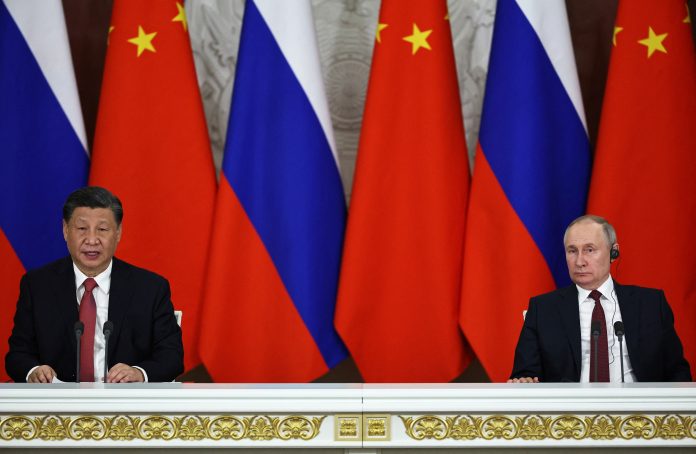
As the Middle East war continues to convulse global energy markets, Russia has stepped forward with an offer to help China mitigate any potential supply disruptions. The move is expected to strengthen the Moscow-Beijing strategic axis as it highlights a fast-emerging geopolitical flashpoint between China and the United States.

The U.S.-led blockade of the Strait of Hormuz, a maritime chokepoint through which a substantial share of the world’s oil and liquefied natural gas flows, has created a fresh tension. The blockade directly threatens China’s energy security, industrial supply chains, and economic stability. China remains Iran’s largest oil customer, reportedly taking more than 80% of Tehran’s sanctioned crude exports in 2025

For Washington, the blockade has become a pressure tool aimed at Iran and, by extension, China’s continued access to Iranian crude. The result is a new and potentially more combustible layer of friction in an already fragile U.S.-China relationship. Trump on Sunday threatened to impose a sweeping 50% tariff on Chinese goods if Washington confirms reports that China is preparing to supply air defense weapons to Iran.

Against this backdrop, Russian Foreign Minister Sergei Lavrov, speaking in Beijing after meeting President Xi Jinping, offered Moscow as an alternative energy supplier should the disruption worsen.

“Russia can certainly fill the resource gap that has arisen in China and other countries interested in working with us on an equal and mutually beneficial basis,” Lavrov said Wednesday, according to Interfax.

The Strait of Hormuz is one of the most critical arteries in global commodity trade. Its prolonged disruption has raised freight costs, insurance premiums, and the risk of physical shortages for energy-intensive sectors ranging from petrochemicals to heavy manufacturing.

More importantly, the blockade has introduced a fresh source of distrust between Beijing and Washington at a time when both sides had been trying to stabilize ties ahead of a planned meeting between President Donald Trump and President Xi Jinping in mid-May.

U.S. Treasury Secretary Scott Bessent escalated the rhetoric on Tuesday, accusing China of worsening the global energy crunch. He said China had been an “unreliable global partner” during the Middle East war by hoarding oil supplies and limiting exports of some goods, drawing comparisons to Beijing’s handling of medical supplies during the COVID-19 pandemic.

This accusation is highly consequential diplomatically. From Washington’s perspective, China’s stockpiling behavior compounds market stress by removing additional supply from circulation at a moment of severe disruption. From Beijing’s perspective, however, strategic stockpiling is a rational response to a blockade that directly threatens one of its most important import routes.

That divergence in interpretation is precisely what makes this episode dangerous. The Strait of Hormuz blockade has now evolved from an Iran-focused military measure into a broader U.S.-China geopolitical dispute centered on energy access, trade reliability, and strategic intent. In effect, energy security is becoming the newest front in the U.S.-China rivalry. Beijing has already condemned the blockade in unusually direct terms.

China’s foreign ministry described the move as a threat to the free flow of international commerce, noting that the Strait is “an important international trade route for goods and energy” and that maintaining its “security, stability and unimpeded flow” is in the common interest of the international community.

This language signals that China sees the blockade not only as a commercial disruption but as a challenge to freedom of navigation and its long-term energy resilience.

Lavrov used the moment to sharpen Moscow’s criticism of Washington.

“Thank God, we and China have all the capabilities, both those already in use and those in reserve, and those planned, to avoid being dependent on this kind of aggressive adventure [the situation in the Middle East], which undermines the global economy and global energy,” he said at a press conference in Beijing.

The language from both Moscow and Beijing points to a coordinated diplomatic posture: resisting U.S. pressure while deepening bilateral economic cooperation.

After the meeting, both sides reaffirmed that their relationship remains “unshakable amid any storms,” a phrase that carries added significance as the crisis drives them closer together.

The conflict is producing both opportunity and economic windfall for Russia. Higher oil prices have sharply boosted export revenues, while increased purchases from China and India continue to redirect Russia’s energy trade eastward. This makes Moscow’s offer to China more than symbolic. It is backed by a rapidly expanding export corridor that has become central to Russia’s post-sanctions economic strategy.

Still, both China and Russia have strong reasons to want the conflict contained. Iran remains a key regional partner for Moscow, while China’s manufacturing economy depends on stable commodity inflows. Data released this week already showed that China’s crude oil and gas imports fell in March from a year earlier, suggesting that the supply shock is beginning to show up in physical trade flows.

The larger implication is that the Hormuz blockade may become a defining issue in near-term U.S.-China diplomacy. Even if Trump and Xi proceed with their planned summit, this episode has introduced a fresh grievance into an already sensitive relationship shaped by trade disputes, technology controls, Taiwan tensions, and military rivalry in the Indo-Pacific.

S&P 500, Crude Oil, Bitcoin and Ethereum Shown Impressive Resilience

0

Markets have shown impressive resilience in the face of the U.S.-Iran conflict that kicked off in late February 2026. The S&P 500 has fully or nearly fully erased its war-related losses. It dipped as much as ~7-8% from pre-conflict levels amid the initial shocks, oil spikes, and uncertainty around the Strait of Hormuz.

By April 13-14, it rebounded strongly—closing around 6,886 to 6,967 on optimism around de-escalation talks, a temporary ceasefire, cooler inflation data (PPI), and solid Q1 earnings from banks and tech. It’s now back to or slightly above its late February levels and flirting with record highs again. Tech and financials led the charge, with names like Oracle and Microsoft contributing big gains.

The index even turned nominally positive for the year in some sessions. Classic buy the dip on hopes that the worst is behind us geopolitically. Bitcoin has been relatively steady, anchoring above the $70K psychological level despite volatility. Recent prices have hovered in the $70K–$74K range around $74K in some sessions, with dips testing $70K support.

It took some hits during peak tensions but recovered quickly, showing its digital gold narrative holding up better than some expected amid risk-off periods. ETF inflows and institutional interest have helped provide a floor. Ethereum has indeed been one of the stronger performers on a relative basis since the conflict started. It initially dropped hard like everything else but staged a solid recovery—outpacing the S&P 500 and even gold in some stretches, with reports of ETH gaining ~17% relative to the S&P at points in March.

Recent prices have been in the $2,100–$2,400 zone, with bounces on ceasefire news and derivatives activity. Its higher-beta nature means bigger swings, but it has shown resilience here. The rebound seems driven by: Hopes for further U.S.-Iran diplomacy though talks have had fits and starts, with a U.S. blockade of Iranian ports adding tension.

Strong corporate earnings helping offset macro worries. Oil prices not exploding as badly as feared; WTI staying under $100 in some reports despite disruptions. That said, it’s still a tense backdrop—geopolitical headline risk remains high, with potential for volatility if negotiations stall or escalation resumes. Markets are pricing in a merely bad outcome rather than full-blown disaster.

Risk assets like stocks and crypto love certainty, and the current mix of earnings optimism + de-escalation hopes is fueling the sprint back up. Stock markets hit sharp decline of ~7-8% in the early weeks due to geopolitical uncertainty, oil price spikes, and fears of supply disruptions via the Strait of Hormuz.

Nearly all losses erased by mid-April. The index has rebounded strongly, recently closing around 6,900–6,967 flirting with prior highs again. Optimism from de-escalation signals, temporary ceasefires, solid corporate earnings especially tech and banks, and cooler inflation data in spots. Volatility remains elevated on headline risk. Bitcoin held relatively steady as a digital gold hedge in parts of the conflict. Dipped initially but recovered faster than many risk assets in some phases.

Current level trading firmly above $70K, recently in the $73K–$74K+ range around $73,982–$74,484 in recent sessions. Outperformed stocks and even gold at times during tensions; up ~7-12% relative in early stretches for some metrics. ETF inflows and institutional positioning provided support. Ceasefire hopes have fueled further upside.

Ethereum is one of the stronger relative performers since the conflict started, thanks to its higher-beta nature and crypto market rebounds on de-escalation news.

Current level hovering in the $2,200–$2,370 zone around $2,331–$2,370 recently. Ethereum saw sharp swings but staged solid recoveries, occasionally outpacing the S&P 500 on a relative basis during recovery phases. Major spike early on Brent briefly over $100–$120/bbl at peaks due to Hormuz disruptions and supply fears.

Has since moderated but remains elevated recently around $100–$103+, contributing to higher gasoline and diesel costs and inflationary pressures. Ceasefire news triggered sharp pullbacks in some sessions. Risk-off early; stocks and some commodities down, safe-havens mixed. Shifted to relief rallies on diplomacy hopes. Prolonged conflict risks included higher inflation, tighter Fed policy, and recession fears, but markets are currently pricing in a contained scenario.

Crypto showed mixed but resilient behavior compared to traditional assets in spots; gold had safe-haven flows but wasn’t the standout. Global volatility persists, with potential for renewed swings if talks stall. Markets have demonstrated resilience via buy the dip on de-escalation optimism and earnings strength, but headline risk from the region keeps things twitchy.