DD
MM
YYYY

PAGES

DD
MM
YYYY

spot_img

PAGES

Home Blog Page 37

Crypto Will Become Native Currency of AI Agents 

1

“Crypto Will Become the Native Currency of AI Agents” has gained significant traction recently, especially following comments from prominent figures in the crypto space at the World Economic Forum in Davos.

Changpeng Zhao (CZ), former CEO of Binance, stated during a panel: “The native currency of AI agents will be cryptocurrency. Blockchain will become the most natural technical interface for AI agents.”

This view was echoed by others, including industry leaders from Circle who emphasized stablecoins for AI bot payments, former PayPal executives predicting Bitcoin’s role, and Coinbase discussions on agentic commerce.

Why This Narrative Makes Sense

AI agents — autonomous systems that can plan, act, transact, and even earn/spend on behalf of users or themselves — face key challenges with traditional finance: Speed and scale — Human-centric systems like credit cards or bank transfers involve friction.

AI-driven economies could involve billions of micro-transactions per second like machine-to-machine payments for compute, data, or services. Agents need money that can be scripted, escrowed, or conditional— smart contracts handle this natively.

No weekends, no geography limits, no KYC per transaction for pure machine interactions. Agents can’t realistically hold credit cards or fiat bank accounts in traditional systems, but they can control wallets and private keys.

Crypto especially blockchains with low fees, fast settlement, and token standards fits as “digital-native” money. Stablecoins are frequently highlighted as the practical choice for value stability, while volatile assets like Bitcoin could serve as a store-of-value layer or reserve.

Projects and protocols are building exactly this: agent payment standard like x402 for AI-agent commerce, machine-to-machine micropayments on chains like Mintlayer or others, and autonomous agents already earning/spending tokens, examples in gaming, DeFi, or experimental bots.

Predictions date back earlier 2023–2025 forecasts from Bitwise, Animoca Brands, and others, but Davos 2026 amplified it into mainstream finance and crypto discourse. Some estimate this convergence could drive massive value — one report referenced a potential $20tn opportunity as AI transforms crypto use cases beyond speculation into real infrastructure.

Many including some responding to CZ argue stablecoins (USDC, USDT, etc.) will dominate for everyday agent transactions due to predictability, while Bitcoin/ETH serve as higher-level assets. Governments may impose rules on autonomous payments; traditional rails could compete.

Low-cost, high-throughput layers (Solana, Ethereum L2s, specialized chains) are better positioned than high-fee networks for micro-transactions. Not everyone agrees fiat rails will be fully displaced — hybrids might emerge.

The thesis is compelling and increasingly discussed in 2026: as AI agents become economic actors, crypto’s properties position it uniquely as their “native” medium of exchange. Whether it’s Bitcoin specifically, stablecoins, or broader crypto rails remains debated — but the direction feels directionally correct to many builders and investors in the space.

If you’re bullish on this intersection, projects focused on AI agents + payments, verifiable compute, or on-chain automation could be worth watching. Agents become autonomous economic actors with their own wallets, earning/spending independently.

This could democratize value creation but also concentrate power if a few platforms dominate agent orchestration. While CZ said “crypto,” many including Circle’s CEO predicting “billions of AI agents” using stablecoins in 3–5 years argue volatility makes assets like BTC/ETH unsuitable for routine payments.

Stablecoins offer predictability for agents negotiating fees or paying per-token usage, while native tokens e.g., on Solana or Ethereum L2s handle gas and incentives. Agents need permissionless identity (wallets via private keys), instant micropayments, and smart contract escrow/verification.

Projects building agent wallets, launchpads like Virtuals Protocol, or decentralized intelligence markets could see explosive growth. Conversely, high-cost networks risk being sidelined for agent-scale txns.

AI agents could interact with tokenized real-world assets autonomously, blurring lines between digital and physical economies.

Who is responsible if an agent makes a bad trade, spends funds erroneously, or causes harm? Regulatory uncertainty around autonomous payments is already noted — governments may demand oversight, KYC for agent creators, or rules on “machine money.”

Some worry this betrays crypto’s decentralization promise if centralized AI platforms control agents. Crypto’s pseudonymity suits agents, but regulators might push for traceable flows in an AI-driven economy to prevent illicit use.

This narrative reframes crypto beyond speculation: real utility as infrastructure for the next economic layer. It could drive sustained demand for base assets (BTC as reserve), stablecoins (USDC/USDT volume surges), and AI-crypto intersection tokens.

Crypto’s properties (programmability, borderlessness, 24/7 operation) make it uniquely suited, but success hinges on stable, scalable infrastructure, thoughtful regulation, and avoiding centralization pitfalls.


“Bitcoin Now One of The Worst Performing Assets After Wall Street Involvement”- Peter Schiff Makes Bold Claims

0

American stockbroker and strong Bitcoin critic, Peter Schiff, in a recent comment, has reignited one of the fiercest debates in the financial world, after describing Bitcoin as one of the worst-performing assets.

The renowned gold advocate in a post on X (formerly Twitter) stated that Bitcoin excelled as an obscure asset but has underperformed since Wall Street adoption via ETFs in January 2024, when mainstream ownership surged.

He wrote,

“Bitcoin was the best-performing asset during a time period when hardly anyone owned it.  But ever since Wall Street embraced it and most people bought it, it’s been one of the worst-performing assets.”

He points to the post-ETF era as the turning point, suggesting that Bitcoin lost its unique edge the moment it went mainstream.

The Numbers Tell a Different Story

Amidst Schiff’s claims that Bitcoin is one of the worst-performing assets since Wall Street embraced it, the numbers tell a different story.

The approval and launch of U.S. spot Bitcoin ETFs on January 11, 2024, marked a historic turning point for Bitcoin. For the first time, Wall Street investors could gain direct, regulated exposure to Bitcoin without touching crypto exchanges or self-custody.

After ETF approval, Bitcoin’s price behavior became more correlated with traditional markets, but greater institutional involvement hasn’t erased the crypto asset’s long-term performance advantage. Rather, it has made Bitcoin more integrated with broader financial markets, which can affect volatility and how returns are realized in short periods, but not the overall narrative of long-term growth.

From a long-range perspective, Bitcoin has dramatically outpaced traditional asset classes over the past decade and more. The crypto asset has returned tens of thousands of percent over 10 years, greatly surpassing stocks, gold, and bonds. For example, one analysis found Bitcoin’s cumulative return over the last decade was over 26,900%, while the S&P 500 returned under 200% over the same period.

These enormous gains were driven in part by Bitcoin’s early status as a small, emerging asset with explosive growth potential. In 2025, gold outpaced Bitcoin, with Bitcoin posting weaker returns relative to gold. This was one of the few years Bitcoin lagged behind a major traditional asset.

However, when looking at total returns since Bitcoin’s early years, it still vastly outperforms traditional assets like stocks, bonds, and even gold. Over long horizons, Bitcoin’s growth remains unmatched by conventional investments.

The real takeaway is not that Bitcoin has failed, but that Wall Street adoption has not turned Bitcoin into a guaranteed macro winner. Instead, Bitcoin now competes directly with established assets in a crowded global portfolio, and in this particular cycle, gold has been the clear champion.

So while Bitcoin has nearly doubled, it has lagged significantly behind gold and sometimes silver during this exact period. Schiff frequently highlights this gap to argue that Bitcoin is failing to live up to its “digital gold” narrative.

Outlook

Looking ahead, Bitcoin’s trajectory is likely to be defined less by explosive, early-stage gains and more by its role within global capital markets. The ETF era marks a shift from Bitcoin as a fringe, high-beta outsider to a maturing macro asset that increasingly competes for allocation alongside equities, gold, and bonds.

Rather than signaling decline, Wall Street adoption suggests Bitcoin has entered a new phase of its lifecycle, one where returns may be more cyclical and contested, but also more durable. The days of effortless outperformance may be gone, but Bitcoin’s relevance in global finance appears far from fading.

Long-Term Forecasts Place Ozak AI in a Potential $15–$35 Range, Giving Presale Buyers 100,000%+ Growth Windows

0

As the crypto market continues searching for the next sector-defining winner, long-term analysts are beginning to converge around a surprising projection: Ozak AI could land in a $15–$35 trading range within the next major AI cycle, creating one of the largest potential ROI windows seen in years.

With the presale still priced at $0.014, these projections translate into theoretical returns between 107,000% and 249,000%, placing Ozak AI among the highest-upside early-stage opportunities of the decade—if execution aligns with expectations.

Why Analysts Are Setting Such an Aggressive Range

The $15–$35 zone isn’t being thrown around lightly. Multiple contributing factors have led analysts to these long-term forecasts:

  1. AI Tokens Already Proven to Deliver Extreme Multipliers

The last bull run turned AI tokens into the biggest multipliers in the entire market:

  • TAO surged from under $1 to over $700
  • FET exploded from cents to nearly $3
  • AGIX, RNDR, and GRT delivered triple- and quadruple-digit multipliers

Analysts argue that Ozak AI is entering the market at the perfect time—right before the next global AI acceleration.

Youtube embed
What is Ozak AI ($OZ)? Complete Educational Breakdown of the AI-Driven Crypto Project

  1. Ozak AI Is Building Full AI Infrastructure, Not Just Tools

The project’s feature stack places it deeper in utility than most AI presales:

  • Prediction Agents (PAs) for automated decision-making
  • Ozak Stream Network (OSN) for high-speed AI data transfer
  • EigenLayer AVS integration for verified execution
  • Arbitrum Orbit compatibility for scalable operations
  • Ozak Data Vaults for long-term decentralized data storage

This broad infrastructure approach signals that Ozak AI isn’t aiming to be “another AI token”—it’s aiming to be an AI backbone.

  1. Ecosystem Associations Boost Credibility

The project’s ecosystem mentions—SINT, HIVE, Intel, Weblume, Pyth Network—appeal strongly to analysts who prioritize technical legitimacy. These associations suggest that Ozak AI is building along recognized standards rather than in isolation.

How the ROI Math Looks for Presale Buyers

At the current presale price of $0.014, the long-term projections reveal some striking possibilities:

  • At $15, early buyers would see 107,000%+ growth
  • At $20, the upside crosses 142,000%
  • At $35, early buyers could exceed 249,000% gains

This kind of percentage window is extremely rare—and only appears when a token has both narrative power and structural utility.

Why $15–$35 Is Considered Achievable

The projected range isn’t based on blind speculation; it’s tied to a few technical and market realities:

  1. AI Spending Is Expected to Grow 500%+ by 2030

In every sector, from finance to healthcare, even logistics, everyone is moving towards autonomous AI systems. Tokens backing AI infrastructure are anticipated to gain significant value over this transition.

  1. Exchange Demand Is Rising for High-Utility Tokens

Rumors continue to circulate about Ozak AI being reviewed by multiple major exchanges, some of which may consider a $1 listing target.
A token with this level of early traction and utility could be fast-tracked into highly liquid trading environments.

  1. Supply Dynamics Could Send Price Higher

Ozak AI’s tokenomics emphasize:

  • early utility demand
  • circulation reduction over time
  • and natural scarcity as key networks (like OSN and PAs) expand

This positions the token for long-term upward pricing pressure.

The Millionaire-Maker Conversation Has Already Started

Small presale allocations—$100, $250, $500—are being highlighted in community threads as potentially life-changing entries if Ozak AI reaches even the lower bound of the forecasted range.

To put it in perspective:

  • $250 at $0.014 turns 17,857 tokens
  • At $15 turns $267,855
  • At $35 turns $625,000+

This growing speculation is drawing more buyers into the presale, pushing the raise closer to the $6M mark.

Final Outlook: A Rare High-Upside Window

Long-term projections don’t guarantee outcomes—but when multiple analysts converge around a $15–$35 range for a project still in presale, it signals something unusual.

Ozak AI is combining:

  • accelerating presale momentum
  • deep AI infrastructure utility
  • high-level ecosystem associations
  • and strong early market demand

The result? A token many believe could deliver one of the largest ROI windows of the coming AI cycle.

If current growth continues, Ozak AI’s presale may be remembered as one of the most advantageous entry points of 2026.

For more information about Ozak AI, visit the links below:

Website: https://ozak.ai/

Twitter/X: https://x.com/OzakAGI

Telegram: https://t.me/OzakAGI


Huang Heads to Beijing as Nvidia Navigates Shrinking China Access Under U.S. Chip Curbs

0

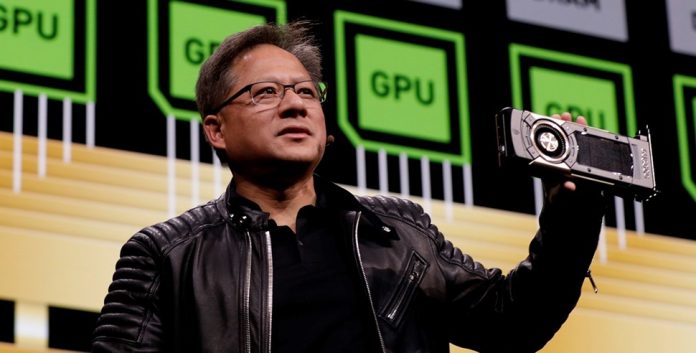
Nvidia CEO Jensen Huang is expected to travel to China in the coming days, ahead of the mid-February Lunar New Year, according to people familiar with the matter who spoke to CNBC.

Huang’s visit comes as Nvidia continues to grapple with tightening U.S. restrictions that have sharply narrowed the range of advanced artificial intelligence chips it can legally sell into China. Before those controls were imposed, China accounted for at least 20% of Nvidia’s data center revenue, making it one of the company’s most important overseas markets.

One of the sources said Huang is expected to attend an Nvidia company event in Beijing on Monday, part of what has become a regular Lunar New Year visit schedule for the chief executive. Huang, who was born in Taiwan and has longstanding ties to the region, has traveled to mainland China multiple times over the past year, including at least three visits in 2025 alone.

Beyond ceremonial appearances, the trip carries strategic weight. Another person with direct knowledge of the plans said Huang is also expected to meet with potential Chinese customers and partners to discuss ongoing challenges in supplying Nvidia chips that comply with U.S. export rules. These discussions are likely to focus on logistics, availability, and the practical limits of demand for downgraded products designed specifically for the Chinese market.

While Nvidia has spent the past two years redesigning processors to comply with successive rounds of U.S. export controls, the company is discovering that formal approval does not necessarily translate into commercial certainty. Even when chips meet U.S. rules and clear licensing hurdles, broader security anxieties on both sides of the Pacific are increasingly shaping what can actually be sold, how it can be used, and who is willing to buy.

At the core of the impasse is Washington’s belief that advanced computing power has become inseparable from national security. U.S. officials view high-end AI chips as “force multipliers” that can accelerate military modernization, surveillance capabilities, cyber operations, and the development of autonomous weapons. That assessment hardened after China’s rapid advances in AI model training, drone swarms, and military-civil fusion programs, where commercial technologies are routinely adapted for defense use.

As a result, U.S. export controls on Nvidia are no longer narrowly targeted at the most powerful chips. They are designed to restrict aggregate computing capability, interconnect speeds, and scalability, making it harder for Chinese firms to cluster large numbers of compliant chips into systems capable of training frontier AI models. Each new rule has forced Nvidia to produce China-specific variants that are progressively less capable and, in many cases, less attractive to customers.

Beijing, for its part, sees the restrictions as a deliberate attempt to slow China’s technological rise and preserve U.S. dominance in AI. Chinese policymakers argue that Washington is weaponizing supply chains under the banner of security, even as U.S. companies continue to profit from global markets. This tension has fostered a climate of caution inside China, where regulators, state-linked firms, and research institutions are increasingly wary of over-reliance on U.S. suppliers, even when purchases are technically legal.

That dynamic helps explain why reports have surfaced suggesting that Nvidia’s H200 chips may be approved only for limited research use. From Beijing’s perspective, allowing broad deployment of U.S. AI hardware in commercial data centers risks future disruptions if relations deteriorate further. From Washington’s standpoint, even research use can raise concerns if it contributes to long-term capability building in sensitive sectors.

The situation leaves Nvidia navigating a narrow and shifting channel. On paper, the company can sell certain chips in China. In practice, those chips face layered scrutiny, informal guidance, and uncertainty over acceptable use cases. Chinese customers, especially large cloud providers and state-linked enterprises, must weigh whether investing in Nvidia hardware today could expose them to abrupt policy reversals tomorrow.

Security concerns also extend beyond China’s borders. U.S. officials worry that chips sold for civilian purposes could be diverted, resold, or integrated into systems supporting sanctioned entities. Enforcement has become more aggressive, with Washington pressing allies to tighten oversight and signaling that compliance failures could carry penalties. That has increased the compliance burden on Nvidia and its partners, complicating logistics even for approved products.

For Nvidia, China’s shrinking accessibility carries real financial implications. Before the restrictions, the country generated at least one-fifth of its data center revenue and played a key role in smoothing demand cycles. While U.S. hyperscalers and Middle Eastern customers have helped offset lost sales, China remains a market where demand for AI compute is structurally strong and politically constrained.

Huang’s repeated visits to China reflect this reality. They are not about reopening the floodgates, but about maintaining trust, clarifying boundaries, and keeping Nvidia relevant as Chinese firms accelerate domestic chip development. Beijing has poured billions into building alternatives, from state-backed foundries to AI accelerators designed by companies like Huawei. While these chips still trail Nvidia in performance and software maturity, the strategic push is unmistakable.

The geopolitical standoff has effectively turned Nvidia into a case study of how technology companies are being pulled into great-power competition. Approvals, licenses, and redesigned products now operate within a broader context of strategic suspicion that neither side appears willing to ease. Even as Nvidia complies with every written rule, unwritten concerns about security, leverage, and long-term dependence continue to limit what is possible.

In that sense, Huang’s China trip highlights a sobering shift for the global chip industry. The constraints facing Nvidia are no longer primarily technical or commercial. They are political, strategic, and enduring, shaped by a rivalry in which advanced semiconductors are viewed not just as products, but as instruments of power.

Why Modern Men Are Rethinking Dating

0

For many men, dating no longer feels like an adventure. It feels like a process.

Profiles are optimized. Conversations are filtered. Expectations are negotiated before chemistry even has a chance to appear. What once unfolded organically now often resembles a performance—measured, compared, and quietly exhausting.

It’s no surprise, then, that a growing number of men are stepping back and asking a different question: Is there a better way to experience connection?
For some, the answer has taken shape in what is commonly called the Girlfriend Experience—not as an indulgence, but as a considered alternative to modern dating culture.

To understand why, we need to look honestly at how dating has changed—and how men have changed with it.

When Dating Became a Marketplace

Dating apps promised convenience and access. What they delivered, in many cases, was choice overload.

Endless swiping encourages comparison rather than curiosity. First impressions are compressed into seconds. Conversations compete for attention in crowded inboxes. Even when matches occur, they often carry an unspoken sense of replaceability.

For men who value depth, this environment can feel strangely hollow. Not because opportunity is lacking—but because presence is.

The Girlfriend Experience stands in quiet contrast to this dynamic. It removes the marketplace element entirely. There is no audition, no competition, no ambiguity about intent. What remains is space—space for interaction to breathe.

Emotional Clarity in an Age of Ambiguity

One of the least discussed aspects of modern dating is emotional uncertainty.

Mixed signals, shifting expectations, and unspoken assumptions have become normal. Men are often expected to lead confidently while simultaneously navigating unclear emotional terrain. The result is tension rather than ease.

What draws many men toward the Girlfriend Experience is not control, but clarity.

When intentions are defined upfront, something unexpected happens: the emotional atmosphere softens. Conversation becomes lighter. Attention becomes more sincere. There is no need to guess where one stands.

In a world full of half-signals, clarity can feel remarkably intimate.

The Quiet Fatigue of Constant Performance

Modern masculinity often demands competence in every arena: career, social life, emotional intelligence, ambition, restraint. Dating adds yet another stage where men are expected to perform—confident but sensitive, decisive but flexible, successful but effortless.

Over time, this performance takes a toll.

Many men who explore the Girlfriend Experience are not seeking novelty. They are seeking relief—from having to impress, to prove, to posture.

What they find instead is a dynamic that feels surprisingly old-fashioned: mutual presence, natural conversation, and a sense of being received rather than evaluated.

Why Success Doesn’t Guarantee Connection

There is a common misconception that men who “have it all” lack nothing. In reality, success often narrows rather than expands emotional space.

High-achieving men tend to live structured lives. Time is measured. Energy is allocated carefully. Social interactions are often transactional by necessity.

Within this context, spontaneous emotional connection becomes rare—not because it isn’t desired, but because it doesn’t easily fit into optimized schedules and guarded environments.

The Girlfriend Experience appeals because it offers something that success alone cannot buy: unrushed attention. Moments that are not optimized for outcome, but allowed to exist for their own sake.

Beyond Fantasy: The Appeal of Emotional Realism

Despite assumptions, the Girlfriend Experience is not primarily about fantasy. Its appeal lies in emotional realism.

Natural conversation. Shared moments. Comfortable silences. A sense of ease that mirrors the best parts of a genuine relationship—without the pressures that often accompany early dating.

In film and literature, audiences are drawn to stories where intimacy unfolds quietly, without spectacle. GFE follows a similar logic. It values tone over intensity, connection over excess.

For many men, this feels less like escapism and more like remembering what closeness used to feel like.

A Cultural Shift Toward Intentional Connection

We curate our lives more than ever: our work, our media, our social circles. Dating, inevitably, has followed the same path.

The rise of experiences like GFE reflects a broader cultural movement toward intentional connection. Rather than leaving intimacy entirely to chance—or to algorithms—some men are choosing environments where emotional quality is prioritized.

This is not a rejection of traditional relationships. It is a response to a reality in which meaningful connection has become harder to access organically.

Choosing GFE Is Not Opting Out — It’s Opting In

Perhaps the most important distinction is this: men who choose the Girlfriend Experience are not opting out of connection. They are opting into a form of it that feels aligned with their values, their time, and their emotional needs.

In an era where dating often feels transactional, GFE offers something quietly radical: presence without pressure, intimacy without ambiguity, and connection without performance.

And that, more than anything, explains why modern men are rethinking dating—and choosing the Girlfriend Experience.