DD
MM
YYYY

PAGES

DD
MM
YYYY

spot_img

PAGES

Home Blog Page 3701

The World is $235 Trillions in Debt

0
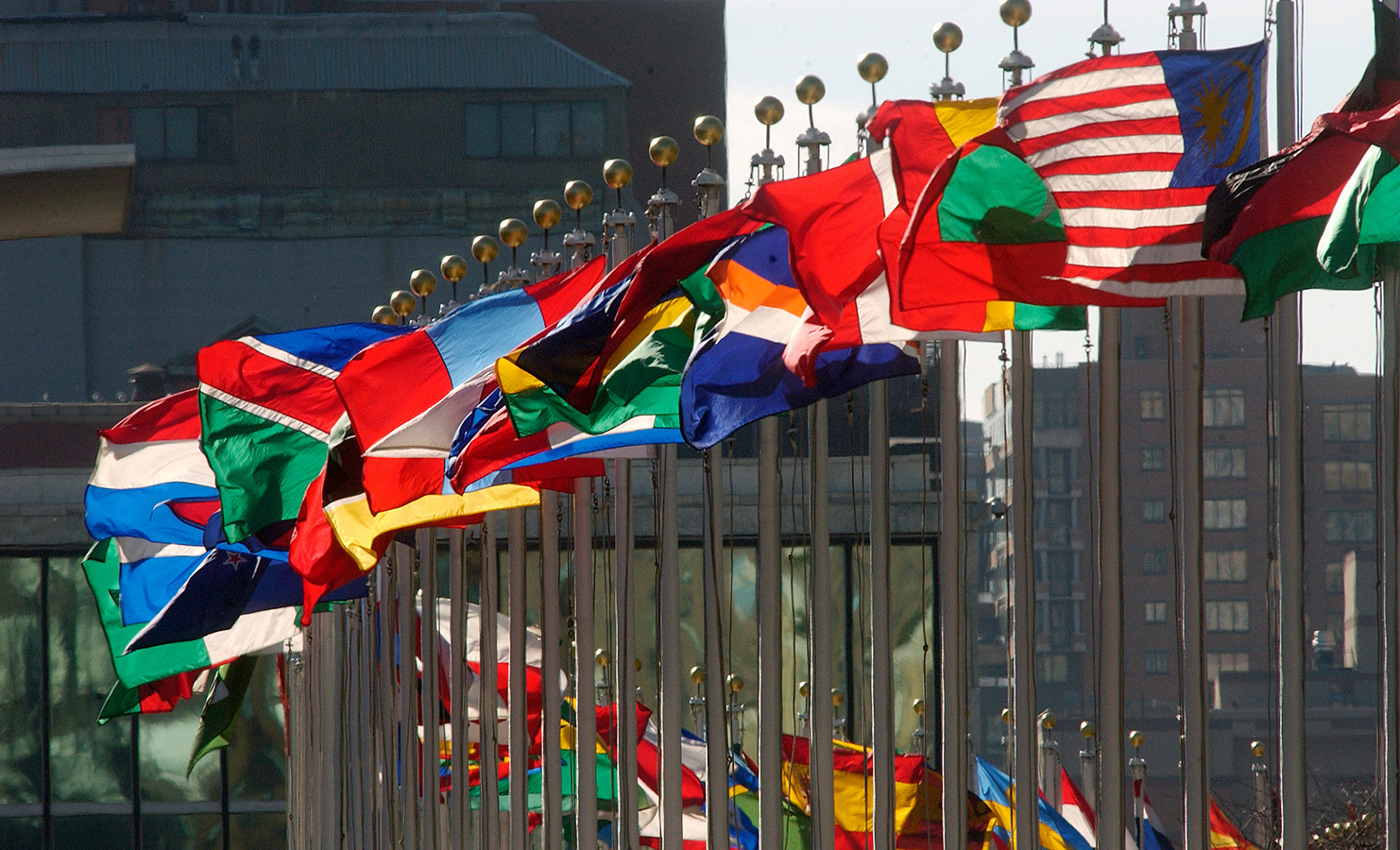
Flags of member nations flying at United Nations Headquarters.

According to a recent report by the Institute of International Finance, the world’s total debt reached a staggering $235 trillion in the first quarter of 2023, up by $10 trillion from the previous year. This means that the global debt-to-GDP ratio has risen to 322%, the highest level on record.

The main drivers of the debt surge are the unprecedented fiscal and monetary stimulus measures that governments and central banks have implemented to combat the economic fallout of the COVID-19 pandemic. While these policies have helped to cushion the impact of the crisis and support the recovery, they have also increased the borrowing needs and liabilities of both public and private sectors.

What are the risks and challenges of such a high level of debt? The most obvious one is the debt sustainability problem, especially for countries that have limited fiscal space and face high borrowing costs. If interest rates rise or growth slows down, these countries may struggle to service their debt obligations and face the risk of default or restructuring. This could trigger a domino effect across the global financial system, as creditors and investors lose confidence and demand higher risk premiums.

Another challenge is the potential crowding out effect, where high public debt reduces the availability of funds for private investment and consumption, hampering long-term growth and innovation. Moreover, high debt levels may limit the policy space for governments and central banks to respond to future shocks, such as natural disasters, geopolitical conflicts or new waves of infections.

The high debt levels pose significant risks for the global economy, especially as some countries face difficulties in servicing their obligations. The IIF warns that a wave of sovereign defaults could trigger a financial crisis that would spill over to other sectors and regions. Moreover, the high debt burden could limit the ability of governments to implement further stimulus measures or invest in long-term growth and development.

The IIF urges policymakers to adopt a coordinated and comprehensive approach to address the debt challenge, which includes enhancing debt transparency, strengthening debt management, and promoting debt sustainability. The IIF also calls for more international cooperation and support for low-income and emerging market countries, which are particularly vulnerable to debt distress.

The global debt situation is a serious concern that requires urgent attention and action. The world cannot afford to repeat the mistakes of the past and let the debt spiral out of control. The future of the global economy depends on how well we manage our debts today.

What can we do to address the global debt problem? There is no one-size-fits-all solution, as different countries face different circumstances and constraints. However, some general principles and recommendations can be outlined:

First, countries should pursue a balanced and credible fiscal consolidation strategy, where they reduce their deficits and stabilize their debt ratios over time, while avoiding excessive austerity that could harm growth and social welfare. This may require enhancing revenue mobilization, improving public spending efficiency and prioritizing productive and inclusive investments.

Second, countries should strengthen their debt management capacity and transparency, where they monitor and report their debt levels and risks, diversify their sources and terms of financing, and adopt sound legal and institutional frameworks for debt resolution.

Third, countries should foster international cooperation and coordination, where they support multilateral initiatives and institutions that provide debt relief, financing and technical assistance to vulnerable countries, as well as promote global financial stability and governance.

Fourth, countries should implement structural reforms that boost their potential growth and resilience, such as improving their business environment, human capital, infrastructure, innovation and environmental sustainability.

The global debt crisis is one of the most pressing challenges that we face in the post-pandemic world. It requires collective action and responsibility from all stakeholders: governments, central banks, private sector, civil society and international organizations. Only by working together can we overcome this challenge and build a more prosperous and sustainable future for all.


Dollar Supply soar after Central Bank of Nigeria (CBN) halted forex Restriction on 43 Items in Nigeria

0

The Central Bank of Nigeria (CBN) has lifted the ban on foreign exchange transactions for 43 items that were previously restricted from accessing the official forex market. This decision, which was announced by the CBN Governor, Yemi Cardoso, on Tuesday, October 17, 2023, is expected to boost the supply and availability of dollars in the country and ease the pressure on the naira.

The CBN had imposed the forex restriction on 41 items in June 2015, and later added two more items in 2016, as part of its measures to conserve the dwindling foreign reserves and support local production of those items. Some of the affected items include rice, cement, poultry products, toothpicks, cosmetics, plastic and rubber products, among others.

The CBN’s decision to lift the ban on these items comes at a time when the country is facing a severe economic crisis, exacerbated by the COVID-19 pandemic and the decline in oil prices. The CBN said that the move was part of its efforts to ease the pressure on the foreign exchange market and improve liquidity. The CBN also said that it would continue to monitor the situation and intervene as necessary to maintain stability and support growth.

However, the policy faced criticism from various stakeholders, who claimed that it was hurting the economy and creating opportunities for corruption and smuggling. They also pointed out that the local production capacity was not sufficient to meet the demand for these items, leading to shortages and high prices. Some of the affected importers resorted to sourcing foreign exchange from the parallel market at exorbitant rates, while others closed down their businesses or laid off workers.

However, after more than six years of implementing the policy, the CBN has decided to reverse it, citing improved macroeconomic conditions and increased forex inflows as the reasons for the policy shift. CBN governor said that the policy had achieved its objectives of reducing import dependence, enhancing domestic production capacity, creating jobs and boosting non-oil exports.

He also said that the CBN had recorded significant improvement in its foreign reserves, which rose from $29.1 billion in June 2015 to $42.3 billion as of October 2023. He attributed this to the introduction of the Investors and Exporters (I&E) window in 2017, which facilitated a more market-determined exchange rate and attracted more foreign portfolio investments into the country.

According to CBN governor, the removal of the forex restriction on the 43 items will not only increase the supply of dollars in the market, but also reduce the cost of production and ease inflationary pressures. He said that the CBN would continue to monitor the forex market and intervene as necessary to maintain stability and liquidity.

The reaction to the CBN’s announcement has been mixed, with some applauding it as a welcome development that would boost trade and investment, while others expressing skepticism about its impact and implementation. Some analysts have warned that the lifting of the ban could lead to a surge in imports and worsen the country’s trade deficit and external debt.

They have also questioned whether the CBN has enough foreign reserves to meet the increased demand for foreign exchange. Others have argued that the policy reversal is a sign of policy inconsistency and uncertainty, which could undermine investor confidence and economic recovery.

He also assured Nigerians that the CBN would sustain its support for the real sector and other strategic sectors of the economy through its various intervention funds and schemes. He urged Nigerians to take advantage of these opportunities and contribute to the economic growth and development of the country.

Bank of America Suffered Unrealized Loss of $131.6 Billion

0

In a shocking announcement, Bank of America revealed that it suffered a massive unrealized loss of $131.6 billion on its securities portfolio in the third quarter. This is the largest quarterly loss ever reported by a U.S. bank and represents a significant deterioration of its financial position.

The loss was mainly driven by a sharp decline in the value of its holdings of U.S. Treasury bonds, corporate bonds, mortgage-backed securities and other fixed-income assets. The bank attributed the loss to the unprecedented rise in interest rates and inflation expectations, which negatively affected the prices of these securities.

The bank said that the loss was unrealized, meaning that it did not affect its cash flow or earnings, and that it could reverse in the future if market conditions improve. However, the loss also reduced the bank’s regulatory capital ratios, which measure its ability to absorb losses and comply with regulatory requirements. The bank said that it remained well capitalized and above the minimum thresholds, but that it would take actions to strengthen its capital position.

The announcement sent shockwaves across the financial markets, as investors feared that other banks could face similar losses and that the banking system could face a liquidity crisis. Bank of America’s stock price plunged by more than 10% on the news, dragging down other financial stocks and the broader market indices. The yield on the 10-year Treasury bond spiked to 3.5%, the highest level since 2019, reflecting the increased risk premium demanded by investors.

The loss also raised questions about the bank’s risk management practices and its exposure to interest rate risk. Some analysts criticized the bank for holding such a large portfolio of securities with long maturities and low yields, which made it vulnerable to rising rates. They also questioned the bank’s hedging strategies and its use of derivatives to mitigate its risk.

The loss had a major impact on Bank of America’s balance sheet and capital adequacy. The loss reduced the bank’s book value by 15%, erasing the gains it had made in the previous quarters. The loss also lowered the bank’s regulatory capital ratios, which measure its ability to absorb losses and comply with regulatory requirements. The bank said that it remained well capitalized and above the minimum thresholds, but that it would take actions to strengthen its capital position.

Bank of America’s CEO Brian Moynihan defended the bank’s strategy and said that it was well prepared for different scenarios. He said that the bank had a diversified portfolio of securities that provided stable income and liquidity, and that it had taken steps to reduce its duration and increase its yield. He also said that the bank had adequate hedges and derivatives to offset its interest rate risk, and that it had stress-tested its portfolio under various assumptions.

Moynihan said that he was confident that the bank would overcome this challenge and continue to deliver value to its shareholders, customers and employees. He said that the bank had a strong core business with solid growth prospects, and that it was investing in digital transformation, innovation and social responsibility. He said that the bank was committed to supporting the economic recovery and addressing the climate change challenge.

The Wale Edun’s Speech And The Reorganization of Nigeria’s Economy

0

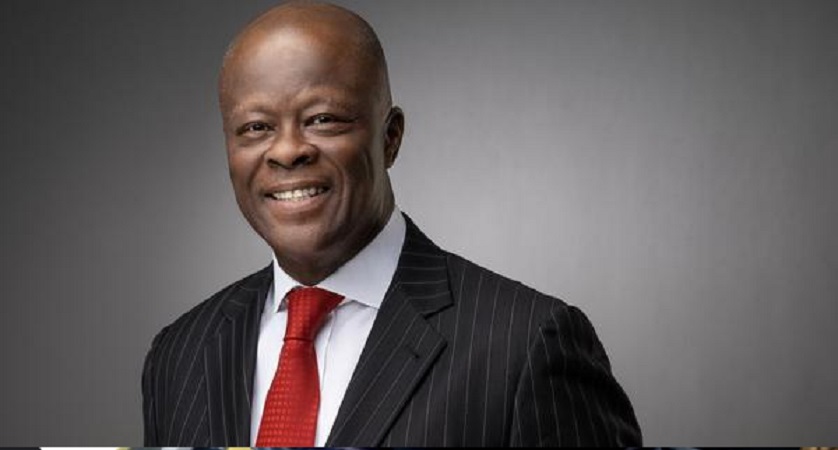
Wale Edun, Nigeria’s Finance Minister, is really very promising. His speech at a recent World Bank/IMF event showed a man who just wants to get things done, no politics. If the government could isolate him from the vagaries and miry clay of politics, something great could happen from him.

Of course, this is not to say that 2024 will not be challenging, but if they give him room to work, things will improve. At N26 trillion for the 2024 fiscal year, the budget is VERY low, since about 50% will likely go into debts servicing. By the time you remove emoluments for workers and defense allocations, Nigeria may not have any funds for any serious capital project.

Interestingly, that may be for a purpose, and by that I mean massive reorganization of the economy where the private sector takes more positions. He dropped a hint while in Morocco for the World Bank/IMF event: “We emphasized access to investment capital,  particularly from the private sector and at a large scale, as well as the need to support private sector development”.

Nations rarely kaput; we’re hoping that Nigeria’s economy gets back to life. 

Comment on Feed

My ResponseWe went to the world bank/ IMF meeting and said that the institutions don’t have funds to lend to us .judging from what I have seen and heard so far” – people are frustrated with me because I am apolitical and non-partisan. I can attack today, and praise today, depending on how I evaluate policies. At my age, I should be very comfortable that I can speak my feelings because I do not need anything from any government or politician.

Your challenge is that he needs to be against the government. While I do not defend Tinubu’s government, your statement that the World Bank “don’t have funds to lend to us “ is a lie. Two days ago, the World Bank dropped a $1.5b loan which the National Assembly accepted. Google it.

As always, I do not need anything from Nigeria. But I desire that people have the opportunities it gave me.

Comment 2: The proposed N26 trillion you termed small will be realised from where? We are not even going to generate the numbers, at least from what has been stated so far. The exchange rate set at N700/$ was based on what exactly, market or government sentiment? The more NNPCL pays for the differentials in petrol (unofficial) subsidy, the more they are not likely to remit anything substantial as proceeds from crude oil sales.

Our system is broken and unsustainable, but we have mastered how to live in denial, even when our collapse is self-evident.

Dollar is exchanging for N1100 in the ‘real’ market, but we had so much to gift brand new cars to our utterly irresponsible and insensitive legislative arm. After our usual wanton misadventures and malfeasance, we start hoping that things will somewhat be better for Nigerians. This level of buffoonery is both amazing and thrilling. It’s unreal.

Whatever we breed and groom here as humans need to be reexamined once again, because we are too strange to qualify as proper humans.

Wale Edun won’t perform any magic, because the very ground he’s standing on is still running, and the sky is warming up to shift as well.

Comment 3: Honestly, I see a country where the redesign and refocus of the economy is looming. This man seem to be one of those that can perform the magic wand if given sometime. At this point, having a private sector led economy is a positive indicator of good things to come. The other day, he has lifted restrictions on 43 items for FX sales to ensure the floating rate FX regime works. This is also a step in the right direction. Although times are hard now, but this seem to be a global phenomenon. I stand by good policies irrespective of where it is coming from.

Comment 4: The motto of the Federal University of Agriculture in Abeokuta is “knowledge for development” and that of Joseph Sarwuan Tarka University (formerly the Makurdi University of Agriculture) is “innovation and service”.

His Excellency can use his discretionary funds to recruit 120 of the world’s best university professors and researchers in the fields of agriculture, soil science and food to come and teach and research at these two universities, making them the best in the world within two decades while empowing local farmers across the country

This economic initiative has the potential to add $3.6 trillion to the country’s GDP in the space of twenty years within an AfCFTA context and if only the best in the world are selected on the basis of merit from countries like the Netherlands and the United States.

This minister will never be forgotten.

(Netherlands has 1 million ha of arable land and export food worth $52 billion a year. Nigeria has 70 million ha of arable land and export food worth $1.2 billion a year. The best agriculture university in the world is in the Netherlands. Now $52 billion X 70…).

This policy can be applied to any country in SSA.

We’re Losing the World

1

The old construct was that digital technologies would make humans more connected and entwined, reducing tensions, since you are not likely to harm someone you know or have connected with, they reasoned.

But today, what we are noticing is that digital technologies are polarizing the world, as narratives get propelled with high-voltages of lies and deceptions, energized by armies of digital netizens at scale. Simply, alternative facts emerge and anything becomes a factor.

From Nigerian politics where anything goes these days to global geopolitics, it is a fact-less world. Yes, you can graduate from a secondary school before it was founded to what we’re seeing in Israel and Hamas, the denominator is this: we’re losing the world because there are few more morals left to build the foundations for the next generation.

Right now, in all humans – and ALL humans – allegiance wins over fairness, justice and morality. Simply, positions shift not because of facts and unalloyed fairness, but because of the players involved. People, the world LIES and we’re losing this world!

Comment on Feed

Comment 1: Ndubuisi Ekekwe. I agree completely!

The traditional notion was that digital innovations would enhance human relationships, connectivity and reduce conflicts.?

It’s clear that, as a global community, we are grappling with a truth crisis. To address this issue, we must strive to be discerning consumers of information, engage in open and honest dialogue, and collectively work towards building a more informed, ethical, and grounded world for the benefit of future generations.

Prof, truly, in your words, the world LIES and we’re losing this world!

My Response: Thanks for providing some suggestions. I was not even bold to offer any suggestions.

Comment 2: There’s something more fundamental to human progress, it is neither technology nor innovation, rather you can call it LIGHT OF VIRTUE. It is more fundamental than anything else. Once you allow the light of virtue to dim, humans are no longer humans, but worse than lower animals.

The moral world is bigger than both the intellectual and physical worlds, and it’s the former that makes everything tick. How exactly do you talk about peace or dignity of human person in the absence of morality? The joke is unbelievable. We regularly see human foolishness and stupidity in full display, once we deviate from the moral codes that form the essence of our very existence.

Nobody cares about the truth, rather narratives and prejudices are elevated to the level of sacredness. It’s obvious that humans are grossly overrated, we lost the plot long time ago.

Within the last 24 hours, a hospital was bombed with over 500 humans killed. What has been the talking points? Nobody gives a damn about the truth, you simply agree or align with the talking points of the camp you support or have a soft spot for. This is not how to live, this cannot be the way to search for truth and subsequently work for peace.

Truth is a higher premium, so out of reach.

Comment 3: The problem is not technologies but the humans who explore the potentials and abilities of these technologies for their various gains.

While it is hard to monitor or manage the activities of humans, we could set up some regulations, but which in my opinion still has the tendency to suffer under humans. So, what then do we do?

Since what has helped us get here so far till this moment is innovation, then we might need to keep innovating solutions. Interestingly, we have the Web3 and Blockchain technologies already helping us in this regard. We just need to embrace them as we continue to innovate.

Let’s not blame technologies.

PS: Amidst all of these continuous innovative technologies, solutions and all, what the World needs is more than that but sadly…