DD
MM
YYYY

PAGES

DD
MM
YYYY

spot_img

PAGES

Home Blog Page 3702

US SEC ordered to Re-review Grayscale’s bid for a Spot Bitcoin ETF, Solana’s SCORCHING October

0

In a surprising turn of events, the U.S. Securities and Exchange Commission (SEC) has been ordered by a federal judge to re-review Grayscale’s bid for a spot bitcoin exchange-traded fund (ETF). This is a major development for the crypto industry, as it could pave the way for the first ever approval of a bitcoin ETF in the U.S.

Grayscale, the largest digital asset manager in the world, filed its application for a spot bitcoin ETF in April 2023, hoping to convert its existing Grayscale Bitcoin Trust (GBTC) into an ETF. GBTC is currently the largest publicly traded bitcoin investment vehicle, with over $40 billion in assets under management. However, GBTC trades at a significant premium or discount to the underlying bitcoin price, which creates inefficiencies and risks for investors.

A spot bitcoin ETF, on the other hand, would track the actual price of bitcoin and allow investors to buy and sell shares of the fund on a regulated exchange, just like any other stock or ETF. This would provide more liquidity, transparency and accessibility to the bitcoin market, as well as lower fees and expenses for investors.

However, the SEC has been reluctant to approve any bitcoin ETF applications, citing concerns over market manipulation, fraud and investor protection. The SEC has rejected or delayed dozens of bitcoin ETF proposals over the years, including Grayscale’s. In August 2023, the SEC issued a preliminary denial of Grayscale’s bid, stating that it did not meet the requirements of the Securities Exchange Act of 1934.

Grayscale challenged the SEC’s decision in court, arguing that the SEC had applied an arbitrary and inconsistent standard to its application, and that it had failed to consider the benefits of a spot bitcoin ETF for investors and the crypto market. Grayscale also claimed that the SEC had violated its due process rights by not providing adequate notice or opportunity to respond to its concerns.

On October 23, 2023, U.S. District Judge Richard J. Leon ruled in favor of Grayscale, finding that the SEC had acted “arbitrarily and capriciously” in denying its application. Judge Leon ordered the SEC to re-review Grayscale’s bid within 60 days, and to provide a detailed explanation of its reasoning if it decides to reject it again.

Judge Leon’s ruling is a significant victory for Grayscale and the crypto industry, as it could set a precedent for other bitcoin ETF applicants and force the SEC to reconsider its stance on crypto regulation. It also shows that the courts are willing to intervene and hold the SEC accountable for its actions, which could encourage more innovation and competition in the crypto space.

While there is no guarantee that the SEC will approve Grayscale’s spot bitcoin ETF after re-reviewing it, the fact that it has been given another chance is a positive sign for crypto enthusiasts and investors. A spot bitcoin ETF could be a game-changer for the adoption and growth of bitcoin and other cryptocurrencies, as it would open up new avenues for institutional and retail participation, as well as enhance the legitimacy and credibility of the crypto sector.

Solana’s SCORCHING October

Solana, the blockchain platform that claims to offer fast, scalable and secure solutions for decentralized applications, has had a scorching October. The native token of the network, SOL, has surged more than 50% in the past month, reaching an all-time high on October 18.

The impressive rally has catapulted Solana to the fifth spot among the largest cryptocurrencies by market capitalization, surpassing the likes of Cardano, XRP and Polkadot.

What are the factors behind Solana’s stellar performance? Analysts point to several catalysts, such as the growing adoption of the network by developers and users, the launch of new projects and products on Solana, the expansion of the ecosystem’s infrastructure and partnerships, and the increasing demand for non-fungible tokens (NFTs) and decentralized finance (DeFi) applications.

One of the main drivers of Solana’s growth is its ability to handle a large volume of transactions at a low cost and high speed. According to Solana’s website, the network can process more than 50,000 transactions per second (TPS) with an average fee of $0.00025 and a confirmation time of less than a second. This makes Solana an attractive platform for building and running applications that require high scalability and performance, such as gaming, social media, streaming, e-commerce and more.

Another factor that has boosted Solana’s popularity is the launch of several innovative and successful projects on the network. For instance, Audius, a decentralized music streaming service that has over six million monthly active users and hosts artists like Skrillex, Deadmau5 and Diplo, migrated to Solana in October 2020. Since then, Audius has seen its user base and token value soar, as well as its integration with popular platforms like TikTok and Twitter.

Similarly, Star Atlas, a metaverse game that combines space exploration, strategy and NFTs, launched its public alpha version on Solana in September 2021. The game has attracted thousands of players and collectors who can buy and sell digital assets such as spaceships, planets and characters on Solana’s marketplace. Star Atlas has also partnered with celebrities like Snoop Dogg, Paris Hilton and Post Malone to create exclusive NFTs and events.

Moreover, Solana has witnessed a surge in demand for its NFTs and DeFi applications in October. According to data from DappRadar, Solana’s NFT sales volume reached $1.2 billion in October, up from $21 million in September. Some of the most popular NFT collections on Solana include Degenerate Ape Academy, Aurory, Solana Monkey Business and Thugbirds.

Additionally, Solana’s DeFi sector has grown significantly in terms of total value locked (TVL), users and transactions. According to DeFi Llama, Solana’s DeFi TVL reached $13.7 billion on October 17, up from $2.8 billion on September 1. Some of the leading DeFi protocols on Solana include Serum, Raydium, Saber and Mango Markets.

Finally, Solana has benefited from the expansion of its infrastructure and partnerships in October. For instance, Solana announced a $20 million fund to support projects in India, one of the fastest-growing crypto markets in the world. The fund aims to provide grants, technical support and mentorship to startups that build on Solana.

Furthermore, Solana partnered with several prominent platforms and organizations in the crypto space, such as Coinbase Custody, BitGo, Fireblocks, CoinShares and Pyth Network.

Solana has had a scorching October thanks to its fast, scalable and secure network that enables a variety of applications across different sectors. The network has also attracted a lot of attention from developers, users, investors and partners who see value in its technology and vision. As Solana continues to innovate and grow its ecosystem, it may pose a serious challenge to other blockchain platforms that aim to dominate the crypto space.
Shoot That Professional Shot Today

0

It’s another week again, send that proposal, send that expression of interest letter, shoot that professional shot, and make a demand for that job you wanted; the worst that could happen is you getting a “no” or rejection from the prospect. If you do actually get a “no” or rejection from the prospect, do not relent, rather that no/ should be a motivation for you to send more proposals. 

Sometimes when you listen to the success stories of some folks who landed a dream job or a dream contract you will be amazed at how many times they got rejected by their prospects but they kept pushing and persisted till they landed it. 

Using myself as an example, you may not believe that some of the mouth-watering gigs and jobs I have gotten in the course of my career came simply because I summoned the confidence and asked for it. In fact, one of my saving grace is the confidence I exude. I can approach anybody for a job and demand that I be your lawyer immediately. I see that you can afford to pay me, the worst that could happen is you saying no or telling me that you already have a lawyer and that’s perfectly fine. I have gotten so many “Nos” and so many rejections too and I have also gotten so many yeses that fetched me millions of naira just because I asked for it. 

I approached my landlord earlier this year and I told him that it would only be fair since I’m paying him millions of naira as rent annually for me to be his personal/business attorney. My Landlord told me that although he has so many lawyers including senior advocates that he uses for transactions but for the fact that he has seen I am an ambitious young man and for the fact that he has seen my track record he will sign with me. Well, I have recovered far more than my rent money from my landlord through the legal fees he has paid me during the course of his taking me on as his lawyer and my landlord being a wealthy and influential man who sits on the board of a lot of reputable organizations have as well opened other ways for me through referrals. This only happened because I summoned the courage and asked him for it. 

On a good day, I’d take a count of how many proposals I have so far sent since this year and also take stock of the number of “Nos” and the rejections I have so far gotten, I promise you that the number of No/rejection is high but that didn’t and won’t deter me. In fact, I use some of the rejections to learn. There are some prospects that will tell you no and give you their reason for the no, those reasons do send me back to the drawing board to see where and what I can improve and work on, the result is always better. 

Do not be dismayed, send that proposal today, make a demand for that job today, and boldly express your interest in that job today, you may get the offer but you never can tell unless you ask; the worst that could happen is you get a rejection letter but I promise you that it is perfectly okay too.

UNIPORT 2023 Innovation Week: Segun Aina Champions Sustainable Future for Nigerian Universities

0

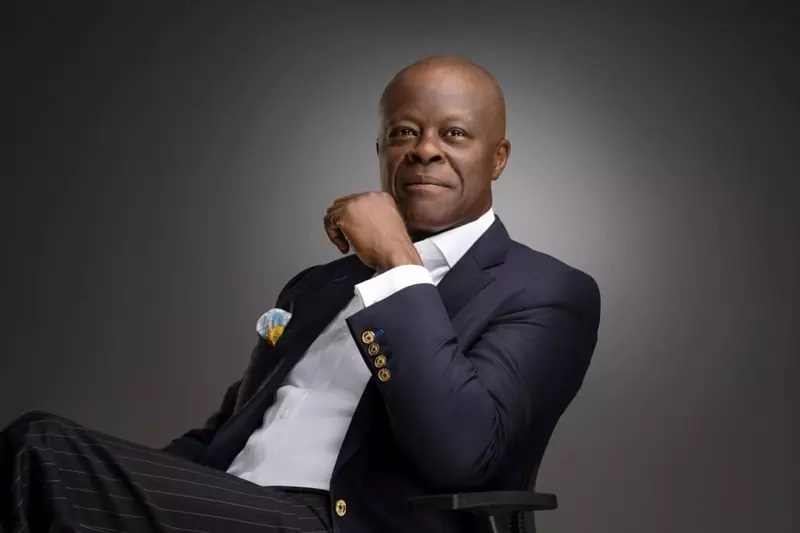
The Chairman and Chief Visioner OF Opolo Global, Dr. Segun Aina, OFR, has challenged Nigerian universities to change the narrative of innovation and entrepreneurship by embracing global practices to make the universities sustainable and impact driven. Aina said this at the 2023 Annual Innovation Week of the University of Port Harcourt.

In the presentation, titled Building a Sustainable Future for Tertiary Institutions through Innovation and Entrepreneurship, Aina underscored the critical role of universities in driving innovation and economic growth. He outlined a comprehensive framework that emphasized several key principles for advancing sustainability in the higher education sector. emphasized the paramount importance of prioritizing research within tertiary institutions. He highlighted that research forms the cornerstone of innovation and entrepreneurship, offering a pathway to create commercially viable products and services. He noted that innovation and entrepreneurship could help the universities record significant result in quality education, decent work and economic well-being, industry, innovation and infrastructure as well as partnerships citing examples universities in the global North that are thriving based on their investment portfolios.

Aina stressed the need for universities to retain and support star faculty researchers identifying them as the driving force behind groundbreaking innovations who can play a pivotal role in the success of technology transfer operations. Dr. Aina further noted that efficient technology transfer operations are instrumental in transforming research outcomes into market-ready products. He said this entails close collaboration with the industry to bridge the gap between the academia and the business world. In concluding this thought, Aina rooted for universities to add a 4th leg of innovation and enterprise to the existing functions of teaching, research and community service.

Aina further challenged universities to embrace the cultivation of a culture of innovation and entrepreneurship within the academic environment highlighting it as a key element of a sustainable future for tertiary institutions. He enjoined the universities to encourage students and faculty members to think creatively and take entrepreneurial risks that can lead to groundbreaking discoveries. He said universities should be a bustling ground for academic and research entrepreneurs.

Aina equally stressed the significance of forging strong connections between universities, industry, and society. According to him, such partnerships can yield mutually beneficial results, including practical applications for research and opportunities for students to gain real-world experience. In closing the framework, Aina emphasized that Nigerian universities should systematically monitor and transparently disclose the impact of their innovation and entrepreneurship initiatives. These outcomes should be showcased to highlight the institution’s contributions to society and the economy.

Dr. Aina, however identified challenges faced by tertiary institutions in Nigeria. These challenges included inadequate funding, inadequate infrastructure and resources, brain drain and incessant strike actions, low remuneration as well as succession challenge.

In response to these challenges, Dr. Aina put forward a series of recommendations. He suggested that universities recalibrate their strategies to ensure sustainability by considering public universities as business. He suggested putting in place that system that accommodate experienced professionals as Professor of Practice. Furthermore, he called for the remodeling of research grant as investment instead of gift. Equally, he challenged the universities to remodel their partnerships with industry to yield more result. He then advocated for a change of promotion criteria with heavy emphasis on IP and venture creation.

In closing the presentation, Aina called upon governments, policymakers, and high-net-worth individuals to actively mobilize and share knowledge, expertise, technology, and financial resources. He said such collaborative efforts are essential to support the achievement of sustainable development goals and create an environment where innovation and entrepreneurship can thrive.

The Customary Practice of Returning Dowry Is Unlawful

1
Igbo traditional marriage

In most African customs and traditions, divorce is conducted and validated by the return of the bride price by the woman’s family to the man. I know for a fact that in my custom, if a woman is no longer interested in marrying the man, the family of the woman will gather the bride price or whatever that has been gifted or that stands as a bride price and return it to the man, this will traditionally and customarily mean that divorce has been conducted and the spouses are no longer married. 

This custom of divorce by returning a bride price has been upheld by courts as a valid means of divorce as has been practiced customarily in most Nigerian customs and even extensively in Africa.

Some men who conducted their marriage customarily even now insist that if their wives are leaving or no longer want to marry them again, the wife must return the bride price and every other gift he has ever gifted the woman during the course of the marriage back to him. This demand from the man will inadvertently tie down the woman who may not afford to return the dowry paid and every gift she has ever received in the marriage. 

Recently, an Upper Customary Court in Kafanchan judicial division sitting at Gwantu, Kaduna state has declared this custom of a man demanding the woman to return the bride price he paid on her back to him before the divorce can be customarily validated to be repugnant to Natural Justice, Equity and good conscience. The court held that the Mada marriage custom and every other Nigerian custom and tradition that requires a departing wife to refund her husband’s dowry and other incidental expenses for her marriage as a ground for granting her divorce is repugnant to natural justice, equity and good conscience.

The court held that those customs demanding women to return dowry paid on their head have reduced women to mere chattels that are up for trade and can be returned whenever the buyer no longer sees fit in the item and the buyer can demand a refund of his money. 

In this landmark Judgment delivered by His Worship, Emmanuel J. Samaila, in the case of Tina John v Adamu John, the court condemned the practice that reduces women married under customary law to the status of mere chattels acquired by men to be used and dumped at their pleasure and with effrontery as repugnant.

The court upheld the Petitioner’s position who had contended that the only ground upon which she will make such a refund is if the respondent can restore her body to its pre-marital state as he has used her body to produce children and in other ways, too for the past three decades their marriage have subsisted. 

Even in the far East African country of Uganda, the court had earlier adopted this reasoning in 2015 in the case of Mifumi (U) & 12 Ors v. Attorney General & Anor (2015) where the Supreme Court of Uganda held that the demand of refund of bride price after the breakdown of a customary marriage is unconstitutional, repugnant to natural justice equity and good conscience.

Therefore, by the implication of this recent judgment, a woman may no longer be expected to return the dowry or the bride price back to the man before their divorce can customarily be validated. 

Nigeria Approves $3.5bn Loan for Education and Power Amid Concerns Over Rising Debt

0

The Nigerian government has given the green light for a $3.45 billion loan that will be allocated to finance vital projects within the power sector and a resource mobilization and education initiative.

While the move is aimed at spurring development in the country, it has raised concerns about the growing national debt crisis.

The announcement was made by Wale Edun, the Minister of Finance and Coordinating Minister of the Economy, during a press briefing following a Federal Executive Council (FEC) meeting presided over by President Bola Tinubu at the Presidential Villa’s Council Chambers in Abuja on Monday.

Edun disclosed that the loans would have a lengthy tenure of around 40 years, with a moratorium period of approximately 10 years and notably low-interest rates. He stated, “In the cases of either loans, zero interest will apply, although some fees will be incurred.”

On the education front, Professor Tahir Mamman, the Minister of Education, revealed that this financial initiative aimed to bolster efforts to reduce the number of out-of-school children, particularly targeting girls aged 10 to 20 from 18 participating states. This move underscores the government’s commitment to promoting education and empowerment for teenage females.

Furthermore, Mamman noted that the Federal Executive Council (FEC) had reevaluated its policy direction and authorized the Public Procurement Council to carry out contract award functions in alignment with the requirements of the Public Procurement Act. This decision allows the FEC to concentrate on issues of national importance.

Betta Edu, the Minister of Humanitarian Affairs and Poverty Alleviation, informed reporters that the council had also approved the establishment of the Humanitarian and Poverty Alleviation Trust Fund. This fund will be overseen by a board of directors and aims to raise $5 billion annually from a range of sources.

Edu emphasized that the implementation of this initiative would be thoroughly planned, with the committee consisting of key ministers, including the finance minister.

One notable development is the ratification of the protocol on the protection of the rights of elderly people in Nigeria, signaling the government’s commitment to the welfare of the elderly.

Despite these ambitious projects, concerns have arisen regarding the increasing volume of loans being sought by the Tinubu administration.

Critics have drawn comparisons to the previous administration led by Muhammadu Buhari, which significantly increased Nigeria’s public debt to N87 trillion in eight years.

Earlier this month, the FEC granted approval for a $1.58 billion loan request. This request, as clarified by Edun, comprises two parts: $1.5 billion from the World Bank and $80 million from the African Development Bank (AfDB).

The Tinubu administration’s plan to accumulate a combined fiscal deficit of N30.6 trillion between 2024, 2025, and 2026, as outlined in the government’s medium-term expenditure framework (MTEF), has raised eyebrows. The 2024 budget proposal, in particular, is expected to have a fiscal deficit of N9.04 trillion, representing a fiscal deficit to GDP ratio of 3.83%, which exceeds the 3% threshold stipulated in the Fiscal Responsibility Act (FRA) 2007.

The situation paints a gloomy economic future for Nigeria due to the significant reduction in the nation’s oil output, which has greatly curtailed its revenue generation.