The Central Bank of Nigeria (CBN) has accused banks and black-market traders in the country of sabotaging the government effort in preventing the continuous fall of the Naira.
Due to this, the Apex bank is reportedly planning a new set of sanctions targeted at banks and black market traders in the country.
Reports reveal that the CBN intends to probe Deposit Money Banks for hoarding foreign exchange and engaging in round-tripping.
The statement reads,
“Government through the CBN, plans to probe bank hoarding and roundtripping with heavy sanctions awaiting defaulters. This is because the apex bank believed hoarders banks and black parallel operators are responsible for the artificial scarcity that is driving up forex rates. Government plans through the CBN, is to address the issues of speculation comprehensively and through heavy sanctions.”
The report claimed that some banks in the country are speculating, purchasing from the official window and selling for profit in parallel markets, which has led to the continuous fall of the naira against the dollar.
Also, BDC operators have accused Banks of hoarding dollars and selling at a higher rate to make huge profits. Another source in the CBN added that speculators are storing piles of dollars with plans to trade for massive profits in future deals.
As the naira continues to depreciate against the dollar, the CBN warning is not the first time it has issued such, after it repeatedly did so in March and August this year, threatening to sanction commercial banks engaging in illegal sales of foreign exchange.
This is coming on the heels of the crash of the naira to over N1,200/$1 at the parallel market, as forex scarcity worsens and allegations that the deposit money banks are diverting most of their forex to the unofficial foreign exchange market rather than selling to their customers.
Meanwhile, in order to mitigate the helpless fall of the naira, reports reveal that Nigeria is expected to receive an anticipated $10 billion of inflows in the coming weeks, providing much-needed relief to a liquidity squeeze that has been adversely affecting the naira.
This was affirmed by Nigeria’s finance Minister Wale Edun while speaking at the Nigerian Economic Summit in Abuja. This substantial inflow is expected to play a significant role in bolstering Nigeria’s economic stability and alleviating the pressures on the national currency.
Meanwhile, the alarming depreciation of the Naira has cast a shadow of uncertainty over the nation’s economic stability.
The repercussions of the currency depreciation are far-reaching, as it affects businesses and citizens grappling with rising prices of goods and services, as well as economic uncertainty.
A building in rubble, and an accompanying narrative of genocidal hopelessness.
This was the pictorial support of an article related to the current middle eastern conflict, and was provided by a well established and respected anchor of US Journalism for several hundreds of years.
However, since the publication of that article, several other articles have come out to counter it, claiming that the photo had been taken at a completely different location, and several days earlier.
When it comes to highly emotive issues, whether they be armed conflicts, pandemics perceived to have been mishandled, tales of historic oppression, or candidate bashing amidst electoral fever, an army of content appears ready to soak into anybody it perceives as a rhetoric sponge.
Now with the skills of Generative AI, everything has been turned upon its head.
It used to be the case, barely one century ago, 80% of anything printed, was accurate enough to be believed. A century earlier still, a well crafted hand written letter, with a wax seal on it, was, in of its very nature, believed to be true irrespective of origin.
In an age when an aristocrat only had a level of educational understanding that a secondary school leaver has today, those privileged enough to have a basic education, simply valued the repute that came with it, and avoided placing mistruths in communiques that might put it at risk.
Meanwhile, back to the present, and an Australian service veteran of the war in Afghanistan has been exonerated after a major network’s reporter portrayed a sources’ recorded statement incorrectly, placing the veteran in a ‘frame’ through some wild conjectures, and unsafe assumptions.
An award was made to Heston Russell of $390,000 and the network issued an apology.
There used to be a saying: ‘I wouldn’t believe it, until I see it with my own eyes’…
Well it seems now, trusting our senses has to be done in reverse order, and our eyes can be the biggest liars, or, to be more precise, they are the easiest sense to be cleverly manipulated.
One of the favourite means of spreading falsehoods, especially when they are emotively charged, is to port content, particularly visual content, from one platform to another, so chain of custody isn’t preserved, and end-viewer has no means of validating the source.
This crime is frequently committed by porting unverifiable content to LinkedIn from either Tik Tok or X.
I now block post authors that frequently do this. Very little of the content from those platforms is helpful to the aims of 9ja Cosmos anyway.
As I am writing this, new content is disrupting me, telling me that Vladimir Putin has suffered cardiac arrest, and is on some kind of life support, while a double is carrying out his official duties, including having a phone conversation with Brazilian president Luiz Inácio Lula da Silva and meeting Kazbek Kokov, head of the Kabardino-Balkarian Republic.
Some of this stuff, you just couldn’t make up. I will have to wait for corroborating evidence from independent sources.
The world of blockchain and Web 3 has been nowhere near immune from the phenomenon.
A spotlight has been shone on the world of web3 since the demise of Sam Bankman Fried who can’t even consistently tell the same lies to his own lawyers.
The information inferno from Fake News is real.
Cas Piancey of Protos reporting on the blatantly fraudulent reporting of Cointelegraph:
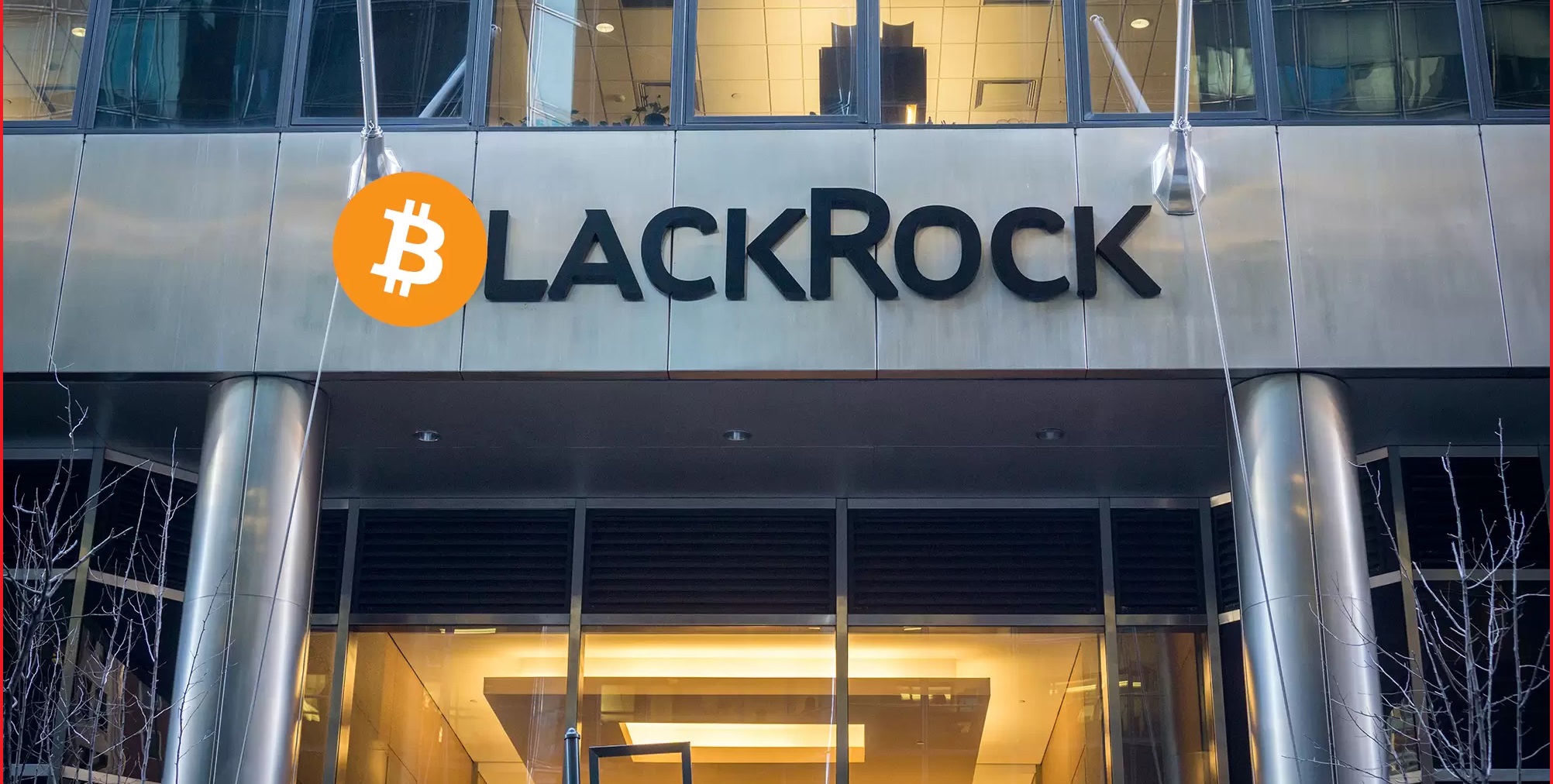
‘A couple of days ago crypto news outlet Cointelegraph put out a tweet that stated, “BREAKING: SEC APPROVES ISHARES BITCOIN SPOT ETF.” It followed this, 23 minutes later, with a slightly amended version that read, “BREAKING: SEC APPROVES ISHARES BITCOIN SPOT ETF, REPORTEDLY.”
What it failed to point out was that the “REPORTEDLY” part was reported by Cointelegraph.
The call was coming from inside the house.
Nine minutes after this, Cointelegraph reached out to BlackRock, confirmed that the Bitcoin ETF hadn’t been approved, and deleted the tweet.
One hour and one minute after the initial ETF message, Cointelegraph posted a tweet apologizing for the dissemination of inaccurate information and stated that an investigation was beginning.’
This isn’t the first rodeo on misleading content by Cointelegraph either.
Following the demise of the W3DA which 9ja Cosmos abandoned interest in last year, an article by Judith BannermanQuist claims it as an authority on Web 3 Domains and with 50+ members.
The reality is none of those represented are in the business of making Web 3 Top Level Domains available.
Web 3 top level domains have many use cases, of which, acting as a secondary domain generator is only one.
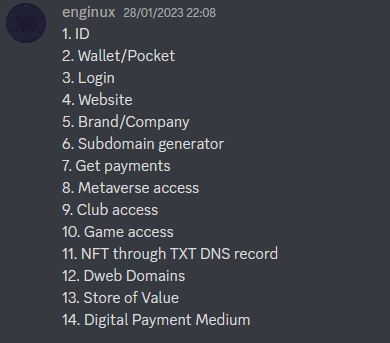
Top Web 3 Domain Guru ‘EngineUX’ who inhabits Discord and X, lists some of the many use cases of Web 3 top level domains.
It appears the list is merely one operator whose activities are solely confined to using a Web 3 TLD as a Secondary Domain Generator. The others mentioned appear to be service partners to the owners of these generated secondary domains.
There are no Web 3 Top Level Domain ecosystems in the group at all.
The largest Web 3 TLD ecosystem is the Handshake ecosystem, which has surpassed the issuance of 12 Million TLDs.
Be careful out there… eating Fake News can give you data indigestion, which can lead to ulceration of your perception of reality!
9ja Cosmos is here…
Get your .9jacom and .9javerse Web 3 domains for $2 at:
BlackRock, the world’s largest asset manager, has launched a spot Bitcoin exchange-traded fund (ETF) that is now listed on Nasdaq, the second-largest stock exchange in the world by market capitalization. The fund, called BlackRock Bitcoin Trust (BBT), allows investors to gain exposure to the price of Bitcoin without having to buy, store, or manage the cryptocurrency themselves.
The BBT is different from other Bitcoin ETFs that have been approved by the U.S. Securities and Exchange Commission (SEC) in recent months, such as ProShares Bitcoin Strategy ETF and VanEck Bitcoin Strategy ETF, which are based on Bitcoin futures contracts traded on the Chicago Mercantile Exchange (CME). The BBT is a spot ETF, meaning that it holds actual Bitcoin in custody and tracks its market price directly. This eliminates the need for futures contracts, which can introduce additional costs and risks for investors.
The BBT is also the first Bitcoin ETF to be listed on Nasdaq, which is a major milestone for the cryptocurrency industry. Nasdaq is one of the most influential and innovative stock exchanges in the world, with a reputation for supporting technology and innovation. By listing the BBT on Nasdaq, BlackRock is signaling its confidence in the legitimacy and potential of Bitcoin as an asset class.
The BBT is expected to attract significant demand from institutional and retail investors who want to access the Bitcoin market in a convenient and regulated way. The BBT has a management fee of 0.95%, which is lower than some of the existing Bitcoin ETFs that charge up to 1.5%. The BBT also benefits from BlackRock’s expertise and reputation as a leading asset manager with over $9 trillion in assets under management.
The launch of the BBT is a positive development for the Bitcoin ecosystem, as it increases the liquidity, accessibility, and adoption of the cryptocurrency. It also demonstrates the growing acceptance and recognition of Bitcoin by mainstream financial institutions and regulators. The BBT could pave the way for more spot Bitcoin ETFs to be approved and listed on other major stock exchanges around the world, creating more opportunities for investors to participate in the Bitcoin revolution.
BLACKROCK IS BUYING BITCOIN AND PREPPING FOR SPOT ETF APPROVAL
BlackRock is moving closer to launching a Bitcoin ETF, evidenced by its iShares Bitcoin Trust appearing on the Depository Trust and Clearing Corporation (DTCC) website. The listing of the fund, which goes by the ticker IBTC, makes it the first proposed spot Bitcoin ETF on DTCC, a financial market giant that handles trillions of dollars in daily transactions.
This listing comes after BlackRock amended its original Bitcoin ETF proposal on October 18. Scott Johnsson, an associate at Davis Polk & Wardwell, pointed out that the amended filing included a CUSIP—a unique identifier necessary for North American securities. The filing also vaguely mentioned that seed creation baskets for the ETF would be purchased in October, subject to certain conditions. That means that Bitcoin is BUYING BITCOIN?? although it may be in small amounts.
The developments at BlackRock are part of a larger trend, as other investment firms like Ark Invest and 21Shares have also updated their Bitcoin ETF applications recently. Ark Invest’s amendments followed discussions with the SEC, further indicating regulatory conversations are taking place. Grayscale is also progressing, registering shares of its existing Bitcoin Trust under the Securities Act of 1933, aiming to eventually convert it into an ETF.
Analysts and legal experts view these developments as signs that the approval of Bitcoin ETFs could be imminent, with BlackRock’s moves seen as particularly bullish. This optimism comes amidst a backdrop of legal developments, like the DC Circuit Court’s recent ruling that criticized the SEC’s rejection of Grayscale’s ETF conversion as “arbitrary and capricious.” The market appears to be responding positively; Bitcoin’s price rose by 10% in the last 24 hours, standing at roughly $34,600 as of press time.
VanEck to donate 10% ETF profit to Protocol Guild
VanEck, one of the leading providers of exchange-traded funds (ETFs) in the US, has announced a new initiative to support the development of decentralized protocols. The company will donate 10% of its net profit from its digital asset’s ETFs to Protocol Guild, a non-profit organization that funds open-source projects in the blockchain space.
According to a press release, VanEck believes that the future of finance is being built on decentralized protocols that offer transparency, efficiency and innovation. The company wants to contribute to this vision by supporting the developers and researchers who are creating these protocols.
Protocol Guild is a community-driven organization that aims to foster the growth and adoption of decentralized protocols. The organization provides grants, mentorship and education to open-source projects that are aligned with its mission. Some of the projects that Protocol Guild has supported include Uniswap, Compound, Aave, MakerDAO and Chainlink.
VanEck’s donation will be based on the net profit from its digital assets ETFs, which include the VanEck Vectors Digital Assets Equity ETF (DAPP) and the VanEck Vectors Bitcoin ETN (VBTC). The donation will be calculated quarterly and distributed to Protocol Guild in the form of cryptocurrencies.
Jan van Eck, CEO of VanEck, said: “We are excited to partner with Protocol Guild and support the development of decentralized protocols. We believe that these protocols have the potential to transform the financial system and create value for investors and society. By donating a portion of our profit from our digital assets ETFs, we hope to contribute to this ecosystem and foster its growth.”
Founder of Protocol Guild said: “We are grateful to VanEck for their generous donation and their commitment to decentralized protocols. We are impressed by their vision and leadership in the digital assets space. Their donation will help us fund more open-source projects and accelerate the adoption of decentralized protocols.”
Novogratz thinks bitcoin ETFs will be approved this year.
One of the most prominent figures in the cryptocurrency industry, Mike Novogratz, has expressed his optimism that the US Securities and Exchange Commission (SEC) will finally approve bitcoin exchange-traded funds (ETFs) this year. Novogratz, who is the founder and CEO of Galaxy Digital, a crypto-focused investment firm, shared his views in an interview with Bloomberg TV on October 22.
Novogratz said that he believes the SEC is under pressure to greenlight bitcoin ETFs, as more and more institutional investors are showing interest in the digital asset class. He also pointed out that Canada and other countries have already launched successful bitcoin ETFs, which could serve as a model for the US regulators.
“I think the SEC is feeling the heat. They’re seeing that this is a real asset class, that institutions want access to it, that there’s a lot of innovation happening around it,” Novogratz said. “And they’re seeing that the rest of the world has moved ahead of them.”
Novogratz added that he expects the SEC to approve bitcoin futures ETFs first, as they are based on regulated contracts traded on the Chicago Mercantile Exchange (CME). He said that these products would be a “big step forward” for the crypto industry, as they would provide more liquidity and price discovery for bitcoin. He also predicted that the SEC would eventually approve bitcoin spot ETFs, which would track the actual price of bitcoin on spot exchanges.
“I think we’ll get futures ETFs first, and then we’ll get spot ETFs. And I think both of those will be very, very bullish for the space,” Novogratz said.
Novogratz is not alone in his bullish outlook for bitcoin ETFs. Several analysts and experts have also expressed their confidence that the SEC will approve bitcoin ETFs in the near future, citing the growing demand and maturity of the crypto market.
Some of the factors that could influence the SEC’s decision include the appointment of Gary Gensler as the new SEC chairman, who is known to be more knowledgeable and open-minded about crypto than his predecessors; the launch of several crypto-related products by mainstream financial institutions, such as Morgan Stanley, Goldman Sachs, and Fidelity; and the increasing adoption of bitcoin by corporations, such as Tesla, MicroStrategy, and Square.
Bitcoin ETFs are seen as a game-changer for the crypto industry, as they would lower the barriers to entry and increase the exposure of bitcoin to a wider range of investors, especially those who are reluctant or unable to buy and store bitcoin directly. Bitcoin ETFs would also provide more legitimacy and credibility to bitcoin as a legitimate asset class, which could boost its price and adoption.
An Apple logo is seen at the entrance of an Apple Store in downtown Brussels, Belgium March 10, 2016. REUTERS/Yves Herman/File Photo
Apple is making significant efforts to respond to the AI advancements that have taken the technology industry by storm, Bloomberg reports.
The company was seen as lagging behind when AI technologies like ChatGPT became prominent. While Apple’s CEO, Tim Cook, has stated that they have been working on generative AI for years, it’s evident that Apple was caught off guard by the AI developments in the industry.
To bridge the gap, Apple has embarked on an internal initiative, spearheaded by senior vice presidents John Giannandrea and Craig Federighi, who are referred to as the “executive sponsors” of the generative AI push. Eddy Cue, the head of services, is also involved. The company is investing approximately $1 billion per year in this endeavor.
Giannandrea is overseeing the development of the underlying AI technology and the revamping of Siri. The goal is to create a smarter Siri that could be ready as soon as next year. However, there are still concerns about the technology, and it may take some time for Apple’s AI features to be integrated across its product line.
“There’s a lot of anxiety about this and it’s considered a pretty big miss internally,” a person with knowledge of the matter told Power On.
Federighi’s software engineering group is incorporating AI into the next version of iOS. This involves filling it with features running on the company’s large language model (LLM), using a vast amount of data to enhance AI capabilities. These features aim to improve Siri and the Messages app, making them more adept at handling questions and auto-completing sentences.
Apple’s software engineering teams are also considering integrating generative AI into development tools like Xcode, which could expedite app development. Apple’s services group, led by Eddy Cue, is exploring how generative AI can enhance various apps, including Apple Music and productivity apps.
One internal debate revolves around how to deploy generative AI: as a completely on-device experience, a cloud-based solution, or something in between. The on-device approach is faster and more privacy-focused, while the cloud-based setup allows for more advanced operations. A combination of both approaches may be adopted to balance performance and adaptability.
Apple recognizes the significance of generative AI and its central role in the future of computing. The company observed as major tech companies like Google and Microsoft made significant strides in the field of generative AI.
Google and Microsoft introduced generative AI versions of their search engines that could provide human-like responses to user queries. Microsoft also enhanced its Windows apps with smarter virtual assistants. Meanwhile, Amazon unveiled an AI-enhanced revamp of its virtual assistant, Alexa.
These advancements in generative AI from rival companies highlight the competitive landscape in the technology industry and the need for Apple to catch up in this field. Thus, the iPhone maker is determined not to fall behind and is making substantial investments to catch up with the AI advancements in the tech industry.
In its “Scary Fast” event Monday evening, Apple unveiled a new family of chips: the M3, M3 Pro and M3 Max, and they’re all coming to the MacBook Pro. The 24-inch iMac will also get an M3 upgrade, which Apple says will make it twice as fast as the M1 24-inch iMac. The tech giant has spent the last three years replacing Intel chips in its products with the in-house M1 and M2. The M3 is expected to be faster and better at handling graphics than the previous iterations. The new 14-inch Pro laptop will start at $1,599; the 16-inch model will start at $2,499.The Verge notes the new M3 MacBook Pros bring an end to the era of the Touch Bar. Sales of Macs are expected to rise about 5% over the holidays, with revenue increasing 5.5% in the new fiscal year, forecasts Bloomberg. (LinkedIn)
The cryptocurrency industry is constantly evolving and adapting to the changing regulatory landscape. We will review some of the recent developments in four major jurisdictions: the European Union (EU), Singapore, the United Arab Emirates (UAE) and the United Kingdom (UK).
European Union – The EU has been working on a comprehensive framework for crypto-assets, known as the Markets in Crypto-Assets Regulation (MiCA), which aims to harmonize the rules and standards for crypto service providers across the bloc. MiCA will cover various aspects of crypto regulation, such as consumer protection, market integrity, anti-money laundering, prudential requirements and supervision.
MiCA is expected to be finalized and adopted by 2024. However, MiCA also poses some challenges and risks for the crypto industry, such as high compliance costs, potential over-regulation, lack of flexibility and innovation and possible conflicts with other jurisdictions.
Singapore: Singapore has been one of the most proactive and supportive jurisdictions for crypto innovation. The Payment Services Act (PSA), which came into force in January 2020, provides a clear and flexible regulatory regime for crypto businesses, such as exchanges, custodians, brokers and advisors.
The PSA requires crypto service providers to obtain a license from the Monetary Authority of Singapore (MAS) and comply with various rules on governance, risk management, disclosure, anti-money laundering and consumer protection. The MAS has also issued guidelines on the application of securities laws to digital token offerings.
The MAS also issued a consultation paper in August 2021, proposing to expand the scope of the PSA to include decentralized finance (DeFi) platforms and activities. However, Singapore also faces some risks in the crypto space, such as exposure to global market fluctuations, cyber-attacks, illicit activities and regulatory arbitrage.
In the United Arab Emirates – UAE has been taking steps to foster innovation and growth in the crypto sector, while ensuring compliance with international standards. The Financial Services Regulatory Authority (FSRA) of Abu Dhabi Global Market (ADGM), a free zone and international financial center in Abu Dhabi, issued a comprehensive regulatory framework for crypto-asset activities in June 2018, which covers aspects such as licensing, capital requirements, risk management, disclosure and reporting.
The FSRA also launched a regulatory sandbox program, called RegLab, which allows crypto startups to test their products and services in a controlled environment. In addition, the Dubai Financial Services Authority (DFSA), the regulator of another free zone and international financial center in Dubai, issued a consultation paper in January 2023, proposing to introduce a regulatory regime for crypto-asset activities within its jurisdiction. However, the UAE also faces some risks in the crypto domain, such as legal uncertainty, lack of consumer awareness, competition from other regions and potential sanctions.
In the United Kingdom – UK has been taking a cautious and balanced approach to crypto regulation, aiming to strike a balance between innovation and risk mitigation. The Financial Conduct Authority (FCA) is the main regulator for crypto-asset activities in the UK, which fall under two categories: regulated tokens and unregulated tokens. Regulated tokens include security tokens and e-money tokens, which are subject to existing rules for securities and electronic money respectively.
Unregulated tokens include utility tokens and exchange tokens (such as Bitcoin and Ethereum), which are not subject to specific rules but are still subject to general principles of conduct and anti-money laundering requirements. The FCA also requires crypto-asset businesses to register with it and obtain approval before operating in the UK. However, the UK also faces some risks in the crypto field, such as regulatory fragmentation, Brexit implications, tax issues and legal disputes.