DD
MM
YYYY

PAGES

DD
MM
YYYY

spot_img

PAGES

Home Blog Page 3709

Binance to Operate under new UK Regulations; Taiwan proposes special Crypto Law

0

Binance, the world’s largest cryptocurrency exchange by trading volume, has announced that it will comply with the new regulatory framework for crypto assets in the UK, despite its previous decision to withdraw its application for registration with the Financial Conduct Authority (FCA).

The FCA introduced new rules for crypto asset firms in January 2020, requiring them to register with the regulator and demonstrate compliance with anti-money laundering and counter-terrorist financing standards. The deadline for registration was initially set for January 2021, but was later extended to March 2022 due to the high number of applications and the complexity of the assessments.

Binance had applied for registration in June 2020, but withdrew its application in May 2021, citing its intention to pursue a full FCA-regulated UK entity under a different legal name. However, in June 2021, the FCA issued a consumer warning against Binance Markets Limited (BML), the UK entity owned by Binance Group, stating that it was not permitted to undertake any regulated activity in the UK. The FCA also clarified that its warning did not apply to Binance.com, the global platform operated by Binance Group from outside the UK.

Following the FCA’s warning, several UK banks and payment providers, including Barclays, Santander, NatWest and PayPal, suspended or restricted their customers’ access to Binance.com, citing regulatory uncertainty and customer protection concerns. Binance responded by saying that it was disappointed by these actions and that it was committed to working with regulators and stakeholders to ensure a safe and secure environment for its users.

In a blog post published on October 6, 2023, Binance said that it had decided to operate under the new FCA rules for crypto assets, and that it would re-apply for registration as soon as possible. Binance also said that it had made significant improvements to its compliance and risk management systems, and that it had hired several senior executives with regulatory and compliance experience to lead its UK operations.

Binance’s CEO Changpeng Zhao, also known as CZ, said in a statement: “We are fully aligned with the FCA’s goals of ensuring financial inclusion, market integrity, and consumer protection. We respect the FCA’s role in creating a level playing field for all participants in the UK’s digital asset industry, and we welcome the opportunity to re-engage with the FCA and demonstrate our commitment to operating under their supervision.”

The FCA regulates crypto businesses under different regimes, depending on the type of service or activity they provide:

Anti-Money Laundering/Counter-Terrorist Financing (AML/CTF): The FCA is the AML/CTF supervisor for crypto asset exchange providers and custodian wallet providers in the UK. This means that these firms have to comply with the Money Laundering Regulations 2017 (MLRs), which implement the EU’s Fifth Anti-Money Laundering Directive. The MLRs require these firms to register with the FCA, conduct customer due diligence, monitor transactions, report suspicious activity, and keep records.

Payment Services: The FCA is the payment services regulator for e-money issuers, e-money agents, and payment service providers in the UK. This means that these firms have to comply with the Payment Services Regulations 2017 (PSRs), which implement the EU’s Second Payment Services Directive. The PSRs require these firms to be authorized or registered by the FCA, have adequate capital and governance, safeguard customer funds, provide information and redress to customers, and follow conduct of business rules.

Financial Services and Markets Act 2000 (FSMA): The FCA is the financial services regulator for security token issuers and providers in the UK. This means that these firms have to comply with the FSMA and its secondary legislation, such as the Financial Services and Markets Act 2000 (Regulated Activities) Order 2001 (RAO) and the Financial Services and Markets Act 2000 (Financial Promotion) Order 2005 (FPO). The FSMA and its secondary legislation require these firms to be authorized or exempt by the FCA, follow prudential and conduct of business rules, and adhere to disclosure and marketing standards.

Binance’s decision to comply with the FCA’s rules is seen as a positive sign for the UK’s crypto asset sector, which has been facing increased regulatory scrutiny and uncertainty in recent months. The FCA has warned that investing in crypto assets involves high risks and that consumers should be prepared to lose all their money. The FCA has also banned the sale of certain types of crypto derivatives to retail investors and has proposed extending the financial promotions regime to crypto assets.

Therefore, the FCA advises crypto consumers to be aware of the potential risks and benefits of using or investing in crypto assets or e-money, and to do their own research before making any decisions. However, some industry experts and advocates have argued that the UK’s regulatory approach is too restrictive and could stifle innovation and growth in the crypto space. They have called for a more balanced and proportionate framework that recognizes the potential benefits of crypto assets and supports their development in a safe and responsible manner.

Taiwan proposes special Crypto Law by end of November

Taiwan is moving forward with its plans to regulate the cryptocurrency industry, as a lawmaker revealed that a draft bill could be ready by the end of November. The proposed legislation, which would be the first of its kind in Asia, aims to provide a clear and comprehensive framework for the development and innovation of digital assets in the island nation.

Taiwan is one of the few countries in Asia that has not banned or restricted cryptocurrency trading. However, the island nation is not taking a laissez-faire approach either. Recently, the Financial Supervisory Commission (FSC), the main financial regulator in Taiwan, issued new guidelines for domestic and foreign crypto platforms operating in the country. The guidelines aim to enhance customer protection, prevent money laundering, and foster a healthy and compliant crypto industry.

According to legislator Jason Hsu, who is leading the initiative, the bill will cover various aspects of the crypto space, such as taxation, consumer protection, anti-money laundering, and licensing. Hsu said that he hopes to present the draft to the parliament before the end of the current session, which ends on November 30. The previous guidelines, which were announced on September 26, 2023, covers four main aspects:

Separation and custody of assets: Crypto platforms must keep customer funds separate from their own assets and entrust them to a third-party custodian. They must also conduct regular audits and disclose the results to the public.

Review standards for listing and delisting: Crypto platforms must establish clear and transparent criteria for listing and delisting virtual assets. They must also monitor the performance and risk of the listed assets and inform customers of any changes or incidents.

Information disclosure: Crypto platforms must disclose relevant information to customers, such as fees, transaction rules, risk warnings, dispute resolution mechanisms, and contact details. They must also report any security breaches, hacking incidents, or abnormal transactions to the FSC and customers as soon as possible.

Anti-money laundering compliance: Crypto platforms must register with the FSC and follow the anti-money laundering regulations applicable to financial institutions. They must also verify the identity of customers, keep transaction records, and report any suspicious activities to the authorities.

The guidelines also apply to offshore crypto platforms that target Taiwanese customers or solicit business in Taiwan. These platforms must register with the FSC and comply with the same rules as domestic platforms. Otherwise, they will be prohibited from operating in Taiwan.

Hsu, who is known as the “crypto congressman” for his support of blockchain and fintech, said that he has been working closely with industry stakeholders, regulators, and academics to craft a balanced and forward-looking bill that would foster a healthy and competitive crypto ecosystem in Taiwan.

He said that the new bill will not only provide legal certainty and clarity for crypto businesses and investors, but also encourage innovation and entrepreneurship in the field. He added that Taiwan has the potential to become a regional hub for crypto and blockchain, as it has a strong talent pool, a vibrant startup scene, and a supportive government.

The FSC has said that it will cooperate with other regulators and law enforcement agencies to monitor and crack down on unregistered offshore crypto platforms. It will also publish a list of registered platforms on its website for public reference.

The FSC has said that the new guidelines are not meant to stifle innovation or hinder the development of the crypto industry in Taiwan. Rather, they are intended to provide legitimacy, oversight, and a clear growth path for the crypto industry, ensuring compliance and public trust.

The FSC has also encouraged domestic crypto platforms to form an industry association and develop self-regulatory rules based on the guidelines. Currently, nine platforms have established a working group for this purpose. The FSC has said that it will support and supervise the self-regulatory efforts of the industry.

Additionally, the Ministry of Economic Affairs is planning to incorporate a crypto business category in its commercial group classification. This will help crypto businesses register and operate legally in Taiwan. Taiwan is one of the few countries in Asia that has not banned or restricted cryptocurrency trading. However, it is also not as liberal or progressive as some other jurisdictions, such as Singapore or Switzerland.

Currently, there are no regulations or rulings concerning the purchase, sale, or taxation of cryptocurrencies in Taiwan. However, cryptocurrencies that are unconnected to any nation are not accepted by the Central Bank of the Republic of China (Taiwan) (CBC) as currencies. The CBC has also warned of the risks and volatility of cryptocurrencies and advised the public to exercise caution.

The FSC has said that it will continue to monitor the global trends and developments of crypto regulation and adjust its policies accordingly. It has also said that it will cooperate with other regulators and stakeholders to establish a comprehensive and balanced regulatory framework for crypto assets in Taiwan.

Taiwan is taking a proactive and pragmatic approach to crypto regulation. The new guidelines issued by the FSC are designed to protect customers, prevent money laundering, and foster a healthy and compliant crypto industry. The guidelines also apply to offshore crypto platforms that target Taiwanese customers or solicit business in Taiwan.

The FSC has said that it will support and supervise the self-regulatory efforts of the domestic crypto industry and cooperate with other regulators and stakeholders to establish a comprehensive and balanced regulatory framework for crypto assets in Taiwan. Hsu also said that he hopes that the bill will set an example for other Asian countries that are still grappling with how to regulate the crypto industry. Hsu said that he believes that Taiwan can play a leading role in shaping the future of digital assets in the region and beyond.

Decoding Crypto Storage: Hot or Cold Wallets for Maximum Security

0

With cryptocurrencies raising popularity over the last couple of years, ensuring the safety of your digital assets is of utmost importance. For instance, among the critical decisions facing every crypto enthusiast is the choice between hot and cold wallets for storage. Before we dive into the nuances of these wallets, let’s first explore an often-underappreciated tool in the arsenal of security: the Virtual Private Network (VPN).

Guarding Your Digital Assets: The Role of VPNs

Picture this: you’re in a bustling coffee shop, sipping on your favorite brew while managing your crypto portfolio. Little do you know, prying eyes may be lurking in the digital shadows. This is where a VPN becomes your digital knight in shining armor. By encrypting your internet connection, a reliable solution like CyberGhost VPN adds an extra layer of security, shielding your crypto transactions from potential threats. In essence, it makes it significantly more challenging for hackers to intercept sensitive information, ensuring a secure environment for your crypto dealings.

Now, as the VPN keeps your digital interactions private, let’s delve into the primary actors in the crypto storage drama: hot and cold wallets.

Hot Wallets: Convenient but Vulnerable

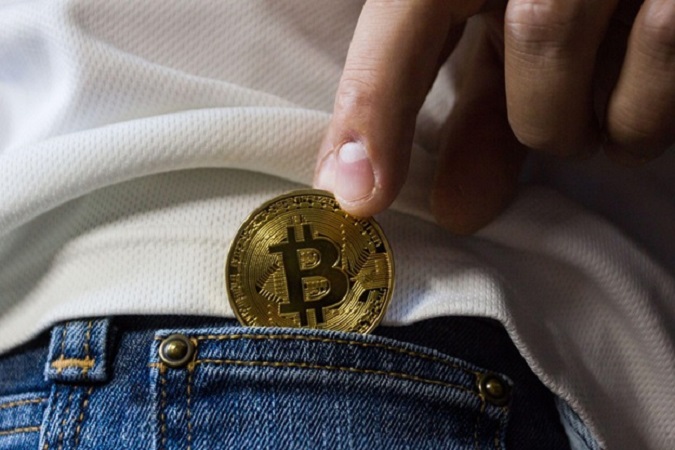
Hot wallets are the swift, accessible vaults of the crypto world. They operate online, helping you to ensure seamless trading and fund transfers. Think of them as the digital wallets in your pocket, ready for action whenever you need them. However, as with many conveniences, there’s a trade-off. Hot wallets are connected to the internet, making them vulnerable to cyber attacks. In fact, research indicates that a significant number of crypto thefts involve hot wallets due to their inherent susceptibility.

These wallets come in various forms, including online wallets, mobile wallets, and exchange wallets. While their convenience is undeniable, users must understand the risks associated with having their assets constantly connected to the internet.

Cold Wallets: Fortresses of Security

Enter cold wallets, the Fort Knox of crypto storage. Unlike their hot counterparts, cold wallets operate offline, making them immune to online threats. They come in two primary forms: hardware wallets and paper wallets. Hardware wallets are physical devices that store your cryptographic keys offline, ensuring that your assets remain safe from online hackers. On the other hand, paper wallets involve printing out your crypto keys and storing them in a physical, secure location. Both options provide an added layer of security, safeguarding your assets from the array of cyber threats that lurk in the digital realm.

Numbers Don’t Lie: The Security Game

Let’s back this up with some cold, hard facts. Recent studies reveal that over 90% of reported crypto thefts involve hot wallets. This statistical evidence underscores the vulnerability of these online wallets and reinforces the case for opting for cold storage solutions. It’s like comparing a secure underground vault to a wallet loosely hanging out of your back pocket. Choosing a cold wallet significantly reduces the risk of falling victim to online attacks and ensures a safer long-term storage solution for your digital assets.

The Human Factor: Understanding User Behavior

Beyond the technical aspects, user behavior plays a pivotal role in crypto security. Consider this analogy: you might have the sturdiest lock on your front door, but if you leave the key under the doormat, it becomes a moot point. Similarly, ensuring your passwords are safe by using secure password managers like 1Password, coupled with responsible practices like two-factor authentication, significantly enhances the security of your crypto assets. Educating oneself on potential phishing attempts and practicing digital hygiene is as crucial as selecting the right wallet type.

Balancing Act: The Right Mix of Security Measures

In the grand scheme of crypto security, employing a VPN is like having a trusty sidekick, enhancing your overall defense against digital threats. It forms a critical part of the holistic approach required to fortify your digital fortress. Remember, it’s not merely about the type of wallet you choose –  it’s about striking the right balance. If convenience is your top concern and you’re actively trading, a hot wallet might be your go-to. However, if security is non-negotiable, especially for long-term storage, a cold wallet emerges as the unbeatable choice.

Conclusion

In the cryptocurrency landscape, where technological advancements occur at breakneck speed and new currencies emerge every year, securing your digital assets is a responsibility that should not be taken lightly. The world of crypto storage is nuanced, with each option having its pros and cons.

As you navigate the crypto waters, remember that the key to a robust defense lies in a combination of factors. Your choice of wallet, coupled with responsible user behavior and the use of online security tools like VPNs, collectively builds a sturdy digital fortress. Moreover, staying informed and adapting your security measures to the evolving landscape is paramount. So, whether you’re opting for the quick-access hot wallet or the offline sanctuary of a cold wallet, ensure you’re equipped with the knowledge and tools needed to safeguard your crypto assets for the long haul.

How to Produce More Start Ups from Nigerian Universities

0

Faisol is my friend. I met him while he was in 200 Level. Cool. Calm. Collected. He is a reflection of an undergraduate son I would love to have. He is gentle but brilliant and hardworking. I still remember the first day I signaled to him to see me at the university mosque after one of the prayers. I enquired about him. His background. His academic standing.  And that was how we struck a friendship. Once in a while when I met him on campus, I would ask him how he has been faring with his academics. To a very large extent, I have been satisfied with his reported performance.

I became more interested in him when I learnt that he has been running an online boot camp teaching people all across the world in digital and soft skills. He tagged it Digital Skills Boot Camp.  He told me how 4000 people from 13 countries in Africa (Botswana, Ghana, South Africa, Somalia, Zimbabwe etc.) and even Qatar had been past beneficiaries of his passion to share knowledge. I was so impressed that a 19-year-old man could have so discovered his purpose and started fulfilling it even before his university admission. And now that he was on campus, he recruited more of his friends and colleagues to help him achieve his ambition. His gentle mien would not betray such greatness is deposited in him. And he is living it out, on and off campus.

One Wednesday morning earlier this year, I saw Faisol AbdulAkeem at Opolo Global Innovation Hub at Osun State University, Osogbo Campus. I was surprised. On enquiries, he told me he was there to seek information about what it takes to book a space for a brainstorming session with his team. He said he was working with others to float a company to further his objectives of making impact at a higher level. And that announced the birth of Skeeli Africa.

According to him, Skeeli Africa is a digital learning platform whose major aim is to give equal access to promising talents by being a medium through which relevant entry level, digital skills are acquired, improved on, and seamlessly adapted with new technologies. He said the idea came up when he and his team noticed an increasing gap in how new technologies are adapted with current skill sets. He noted that tech industry has become the new oil boom for young men and women. He said his team was aiming at answering the question: how do we help others who do not have the flair for writing codes thrive in their respective fields?

While I congratulate Faisol AbdulAkeem and his team on this new project, I kept musing on if the Nigerian University System has a support structure for young entrepreneurial minds like Faisol. As a young aspiring entrepreneur, he requires support of all kinds- ideation, incubation, product development, funding and scalability. Tell me a university in Nigeria that has that support system on campus. Maybe one or two. Instead many Nigerian universities run the so called entrepreneurship programmes that are heavily focused on vocational skills. We run a university system that trains students on bead making, liquid soap making, tailoring and other vocational skills that one does not need to get to a university to learn. It does not make sense to me. Besides, when the students have learnt the skills, who helps them to navigate the terrain of commercializing the skills, good and services.

Maybe, there was a time those skills were useful. But, this era calls for a more innovative approach to skilling the undergraduates. One, those taught skills do not have the potency to create employment on a larger scale. You see one or two individuals going forward to make sense of and become financially independent through them. Those skills do not have the potency to affect the unemployment rate at scale.

Now, fees are rising without corresponding increase in the value of the education given to the students who are the subscribers. Such kind of increments are business as usual. My thesis is that the institutions should make the education offered comprehensive and effective such that no one graduates without a job. The current educational playbook cannot and will never guarantee that.

Let us tie the entrepreneurship curriculum to either the courses students are subscribed to in the universities or by interest. If I am given admission to read French, teach me proficiency in the language and let me know the business aspect of it. If I go for Political Science, what skills are inherent in this course that I could offer and gain values. If I am a graduate of Computer Science, I should know its adjoining digital skills and should be put on the path that would lead me to making money right from the campus. If I am a banking and finance student, should I not know how to use Fintech to build digital financial funnel for my own local community.  My recent experience shows me that universities in Nigeria do not realise that students pass through their entrepreneurship programmes to fulfil all righteousness. Not because there is really something worthwhile to gain. For those, like Faisol, and I know some of them on campuses I relate with, they are finding their paths to their vision and mission without a support system. The Obafemi Awolowo University is renowned for the thriving startup ecosystem on her campus, how many of these startups that gained traction and scaled did the university deliberately produce? What acknowledgement did Babcock University get for producing Paystack’s founders?  Was it not “we met on campus” mention the university got for producing Ezra and Akinlade who sold their startup to an American company for N76 Billion.

So, what do the Nigerian universities have to do to ensure they improve their profile of producing startups with the potential to become unicorns? The former Vice Chancellor of Bowen University, Iwo, Prof. Joshua Olalekan Ogunwole, in his exit interview in Guardian newspaper gave this golden advice to Nigerian universities on entrepreneurship:

“At the university level, you cannot be talking about entrepreneurship and you are buying sewing machines and whatever for the students. Do that to them at the secondary school or primary school levels. At this tertiary level, you want to raise entrepreneurs who affect the world; who would make global impact and have national relevance. You cannot begin to introduce certain specific skills and say this is what they should know.

What we are saying is this: teach the students under entrepreneurship how to take care of an idea, work on the idea to be an innovation and take all the process so that they can either commercialise it, start up a company with it or whatever. That’s how we see great minds work all over the world. So, university should not be talking about entrepreneurship in the context of wanting to learn confectionery, wanting to be mechanics; universities should be beyond all that.” So, the first step is to admit that the current entrepreneurship programmes are neither relevant nor appropriate for the knowledge economy.

The second and very important point to take note is the advice captured in Adam Adeiza’s reflections on his visit to Covenant University in a 2019 article in Business Day. First, he addressed the philosophy of Covenant University entrepreneurship ecosystem. He observed that “the CU’s entrepreneurship ecosystem has two major components – talents development and incentives.”  He proceeded further to pick the thinking at the heart of the university’s entrepreneurship programme. He wrote:

“They have this philosophy that their students must be so molded that they don’t go back to their parents for anything after graduation. At the heart of CU’s curriculum are development of entrepreneurial mindset and great attitude in students. They don’t necessarily want everyone to be business owners but they do want to make sure that those who would rather work for others are job-ready and that they possess the attitudes that not only attract high-quality jobs, but also ones that keep them in the job when they do get one.” He also said “the university introduced CU Developer Circle, one of the most thriving in the country, where students acquire high premium digital skills that help them unlock Silicon Valley-like jobs while in school. This is also the driving philosophy behind their popular TTG (Towards a Total Graduate) program, where students are mandated to spend few extra weeks immediately after graduation learning critical attitudes, resume development, how to ace an interview, work ethics, being a productive worker, making a difference in the community and so on.”

He was not done yet. He equally identified further the university’s thinking on teaching entrepreneurship. He noted that at the university, “teaching entrepreneurship is more like saying: ‘you can give what you have’. With this, entrepreneurship is not necessarily taught, it’s inspired by people who are travelling the same road. Second, students ‘Get Out of the Building’ a lot, to try their hands on real-life businesses and projects. Finally, On the incentive side, several supporting infrastructures are on ground for both students and faculties to think and act entrepreneurially: free high-speed wifi, a startup lab, regular reward-driven business model competition, institutional facilitation of access to markets and finance as well as sponsorship to Accelerator programs for startups looking to scale.”

Moving forward, the Nigerian University System has to change philosophy, direction and delivery of its entrepreneurship programmes. Nigerian universities, especially as they all warm up to increase their subscription fees, should learn how to manage the abundant talents that are on their campuses and nurture them to become globally relevant startups with high valuation. Doing this will make them produce graduates that could solve national, continental and global problems.


Letter of Administration: Reclaiming The Assets of a Deceased Who Died Intestate

0

A client was in my office last week and the matter he brought before me was that his father who happened to be a very wealthy man recently died but the core issue is that the man died without leaving a will behind ie the father died intestate. He was seeking legal advice on how to go about reclaiming some of his father’s wealth since there was no will deposing the wealth on him. 

In instances like this, the way to go about it is for the next of kin or the ward of a deceased person who died intestate to claim some of the riches of the deceased is for the person to approach the court or the probate registry for a letter of administration.

A letter of administration is the formal and written authorization given by the Probate registry of a Court to a person known as the administrator (male) or administratrix (female) to oversee the assets of a person who died intestate. This person referred to as the administrator or administratrix of the deceased could be the wife, child, husband, parents, or even the creditor of the deceased. The applicant of the letter of administration only needs to prove through relevant documents and attestation that there is an existing relationship be It cordial, blood or business relationship between the deceased and the applicant. 

A person who dies without a will is said to have died intestate. The state’s intestacy laws determine who will inherit the decedent’s assets. The state takes responsibility for dividing up the assets among the descendants via a probate court. 

A will is a set of instructions about how you want your property to be distributed after you’re gone. If you don’t have a will, your state has intestacy laws that will determine who will get your property. 

Typically, the takers are relatives of the decedent. For example, in Pennsylvania, the surviving spouse is generally entitled to receive at least one-third of the decedent’s estate if there are descendants of both spouses that survive him or her. Otherwise, they can receive up to one-half. 

An intestate estate can also be one in which the will presented to the court was deemed to be invalid

Before the letters of administration are awarded, the properties of the deceased are presumed to be vested in the Chief Judge of the State, especially the state where the deceased was a  resident before dying. The authority is then relinquished from the judge to the applicant after the application is granted. 

The essence of obtaining Letters of Administration is to gain official or judicial authority to be able to manage the assets and funds on behalf of the Estate of the deceased. With this document, the holder can access the deceased finances and the other properties and most importantly make management decisions accordingly. The Letters of Administration will also grant the holder the right to legally delegate assets and funds to relatives of the deceased.

The following persons are legally eligible to apply for a letter of administration over the assets of a deceased person. 

  1. The spouse of the deceased 
  2. The child or children or grandchildren of the deceased
  3. The Parents or parents of the deceased
  4. The siblings of the deceased and/ or their children
  5. Grandparents of the deceased
  6. Uncles and aunts of the deceased
  7. Creditors of the deceased
  8. Office of Administrator-General of the state can also apply 

The application for a letter of administration by any of the above persons is made directly to the office of the probate registrar and other relevant documents like the death certificate of the deceased are to be attached to the application.

To Succeed in Blockchain Participation, Readiness is Key

0

The degree of one’s vision as it relates to the ascent to the zenith level is dependent upon preparation. The major stream is that being prepared in any area you’re in is a factor in growth. Opportunities are essential to our survival, just like air. Because of a crucial relationship that keeps both in the spotlight, there would be no interaction between human nature and vegetative nature if there was no oxygen. Both help to ensure its survival. This simply indicates that no matter what topic you examine, there is important knowledge that actually affects people’s lives or their level of financial affluence. The key to success is preparation.

Today, I’ll outline the key arguments and motivations for why a person should adhere to the requirement of self-readiness in the Blockchain realm as a user of Blockchain technology. Humans frequently use what is profitable to us without considering the consequences. In order to build and retire, we use and reuse. But the question is: Are you prepared to profit from Blockchain technology or the stock market? To start getting ready to take part in a crucial notification or update from space, it is important to start storing important information in our brains.

Tips for getting ready for the latest stock market and cryptocurrency news
I’ll highlight several key techniques to actually make money in the following market updates:
This is not a brand-new summary or highlight; it has existed for a long time. Nevertheless, we continue to spread the important message of educating users who are interested in adding value to it in the course of growth.

The appropriateness of the cryptocurrency setup for participation
1: Open a Binance account: User-Friendly Interface Equipped with a Powerful Charting Engine. No Overloads Guarantee. Binance The World’s Leading Assets Platform. Join the Binance Community now. Discover Binance Now. Fast and Reliable Trading. Simple & Convenient. Low Fees, High Profits. A controlled cryptocurrency exchange, Binance operates a 24-hour trading floor. As long as a coin or token is listed on the Binance platform, anyone can trade it. The polka-dot quiz, which surely pays individuals who participated and gave the correct answer, is currently being bombarded with news and information from every outlet. It is necessary to verify your Binance before you can join or trade. Verify your Binance account, please.

2: Set up a Bybit account: Bybit is a cryptocurrency exchange founded in 2018. Bybit is headquartered in Dubai, United Arab Emirates. In the global market, Bybit and Binance offer similar types of services, but uniqueness is always remarkable, and development psychology and physiology can never be identical. Prepare your Bybit account.

Get ready with your decentralized account
A decentralized wallet is a cryptocurrency wallet that enables users to hold their private keys on their own, ensuring they have complete control over their digital assets. The main goal of such a wallet is to completely eliminate any involvement of a third party to permit peer-to-peer (P2P) transactions.

However, decentralized accounts or wallets are ones that you use privately and that enable anonymous transaction processing at any time, without restrictions or rules. Blockchain is a decentralized system, not a centralized one. Many policies are present in centralized areas. The person using this service (decentralized protocol) is the risk taker in this procedure. These are only independent means. You must download the decentralized wallets listed below to stay up to current on blockchain developments.

1: Metamask: MetaMask is a software cryptocurrency wallet used to interact with the Ethereum blockchain. It allows users to access their Ethereum wallet through a browser extension or mobile app, which can then be used to interact with decentralized applications.

2: Trust wallet: is the best Ethereum wallet and cryptocurrency wallet to store your favorite BEP2, ERC20, and ERC721, tokens. Download the Android Trust Wallet…

3: Coinbase: Coinbase Global, Inc., branded Coinbase, is an American publicly traded company that operates a cryptocurrency exchange platform. Coinbase is a distributed company; all employees operate via remote work. It is the largest cryptocurrency exchange in the United States by trading volume.

4: Phantom: is a digital wallet reimagined for DeFi, making it safe and easy to store, send, receive, collect, and swap tokens on the Solana blockchain.

Before doing anything else, one must set up these important tools. Second, don’t just set it up and walk away from it. This time, you’ll need to take precautions by keeping up with local news and updates on testnet, node, and airdrop activities like trading. Funding your centralized and decentralized accounts is crucial in case an opportunity arises again. Sincerity demands that you start someplace and follow directions in order for testimony to occur.

For mobile users that want to participate in testnet but are unable to do so because of Chrome’s limitations
Now that you know, keep in mind that layer 3.0 is not included in the standard Chrome browser, therefore it is incompatible with the testnet protocol. Please visit the Google Play Store and download the Kiwi browser if you are a smartphone user and want to participate in testnet protocols.

1: Install the Kiwi browser, then sign in with your current Google account or You can make one if you want to.

2: Enter “meta mask extension” in the search field by clicking. Click “Add” after selecting the top result.

3: If the user already has an account, please enter your seed phrase. If not, please register an account and record your seed phrase, which acts as a powerful security measure to safeguard your resources.

4: Make a strong password to guard the wallet from unauthorized access.

5: This straightforward technique is comparable to making any other wallet in the market.

Can I use my smartphone to participate in testnet nodes?
The two types of blockchain setups use CPU and GPU nodes, respectively.
However, there has been much discussion about how/what method to use to join a blockchain node using a smartphone. The setup to take into account before joining any Blockchain network node is listed below.


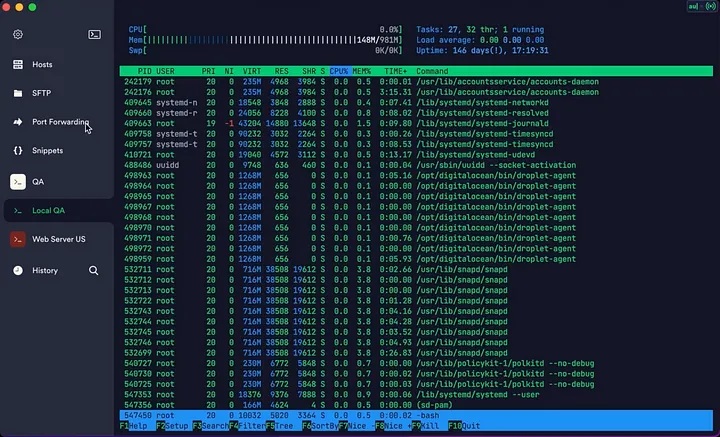
termius.com
1: Kindly download Termius from the Google Play Store, Bash- and Terminus both share a similar nature.

2: Purchase an IP address because it is necessary for the setup of a GPU node to have one.

3: By using the command lines to configure the node, adhere to and apply the network documentation testnet node.

Users of laptop
Please adhere to the instructions and make sure your IP address is always available.

In conclusion, find out the primary goal of blockchain ethics by studying Dapplab Please click the thing that motivates the writer to continue doing what he enjoys.

Please subscribe to the Dapplab Telegram channel for more blockchain news. In addition, follow Dapplab X handle.