DD
MM
YYYY

PAGES

DD
MM
YYYY

spot_img

PAGES

Home Blog Page 3713

Google Cuts Workforce in News Division As Tech Industry Challenges Continue

0

Google has initiated a round of job cuts in its news division, impacting dozens of employees, in a move that is raising concerns within the industry, according to a CNBC report.

The downsizing comes at a time when online platforms and publishers are grappling with misinformation challenges and as global events demand accurate and timely news coverage.

According to a spokesperson from the Alphabet Workers Union, approximately 40 to 45 workers in Google News have lost their jobs. However, the exact number of affected employees remains undisclosed by Google.

A Google spokesperson confirmed the cuts and emphasized that there are still hundreds of employees dedicated to the news product. The spokesperson stated, “We’re deeply committed to a vibrant information ecosystem, and news is a part of that long-term investment. We’ve made some internal changes to streamline our organization. A small number of employees were impacted. We’re supporting everyone with a transition period, outplacement services, and severance as they look for new opportunities at Google and beyond.”

Google News is a prominent platform that offers links to articles from thousands of publishers and magazines. It is widely used by individuals who rely on Google Search to discover top-ranked stories on various topics.

The timing of these layoffs is critical, as it coincides with the ongoing conflict between Israel and Hamas, which has resulted in thousands of casualties since October 7 and follows the 20-month-long Russian invasion of Ukraine. These global crises have led to a surge in the spread of misinformation, underscoring the importance of platforms like Google in delivering reliable and up-to-date news.

U.S. Senator Michael Bennet, representing Colorado, has already sought information from major tech companies, including Google, regarding their efforts to combat the spread of false and misleading content concerning the Israel-Hamas conflict. European Union industry chief Thierry Breton has also urged tech companies to take more stringent measures to combat disinformation, reminding Google and YouTube of the content moderation requirements under the EU’s Digital Services Act.

Despite these job cuts, Google’s spokesperson emphasized that these internal changes have no impact on their ongoing work to combat misinformation and maintain information quality in Google News.

In response to the rising challenges of misinformation, many tech companies have been bolstering their content moderation teams to address the issue more effectively.

Meanwhile, several countries, including Canada, are considering legislation that would compel tech platforms to compensate publishers for their content.

These job cuts in Google News follow a series of layoffs that have occurred across different parts of the company throughout the year. In January, Google announced its decision to cut 12,000 jobs, affecting approximately 6% of its full-time workforce. Just last month, hundreds of positions were eliminated from Google’s recruiting organization.

One staff engineer at Google News shared their thoughts on the layoffs through a post on LinkedIn, expressing their admiration for their now former colleagues: “These are some of the best and brightest people I’ve ever worked with. We’re definitely worse off without them.”

The future of Google News and the impact of these job cuts on the information ecosystem will continue to be closely monitored as the industry adapts to evolving challenges.

Nokia To Cut Jobs Also

Telecoms company Nokia on Thursday announced its plan to cut between 9,000 and 14,000 jobs by the end of 2026.The company recently reported a third-quarter net sales decline of 20 per cent year-on-year to 4.98 billion euros. Profit over the period plummeted by 69 per cent year-on-year to 133 million euros.

The company said the move is to address the challenging market environment.

“To address the market environment Nokia will reduce its cost base and increase operational efficiency while protecting its R&D capacity and commitment to technology leadership,” Nokia said in a statement.

Nigerian Fintech Firm Kippa Has Opted to Halt Its Payments Product And is Planning to Downsize Workforce

0

Kippa, a Nigerian fintech company has made the tough decision to cease its offline payments product (KippaPay), and is in the process of downsizing its workforce by the end of the year.

The company did not however disclose the number of employees to be laid off, but stated that the core team responsible for the payments products will exit their role by December.

CEO and Founder of Kippa Kennedy Ekezie described the proposed layoff as a tough decision taken, stating that it was related to profitable product portfolio consolidation.

In his words,

“Today, we announce that we’re pulling back our offline payments product KippaPay from the market. Over the past 18 months, we launched and grew this arm of our product suite to support merchants with offline payments and agency banking through our POS terminals.

“This company decision is related to profitable product portfolio consolidation. This decision unfortunately means that the core of our team supporting the KippaPay product will be leaving us in December 2023. This has been an incredibly difficult decision for us to make, but we are incredibly proud of the work this team has done, and the impact KippaPay had on our merchants.

“Starting November 15th, our KippaPay product will no longer be available for use by merchants. In the weeks leading up to this, we will provide support for our merchants and partners helping them transition off the product and resolve any pending settlements.”

Pending the product’s final shutdown, the company had stated that it would resolve pending settlements for its merchants.

About Kippa

Founded in June 2021, Kippa provides digital business and financial management solutions to SMEs in Nigeria.

One of the app’s most important features, is that it helps merchants keep track of debtors and send automated reminders to them. The company claims that merchants who use Kippa recover debts 3 times faster.

Since its inception, the startup has received backing from international investors to develop products that will help SMEs grow their businesses.

In 2021, Kippa raised pre-seed funding of $3.2 million with the plan of onboarding merchants to a simple-to-use mobile bookkeeping app to help them digitize bookkeeping and recover customer debt.

According to Kippa, since the pre-seed announcement, it stated that it has made tremendous progress in recruiting ex-regulators and former senior executives at top startups, which include Opay, NIBSS, Khatabook, TeamApt, OKCredit, and Unified Payments, among others.

In an interview with th CEO Ekezie, he said Kippa had more than 130,000 active businesses, ranging from small kiosks and street corner shops to local food vendors and high-end merchants.

Fast forward to 2022, Kippa raised $8.4 million in an oversubscribed seed round from backers such as Goodwater Capital, TEN13 VC, Rocketship VC, Saison Capital, Crestone VC, VentureSouq, Horizon Partners, and Vibe Capital.

In the same year, the company announced that it had obtained a license from Nigeria’s apex bank, the Central Bank of Nigeria (CBN), to operate as a Super Agent, just like agency banking players OPay and Moniepoint.

Kippa works as a simple app where small business owners can keep track of their daily income and expense transactions, create invoices and receipts, manage inventory, and generally monitor how their businesses ebb and flow over time.

That startup says its mission is to make it easy for anyone to start and run profitable small businesses in Africa.

African indigenous companies are globally undervalued

0

Africa is home to many innovative and resilient companies that have been creating value and solving problems for their communities and beyond. However, these companies face challenges in accessing capital, markets, and talent, as well as unfair competition from foreign firms that enjoy more favorable conditions. As a result, African indigenous companies are globally undervalued and underrepresented.

I will explore some of the reasons why African indigenous companies are globally undervalued, and what can be done to change this situation. I will also highlight some of the success stories of African indigenous companies that have overcome the odds and achieved global recognition and impact.

One of the main reasons why African indigenous companies are globally undervalued is the lack of awareness and appreciation of their potential and achievements. Many investors, consumers, and media outlets tend to overlook or underestimate the value proposition and competitive advantage of African indigenous companies, and instead focus on the risks and challenges they face. This creates a negative perception and bias that affects the valuation and growth prospects of these companies.

Another reason why African indigenous companies are globally undervalued is the lack of adequate support and enabling environment for their development. Many African countries lack the infrastructure, policies, regulations, and institutions that can foster a conducive ecosystem for entrepreneurship and innovation.

For instance, African indigenous companies often face difficulties in accessing finance, registering their businesses, protecting their intellectual property rights, complying with tax laws, and accessing quality education and training. These factors limit their ability to scale up, expand their markets, and attract talent.

A third reason why African indigenous companies are globally undervalued is the unfair competition they face from foreign firms that have more resources, networks, and influence.

Many foreign firms operate in Africa with preferential treatment from governments, donors, and multilateral organizations, such as tax breaks, subsidies, contracts, and grants. These firms also benefit from their global brand recognition, customer loyalty, and economies of scale.

This creates an uneven playing field for African indigenous companies that have to compete with these firms on quality, price, and innovation.

There are several actions that can be taken to change the situation of African indigenous companies being globally undervalued. Some of these actions include:

Raising awareness and appreciation of the value and impact of African indigenous companies among investors, consumers, media outlets, policymakers, and other stakeholders. This can be done by showcasing the success stories of African indigenous companies that have created innovative solutions, generated employment, contributed to social development, and improved environmental sustainability.

This can also be done by promoting positive narratives and images of Africa as a continent of opportunities, creativity, and diversity.

Providing adequate support and enabling the environment for the development of African indigenous companies. This can be done by improving the infrastructure, policies, regulations, and institutions that can facilitate entrepreneurship and innovation in Africa.

For instance, this can be done by increasing access to finance, simplifying business registration processes, strengthening intellectual property rights protection systems, streamlining tax laws, and enhancing education and training quality and relevance.

Leveling the playing field for African indigenous companies to compete fairly with foreign firms. This can be done by ensuring that foreign firms operate in Africa with transparency, accountability, and social responsibility.

This can also be done by encouraging foreign firms to partner with African indigenous companies to share knowledge, skills, resources, and markets. This can also be done by advocating for fair trade practices and policies that protect the interests of African indigenous companies.

Despite the challenges they face, many African indigenous companies have proven their worth and potential in the global market. Here are some examples of such companies:

Safaricom: Safaricom is a leading telecommunications company in Kenya that offers mobile money services through its M-Pesa platform. M-Pesa has revolutionized financial inclusion in Kenya and other countries by enabling millions of people to send and receive money using their mobile phones. M-Pesa has also enabled the development of other digital services such as e-commerce, healthcare, education, agriculture, and energy.

Flutterwave: Flutterwave is a fintech company that provides payment solutions for businesses across Africa. Flutterwave enables businesses to accept payments from customers using various methods such as cards, mobile money, bank transfers, and cryptocurrencies.

Flutterwave also enables businesses to access global markets by integrating with platforms such as Shopify, Amazon, and PayPal. Flutterwave has processed over $9 billion in transactions across 33 African countries.

Jumia: Jumia is an e-commerce platform that connects buyers and sellers across Africa. Jumia offers a variety of products such as electronics, fashion, beauty, groceries, and books.

Jumia also offers services such as food delivery, travel booking, and classifieds. Jumia has over 6 million active customers across 14 African countries and is the first African startup to be listed on the New York Stock Exchange.

Zipline: Zipline is a drone delivery company that delivers medical supplies such as blood, vaccines, and medicines to remote and hard-to-reach areas in Africa. Zipline uses autonomous drones that can fly up to 100 km and carry up to 1.8 kg of cargo. Zipline has delivered over 100,000 medical supplies to health facilities in Rwanda and Ghana, saving lives and improving health outcomes.

Andela: Andela is a talent marketplace that connects software developers from Africa with global companies that need their skills. Andela provides training, mentorship, and support to developers and matches them with projects that suit their expertise and interests. Andela has over 1,500 developers from six African countries working with companies such as Microsoft, IBM, and Facebook.

African indigenous companies are globally undervalued, but they have the potential and capacity to create value and impact for their communities and the world. They need more awareness, appreciation, support, and fair competition to thrive and grow. They also need more recognition and celebration for their achievements and contributions. African indigenous companies are the future of Africa and the world.

Israel seeks $10 billion in Emergency funding from USA

0
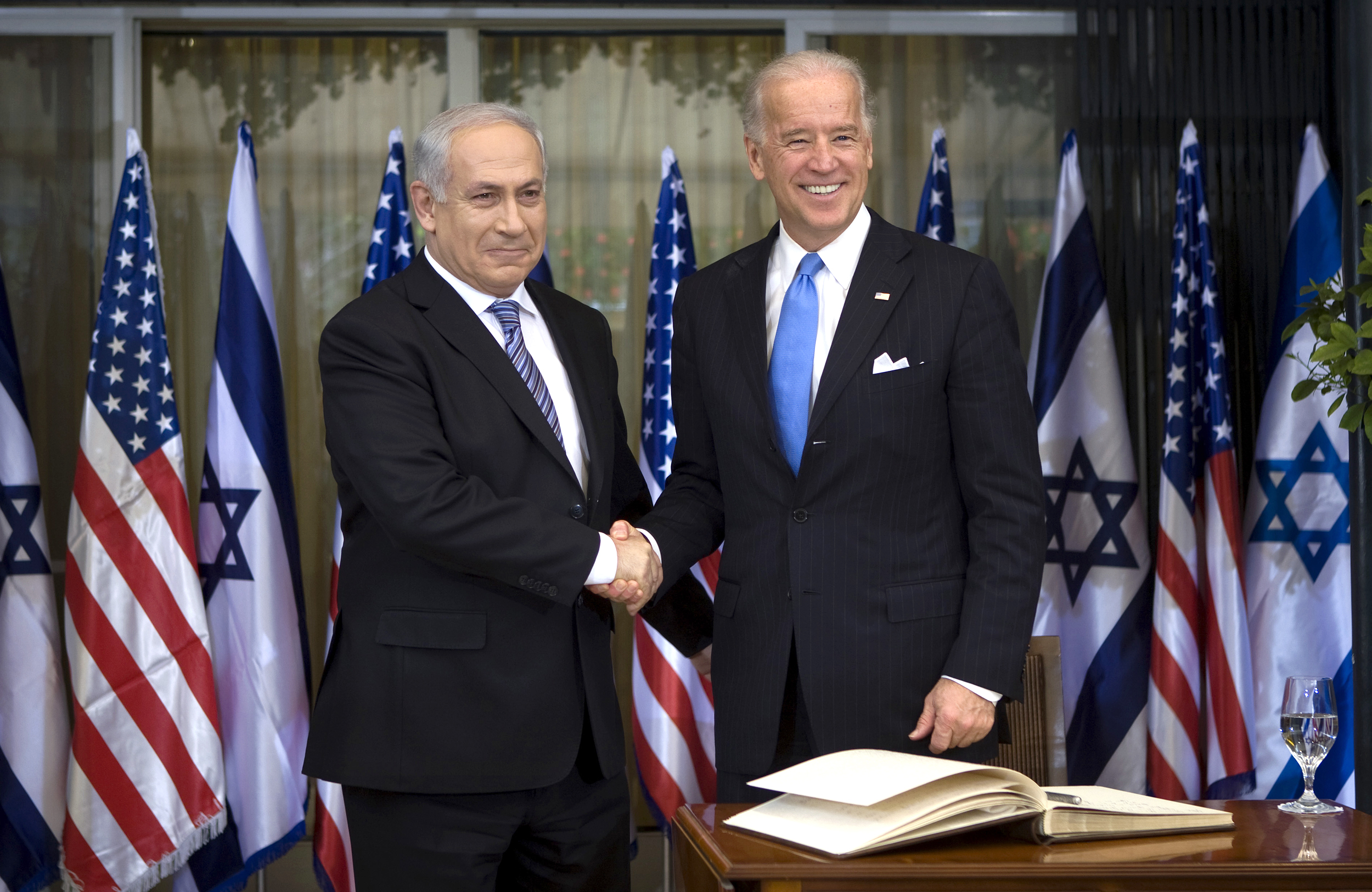
Benjamin Netanyahu and Joe Biden in Jerusalem, on March 9, 2010.

In a surprising move, Israel has requested $10 billion in emergency funding from the United States, citing the need to bolster its defense capabilities and economic recovery amid rising regional tensions and the impact of the COVID-19 pandemic.

The request, which was made public on Tuesday, comes as the Biden administration is trying to revive the 2015 nuclear deal with Iran, a move that Israel strongly opposes and has threatened to take military action against. The deal, formally known as the Joint Comprehensive Plan of Action (JCPOA), was signed by Iran and six world powers, and aimed to limit Iran’s nuclear activities in exchange for sanctions relief.

However, former President Donald Trump withdrew from the deal in 2018 and reimposed harsh sanctions on Iran, prompting Iran to resume some of its nuclear activities that were restricted under the deal. The Biden administration has expressed its willingness to rejoin the deal if Iran returns to full compliance, but the two sides have not yet reached an agreement.

Israel also faces growing challenges from Hezbollah in Lebanon, Hamas in Gaza, and Syria, where Iranian-backed militias have established a foothold. Israel considers Iran and its proxies as existential threats and has carried out hundreds of airstrikes against Iranian targets in Syria in recent years. Israel also accuses Iran of providing weapons and funding to Hezbollah and Hamas, which have launched rockets and missiles at Israeli territory on several occasions.

According to Israeli officials, the $10 billion would be used to purchase advanced weapons systems, such as the F-35 stealth fighter jet, the KC-46 aerial refueling tanker, and precision-guided munitions. The funds would also help Israel cope with the economic fallout of the pandemic, which has caused a sharp contraction in its GDP and a rise in unemployment and poverty.

The US is already Israel’s largest benefactor, providing $3.8 billion in annual military aid as part of a 10-year agreement signed in 2016. The emergency funding would be in addition to that amount and would require congressional approval. The US has previously granted Israel emergency aid in times of crisis, such as during the 1973 Yom Kippur War and the 1991 Gulf War.

The request has sparked mixed reactions in Washington, where some lawmakers have expressed support for Israel’s security needs, while others have questioned the timing and the rationale of the request.

Some critics have argued that Israel is trying to pressure the US into abandoning the Iran deal, or to compensate for its own mismanagement of the pandemic. Others have pointed out that Israel is one of the wealthiest countries in the region, and that the US should prioritize its own domestic needs amid the ongoing health and economic crisis.

The Biden administration has not yet responded to the request but has reiterated its commitment to Israel’s security and its support for a two-state solution to the Israeli-Palestinian conflict. The administration has also stressed the importance of diplomacy and dialogue with Iran and has urged Israel to refrain from any actions that could undermine the negotiations or escalate the situation.

Roblox integrates XRP as a payment method

0

Roblox, the popular online gaming platform, has announced that it will integrate XRP, the native cryptocurrency of the Ripple network, as a payment method for its users. This is a major milestone for both Roblox and XRP, as it will enable millions of gamers to access and use digital assets in a seamless and secure way.

Roblox is a platform where users can create and play games, as well as socialize and interact with other players. Roblox has over 200 million monthly active users, and more than 20 million games created by its community. Roblox also has its own virtual currency, called Robux, which can be used to buy items and access premium features in the platform.

XRP is a fast, scalable and low-cost cryptocurrency that powers the Ripple network, a global payment system that connects banks, payment providers, digital asset exchanges and corporates. XRP can be used to send and receive value across borders, without intermediaries or high fees. XRP also has a strong and growing ecosystem of developers and innovators who are building applications and solutions on top of it.

One of the main benefits of using XRP as a payment method is its speed. XRP transactions can be confirmed in seconds, compared to minutes or hours for other payment systems. This means that users can send and receive money almost instantly, without having to wait for intermediaries or deal with delays and uncertainties.

Another benefit of using XRP as a payment method is its low cost. XRP transactions have very low fees, typically less than a cent, regardless of the amount or destination of the payment. This makes XRP ideal for micropayments, remittances, and e-commerce, where high fees can eat into the margins or deter customers.

A third benefit of using XRP as a payment method is its scalability. XRP can handle thousands of transactions per second, which is much higher than most payment systems. This means that XRP can cope with high volumes of payments without compromising its performance or security.

XRP is also a versatile payment method that can support various use cases and scenarios. For example, XRP can be used to pay for goods and services online or offline, using QR codes, NFC, or other methods. XRP can also be used to send money to friends and family across the world, without having to worry about exchange rates or intermediaries. XRP can also be used to access decentralized applications and services on the XRP Ledger, such as smart contracts, decentralized exchanges, or NFTs.

By integrating XRP as a payment method, Roblox will offer its users a new and convenient way to buy Robux and other in-game items, as well as to cash out their earnings from creating games. Users will be able to link their Roblox account with their XRP wallet and use XRP to make transactions within the platform. Users will also benefit from the speed and low cost of XRP transactions, which can be confirmed in seconds and cost fractions of a cent.

Roblox’s decision to adopt XRP is a testament to the growing adoption and innovation of digital assets in the gaming industry. Roblox joins other leading gaming platforms, such as Fortnite, Minecraft and Decentraland, that have embraced cryptocurrencies and blockchain technology to enhance their user experience and create new opportunities for their communities.

Roblox’s integration of XRP will also expose millions of gamers to the potential and benefits of digital assets and foster greater awareness and education about this emerging technology.

XRP is a payment method that offers speed, low cost, scalability, and versatility. XRP can enable faster and cheaper cross-border payments, as well as support various use cases and scenarios. XRP is not only a digital asset, but also a payment solution that can benefit users and businesses alike.

Roblox’s integration of XRP is expected to launch in the first quarter of 2024, following a testing and development phase. Roblox and Ripple will provide more details and updates on the integration process in the coming months. In the meantime, users can sign up for early access and get a chance to win free XRP.