DD
MM
YYYY

PAGES

DD
MM
YYYY

spot_img

PAGES

Home Blog Page 3716

Will the new ‘ZiG’ ‘gold backed’ digital currency alleviate Zimbabwe’s currency stability woes?

1

The chronic problem of Zimbabwe’s economy has its roots in the land reform activities that began more than 30 years ago.

The principle of ‘ethnic balance’ in land ownership was fair. The problem was in its implementation.

Macro farms operating on efficiencies of scale, being cultivated and harvested with mega machinery, suddenly got transformed into many inefficiently managed subsistence plots.

The bottom fell out of the economy, and Zimbabwe (formerly dubbed ‘the bread basket of the world’), suffered a mass exodus of its people, who were starving, many of which headed for South Africa.

Zimbabwe has seen decades of pain since, and multiple efforts have been made to recover the Zimbabwean dollar from implosion.

Revaluation didn’t work, and most of the time does not, as we have also seen with the Ghanaian Cedi.

It also tried operating with the USD as a local currency, which also didn’t work, as individuals simply sucked the USD out of circulation, and market activity was unable to function for lack of promissory notes to act as value representation in trades.

Zimbabwe then went through a process of trying gold coins, but these too faced difficulties, with the masses complaining the issuance didn’t reach them and were retained among the elites.

Now, the Central Bank of Zimbabwe (RBZ)  is issuing a new instrument called ZiG aimed at stabilizing purchasing power of citizenry.

“These are financial instruments designed to give an investment alternative to gold coins and other asset classes,” Clive Mphambela, the chief director of communications in the Ministry of Finance and Economic Development, told Al Jazeera.

Godfrey Kanyenze, economist and founder of the Labour and Economic Development Research Institute of Zimbabwe (LEDRIZ), lauded the introduction of the digital currency but said it would not solve Zimbabwe’s currency woes.

“While the idea of launching digital coins is noble as it mops up excess liquidity and stabilises the local unit, this is no different from the gold coins introduced by the central bank last year that have failed to stem the money supply growth,” Kanyenze said.

He said Zimbabwe was currently grappling with a “confidence and trust deficit emanating from legacy issues such as when the country experienced hyperinflation that ended in 2009 where people lost their money and savings.”

Former Finance Minister Tendai Biti attacked the new digital currency, saying the central bank should instead establish market stability by floating the Zimbabwe dollar.

Multi-talented entrepreneur and educator, Prof. Ndubuisi Ekekwe, owner of both Tekedia Institute and Tekedia Capital, has frequently argued against floating ‘troubled’ internationally restricted currencies.

In the case of the Naira, he wrote: You cannot float Naira when you cannot fix the supply side of the US dollars in Nigeria. Across all indicators, the demand and supply imbalance of US dollars in Nigeria is the root cause of why Naira is struggling. Another component is the overdue forward payments of $6.8 billion. The challenge now is how to fix this Naira’

My own take is that the real value of a nation is not in how much of a precious commodity it can lock away, but in the collective productivity of its people. This collective productivity is formulized into a statistical annual standard, called GDP (Gross Domestic Product).

This was the reasoning behind why ‘so called’ economically advanced nations, such as the US, ditched the gold standard.

Pegging currency issuance to GDP makes sense, but the ‘artificial’ printing of money (called quantitative easing) in excess of the GDP, and exasperating debt is what causes problems, not ditching the gold standard.

These are the problems the US is facing now, and I would probably add to that, an over liberal regulatory approach to fractional reserve banking (the agreement between state and commercial retail banks on the permission to loan more money to customers than they actually have) which heats up the economy and causes interest rates to rise.

As of writing the US debt clock showed a total figure just short of $ 33.5 Trillion and running at 123.88% of GDP.

Zimbabwe’s Tendai Biti further described the introduction of the gold-backed digital currency as ‘a psychopathic exercise in self-delusion’

Central bank governor John Mangudya said ZiG will cater for domestic transactions over its purpose.

He said the ZiG will be at the same rate as the physical gold coin and will be guided by the international gold price.

“Banks will maintain dedicated ZiG accounts and intermediate transactions in ZiG in the same way they intermediate transactions in local and foreign currency. The applicable intermediated money transfer tax will be half of the IMTT applicable to transactions in foreign currency and the relevant legal instrument to that effect will soon be published,” he said.

ZiG is a peer-to-peer (P2P) and peer-to-business (P2B) digital currency that can also be used as a store of value. It is backed by physical gold coins that are held in the RBZ’s vaults.

Mangudya said ZiG is intended to help stabilize the Zimbabwe dollar and promote financial inclusion.

It represents a significant development for Zimbabwe’s financial system, and is the first time that a central bank in Africa has issued a gold-backed digital currency.

However, it won’t fix the countries problem to raise GDP and alleviate poverty, which can only be achieved by cranking up production across sectors, and developing wealth.

In the long term also, in order to remove development constraints, Zimbabwe will need to move from  pegging to a precious commodity it can lock away, to a collective productivity formulized into a statistical annual standard, as GDP, just as the ‘advanced’ nations did before.

The digital currency is merely an exchange medium, but issuance will probably need to shift to align with GDP. The ‘gold backed’ status is unlikely to be able to support a growing economy long term.

ZiG  went on sale yesterday (5 October) and can be purchased and sold through the RBZ’s mobile wallet application. It can also be used to make payments to merchants who accept ZiG.

Although the ZiG is governmental digital issue, it doesn’t possess the spending monitoring and programmable capabilities feared of CBDCs – at least not yet!


9ja Cosmos is here… 

Get your .9jacom and .9javerse Web 3 domains  for $2 at:

.9jacom Domains

.9javerse Domains

Visit 9ja Cosmos

Follow us on LinkedIn HERE


All URLs accessed 05-06/10/2023

usdebtclock.org/

tekedia.com/what-ndubuisi-ekekwe-will-do-to-stabilize-the-naira-option-1-a-partnership-with-nigerian-diasporas/

en.wikipedia.org/wiki/Land_reform_in_Zimbabwe

.sourcesmedia.com/news/gold-backed-digital-currency-now-translatable-mangudya

zimpricecheck.com/market-intelligence/all-you-need-to-know-about-the-zig-zimbabwes-new-digital-currency/

aljazeera.com/news/2023/5/9/zimbabwes-new-gold-backed-digital-currency-all-you-need-to-know

blog.remitly.com/currencies/ghanaian-cedi-facts-ghana-money-guide/



$730,000,000 worth of Bitcoin and Ethereum options expire Friday

0

A significant amount of cryptocurrency options contracts is set to expire this Friday, October 6, 2023. According to data from Skew, a crypto analytics platform, about $730 million worth of Bitcoin and Ethereum options will mature on that date, representing about 18% of the total open interest in the market.

Options are financial derivatives that give the buyer the right, but not the obligation, to buy or sell an underlying asset at a predetermined price and date. They are used by traders and investors to hedge their risks, speculate on price movements, or generate income from their holdings.

The expiry of options contracts can have an impact on the spot price of the underlying asset, as some traders may choose to exercise their options or roll them over to a later date. Additionally, some traders may adjust their positions in the spot market to avoid or profit from potential price swings caused by the expiry.

The expiry of $730 million worth of Bitcoin and Ethereum options on Friday could create some volatility in the crypto market, especially if the price of these assets is close to the strike prices of the options. The strike price is the price at which the option can be exercised.

According to Skew, the majority of the Bitcoin options expiring on Friday have strike prices between $50,000 and $60,000, while the majority of the Ethereum options have strike prices between $3,000 and $4,000. As of October 5, 2023, the spot price of Bitcoin was around $54,000 and the spot price of Ethereum was around $3,500.

If the spot price of Bitcoin and Ethereum remains within these ranges until Friday, it could indicate that most of the options will expire out of the money, meaning they will be worthless. This could reduce the selling pressure on the spot market, as traders who sold options would not have to buy back the underlying asset to cover their positions.

However, if the spot price of Bitcoin and Ethereum moves significantly above or below these ranges before Friday, it could trigger a cascade of option exercises or rollovers, which could increase the buying or selling pressure on the spot market. This could create a feedback loop that could amplify the price movements of these assets.

The expiration of options contracts can have a significant impact on the price of the underlying asset, as traders may try to push the price in their favor or close their positions before the deadline. For example, if a trader bought a call option to buy Bitcoin at $50,000 by Friday, and the current price is $48,000, they may try to buy more Bitcoin in the spot market to drive the price up and make their option profitable. Conversely, if a trader sold a put option to sell Ethereum at $3,000 by Friday, and the current price is $3,200, they may try to sell more Ethereum in the spot market to drive the price down and avoid losing money on their option.

The expiration of options contracts can also affect the volatility and liquidity of the crypto market, as large amounts of buying or selling can create price swings and fluctuations in supply and demand. Moreover, the expiration of options contracts can signal a shift in market sentiment and expectations, as traders may adjust their strategies and positions based on the outcome of the options expiry.

Therefore, crypto investors and enthusiasts should pay close attention to the options expiry this Friday, as it may have a significant impact on the price and direction of Bitcoin and Ethereum in the short term. However, it is important to note that options expiry is not the only factor that influences the crypto market, and other events and developments may also affect the price and performance of these digital assets.

Therefore, crypto traders and investors should be aware of the potential impact of the options expiry on Friday and prepare accordingly. They should also monitor other factors that could influence the crypto market, such as regulatory developments, institutional adoption, network upgrades, or technical indicators.

The Dynamic Landscape of Innovation Hubs for Sparking Innovation Across Nigeria

0

Cluster 1: Tech Innovation Hubs in Lagos In Lagos, Nigeria’s bustling tech hub, several innovation centres have emerged, all geared towards fostering technological growth and entrepreneurship. These hubs include the Co-Creation Hub, MEST Incubator, Wennovation Hub, NG_Hub, Impact Hub Lagos, Artificial Intelligence Hub, Cranium One, Vatebra Tech Hub, and more. They form a tightly-knit cluster, united by a joint mission to support technology startups and entrepreneurs. These hubs offer various services, including incubation, mentorship, and access to vital resources. They have played a significant role in positioning Lagos as a prominent tech hub on the African continent.

Cluster 2: General Incubation and Co-Working Spaces Distributed across various Nigerian cities, another cluster comprises general innovation hubs and co-working spaces. This extensive group includes LeadSpace, Blue Hub, KAD ICT Hub, Founders Hub, Roothub, OlotuSquare, Heartland Hub, Innovation Growth Hub (IGHub), iDEA Hub, Leadpath, Focus Hub, Strategic Hub, 360 Creative Hub, Zonetech Park, Vatebra Tech Hub, Cranium One, Hub 30, Brainiacs Innovation Hub, Illumination E-learning, Innovation Hub & Job Centre, Seedbuilders Innovation Hub, South-South Innovation Hub, Ken Saro-Wiwa Innovation Hub, African Technology Innovation Hubs Initiative, 720Degree Hub, and ImpactCentral Social Innovation Hub. This diverse cluster serves as a haven for entrepreneurs, offering a multitude of services, including incubation, training, and business support. They are located in various cities across Nigeria, supporting a wide range of startups.

Cluster 3: Social Innovation and Inclusion Hubs Focused on addressing societal challenges through social innovation and inclusion, this cluster includes hubs like The Humanitarian Innovation Hub, Project Enable Africa Hub, and Impact Hub Lagos. These hubs emphasize collaboration and community involvement in creating solutions to pressing social issues. They provide support to individuals and groups working to make a positive impact on society, fostering a sense of purpose and community.

Cluster 4: Skill Development and Education Hubs Start Innovation Hub Nigeria, Ilorin Innovation Hub, and Kebbi Innovation and Tech Hub constitute a cluster that prioritizes talent development, training, and skill-building. These hubs play a crucial role in equipping individuals with the skills needed to thrive in the digital age, fostering innovation and personal growth.

Cluster 5: Innovation Hubs with a Financial Focus Premier Hub Innovation Centre, The Solutions & Innovation hub, and StartPreneurs form a group of hubs with a strong focus on financial support for startups. They offer services that include access to capital and business services, aiming to catalyze the growth of early-stage ventures.

Cluster 6: Innovation Support Network Innovation Support Network (ISN Hubs) brings together a network of innovation hubs across Nigeria. Formed by hub owners, ISN Hubs provides policy advocacy, facilitates connections between various stakeholders, and promotes sustainability among member hubs. They foster collaboration and knowledge sharing among a growing community of entrepreneurship and innovation hubs.

Cluster 7: State-Specific Hubs Found in specific states across Nigeria, these hubs include Delta State Innovation Hub, Edo Innovates, GIG Innovation Hub, AkureTechUp, DevsDistrict Hub, Hebron Startup Labs, and Founders Hub. These hubs tailor their missions and services to address the unique needs of their respective regions, playing a vital role in local economic development and innovation.

Cluster 8: Unique and Specialized Hubs This cluster comprises specialized hubs such as The Tangent Eco-Innovation Hub, StartPreneurs, Civic Innovation Lab, and BD Hub. Each hub has a distinct mission, including environmental management, disability-friendly initiatives, civic innovation, and business development. They contribute to addressing specific challenges and opportunities in their areas of focus.

Cluster 9: Innovation Hubs in Abuja (FCT) A cluster of innovation hubs is concentrated in the Federal Capital Territory (Abuja), including Innov8hub, LPI Innovation Hub, Technology Development for Poverty Alleviation Initiative, StoneBricks Hub, Sustainable Innovation Hub, WhatIf? Innovation Hub, Seedbuilders Innovation Hub, African Technology Innovation Hubs Initiative. These hubs are strategically located in the nation’s capital and collaborate on initiatives, share resources, and engage with the government and policymakers to further the innovation ecosystem in Nigeria.

These clusters represent the vibrant and diverse landscape of innovation hubs across Nigeria, each contributing to the country’s entrepreneurial spirit and technological advancement in its unique way. They are vital in nurturing startups, fostering innovation, and driving economic growth in the region.

Nigeria Should Consider Rotational Presidency

1

Good People, Nigeria should modify its constitution and adopt a rotational presidency. From all indicators, we need a new plan because the current model is not working. How do I know? Evil could be good, and good could be evil, depending on who is benefiting? With lack of consistency in our moral fibers, I do not see how any human can unite Nigerians to a mission. And if that is the case, we need to look for alternatives.

As things stand, we’re focusing on tribal strategies and supremacy over national competitiveness. And the nation called Nigeria is fading because of it. Sure, rotational presidency will not solve all the problems, but at least, it creates a spirit of equity so that people will know they belong. But if you continue with what we call “politics”, the inconsistencies in the judicial ruling injects huge risks to Nigeria’s economic viability.

In 1999, a mere embellishment in CVs was enough to dethrone the Senate President and Speaker of the House. Today, do you think that is possible? A few years later, a guy was disqualified for winning a House seat as a corps member (NYSC) member. Today, a minister is combining a ministerial job with NYSC.!

In the European Union, they have rotational presidency even as tribes and nations do whatever they want. With that, Iceland with its strong 400k people can breathe from France and Germany. I think each of the geopolitical zones in Nigeria is much larger than most nations in the EU. We need to create this rotational thing and diminish the impact of tribes in our national politics, if we do hope for people to really pay attention to Nigeria.

That rotational presidency should come with fiscal federalism. That way, we can push ourselves to innovate and thrive.

Comment on Feed

Comment 1: A certain Professor Durojaiye wrote a book advocating for a presidential council of 6, each member of the council coming from a geopolitical zone, with rotational presidencies for 2 years each among each of them, and the other 5 will control other critical pillars of the nation like the military, economy, oil and gas, works etc.
One thing is certain. We need to rethink how our we are structured so the idea of tribe gets diminished.

I watch people make an excuse for absolute criminality because of tribal factors.
We can’t continue like this.

Comment 2: Rotational presidency should be ceremonial only. Let their be a federalism with autonomous regional government and a functional Prime Minister for administrative purposes.

My Response:That is the point. It should be ceremonial as they do it in Europe

I have passed the age to be afraid. But if you read closer, I wrote “fiscal federalism”. That is another way of saying regional governments with ceremonial rotational “presidents”.

Atiku Held International Press Conference Over Tinubu’s Forged Certificate, Said ‘The Reputation of Nigeria is At Stake’

0

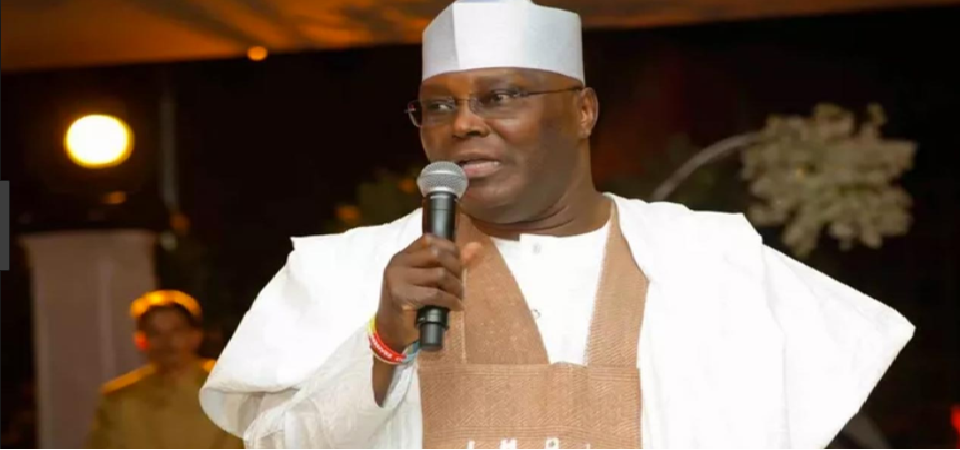
Former Vice President Atiku Abubakar held an international press conference on Thursday in response to the Chicago State University’s sworn deposition, which revealed that President Bola Tinubu submitted a forged certificate to the Independent National Electoral Commission (INEC) in June 2022.

Speaking on the outcome of the deposition, which has put the credibility of the Nigerian leadership in the spotlight, Atiku said Nigerian institutions need to up their game in checking the authenticity of certificates presented by political office holders.

“The ground rules for legitimate governance in our country need to be upheld, and the reputation of our country is at stake. That affects everyone, Nigerians everywhere,” he said.

Defying calls from the quarters of All Progressive Congress (APC) to back off his push to unravel the truth about Tinubu’s educational credentials, Atiku said: “Our country is bigger than any of us, and its standing in the world affects the fate of all who come from or live in it.”

He added that the fight is not personal, but rather it is a quest for the enthronement of truth, morality, and accountability in our public affairs. He therefore called on well-meaning Nigerians, including Governor Peter Obi of the Labour Party and Governor Rabiu Kwankwaso of the NNPP, to join him in the “campaign to enshrine probity, accountability and the basic principles of justice, morality and uprightness in our country and our government.”

Read the full text of Atiku’s press conference below:

Being text of a press conference by His Excellency, Atiku Abubakar (GCON), Waziri Adamawa, Vice President of Nigeria (1999-2007) and Presidential candidate of the Peoples Democratic Party (2023), at the Shehu Yar’Adua Centre on the 5th of October 2023.

Protocol

Gentlemen of the Press, Fellow Citizens of the Federal Republic of Nigeria, I consider it important to address and report to you today on issues that define the future of elective government and legitimate leadership in our country.

Political leadership and active citizenship matter because they are ways through which we all work together to build a country that works for all who live in it. Our country is bigger than any of us, and its standing in the world affects the fate of all who come from or live in it. As leaders, it is our duty to advance the well-being of all our people and the country.

For this purpose, my generation worked hard to return the soldiers to the barracks and to defend the right of the people to elect and establish for ourselves a legitimate government. Our elections are established and governed by law and founded on the constitution from which leadership and government in Nigeria alone derive their legitimacy.

The people look up to us as leaders to respect these rules and, where necessary, to defend them. This is what brings us here.

Today, we are called upon again as a people to uphold and defend the ground rules of elective government in our country. The constitution prescribes the requirements for those who seek the highest elective office in the land.

It should not take months or, indeed, decades, for the institutions concerned to be able to do their work in establishing the credibility of any certificates presented by candidates for public office.

We undertook this journey at great cost and for important reasons. The ground rules for legitimate governance in our country need to be upheld, and the reputation of our country is at stake. That affects everyone, Nigerians everywhere.

I am a democrat by conviction and a citizen of a country that I love. The issues at stake in this case require us once more to re-dedicate ourselves to both the country and our constitution.

Now, we entrust these facts to us all as citizens and as leaders of the institutions charged with interpreting our constitution. I should thank the lawyers both in Nigeria and in the United States, who have assisted us in bringing clarity and definitive answers to these issues that appear to have defied our institutions for nearly a quarter of a century. I also want to extend my gratitude to Nigerian citizens and friends of Nigeria both within and beyond the shores of our country for their patience as we have sought to find the facts and establish the truth.

I wish to pay tribute to the late human rights activist, Chief Gani Fawehinmi, SAN, who inspired us on this path of discovery. Now, he can truly rest in peace in the assurance that what he started about 23 years ago has come to fruition. Gani’s vindication today gives credence to the saying that no matter how fast a lie runs, the truth will someday overtake it.

Former American President Thomas Jefferson once said, “If I had to choose between government without newspapers, and newspapers without government, I wouldn’t hesitate to choose the latter”. From exposing the Watergate scandal and unraveling the dubious certificates of politicians, journalists have maintained eternal vigilance by bridging the gap and stepping in when other arms of government failed.

It is for these reasons that commendation must be given to David Hundeyin, an independent journalist whose extraordinary work, and those of many more young people like him has become a source of inspiration. Special thanks must be given to the millions of Nigerian youths and citizen journalists too who continue to put out the truth online even when no one is listening. Indeed, the price of Liberty is Eternal Vigilance. They have put the country first in their firm commitment to unravel the truth and hold leaders accountable. This gives me the hope that we have worthy partners in the struggle to reclaim the country we call home.

This quest is not for or about Atiku Abubakar. It is a quest for the enthronement of truth, morality, and accountability in our public affairs. In line with this, therefore, I am calling on all well-meaning Nigerians, leaders of thought, our religious leaders, our traditional leaders, our community leaders, our political leaders, and in particular, Governor Peter Obi of the Labour Party and Governor Rabiu Kwankwaso of the NNPP and, the leaders of every political party in Nigeria, and, indeed, every single person who loves this country, as I do, and who wishes nothing but the best for the country, as I do, to join me in this campaign to enshrine probity, accountability and the basic principles of justice, morality and uprightness in our country and in our government. This is a task for each and every one of us.

Thank you for listening. May God bless you, and may God bless the Federal Republic of Nigeria.