DD
MM
YYYY

PAGES

DD
MM
YYYY

spot_img

PAGES

Home Blog Page 3720

NAFDAC Guidelines for The Clearing of Imported Donated Items at Ports of Entry in Nigeria

0

The Guidelines of the National Agency For Food and Drug Administration and Control (NAFDAC) for the clearing of Imported Donated Items at Ports of Entry in Nigeria (forming the focus of this article) are for the interest of the general public and in particular importers of donated products into Nigeria.

It is necessary to emphasize that, no regulated product shall be manufactured, imported,advertised, offered for sale, distributed or used in Nigeria unless it has been registered in accordance with the provisions of NAFDAC Act CAP N1 (LFN) 2004, other related legislations and the accompanying Guidelines.

The notable provisions of these guidelines are as follows:

Documentation For Clearance

– Applicants intending to clear donated items should submit an application letter on the company’s letter head addressed to the Director-General, NAFDAC.

– The following information should be attached to the application letter;

  1. A Single Goods Declaration (SGD) Form
  1. A Commercial invoice
  1. PAAR (Pre-Arrival Assessment Report)
  1. A Form M
  1. A Bill of Lading/Airway Bill
  1. Packing List
  1. Letter of Undertaking stating that the product(s) will not be sold used until satisfactory laboratory report is out. The letter should also state that in event of the product(s) being  substandard or illegally imported, or unfit for human consumption, the product(s) will be forfeited to the Federal Government for destruction.
  2. Evidence of approval from Director General, NAFDAC to import donation items.
  1. Photocopy of payment advice.

10.Photocopy of NAFDAC Receipt of payment.

Physical Examination

– Physical examination of the consignment should be conducted by NAFDAC with other relevant goovernment agencies at the port of Entry or Importer’s premises warehouse where applicable.

– Samples of the imported product shall be drawn during physical examination by NAFDAC inspectorsand forwarded to the relevant NAFDAC laboratory for analysis.

Release Of The Consignment From The Port of Entry

– The finished pharmaceutical product should be granted second endorsement for release to the importer’s warehouse within 24 hours of sample collection.

– The Finished Pharmaceutical Product can only be marketed and used after a satisfactory laboratory evaluation.

Tariff

As advised by NAFDAC.

Notes

– The importation of unapproved donated items should be regarded as a violation.

– Imported donated items must be limited to the number and quantity of the product approved.

– Approval for importation can be obtained through a written application submitted to the Director-General,NAFDAC on the donor’s letter head paper, stating the following:

  1. The profile of the donor
  1. The purpose of the donation
  1. The target population
  1. The list of regulated products indicating the batch numbers, appropriate date markings and quantity
  2. No donated item must be sold or distributed for sale to the public
  1. The following conditions must be met for issuance of approval :
  • Regulated products shall have a minimum of 6 months shelf life on arrival at any of the designated ports.
  • Regulated products on Federal Government Import Prohibition List as published by the Nigerian Customs Service.
  • Permits shall be obtained for restricted and controlled regulated products from the relevant directorates.

Timelines

– The timeline for cost assessment and issuance of payment advice is Ten (10) minutes.

– The timeline for issuance of 1st Endorsement is Thirty (30) minutes.

– The timeline for Physical inspection as determined by the Joint Task Force is Two (2) hours.

– The timeline for issuance of 2nd Endorsement is Fifteen (15) minutes.
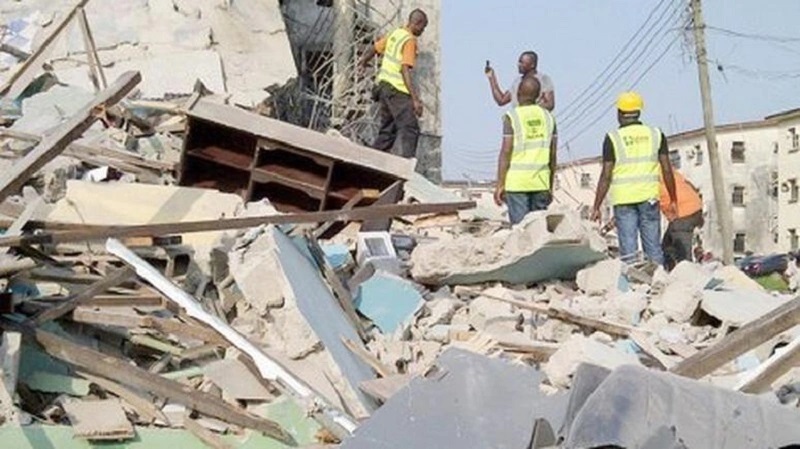
Collapsed Buildings; The Devil Did Not Do This!

0

News broke out earlier this week that one of the branches of arguably the largest church in Nigeria collapsed killing the resident pastor of the church and other worshippers sustaining grave injury in Makurdi, Benue state. 

When it has to do with religious settings like this the first person to accuse is the devil. The default response will be some religious mantra like, “It is the work of the devil but the devil has failed the battle”. Expectedly, this was the response of the pastors of the church and other members. 

Honestly, I am not oblivion of the forces of dark supernatural powers and their activities, I have seen it at work on numerous occasions and religiously and spiritually speaking the collapse of a large church building like that and the occurrence of other despicable evils could be the work of the devil but after cussing out the devil and all the accusations we will have to go back to the drawing board and analyze facts and logic on why a large church building like that collapsed. 

Building collapsing is becoming the order of the day in Nigeria; residential buildings and commercial complexes are always caving in, especially in big cities like Lagos and Abuja but a church building with thousands of active daily worshippers who could have been the victims collapsing is highly nerve-racking. Just imagine if the building had collapsed on a Sunday or during a weekly church service, hundreds of people could have died and the survivors could have blamed the devil and prayed that affliction should not rise again the second time. 

I still cannot forget about a building that collapsed close to my area here in Abuja earlier this year when I witnessed many dead people being excavated from the debris of the collapsed building. Some of us wrote petitions to the Federal Capital Territory Development Agency (FCDA) and even to the FCT minister himself asking him to launch an active investigation on the cause of that collapse but we are yet to hear of what has been done about that especially if the developers and the contractors have been made to face the music of the law and steps that has been taken to ensure that incidents like that do not occur regularly hence why anytime I see or hear from the news that a building collapsed it is always traumatizing for me because most of the reason why some of these buildings do collapse is just sheer carelessness and negligence of the builders, the contractors and the development agencies contrary to the accusation that it is devil’s handwork.

We may continuously accuse the devil but the devil did not actually or directly cause them. Someone somewhere approved a building without doing a proper inspection; some developer somewhere did bribe a development control agent so as to overlook some irregularities; someone somewhere used substandard materials for the building, someone somewhere failed to properly supervise the ongoing building process, someone somewhere wanted to cut cost and used a bag of cement to get tonnes of bricks more than it was due. These were not the devil, these are human beings; believe me, the devil did not do it. 

Building control agencies really need to step up their games. It is now a national crisis that the federal government will have to take charge and declare a state of emergency on building collapses and set up active task forces to monitor buildings; vet and approve new buildings, insist on standards and quality control and demolish old buildings that pose risks. 

Builders also need to stop using cheap or substandard materials or trying so much to cut costs or to get more for less. These are human lives that we are using to gamble like this. If your budget as a builder is two million naira, please build a house that is worth two million naira. Trying to build a house that is worth ten million naira on a two-million naira budget is dangerous. You cannot use one bag of cement to get a hundred or even more bricks of blocks. It may save immediate cost for you but the future threat could be devastating and when it happens, everyone will blame the devil. 

Are Domestic Contracts Enforceable?

0

Continuation to our learning the law series; Can Domestic Contracts Be Enforceable In Law? 

If a man maybe during lovemaking with the wife or under any other circumstances makes a promise to the wife and fails to fulfill that promise can the wife sue the man for the man to fulfill his promise? 

What if a parent asks a child to do some domestic chores and the parent promises the child money or other material things in exchange for the child to execute the task, can the child sue the parent for them to fulfil the promise after the child has executed the task and the parent fails to fulfill the promise?

What about a boyfriend promising the girlfriend some money or promising to buy the girlfriend a house or a car and the boy fails to fulfil his promises to the girlfriend, can the girlfriend sue the guy for the execution of his promise?

An instance like the above scenarios have been tested in court as far back as 1919 and the court ruling in such an instance was that there is a rebuttable presumption against an intention to create a legally binding and enforceable agreement when the agreement is domestic in nature. This means that when an agreement is made between a husband and a wife or a parent and a child and such contract is a domestic one, it is generally presumed that there is no intention for that contract to be legally binding hence why it may not be enforceable in court.

This principle of rebuttable presumption against an intention to create a legally enforceable agreement in domestic contracts was laid down in the 1919 England case of Balfour v Balfour [1919] 2 KB 571. 

What happened in the case was that in 1915 Mr Balfour promised his wife Mrs Balfour a monthly stipend of 30£. Later on, the husband and wife had a fallout and Mr Balfour was no longer consistent with the payment of the 30£ monthly stipend so Mrs Balfour sued him so that the court will mandate Mr Balfour to keep up his promise of sending her 30£ every month. The court held that the promise made by Mr. Balfour to Mrs. Balfour is domestic in nature and there is a presumption that there was no legal intention backing such a domestic agreement hence why such promise can not be enforced in court. 

This case laid down the locus classicus in legal jurisprudence stating that even when an contract or an agreement has fulfilled and contained every ingredients that makes up a valid contract in law which include; offer, acceptance, consideration etc such a contract may still not be enforceable because it is presumably that  the parties to such contract had no intention for such contract to be legally binding.  Therefore,  once an agreement is of domestic nature it may not be enforceable in court because the parties to the contract had no intention for the contract to be legally binding unless it is proven otherwise. 

Please note that a domestic contract is an agreement reached. between two or more people living in a family or together in a household.

NAFDAC Guidelines on Service Drugs and Orphan Drug Schemes in Nigeria

0

Service drugs are medicines that are not readily available in the Nigerian market but are needed to meet varying unique individual health needs of patients and clients within the community while orphan drugs are medicines that are developed specifically to treat rare medical conditions in fewer than 200,000 persons within the country.

This article looks into the notable provisions of the National Agency For Food and Drug Administration and Control NAFDAC Guidelines on The Operation Of Service Drugs and Orphan Drug Schemes in Nigeria.

Application

– Applications shall be open to all community pharmacies (valid licenced premises by Pharmacist Council Nigeria (PCN) owned and operated by Pharmacists with valid and current license which must be issued by the PCN).

– The Applicant should show evidence of membership with the Association of Community Pharmacists of Nigeria (ACPN).

– For multinational concerns, requests for service drugs for specific products, application can be processed under this scheme in special circumstances.

– Products that qualify to be treated under the Service Drug scheme are those which are needed for the treatment of critical health conditions for which there are no local capacity to meet those needs.

– Products that qualify should be sourced from any of the following manufacturing facilities:

i.Facilities situated in countries within the Stringent Regulatory Authority (SRA) Region.

ii.Facilities situated in countries that are among the Pharmaceutical Inspection Convention Scheme (PIC/S) member countries.

– Products should be labelled in English language.

– Pharmacies are to maintain a register for the disposal of the service/orphan drugs for ease of verification.

– Orphan drug request should be submitted with a prescription from a recognised hospital with clear indication on the name of the prescriber, signature of the prescriber and duration of the medication.

– Only generics and brands not already registered shall be allowed. However,any company wishing to import small quantities of an already registered brand or generic must bring a “no objection letter” from the party that registered it and this letter shall be verified by NAFDAC.

– The following products are not qualified under the Service Drug and Orphan Drug Scheme and should be excluded from the Scheme:

i.Products for which there is local capacity.

ii.Products for which there are safety concerns.

iii.Product on the NAFDAC Ceiling list.

iv.Products on the Federal Government Import Prohibition.

-The number of products per application should not be more than 2000 items.

– The quantity to be imported shall not exceed 500unit packs per product perannum and the importation may be in parts.

– The following information: Brand name, Active ingredient(s) and strength, pack size, quantity, and manufacturer name and country of origin should be provided in soft copies (Ms word/Excel).

– Where there are Narcotics, Psychotropic substances, and any controlled drugs,an authorization to import and clear such drugs must be obtained from the Narcotics & Controlled Directorate of NAFDAC.

Tariffs

The processing fee for Service drugs and Orphan drugs are as follows:

Over The Counter (OTC)

N 30,000.00 per product

Prescription only medicines (POM)

N 25,000.00 per product

Orphan Drugs: Payment is not required.

Notes

– It should be noted that :-

  • A permit for Service and Orphan drugs is valid for one (1) year from the date of issue.
  • All approved application should be immediately enrolled on the single window for trade to enable importation.
  • Products under this scheme are prohibited from Advertisement.


Are Social Media platforms ready to handle the rise of AI Deepfakes?

0
social media apps

Artificial intelligence (AI) has enabled the creation of realistic and convincing deepfakes, which are synthetic media that manipulate the appearance or voice of a person or an object. Deepfakes can be used for various purposes, such as entertainment, education, or satire, but they can also pose serious threats to the integrity of information, the privacy of individuals, and the security of society.

Social media platforms are one of the main channels for the dissemination and consumption of deepfakes, as they allow users to easily share and access content. However, social media platforms also face significant challenges in dealing with the rise of AI deepfakes, such as:

Detecting and verifying deepfakes: Social media platforms need to develop and deploy effective methods to identify and verify deepfakes, as well as to inform and educate users about their presence and potential impacts. However, this is not an easy task, as deepfake technology is constantly evolving and becoming more sophisticated, making it harder to distinguish between real and fake content.

Balancing freedom of expression and responsibility: Social media platforms need to balance the right of users to express themselves freely and creatively with the responsibility to prevent and mitigate the harms caused by malicious or deceptive deepfakes. However, this is not a simple task, as different types of deepfakes may have different legal and ethical implications, depending on their context, intent, and effect.

Coordinating with stakeholders: Social media platforms need to coordinate with various stakeholders, such as governments, regulators, civil society, researchers, and users, to establish and enforce clear and consistent policies and standards for dealing with deepfakes. However, this is not a straightforward task, as different stakeholders may have different interests, perspectives, and expectations regarding the regulation and governance of deepfakes.

One of the main challenges of dealing with deepfakes is to detect and verify them before they cause harm or confusion. However, this is not an easy task, as deepfake technology is constantly evolving and becoming more sophisticated. Moreover, deepfakes can be disseminated quickly and widely through social media platforms, which have a large and diverse user base and a high degree of interactivity.

Social media platforms have a responsibility to ensure that their users are not exposed to harmful or misleading deepfakes, but also to respect their freedom of expression and creativity. Therefore, they need to adopt a balanced and proactive approach to handle the rise of AI deepfakes.

Developing and implementing robust and transparent policies and guidelines for the use and sharing of deepfake content on their platforms. These policies should clearly define what constitutes a deepfake, what are the acceptable and unacceptable uses of deepfake technology, and what are the consequences for violating the rules.

Investing in research and innovation to improve their own capabilities and technologies for deepfake detection and verification. This could involve using advanced AI techniques, such as deep learning, computer vision, natural language processing, and audio analysis, to analyze the features and characteristics of deepfake content and compare them with authentic sources.

Providing users with easy-to-use and accessible tools and features to help them identify, report, flag, or challenge deepfake content on their platforms. This could include providing visual or auditory cues or indicators to signal that a content is a deepfake, enabling users to verify the source or origin of a content, or allowing users to provide feedback or ratings on the quality or reliability of a content.

Promoting ethical and responsible use of deepfake technology among their users and creators. This could include encouraging users to disclose or label their deepfake content as such, providing guidelines or tips on how to create or use deepfake content in a respectful and lawful manner, or rewarding or incentivizing users who create or use deepfake content for positive or beneficial purposes.

Social media platforms are not fully ready to handle the rise of AI deepfakes, as they face multiple and complex challenges that require technical, legal, ethical, and social solutions. Therefore, social media platforms need to invest more resources and efforts in developing and implementing effective strategies to address the issue of deepfakes in a proactive and collaborative manner.