
DD
MM
YYYY

PAGES

DD
MM
YYYY

spot_img

PAGES

Home Blog Page 3725

Crypto scams are a serious threat to the security and integrity of the crypto ecosystem

0

Crypto scams are a serious threat to the security and integrity of the crypto ecosystem. In this blog post, we will explore some of the most common types of crypto scams, how they work, and how to avoid them. We will also share some tips on how to protect your crypto assets and report any suspicious activity.

Crypto scams are fraudulent schemes that aim to deceive crypto users and steal their funds or personal information. Crypto scams can take many forms, such as phishing, fake exchanges, fake wallets, fake ICOs, Ponzi schemes, ransomware, and more. Crypto scams often exploit the lack of regulation, transparency, and education in the crypto space, as well as the high volatility and anonymity of crypto transactions.

Some of the most common types of crypto scams are:

Phishing: Phishing is a type of scam that involves sending fake emails or messages that impersonate legitimate entities, such as crypto exchanges, wallets, or projects. The goal is to trick users into clicking on malicious links or attachments or entering their credentials or private keys on fake websites. Phishing can result in the loss of access to your crypto accounts or funds, or the installation of malware on your device.

Fake exchanges: Fake exchanges are websites that pretend to offer crypto trading services but are actually designed to steal your money or personal information. Fake exchanges may lure users with attractive features, such as low fees, high returns, or exclusive offers. However, once users deposit their funds or provide their personal details, they may never be able to withdraw them or access their accounts again.

Fake wallets: Fake wallets are applications or websites that claim to store your crypto assets securely but are actually controlled by scammers. Fake wallets may look like legitimate ones, but they may have hidden backdoors that allow scammers to access your funds or private keys. Fake wallets may also generate invalid addresses or QR codes that redirect your funds to the scammers’ accounts.

Fake ICOs: Fake ICOs are initial coin offerings that promise to launch a new crypto project or token but are actually scams that run away with your money. Fake ICOs may create fake websites, whitepapers, social media accounts, and marketing campaigns to attract investors. However, once they collect enough funds from unsuspecting users, they may disappear without delivering any product or service.

Ponzi schemes: Ponzi schemes are scams that promise high returns on your investment but are actually paying old investors with new investors’ money. Ponzi schemes rely on a constant inflow of new investors to sustain their payouts, but eventually collapse when they run out of funds or get exposed. Ponzi schemes may use crypto as a cover for their operations or claim to offer crypto-related products or services.

Ransomware: Ransomware is a type of malware that encrypts your files or locks your device and demands a ransom in crypto to restore your access. Ransomware can infect your device through phishing emails, malicious downloads, or compromised websites. Ransomware can target individuals or organizations and may threaten to delete your files or expose your sensitive data if you don’t pay the ransom.

Crypto scams can be very sophisticated and convincing, but there are some steps you can take to protect yourself and your crypto assets from them:

Do your research: Before engaging with any crypto-related entity, such as an exchange, a wallet, a project, or an ICO, do your due diligence and verify their legitimacy and reputation. Check their official website, social media accounts, reviews, ratings, and feedback from other users. Look for signs of credibility, such as licenses, regulations, partnerships, audits, and security measures. Avoid entities that have red flags, such as poor grammar, spelling errors, unrealistic claims, or lack of transparency.

Use secure platforms: Only use trusted and reputable platforms for your crypto transactions and storage. Choose platforms that have strong security features, such as encryption, two-factor authentication (2FA), multi-signature (multisig), cold storage (offline), and anti-phishing protection. Avoid platforms that have been hacked or compromised in the past.

Protect your devices: Keep your devices updated with the latest software and security patches. Use antivirus software and firewall to prevent malware infections. Avoid using public Wi-Fi networks or devices for your crypto activities. Use a VPN (virtual private network) to encrypt your internet traffic and hide your IP address.

Protect your keys: Your private keys are the passwords to your crypto assets. Never share them with anyone or enter them on any website or application that you don’t trust. Store them securely in a hardware wallet (a physical device) or a paper wallet (a printed copy). Don’t store them online or on your device’s memory. Backup your keys and keep them in a safe place.

Be cautious: Don’t click on any links or attachments that you receive from unknown sources or that look suspicious. Don’t provide any personal information or credentials to anyone who asks for them unsolicited. Don’t send any funds to anyone who promises you high returns or rewards. Don’t download any software or applications that you are not familiar with or that are not from official sources.

Report scams: If you encounter or fall victim to a crypto scam, report it to the relevant authorities and platforms as soon as possible. You can also report it to online communities and forums, such as Reddit, Twitter, or Telegram, to warn other users and prevent further damage. You can also use websites, such as Scam Alert, Crypto Scam Checker, or Crypto Scam Database, to check or report crypto scams.

Crypto scams are a serious threat to the security and integrity of the crypto ecosystem, but they can be avoided with some awareness and caution. By following these tips, you can protect yourself and your crypto assets from scammers and enjoy the benefits of the crypto world safely and securely.
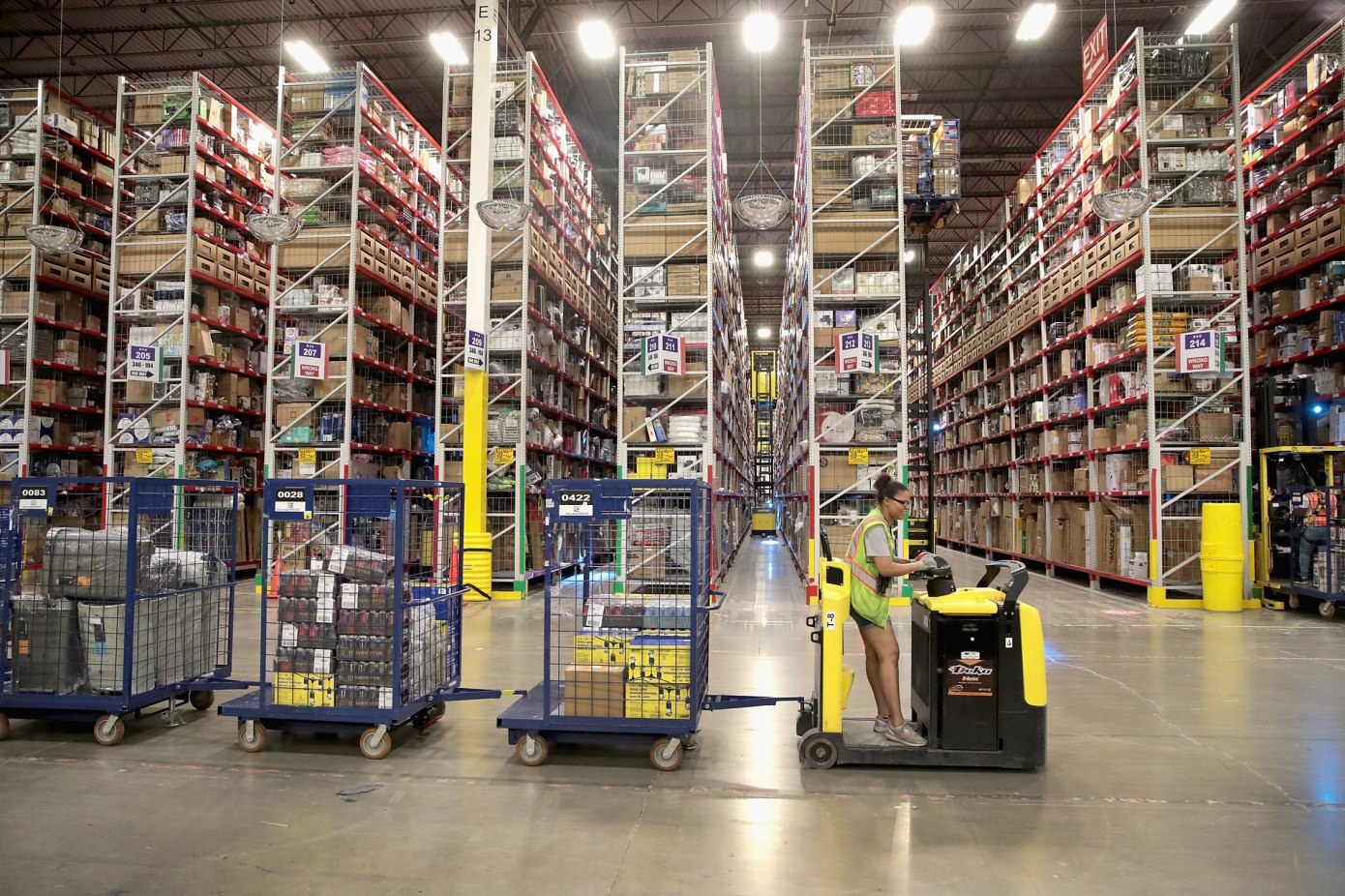

Amazon Tests New Humanoid Robots in A Warehouse Automation Push

0
ROMEOVILLE, IL - AUGUST 01: Workers pack and ship customer orders at the 750,000-square-foot Amazon fulfillment center on August 1, 2017 in Romeoville, Illinois. On August 2, Amazon will be holding job fairs at several fulfillment centers around the country, including the Romeoville facility, in an attempt to hire more than 50,000 workers. (Photo by Scott Olson/Getty Images)

Amazon.com Inc., the world’s leading e-commerce giant, is forging ahead with its quest for greater automation in its vast network of warehouses, with the introduction of two groundbreaking technologies. In a recent blog post, the company revealed that it is currently experimenting with a humanoid robot and an inventory-sorting technology to improve operational efficiency.

The humanoid robot, affectionately named “Digit,” was developed by Agility Robotics Inc. This bipedal robot exhibits remarkable dexterity, as it can squat, bend, and manipulate objects using hand-like clasps. Initially, Digit’s role will be to assist employees in consolidating totes that have been emptied of their contents. Amazon took a significant step toward this initiative when it invested in Agility Robotics last year.

While Amazon has been employing robots in its warehouses for over a decade, primarily for transporting inventory to human workers, the company is now making strides toward a new warehousing paradigm. The traditional method of manually stocking inventory onto mesh shelving is evolving into a container-based storage system. This transformation accommodates the seamless integration of robotic arms and other automated technologies for sorting and selecting items.

The e-commerce giant cited significant safety improvements within Amazon Robotics sites. In 2022, these sites recorded a 15% reduction in recordable incident rates and an 18% drop in lost-time incident rates compared to non-robotics sites.

In addition to the introduction of Digit, Amazon is experimenting with “Sequoia,” an advanced technology designed to identify and sort inventory items into containers. These containers are then accessed by employees who retrieve items ordered by customers. For any remaining products, Amazon employs a robotic arm known as “Sparrow,” which was unveiled last year. According to Amazon, the Sequoia system is already operational in a Houston warehouse and has the potential to reduce order processing times by as much as 25%.

This technological shift in Amazon’s warehousing process brings the operation closer to an assembly line model, in contrast to the traditional approach where employees manually search for items on shelves.

Notably, Amazon is aligning these automation efforts with a focus on enhancing employee safety. The company has come under scrutiny from both Washington state and federal regulators due to injury rates exceeding industry averages. By automating repetitive tasks that often lead to injuries, Amazon aims to improve workplace safety and employee well-being.

Amazon’s continued investment in robotics and automation technology underscores its commitment to delivering products to customers more efficiently and safely, as it strives to stay ahead in the fiercely competitive e-commerce landscape.

The deployment of these innovative technologies is poised to revolutionize the warehousing industry and promises to play a pivotal role in shaping the future of logistics and e-commerce.

Amazon is revamping its warehouses with new artificial intelligence and robotics technology, beginning this week with a fulfillment center in Houston and rolling out over the next three to five years. The system, dubbed Sequoia, can identify and store inventory up to 75% faster and cut fulfillment time up to 25%, according to the company. Amazon said the new sorting machines, along with previously introduced robotic arms, are designed to work alongside employees and help reduce injuries, not eliminate jobs, The Wall Street Journal reports.

Amazon will also be testing a bipedal robot named Digit to handle empty totes. The company is now using drones to drop prescription medications on doorsteps for Amazon Pharmacy customers in College Station, Texas, it announced Wednesday.

Google Cuts Workforce in News Division As Tech Industry Challenges Continue

0

Google has initiated a round of job cuts in its news division, impacting dozens of employees, in a move that is raising concerns within the industry, according to a CNBC report.

The downsizing comes at a time when online platforms and publishers are grappling with misinformation challenges and as global events demand accurate and timely news coverage.

According to a spokesperson from the Alphabet Workers Union, approximately 40 to 45 workers in Google News have lost their jobs. However, the exact number of affected employees remains undisclosed by Google.

A Google spokesperson confirmed the cuts and emphasized that there are still hundreds of employees dedicated to the news product. The spokesperson stated, “We’re deeply committed to a vibrant information ecosystem, and news is a part of that long-term investment. We’ve made some internal changes to streamline our organization. A small number of employees were impacted. We’re supporting everyone with a transition period, outplacement services, and severance as they look for new opportunities at Google and beyond.”

Google News is a prominent platform that offers links to articles from thousands of publishers and magazines. It is widely used by individuals who rely on Google Search to discover top-ranked stories on various topics.

The timing of these layoffs is critical, as it coincides with the ongoing conflict between Israel and Hamas, which has resulted in thousands of casualties since October 7 and follows the 20-month-long Russian invasion of Ukraine. These global crises have led to a surge in the spread of misinformation, underscoring the importance of platforms like Google in delivering reliable and up-to-date news.

U.S. Senator Michael Bennet, representing Colorado, has already sought information from major tech companies, including Google, regarding their efforts to combat the spread of false and misleading content concerning the Israel-Hamas conflict. European Union industry chief Thierry Breton has also urged tech companies to take more stringent measures to combat disinformation, reminding Google and YouTube of the content moderation requirements under the EU’s Digital Services Act.

Despite these job cuts, Google’s spokesperson emphasized that these internal changes have no impact on their ongoing work to combat misinformation and maintain information quality in Google News.

In response to the rising challenges of misinformation, many tech companies have been bolstering their content moderation teams to address the issue more effectively.

Meanwhile, several countries, including Canada, are considering legislation that would compel tech platforms to compensate publishers for their content.

These job cuts in Google News follow a series of layoffs that have occurred across different parts of the company throughout the year. In January, Google announced its decision to cut 12,000 jobs, affecting approximately 6% of its full-time workforce. Just last month, hundreds of positions were eliminated from Google’s recruiting organization.

One staff engineer at Google News shared their thoughts on the layoffs through a post on LinkedIn, expressing their admiration for their now former colleagues: “These are some of the best and brightest people I’ve ever worked with. We’re definitely worse off without them.”

The future of Google News and the impact of these job cuts on the information ecosystem will continue to be closely monitored as the industry adapts to evolving challenges.

Nokia To Cut Jobs Also

Telecoms company Nokia on Thursday announced its plan to cut between 9,000 and 14,000 jobs by the end of 2026.The company recently reported a third-quarter net sales decline of 20 per cent year-on-year to 4.98 billion euros. Profit over the period plummeted by 69 per cent year-on-year to 133 million euros.

The company said the move is to address the challenging market environment.

“To address the market environment Nokia will reduce its cost base and increase operational efficiency while protecting its R&D capacity and commitment to technology leadership,” Nokia said in a statement.

Nigerian Fintech Firm Kippa Has Opted to Halt Its Payments Product And is Planning to Downsize Workforce

0

Kippa, a Nigerian fintech company has made the tough decision to cease its offline payments product (KippaPay), and is in the process of downsizing its workforce by the end of the year.

The company did not however disclose the number of employees to be laid off, but stated that the core team responsible for the payments products will exit their role by December.

CEO and Founder of Kippa Kennedy Ekezie described the proposed layoff as a tough decision taken, stating that it was related to profitable product portfolio consolidation.

In his words,

“Today, we announce that we’re pulling back our offline payments product KippaPay from the market. Over the past 18 months, we launched and grew this arm of our product suite to support merchants with offline payments and agency banking through our POS terminals.

“This company decision is related to profitable product portfolio consolidation. This decision unfortunately means that the core of our team supporting the KippaPay product will be leaving us in December 2023. This has been an incredibly difficult decision for us to make, but we are incredibly proud of the work this team has done, and the impact KippaPay had on our merchants.

“Starting November 15th, our KippaPay product will no longer be available for use by merchants. In the weeks leading up to this, we will provide support for our merchants and partners helping them transition off the product and resolve any pending settlements.”

Pending the product’s final shutdown, the company had stated that it would resolve pending settlements for its merchants.

About Kippa

Founded in June 2021, Kippa provides digital business and financial management solutions to SMEs in Nigeria.

One of the app’s most important features, is that it helps merchants keep track of debtors and send automated reminders to them. The company claims that merchants who use Kippa recover debts 3 times faster.

Since its inception, the startup has received backing from international investors to develop products that will help SMEs grow their businesses.

In 2021, Kippa raised pre-seed funding of $3.2 million with the plan of onboarding merchants to a simple-to-use mobile bookkeeping app to help them digitize bookkeeping and recover customer debt.

According to Kippa, since the pre-seed announcement, it stated that it has made tremendous progress in recruiting ex-regulators and former senior executives at top startups, which include Opay, NIBSS, Khatabook, TeamApt, OKCredit, and Unified Payments, among others.

In an interview with th CEO Ekezie, he said Kippa had more than 130,000 active businesses, ranging from small kiosks and street corner shops to local food vendors and high-end merchants.

Fast forward to 2022, Kippa raised $8.4 million in an oversubscribed seed round from backers such as Goodwater Capital, TEN13 VC, Rocketship VC, Saison Capital, Crestone VC, VentureSouq, Horizon Partners, and Vibe Capital.

In the same year, the company announced that it had obtained a license from Nigeria’s apex bank, the Central Bank of Nigeria (CBN), to operate as a Super Agent, just like agency banking players OPay and Moniepoint.

Kippa works as a simple app where small business owners can keep track of their daily income and expense transactions, create invoices and receipts, manage inventory, and generally monitor how their businesses ebb and flow over time.

That startup says its mission is to make it easy for anyone to start and run profitable small businesses in Africa.

African indigenous companies are globally undervalued

0

Africa is home to many innovative and resilient companies that have been creating value and solving problems for their communities and beyond. However, these companies face challenges in accessing capital, markets, and talent, as well as unfair competition from foreign firms that enjoy more favorable conditions. As a result, African indigenous companies are globally undervalued and underrepresented.

I will explore some of the reasons why African indigenous companies are globally undervalued, and what can be done to change this situation. I will also highlight some of the success stories of African indigenous companies that have overcome the odds and achieved global recognition and impact.

One of the main reasons why African indigenous companies are globally undervalued is the lack of awareness and appreciation of their potential and achievements. Many investors, consumers, and media outlets tend to overlook or underestimate the value proposition and competitive advantage of African indigenous companies, and instead focus on the risks and challenges they face. This creates a negative perception and bias that affects the valuation and growth prospects of these companies.

Another reason why African indigenous companies are globally undervalued is the lack of adequate support and enabling environment for their development. Many African countries lack the infrastructure, policies, regulations, and institutions that can foster a conducive ecosystem for entrepreneurship and innovation.

For instance, African indigenous companies often face difficulties in accessing finance, registering their businesses, protecting their intellectual property rights, complying with tax laws, and accessing quality education and training. These factors limit their ability to scale up, expand their markets, and attract talent.

A third reason why African indigenous companies are globally undervalued is the unfair competition they face from foreign firms that have more resources, networks, and influence.

Many foreign firms operate in Africa with preferential treatment from governments, donors, and multilateral organizations, such as tax breaks, subsidies, contracts, and grants. These firms also benefit from their global brand recognition, customer loyalty, and economies of scale.

This creates an uneven playing field for African indigenous companies that have to compete with these firms on quality, price, and innovation.

There are several actions that can be taken to change the situation of African indigenous companies being globally undervalued. Some of these actions include:

Raising awareness and appreciation of the value and impact of African indigenous companies among investors, consumers, media outlets, policymakers, and other stakeholders. This can be done by showcasing the success stories of African indigenous companies that have created innovative solutions, generated employment, contributed to social development, and improved environmental sustainability.

This can also be done by promoting positive narratives and images of Africa as a continent of opportunities, creativity, and diversity.

Providing adequate support and enabling the environment for the development of African indigenous companies. This can be done by improving the infrastructure, policies, regulations, and institutions that can facilitate entrepreneurship and innovation in Africa.

For instance, this can be done by increasing access to finance, simplifying business registration processes, strengthening intellectual property rights protection systems, streamlining tax laws, and enhancing education and training quality and relevance.

Leveling the playing field for African indigenous companies to compete fairly with foreign firms. This can be done by ensuring that foreign firms operate in Africa with transparency, accountability, and social responsibility.

This can also be done by encouraging foreign firms to partner with African indigenous companies to share knowledge, skills, resources, and markets. This can also be done by advocating for fair trade practices and policies that protect the interests of African indigenous companies.

Despite the challenges they face, many African indigenous companies have proven their worth and potential in the global market. Here are some examples of such companies:

Safaricom: Safaricom is a leading telecommunications company in Kenya that offers mobile money services through its M-Pesa platform. M-Pesa has revolutionized financial inclusion in Kenya and other countries by enabling millions of people to send and receive money using their mobile phones. M-Pesa has also enabled the development of other digital services such as e-commerce, healthcare, education, agriculture, and energy.

Flutterwave: Flutterwave is a fintech company that provides payment solutions for businesses across Africa. Flutterwave enables businesses to accept payments from customers using various methods such as cards, mobile money, bank transfers, and cryptocurrencies.

Flutterwave also enables businesses to access global markets by integrating with platforms such as Shopify, Amazon, and PayPal. Flutterwave has processed over $9 billion in transactions across 33 African countries.

Jumia: Jumia is an e-commerce platform that connects buyers and sellers across Africa. Jumia offers a variety of products such as electronics, fashion, beauty, groceries, and books.

Jumia also offers services such as food delivery, travel booking, and classifieds. Jumia has over 6 million active customers across 14 African countries and is the first African startup to be listed on the New York Stock Exchange.

Zipline: Zipline is a drone delivery company that delivers medical supplies such as blood, vaccines, and medicines to remote and hard-to-reach areas in Africa. Zipline uses autonomous drones that can fly up to 100 km and carry up to 1.8 kg of cargo. Zipline has delivered over 100,000 medical supplies to health facilities in Rwanda and Ghana, saving lives and improving health outcomes.

Andela: Andela is a talent marketplace that connects software developers from Africa with global companies that need their skills. Andela provides training, mentorship, and support to developers and matches them with projects that suit their expertise and interests. Andela has over 1,500 developers from six African countries working with companies such as Microsoft, IBM, and Facebook.

African indigenous companies are globally undervalued, but they have the potential and capacity to create value and impact for their communities and the world. They need more awareness, appreciation, support, and fair competition to thrive and grow. They also need more recognition and celebration for their achievements and contributions. African indigenous companies are the future of Africa and the world.