DD
MM
YYYY

PAGES

DD
MM
YYYY

spot_img

PAGES

Home Blog Page 3726

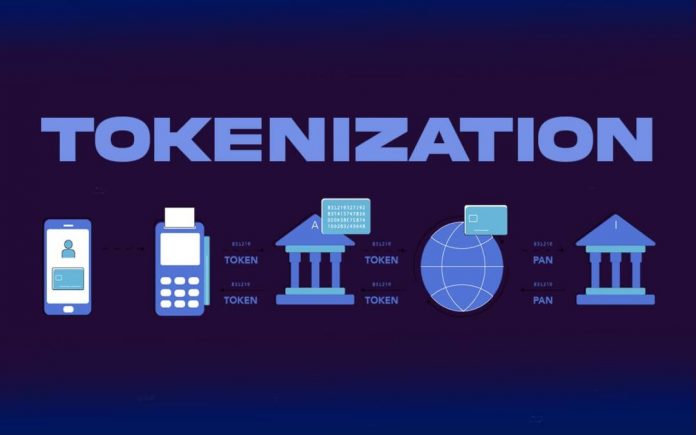
ERC-721 and ERC-20 standards can Create a new Paradigm for Tokenization

0

If you are looking for a new and innovative way to invest in the crypto space, you might want to check out Pandora, the first ERC-404 token that combines the best features of ERC-721 and ERC-20 standards. Pandora is a decentralized platform that allows users to create, trade and collect unique digital assets, such as art, music, games and more.

Pandora uses the ERC-404 standard, which is a novel extension of the ERC-721 protocol that enables the creation of non-fungible tokens (NFTs) with dynamic properties and functionalities.

Unlike traditional NFTs, which are static and immutable, Pandora’s NFTs can change their appearance, behavior and value over time, depending on various factors such as market demand, user interaction and external events. This makes Pandora’s NFTs more engaging, interactive and adaptive to the needs and preferences of their owners and collectors.

Pandora also leverages the ERC-20 standard, which is the most widely used protocol for creating fungible tokens (FTs) that can be easily exchanged and transferred on the Ethereum network. Pandora’s FTs are used as the native currency of the platform, as well as the medium of exchange for buying and selling NFTs.

Pandora’s FTs also have a unique feature: they can be converted into NFTs and vice versa, depending on the user’s choice. This gives users more flexibility and control over their digital assets, as well as the opportunity to benefit from both the liquidity of FTs and the scarcity of NFTs.

Pandora’s innovative approach to tokenization has attracted a lot of attention and interest from investors, collectors and creators alike. Since its launch in December 2023, Pandora has seen a tremendous growth in its user base, trading volume and market capitalization.

Pandora’s FTs, which are traded under the symbol PND, have increased in value by over 10,000% in less than two months, reaching an all-time high of $12.34 on February 6th, 2024. Pandora’s NFTs have also been selling like hotcakes, with some of them fetching prices in the six or seven figures range. Some of the most popular NFTs on Pandora include:

The Genesis Collection: a series of 10,000 unique and randomly generated digital artworks that represent the origin and evolution of Pandora. Each artwork has a different rarity level and a hidden trait that can be unlocked by its owner. The Genesis Collection was sold out within minutes of its release, with some artworks being resold for over $100,000.

The Metaverse Project: a collaborative and immersive virtual reality experience that allows users to explore, create and interact with various digital worlds and avatars. The Metaverse Project is powered by Pandora’s NFTs, which can be used as access keys, customization tools and social tokens. The Metaverse Project has attracted over 1 million users so far, making it one of the most popular VR platforms in the crypto space.

The Music Box: a decentralized music streaming service that allows users to discover, listen and support independent artists from around the world. The Music Box is based on Pandora’s NFTs, which can be used as digital albums, tickets and fan tokens. The Music Box has partnered with over 10,000 artists so far, offering them a fair and transparent way to monetize their music.

Pandora is undoubtedly one of the most innovative and successful projects in the crypto space right now. It has proven that combining ERC-721 and ERC-20 standards can create a new paradigm for tokenization that offers more value, utility and diversity to users. Pandora is not only a platform for creating and trading digital assets, but also a community for sharing and expressing creativity, passion and vision.

US Treasury Secretary calls on Congress to pass Crypto Legislation

0

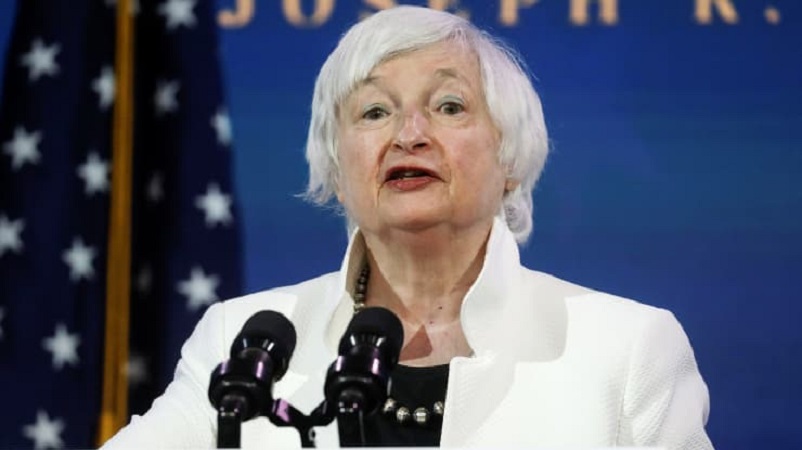
In a recent statement, Treasury Secretary Janet Yellen urged Congress to enact legislation to address the challenges and risks posed by the growing use of cryptocurrencies. She said that the current regulatory framework is inadequate and outdated, and that it leaves consumers, investors, and the financial system vulnerable to fraud, cyberattacks, money laundering, and tax evasion.

Yellen highlighted some of the benefits of crypto innovation, such as faster and cheaper payments, greater financial inclusion, and more efficient capital markets. However, she also warned that these benefits come with significant trade-offs and dangers, such as volatility, environmental impact, illicit activity, and lack of consumer protection and balancing the need for regulatory oversight and enforcement with the respect for privacy and civil liberties.

She said that the Treasury Department has been working with other federal agencies and international partners to develop a comprehensive and coordinated approach to crypto regulation. She also said that the Treasury has been engaging with stakeholders from the private sector, academia, civil society, and state and local governments to solicit feedback and input.

Yellen emphasized that Congress has a critical role to play in shaping the future of crypto regulation. She said that existing laws and rules are not sufficient to address the unique features and challenges of crypto assets and activities. She called on lawmakers to pass legislation that would provide clarity, consistency, and certainty for the crypto industry and its users.

The Secretary also outlined some of the key principles that should guide the crypto legislation, such as:

Establishing a clear and consistent regulatory framework for crypto activities across different agencies and jurisdictions.

Promoting responsible innovation and competition in the crypto sector while protecting consumers and investors from fraud and abuse.

Enhancing cooperation and coordination among federal, state, and international authorities on crypto matters.

Fostering transparency and accountability in the crypto market by requiring reporting and disclosure of relevant information.

Ensuring that crypto entities comply with anti-money laundering, counter-terrorism financing, sanctions, and tax obligations.

The US government has been working on a comprehensive framework for regulating the crypto industry, which has grown exponentially in the past few years. The framework aims to balance the innovation and potential of crypto with the protection of investors, consumers, and national security.

The framework is based on four main principles:

Clarity: The framework defines the roles and responsibilities of different federal agencies, such as the SEC, CFTC, FinCEN, and the IRS, in overseeing various aspects of the crypto ecosystem, such as securities, commodities, anti-money laundering, and taxation. It also clarifies the legal status and treatment of different types of crypto assets, such as stablecoins, tokens, and NFTs.

Innovation: The framework encourages and supports the development and adoption of crypto technologies, such as blockchain, smart contracts, and decentralized applications. It also creates a regulatory sandbox for testing new products and services in a safe and controlled environment, with appropriate safeguards and oversight.

Inclusion: The framework promotes financial inclusion and access for all Americans, especially those who are underserved or unbanked by the traditional financial system. It also fosters diversity and inclusion in the crypto industry, by ensuring equal opportunities and representation for women, minorities, and other marginalized groups.

Security: The framework protects the integrity and stability of the crypto market, by preventing fraud, manipulation, cyberattacks, and other illicit activities. It also protects the privacy and security of users’ data and funds, by requiring adequate disclosures, safeguards, and compliance from crypto service providers.

The Secretary concluded by saying that the US has a unique opportunity to lead the world in shaping the future of crypto and digital assets, but it requires urgent and decisive action from Congress. The Secretary said that the Treasury Department stands ready to work with lawmakers and stakeholders to advance this important agenda.

Federal Reserve Bank of Minneapolis’s President, Neel Kashkari explains why he is skeptical of Bitcoin as a Currency

Meanwhile, Bitcoin is a popular cryptocurrency that has attracted a lot of attention and investment in recent years. However, not everyone is convinced that it can function as a reliable and stable currency. In this blog post, I will explain why I am skeptical of bitcoin as a currency, and why I think it poses significant risks to the financial system and the economy.

First, let me clarify what I mean by a currency. A currency is a medium of exchange, a unit of account, and a store of value. A medium of exchange means that people can use it to buy and sell goods and services. A unit of account means that people can measure the value of things in terms of the currency. A store of value means that people can hold the currency and expect it to retain its purchasing power over time.

Bitcoin fails to meet these criteria for a currency. As a medium of exchange, bitcoin is very inefficient and costly. Transactions are slow, volatile, and subject to fraud and hacking. The network consumes enormous amounts of energy and resources, which is wasteful and harmful to the environment. Moreover, bitcoin is not widely accepted or regulated by any government or central authority, which limits its usability and legitimacy.

As a unit of account, bitcoin is also unreliable and inconsistent. The price of bitcoin fluctuates wildly, depending on supply and demand, speculation, and market sentiment. This makes it hard to compare the value of different goods and services in terms of bitcoin, or to plan and budget for the future. Furthermore, bitcoin is not backed by anything tangible or credible, unlike fiat currencies that are backed by the full faith and credit of sovereign governments.

As a store of value, bitcoin is also risky and uncertain. The value of bitcoin can drop dramatically in a short period of time, eroding its purchasing power and wealth. There is no guarantee that bitcoin will retain its value in the long run, or that it will not be replaced by another cryptocurrency or technology. Additionally, bitcoin is vulnerable to theft, loss, or destruction, as there is no central authority or institution that can protect or insure it.

In summary, Neel Kashkari is skeptical of bitcoin as a currency because it fails to perform the basic functions of a currency. It is inefficient, costly, unstable, unregulated, unbacked, and insecure.

It poses significant challenges and threats to the financial system and the economy, as it can facilitate illicit activities, evade taxes and regulations, undermine monetary policy, destabilize markets, and create bubbles and crashes. I believe that fiat currencies issued by central banks are superior to bitcoin as currencies, as they are more efficient, stable, reliable, regulated, backed, and secure.

Some of the assertions postulated by Neel in his review does not reflect on the use cases and utilities tied around Bitcoin as a standard global Currency in its totality, transaction costs on Bitcoin are cheaper, efficient and durable to fiats but still have certain inherent contradictions like Scalability and Security.

Spraying Money or Making a Money Cake is a Crime in Nigeria.

0

A famous Nigerian actress was handed a six-month jail term by the court last week for the offence of spraying money during a party she hosted sometime in 2023. 

This punishment meted out to the beautiful actress comes as a surprise to many as many Nigerians do not know that spraying money at parties or in a nightclub is a criminal offence punishable with at least 6 months jail term. If everybody who has committed this offence is to be arrested and tried then thousands of persons (if not millions) will go to jail as spraying money and throwing money into the air has come to be an exciting habit that most socialites engage in. People are always eager to spray money at parties; fun has not started in clubs if the “ballers” don’t throw money into the air, people now spray money even in churches. Unfortunately, most of them do not know that such an exciting habit is a crime but as we say in Latin that “Ignorantia juris non excusat” which means that ignorance of the law excuses no one. 

Not just spraying money is a crime; anything (at all) that was done that is dishonourable to the naira or that tampers with the sanctity of the Nigerian currency is a crime and it’s punishable with a six-month jail term. Some of these dishonourable acts may include; making money cakes, money flowers or money bouquets, selling money, littering money on the floor, stepping on money, squeezing money, defacing money, washing money, etc.

This offence was criminalized by the Central Bank of Nigeria Act, 2007, particularly in its Section 21. This section provides thus; “A person who tampers with a coin or note issued by the Bank is guilty of an offence and shall on conviction be liable to imprisonment for a term not less than six months or to a fine not less than N50,000 or to both such fine and imprisonment”.

Subsequently, subsection two went ahead to explain what the word “tamper” means as used in sub-section one; “A coin or note shall be deemed to have been tampered with if the coin or note has been impaired, diminished or lightened otherwise than by fair wear and tear or has been defaced by stumping, engraving, mutilating, piercing, Stapling, writing, tearing, soiling, squeezing or any other form of deliberate and wilful abuse whether the coin or note has or has not been thereby diminished or lightened”. This simply means that whatever is done to have subjected the naira notes or coins to abuse implies tampering. 

As Valentine’s Day is around the corner when some lovers go the extra to send their partners money cake, money rose or money bouquet which are all decorated with money, it is pertinent to bring to your attention that such act is a crime as well as provided in S.21 and it is punishable with six months jail term. Using the naira to build a money cake or money bouquet for your lover can land you in jail as it is one of the acts that “tamper” with the currency as provided in section 21(2) of the CBN act, 2007. 


MicroStrategy adds 850 BTCs to its balance sheet, amid BlackRock and Fidelity leading institutional Bitcoin Holders

0

MicroStrategy, a leading business intelligence and cloud platform company, has announced that it has purchased an additional 850 Bitcoin, worth about $37.2 million, as part of its ongoing strategy to acquire more of the cryptocurrency as a reserve asset. The company now holds a total of 122,478 Bitcoin, valued at approximately $5.3 billion, according to a press release issued on February 7, 2024.

The company’s CEO, Michael Saylor, said that the purchase was made in accordance with its treasury reserve policy, which aims to maximize long-term value for its shareholders. He added that Bitcoin is a “dependable store of value” and an “attractive investment asset” that has more long-term appreciation potential than holding cash.

MicroStrategy was one of the first publicly traded companies to adopt Bitcoin as its primary treasury reserve asset, starting in August 2020. Since then, the company has been steadily increasing its Bitcoin holdings, using its excess cash flow and issuing debt and equity to fund its purchases. The company has also been vocal in promoting Bitcoin as a superior form of money that can empower individuals and organizations around the world.

The company’s latest purchase comes amid a bullish market sentiment for Bitcoin, which has surged to new all-time highs in 2024, reaching over $50,000 per coin in January. The cryptocurrency has also gained more mainstream adoption and recognition, with several major institutions and corporations announcing their involvement or interest in Bitcoin.

Some of the notable examples include Tesla, which invested $1.5 billion in Bitcoin and started accepting it as a payment option; PayPal, which enabled its users to buy, sell and hold Bitcoin and other cryptocurrencies; and Visa, which partnered with several crypto platforms to enable crypto payments and transfers.

MicroStrategy’s move to increase its Bitcoin exposure is likely to inspire more companies and investors to follow suit, as they seek to hedge against inflation and currency devaluation, and benefit from the potential growth and innovation that Bitcoin offers. As Saylor said in a recent interview, “Bitcoin is the best money ever created in the history of the world.”

According to data from bitcointreasuries.org, a website that tracks the Bitcoin holdings of publicly traded and private companies, as of February 7, 2024, the top three institutional holders of Bitcoin are:

MicroStrategy: The business intelligence software company has been one of the most vocal and aggressive advocates of Bitcoin, buying over 150,000 bitcoins since August 2020. The company’s CEO, Michael Saylor, has repeatedly stated that Bitcoin is a superior asset class than cash or gold, and that he intends to hold it for the long term.

MicroStrategy’s Bitcoin holdings are worth over $8 billion at current prices, representing about 80% of its market capitalization.

BlackRock: The world’s largest asset manager, with over $9 trillion in assets under management, has also shown interest in Bitcoin as an investment opportunity. In January 2021, the company filed documents with the SEC indicating that two of its funds could invest in Bitcoin futures.

In February 2023, BlackRock’s CIO of global fixed income, Rick Rieder, said that Bitcoin had “caught the attention” of many people and that it was “here to stay”. BlackRock’s Bitcoin holdings are estimated at over 40,000 bitcoins, worth over $2 billion.

Fidelity: The financial services giant, with over $4 trillion in assets under management, has been a pioneer in the cryptocurrency space, launching its own digital asset platform, Fidelity Digital Assets, in 2018. The platform offers custody, trading and other services for institutional clients who want to access the crypto market.

Fidelity also has its own Bitcoin fund, the Wise Origin Bitcoin Index Fund I, which was launched in August 2020 and has over $150 million in assets. Fidelity’s Bitcoin holdings are estimated at over 30,000 bitcoins, worth over $1.5 billion.

Exchanges, Brokers, may be subject to the SFC’s licensing and supervision in Hong Kong

0

The Securities and Futures Commission (SFC) of Hong Kong has issued a public statement to alert investors and operators of virtual asset trading platforms (VATPs) about the legal and regulatory risks involved in trading virtual assets.

The SFC warns that any person who operates a VATP in Hong Kong, or targets Hong Kong investors, without a license or authorization from the SFC may be committing a criminal offence under the Securities and Futures Ordinance (SFO).

According to the SFC, virtual assets are likely to be “securities” as defined in the SFO if they have features of traditional securities, such as shares, debentures or collective investment schemes. The SFC also considers that virtual assets may be “futures contracts” if they are standardized contracts or arrangements for the purchase or sale of a specified quantity of a commodity or financial instrument at an agreed price and time.

Therefore, any person who carries on a business in dealing in, advising on, or providing automated trading services for such virtual assets must be licensed by or registered with the SFC, unless an exemption applies.

The SFC notes that some VATPs may attempt to operate in jurisdictions where there is no or less stringent regulation of virtual assets. However, this does not exempt them from the licensing and regulatory requirements under the SFO if they target Hong Kong investors or have a nexus with Hong Kong.

The SFC urges investors to exercise caution and due diligence when dealing with VATPs, especially those operating overseas or using offshore entities to avoid regulatory scrutiny. Investors should also be aware of the risks of hacking, fraud, misappropriation of assets, market manipulation, and volatility associated with trading virtual assets.

In a recent statement, the Securities and Futures Commission (SFC) of Hong Kong clarified its position on the regulation of virtual assets, such as cryptocurrencies and tokens. The SFC explained that virtual assets may fall under the definition of “securities” in the Securities and Futures Ordinance (SFO) if they possess characteristics of traditional securities, such as shares, debentures, or collective investment schemes.

This means that virtual asset service providers, such as exchanges, brokers, or fund managers, may be subject to the SFC’s licensing and supervision requirements if they deal with virtual assets that are securities in Hong Kong.

The SFC also warned investors of the risks and challenges associated with investing in virtual assets, such as volatility, hacking, fraud, and lack of transparency. The SFC’s statement is part of its ongoing efforts to protect investors and promote market integrity in the fast-growing and evolving virtual asset sector.

The SFC states that it will continue to monitor the development and activities of VATPs in Hong Kong and overseas and will take appropriate enforcement action against unlicensed or unauthorized VATPs to protect the interests of investors and the integrity of the market.

The SFC’s statement is an important reminder for virtual asset service providers to assess whether their activities involve virtual assets that are securities and to comply with the relevant regulatory obligations. The SFC has indicated that it will continue to monitor the development of the virtual asset market and take appropriate enforcement actions against any misconduct or breaches of the law.