DD
MM
YYYY

PAGES

DD
MM
YYYY

spot_img

PAGES

Home Blog Page 3730

Winning the Future with Tekedia AI in Business Masterclass

0

Those who make sense of numbers will win the future of markets, and tools which help you to understand numbers are catalytic to the success of your mission. Never in the history of humanity have we ever experienced the possibilities which Artificial Intelligence (AI) offers. AI will help you master the numbers on your career, your business and whatever you do. Since that is so, it helps to understand the business of AI.

At Tekedia Institute, we’re helping professionals and companies to understand the promises of AI, and how to apply AI in Business. We created “Artificial Intelligence (AI) in Business Masterclass”, and daily more professionals and companies are getting directions.

I invite you to register and attend our masterclass  – $400 or N200k per person. The wealth of a people is in the knowledge of a people. Our mission here is your success.

Some Government Agencies Are Not Meant to Generate Revenue, But Create Value

0

One of the common misconceptions about government agencies is that they are supposed to generate revenue for the public sector. This is not true. Government agencies are not businesses, and their primary goal is not to make a profit.

Rather, they are established to provide public goods and services that are essential for the well-being of the society, such as national defense, public health, education, environmental protection, and so on.

Government agencies are not meant to generate revenue, but they are meant to generate value for the society. They are not driven by profit, but by purpose. They are not competing with each other but complementing each other. They are not working for themselves, but for the common good.

Many people have a misconception that government agencies should be run like businesses, and that they should aim to maximize their revenue and minimize their costs. However, this is not the true purpose of government agencies. Government agencies are not meant to generate revenue, but they are meant to generate value for the society.

Government agencies are funded by taxes, fees, and other sources of revenue that are collected from the citizens and businesses. These revenues are not meant to be retained by the agencies, but rather to be allocated to the programs and activities that serve the public interest.

The agencies are accountable to the taxpayers, and they have to follow strict rules and regulations on how they spend their money. They also have to report on their performance and outcomes and justify their budget requests to the legislative and executive branches of the government.

Government agencies are not meant to generate revenue, but they are expected to use their resources efficiently and effectively. They have to balance the needs and demands of the public with the available funds and capacities. They have to prioritize their goals and objectives and align them with the strategic vision and mission of the government.

They have to collaborate with other agencies, as well as with private and nonprofit sectors, to leverage their strengths and address their challenges. They have to innovate and adapt to the changing environment and circumstances and seek continuous improvement and excellence.

What does it mean to generate value for the society? It means to provide public goods and services that benefit the common good, such as national defense, public health, education, infrastructure, environmental protection, and social welfare.

These are things that the private sector cannot or will not provide adequately, because they are either too costly, too risky, or too unprofitable. Therefore, the government has to step in and fill the gap, using its authority and resources to ensure that these essential needs are met.

However, generating value for the society does not mean that government agencies can ignore their financial performance. Government agencies still have to operate within a budget, and they have to be accountable for how they spend the taxpayers’ money.

They have to be efficient and effective in delivering their services, and they have to measure and report their outcomes and impacts. They have to balance the trade-offs between quality and quantity, between short-term and long-term goals, and between competing interests and priorities.

Therefore, government agencies need a different set of metrics and indicators than businesses to evaluate their performance. They cannot rely on simple measures such as revenue, profit, or market share.

They have to use more complex and nuanced measures such as social return on investment (SROI), cost-benefit analysis (CBA), or multi-criteria analysis (MCA). These methods take into account not only the financial costs and benefits of a project or program, but also the social, environmental, and ethical implications.

Government agencies are not meant to generate revenue, but they are meant to generate value for the society. This requires a different mindset and approach than running a business. Government agencies have to focus on their mission and vision and align their strategies and actions with the public interest.

They have to be transparent and accountable for their decisions and results, and they have to engage with their stakeholders and customers. By doing so, they can create positive change and improve the quality of life for everyone.

Nigeria Recorded A Staggering 66% Surge in e-Payment Transactions in 2023 at N664.2 Trillion

0

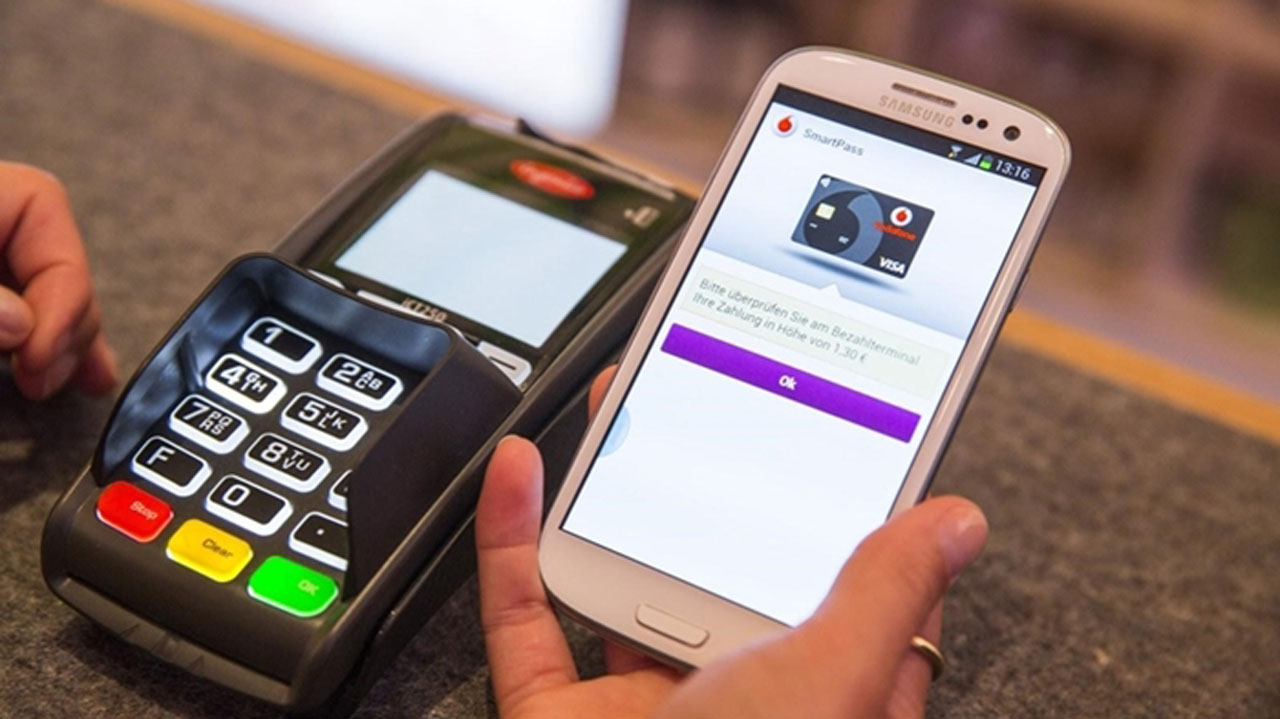
The value of e-payment transactions in Nigeria surged significantly in 2023, with the country recording a staggering 66% growth, totaling an impressive N664.2 trillion.

The Nigerian Interbank Settlement System (NIBSS) disclosed that this reflects an increase in electronic payments, driven by cash scarcity.

Following the same trend, the volume of electronic payment transactions increased by 240 percent to 17.34 billion from 5.1 billion in 2022. NIBSS also reported that the highest volume of transactions valued at N1.76 billion was recorded in December reflecting increased spending due to the festive season.

On the other hand, the lowest volume was recorded in March with N978.7 million transactions. Furthermore, the highest value of transactions, N79 trillion, was recorded in December 2023 while the lowest was recorded in February 2022 with N40.9 trillion transactions.

BusinessDay analysis of the data revealed that electronic payment channels were used 11.05

billion times in 2023, a 75.96 percent increase from the 6.28 billion times they were used in

2022.

Also, the NIBSS revealed that the total value of instant payment in 2023 was N600.36tn, and PoS was N1O.7tn. Instant payment channels, including mobile, recorded a usage volume of 9.67 billion, and PoS terminals recorded 1.38 billion.

The NIBSS wrote,

“Financial inclusion continues to grow, even as formal financial inclusion grew from 56 percent (2020) to 64 percent (2023). Nigeria is just 1.0 percent point away from achieving the 2022 Nigerian Financial Inclusion Strategy, NFIS, recommended targets for 2024 and must now pay equal attention to deepening the quality and impact of inclusion.”

While the cashless policy of the Central Bank of Nigeria (CBN) is already gaining traction with many Nigerians embracing the use of the various e-payment channels for transactions, more growth is anticipated.

The CBN believes that the revised cashless policy, which is further limiting the amount of cash that can be withdrawn by individuals and corporate organizations will further drive a surge in electronic transactions across the country.

It is worth noting that the Apex Bank has a plan to reduce cash payments by 2025 and expects mobile payments to become a more prominent feature. According to the CBN, the Nigerian payment landscape has many options that have displaced cash in recent times, including electronic bill payment, mobile phone top-up, and mobile and instant payments.

As the bank implements the PSV 2025 agenda, it has disclosed that it will continue to ensure that the Nigerian payments system is widely utilized domestically, supports the government’s financial inclusion objectives, and meets international standards while contributing to overall national economic growth and development of Nigeria.

Nigeria’s Food Crisis: 88.4m Grappling with Extreme Poverty, 7 northern states worst hit

0

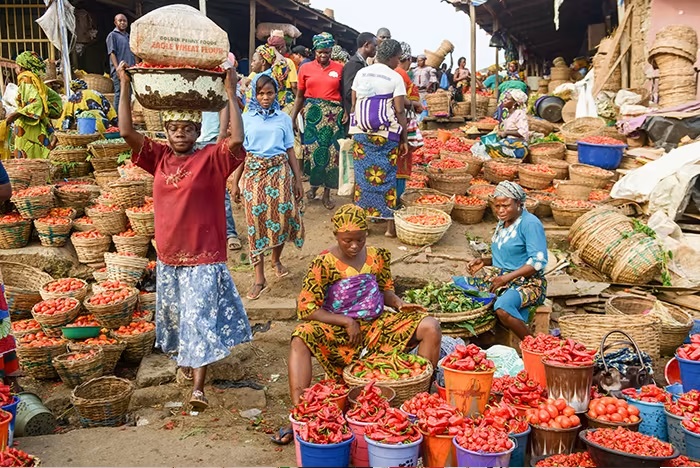
Nigeria, a country grappling with deep-seated issues of poverty and insecurity, is facing a looming food crisis that threatens millions of its citizens.

According to Temitope Fadeshemi, the Permanent Secretary at Nigeria’s Federal Ministry of Agriculture and Food Security, an alarming 88.4 million Nigerians currently live in extreme poverty. Fadeshemi disclosed this sobering statistic while overseeing the distribution of farm inputs and empowerment materials to 250 smallholder farmers in Kaduna.

Bashir Abdulkadir, representing Fadeshemi at the event said: “The level of poverty in Nigeria is alarming. An estimated population of 88.4 million people in Nigeria is living in extreme poverty.

“The number of men living on less than 1.90 U.S. dollars a day in the country reached around 44.7 million, while the count was at 43.7 million for women.

“Overall, 12.9% of the global population in extreme poverty was found in Nigeria as of 2022.

“This is why the Federal government of Nigeria through the Federal Ministry of Budget and National Planning in collaboration with FMAFS is making conscious efforts at reducing the spate of poverty across the country.”

Abdulkadir highlighted the disparity, revealing that approximately 44.7 million men and 43.7 million women survive on less than $1.90 per day. Nigeria, he lamented, accounts for 12.9% of the global population living in extreme poverty.

To address this crisis, Nigeria has embarked on the National Poverty Reduction with Growth Strategy (NPRGS) initiative. Fadeshemi hailed NPRGS as a crucial step in uplifting smallholder farmers and promoting sustainable agricultural practices. He said that the program signifies an investment in the nation’s future, recognizing farmers as the backbone of Nigeria’s prosperity.

The initiative, in collaboration with the Federal Department of Agricultural Extension Service, has identified and validated 250 farmers for participation. Fadeshemi stressed that NPRGS reflects the government’s commitment to eradicating poverty by empowering farmers with the necessary knowledge and resources to thrive.

Timkat Nanfa, the State Coordinator of the ministry, expressed gratitude for the federal government’s support and urged participants to maximize the empowerment resources. The distributed items, including organic fertilizers, seeds, poultry, and fish feeds, aim to enhance farm operations and alleviate poverty.

However, despite these efforts, Nigeria faces a daunting food security challenge, particularly in its northern states. The latest Food Security Report by the World Bank predicts severe food crises in seven northern states in 2024, including Adamawa, Borno, Kaduna, Sokoto, Yobe, and Zamfara.

“It is projected that most areas in West and Central Africa will remain Minimally food insecure (IPC Phase 1) until May 2024, with some being categorized as Stressed (IPC Phase 2). Nigeria (far north of Adamawa, Borno, Kaduna, Katsina, Sokoto, Yobe, Zamfara states) will be at Crisis food security levels (IPC Phase 3), mostly because of persistent insecurity and armed conflict and deteriorating livelihoods,” the report stated.

Factors such as persistent insecurity, armed conflict, and deteriorating livelihoods exacerbate the situation.

The report warns that Nigeria’s far north will experience crisis-level food insecurity, primarily due to insecurity and armed conflict. Inaccessible areas, such as Abadam, Bama, Guzamala, and Marte, have reached emergency food security levels. The conflict has already left 4.4 million people food insecure in Borno, Adamawa, and Yobe states, according to the World Food Programme.

In addition to insecurity, Nigeria grapples with soaring inflation, further straining food access for vulnerable populations, particularly internally displaced persons. The activities of bandits and terrorists displace communities, disrupt farming activities, and exacerbate food insecurity.

World Bank said urgent action is imperative to mitigate the impending food crisis. Sustainable strategies that address poverty, insecurity, and agricultural development have long been advocated to safeguard the well-being of millions of Nigerians and ensure food security for the nation’s future.

EFCC Should Set Up An Electricity Task Force, Not Dollarization One, to Help Naira

0

My understanding is that the NIN (national identity number) was partly implemented in the banking sector to improve KYC and transparency in the sector. If their data and analytic combo is great, they can use that to connect the pieces together for this task force (EFCC Launches Special Task Force To Combat Dollarization Of Nigeria’s Economy). I do hope we have been doing that before now.

In an official statement released on Wednesday, the EFCC disclosed its proactive measures to confront the pervasive dollarization phenomenon. Dele Oyewale, the Head of Media and Publicity for EFCC highlighted the agency’s commitment to curbing currency mutilation and the illicit adoption of the dollar as a primary medium of exchange in Nigeria as the naira’s value wanes.

Ola Olukoyede, who represented the Chairman of the EFCC, inaugurated the task force in Abuja, stressing the anti-graft agency’s pivotal role in safeguarding the economy against exploitation, financial leakage, and distortions. Olukoyede reiterated the agency’s dedication to upholding existing laws aimed at preserving the stability and integrity of Nigeria’s financial system.

I support any effort to improve Nigeria’s economy and I wish EFCC good luck on this: “In response to the alarming escalation of dollarization within Nigeria’s economy, the Economic and Financial Crimes Commission (EFCC) has taken decisive action by establishing a Special Task Force across all its Zonal Commands to checkmate the situation.”

Yet, EFCC cannot win a fight for Naira; only factories and warehouses (the modern and the old) can. If EFCC wants to help, it can probe all the contracts and implementations on the power sector in Nigeria since 1999. And get all those deals executed 100%. If there is electricity in Nigeria, the economy will rise. An electricity fighting task force is more strategic than a dollarization one in Nigeria.

EFCC Launches Special Task Force to Combat Dollarization of Nigeria’s Economy