DD
MM
YYYY

PAGES

DD
MM
YYYY

spot_img

PAGES

Home Blog Page 3730

Beyond Reflective Electricity Tariffs, Nigeria MUST Still Subsidize Electricity for Industrial Customers

1

Question:  “Nigeria’s Minister of Power, Adebayo Adelabu, has expressed concerns over the poor electricity supply situation in the country caused by a plethora of issues including outstanding subsidy debts. One of his solutions is that Nigeria should migrate to a full cost-reflective tariff regime if the federal government cannot pay for subsidies owed. He noted that Nigeria pays the lowest tariff compared with Niger, Ghana and Ivory Coast. What is your comment?”

My Response: The Honourable Minister is correct that our electricity challenges are massive. But we know the solution. Recall that Nigeria privatized our electricity distribution (DISCO) with a juicy template on electricity rate. Many foreign investors came on that agreed rate which would have made the DISCOs profitable companies. But as soon as they completed the investment, some Nigerians went to court, and the court aborted the agreed new rates.

 With the new rates gone, DISCOs became like charities, unable to generate profits. Over time, most of them went bankrupt.  (Think of going to Court to force DSTv to show European Football for nothing, and as a result of that, over time, DSTv will not have funds to pay for  future rights). I explained these issues here in 2017 and they remain till today:

The generation companies (gencos) do not see the pricing as optimal to waste their efforts generating power. The distribution companies (discos) do not even bother accepting all available electricity to sell to consumers. Discos think it makes no sense selling something at a loss. And the consumers do not want to see any increase because the past ones have not resulted in any improvement in power supply…Mr. President, if the court had struck the increased tariff, ask the Attorney General to support the Nigerian Electricity Regulatory Commission (NERC) which I understand is challenging the ruling in the court. Until we can fix this pricing issue, we will not make progress.”

(You can also add the reason why we do not have working water boards. In some states, water rates have not been updated for more than two decades, making such investments of no value).

So, I support increasing the electricity tariff but I also support energy subsidies. Nigeria provides gas to Ghana  and Ivory Coast to run their power plants. We also sell electricity to Niger at least before the ECOWAS sanctions. Simply, their cost of electricity should be more than Nigeria’s; that is expected.

Yet, in some of these countries, they have a strategy. There are 3 classes of electricity customers – Residential, Commercial and Industrial. You use reflective tariffs for residential (homes) and commercial (like bank offices) while you subsidize industrial (like cement, biscuit factories). In Ethiopia, Dangote Cement – an industrial customer – receives massive subsidies and runs on the national grid.  In Nigeria,  the company  is not connected to the grid and as they have an independent power plant. That creates a big problem for DISCOs – some of their best customers in Nigeria have alternatives to the national grid, and even if you invest and improve capacity, you are left with residential and low-tier commercial customers which to a large extent are challenging to serve and not as lucrative as the industrial.

Dangote Group uses about 40% of Nigeria’s total distributed energy capacity, and that is revenue lost by Discos, transmission companies and generating companies because the company has nothing to do with the national grid. Under that system, most investors do not want to invest especially in the distribution phase which remains challenging.

In summary: we can have reflective tariffs for residential and commercial customers even as we subsidize electricity and fossil fuels for productive industrial customers. 

Of course, this is wishful thinking as someone somewhere will go to court and one judge will strike down any reflective tariff since Nigeria has all the rights for cheap electricity to watch European football. If not, why should a minister be lamenting on the national media when he could effect this change himself? He knows that unless we reform the judiciary and the rascality we see everywhere, it is a waste of time. In my office in Owerri, we’re not connected to the national grid – we run on two generators and we have peace!


Chainlink (LINK), Internet Computer (ICP) and Pullix (PLX) Look Bullish For February

0
  • Chainlink is bullish on the charts and can soon reach new heights as it moves above the $22 range.
  • In the meantime, Internet Computer (ICP) can also see a major upswing, resulting in a climb to $20.12.
  • Pullix (PLX) is at the forefront with its presale. Fueled by a vast ecosystem and massive token utility, it’s shaping up to be one of the best projects to get into for 2024.

Internet Computer (ICP) has showcased bullish performance on the weekly chart and could soon reach new heights based on the most recent on-chart data. In addition, Chainlink (LINK) is moving upwards in value and could initiate the next bull run. The most bullish crypto for February remains Pullix (PLX) as its already given early investors an ROI of 150%, and newer investors can expect to get even more, with a projected upswing of 40x.

Chainlink (LINK) Poised to Move Above $22 by the End of 2024

Chainlink (LINK) is also moving upward in value as it recently found support at the $15 price after climbing by 100% during the past year. In the past seven days alone, the Chainlink price moved from a low point of $13.55 to a maximum value of $15, indicating that $20 is its next major price barrier.

The Chainlink crypto is showcasing a bullish crossover at the 50-day EMA, and if the Chainlink crypto continues and climbs above the 150-day EMA, it is primed for more significant growth. Its current sentiment is bullish for February, but by the end of the year, according to the Chainlink price prediction, it can reach $22.86.

Internet Computer (ICP) to Climb in February and End 2024 at $20.12

Internet Computer (ICP) has also performed well during the past week, and its price momentum could result in even more significant gains. The Internet Computer price moved up from a low point of  $9.62 to $12.95 during the past week, and support was found at the $12 range.

Now, an increase above this point would spell good news for the Internet Computer crypto, as a break above the $15 price barrier could result in even more significant gains. The MACD line and signals indicate a bullish crossover can occur, which, according to the Internet Computer price prediction, would result in a price upswing of $20.12.

Pullix (PLX) Enters Stage 7 of Presale – Can Surge by 100x Following Its Launch

Pullix (PLX) as a DeFi project can introduce a Web3 marketplace that will create a combination of the best elements found in CEXs and DEXs, through which investors can maintain full control over their assets without the interference of any third-party.

  • With this approach, the platform can combine a much higher level of trust with transparency and security.
  • There will be automated tools available as-well, which can help traders make well-informed decisions.
  • For the inexperienced traders, there will even be a Copy Trader infrastructure, where through it, anyone can copy the most successful traders.

To get fixed passive income, anyone can also provide liquidity to the automated market maker, which operates through the liquidity provision system. Selling over 80 million tokens, Pullix is making a name for itself with the blockchain ICO. Now at Stage 7, it trades at just $0.10, and analysts project an upswing of 40x for the native crypto of this DeFi project.

For more information regarding Pullix’s presale see links below:

Visit Pullix

Join The Pullix Communities

Algotech (ALGT) Presale Gears up for a Rally, as Liquidity Rotates Out of Mantle (MNT) and Bitcoin Cash (BCH)

0

A lot is happening in the crypto market as liquidity rotates out of Mantle (MNT) and Bitcoin Cash (BCH). However, the Algotech (ALGT) presale is gearing up for a rally. This is because of the significant use in demand due to the large influx of investors in Algotech (ALGT) who see it as the best cryptocurrency to buy in 2024.

TLDR

  • Algotech (ALGT) is in high demand; it is now a top crypto to buy in 2024
  • Mantle (MNT) is expected to trade between $0.56 and $0.82 by 2025.
  • There is a possibility that Bitcoin Cash’s (BCH) price will reach $435.51 by 2024.

Why Algotech Has a Large Influx of Investors

After its groundbreaking success, raising a whopping $1.1 million in a $0.02/token seed sale, Algotech (ALGT) has become the leading decentralized cryptocurrency trading platform. Algotech (ALGT) doesn’t just simplify the process of cryptocurrency trading; it also offers investors dividends, active roles, and voting rights.

The seed sale, which created the foundation for several public presale stages, saw increases in the prices of Algotech (ALGT). Algotech’s (ALGT) focus on research and development in areas like trend following and mean reversion makes it a leading decentralized algorithmic crypto trading platform.

Early investors have a source of passive income as they get a share in the dividends from Algotech’s (ALGT) lucrative funds. Also, these investors can partake in some decision-making in Algotech (ALGT) as they have voting rights.

This innovative platform offers investors a part of the 30% performance fee it charges users who benefit through its algorithms. As Algotech (ALGT) continues to progress through several public presale stages, analysts forecast an increase in the value of its token.

Algotech (ALGT) began its journey from $0.04 in Stage 1 and is projected to reach $0.15 at launch, indicating a 275% surge from its initial price. This increase will pave the way for Algotech (ALGT) tokens to enter major exchanges, making it the best crypto to invest in.

Mantle (MNT) Price Analysis & Forecast: How High Can Mantle (MNT) Go In 2025?

Mantle (MNT) is currently in a bearish sentiment with a Fear and Greed Index Value of 61 (indicating greed). Furthermore, the Mantle (MNT) saw 13 green days out of 30 green days (43%), with price volatility of 8.37% over the past 30 days.

Furthermore, Mantle (MNT) has an RSI value of 44.15, indicating that the Mantle market is neutral. By next week, analysts expect the Mantle (MNT) price to fall between $0.59 and $0.62. Throughout 2024, Mantle (MNT) should trade between $0.56 and $0.82.

Experts’ prediction of Mantle (MNT) price in 2025 reveals a trading price between $0.56 and $0.81. This means that if it reaches the higher value target of $0.81, it would increase by 44.74%.

By 2030, experts predict that Mantle (MNT) can reach a maximum price of $4.09, while on average, it should be valued at around $3.76. If the trend is bullish, the MNT coin price may surpass the forecast.

Bitcoin Cash Price Prediction: Is Bitcoin Cash a Good Investment?

With a boost in Bitcoin’s trend momentum due to the SEC’s approval of all ETFs, altcoins are climbing the bullish ladder. Like other cryptocurrencies, it is difficult to tell if Bitcoin Cash (BCH) will be a good investment.

Technical indicators signal a neutral bullish market sentiment on Bitcoin Cash (57%) with a Fear & Greed Index Value of 55 (Greed). Over the past month, Bitcoin Cash (BCH) experienced 13/30 (43%) green days with a price volatility of 5.03%.

Bitcoin Cash (BCH) is surging in this bull market, driving the rally nearer to $300. Experts have revealed their Bitcoin Cash price prediction for 2024. With Bitcoin Cash’s (BCH) recent price surge, its price could reach $435.51 by 2024. However, considering the flip side, the Bitcoin Cash (BCH) price may bottom out at $260.

The Bitcoin Cash price prediction for 2025 reveals that it could be a year of growth for Bitcoin Cash (BCH), with the possibility of the price oscillating between $595 and $714. The average Bitcoin Cash (BCH) price could be at $654.50.

Visit Algotech Presale

Join The Algotech Community

Why China Is Winning The World via Global Logistics Subsidy

0

I have posited that Africa cannot effectively copy China’s industrialization policy for many reasons. You can read that piece in Harvard here. Many things happen in China and one of those things is how China subsidizes production elements for its companies.

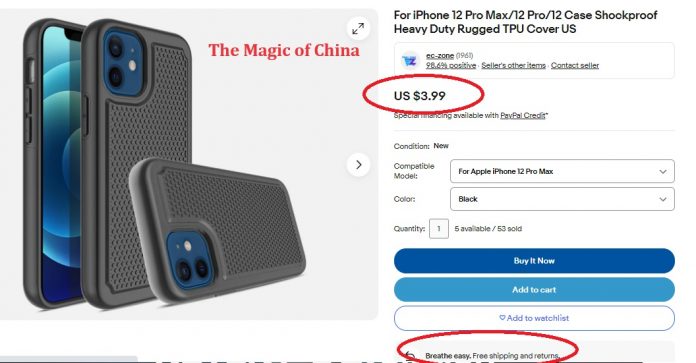
If you live in New York, you can buy an iPhone cover for $4 from Chinese firms and their secondary affiliates. That $4 includes shipping and handling. How can someone make an iPhone cover in China and ship it to you in New York for $4 and still remain in business?

Yes, China has subsidized logistics, and it is the world’s best in doing that.

It is on this thesis that I note that Nigeria has to pick one element in our production system to subsidize. Energy is always a suspect. Note: India is big on energy subsidy; according to the Brookings Institution, “The Government of Delhi’s household electricity subsidy is amongst the most generous in India.” which means that India subsidizes energy.

In this piece, I explain why Nigeria must bring fuel subsidy back, with the corruption removed, if we want to re-ignite our economy.

Why I like Strategic Subsidies And Why Nigeria Must Reform and Return Them

Amazon Unveils New AI Shopping Assistant to Enhance User Experience

0

American multinational e-commerce giant, Amazon, has announced the launch of a new Artificial Intelligence shopping assistant called ‘Rufus’ to enhance users’ shopping experience.

Rufus is an expert shopping assistant trained on Amazon’s product catalog and information from across the web to answer customer questions on shopping needs, products, and comparisons, as well as make recommendations based on context, and facilitate product discovery.

The tool is designed to help users search for products. Shoppers can get to type or speak a question into the search bar in Amazon’s mobile app and a chat window will appear at the bottom of the screen.

Announcing the roll-out of the feature, Amazon wrote via a blog post,

Amazon has been using Al very expansively for 25+ years to improve customer experiences. The personalized recommendations customers get when they shop at Amazon’s store, the pick paths in our fulfillment centers, our drone deliveries, the conversational capabilities of Alexa, and our checkout-free Amazon Go stores are just a few examples of experiences fueled by Al. And we believe generative Al is going to change virtually all customer experiences that we know.

“This past year, we’ve introduced a number of new generative Al-powered capabilities in Amazon’s store to make shopping even easier and more convenient. Our Al-generated review highlights provide customers with common themes from dozens, hundreds, or even thousands of reviews at a glance to help them quickly understand customer insights.

“We also recently introduced our Fit Review Highlights feature, which offers personalized size guidance and insights so customers can determine which size will fit them best. We are also using generative Al to make the product listings even more informative for customers by helping our selling partners write more engaging and effective titles and product descriptions, and enrich existing listings.”

Amazon disclosed that the AI Shopping Assistant Rufus, will be launched in Beta version, and it will be rolled out to customers in waves, beginning with a small subset of customers in the U.S using the mobile app, and will subsequently roll out to the rest of its U.S. customers in the coming weeks.

Check Out Some Remarkable Features  of Amazon AI Shopping Assistant Rufus;

Customers Can Get help comparing product categories:

Customers can now ask get help comparing product categories such as “What’s the difference between lip gloss and lip oil?”, so they can find the type of product that best suits their needs and make even more confident purchase decisions.

Find the best recommendations:

Customers can ask for recommendations for exactly what they need, and then Rufus generates results tailored to the specific question and makes it quick and easy for them to browse more refined results.

Ask questions about a specific product while on a product detail page:

Customers can use Rufus to quickly get answers to specific questions about individual products when they are viewing the product’s detail page. Rufus will generate answers based on listing details, customer reviews, and community Q&As.

With Rufus, customers are now able to shop alongside a generative Al-powered expert that knows Amazon’s selection inside and out, arid can bring it all together with information from across the web to help them make more informed purchase decisions.

LinkedIn Summary

Amazon shares jumped in early trading Friday, after it released its fourth-quarter earnings that handily beat expectations Thursday. The nation’s second-largest retailer benefitted from brisk holiday shopping and a special sales event. Revenue surged 14% from the year-earlier period, to $170 billion. Net income shot to a two-year high of $10.6 billion, or $1 per share, following cost-cutting measures beginning in late 2022 that resulted in more than 27,000 layoffs. The e-commerce giant’s cloud-computing arm, meanwhile, saw sales increase by an expected 13% — higher than the 12% increase of the last quarter but below the 20% expansion seen a year earlier.

  • Amazon also announced that it is unleashing a new shopping assistant powered by generative AI. Dubbed Rufus, the tool uses generative AI to make recommendations and answer questions.
  • The company, which has rolled out commercials on its Prime Video streaming service, also saw ad revenue rocket 27% higher, to $14.7 billion — the fourth quarter of faster sales.
  • The company has emerged from a post-pandemic slump with a reorganized logistics business and is finding new efficiencies with artificial intelligence.