DD
MM
YYYY

PAGES

DD
MM
YYYY

spot_img

PAGES

Home Blog Page 3734

US Army gets solution to its Stinger missile stock problem; JCPOA and Iran’s nuclear ambitions

0
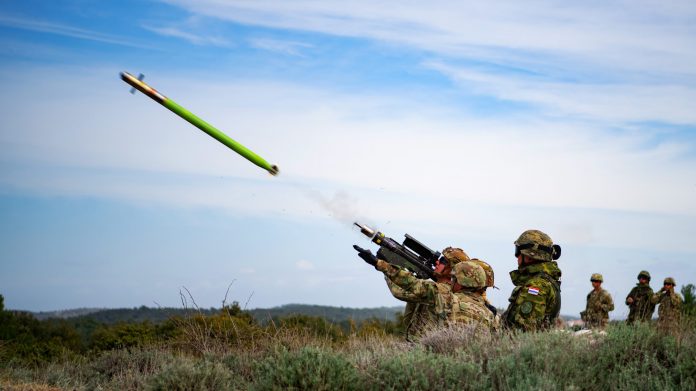
U.S. Army paratroopers assigned to the 173rd Airborne Brigade fire a FIM-92 Stinger during an air defense live-fire exercise alongside soldiers with the Croatian Air Defense Regiment. This training is part of Exercise Shield 22 at Kamenjak near Medulin, Croatia on April 9, 2022. Exercise Shield 22 is an annual Croatian air defense exercise that aims at strengthening the execution of the Air Defense tasks against low and medium altitude moving targets. During the exercise, the 173rd Airborne Brigade and Croatian Air Defense Regiment conduct joint training on Air Defense Tactics, Techniques and Procedures to include air-space control, deconfliction and surveillance as well as targeting and live fire engagement against flying objects on low and medium level altitudes. The 173rd Airborne Brigade is the U.S. Army's Contingency Response Force in Europe, providing rapidly deployable forces to the United States European, African, and Central Command areas of responsibility. Forward deployed across Italy and Germany, the brigade routinely trains alongside NATO allies and partners to build partnerships and strengthen the alliance.

The US Army has announced that it has found a solution to its Stinger missile stock problem, which has been plaguing the service for years. The Stinger missile is a short-range, air defense weapon that can be fired from a shoulder launcher or a vehicle-mounted system. It is designed to engage low-altitude, fixed-wing aircraft, helicopters, and unmanned aerial vehicles.

The problem with the Stinger missile is that it has a limited shelf life of about 10 years, after which it becomes unreliable and unsafe to use. The Army has been struggling to maintain its inventory of Stinger missiles, which are essential for countering the growing threats from drones and other low-flying targets. The Army has been relying on buying new missiles from the manufacturer, Raytheon, or refurbishing old ones, but both options are costly and time-consuming.

The solution that the Army has found is to use a new technology called the Service Life Extension Program (SLEP), which can extend the shelf life of the Stinger missile by up to 15 years. The SLEP involves replacing the missile’s battery, rocket motor, and other components with newer and more reliable ones. The SLEP also upgrades the missile’s software and hardware to improve its performance and compatibility with modern platforms.

The Army has about 19,000 Stingers in its arsenal, but only about 6,000 of them are serviceable, according to a recent report by the Government Accountability Office (GAO). The rest are either expired, damaged, or undergoing maintenance. The GAO found that the Army faces several challenges in managing its Stinger inventory, such as:

A lack of reliable data on the condition and location of the missiles. A shortage of qualified personnel and equipment to inspect and repair the missiles. A high demand for the missiles from operational units and allies. A limited supply of new missiles from the manufacturer.

The GAO recommended that the Army improve its data collection and analysis, increase its inspection and repair capabilities, prioritize its missile requirements, and coordinate with the manufacturer to address the supply issues. The Army concurred with most of the recommendations and is taking steps to implement them.

The Stinger missile is an important asset for the Army, especially in an era of increasing threats from unmanned aerial systems and near-peer adversaries. The Army needs to ensure that it has enough Stingers to meet its current and future needs, and that it can maintain them effectively and efficiently.

The Army has awarded a contract to Raytheon to perform the SLEP on up to 7,000 Stinger missiles over the next five years. The SLEP will not only save the Army money and time, but also enhance its air defense capabilities and readiness. The Army expects to receive the first batch of SLEP-modified Stinger missiles by the end of this year.

The fate of the JCPOA and Iran’s nuclear ambitions

Iran has announced that it is constructing a new nuclear reactor in the city of Isfahan, a major industrial and cultural center in central Iran. The reactor, which will be used for research and medical purposes, is expected to be completed by 2026, according to the Atomic Energy Organization of Iran (AEOI).

The AEOI said that the reactor will have a capacity of 10 megawatts and will use low-enriched uranium as fuel. The reactor will also produce radioisotopes for medical and industrial applications, such as cancer treatment and agriculture.

The AEOI claimed that the reactor will be under the supervision of the International Atomic Energy Agency (IAEA) and will comply with the safeguard’s agreement between Iran and the world.

The announcement comes amid heightened tensions between Iran and the United States over the 2015 nuclear deal, which was abandoned by former President Donald Trump in 2018. The deal, known as the Joint Comprehensive Plan of Action (JCPOA), aimed to limit Iran’s nuclear activities in exchange for sanctions relief.

However, since the US withdrawal and reimposition of sanctions, Iran has gradually breached some of the deal’s key provisions, such as enriching uranium beyond the agreed limits and installing advanced centrifuges.

Iran insists that its nuclear program is peaceful and that it has the right to develop nuclear technology for civilian purposes. It also says that it is willing to return to full compliance with the JCPOA if the US lifts all sanctions and rejoins the deal.

The current US administration, led by President Joe Biden, has expressed interest in reviving the JCPOA, but has also demanded that Iran reverse its violations first. The two sides have been engaged in indirect talks in Vienna since April 2021, but have not yet reached a breakthrough.

The new reactor in Isfahan is not part of the JCPOA and is not subject to the same restrictions as Iran’s other nuclear facilities. According to Iran’s Atomic Energy Organization (AEOI), the reactor will have a capacity of 10 megawatts and will use low-enriched uranium as fuel. The AEOI also claims that the reactor will not produce plutonium, a key ingredient for nuclear weapons.

The international community has reacted cautiously to Iran’s announcement. Some countries, such as Russia and China, have welcomed Iran’s efforts to develop nuclear medicine and have expressed support for the JCPOA negotiations. Others, such as Israel and some Arab states, have voiced concern that Iran’s nuclear activities pose a threat to regional stability and security. They have also accused Iran of pursuing a covert nuclear weapons program and of supporting militant groups across the Middle East.

The fate of the JCPOA and Iran’s nuclear ambitions remains uncertain as the talks in Vienna continue. Both sides face domestic pressures and external challenges that complicate the prospects of reaching a lasting agreement. The new reactor in Isfahan adds another dimension to the complex and contentious issue of Iran’s nuclear program.

The negotiations, which began in April 2021, are aimed at restoring the JCPOA and bringing both the US and Iran back into full compliance. However, the talks have faced many challenges and obstacles, such as political changes in both countries, regional tensions, technical issues and mutual distrust.

The latest round of talks, which started on November 29, 2023, has been described as “the last chance” to save the deal by some diplomats and analysts. However, there is still no clear sign of a breakthrough or a compromise. The main sticking points


Visa and Transak Partner to Streamline Cryptocurrency Offramping in Africa

0

Cryptocurrency adoption is growing rapidly in Africa, as more people are looking for alternative ways to access and use money. However, one of the main challenges that crypto users face is the lack of convenient and cost-effective ways to convert their digital assets into fiat currency and vice versa.

That’s why Visa, the global leader in digital payments, and Transak, a UK-based fintech company that provides fiat on/off ramps for crypto platforms, have announced a strategic partnership to streamline cryptocurrency offramping for African users.

The partnership will enable Transak to integrate Visa Direct, Visa’s real-time push payments platform, into its service, allowing users to send money from their crypto wallets to their bank accounts or Visa cards in minutes. This will significantly reduce the friction and fees associated with crypto-to-fiat conversions, as well as enhance the security and transparency of the transactions.

Transak currently supports over 40 African countries, including Nigeria, Kenya, South Africa, Ghana, and Uganda. The company works with local payment methods, such as mobile money, bank transfers, and cash deposits, to facilitate fiat-to-crypto and crypto-to-fiat transactions. By leveraging Visa Direct, Transak will be able to offer a faster and more seamless experience for its users across the continent.

Sam Hamilton, Senior Vice President and Global Head of Crypto at Visa, said: “We are excited to partner with Transak to bring the benefits of Visa Direct to crypto users in Africa. Visa is committed to supporting the growth and innovation of the crypto industry, and we believe that enabling easy and secure crypto-to-fiat conversions is a key step towards mainstream adoption. With Visa Direct, Transak can offer its users a simple and convenient way to access and use their crypto funds anytime, anywhere.”

Tanveer Singh, Co-Founder and CEO of Transak, said: “We are thrilled to partner with Visa to enhance our service and offer a better offramping solution for our users in Africa. Transak’s mission is to make crypto accessible and usable for everyone, and we believe that integrating Visa Direct will help us achieve that goal.

Visa Direct will enable us to provide faster, cheaper, and more reliable crypto-to-fiat transfers, which will ultimately improve the user experience and drive more adoption of crypto in Africa.”

Africa is a continent with huge potential for crypto adoption, due to its young and tech-savvy population, high mobile penetration, and widespread use of mobile money services. However, Africa also faces many challenges that hinder the growth of the crypto ecosystem, such as lack of access to banking services, high fees and delays for cross-border transactions, and regulatory uncertainty.

This is where Visa Direct can help. By integrating Visa Direct with crypto platforms, such as exchanges, wallets, and payment processors, crypto users in Africa can enjoy the following benefits:

Faster and cheaper access to fiat: Visa Direct can enable crypto users to cash out their crypto assets to their local currency in minutes, rather than hours or days. This can reduce the risk of price volatility and provide liquidity for their daily needs. Moreover, Visa Direct can offer lower fees than traditional methods of fiat withdrawal, such as bank transfers or mobile money.

Easier and safer cross-border payments: Visa Direct can also facilitate cross-border payments for crypto users in Africa, whether they are sending or receiving money from other countries. For example, a crypto user in Nigeria can send money to a family member in Ghana using Visa Direct, without having to convert their crypto to naira and then to cedi.

This can save time and money, as well as avoid the hassle of dealing with multiple intermediaries and currencies. Additionally, Visa Direct can provide more security and transparency for cross-border payments, as the sender and the recipient can track the status of the transaction and receive confirmation when it is completed.

Greater inclusion and innovation: Finally, Visa Direct can help crypto users in Africa to access more opportunities and services that are enabled by crypto technology. For instance, a crypto user in Kenya can use Visa Direct to pay for goods and services online or offline using their Visa card, without having to rely on a bank account or a mobile money provider. This can increase their financial inclusion and empowerment, as well as foster innovation and entrepreneurship in the crypto space.

Visa Direct is not only a service that can benefit crypto users in Africa, but also a strategic partner that can support the development and growth of the crypto ecosystem in the continent. By working together with crypto platforms and stakeholders, Visa Direct can help to bridge the gap between crypto and fiat and create a more inclusive and efficient financial system for everyone.

Nigerian Edtech Startup Klas Announces Raise of $1M Pre-Seed Funding

0

Klas, a Nigerian Edtech startup platform that allows anyone to start an online school and deliver live classes, has announced the raise of $1 million in pre-seed funding.

The funding round was led by Ingressive Capital, with participation from Techstars, HoaQ Capital, and several angel investors.

Speaking on its investments in Klas, managing director of Techstars Toronto Sunil Sharma said,

“It has been a rewarding experience to have invested in Klas at the earliest stage of the company based on the core abilities of the co-founders Nathan and Lekan and the vision they set for the company. This confidence was further demonstrated by our follow-on investment in the company, something we like to do when presented with exceptional opportunities.”

Founded in 2022 by Nathan Nwachuku and Lekan Adejumo, Klas enables users to create and sell ebooks, courses, and live classes. The platform offers essential class components such as scheduling, payments, community features, analytics, and video conferencing, catering to various subjects from coding and design to finance, art, and languages.

The platform also enables creators, trainers, and professionals to monetize their knowledge and for anyone to acquire tailored knowledge through courses, live classes, and ebooks.

Today, Klas boasts a user base of over 5,000 online schools (creators), which have earned hundreds of thousands of dollars on the platform and 300,000 learners spanning over 30 countries.

Currently facilitating transactions in naira for Nigerian users and dollars for those outside Nigeria, the edtech startup aims to amplify its international presence, focusing on India, its second-largest market, and North America, where the incumbent players in the industry have the bulk of their customer base.

The move aligns with the startup’s strategy to address currency devaluation concerns, and it includes plans to enhance user experiences through localized currency options in various countries.

Unlike Edtech platforms like Udemy and Skillshare which focus on pre-recorded courses, Klas has set itself apart by enabling users to create, monetize, and host engaging live classes. Klas takes a more all-in-one approach to online teaching while remaining simple and intuitive for everyone.

Creators can accept payments from students globally, manage their classes, offer online tests, and connect their favorite tools from Klas integration store. The Edtech startup aims to power up to 100,000 online schools globally by 2027, while it presently provides a free plan with a 5% transaction fee.

Although positioned as a cost-effective alternative to other platforms like Kajabi and Thinkific (whose prices range between $49-$399), Klas, in a bid to boost its revenues, may become as pricey in the coming months, introducing an enterprise product targeted at upskilling employees in large companies at $199 per month.

The company’s mission is to empower everyone to teach engaging online classes. With over 125,000 students and 2,200 online academics, Klas is on the move to powering the upskilling economy.

Obi Cubana, Ndubuisi Ekekwe, Coscharis, etc Appear on Freemen, a Showmax Documentary on the Igbo Apprenticeship System

2

I want to congratulate Showmax, owned by MultiChoice and NBCUniversal, and the whole team members of the Freemen, a new movie on the Igbo Apprenticeship System (IAS). I am also honoured to report that your Ovim village boy was recognized as an academic Nollywooder with references to my work in Harvard Business Review. I just sent a note to my editors in Harvard, and thanked them for their support. Yes, since that publication, the African model of stakeholder capitalism on the entrepreneurial spirit of shared prosperity and the rise of all, has gone mainstream. 

The documentary features prominent Igbo businessmen such as Dr Cosmas Maduka aka Coscharis, Obinna Iyiegbu, popularly known as Obi Cubana, Ndubuisi Ekekwe, Okey Japan, Bartholomew Duru Nwanguma alongside his son Peter Nwanguma, and other notable entrepreneurs.” In the Igbo Nation, men build men, not just through the ancestral model of craftsmanship, but through knowledge.

The IAS is a valid and tested developmental framework as no global framework has demonstrated the remarkable economic recovery of Igbos after the civil war, with households (with verified proofs of deposited funds in amount or excess)  starting with 20 Nigerian pounds. In an upcoming work, I explain that no other people in history (including Chinese)  have accomplished what the Igbos did as 20 pounds quickly became mansions, companies, properties, dynamic diasporas, homeland legends, and successes. The 20 pounds, if a pure investment, would have broken all investment returns ever recorded in humanity.

Good People, Showmax will launch this Nigerian Original documentary series, Freemen – a captivating exploration of the Igbo Apprenticeship System, known locally as Igba Boi – on a seven-part groundbreaking documentary that premieres on 12 February 2024.

Watch the trailer here.

4 industries that are changing the digital landscape

0

The digital landscape constantly shifts and adapts, with new technologies and innovations coming online every day. Industries across all fields must keep pace to remain relevant and competitive in today’s fast-paced digital world, including the healthcare and finance sectors. Technology has revolutionized these sectors, disrupting traditional practices and opening innovation doors. This blog post will look at four industries that are leading this revolution within their respective sectors. So, sit back and discover exciting breakthroughs taking place right now within these rapidly expanding sectors.

1.   Healthcare

Healthcare has long been the subject of public discourse, with its role essential in maintaining your health and treating illness. Healthcare professionals strive tirelessly to deliver top-quality patient care from hospitals to clinics and private practices. Healthcare evolves quickly, with new treatments and technologies emerging daily. One of the most satisfying fields to work in with an impactful ability. With COVID-19 making its presence felt over the years, its significance has become even clearer. Healthcare maintains a huge industry driven by pharmaceuticals and in-depth patient Care. It remains to be seen whether the privatized system will continue to be the dominant model going forward into the future.

2.   Online casinos

Technology’s rapid adoption and advancement have had an incredible impact on the entertainment industry, particularly through the proliferation of online casinos. The best Australian casino sites make traditional and cutting-edge casino games readily accessible from home through advanced software and encryption technologies to guarantee fair play and protect user data while creating a global market of entertainment. As demand for remote leisure activity options expands further, virtual entertainment trends like online casinos could become leading trends that draw large audiences searching for convenience and variety in gaming experiences. It is convenient entertainment options like this that look set to blow traditional entertainment options straight out of the water.

3.   Retail

Retail is an ever-evolving industry that plays an indispensable role in daily life, from providing essential necessities like groceries and apparel, to purchasing gadgets. Many people depend on retail stores for products of every variety, ranging from groceries and apparel to tech gadgets and everything in between. Retail stores range from big box retailers like Walmart or Best Buy to boutique shops that cater to their target market and provide customers with convenience while creating job opportunities and driving economic development. Retail will always be at the forefront of the industry.

4.   Finance

Technology is having an incredible effect on financial institutions worldwide. Led by artificial intelligence, machine learning, and big data analytics tools like artificial neural networks and machine learning algorithms, financial institutions now make more informed decisions than ever before. They utilize artificial neural networks and machine learning algorithms to their advantage. That means they are better equipped to identify patterns and anomalies, spot market trends and create predictive models that provide valuable consumer spending behavior analysis. This gives unparalleled consumer behavior analysis insights into consumer spending habits. The finance sector is bound to continue changing as the pace of technology continues.