DD
MM
YYYY

PAGES

DD
MM
YYYY

spot_img

PAGES

Home Blog Page 374

BlockDAG’s $420M Presale and BWT Alpine F1® Deal Outshine Bitcoin Hyper, Snorter, and Pepenode as the Best Presale Coins Today

0

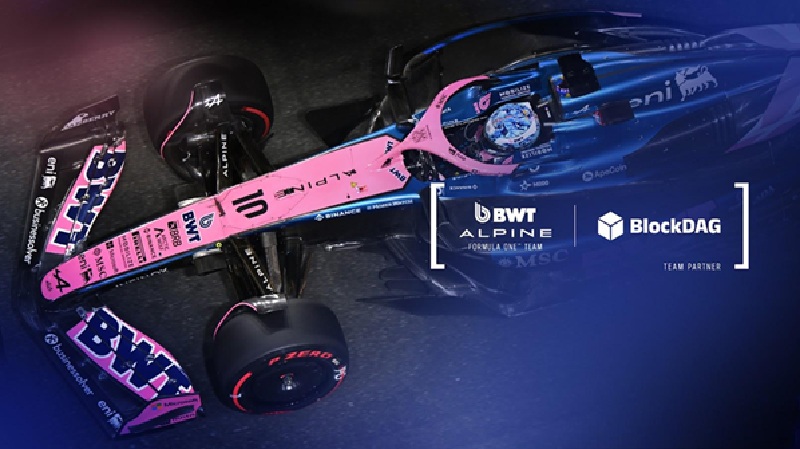
Crypto presales are capturing major attention in 2025, giving buyers access to new projects before they reach exchanges, often with lower entry points and strong growth potential. Several names are competing in this space, but one project is pulling ahead in both scale and visibility. BlockDAG is combining massive presale momentum with real-world integration by partnering with the BWT Alpine Formula 1® Team, transforming itself from another blockchain project into a global name.

Meanwhile, Bitcoin Hyper is positioning itself as a next-gen Bitcoin Layer-2, Snorter is building a cross-chain trading bot platform, and Pepenode is combining meme energy with gamified mining. Each offers something unique, but one project continues to dominate discussions around the best presale coins of 2025.

1. BlockDAG: Setting the Standard for Best Presale Coins

BlockDAG is leading the conversation as one of the best presale coins this year, thanks to its mix of rapid adoption, technical progress, and global visibility. The presale has already raised nearly $420 million, with demand averaging about $1 million per day. The coin is currently priced at just $0.0015 for a limited time, and more than 312,000 holders have already joined, with over 1,000 new sign-ups daily.

This isn’t just a presale story; BlockDAG is delivering real adoption ahead of its mainnet launch. More than 20,000 X-Series hardware miners have shipped to over 130 countries, and the X1 mobile mining app now boasts 3 million+ active users, making it one of the largest mobile mining platforms globally. These achievements demonstrate that the project is operational long before it hits exchanges.

What truly sets BlockDAG apart from other best presale coins is its exclusive multi-year partnership with the BWT Alpine Formula 1® Team. This deal ensures BlockDAG’s branding and technology are showcased on race weekends across the globe, from fan simulators and trackside activations to hackathons and digital experiences. It connects blockchain directly to culture and sport, giving the project visibility far beyond traditional crypto circles.

With this blend of adoption, community growth, and mainstream exposure, BlockDAG isn’t just competing, it’s leading. Anyone looking for the best presale coins with real-world traction and global reach will find BlockDAG hard to ignore.

2. Bitcoin Hyper: Expanding Bitcoin’s Utility

Bitcoin Hyper is drawing attention as a project designed to extend Bitcoin’s capabilities through a new Layer-2 solution. The focus is on faster transactions, reduced fees, and smart contract support, all areas where Bitcoin traditionally struggles. The presale has already raised over $17 million, with coins priced around $0.012965, signaling strong market interest.

If successful, Bitcoin Hyper could bridge Bitcoin’s security and liquidity with modern blockchain functionality. However, questions remain about how quickly its ambitious vision can translate into real-world adoption. Even with these challenges, it remains part of the conversation around 2025’s best presale coins.

3. Snorter: Trading Bot Presale With High Rewards

Snorter, often referred to as Snorter Bot, targets users who want trading automation across multiple blockchains. Accessible through Telegram, the bot enables buying, selling, sniping, and stop-loss execution while offering benefits such as reduced fees, governance features, and staking rewards.

The presale has surpassed $3 million, with coin prices ranging between $0.0935 and $0.105. A key selling point is its reported 120%–146% APY staking rewards, though questions remain about the sustainability of such high returns. Still, Snorter’s focus on practical utility over speculation gives it a place among the best presale coins currently available.

4. Pepenode: Meme Energy With a Mining Twist

Pepenode brings a unique angle to the presale space by combining meme appeal with gamified mining mechanics. Participants can purchase digital “nodes” that function like mining rigs, earning rewards based on participation. This interactive system has helped Pepenode raise more than $1.2 million, with the coin priced near $0.0010702.

Some forecasts predict the price could climb to $0.005 by 2025 and potentially higher by 2030. However, sustainability, adoption, and security will all determine whether Pepenode transitions from niche appeal to mainstream success. Despite these challenges, it remains part of the broader conversation about the best presale coins worth watching this year.
Quick Recap

The variety of presales in 2025 highlights just how diverse the crypto space has become. Bitcoin Hyper is focused on enhancing Bitcoin’s performance, Snorter is automating cross-chain trading, and Pepenode is merging meme culture with mining mechanics. Each project brings something to the table and has raised significant funds, indicating a strong market appetite for fresh ideas.

Yet, one project consistently ranks highest among the best presale coins: BlockDAG. With nearly $420 million raised, a $0.0015 entry point, hardware miners already in circulation, a 3 million-strong mobile mining community, and branding integrated with BWT Alpine F1®, BlockDAG isn’t just another presale; it’s a project already proving delivery before launch. For anyone searching for the best presale coins with real adoption, cultural reach, and tangible momentum, BlockDAG remains the clear frontrunner in 2025.

Deloitte Announces Enterprise AI Deal with Anthropic Amid Refund to Australia for Faulty AI-Generated Government Report

0

Professional services giant Deloitte has announced a sweeping new enterprise deal with Anthropic, the maker of the Claude chatbot, in what the firm called a “landmark partnership” to deepen its artificial intelligence capabilities across its global operations.

Yet, the timing of the announcement has stirred attention — and irony — as it coincided with revelations that Deloitte would refund the Australian government for submitting a report tainted by AI-generated inaccuracies.

According to the Financial Times, the Australian Department of Employment and Workplace Relations said Deloitte would have to refund the final installment of its A$439,000 (about $283,000) contract after a review revealed the report it delivered earlier this year contained multiple factual errors and citations to non-existent academic papers. A corrected version was quietly uploaded to the department’s website last week.

The review, which had been billed as an “independent assurance report,” had been prepared for the government to assess policy effectiveness, but ended up being undermined by reliance on AI tools that produced fabricated information.

The Australian Financial Review, which first reported on the errors in August, noted that the incident prompted internal questions within Deloitte about the use of generative AI in research and advisory services. The consulting firm has since promised to tighten its internal review processes for AI-assisted work.

While that story was unfolding, Deloitte was simultaneously unveiling its AI expansion with Anthropic, announcing that Claude, Anthropic’s flagship chatbot, would soon be rolled out to the firm’s nearly 500,000 employees worldwide. The two companies first partnered in 2023, but the new deal — described by Anthropic as a “strategic alliance” — significantly scales up the collaboration.

Under the agreement, Deloitte and Anthropic plan to co-develop compliance-oriented AI products designed for highly regulated industries such as finance, healthcare, and public services. Deloitte also intends to deploy “AI personas” — tailored versions of Claude — to support various internal departments, including accountants, auditors, and software developers.

“Deloitte is making this significant investment in Anthropic’s AI platform because our approach to responsible AI is very aligned,” said Ranjit Bawa, Deloitte’s global technology and ecosystems and alliances leader, in a company blog post. “Together we can reshape how enterprises operate over the next decade. Claude continues to be a leading choice for many clients and our own AI transformation.”

The financial terms of the deal were not disclosed, but Anthropic described it as the largest enterprise deployment of Claude to date, a sign that major consulting firms are now racing to embed generative AI tools at the core of their service delivery models.

Still, the juxtaposition of the two announcements — Deloitte expanding its AI footprint while refunding a government client for AI-generated misinformation — has raised uncomfortable questions about corporate responsibility in deploying generative AI.

In recent months, several organizations have faced similar missteps as generative AI tools have been caught fabricating data or references. In May, the Chicago Sun-Times admitted that part of its annual summer reading list was generated by AI and included nonexistent book titles. Internal documents from Amazon also revealed that the company’s AI productivity tool, Q Business, had struggled with accuracy and reliability in its first year of rollout.

Even Anthropic, Deloitte’s new partner, has not been immune. Earlier this year, its legal team apologized after Claude fabricated a legal citation used in a court filing related to a dispute with music publishers. The company later said the incident highlighted the importance of “human oversight” when using generative models in high-stakes contexts.

However, the controversy illustrates the central paradox confronting the consulting world, where firms are racing to capitalize on the AI boom to boost efficiency and revenue, yet they are simultaneously struggling to control the very technology they are selling as transformative. The firm’s alliance with Anthropic could help shape the next era of AI-driven consulting, but it also serves as a cautionary tale about the growing pains of automation at scale.

At its core, the saga captures the uneasy intersection of ambition and accountability in the generative AI revolution — where companies eager to lead may find themselves humbled by the same technology they seek to master.

The Stablecoin Tsunami and the Silent Erosion of Africa’s Banking Fortresses

0

The global financial landscape is quietly reorganizing itself. In the last decade, we saw fintechs nibble at the edges of traditional banking. But today, a more seismic shift is underway—U.S. dollar-backed stablecoins. According to a new report by Standard Chartered, as much as $1 trillion could exit emerging market banks and move into stablecoins within the next three years.

The reason is simple: people no longer trust the promise of “return on capital” when “return of capital” has become the supreme pursuit. In countries like Nigeria where currency depreciation is a recurring virus, savers now seek stability, not yield. They prefer a dollar stablecoin wallet to a naira savings account—because what is the essence of a 10% interest rate when the currency itself has lost 40% of its value?

The global financial landscape is on the brink of a major transformation as U.S. dollar-backed stablecoins continue their meteoric rise, challenging the dominance of traditional banking systems.

According to a new report by Standard Chartered, it warns that the rapid adoption of stablecoins, bolstered by supportive U.S. crypto policies, could drain up to $1 trillion in deposits away from emerging market banks within the next three years.

“We see the potential for $1 trillion to leave emerging market banks and move into stablecoins in the next three years or so,” the bank stated in its analysis released on Monday.

This reality poses existential questions for African banking. Young Nigerians are not just saving in stablecoins—they are warehousing their future in them. The implication is profound: bank deposits will deteriorate, local loanable funds will shrink, and balance sheets will weaken. As deposits fall, the capacity of banks to lend to businesses declines, tightening liquidity across the economy.

In simple terms, as stablecoins rise, naira-denominated financial intermediation falls. Yet, this is not driven by rebellion but by rationality; it is the invisible hand of self-preservation in a turbulent monetary ecosystem. And behind the curtain, the United States silently wins—because every dollar-backed stablecoin is another vote for its currency’s global supremacy.

In this transition, we are witnessing the most sophisticated form of dollarization in history. No longer does one need to physically hold greenbacks; all it takes is a blockchain wallet. While emerging economies fight inflation and instability, the U.S. dollar—through stablecoins—enters every smartphone, every crypto exchange, and every youth’s savings app. This is not just capital flight; it is trust migration.

The architecture of money is being redesigned, and the winners are those who issue the stablecoins. Every USDT or USDC held in Lagos, Nairobi, or Johannesburg strengthens the dollar’s gravitational pull while weakening local monetary sovereignty.

Africa must therefore act. The time for central banks to merely regulate is gone; now, they must innovate. Nigeria’s banks and regulators must not dismiss this wave as another crypto fad. They must create naira-backed digital assets, integrate programmable money into their systems, and redesign incentives that make banking competitive in the age of decentralization.

Because if this trend continues, Africa’s banking system may survive—but its economic soul will not. In this new world, where young people choose return of capital over return on capital, the nation that understands trust will become the nation that controls wealth. And today, that nation is the United States—powered by code, trust, and stablecoins.

NGX Lifts Suspension on International Energy Insurance Plc Shares as Firm Exits Daewoo Loan and Eyes Fresh Recovery

0

Trading in the shares of International Energy Insurance Plc (IEI) has officially resumed on the Nigerian Exchange Limited (NGX) after more than a month-long suspension, following the company’s compliance with regulatory requirements and the release of its 2024 audited financial statements.

The insurer disclosed this in a notice to the NGX on Monday, confirming that the exchange had lifted the trading suspension placed on its shares on September 1, 2025. The suspension had been imposed over delays in filing its audited accounts, which the company has now rectified.

“The lifting of the suspension marks a new chapter in our journey of recovery and growth. With this step, we are focused on rebuilding investor confidence and delivering long-term value for all stakeholders,” the company said in a statement.

IEI’s shares, which trade under the ticker INTENEGINS, returned to the market on October 2. Despite sliding over 10 percent month-to-date, the stock has seen renewed trading momentum, with more than seven million shares changing hands in the days following the resumption.

The development is one of several key milestones for the insurer, which has been working to restructure its balance sheet and restore investor trust after years of financial turbulence.

Daewoo Loan Settlement and Norrenberger Takeover

In what has been described as a major turning point, IEI also announced that it has completely exited its long-standing loan with Daewoo Securities, now known as Mirae Asset Securities (UK) Limited.

The loan, a JPY 1.85 billion zero-coupon bond originally issued in January 2008 and due for repayment in 2028, had weighed heavily on the company’s financial health for years. However, during its Annual General Meeting in Jigawa on April 10, 2025, shareholders approved a debt-transfer plan to Norrenberger Advisory Partners Limited (NAPL), which took over responsibility for settling the bond.

By August 2025, IEI confirmed that NAPL had fully repaid the Daewoo bond—an event that capped years of restructuring and effectively cleared one of the company’s most significant liabilities.

The repayment followed Norrenberger’s acquisition of a 50.61 percent controlling stake in IEI in 2021 through a mandatory takeover bid involving 649.8 million shares. That acquisition, which transferred management control to the investment firm, was aimed at stabilizing IEI’s operations and positioning it for growth after a prolonged period of losses.

Financial Performance: Signs of Stability Amid Lower Earnings

While the company’s recent results show mixed performance, there are signs of gradual recovery. For the half-year ended June 30, 2025, IEI reported a pre-tax profit of N679.1 million, down from N1.04 billion recorded in the same period of 2024.

Insurance revenue declined to N2.3 billion, compared to N3 billion a year earlier. However, insurance service expenses fell to N866 million from N1.2 billion, while insurance service results stood at N1.2 billion, a decline from N1.6 billion in 2024.

Net investment income also dropped by 8.84 percent to N237.2 million, bringing the combined net insurance and investment income to N1.49 billion—a 22.7 percent year-on-year decline.

Despite lower earnings, the company’s balance sheet strengthened modestly. Total assets rose to N17 billion from N16.8 billion in 2024, while total liabilities decreased slightly to N24.06 billion from N24.4 billion in the prior year.

These figures, analysts say, suggest the company is gradually stabilizing following years of financial distress and restructuring. The lifting of the trading suspension, coupled with the complete repayment of the Daewoo bond, could signal a new phase for the insurer—one centered on capital rebuilding, governance strengthening, and renewed investor engagement.

As IEI turns the page on a turbulent chapter, its immediate focus appears to be on consolidating the gains from the Norrenberger-led restructuring while pursuing fresh business growth in Nigeria’s competitive insurance industry.

Some analysts believe that with improved compliance, cleaner balance sheets, and clearer governance, the company may now be in a position to restore market confidence and reposition itself as a key mid-tier player in Nigeria’s insurance sector.

U.S. Dollar-Backed Stablecoins Could Drain $1 Trillion From Emerging Market Banks, Standard Chartered Warns

1

The global financial landscape is on the brink of a major transformation as U.S. dollar-backed stablecoins continue their meteoric rise, challenging the dominance of traditional banking systems.

According to a new report by Standard Chartered, it warns that the rapid adoption of stablecoins, bolstered by supportive U.S. crypto policies, could drain up to $1 trillion in deposits away from emerging market banks within the next three years.

“We see the potential for $1 trillion to leave emerging market banks and move into stablecoins in the next three years or so,” the bank stated in its analysis released on Monday.

The global bank which has deep roots in developing economies, noted that as people seek to protect their wealth from local currency depreciation, many will turn to stablecoin wallets instead of traditional bank accounts.

While recent U.S. crypto legislation seeks to stem the outflow of deposits by barring stablecoin issuers from paying direct yields, similar to interest on bank accounts Standard Chartered believes this measure will do little to dampen demand in emerging markets.

“Return of capital matters more than return on capital,” the report noted, emphasizing that the priority for many savers is security rather than yield.

The bank further projected that stablecoin savings across developing economies could soar from the current $173 billion to $1.22 trillion by the end of 2028 if current trends persist.

This forecast aligns with recent comments from Tether co-founder Reeve Collins, who predicted that by 2030, every major currency whether dollars, euros, or yen will exist as a stablecoin. Collins described this as a “seismic shift” that will fully digitize global money systems.

He argued that stablecoins will become the dominant method of transferring funds within the next five years due to their efficiency and integration into both crypto and traditional financial systems.

“The benefits of tokenized assets are now too compelling for traditional finance to ignore,” he said, adding that the definition of stablecoins essentially comes down to moving money on a blockchain.

The rise in global adoption of Stablecoins, underscores growing confidence in blockchain-based financial instruments and highlights the deepening appeal of digital dollars in regions grappling with inflation, currency instability, and declining trust in local banking institutions.

According to market data, the total capitalization of stablecoins recently surpassed $301 billion, a new all-time high after a 6.5% increase over the past month. Stablecoins now form a crucial part of the digital finance ecosystem, serving as a haven during crypto volatility, a medium of exchange for trading and payments, and a key infrastructure for decentralized finance (DeFi) and cross-border transactions.

Notably, the GENIUS Act, enacted in July 2025 by the U.S government, is emerging as a potential game-changer for the U.S. financial system, one that could upend traditional banking models and accelerate the shift toward digital assets. The Genius Bill according to many is the beginning of the end for banks’ ability to rip off their retail depositors with minimal interest.

Industry leaders warn that the Act could spark a mass migration of deposits from low-interest bank accounts to high-yield stablecoins, threatening to erode bank profits and reshape how consumers store and grow their money.

Future Outlook

Looking ahead, the growing dominance of U.S. dollar-backed stablecoins could redefine global capital flows and reshape the role of traditional banks particularly in developing markets.

As stablecoin adoption accelerates, emerging economies may face tighter liquidity conditions, reduced lending capacity, and increased dependence on dollar-denominated digital assets.

On the flip side, the continued integration of stablecoins into mainstream finance could spur innovation, prompting central banks to accelerate the development of central bank digital currencies (CBDCs) as a countermeasure.