DD
MM
YYYY

PAGES

DD
MM
YYYY

spot_img

PAGES

Home Blog Page 3740

Celta is struggling to stay in La Liga

0

Celta chances

Celta moved three points away from the relegation zone with a 3-0 thrashing of Osasuna that coach Rafael Benitez described as “important”, confirming his planned long-term project is beginning to bear fruit. Los Celestes now have three wins in their last seven La Liga matches, after just one in their first 16 matches of the season, so results are certainly improving. Celta are in 16th place in the standings, though close to dangerous 18th position.

The team has 24 goals scored and 32 missed goals. In fact, her rear is of average reliability, but what drags her down much more is her ineffective attack.
This success interrupted a series of defeats for the team from Vigo in three matches. It is difficult to understand whether Celta are already recovering or this is just an isolated emotional outburst after a series of failures. Read more Celta games predictions at Ratingbet.com online.

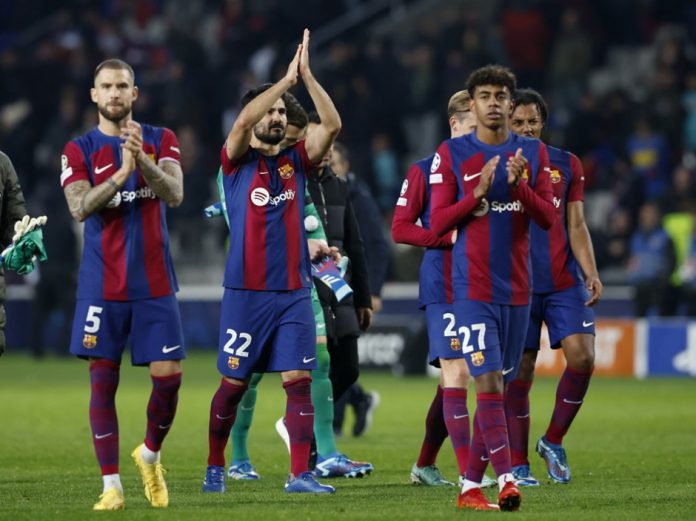
Chance for Barcelona 

Barcelona has stopped working passively and is delighting fans of goal shows with spectacular matches. And if we consider the purely defensive work of the Catalan team, then everything is not so rosy, and for example, in the last 10 meetings, the club has only 2 clean sheets. Interestingly, these matches took place against Osasuna, and in both the 1st and 2nd cases, Barcelona’s opponent was close to scoring a goal (0.72xG) and (0.95xG).

After the slap in the face that the Catalan players received from Villarreal, the team came to their senses and played two matches in which they scored six points. In the last round away, they pleased their fans with an abundance of goals, beating Alaves 1:3. A little earlier, they looked much more modest at home, defeating Osasuna with a minimal score of 1:0.

If we look at the statistics of Xavi’s players, we can say that little by little, the players manage to score an average of two goals per match. Yes, there are rare exceptions, but even if we take matches where the club was defeated, then we see goals there too. The upcoming opponent is an excellent opponent for a productive match.

In the Spanish Championship, Barça is still high – in third place. Due to several failures by Girona, the gap between second and third place has narrowed to six points. News has already appeared that Xavi’s team intends to get ahead of their opponent in the near future. Let’s see if it works out, so far the club is experiencing problems in defense – in 23 rounds they have conceded more than anyone else in the top 10.

Match prediction 

Today we are waiting for the traditional duel scenario for meetings between rivals – both teams are maximally motivated for this duel, and it is high-quality defense that can ultimately bring success. Moreover, in three of the last four head-to-head matches, the opponents scored more than 3 goals, which is what we expect today.


Tekedia WhatsApp School Opens Registrations with AI Lecture Companion

0

Tekedia WhatsApp School is an optional component of Tekedia Mini-MBA which delivers summaries of Tekedia Mini-MBA Live sessions via WhatsApp. We understand that knowledge and the acquisition of it should be unbounded and unconstrained by geography and delivery convenience. WhatsApp offers something amazing, and we’ve built Tekedia WhatsApp School, on WhatsApp, to deliver our world-class business management and leadership programs.

Tekedia AI Lecture Companion is part of this product, and supports the creation of summaries as well the analysis of the Live sessions, facilitating efficient learning outcomes for our Learners. You will receive the courseware thrice weekly on Tuesdays, Thursdays and Saturdays (see a sample here).

To join Tekedia WhatsApp School,  you must have attended, begun or about attending Tekedia Mini-MBA to qualify to register as it is not a standalone program. For Tekedia Mini-MBA alumni, you will receive the LIVE summaries and analysis, via WhatsApp, but will not have access to the core Tekedia Mini-MBA program courseware.

Cost and Registration

Program costs $60 or N20,000 Naira. (Remember,  you must have attended, begun or about attending Tekedia Mini-MBA to qualify to register as it is not a standalone program.)

For more about Tekedia WhatsApp School and to register, click here.

I was Arrested by Nigeria Police for Speaking Against a Religious Leader in My Community. Is it an offense?

0
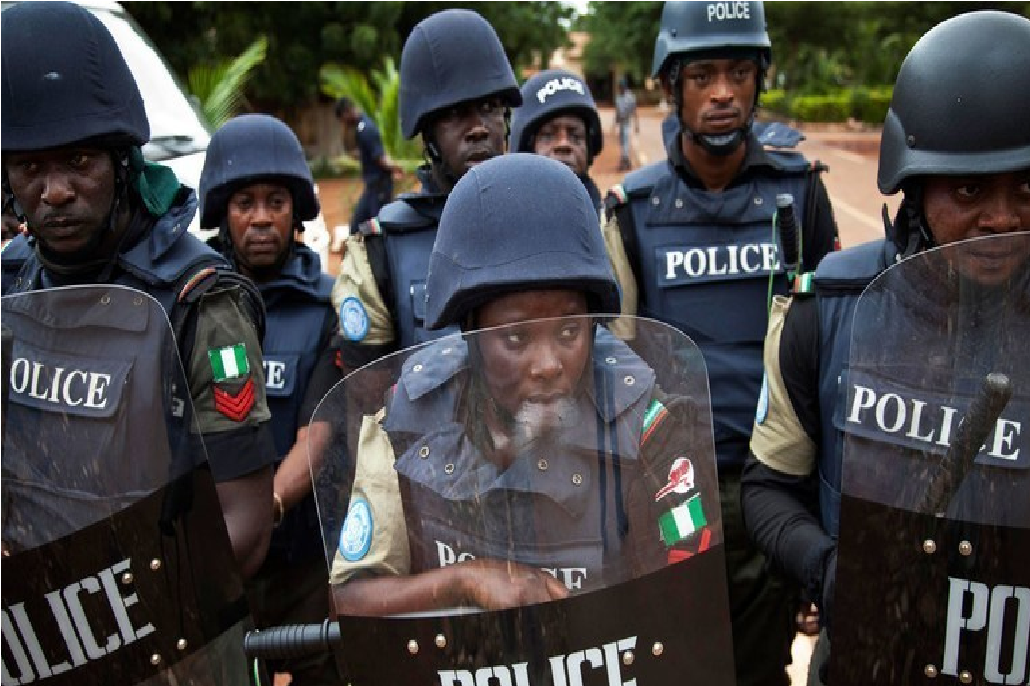
Nigeria police continues to struggle to maintain peace

was arrested by police for speaking against a religious leader in my community. Is it an offence?

I always get questions like this during my question-and-answer session on social media, I have taken my to provide answer to the above question in details. 

Generally speaking, no person has the power to order the arrest of another for speaking up against him (be it a public servant or a private citizen) unless what the speaker said against the person was defamatory or falsehood. So I want to believe that this fellow was arrested for defamation or making some defamatory utterances against the religious leader. If charged to court, his case file will not read; “that you are charged for speaking against a religious leader”, there is no offence as such, rather, the case file would read “charged for defamation” which is in contravention to 373 of the criminal code act and punishable under section 375 of the criminal code act.

Idi Amin is credited with having made this funny but true assertion that “there is Freedom of Speech But I Cannot Guarantee Freedom After Speech”. 

You should know that while you have the freedom to express your thoughts and speak freely as provided by section 39 of the constitution, you also need to be mindful not to make defamatory statements about others, as this could lead to potential liability for defamation. Everyone has the constitutional right to protest, speak freely, air his or her displeasure and also the right to criticize persons, especially public officials but while exercising such rights, your criticism should be constructive because such right does not give you the impetus to defame, impune and tell falsehood against another person, not even a public official. You should know that when your criticism is defamatory, the person can take up an action against you for defamation. 

You have the right to criticize your leaders or say anything you like about them but they also have the concurrent right to sue you for damages if your criticisms against them are defamatory, false and damaging to their reputation.

Section 373 of the Criminal Code Act defined defamatory matter as “matter likely to injure the reputation of any person by exposing him to hatred, contempt, or ridicule, or likely to damage any person in his profession or trade by any injury to his reputation”.

So from the provisions of this section, we can deduce that for something to be tagged defamatory, such a thing must first of all be false and it must be damaging to the reputation of the person. 

The punishment for defamation according to section 375 of the criminal code is a one-year jail term. 

For the fellow who was arrested for speaking against his religious leader, here are his possible defences if he was arrested and charged with defamation; if the statements he made were true or the things he said are fair comments on a matter of public benefit. 

Perhaps he was arrested for other things or other backyard offences which are unknown to our laws, his constitutional right to free speech has been breached and he has a right of action against the law enforcement agency that arrested him for fundamental right enforcement. 


House of Representatives Divided Over Educational Requirements for Political Office, Steps down the bill

0

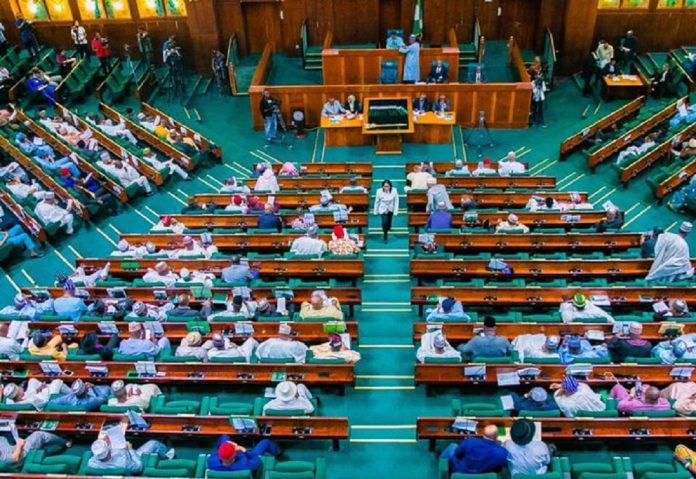
In a contentious session on Tuesday, the House of Representatives witnessed heated debates over a proposed bill seeking to elevate the minimum educational requirement for political office holders in Nigeria.

The bill, presented by Hon. Adewunmi Onanuga, aimed to amend Section 131 (d) of the 1999 Constitution to mandate a university degree or its equivalent for candidates aspiring to the highest political offices in the land.

However, the argument surrounding the education qualification of public office holders was heightened following the controversy surrounding former president Muhammadu Buhari’s education. The credibility of Buhari’s senior school certificate came under serious question in the first four years of his leadership, owing to many factors, including poor leadership acumen. It thus ignited and fueled the debate on whether a higher educational qualification should be a prerequisite for leadership roles.

Onanuga, the sponsor of the bill, argued passionately for the need to raise the bar, stating, “It had become necessary to peg a university degree or its equivalent as the basic minimum educational requirement to vie for political offices.”

She emphasized the importance of ensuring that political officeholders possess the necessary educational background to effectively lead the nation.

Benson said in support of the bill, “Anyone who is going to oppose this bill should tell us if his son or daughter is in the university or not. I can’t believe that in this modern age, some people will say ‘don’t go to school but yet go and be the president.”

Support for the bill was also echoed by House Leader Julius Ihonvbere, who highlighted the significance of knowledge in modern leadership.

“We all know what the world is today. In a world where knowledge is power, we see leaders of other nations who make excellent presentations but here, we have leaders dodging debate.

“I don’t think this requirement should apply to all political offices. For local governments, it might not be required but the president, vice-president, national assembly members should be required to own a degree,” he said.

Another lawmaker, Leke Abejide, in support of the bill, added: “The world has moved, Nigeria should not be left behind. If we put a mediocre candidate to head an important political office, we will end up in disaster.”

However, the proposed amendment faced staunch opposition from some lawmakers. Hon. Aliyu Madaki argued that leadership quality is not solely determined by one’s level of education.

“Your level of education is never a determinant of what you will do when you are put in a position of leadership,” Madaki asserted, advocating for maintaining the existing educational requirements.

Other dissenting voices raised concerns about the potential exclusion of less privileged individuals from participating in politics. Usman Bashir expressed concern about limiting political office eligibility to degree holders, highlighting the disparity in access to higher education across the country.

“We have less privileged Nigerians who couldn’t afford to go to the university. I propose that we allow the minimum requirement for political office holders to remain the school certificate,” Bashir argued.

Similarly, Ahmed Jaha cautioned against overemphasizing qualifications over practical knowledge and governance experience.

“Qualification alone is not a true taste of knowledge. We are making laws for good governance and peace in this country. We will not make laws that will favor only a few number of Nigerians.

“How many Nigerians are degree holders? America that we refer to have done greatly in educating her citizens but here in Nigeria, what have we done in improving our education system?”

Hon. Inuwa Garba said, “The mover of this bill is not aware of what is happening in some part of this country. Some schools in some parts of the country have been shut down for a while now. Certificate is not a true test of knowledge. The bill is discriminatory against some people.”

Despite the impassioned debates, Hon. Onanuga ultimately chose to step down the bill, acknowledging the need for further deliberation and consensus-building among her colleagues.

“It appears some of our colleagues need further lobbying. I will move to step down the bill for now,” Onanuga conceded, signaling a temporary halt to the legislative process.

The contentious discussions surrounding the educational qualifications for political office holders underscore the broader debate on the role of education in leadership. While proponents argue for higher academic standards to ensure competent governance, opponents emphasize the importance of inclusivity and practical experience in political leadership.

In a country striving for progress and development, the balance between educational requirements and inclusive representation is believed to be a critical consideration for shaping the future of Nigerian politics. However, it is not clear whether the current education requirement will be changing anytime soon.

Germany hits 2% NATO target for first time since 1992

0

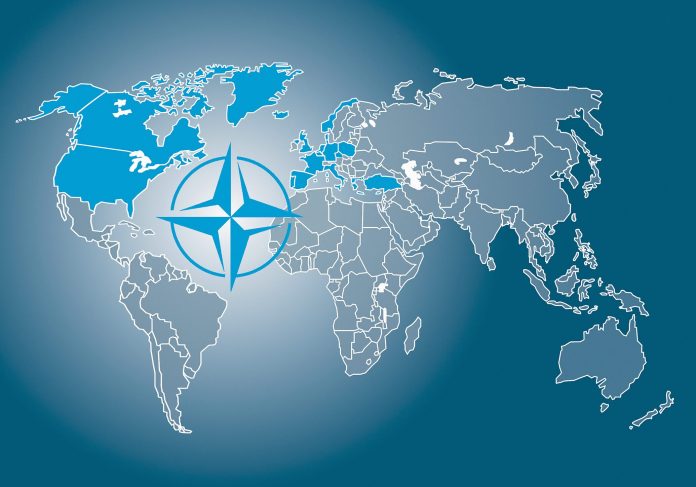
Germany has achieved NATO’s goal of spending 2% of its gross domestic product (GDP) on defense in 2024. This is the first time since 1992 that Germany has exceeded this mark. In doing so, Germany is fulfilling a long-standing demand from the United States and other NATO partners, who have demanded more commitment from Europe’s largest economy.

The increase in defence spending is part of the German government’s strategy to strengthen security and stability in Europe and beyond. In recent years, Germany has expanded its military capabilities, increased its participation in international missions and deepened its cooperation with other NATO members and partners.  Germany has also taken a leading role in the development of a common European defence policy to complement NATO.

The Federal Government emphasizes that the achievement of the 2% target is not an end in itself, but an expression of the responsibility and solidarity that Germany bears as a member of the transatlantic alliance. The German Government is committed to the principle that burden-sharing within NATO cannot be measured by a single indicator, but that other factors such as the quality, efficiency and operational readiness of the armed forces must also be taken into account.

The German government is aware that the increase in defence spending also requires a social debate about Germany’s role in the world. The Federal Government is therefore committed to a broad dialogue with citizens, parliament, the media and civil society organizations in order to promote understanding and support for German security and defence policy.

Germany’s role in the development of a common European defence policy has been multifaceted and constructive. Germany has supported the creation and enhancement of various EU defence instruments and initiatives, such as the Common Security and Defence Policy (CSDP), the Permanent Structured Cooperation (PESCO), the European Defence Fund (EDF) and the Coordinated Annual Review on Defence (CARD). Germany has also participated in numerous EU military and civilian missions and operations, ranging from peacekeeping in Bosnia and Kosovo to training in Mali and Somalia. Germany has also advocated for a stronger strategic dialogue and cooperation between the EU and NATO, as well as for a more inclusive and balanced transatlantic partnership.

However, Germany’s role in the development of a common European defence policy also faces some challenges and limitations. Germany’s constitutional and political constraints limit its ability to deploy military forces abroad and to increase its defence spending. Germany’s public opinion is often skeptical or indifferent towards EU defence matters and prefers NATO as the primary security provider.

Germany’s bilateral and multilateral relations with other key actors, such as France, the UK, Turkey and Russia, are sometimes strained or divergent on various security issues. And Germany’s vision of a common European defence policy is not always shared or supported by other EU member states, who have different threat perceptions, strategic cultures and interests.

Despite these challenges, Germany’s role in the development of a common European defence policy remains crucial and positive. Germany has shown leadership and initiative in advancing the EU defence agenda, especially during its presidency of the Council of the EU in 2020.

Germany has also demonstrated pragmatism and flexibility in finding compromises and solutions among diverse and sometimes conflicting views and preferences within the EU. And Germany has maintained its loyalty and solidarity with NATO, while seeking to enhance the complementarity and coherence between the two organizations.

Germany has taken a leading role in the development of a common European defence policy to complement NATO, because it believes that this is in its own interest, as well as in the interest of Europe and the transatlantic community.

Germany’s role is not without challenges or limitations, but it is also not without achievements or potential. Germany will continue to play an important and constructive role in this endeavor, as long as it remains committed to its values, principles and partners.

The German Government is convinced that Germany can only be a credible and reliable partner if it defends its interests and values by both diplomatic and military means.