DD
MM
YYYY

PAGES

DD
MM
YYYY

spot_img

PAGES

Home Blog Page 375

Why Private Companies Will Rise Before Stronger and Efficient Public Institutions Will Emerge in Africa

0

In the narrative of Africa’s development, there is a structural inversion we must accept: private companies will lead the charge before public institutions become truly capable. To hope that public institutions must be perfect before private enterprises can flourish is to misunderstand how nations have historically evolved.

Rockefeller invented the US oil sector before the government came to regulate. Vanderbilt was writing the script on the railways as the government followed, and Carnegie seeded steel making well beyond the understanding of the bureaucrats. You can see same in finance in the age of JP Morgan. In Nigeria, movie entrepreneurs created Living in Bondage before the government put out any regulation for Nollywood.

Simply, when you look back at some economies — whether in Europe, North America, or East Asia — you’ll discover that robust private firms often preceded the full maturation of efficient public institutions. Why? Because governments rely on tax revenue, investments, and economic vibrancy to build functional institutions. Without thriving companies generating value, there is no fuel for institutional evolution.

This was my concern in a piece in Harvard where I noted that Africa was urbanizing before industrialization, flipping centuries-old script that you industrialize, and then urbanize. As Lagos, Port Harbourt and Onitsha urbanize, the industries are even fading, triggering massive loss of social welfare.

So, we cannot demand flawless roads, world-class schools, or nimble regulatory bodies first, then build businesses — that path is a recipe for perpetual delay. Africa’s case is the same. We can—and should—lay down the entrepreneurial seeds even when many of the enabling conditions are suboptimal. The logic is simple: the success of private firms creates the resources and moral force with which states can upgrade institutions.

Good People, too often in African discourse we hear: “We must fix infrastructure, governance, education — then we can attract serious businesses.” But this is backward. Waiting for a perfect environment is a form of analysis paralysis. Governments are resource constrained; they cannot fix everything at once. In truth, public institutions often languish because there isn’t a thriving private sector to pay the piper.

In Nigeria, for instance, many critics say we must solve power, roads, or corruption before investing. But who pays for those fixes? Who generates the tax base? Who attracts the talent? Without strong and scalable private firms, these ambitions remain illusions.

Of course, many think Nigeria has a big purse. Our national budget is about the size of the healthcare budget of South Africa which spends close to $100 billion more in national budget even though it has about 30% of our population. Yes, I get it – how efficient are we the little we have?

Catalysts of Institutional Change

When private firms begin to scale, they do more than pay taxes: they pressure the state to respond. As corporations grow, they demand better regulation, consistency, predictable enforcement, and smart policies. When that pressure becomes real, governments are forced — or persuaded — to evolve.

Consider sectors that did not exist until entrepreneurial pioneers emerged. Those pioneers create markets, demonstrate value, and force governments to invent agencies, rules, and oversight bodies. Without those catalysts, institutions wait in the wings, hoping for charity or foreign aid.

The Chicken-and-Egg That Isn’t

Yes, institutions matter. Yes, without them, firms face headwinds. But there is no global case where first they built perfect public institutions, and then prosperous firms sprouted. Rather, industrious private actors often spring—even amid institutional weakness—and provide the very impetus for institutional reform.

Largely, my point is not that public institutions are unimportant; rather, their maturation is downstream of private sector dynamism. Simply, you must build and thrive to fund the stronger and efficient governments you expect!

A Strategic Prescription

  1. Invest where you can now. Don’t wait for perfect infrastructure; find niches or sectors where friction is lower, and begin building.

  2. Scale matters. Focus on firms that can grow across borders, exploit digital platforms, or leverage regional linkages.

  3. Engage the state. Use the legitimacy and resources of growing firms to persuade governments to improve regulatory, legal, and administrative frameworks.

  4. Build symbiosis. The ideal African development model is not top-down, nor purely laissez-faire, but a mutually reinforcing ecosystem of private excellence and responsive public institutions.

Conclusion

In African states, the path to better governance does not begin with perfect public institutions — it begins with bold, capable, scalable private enterprises. These firms create both the resources and impetus for states to step up. The road to stronger institutions in Africa passes through the thriving of private companies first. And so, for those who want to see African institutions become efficient and strong, the real work is in enabling — and investing — in private companies today.
Top 10 Crypto to Watch in 2025 – Blazpay ($BLAZ) at $0.006 Tops the Presale List

0
Blazpay - best crypto presale for this bull run

The 2025 bull run has kicked off a frenzy in the presale market, where early investors are chasing opportunities that could deliver massive returns before tokens ever hit exchanges. While Bitcoin and BNB remain the giants of the industry, smaller projects like Kadena, Sei, and Casper Network are also attracting strong interest.

At the center of this momentum is Blazpay ($BLAZ), which is gaining attention as the best crypto presale for this bull run. With more than 1.2 million users already engaged, over 10 million transactions processed, and 100+ partners across 20 blockchains, Blazpay is emerging as a true top 100x crypto presale candidate.

Let’s break down Blazpay alongside other major tokens to see why it’s being called a crypto presale with 1000% return potential.

1. Blazpay ($BLAZ) – Phase 1 Presale Momentum

  • Current Price: $0.006
  • Next Phase Increase: +25%
  • Users: 1.2M+
  • Transactions: 10M+
  • Partners: 100+
  • Chains Integrated: 20+

Blazpay is entering the spotlight with its AI-driven DeFi superapp that combines Swap AI, Bridge AI, portfolio tracking, NFT marketplace integration, and fiat on/off ramps in a single platform. Unlike most presales, Blazpay is not starting from zero it already has real users, real integrations, and a growing community.

The presale is currently in Phase 1, offering tokens at just $0.006. Once this round is filled, the price jumps by 25%, creating urgency for investors looking to enter before later phases push valuations higher. Early backers stand to benefit from built-in scarcity and the long-term loyalty program that rewards holders.

Blazpay is the only presale token combining AI-powered DeFi tools with a fully operational ecosystem of 1.2M+ users. That foundation makes it one of the strongest cases for a crypto presale with 1000% return potential.

Blazpay - best crypto presale for this bull run

How to Buy Blazpay in Phase 1

  1. Visit the official website: Blazpay.com.
  2. Connect your wallet (MetaMask, WalletConnect, etc.).
  3. Choose your $BLAZ allocation.
  4. Confirm the transaction and secure tokens before the next price jump.

With scarcity baked into the model, this is the best crypto presale for this bull run and a strong contender for a top 100x crypto presale.

2. Kadena (KDA) – Scaling with Braided Chains

  • Price: $0.34
  • Market Cap: Moderate, in the hundreds of millions

Kadena is a unique layer-1 blockchain with its braided chain architecture, offering high throughput while maintaining security. With enterprise-level smart contract capabilities, Kadena is positioned to compete in large-scale adoption. While not a new project, it continues to attract investors who believe in its scalability promise.

For those seeking diversification alongside Blazpay, Kadena represents a strong infrastructure bet with real-world use cases.

3. Sei (SEI) – DeFi Trading Chain

  • Price: $0.2765
  • Market Cap: $1.69B
  • Volume (24h): $128M

Sei is optimized for decentralized trading with features like low latency and order sequencing. It’s carving out a niche in the DeFi sector, where speed and fairness are critical. With its growing developer base, Sei could become a backbone for trading protocols in the bull run.

It’s not a crypto presale with 1000% return, but it is shaping up as a long-term growth play.

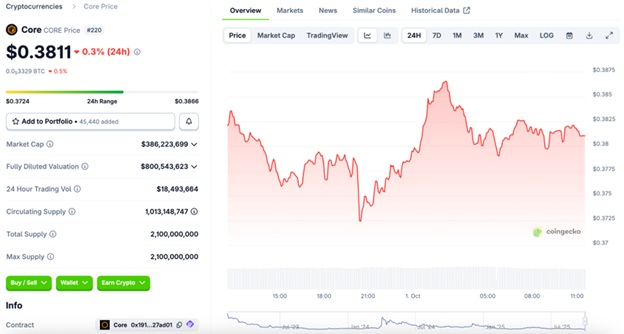
4. Core Blockchain (CORE) – DAO-Driven Ecosystem

  • Price: $0.38
  • Market Cap: Just under $500M

Core focuses on decentralized governance and sustainable ecosystems. By empowering its community through DAO mechanisms, it appeals to investors looking for transparent blockchain projects. While it doesn’t have the explosive presale appeal of Blazpay, it’s quietly building momentum as a top 100x crypto presale alternative.

5. Harmony (ONE) – Sharding and Efficiency

  • Price: $0.0091
  • Market Cap: Low hundreds of millions

Harmony uses sharding to provide scalable and cost-efficient transactions. It has been part of multiple presale and DeFi conversations due to its interoperability features. Despite a low current price, its infrastructure makes it one of the cheaper entry points for investors seeking outsized returns in the bull run.

6. BNB – Exchange Utility Giant

  • Price: $1,011
  • Market Cap: $140.7B
  • 24h Change: +1.3%

Blazpay - top 100x crypto presale

BNB remains one of the largest and most influential coins in the market. As the native token of Binance, it powers discounts, staking, and an entire smart chain ecosystem. Though it isn’t a presale token, its dominance provides a benchmark for emerging projects like Blazpay.

BNB’s continued growth signals strong demand for tokens with utility.

7. Cronos (CRO) – Crypto.com’s Flagship

  • Price: $0.1937
  • Market Cap: $6.7B

Cronos powers the Crypto.com ecosystem, offering staking, governance, and interoperability with Ethereum. As one of the larger exchange-backed coins, it benefits from strong institutional support. While CRO is not a crypto presale with 1000% return, it has reliable growth potential.

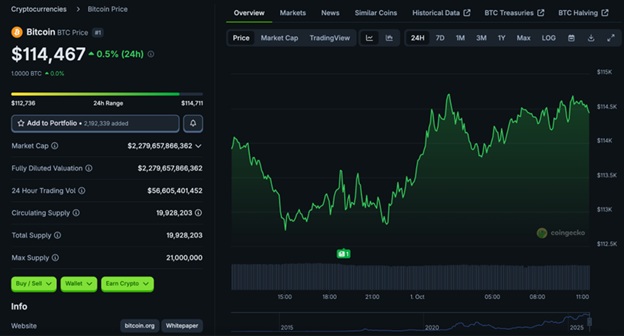
8. Bitcoin (BTC) – The Benchmark

  • Price: $114,532
  • Market Cap: $56B+

Bitcoin is still the leader of the pack, often referred to as digital gold. While not a presale, it remains the asset against which all new tokens are compared. For investors exploring Blazpay or other presales, Bitcoin serves as a hedge and benchmark for performance.

9. Casper Network (CSPR) – Enterprise Adoption

  • Price: $0.0097
  • Market Cap: $130M

Casper is focused on enterprise-grade adoption, offering scalability and upgradability through its proof-of-stake model. It’s less volatile than other tokens, but its business-focused blockchain could attract institutional investors as blockchain adoption accelerates in 2025.

10. Ergo (ERG) – Privacy-First DeFi

  • Price: ~$1.30 (approx, varies)
  • Market Cap: ~$90M (approx)

Ergo is a smart contract platform emphasizing privacy and cryptographic security. By blending proof-of-work consensus with innovative financial contract design, Ergo stands out in the DeFi niche. While smaller in scale, it’s gaining traction as a high-potential underdog.

Bottom Line – Blazpay Leads Among 2025’s 10 Presale Picks

The 2025 bull run is putting presales back in the spotlight. While legacy giants like Bitcoin and BNB remain solid, the best crypto presale for this bull run is shaping up to be Blazpay ($BLAZ). With AI-driven features, a massive user base, and a presale price of just $0.006 in Phase 1, Blazpay has all the hallmarks of a top 100x crypto presale.

For investors looking to capture a crypto presale with a 1000% return, early entry into Blazpay’s Phase 1 offers one of the most compelling opportunities of 2025.

Secure your allocation in Blazpay Phase 1 now at Blazpay.com before the price increases by 25%. Early investors stand to capture the biggest gains of this bull run.

Blazpay - crypto presale with 1000% return

Join the Blazpay Community


Website – https://blazpay.com

Twitter – https://x.com/blazpaylabs

Telegram – https://t.me/blazpay

Ripple’s New Partnerships Rewrite the Rules, But This $0.003 Altcoin Tipped as Best Crypto for Payments

0

Everyone’s talking about Ripple’s massive deals with trillion-dollar companies, but there’s another crypto project flying under the radar that might actually solve payments better.

Big banks are finally getting serious about crypto. Ripple just landed partnerships that most people thought were impossible a few years ago. But here’s the thing – sometimes the loudest success stories aren’t the ones that end up winning. A small London startup called SpacePay is quietly building something that could make crypto payments work for regular people and businesses.

Ripple Scores Big With Franklin Templeton and DBS

Franklin Templeton manages $1.5 trillion. That’s more money than most countries have. Now they’re using Ripple’s XRP Ledger to turn traditional assets into digital tokens. When a company that big trusts your technology, it sends a clear message to the rest of the financial world.

DBS Bank took things even further. They’re Singapore’s biggest bank, and they’ve integrated Ripple’s payment system for international transfers. Customers can now send money across borders instantly instead of waiting days. The fees are lower, too, which everyone appreciates.

Crypto analysts are paying attention to these moves. CaptainAltcoin’s YouTube channel pointed out to something interesting – these partnerships create actual demand for XRP tokens, not just hype. The question now is whether these deals will push XRP into mainstream adoption or if something else will beat them to it.

SpacePay Has a Completely Different Plan

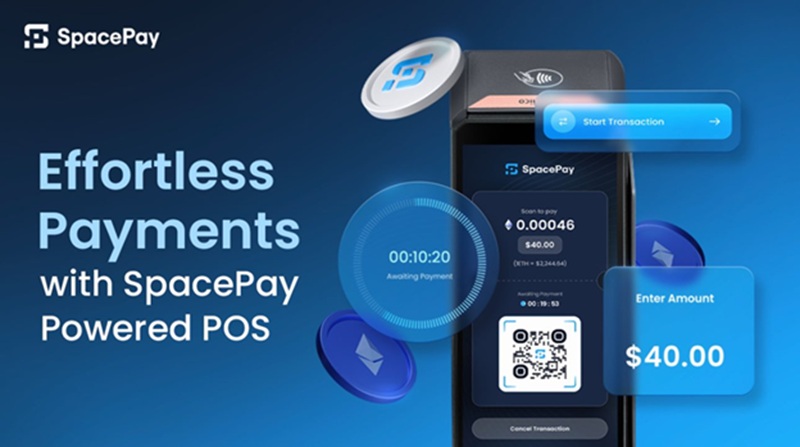
Most crypto payment companies go after banks and big corporations first. SpacePay decided to start with regular businesses instead. They built a system that lets any merchant accept crypto through their existing card machines. No new equipment needed. No complicated setup process.

The approach makes sense when you think about it. Small businesses often get left behind when new payment technologies launch. SpacePay’s solution works with Android-based terminals that most stores already have. A simple software update and suddenly they can accept payments from over 325 different crypto wallets.

So far, investors seem to like the idea. SpacePay has raised over $1.3 million in their $SPY token presale. That’s solid funding for a company that’s still in early stages. The money shows people believe their merchant-focused strategy can work.

Why SpacePay Might Beat Everyone Else

The secret sauce is simplicity. Other payment systems require merchants to learn new processes, install hardware, or deal with complex interfaces. SpacePay works like existing payment systems, just with crypto added on top.

The numbers work in their favor, too. They charge 0.5% per transaction. Most traditional payment processors charge way more than that. Lower fees mean more profit for businesses, which gives them a real reason to try crypto payments.

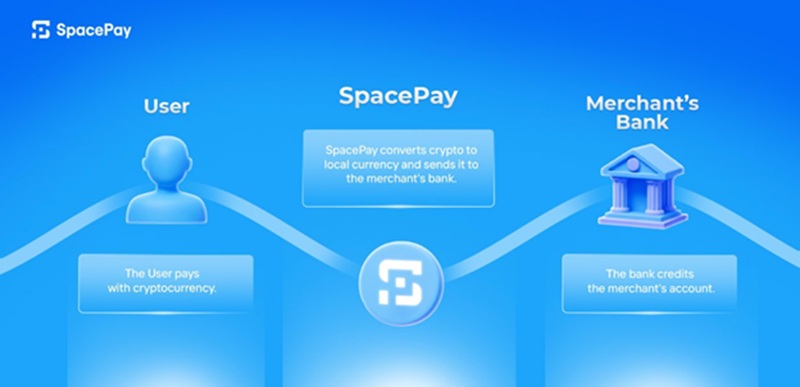
Here’s another smart move – merchants get paid in regular money immediately. The crypto gets converted automatically, so businesses don’t have to worry about Bitcoin dropping 10% overnight. They get the benefits of crypto payments without the stress of price swings.

The whole system settles instantly. Compare that to traditional payments where businesses sometimes wait days to actually get their money. Speed and lower costs are hard to argue with.

The $SPY Token Actually Does Something Useful

SpacePay built their token system differently than most crypto projects. $SPY holders get voting rights on platform decisions. That means the community has real influence over how the company develops new features.

The tokenomics look reasonable compared to other projects. Total supply is 34 billion tokens. They allocated 20% for the public sale, 17% for rewarding users, and split the rest between development, partnerships, marketing, and reserves. It’s not perfect, but it’s not obviously terrible either.

Token holders get a share of the platform’s revenue. Monthly airdrops go to active users. Early access to new features is included too. These perks give people reasons to hold tokens beyond just hoping the price goes up.

$SPY Token Economics Make Sense

The presale structure is straightforward. Tokens currently cost $0.003181 each, with prices increasing as the sale progresses. Early buyers get better deals, which is standard for crypto presales.

Revenue sharing might be the most interesting part. As more merchants use SpacePay, token holders earn passive income from transaction fees. This creates alignment between the company’s success and token value. More usage means more revenue for everyone involved.

The community features feel genuine rather than forced. Quarterly webinars let token holders talk directly with the team. Monthly loyalty rewards encourage people to stay engaged with the platform long-term.

Getting Started With SpacePay’s Presale

Anyone can join the $SPY presale at the current price of $0.003181 per token. The process starts on SpacePay’s official website, where you connect a crypto wallet like MetaMask. The platform accepts ETH, BNB, MATIC, USDT, and several other cryptocurrencies. They even accept bank card payments for people who don’t own crypto yet.


JOIN THE SPACEPAY ($SPY) PRESALE NOW

Website    |    (X) Twitter    |  Telegram

Key Factors for Sustaining TikTok’s Monetization Policy in Kenya

0

TikTok has quickly become one of the most influential platforms for digital expression in Kenya. From comedy skits to educational content and political commentary, young Kenyans are building communities and even careers around short video creation. Yet, while the creative energy is undeniable, the sustainability of monetization policies remains under question. For Kenya to truly benefit from TikTok’s economic potential, several key factors must be addressed.

Inclusive Monetization Opportunities

At present, TikTok’s formal monetization programmes are not fully available in Kenya. Creators largely depend on live gifts, video gifts, subscriptions, or brand sponsorships, which offer inconsistent income. Eligibility thresholds such as the requirement for at least 10,000 followers exclude a large number of talented creators who produce valuable content but lack the scale to qualify. The government and creators have urged TikTok to lower this requirement to 5,000 followers to open access to a wider pool. Making monetization tools more inclusive is a first step toward sustainability. However, inclusivity must go hand in hand with measures to maintain content quality, otherwise a flood of low-value videos could reduce viewer satisfaction and advertiser trust.

Local Payment Integration

One of the biggest barriers to creator sustainability is the lack of seamless payout systems. Currently, many creators must rely on third-party services, which come with delays, hidden charges, and foreign exchange complications. Kenya’s mobile money ecosystem, led by M-Pesa, offers a tested and trusted alternative. Integrating such local payment platforms would allow creators to receive earnings quickly and securely. This would not only simplify financial flows but also make monetization viable for creators in rural areas who may not have access to traditional banking.

Strengthening Policy and Legal Infrastructure

Sustainability is also about regulatory clarity. Creators need to know how their income will be taxed, how intellectual property is protected, and how to navigate content moderation. At the moment, there is uncertainty in taxation rules for digital creators, which leaves many vulnerable to penalties or informal arrangements. A supportive legal framework, as envisioned in the proposed Creative Economy Support Bill, could provide certainty and empower creators to treat their content as a legitimate business. At the same time, overregulation or vague censorship could stifle creativity and push creators to riskier or underground platforms. Balancing freedom with accountability is critical.

Building Local Trust and Presence

Kenya is one of the largest TikTok markets in Africa, yet the platform lacks a physical office in the country. Establishing local representation would demonstrate commitment, allow for faster dispute resolution, and build stronger ties with both creators and regulators. A local office could also provide training and capacity building for creators, helping them understand best practices in monetization, financial planning, and digital rights. Without this presence, many creators feel disconnected from TikTok’s decision-making processes.

Encouraging Financial Resilience Among Creators

Content creation can be highly volatile. Viral trends bring sudden spikes in earnings, but income often declines just as quickly. Encouraging creators to form savings and credit cooperatives or specialized financial institutions could help them stabilize their income. With access to financial planning tools, insurance, and credit, creators would be able to invest in better production quality and withstand the unpredictable nature of online platforms. Sustainability cannot depend on virality alone.

Expanding the Advertising Ecosystem

For monetization to have real impact, there must be sufficient advertising demand. In markets with lower purchasing power, advertising rates are usually much lower than in Europe or North America. Kenya will need to stimulate local ad spend, both from private sector brands and from government initiatives. The state has already proposed channeling some advertising budgets through digital creators, especially in areas like housing, health, and employment. While this offers new revenue streams, care must be taken to ensure that such partnerships do not compromise the independence of creators or reduce content diversity.

Transparency and Trust in Platform Policies

Creators often raise concerns about unclear rules, sudden demonetization, or unexplained drops in content reach. Without transparency and consistent enforcement, it is difficult to plan for growth. TikTok needs to provide clearer guidelines, robust appeal systems, and reliable communication channels. This transparency will build trust and encourage more creators to see content production as a long-term career path.

Casino Tourism vs Online Play: What Keeps People Logging In Abroad

0

Casinos have always meant more than just gambling. For some, they are part of travel itself, resorts in Las Vegas, Macau, Monaco, places that people build entire trips around. For others, a casino today is simply an app on a phone, waiting to be opened whether they are at home, in an airport lounge, or sitting in a small hotel room on the other side of the world. With both options available, the question becomes: what makes someone walk through the doors of a casino abroad, and what makes someone else just keep logging in online?

The Pull of Travel Casinos

Casinos as destinations still have a magic that is hard to ignore. Las Vegas is an obvious example. It is not only about tables and slot machines. It is the concerts, the restaurants, the over-the-top atmosphere that no online platform can copy. Macau has a similar draw, but in its own style, mixing luxury resorts with local culture. People book trips not simply to play, but to feel part of something larger.

There is also the social element. Standing at a roulette wheel or poker table creates moments that stick in memory. Strangers cheering at the same win, laughing at the same loss, sharing the same energy. That sense of shared experience is something that even the best-designed online game struggles to replicate.

Why Online Play Travels Too

Still, platforms like the online Betway casino bring their own strengths, and one of them is convenience. You do not have to look for a venue in an unfamiliar city. You do not need to dress up, or even leave the room. A phone, Wi-Fi, and you are already spinning. That simplicity keeps people logging in even when they are abroad.

Familiarity matters too. A traveler may be far from home, but the online casino account carries over. The same games, the same bonuses, even the same balance are there waiting. It feels safe and steady in a way that walking into a random casino overseas might not.

Where the Two Meet

The lines are blurring. Some resorts now offer their own apps, letting guests keep playing when they step away from the gaming floor. Online platforms, meanwhile, have introduced live dealers, with real people on camera dealing cards in real time. Both sides are borrowing ideas, making the experiences overlap more than ever before.

Choosing the Experience

In the end, the choice is not complicated. It depends on the person and the mood. One traveler wants bright lights, crowds, and stories to tell later. Another just wants to relax with a familiar slot game after a long day of sightseeing. Both are valid, and both show why casinos in any form, physical or digital—keep attracting people.

What seems clear is that one will not erase the other. Casino tourism still thrives because of the spectacle. Online play keeps growing because of convenience. Together they cover both sides of what travelers want, and that balance is why people keep spinning, wherever they are.