DD
MM
YYYY

PAGES

DD
MM
YYYY

spot_img

PAGES

Home Blog Page 3752

Insight into Everlodge’s (ELDG) Real Estate Investment Blueprint, Oasis Network (ROSE) and EOS (EOS) Witness Price Uptrend

0

The real estate investment industry is a trillion industry that is difficult to penetrate. Now, Everlodge (ELDG) has come up with a unique idea to innovate the industry by combining blockchain technology to elevate its scalability. With Everlodge, the luxury real estate industry that was previously reserved for the rich will be open to average earners. Meanwhile, altcoins like EOS (EOS) and Oasis Network (ROSE) have displayed significant bullish sentiment in the past weeks, with analysts picking them among the top cryptos to buy in Q1. Find out more below.

Everlodge (ELDG) to Make Entry into Real Estate Investment Seamless, Using Blockchain

Everlodge (ELDG) is gearing up to become the world’s first crypto project to integrate blockchain technology to make real estate investment affordable and profitable. To do this, Everlodge will be creating fractionalized NFTs whose value will be tied to real-world property assets. As such, investing in these affordable NFTs will grant investors ownership rights to parts of the luxury properties that these NFTs represent. With as little as $100, individuals can purchase these NFTs which is a digital representation of these luxury real estate assets. Also, investors will gain revenue share from the properties they co-own.

Notably, the Everlodge platform also rewards individuals who hold the ELDG token with free nightly stays on Everlodge-owned properties. The Everlodge ecosystem also has a marketplace where users can buy/sell fractional real estate assets. There is also a lending protocol where users can use their property backed NFTs as collateral for loans. The launchpad allows developers to raise funds from the community for new developments.

The Everlodge native token, ELDG, an ERC20 token is currently on sky-high growth potential. For context, ELDG has already generated over 200% ROI for early investors of the token. Similarly, with the project set for launching soon, analysts have projected a 35x return once the project is launched making it one of the top cryptos to buy in 2024.

ELDG has already been listed on the Uniswap exchange. Also, the project has airdropped over 25% of the token into the digital wallets of early investors. With the current bullish trajectory of ELDG, the token is on course to get listed on tier-1 exchange platforms soon. Meanwhile, investors can continue to buy the top crypto token to position themselves for future gains.

Oasis Network (ROSE) Showing Signs of Extending its Bullish Trend

The bullish sentiment of the Oasis Network (ROSE) doesn’t look to be stopping anytime soon. According to market stats, the token has gained over 23% within the last month and a further 5% within the last week. Also, the Oasis Network trading volume is on a positive trajectory, having shown an average day-to-day growth of 40% in the past week.

As of the second week of February, the Oasis Network market cap has been over $840 million. At the current trajectory, the market cap of Oasis Network is likely to reach the $1 billion mark before the end of Q1 of 2024.

Can the Current Bullish Momentum Push EOS (EOS) Back to $1?

In Q1 of 2023, the EOS (EOS) token was trading above the $1 mark. However, having undergone an extended bear market, EOS price dipped to almost $0.5 mark in Q3 of 2023. While the Q4 of 2023 saw the token enter into the bull market again, its current market stats show it is yet to come close to the $1 mark witnessed early last year.

Meanwhile, a significant number of analysts expect the EOS altcoin to rally back to $1, which it traded in Q1 of 2023. At the current trajectory, there’s a substantial likelihood of the token witnessing a resurgence soon. Analysts think that with the bull market in sight, the EOS price will rally past the $1 mark before the end of Q1 of 2024.

For more information about Everlodge (ELDG) please visit their website.

Market Darling: Arm Holdings’ Stock Growth Phenomenon

0

Arm Holdings (NASDAQ:ARM) is a British company focused on developing and licensing microprocessor architecture and related software. Since its establishment in 1990, Arm has become a key player in the mobile and embedded computing market, closely tied to the rise of the Internet of Things (IoT) sector, mobile devices, and wearable electronics technologies.

Originally formed as a collaboration between Acorn Computers, Apple Inc., and VLSI Technology, Arm’s gamble paid off handsomely. The processor architecture initially developed by Acorn for personal computers laid the groundwork for Arm’s first processors. What sets Arm apart from many tech companies is its business model, centered not on manufacturing and selling microprocessors but on licensing its technologies to other companies for chip production based on Arm’s designs. This approach, coupled with Arm’s RISC (Reduced Instruction Set Computing) architecture, inherently offers more energy-efficient solutions compared to traditional CISC (Complex Instruction Set Computing) processors, making it an ideal choice for mobile devices where battery life is critical.

Arm processors have become the preferred choice for most smartphone manufacturers, given the dominance of mobile devices in accessing digital content. In 2016, the Japanese SoftBank corporation (TSE:9984) acquired Arm for $32 billion, enabling its continued growth, especially in artificial intelligence and IoT domains. Despite this acquisition, Arm remains a British company headquartered in Cambridge, England, and has been steadily solidifying its position in the market.

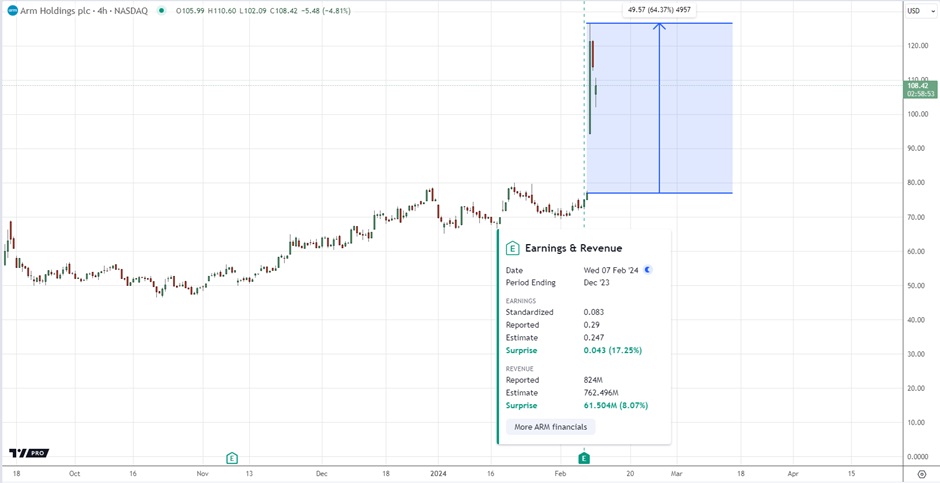
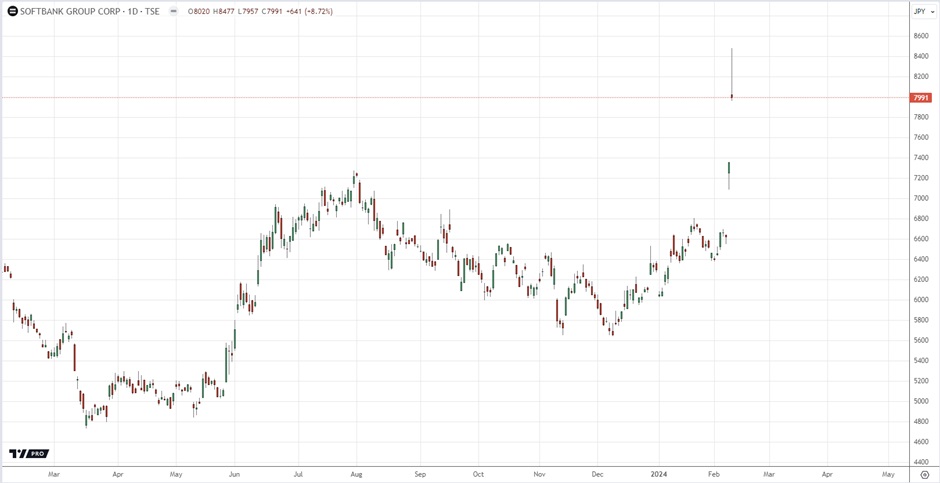
The company regularly releases its financial statements since going public in the United States. On February 7, 2024, Arm announced its quarterly results, instantly catapulting it higher in the list of large-cap companies, making it closer to Microsoft, NVIDIA, and Apple stock. The results surpassed market expectations, with forecasts for the current quarter further driving up stock prices. Consequently, the publication of the quarterly report, which outperformed analysts’ predictions, nearly doubled Arm’s stock price during the trading session, pushing its market capitalization above $116 billion. SoftBank also reaped benefits, witnessing a 15% increase in its share price due to investor optimism.

The revenue can be attributed to a resurgence in the smartphone market and the expansion of the more advanced Armv9 architecture, featuring higher deduction rates and more cores per device. Additionally, Arm architecture processors are gaining traction in server and automotive sectors, contributing to increased licensing revenue. Last quarter, Arm’s direct license revenue surged by $354 million, marking an 18% increase.

While SoftBank, holding over 90% of Arm shares, saw a substantial increase in asset value, it’s currently restricted from selling its shares post-IPO. The restrictions are expected to lift in March, enabling SoftBank to capitalize on Arm’s shares. It’s been exactly two years since NVIDIA’s failed attempt to acquire Arm for $40 billion.

For the current quarter, Arm anticipates generating between $850 million and $900 million in revenue, surpassing analysts’ expectations. Operating expenses are projected to remain at $490 million. By the year’s end in April, Arm aims to earn between $3.15 billion to $3.2 billion in revenue, with operating expenses capped at $1.7 billion. Notably, Arm customers shipped 30.6 billion processors over the past year, with smartphone processors contributing to no more than a third of Arm’s revenue, highlighting the company’s successful diversification efforts into other sectors like data centers and automotive.

With continuous innovation and development, each generation of Arm Cortex architecture sees improvements in performance, energy efficiency, and functionality. The company is expanding its reach beyond mobile and consumer devices into servers, supercomputers, and machine learning, ensuring continued growth and relevance in the ever-evolving tech landscape.

Banks Want Access to Bitcoin, Amid Decreasing BTC Supply

0

Since 2020, the supply of Bitcoin (BTC) on exchanges has fallen by up to 25%. This decline is likely to increase further due to the entry of major institutions like BlackRock and Fidelity into the cryptosphere. However, there’s another factor that has caught attention: BTC exchange supply is drying up.

Banks’ Paradigm Shift: Requesting Easier Access to BTC

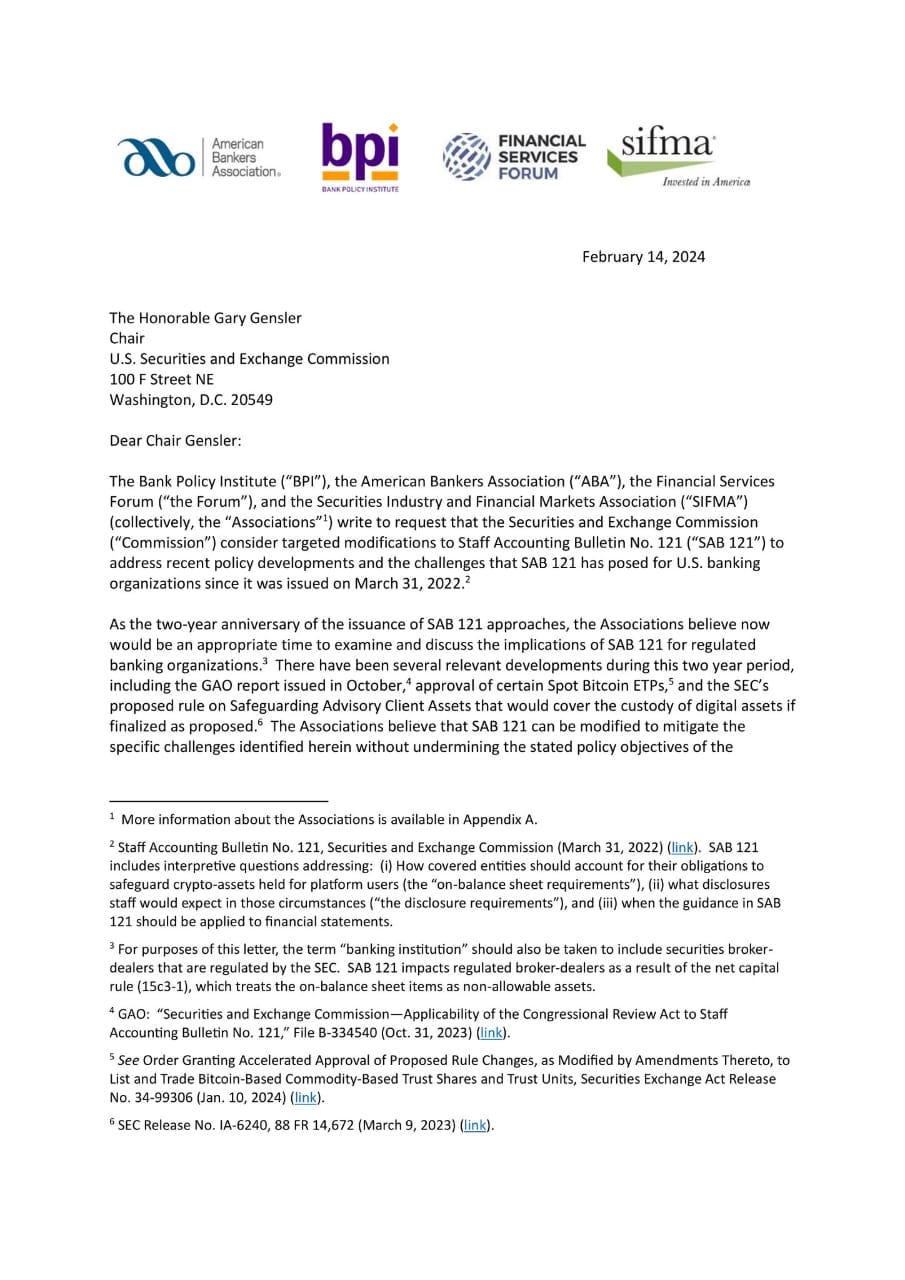
In a surprising twist, banks are changing their stance on BTC. They have sent an open letter to the SEC requesting that access to and holding of digital currency be made easier. Specifically, they want the regulatory body to revisit and amend Bulletin number 121, which outlines how crypto asset holdings should be reported and safeguarded by banks. This move signifies a significant shift in institutional perception towards

BTC Levels on Exchanges at a 24-Month Low

According to data from Glassnode, the number of BTC held on crypto exchanges is currently at its lowest level since July 2020. There is nearly 25% less BTC available on exchanges (either in wallets or up for trade) than there was four years ago, despite thousands more BTC theoretically entering circulation since then.

This trend has been ongoing even before the recent spot ETF approval by the Securities and Exchange Commission (SEC). The collapse of FTX in 2022 may have contributed to this decline as investors reconsidered custody of their digital assets. However, more broadly, it reflects that BTC holders are increasingly opting for long-term storage in their wallets rather than leaving it on exchanges for easy trading.

Most spot ETF brokers are likely to hold BTC (which backs their funds) through safe custodial means such as a mix of hot and cold wallets. As more people invest in spot ETFs, there is less BTC supply available on crypto exchanges.

Bitcoin’s (BTC) recent rally has been driven by the spectacular introduction of exchange-traded funds (ETF). It may now be time to focus on ether (ETH), the second-largest cryptocurrency, broker Bernstein said in a research report on Monday. Ether is “probably the only other digital asset likely to get a spot ETF approval by the SEC,” the report said.

Bernstein says there is about a 50% chance of ether spot ETF approval by May and near-certain probability of approval in the next 12 months. Ether rose over 3% on Monday, while bitcoin gained just over 1%. Ether has outpaced bitcoin over the past week, gaining over 16% in seven days to trade above $2,900 for the first time in nearly two years while the bitcoin price rose a more sedate 8.5% to $52,300.

Financial giants entering the crypto game have had several effects on the market, including an influx of money entering the sector. But there’s been one factor that nobody really considered – BTC exchange supply is drying up. According to a glassnode graph documenting the number of BTC held on crypto exchanges, supply is at the lowest it’s been since July 2020.

Even before the spot ETF approval, Bitcoin held on exchanges was rapidly diminishing. This may have been spurred on by the disastrous collapse of FTX in 2022

Honduras imposes strict ban on Crypto Trading

The National Banking and Securities Commission (CNBS) of Honduras has recently taken a significant step by announcing a ban that prohibits local financial institutions from participating in crypto trading and holding digital assets. This measure has been adopted with the aim of preserving the integrity of the national financial system through stricter control.

Honduran regulations currently lack specific provisions for cryptographic assets, which exposes users to risks such as fraud, operational issues, and legal uncertainties. Additionally, there are growing concerns about the use of such assets for illicit activities like money laundering and terrorism financing.

The CNBS has highlighted the challenges related to the decentralized nature of many cryptocurrency-related businesses operating in Honduras, often registered in external jurisdictions. This decentralization makes regulatory supervision difficult, allowing potentially unmonitored activities.

To address these issues, the CNBS has issued a directive explicitly prohibiting Honduran financial entities from associating with cryptocurrencies, virtual currencies, tokens, or digital assets not authorized by the Central Bank of Honduras. This move aims to maintain tight control over financial activities and preserve the integrity of the sector within the country.

Decentralized Finance (DeFi) has emerged as a revolutionary force within the financial industry, leveraging blockchain technology and smart contracts to enable a wide range of financial services and applications that operate outside traditional banking institutions. By eliminating intermediaries, DeFi democratizes access to financial services, reduces costs, and fosters financial inclusion on a global scale.

DeFi encompasses various services built on decentralized blockchain networks, primarily Ethereum. These services include lending and borrowing platforms, decentralized exchanges (DEXs), asset management, insurance, derivatives, and prediction markets.

Through smart contracts—self-executing agreements with terms directly written into code—DeFi platforms automate transactions and enable peer-to-peer financial interactions without relying on centralized authorities.

As DeFi continues to grow and attract significant capital, it becomes essential to establish legal and regulatory frameworks that address the unique challenges posed by this new financial ecosystem.

While DeFi offers numerous advantages, it also raises concerns about consumer protection, financial stability, and compliance with existing regulations such as anti-money laundering (AML) and know-your-customer (KYC) requirements.

The decentralized nature of DeFi presents challenges related to consumer protection. Unlike traditional financial institutions, which are subject to regulatory oversight, DeFi platforms operate without central authorities.

Users maintain full control of their assets and transact through smart contract programs. However, this lack of intermediaries can lead to increased risks for consumers—such as potential fraud or loss of funds—without clear avenues for recourse.

Interestingly, this ban comes at a time when institutional interest in the crypto sector is increasing globally. In the United States, several exchange-traded funds (ETFs) related to Bitcoin have been launched. US banking actors are pushing for a review of rules that currently make it expensive to provide custody services for these ETFs.

The Lesson from the New Yam Festival, And Grand Messaging Unification from Sultan and Bishops

1

“It is getting to a level that traditional leaders could no longer pacify the people from revolting against government and political leaders that are supposed to find solutions to their lingering socio-economic plight…”- Sultan of Sokoto, Muhammad Sa’ad Abubakar.

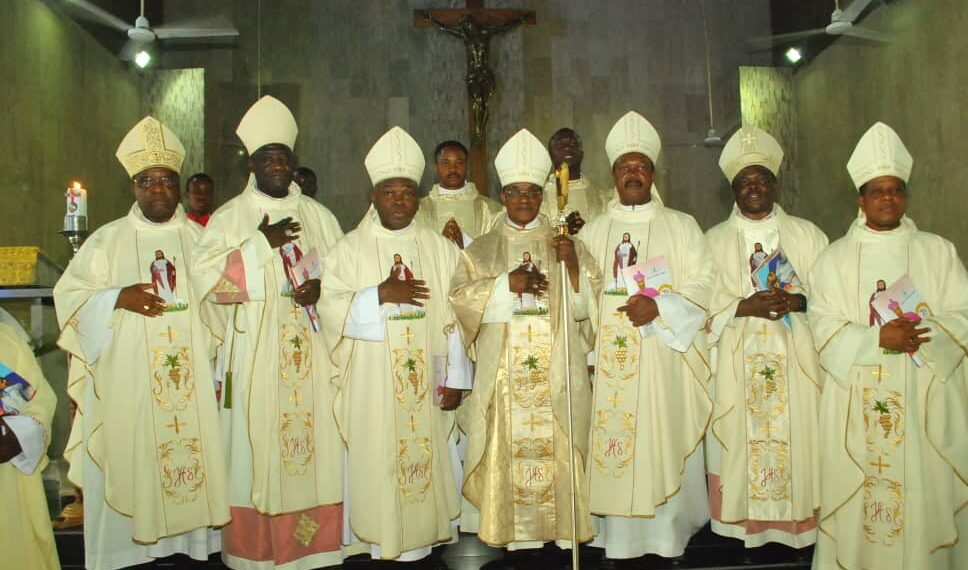
“If we cast a cursory glance at the present state of our nation, we are inclined to conclude that this seems to be the worst of times for our country in the areas of security and the economy…As a result of the government’s reform agenda, millions of Nigerians have been reduced to a life of grinding poverty, wanton suffering, and untold hardship as never before in our national history” – Bishop Lucius Ugorji, President of Catholic Bishops Conference of Nigeria (CBCN) (in picture below)

Nigerian leaders (economic, political, religious, etc) must wake up. Yet, I do posit that there is even “no hunger” in Nigeria at the moment. At least farmers farmed last year before the current acceleration of insecurity. Largely, no farming is going on now in Benue (the food basket of the nation), Nassarawa, etc. By November this year, Nigeria will experience severe economic turbulence since the harvest will be so low that food prices will hit new records, if our leaders FAIL to lead.

Yes, this is the planting season and our leaders have a window to ensure that our soldiers are deployed into all farmlands so that farmers can farm!!! If we do not do just that, the “soldiers of hunger” will come with vengeance from November.

In ancestral Igbo, new yams are celebrated because the new harvest breaks the “unwu” [famine] period. That period is when yams have been planted but they are not yet ready to be harvested. Due to lack of storage facilities, there is always scarcity and “famine” because during “unwu”, yam is scarce.

But as August arrives, and the new yams are ready for harvest, communities celebrate because the “famine” is  going to be over. That is the heart of the new yam festival which you might have read in Chinua Achebe’s books. The festival honours the earth goddess of wealth for bringing her fertility and increasing the wealth of the village. 

On that context, imagine if there would not be harvest because the “yams” were not planted in March because of insecurity. Do you know the implications? Do not imagine that…for Nigeria!

AI-Tokens Rally as OpenAI’s Sora Drive FOMO, as BTC Hits $51.5k

0

Narratives can often fuel significant bumps in token prices, and there are renewed hopes around AI-related tokens. Over the weekend, tokens related to artificial intelligence (AI) or claiming to be utilizing AI rallied as OpenAI unveiled its groundbreaking text-to-video generator, Sora. This development has boosted hopes among those who view the sector as a key driver of profits this year.

Sector tokens experienced an impressive 7.7% average increase in value within the past 24 hours, according to CoinGecko data. Notably, Ocean Protocol’s OCEAN and Fetch. AI’s FET rose more than 10%. Meanwhile, the CoinDesk 20 Index (CD20)—a benchmark for the biggest and most liquid cryptocurrencies—also saw a positive trend, rising by 2.68% during the same period.

Among all AI tokens, Worldcoin’s WLD stood out with a remarkable 30% surge, setting a new lifetime peak at $7. Worldcoin’s parent company was founded by OpenAI CEO Sam Altman, leading some traders to consider WLD as a bet on OpenAI’s growth.

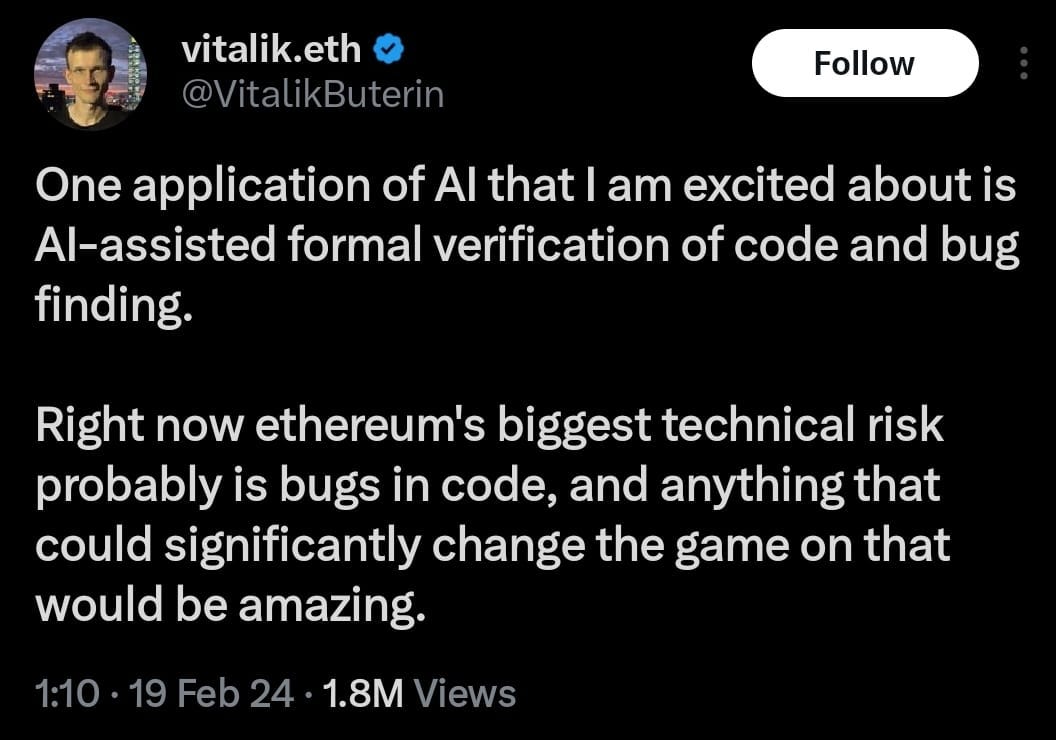
Ethereum co-founder Vitalik Buterin added fuel to the fire by tweeting that AI could find a place for auditing smart contracts. This statement sent lesser-known tokens like 0x0 and Token Fi’s TOKEN up by as much as 15%, given their connection to AI-related topics.

He wrote;

One application of Artificial Intelligence AI that I am excited about is AI-assisted formal verification of code and bug finding.

Right now, Ethereum’s biggest technical risk probably is bugs in code, and anything that could significantly change the game on that would be amazing.

Buterin highlighted the importance of AI-powered auditing to identify and rectify buggy code in the Ethereum network. He specifically mentioned the value of AI-assisted formal verification of code and bug finding emphasizing that this could significantly enhance the network’s robustness.

But why is this so crucial? Let’s delve into the details:

The Challenge of Code Bugs: Ethereum, like any complex software system, faces the risk of bugs in its codebase. These bugs can lead to vulnerabilities, security breaches, or unintended behavior. Identifying and fixing these bugs is essential for maintaining a secure and reliable blockchain platform.

AI-Assisted Formal Verification: Formal verification involves mathematically proving that a program meets its intended specifications. AI-assisted formal verification combines the power of AI algorithms with formal methods to verify code correctness.

By leveraging AI, developers can automatically analyze code for potential issues, ensuring that it adheres to specified properties.

Benefits of AI in Code Verification: AI can perform exhaustive checks on code, exploring various execution paths and identifying subtle bugs that manual inspection might miss. It can help detect issues related to memory leaks, race conditions, buffer overflows, and other common programming pitfalls.

Automated verification tools powered by AI can significantly reduce the time and effort required for manual code reviews.

Interest in AI-related tokens began to spike in early 2023 when ChatGPT and image generation software gained popularity. Although this enthusiasm waned over the past few months, Sora’s Friday launch has seemingly reignited interest. Commercial usage of AI remains limited to virtual tools and chat software.

Bitcoin hovers around $52k per coin on Monday

As the weekend approaches, investors worldwide are taking a moment to reflect and analyze the ever-evolving landscape of cryptocurrency. All eyes are on Bitcoin as it hovers tantalizingly close to the $52,000 mark, while altcoins navigate a landscape marked by slight retractions and nuanced price movements.

Bitcoin is classified as a Currency under CoinDesk’s Digital Asset Classification Standard (DACS). It is the world’s first decentralized cryptocurrency – a type of digital asset that uses public-key cryptography to record, sign, and send transactions over the Bitcoin blockchain – all done without the oversight of a central authority.

Bitcoin, the undisputed leader of the cryptocurrency market, has been on a remarkable journey over the past ten days. It all began on February 7 when Bitcoin finally broke out of its prolonged consolidation phase, which had seen the digital asset trading within a tight range around $43,000.

The breakout ignited a frenzy among bulls, propelling Bitcoin to knock on the $50,000 door by the end of the week. Despite facing initial resistance, Bitcoin’s ascent continued unabated, culminating in a triumphant reclaiming of the $50,000 level on February 12. The cryptocurrency reached a crescendo on Thursday, soaring to a dizzying height of $52,900, marking its highest price since late 2021.

However, as Bitcoin attempted to breach the $52,000 barrier, it encountered stiff opposition, leading to a slight retracement on Friday. As of now, Bitcoin remains locked in a tight range just below the $52,000 threshold, signaling a temporary pause in its upward trajectory.

While its market capitalization remains above $1 trillion, its dominance over the altcoin market has increased to 50%, indicating a shift in market dynamics favoring the king crypto asset. The recent price action in Bitcoin left the token’s market capitalization at $1.02 trillion. So far this year, Bitcoin has experienced a 23.01% change.

The Bitcoin network (with an upper-case “B”) was launched in January 2009 by an anonymous computer programmer or group of programmers under the pseudonym “Satoshi Nakamoto.” The network is a peer-to-peer electronic payment system that uses a cryptocurrency called bitcoin (lower case “b”) to transfer value over the internet or act as a store of value like gold and silver.

Each bitcoin is made up of 100 million Satoshi’s (the smallest units of bitcoin), making individual bitcoin divisible up to eight decimal places. That means anyone can purchase a fraction of a bitcoin with as little as one U.S. dollar.

Bitcoin’s price is renowned for being highly volatile, but despite that, it has become the top-performing asset of any class (including stocks, commodities, and bonds) over the past decade – climbing a staggering 9,000,000% between 2010 and 2020. When the cryptocurrency was launched at the beginning of 2009, as Satoshi Nakamoto mined the bitcoin genesis block (the first-ever block on the Bitcoin network).