DD
MM
YYYY

PAGES

DD
MM
YYYY

spot_img

PAGES

Home Blog Page 3760

Time Management Tips: An Example of New Live Casinos’ Real-Time Basis Interaction Model

0

The evolution of live casinos has significantly reshaped the industry’s contours. These platforms offer a unique blend of the immersive experience of traditional brick-and-mortar casinos with the convenience of online gaming platforms.

The real-time basis interaction model is central to their appeal, a distinctive feature that emphasizes instantaneous engagement. Within this milieu, players and operators alike are drawn into an immediate and captivating environment where decisions and reactions are demanded in the mere span of split seconds.

This real-time experience, coupled with the surge in digital innovations, has paved the way for the rise of new live casino sites for beginners. These sites represent a harmonious convergence of the old and new and provide an accessible gateway for those venturing into the exhilarating world of live casino gaming for the first time.

Core Components of the Real-Time Interaction Model

Live Video Streaming

Central to the live casino experience is streaming high-definition video in real time. Players worldwide can witness live dealers shuffle cards, spin roulette wheels, and manage bets, all in real-time. This immediate interaction mirrors the physical casino experience but is delivered via a digital platform.

Interactive Chat Features

To enhance engagement, many live casinos incorporate chat features. This allows players to communicate with dealers and other players. Messages must be read, understood, and responded to promptly, emphasizing interactions’ real-time nature.

Real-Time Betting Systems

Placing wagers in live casino games is immediate. Players need to make betting decisions within short, defined timeframes. The casino’s backend systems then process these wagers in real-time, ensuring that bets are accepted, processed, and settled immediately.

Instant Technical Support

Given the time-sensitive nature of live casino games, any technical glitch can be disruptive. Live casinos often have real-time technical support systems, ensuring players and dealers can report and resolve issues instantly.

Benefits of the Real-Time Interaction Model

Enhanced Player Engagement: The real-time nature of interactions, from placing bets to conversing with dealers, creates an immersive experience that traditional online casinos can’t replicate.

Transparency and Trust: Watching live dealers in action helps foster trust among players. They can see every move, ensuring fairness and transparency.

Instant Feedback Loop: Real-time interactions provide immediate feedback. Whether it’s winning a bet or getting a query addressed, players don’t have to wait.

Challenges and Solutions

Latency Issues

Delays in streaming can disrupt the real-time experience. Many live casinos combat this by investing in high-quality streaming technologies and robust server infrastructures.

Multitasking Demands

Live dealers often must manage game dynamics, player interactions, and technical issues concurrently. Comprehensive training programs ensure they can handle these demands efficiently.

Final Thoughts

With their real-time interaction models, live casinos have raised the bar in the digital gaming industry. These platforms have successfully replicated the immediacy and engagement of physical casinos in a digital environment. As technology evolves, it’s exciting to envisage the next developments that will further enhance real-time interactions in the gaming world.

Types of Cryptocurrency Scam, Crypto for Humanity

1

Crypto scams are fraudulent schemes that aim to deceive crypto users and steal their funds or personal information. Crypto scams can take many forms, such as phishing, fake exchanges, fake wallets, fake ICOs, Ponzi schemes, ransomware, and more.

One of the most prevalent crypto scams is phishing, which involves sending fake emails or messages that impersonate legitimate platforms or entities, such as exchanges, wallets, or regulators.

The scammers try to trick you into clicking on malicious links or attachments, or providing your personal or financial information, such as your login credentials, passwords, or private keys. Once they have access to your account or wallet, they can steal your funds or identity.

Another common crypto scam is fake ICOs or initial coin offerings, which are crowdfunding campaigns that raise funds for new projects or tokens. Scammers create fake websites or social media accounts that mimic real ICOs and use hype and false claims to attract investors. They may also use bots or paid promoters to create artificial demand and inflate the price of the token. Once they collect enough money from unsuspecting investors, they disappear with the funds and leave behind worthless tokens.

A third type of crypto scam is Ponzi or pyramid schemes, which are fraudulent investment schemes that promise high returns with little or no risk. Scammers recruit new members by offering them incentives or commissions for bringing in more investors. They use the money from new members to pay off old members, creating an illusion of profitability. However, the scheme collapses when there are not enough new members to sustain the payouts, or when the scammers run away with the money.

How can you avoid falling prey to these crypto scams? Here are some tips:

Do your own research before investing in any crypto project or platform. Check the credibility and reputation of the source and verify the information from multiple sources. Look for reviews, ratings, feedback, and testimonials from other users or investors.

Be wary of unsolicited emails or messages that ask you to click on links or attachments or provide your personal or financial information. Never share your login credentials, passwords, or private keys with anyone. Use a secure and reputable wallet or exchange to store and manage your funds.

Be skeptical of offers that sound too good to be true, such as guaranteed returns, low risk, high reward, or limited time offers. Remember that investing in crypto involves risks and volatility, and there is no such thing as a free lunch.

Be careful of social media influencers or celebrities who endorse or promote crypto projects or platforms. Some of them may be paid or sponsored by scammers or may not have done proper due diligence themselves. Always do your own research and analysis before following their advice.

Report any suspicious or fraudulent activity to the relevant authorities or platforms. You can also alert other users or investors by sharing your experience and warning them of potential scams.

Crypto scams are a serious threat to the security and integrity of the crypto ecosystem, but they can be avoided with some awareness and caution. By following these tips, you can protect yourself and your crypto assets from scammers and enjoy the benefits of the crypto world safely and securely.

Crypto for HUMANITY

Blockchain technology is not only a powerful tool for creating decentralized and transparent financial systems, but also a catalyst for social impact and human empowerment. In this blog post, we will explore some of the ways that crypto can enable positive change in the world, from fighting poverty and corruption, to promoting democracy and human rights, to protecting the environment and biodiversity.

One of the main benefits of crypto is that it can provide access to financial services and opportunities for the unbanked and underbanked populations, especially in developing countries. According to the World Bank, about 1.7 billion adults do not have an account at a financial institution or through a mobile money provider, and about 56% of them are women.

Crypto can offer them a way to store, send, receive, and exchange value without intermediaries, fees, or barriers. For example, platforms like Celo and Stellar aim to create inclusive and accessible mobile money networks that can connect people across borders and regions. Similarly, projects like Kiva Protocol and MakerDAO leverage crypto to provide microfinance and lending solutions for entrepreneurs and small businesses in emerging markets.

Another way that crypto can foster social change is by enhancing transparency and accountability in governance and humanitarian aid. Blockchain technology can create immutable and verifiable records of transactions and data, which can prevent fraud, corruption, and mismanagement.

For instance, initiatives like Bitnation and Democracy Earth use crypto to create decentralized and participatory governance systems that can empower citizens and communities. Likewise, organizations like UNICEF and the World Food Programme use crypto to deliver aid and donations more efficiently and effectively to those in need.

Moreover, crypto can also support environmental and social causes by incentivizing positive behavior and actions. Blockchain technology can enable the creation of tokenized assets that represent real-world value, such as carbon credits, natural resources, or social impact bonds.

These tokens can then be traded, donated, or rewarded on crypto platforms and marketplaces. For example, platforms like Regen Network and Nori use crypto to reward farmers and landowners for regenerating soil and sequestering carbon. Similarly, platforms like Alice and Bounties Network use crypto to fund and track social impact projects and campaigns.

Crypto is not only a revolutionary innovation for the financial sector, but also a potential force for good in the world. By leveraging blockchain technology, crypto can empower individuals and communities, enhance transparency and accountability, and incentivize positive impact. Crypto for HUMANITY is not just a slogan, but a vision for a more fair, inclusive, and sustainable future.

Unlocking Trust: A Data-Driven Approach for Nigerian Diaspora Investors

0

In an era of globalization, the concept of trust plays a pivotal role in shaping our decisions and actions. It is especially critical when Nigerians in the diaspora seek to invest in their homeland. Establishing trust is often a significant challenge, given the geographical and cultural distances that separate them from Nigeria. However, data from a recent global survey conducted by the World Values Survey between 2017 and 2022 provides valuable insights that can help Nigerian diaspora investors build a personal trust value system. In this article, we explore how Excel, a powerful tool, can be employed to harness this data and lay the foundation for informed investment decisions.

Understanding the Data: A Closer Look

The survey findings paint a nuanced picture of Nigerians’ affinity and trust patterns. Let’s break down the key insights:

1. Affinity with Place:

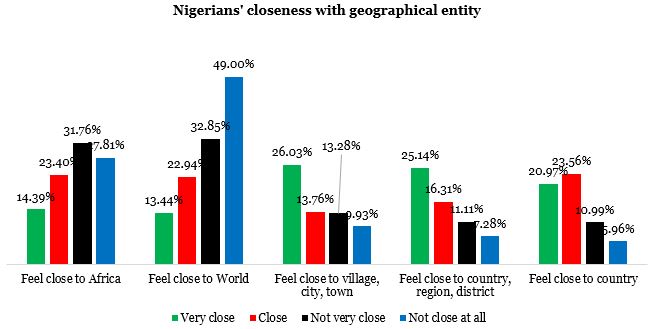
  • Over 26% of surveyed Nigerians feel very close to their village, city, and town.
  • Approximately 25.14% and 20.97% reported strong closeness to their country, their respective region and district, and the country as a whole.
  • Interestingly, nearly half (49%) of those who claimed to have no close affinity with any entity indicated a lack of connection with the world as a whole.

2. Trust Dynamics:

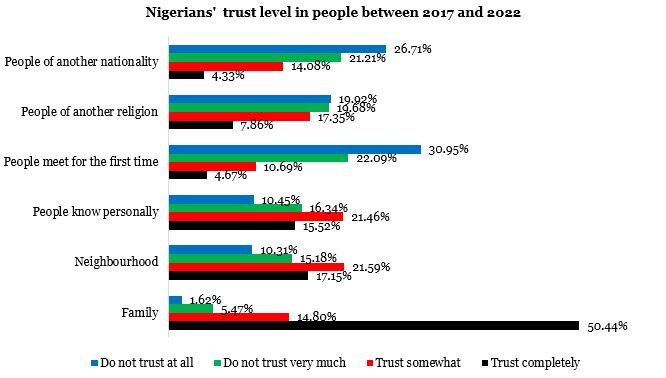
  • More than half (50.44%) trust their family members more than anyone else.
  • Roughly 21.59% trust people in their neighbourhood somewhat.
  • An almost identical percentage (21.46%) trusts individuals they know personally somewhat.
  • Notably, 22.09% do not trust people they meet for the first time.
  • Over 21% expressed a lack of trust in individuals of another nationality.

Building Your Personal Trust Value System Using Excel:

Now, the question is how diaspora investors can use these insights to construct a personal trust value system. The answer lies in leveraging data analysis, and Excel is an excellent tool for the job.

1. Data Visualization:

  • Excel’s data visualization tools can help you create charts and graphs to better understand the data. Visual representations make it easier to spot trends and patterns, such as the relationship between affinity and trust levels.

2. Affinity Mapping:

  • Use Excel to categorize and quantify your own affinity with different aspects of Nigeria. Compare these with the survey data to see how closely your feelings align with those of the surveyed population.

3. Trust Assessment:

  • Excel can help you assess your trust levels. Create a trust matrix where you score different categories of individuals based on your own trust. Compare this with the survey data to identify any gaps or discrepancies.

4. Risk Mitigation:

  • Excel’s calculation features can assist you in quantifying risks associated with your investments. Consider factors such as trust levels, geographical proximity, and cultural familiarity to assess the potential risks.

5. Informed Decision-Making:

  • Excel can be used to create decision matrices that weigh the pros and cons of various investment options. By incorporating your trust and affinity data, you can make well-informed decisions that align with your personal values.

6. Building Local Relationships:

  • Excel can serve as your organizational tool to keep track of your interactions with local contacts. It can help you identify key stakeholders and nurture relationships that are essential for building trust in the local business environment.

7. Continuous Monitoring:

  • Use Excel to set up a monitoring system to track changes in trust dynamics and affinity over time. This will enable you to adapt your investment strategies as circumstances evolve.

In today’s interconnected world, trust is a currency that transcends borders. For Nigerian diaspora investors, the path to building a personal trust value system begins with understanding the data, as revealed in the World Values Survey. Excel is a versatile tool that can help you analyze, visualize, and leverage this data to make informed investment decisions that align with your personal values and aspirations. Trust is the cornerstone of successful investments, and with the right data-driven approach, you can unlock the potential of investing in Nigeria with confidence.

Building Trust Value System for Nigerian Diaspora Investors

0

In a global survey conducted by the World Values Survey between 2017 and 2022, more than 26% of the 3,257 surveyed Nigerians stated that they feel very close to their village, city, and town. Within the same group, 25.14% and 20.97% reported feeling very close to their country, their respective region and district, and the country as a whole, respectively. Additionally, the analysis reveals that nearly half (49.00%) of the 151 Nigerians who selected the “not at all close” response category indicated that they do not have a strong affinity with the world as a whole. In the “not very close” category, the analysis shows that 32.85% of respondents were not very close to the world. In comparison, 31.76% felt similarly distant from Africa, out of 828 sampled respondents. For those who chose the “close” response option, the analysis indicates that 23.56% of the 1,918 sampled citizens felt close to their country. This is closely followed by 23.40% and 22.94% of the same sampled citizens who expressed feeling close to Africa and the world, respectively.

Source: World Values Survey, 2017-2022; Infoprations Analysis, 2023

Regarding trust, the survey found that more than half (50.44%) of the 1,475 sampled citizens expressed confidence in their family members over other categories of individuals around them. Among the 2,357 sampled citizens, 21.59% reported that they somewhat trust people in their neighbourhood, with 21.46% of the same group also indicating that they somewhat trust people they know personally. Further analysis revealed that 22.09% of the 2,154 sampled citizens did not trust people they met for the first time. Additionally, over 21% of the same sampled citizens reported that they did not trust individuals of another nationality. Notably, Nigerians did not express trust in either of these two categories of people.

Source: World Values Survey, 2017-2022; Infoprations Analysis, 2023
Our analyst notes that the World Values Survey between 2017 and 2022 offers valuable insights into the trust dynamics within Nigeria, which can be used as a foundation for constructing a trust value system because the desire of Nigerians in the diaspora to invest in their home country is commendable, but the perceived lack of trust in the local environment presents a significant hurdle. To create a sustainable Trust Value System, we need to consider several key aspects based on the survey findings:

1. Building Trust in Local Networks

The survey highlights that more than half of sampled Nigerians trust their family members more than anyone else. This familial trust can be leveraged to establish a foundation for building trust in local networks. Encouraging diaspora investors to collaborate with trustworthy family members or close acquaintances in Nigeria can mitigate some of their trust concerns. Additionally, creating support systems or networks of fellow diaspora investors who can share experiences and insights can foster trust among this group.

2. Enhancing Trust in Neighbors and Personal Contacts

Approximately 21.59% of surveyed citizens reported some level of trust in people in their neighbourhoods, and a similar percentage trusted individuals they knew personally. To strengthen this trust, initiatives can be developed to promote community engagement and cohesion. Diaspora investors can actively participate in local community activities and build relationships with neighbours and acquaintances. These interactions can lead to greater trust in local communities and personal contacts.

3. Addressing Trust Issues with Strangers and Other Nationalities

The data indicates that a significant portion of respondents did not trust people they met for the first time or individuals of another nationality. To address these issues, awareness campaigns and educational programs can be implemented. These programs can focus on promoting cultural understanding, tolerance, and diversity. Encouraging diaspora investors to engage in cross-cultural exchanges and dialogue can help break down barriers and enhance trust in diverse communities.

4. Establishing Trust in Business Environments

The survey shows that trust in business environments remains a concern for diaspora investors. To address this, several strategies can be employed:

a. Transparency and Accountability: Encourage businesses and institutions in Nigeria to adopt transparent practices. This includes financial transparency, clear legal frameworks, and adherence to ethical standards. Regulatory bodies can play a crucial role in ensuring businesses operate with integrity.

b. Access to Information: Provide diaspora investors with access to reliable information about the Nigerian business landscape. This can include market research, regulatory guidelines, and potential risks and opportunities. Creating a centralized platform or agency for this purpose can be beneficial.

c. Legal Protections: Ensure that legal protections for investors are robust and enforceable. This includes mechanisms for dispute resolution and protection of property rights. Diaspora investors should have confidence that their investments are legally secure.

d. Local Partnerships: Encourage diaspora investors to establish partnerships with local businesses or individuals who have a proven track record of trustworthiness. These local partners can provide valuable insights and credibility.

e. Government Initiatives: Advocate for government policies that promote a conducive business environment. This includes reducing bureaucratic red tape, streamlining business registration processes, and offering incentives to diaspora investors.

5. Fostering a Sense of National and Global Identity

The survey indicates that a substantial portion of respondents felt close to their village, city, and country. However, when it comes to the world and Africa as a whole, the affinity decreases. To bridge this gap, efforts can be made to instil a sense of national and global identity:

a. Cultural Exchange Programs: Promote cultural exchange programs that connect diaspora investors with their cultural roots. These programs can help them better understand and appreciate the local culture, history, and traditions.

b. Global Citizenship Education: Encourage a sense of global citizenship by promoting education and awareness about global issues, sustainability, and interconnectedness. This can foster a broader sense of identity and responsibility.

c. Promotion of African Unity: Advocate for initiatives that promote unity and collaboration among African nations. Diaspora investors can be encouraged to see themselves as part of a larger African community, which can enhance their affinity with the continent.

Constructing a sustainable Trust Value System for Nigerians in the diaspora looking to invest in Nigeria is a multifaceted endeavour. It requires addressing trust issues at various levels, from personal relationships to business environments, and fostering a sense of identity and belonging. The survey data provides valuable insights into the specific challenges and opportunities in building trust for diaspora investors.

To succeed in this endeavour, it is essential for stakeholders, including the government, local businesses, diaspora organizations, and civil society, to collaborate closely. By implementing the strategies outlined above and creating a supportive ecosystem, Nigeria can attract investments from its diaspora while addressing the trust concerns that may have previously deterred potential investors. This, in turn, can contribute to the country’s economic growth and development.

Blockchain in Cross-Border Payments and more Applications

0

The financial sector has undergone a transformative evolution in recent years, driven mainly by the revolutionary technology known as blockchain. Blockchain, originally devised as the backbone of cryptocurrencies like Bitcoin, has transcended its initial purpose and found many applications across various industries. In the financial sector, blockchain’s potential to streamline cross-border payments, reduce transaction costs, and automate complex processes is reshaping the landscape, making financial services more efficient, secure, and accessible than ever before.

In the financial sector, Blockchain is like a decentralized and distributed ledger technology that records transactions across multiple computers in a tamper-proof and transparent manner. The core features of blockchain—immutability, transparency, security, and decentralization—make it an ideal fit for the financial sector. Here’s what it does;

Streamlines Cross-Border Payments

Cross-border payments have historically been fraught with inefficiencies and delays due to the involvement of multiple intermediaries, differing regulatory frameworks, and the need for currency conversion. Blockchain simplifies this process by enabling direct peer-to-peer transfers with reduced fees and faster settlement times.

Reduced Transaction Costs: Blockchain eliminates the need for intermediaries such as banks or clearinghouses, significantly reducing transaction fees associated with cross-border payments.

Faster Settlements: Traditional cross-border transactions can take several days to complete. With blockchain, settlements can occur in minutes or seconds, improving liquidity and reducing currency exchange risks.

Automating Complex Processes:

Many financial processes involve complex, multi-step workflows that require manual verification and reconciliation. Blockchain can automate these processes, ensuring accuracy and reducing the risk of errors.

Smart Contracts: Smart contracts are self-executing contracts with predefined rules and conditions. They automatically trigger actions when specific criteria are met. In finance, smart contracts can automate tasks like loan approvals, insurance claims, and trade settlements, eliminating the need for intermediaries and reducing operational costs.

Auditing and Compliance: Blockchain’s transparent ledger makes it easier for regulators and auditors to monitor transactions in real time, enhancing compliance and reducing the risk of fraud.

Enhancing Security:

Security is paramount in the financial sector, and blockchain protects against fraud and unauthorized access. We have discussed this previously. For instance;

Immutable Records: Once a transaction is recorded on the blockchain, it cannot be altered or deleted. This immutability reduces the risk of fraudulent activities.

Decentralization: The decentralized nature of blockchain means that there is no single point of failure. Even if one node is compromised, the network remains secure.

Increasing Accessibility:

Blockchain technology is inherently global and accessible to anyone with an internet connection. This accessibility can potentially bring financial services to underserved and unbanked populations.

Financial Inclusion: Blockchain-powered financial services can reach individuals and businesses in remote or underserved areas, expanding financial inclusion.

Lower Barriers to Entry: Blockchain lowers barriers to entry for fintech startups, enabling them to compete with traditional financial institutions and offer innovative solutions.

In a few words

As blockchain technology matures and regulatory frameworks evolve, financial institutions and fintech innovators are poised to unlock new levels of efficiency, security, and inclusivity.

The future of finance lies in the integration of blockchain, where transactions are not only faster and cheaper but also more secure and accessible to everyone, regardless of their location or financial status. As blockchain continues to disrupt traditional financial systems, we can expect a financial sector that is more efficient, transparent, and equitable for all.