DD
MM
YYYY

PAGES

DD
MM
YYYY

spot_img

PAGES

Home Blog Page 3765

Bitcoin regains $41,000 as crypto market ticks upward in last week of January 2024

0

The cryptocurrency market has shown signs of recovery in the final week of January 2024, with Bitcoin leading the way. The largest digital asset by market capitalization has regained the $41,000 level, after dropping below $30,000 earlier this month. This represents a 37% increase in value since the monthly low.

Bitcoin’s rally has been driven by several factors, including positive news from institutional investors, regulatory developments, and network upgrades. Some of the highlights include:

Tesla announced that it has increased its Bitcoin holdings by another $1.5 billion, bringing its total to $3.5 billion. The electric car maker also said that it will accept Bitcoin as a payment option for its vehicles in select markets.

The US Securities and Exchange Commission (SEC) approved the first Bitcoin exchange-traded fund (ETF) in the country, allowing investors to gain exposure to the asset without having to buy or store it directly. The ETF, which tracks the performance of the CME CF Bitcoin Reference Rate, began trading on the New York Stock Exchange under the ticker symbol BTCR.

The Bitcoin network underwent a major upgrade, known as Taproot, which improves its scalability, privacy, and security. Taproot introduces a new signature scheme that allows for more complex and flexible transactions, such as multi-signature and smart contracts. Taproot also reduces the amount of data needed to verify transactions, making them faster and cheaper.

The global adoption of Bitcoin continued to grow, with more countries recognizing its legal status and facilitating its use. For instance, Brazil became the first Latin American nation to regulate Bitcoin as a legal tender, following the example of El Salvador. Meanwhile, India lifted its ban on crypto trading and allowed banks to offer services to crypto businesses.

These developments have boosted the confidence and optimism of the crypto community, as well as attracted new investors to the space. According to data from Glassnode, the number of active Bitcoin addresses reached a new all-time high of 38.6 million on January 25th, indicating a high level of network activity and user engagement.

The positive momentum of Bitcoin has also spilled over to other cryptocurrencies, lifting the overall market capitalization to over $1.2 trillion. Some of the best performers include Ethereum, which broke above $3,000 for the first time since September 2021; Cardano, which surged by over 50% after launching its smart contract platform; and Solana, which hit a new record high of $250.

As January comes to an end, the crypto market seems to have shaken off the bearish sentiment that dominated the previous months. However, challenges and uncertainties remain, such as regulatory risks, environmental concerns, and technical issues. Therefore, investors should exercise caution and due diligence when entering this volatile and unpredictable market.

UK Supreme Court Refuses Craig Wright Appeal

The UK Supreme Court has rejected the appeal of Craig Wright, the self-proclaimed inventor of Bitcoin, who was ordered to pay $5 billion worth of the cryptocurrency to the estate of his former business partner, Dave Kleiman.

The court upheld the decision of the High Court, which found that Wright had forged documents and lied in his testimony to claim ownership of more than a million bitcoins that he and Kleiman had mined together in the early days of the cryptocurrency.

Wright, who claims to be Satoshi Nakamoto, the pseudonymous creator of Bitcoin, has been involved in a legal battle with Kleiman’s brother, Ira, since 2018. Ira Kleiman sued Wright for half of the bitcoins that he alleged Wright owed to his brother’s estate, as well as intellectual property rights related to Bitcoin.

Wright has repeatedly failed to prove his claim to be Nakamoto and has been accused of fraud and perjury by several experts and witnesses. He has also faced criticism from the Bitcoin community, who have rejected his attempts to assert control over the cryptocurrency and its underlying technology.

The UK Supreme Court’s ruling is a major blow to Wright, who may have to surrender a significant portion of his fortune and reputation. It is also a victory for Ira Kleiman, who has vowed to donate a portion of the recovered bitcoins to charity.

The case is not over yet, however, as Wright has indicated that he will seek to challenge the jurisdiction of the UK courts and pursue further appeals. He has also filed a lawsuit against Ira Kleiman in Florida, where he is seeking to reverse a default judgment that awarded Kleiman 50% of the disputed bitcoins.
ARK Invest sold $42.8 million of BITO and purchased $62.3M of its own ETF last week

0

In a surprising move, ARK Invest has reduced its exposure to the first U.S. bitcoin futures ETF, BITO, and increased its stake in its own innovation-focused ETF, ARKK. According to data from ARK’s daily trading activity, the firm sold $42.8 million worth of BITO shares and bought $62.3 million worth of ARKK shares in the last week.

This decision may indicate that ARK is more confident in the long-term prospects of its own portfolio of disruptive companies than in the short-term performance of bitcoin futures. BITO, which launched in October 2021, tracks the price of bitcoin futures contracts rather than the spot price of bitcoin itself. This means that it is subject to contango, a situation where futures prices are higher than spot prices, which can erode returns over time.

ARKK, on the other hand, invests in companies that are expected to benefit from technological innovation across various sectors, such as Tesla, Shopify, Roku, Coinbase and Spotify. ARK’s founder and CEO, Cathie Wood, has been a vocal proponent of bitcoin and has predicted that it will reach $500,000 in the next five years.

However, she has also stated that she prefers to invest in companies that are building on top of the blockchain technology rather than in bitcoin itself.

By selling BITO and buying ARKK, ARK may be signaling that it sees more value and growth potential in its own ETF than in a bitcoin futures ETF that may not fully capture the upside of the cryptocurrency market.

ARK may also be taking advantage of the recent dip in ARKK’s price, which has fallen by about 20% since the start of the year, amid rising interest rates and market volatility. ARK may be betting that its ETF will rebound strongly as the innovation cycle continues and its holdings deliver on their promises.

Celo developers evaluating proposals for migration to become Ethereum layer 2.

Celo is a blockchain platform that aims to create a more inclusive and accessible financial system for everyone. Celo leverages a proof-of-stake consensus mechanism, a native stablecoin (cUSD), and a mobile-first approach to enable fast and low-cost transactions, as well as decentralized applications (DApps) that can reach billions of users.

However, Celo also faces some challenges in terms of scalability, interoperability, and security. As the demand for Celo’s services grows, so does the need for higher throughput, lower latency, and greater compatibility with other blockchains. Moreover, Celo has to ensure that its network remains secure and resilient against potential attacks or failures.

One possible solution to these challenges is to migrate Celo to become a layer 2 solution on top of Ethereum. Layer 2 solutions are protocols that run on top of an existing blockchain (layer 1) and provide additional functionality or performance improvements. By becoming a layer 2 solution, Celo could benefit from Ethereum’s network effects, security guarantees, and ecosystem of tools and developers.

However, migrating Celo to become a layer 2 solution is not a trivial task. It requires careful evaluation of various technical, economic, and social factors. For instance, Celo would have to decide which layer 2 protocol to adopt, how to ensure compatibility with its existing features and users, how to manage the transition process and governance, and how to deal with potential trade-offs or risks.

To address these issues, Celo developers are currently evaluating different proposals for migration to become Ethereum layer 2. These proposals include:

Optimistic rollups: A layer 2 protocol that uses fraud proofs to verify transactions on the layer 1 chain. Optimistic rollups can achieve high scalability and low latency, but also require complex dispute resolution mechanisms and incur high withdrawal costs and delays.

ZK-rollups: A layer 2 protocol that uses zero-knowledge proofs to verify transactions on the layer 1 chain. ZK-rollups can achieve high scalability and low latency, but also require advanced cryptographic techniques and incur high computation costs.

Plasma: A layer 2 protocol that uses exit games to verify transactions on the layer 1 chain. Plasma can achieve high scalability and low latency, but also require users to monitor the network and challenge invalid exits or withdrawals.

State channels: A layer 2 protocol that uses off-chain communication and signatures to verify transactions between participants. State channels can achieve high scalability and low latency, but also require users to lock up funds and be online at all times.

Each of these proposals has its own advantages and disadvantages, as well as different implications for Celo’s vision and values. Celo developers are carefully weighing the pros and cons of each option, as well as soliciting feedback from the community and stakeholders. The goal is to find the best solution that can enhance Celo’s performance, security, and interoperability, while preserving its mission of creating a more inclusive and accessible financial system for everyone.

Nigeria’s fuel subsidy removal will create space for development spending, says IMF

0

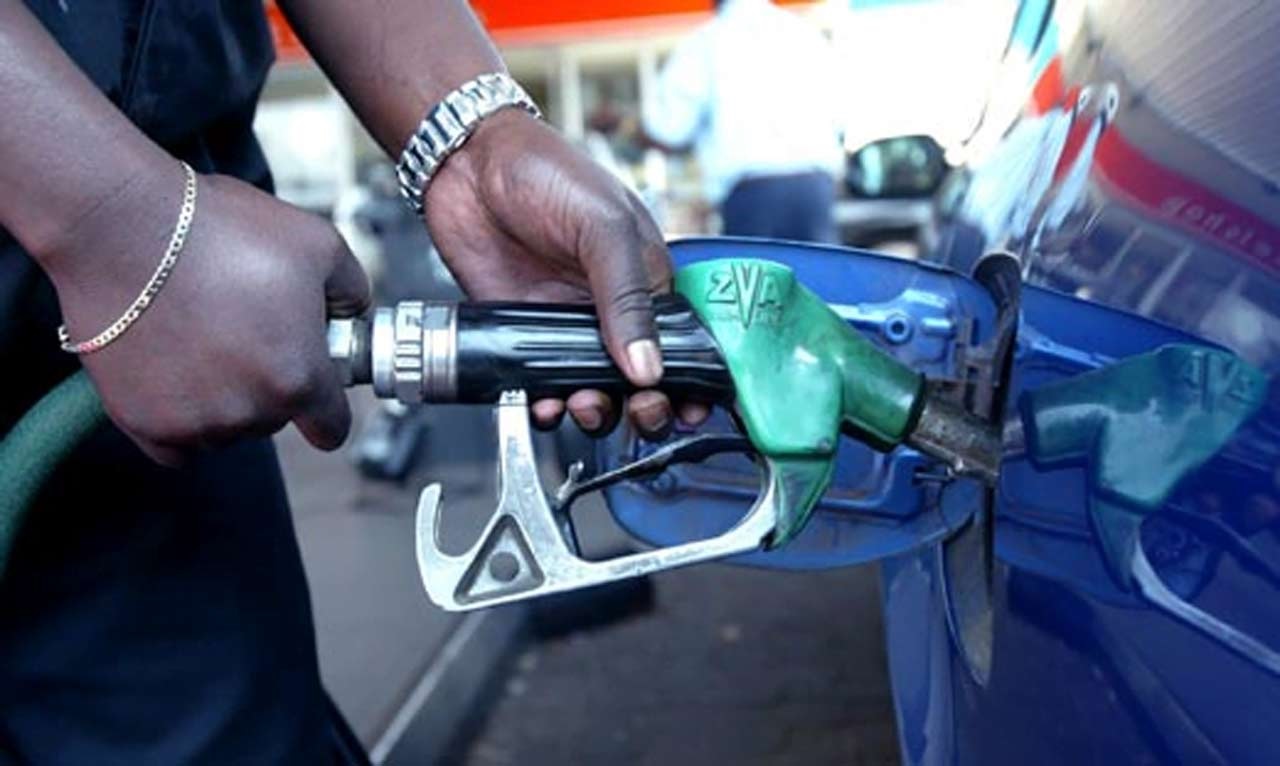
The International Monetary Fund (IMF) has welcomed the decision by the Nigerian government to remove the fuel subsidy, saying it will free up more resources for development spending.

The government claims that the subsidy removal will save the country about 1 trillion naira ($2.6 billion) annually, which can be used for development projects and social welfare programs. But is this claim justified? And what are the implications of the subsidy removal for the Nigerian economy and the people?

In a statement, the IMF said the subsidy removal was a “bold and necessary reform” that would help address the fiscal challenges posed by the COVID-19 pandemic and the decline in oil prices.

The IMF said the subsidy removal would also reduce the distortions in the energy sector, improve efficiency and transparency, and support the development of renewable energy sources.

The subsidy on petrol was introduced in the 1970s as a way of cushioning the effects of oil price fluctuations on the domestic market. The subsidy meant that the government paid the difference between the landing cost of imported petrol and the pump price, which was fixed at a low level. This was supposed to make petrol affordable for Nigerians and stimulate economic growth.

However, over the years, the subsidy became unsustainable and inefficient, as it consumed a large chunk of the government’s budget, encouraged smuggling and corruption, distorted the market signals, and discouraged investment in the refining sector.

The government argues that by removing the subsidy, it will free up resources that can be used for more productive purposes, such as infrastructure development, health care, education, and social protection. The government also says that the subsidy removal will encourage competition and efficiency in the downstream sector, attract private investment in refining and distribution, reduce dependence on imported petrol, and create more jobs.

Furthermore, the government assures that it will implement measures to mitigate the impact of the subsidy removal on the poor and vulnerable segments of the population, such as cash transfers, mass transit schemes, and lower tariffs on electricity.

The IMF urged the Nigerian authorities to use the savings from the subsidy removal to increase social spending, especially on health, education and social protection, as well as to invest in infrastructure and human capital development.

Many Nigerians are skeptical about the government’s ability and willingness to use the savings from the subsidy removal for development spending. They point out that previous attempts to remove or reduce the subsidy did not result in any tangible improvement in public services or infrastructure.

They also fear that the subsidy removal will lead to higher inflation, lower purchasing power, and reduced economic activity, especially in the context of the COVID-19 pandemic and its aftermath. Moreover, they question the timing and manner of the subsidy removal, which was done without adequate consultation or communication with stakeholders.

The debate over the subsidy removal is not new in Nigeria. It has been a recurring issue for decades, with different administrations trying to implement it with varying degrees of success and resistance.

The challenge for the current government is to convince Nigerians that this time is different, and that it has a clear and credible plan to use the savings from the subsidy removal for development spending that will benefit all Nigerians.

The government also needs to ensure that it provides adequate social safety nets for those who will be adversely affected by the price increase. Only then can Nigerians accept and support this policy reform.

The IMF also called for more reforms to improve governance, enhance revenue mobilization, strengthen public financial management, and foster a conducive business environment.

The IMF said it was ready to continue supporting Nigeria in its efforts to achieve inclusive and sustainable growth, reduce poverty and create jobs.

Niger, Mali and Burkina Faso military Juntas announce withdrawal from ECOWAS

0

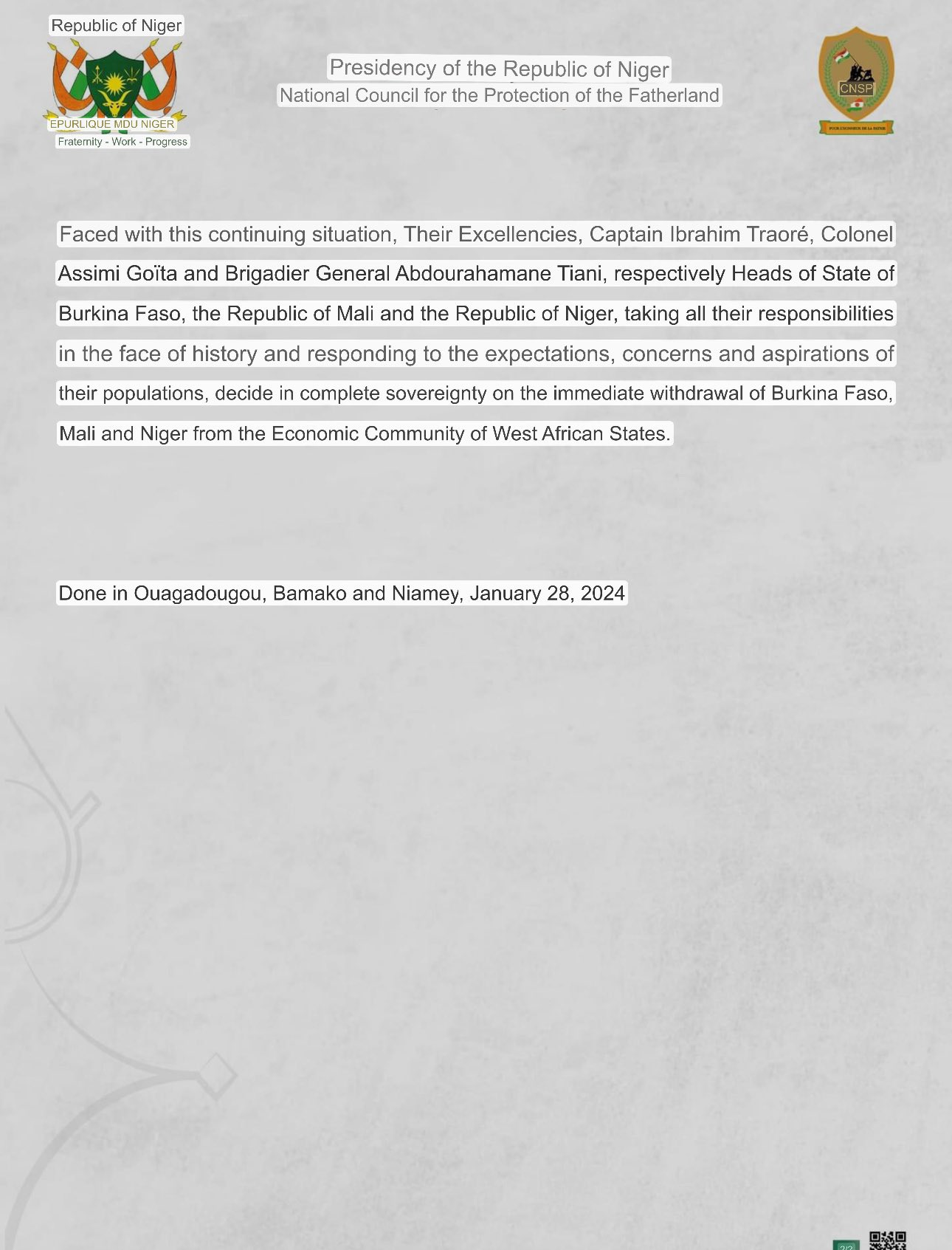
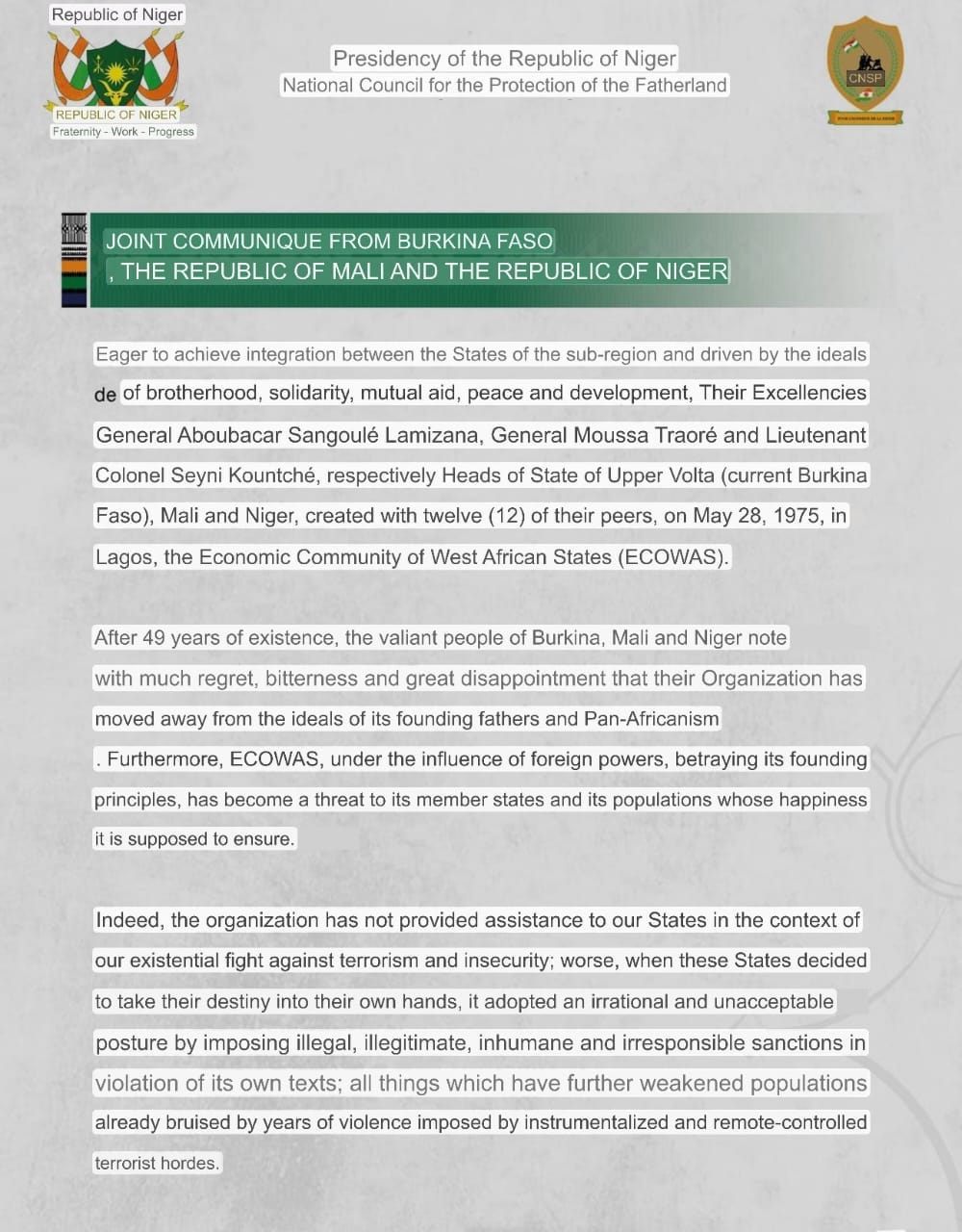
In a surprising move, the leaders of three West African nations have announced their decision to leave the Economic Community of West African States (ECOWAS), a regional bloc of 15 countries that promotes economic integration and political cooperation.

The statement, issued by the military junta that seized power in Niger last year, and endorsed by the transitional authorities in Mali and Burkina Faso, who also came to power through coups, cited “irreconcilable differences” with the other members of ECOWAS as the main reason for their withdrawal.

The statement also accused ECOWAS of interfering in their internal affairs and imposing sanctions on them for violating the bloc’s democratic principles. The statement did not specify when the withdrawal would take effect, but said it was “immediate and irreversible”.

The announcement has sent shockwaves across the region and beyond, as ECOWAS is widely regarded as one of the most successful and influential regional organizations in Africa. ECOWAS was founded in 1975 with the aim of fostering economic integration and trade among its members, as well as promoting peace and security in a region plagued by conflicts and instability.

ECOWAS has played a key role in mediating and resolving crises in countries such as Liberia, Sierra Leone, Guinea-Bissau, Ivory Coast and The Gambia. It has also launched several initiatives to enhance cooperation in areas such as energy, infrastructure, agriculture, health and education.

The withdrawal of Niger, Mali and Burkina Faso from ECOWAS will have significant implications for both the departing countries and the remaining members. For the former, it will mean losing access to the benefits of regional integration, such as free movement of goods and people, common currency, customs union, common market and preferential trade agreements. It will also isolate them from their neighbors and expose them to greater security threats from armed groups and terrorists that operate across borders.

For the latter, it will mean losing three important partners in addressing the challenges of development, governance and security in the region. It will also weaken the credibility and legitimacy of ECOWAS as a regional actor and undermine its efforts to promote democracy and human rights.

The decision to leave ECOWAS is likely to face strong opposition from various stakeholders within and outside the three countries. The civil society, opposition parties, trade unions, business associations and ordinary citizens may protest against the move and demand a return to democratic rule and regional integration.

The international community, especially the African Union, the United Nations, the European Union and France, may also condemn the move and exert pressure on the military rulers to reverse their decision and respect their commitments to ECOWAS. The other members of ECOWAS may also try to persuade or coerce the three countries to reconsider their withdrawal and rejoin the bloc.

The future of ECOWAS and its relations with Niger, Mali and Burkina Faso will depend on how these actors react to the announcement and what steps they take to address the underlying issues that led to it. It is hoped that dialogue, diplomacy and compromise will prevail over confrontation, isolation and fragmentation.

ECOWAS has been a force for good in West Africa for over four decades, and it should not be allowed to fall apart because of the actions of a few military leaders who do not represent the aspirations of their people.

ECOWAS Must Find Ways To Bring Mali, Burkina Faso and Niger Back

0

Many are positing that Mali, Burkina Faso and Niger exiting ECOWAS is not a big issue. It is indeed an issue as ECOWAS makes many things happen in West Africa. Yes, you can drive from Ovim to Ghana to any part of ECOWAS as a person or a business owner.

You can make soap in Lagos and ship it to any ECOWAS nation with limited challenges. When Nigeria closed ECOWAS land borders, we scored own-goals with a recession. Our Togolese brothers install the best tiles in Lagos, Kano, etc, and they can come and go with no Visas, etc. Simply, ECOWAS makes West Africa become one country. You can live in Lagos and work in Benin Republic. Private English-based secondary schools in Lagos get many students from Francophone West Africa due to ECOWAS. If ECOWAS breaks down, those orders will fold. Simply, there are many benefits with no tariff.

My company, Fasmicro, Intel’s only programmable microprocessor knowledge partner in Africa, serves many universities and companies across Africa.  My team does travel with Young Shall Grow Motors ECOWAS bus. If ECOWAS fades, that will not be possible because The Young’s ECOWAS bus will not move easily.

Good People, ECOWAS must find ways to ensure those 3 countries return; Africa must be united because unity is the path to progress.