DD
MM
YYYY

PAGES

DD
MM
YYYY

spot_img

PAGES

Home Blog Page 3766

A Fragile World Needs A More Influential United Nations

1

As the paralysis scales in Gaza, Syria, Yemen, Ukraine, and other places in the world, if care is not taken, we may not have the United Nations anymore. The fact is evident: few and fewer nations care about what the United Nations puts out these days, and the attack on its institution is unprecedented. 

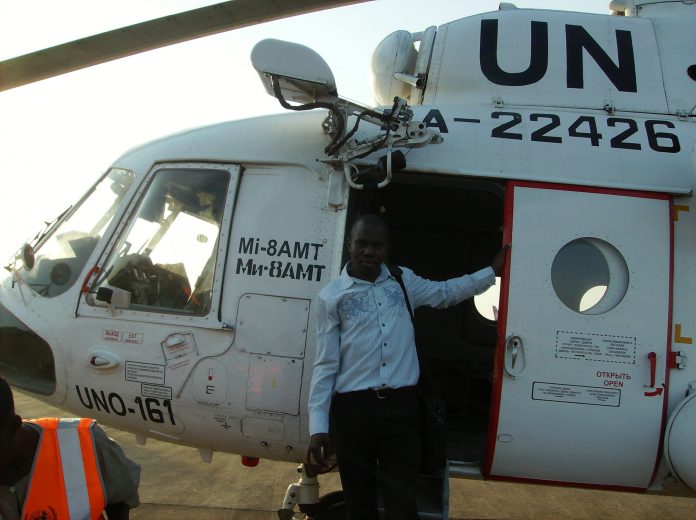
I have served the United Nations as a global citizen in many ways and forms, flying in planes and helicopters, and doing what global citizens do. But over the last few years, I can see a clear stress on the foundational cord of the United Nations.

Truth and facts are not absolute anymore. Everything now is based on relativism. You may blame me for thinking that it was actually based on order. The world has a few more years for a redesign  because if we continue like this, expect some countries to resign as members of the United Nations. The operating order right now is broken – and this is a huge risk to global peace.

In the Igbo Nation, men fight, dance and do whatever, but one day, it is expected that they will converge and drink together. In Ovim, that is the Nkwo day (in some communities, it could be Afo, Orie or Eke). During that drinking, the most elderly person asks the ancestors to bring peace, and allow kinsmen drink together, and reconcile. Magically, some of those “enemies” will forget their animosities, reducing tension in the land. 

Then  as kinsmen gather for the yam festival, they ask everyone to eat the yam and vegetable from the same pot. How do you eat from the same pot with your enemy? Haha, you must dis-enemy that person before eating. Peace is consolidated, and the spirits of Nwaoha (a child is born to the community, not just the parents) and Udoha (peace to all in the community) scale.

Good People, as in ancestral Igbo which had mechanisms to bring people together and solve problems, the world needs the United Nations to deepen its influence, towards bringing peace to our fragile world.

Of course, this is coming on the news that Mali, Niger and Burkina Faso have exited ECOWAS membership.  This is a very troubling pattern where few really care about supranational institutions like the UN and ECOWAS.

I do expect Nigeria, Ivory Coast and Ghana to lead to ensure ECOWAS does not disintegrate into pieces. It has taken decades to build that economic alliance, we cannot allow it to just collapse overnight.

Ndubuisi Ekekwe Ban Ki-moon
UN Secretary General

Russia launches new aerial attacks in Syria

0

In a major escalation of the conflict in Syria, Russia has launched a series of airstrikes on rebel-held areas in the northwestern province of Idlib. The attacks, which began on Saturday, have targeted several towns and villages, killing dozens of civilians and displacing thousands more.

According to the Syrian Observatory for Human Rights, a UK-based monitoring group, at least 21 civilians were killed on Sunday, including eight children and six women. Among the victims were a family of seven who died when their home was hit by a Russian missile in the town of Ariha.

The attacks have also damaged or destroyed several health facilities, schools, mosques and markets, according to local sources and aid groups. The White Helmets, a volunteer rescue group, said they had documented 18 attacks on civilian infrastructure in the past two days.

The Russian Defense Ministry said it was targeting “terrorist groups” that had violated a ceasefire agreement brokered by Turkey and Russia in March 2020. The ministry claimed that the strikes were carried out in coordination with Turkey and in response to “provocations” by the rebels.

However, Turkey, which backs some of the rebel factions in Idlib, denied any involvement in the Russian attacks and condemned them as a violation of the ceasefire. Turkey’s Foreign Ministry said it had summoned the Russian ambassador to Ankara to express its “strong reaction” to the strikes.

The UN humanitarian coordinator for Syria, Mark Lowcock, also expressed alarm over the situation in Idlib and urged all parties to respect international humanitarian law and protect civilians. He said the UN was ready to provide humanitarian assistance to those affected by the violence.

Idlib is the last major rebel stronghold in Syria, where a civil war has been raging since 2011. The province hosts about three million people, more than half of whom are internally displaced from other parts of the country. The region has witnessed several waves of violence and displacement in recent years, as the Syrian government and its allies have tried to recapture it from the rebels.

Why did Russia launch new aerial attacks?

The Russian defense ministry said it targeted “terrorist” positions and infrastructure, but activists and witnesses reported civilian casualties and damage to hospitals, schools and markets. What are the motives behind this intervention and what are the implications for the region and the world?

One possible reason for the Russian airstrikes is to support its ally, Syrian President Bashar al-Assad, who is facing a serious threat from a variety of rebel groups, some of which are backed by the US, Turkey and other countries. Russia has been a staunch ally of Assad since the start of the civil war in 2011, providing him with military, economic and diplomatic assistance. By launching the airstrikes, Russia may hope to bolster Assad’s position and prevent his regime from collapsing.

Another possible reason for the Russian airstrikes is to counter the influence of the US and its allies in the Middle East. Russia has been critical of the US-led coalition that has been conducting airstrikes against the Islamic State (IS) group in Syria and Iraq since 2014, accusing it of violating Syria’s sovereignty and failing to coordinate with the Syrian government. Russia may also see the US as a rival for regional dominance and seek to challenge its interests and allies, such as Turkey, Saudi Arabia and Israel.

A third possible reason for the Russian airstrikes is to protect its own national security interests. Russia may fear that the instability and violence in Syria could spill over into its neighboring regions, such as the Caucasus and Central Asia, where it has strategic and economic interests.

Russia may also worry that some of the rebel groups in Syria, especially those affiliated with IS or al-Qaeda, could pose a terrorist threat to its homeland or its citizens abroad. By launching the airstrikes, Russia may aim to prevent the spread of extremism and terrorism in its vicinity.

The Russian airstrikes have provoked mixed reactions from the international community. The US and its allies have condemned the intervention as a violation of international law and a hindrance to the peace process. They have also expressed concern that Russia is not targeting IS but rather other rebel groups that are fighting against Assad.

They have called for an immediate cessation of hostilities and a political solution to the conflict. On the other hand, some countries, such as Iran, Iraq and China, have welcomed the Russian intervention as a contribution to the fight against terrorism and a stabilizing factor in the region.

The Russian airstrikes have also raised questions about the future of Syria and the prospects for a peaceful resolution of the conflict. The intervention may complicate the efforts to find a political solution that would involve all parties, including Assad and his opponents.

It may also increase the risk of a direct confrontation between Russia and the US or its allies, which could escalate into a wider regional or global war. The intervention may also worsen the humanitarian situation in Syria, where millions of people have been killed, injured or displaced by the violence.

The Russian airstrikes are a significant development in the Syrian civil war that could have far-reaching consequences for the region and the world. The motives behind this intervention are complex and multifaceted, involving geopolitical, security and ideological factors.

The intervention has sparked controversy and criticism from some countries and support from others. The intervention has also added uncertainty and complexity to the situation in Syria and challenged the hopes for a peaceful end to the conflict.

Boeing exec apologizes over MAX 9 problem, promises fixes

0

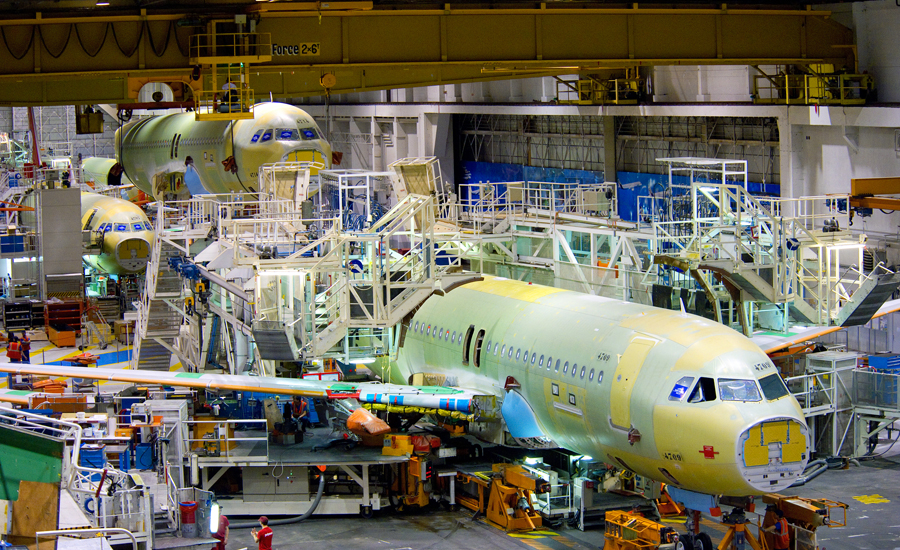
The Boeing 737 MAX 9 is a narrow-body aircraft that is part of the Boeing 737 MAX family, which also includes the MAX 7, MAX 8, and MAX 10 variants. The MAX 9 has a longer fuselage and can carry up to 220 passengers in a single-class configuration. It made its first flight in April 2017 and entered service with Lion Air in March 2018.

In a blog post published on Monday, Boeing’s executive vice president of commercial airplanes, Stan Deal, issued a heartfelt apology to the customers and passengers affected by the recent problem with the MAX 9 aircraft. He also assured them that the company is working hard to resolve the issue and prevent it from happening again.

MAX 9, along with the other MAX variants, has been grounded worldwide since March 2019, following two fatal crashes involving the MAX 8 model that killed 346 people. The crashes were attributed to a faulty software system called MCAS (Maneuvering Characteristics Augmentation System), which was designed to prevent the aircraft from stalling by automatically pushing the nose down in certain situations.

However, the system was prone to erroneous activation due to faulty sensor data, and pilots were not adequately trained or informed about how to override it.

The airlines that have ordered or operated the MAX 9 have also faced challenges due to the grounding. They have had to cancel thousands of flights, reduce their capacity and revenue, and incur additional costs for leasing or maintaining alternative aircraft.

Some airlines have also cancelled or deferred their orders for the MAX 9 or other MAX variants, opting for other models from Boeing or its competitors. The impact of the grounding has varied depending on the size and market of each airline, but overall, it has been a major disruption for the industry.

The Boeing 737 MAX 9 is a promising aircraft that offers improved fuel efficiency, range, and passenger comfort compared to its predecessors. However, it has been plagued by a serious safety issue that has grounded it for almost five years.

The impact of this problem has been felt by Boeing, its customers, and the entire aviation industry. It remains to be seen when and how the MAX 9 will return to service, and whether it will be able to regain its reputation and market share.

Deal explained that the problem was caused by a faulty sensor in the tail of the plane, which triggered a warning message in the cockpit and forced some flights to return to the airport or divert to another destination. He said that the sensor was part of a new system designed to enhance the performance and safety of the MAX 9, but that it malfunctioned due to a manufacturing defect.

He said that Boeing has identified the root cause of the problem and is implementing a fix that will be installed on all MAX 9 planes before they resume service. He also said that Boeing is conducting a thorough review of its quality control processes and procedures to ensure that such a defect does not occur again.

The grounding of the MAX fleet has had a significant impact on the aviation industry, both for Boeing and its customers. Boeing has faced billions of dollars in losses, fines, lawsuits, and compensation claims from airlines, passengers, and regulators. It has also suffered reputational damage and loss of trust from the public and its stakeholders.

Boeing has been working on fixing the software issues and implementing other changes to the aircraft design and training procedures, but the process has been delayed by multiple technical and regulatory hurdles. As of January 2024, Boeing has not yet received approval from the FAA or other authorities to resume flights of the MAX fleet.

Deal expressed his deep regret for the inconvenience and anxiety caused by the problem and thanked the customers and passengers for their patience and understanding. He said that Boeing is committed to delivering the highest standards of quality, reliability and safety in its products and services, and that it will continue to work closely with its partners and regulators to restore confidence in the MAX 9.

He concluded by saying that Boeing values the trust and loyalty of its customers and passengers, and that it will do everything in its power to earn it back.

Boeing 737 MAX delivered to China since 2019

Meanwhile, a historic moment for Boeing and China: the first 737 MAX delivered to the country since 2019 has landed in Guangzhou on January 27, 2024. The aircraft, a 737 MAX 8, was delivered to China Southern Airlines, the largest airline in China and one of the world’s biggest carriers.

The delivery marks a milestone in the recovery of the 737 MAX program, which was grounded worldwide for nearly two years following two fatal crashes in Indonesia and Ethiopia that killed 346 people.

The first crash occurred on October 29, 2018, when Lion Air Flight 610 plunged into the Java Sea shortly after takeoff from Jakarta, Indonesia, killing all 189 people on board. The second crash happened on March 10, 2019, when Ethiopian Airlines Flight 302 crashed near Addis Ababa, Ethiopia, killing all 157 people on board.

Boeing has since made several changes to the design, software and training of the 737 MAX, and has obtained approval from regulators in the US, Europe, Canada, Brazil and other countries to resume flights.

China was the last major market to lift the ban on the 737 MAX, after conducting its own rigorous review and test flights. The Civil Aviation Administration of China (CAAC) announced the recertification of the 737 MAX on December 15, 2023, clearing the way for Chinese airlines to resume taking delivery of their orders. China Southern Airlines has 24 737 MAX jets in its fleet and another 64 on order, according to Boeing’s website.

The delivery flight of the first 737 MAX to China since 2019 took off from Boeing’s delivery center in Seattle on January 26, and flew across the Pacific Ocean with a stopover in Honolulu. The flight crew reported no issues during the journey and praised the performance and efficiency of the aircraft.

The flight landed in Guangzhou Baiyun International Airport at 4:26 pm local time, where it was welcomed by a water cannon salute and a ceremony attended by representatives from China Southern Airlines, Boeing and CAAC.

The first 737 MAX delivered to China since 2019 will undergo some final checks and preparations before entering service with China Southern Airlines. The airline plans to use the aircraft on domestic routes initially, before expanding to regional and international destinations. The airline said it is confident in the safety and reliability of the 737 MAX and expects it to bring more value and convenience to its customers.

Boeing said it is grateful for the trust and support of China Southern Airlines and other Chinese customers who have ordered more than 300 737 MAX jets. The company said it is committed to delivering high-quality products and services to the Chinese market, and to enhancing its long-term partnership with China’s aviation industry.

Spot Bitcoin ETF flows show Negative Trend since launch as Ethereum Options out of Sync with Bullish sentiment

0

The spot Bitcoin exchange-traded fund (ETF) launched by ProShares in October 2021 has seen its first net outflow of funds since its inception, according to data from ETF.com. The fund, which trades under the ticker BITO, had a net outflow of $12.6 million on January 25, 2024, bringing its total assets under management (AUM) to $1.18 billion.

This marks the first time that BITO has experienced a negative trend in its daily flows, which measure the net amount of money moving in or out of the fund. Since its launch, BITO has attracted significant investor interest, becoming the fastest ETF to reach $1 billion in AUM in just two days.

BITO tracks the price of Bitcoin using futures contracts traded on the Chicago Mercantile Exchange (CME), which are settled in cash and not in actual Bitcoin.

The negative flow for BITO coincides with a sharp drop in the price of Bitcoin, which fell below $30,000 for the first time since July 2021 on January 25. The cryptocurrency market has been under pressure from regulatory uncertainty, environmental concerns, and competition from other digital assets.

Some analysts have also suggested that the launch of spot Bitcoin ETFs, which allow investors to gain exposure to the actual Bitcoin rather than futures contracts, may have reduced the demand for BITO and other futures-based ETFs.

However, not all spot Bitcoin ETFs have fared well either. The Valkyrie Bitcoin Strategy ETF (BTF), which launched on January 3, 2024, as the first spot Bitcoin ETF in the U.S., has also seen a net outflow of $3.4 million on January 25, bringing its AUM to $69.4 million. The fund, which trades under the ticker BTF, holds Bitcoin in a trust and charges a 0.9% expense ratio.

The only spot Bitcoin ETF that has seen a positive flow on January 25 is the VanEck Bitcoin Trust (XBTF), which launched on January 5, 2024, as the second spot Bitcoin ETF in the U.S. The fund, which trades under the ticker XBTF, had a net inflow of $2.7 million on January 25, increasing its AUM to $32.7 million. The fund also holds Bitcoin in a trust and charges a 0.65% expense ratio.

The performance of the three spot Bitcoin ETFs may indicate that investors are more sensitive to fees and brand recognition when choosing which fund to invest in. VanEck is a well-known name in the ETF industry, having launched several successful funds in the past, such as the VanEck Vectors Gold Miners ETF (GDX) and the VanEck Vectors Semiconductor ETF (SMH). Valkyrie and ProShares are relatively new entrants in the ETF space and may have to compete harder to attract and retain investors.

The future of Bitcoin ETFs remains uncertain, as the U.S. Securities and Exchange Commission (SEC) has yet to approve any ETF that directly tracks the price of Bitcoin using physical custody or a decentralized network. The SEC has expressed concerns about the potential for fraud, manipulation, and theft in the Bitcoin market, and has asked for more public input on how to address these issues.

Until then, investors who want to gain exposure to Bitcoin through an ETF will have to choose between futures-based or trust-based funds, each with their own advantages and disadvantages.

Ethereum Options out of Sync with Bullish sentiment

Ether, the second-largest cryptocurrency by market capitalization, has been on a tear lately, reaching new all-time highs and outperforming bitcoin in terms of percentage gains. However, the options market seems to be lagging behind the bullish momentum, as implied volatility and skew indicators suggest a lack of enthusiasm among traders.

Implied volatility (IV) is a measure of how much the market expects the price of an asset to move in the future. It is derived from the prices of options contracts, which give the buyer the right but not the obligation to buy or sell the underlying asset at a predetermined price and date. The higher the IV, the more expensive the options and the greater the expected price fluctuations.

Skew is a measure of how much the options market favors one direction over another. It is calculated by comparing the IV of out-of-the-money (OTM) calls and puts, which are options that have strike prices above or below the current market price, respectively. A positive skew means that OTM calls have higher IV than OTM puts, indicating a higher demand for bullish bets. A negative skew means that OTM puts have higher IV than OTM calls, indicating a higher demand for bearish bets.

According to data from Skew, the one-month IV for ether options has dropped to 86%, the lowest level since October 2020. This implies that the options market is not expecting any major price movements in ether in the next 30 days, despite the recent rally and the upcoming launch of Ethereum 2.0, which is expected to improve the network’s scalability and security.

Moreover, the one-month skew for ether options has turned negative, reaching -7%, the lowest level since November 2020. This means that OTM puts are more expensive than OTM calls, indicating a higher demand for downside protection than upside speculation.

These indicators suggest that ether options traders are either taking profits after the rally, hedging their long positions against a possible correction, or simply waiting for more clarity on the direction of the market. In contrast, spot and futures markets are showing more bullish signs, as ether’s price and open interest continue to climb to new highs.

One possible explanation for this divergence is that options traders are more cautious and rational than spot and futures traders, who may be driven by emotions and FOMO (fear of missing out). Another possibility is that options traders are underestimating the potential of ether and Ethereum 2.0 and are missing out on a rare opportunity to profit from a paradigm shift in the crypto space.

Tron (TRX) and Polygon (MATIC) Slide, Investors Pick Scorpion Casino as the Next Big Thing

0

Tron and Polygon, two giants with ecosystems of depth have seen their fortunes dim in January. Tron has been struggling to find stability, but encouraging signs have started to emerge. Polygon has also seen a slide in value with no signs of a resurgence. As the two tokens have struggled investors have started looking for alternatives with potential. Investors’ search for an asset with promise has landed them at the Scorpion Casino (SCORP) presale. SCORP has already notched up $3.5 million in its blockbuster presale.

Read on to find out more about SCORP’s presale and TRON and Polygon’s slide.

Presale Tokens Selling Out Fast

Tron (TRX): A Struggle for Stability

TRON is showing signs of stabilising after a tough week. On January 15, TRX reached $0.1130 on the heels of Justin Sun’s announcement that the USDT circulation surpassed $50 billion on the TRON network. The announcement gave the network some much-needed momentum but failed to ensure a surge. The subsequent partnership with HTX DAO also failed to maintain the momentum, and by January 22, TRX had settled at $0.1095, reflecting a 3.10% decline within the week.

This lackluster performance raises concerns about TRON’s viability as a crypto investment in the short term, prompting investors to explore alternatives in a market that appears to be losing faith in TRX.

Polygon Pins Hope on Ecosystem for Recovery

Similarly, Polygon (MATIC) has navigated rocky terrain over the past week. Starting at $0.8497 on January 15, MATIC faced a significant downturn triggered by Celcius Network transferring a substantial amount to Binance on January 18. The subsequent suspension of MATIC trading on Bithumb due to network issues exacerbated the situation, resulting in a 10.69% plummet by January 22.

In keeping with these challenges, analysts remain negative about MATIC’s performance in the short term. The network’s ecosystem remains its hope for a rebound, but in the short term, MATIC remains shaky with investors seeking out alternatives.

Scorpion Casino Presale Cruises to $3.5 Million

Amidst the crypto market’s turbulence, Scorpion Casino’s presale emerges as a beacon of promise. Several key features set it apart from its counterparts, attracting investors seeking innovation and potential returns. Notably, Scorpion Casino’s presale has rapidly surged, raising over $3.5 million and selling out quickly.

What distinguishes Scorpion Casino is its daily USDT rewards, which are withdrawable during the presale. Holders benefit from more than 10,000 USDT daily. The presence of four famous ambassadors adds a touch of glamour, underscoring Scorpion Casino’s commitment to widespread recognition.

As Scorpion Casino enters the final phase of its pre-sale, the anticipation builds further with its listing on BitMart, marking the beginning of what promises to be a series of significant milestones. The $SCORP token, the driving force behind the comprehensive SCORPION ecosystem, positions itself as an all-in-one solution for online gambling enthusiasts. With offerings ranging from betting options to a rich selection of casino games and access to live games, Scorpion Casino aims to set a new industry standard.

A Shining Beacon Amidst a Slide

In the face of Tron and Polygon’s recent struggles, Scorpion Casino emerges as a compelling alternative for investors seeking the next big crypto investment. Its presale success, daily rewards, and high-profile ambassadors create a narrative of excitement and potential.

As TRX and MATIC grapple with challenges, Scorpion Casino’s unique withdrawal feature sets a new industry standard, contributing to a narrative that positions it favourably among the top contenders in the crypto space.


To learn more and invest in the Scorpion Casino presale, visit:

Presale: https://presale.scorpion.casino/

Twitter: https://twitter.com/ScorpionCasino

Telegram: https://t.me/scorpioncasino_official