
DD
MM
YYYY

PAGES

DD
MM
YYYY

spot_img

PAGES

Home Blog Page 3767

Forex crisis: Central Bank of Nigeria urges Nigerians to curtail their demand for dollar

0

The Central Bank of Nigeria (CBN) governor, Olayemi Cardoso, has called upon Nigerians to temper their demand for foreign exchange as the federal government intensifies efforts to stabilize the foreign exchange (FX) market.

Under Cardoso’s leadership, the CBN has implemented a series of policies aimed at bolstering the performance of the naira, which has seen a significant decline, reaching N1500/$1 in the foreign exchange market.

During an interactive session with the Joint Senate Committees on Finance, Appropriations, Banking, Insurance, and other Financial Institutions in Abuja, Cardoso attributed the naira’s weakening trend to various factors, prominently the high demand for the dollar by Nigerians. He stressed the need for Nigerians to reduce their appetite for foreign currency and curb the consumption of imported goods to alleviate pressure on the naira.

“We must moderate our demands for forex. Where there are opportunities to substitute locally, so we should,” said Cardoso.

Moreover, Cardoso urged the federal government to focus on enhancing the educational and medical sectors to dissuade citizens from seeking services abroad, thereby reducing the demand for dollars.

“The total quantum for education and medical is more than our external reserves. If we can up our game on education and medicals, there won’t be the need for our people to go abroad,” he emphasized.

The relentless pursuit of the dollar by Nigerians for purposes such as paying tuition fees, medical expenses, and import bills has exacerbated the pressure on the naira, leading many to resort to the black market for forex transactions.

Addressing the issue of inflation, Cardoso reiterated the CBN’s commitment to implementing monetary policies aimed at curbing inflation, including the adoption of a single exchange rate system to enhance investment credibility in the country.

“We are working very hard to bring back credibility to the CBN, and many investors who have previously viewed the environment as inimical. If we are doing the right thing, investors will come,” he asserted.

”If we are doing the right thing, investors will come. For them to come, they have to believe that you will do the right things. I also want to say that in establishing credibility, there are certain things that we need to do.”

However, while some economic experts have praised Cardoso’s policies, others have expressed dissent regarding the strategy of curbing forex demand. Yemi Kale, former Statistician-General of the federation, disagreed with the notion of reducing demand, emphasizing the importance of focusing on boosting supply instead.

“No please! Let’s concentrate on boosting supply not controlling demand. We can’t really control demand in the near term without once again widening the FX gap and worsening confidence. Anytime we try to forcefully control anything it often leads to an increase in its price.”

In response to the ongoing forex crisis, Cardoso acknowledged the limitations of the CBN’s intervention powers but pledged to explore partnerships to alleviate the situation.

While the FX crisis persists, the exchange in the official (NAFEM) and parallel market are notably reaching a convergence. The naira has been trading around N1,480/$1 at the official and N1,485/$1 in the parallel market, which suggests that the central bank is close to achieving its aim of having a unified exchange rate.

Nigerian Food Crisis: Nigeria may close border to secure food – Agric minister

0

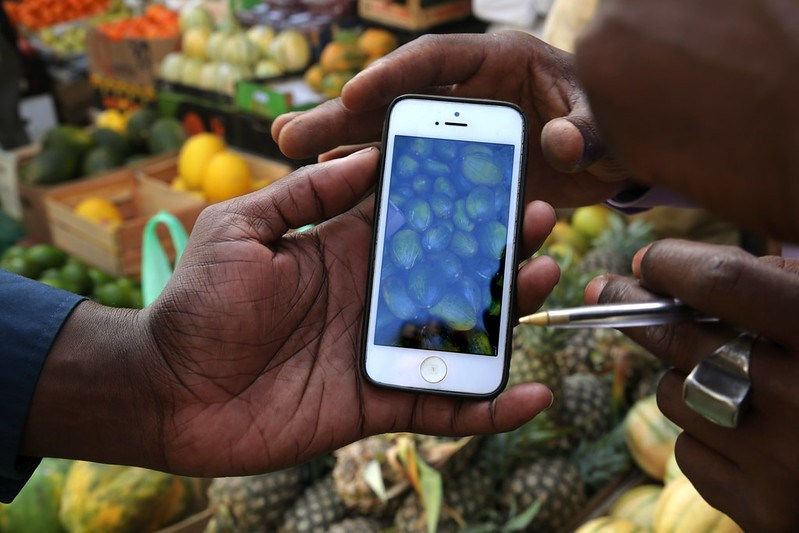
Abubakar Kyari, Minister of Agriculture, Food, and Security, has expressed deep concerns over the shortage of food in Nigeria, coupled with the resultant surge in prices, touting border closure as a possible solution.

In a recent address to the Senate Committee on Banking, Insurance, and other Financial Institutions, Kyari noted the dilemma facing the government, saying it may close borders or intensify efforts to bolster local food production and export.

Kyari’s remarks come in the wake of the Niger State government’s decision to prohibit the sale of food products to individuals residing outside the state, coupled with efforts to enact legislation to control food prices.

The Minister lamented the undocumented export of food to neighboring countries, buoyed by the significant devaluation of the naira against the CFA currency. He explained, “One CFA is N2.20kobo, this means 1000 CFA is N2,200, this is something that was N400-N500 a few years ago. Because of the devaluation of naira, our food is the cheapest around the neighborhood, so you find a lot of undocumented exports which is smuggling across our porous borders.”

He emphasized the urgency of addressing this challenge and highlighted the government’s ongoing endeavors to ramp up local production. However, he warned that if the prevailing economic conditions persist, the government might be compelled to make a tough decision between sealing borders or prioritizing food production for Nigerians.

“We are trying to ramp up production, what we are faced with unfortunately, is to see how we can secure food for our 230 million people and at the same time, if this economics continues , we have to either seal our border, or produce for all other Africans”, he said.

Kyari attributed the food smuggling to the prevailing shortages and escalating prices, while also identifying other contributing factors, such as inadequate planning for the 2023 farming season by the previous administration, insecurity impeding farmers’ willingness to cultivate, and a foreign exchange crisis.

He also highlighted the adverse effects of the scarcity of foreign exchange, citing instances where investors from India, China, and Turkey purchase Nigerian crops at inflated prices primarily to earn foreign exchange, with no repatriation of profits and no benefit to the Nigerian government.

However, Kyari’s proposition to close the borders as a solution has sparked considerable backlash, given Nigeria’s previous experience with border closures. Former President Muhammadu Buhari’s decision to shut down Nigerian land borders for two years in a bid to stimulate local food production and combat smuggling has been cited as a major factor that contributed to the country’s high inflation rates.

Critics argue that another border closure for food security purposes would exacerbate the plight of the masses, who are still grappling with the repercussions of the previous closure.

The notion of sealing borders is particularly contentious due to its potential adverse effects on regional trade, economic integration, and diplomatic relations with neighboring countries. Critics argue that such a move could further strain Nigeria’s economy, exacerbating inflation and food shortages.

Moreover, the closure of borders may not effectively address the root causes of food shortages and inflation. Instead, it could perpetuate smuggling activities through alternative routes or channels, further undermining government efforts to achieve food security and economic stability.

Furthermore, sealing borders could have negative implications for Nigeria’s image on the international stage, potentially deterring foreign investment and undermining efforts to foster regional cooperation and integration.

In light of these concerns, stakeholders advocate for a comprehensive approach to address food shortages and inflation, emphasizing the need for strategic policies that promote sustainable agricultural practices, enhance productivity, and facilitate trade within the region.

They emphasize the importance of collaboration with neighboring countries to address cross-border challenges effectively, while also prioritizing investments in infrastructure, technology, and capacity-building to strengthen Nigeria’s agricultural sector and ensure food security for its citizens.

While the shortage of food in Nigeria presents a significant challenge, the proposition to close borders as a solution raises serious concerns. Stakeholders have emphasized the importance of adopting a holistic approach that addresses the underlying causes of food shortages and inflation while promoting regional cooperation and integration for sustainable development and economic growth.

“When you close borders you stop both legal & illegal exports of food/non food items. You also block legitimate & needed imports or food & other goods & create a black market for them. Instead focus on why it’s more profitable to export & using pricing/market forces address it,” Yemi Kale, former head of the Nigerian Bureau of Statistics, noted.

Unlimited, Lifetime Access And Why You Have Zero Referrals

1

The data there is clear: “The completion rate of online courses is between 5–15%, and for MOOCs, it is 3–6% only”. That is dreadful. Every online program has that problem where people pay for something, and rarely make time, since people are not constrained by time and geography like in the physical courses to be somewhere at a specific time.

To solve that problem, Tekedia Institute does not give unlimited time or lifetime access, unlike most online courses where there is no end date, to finish the program. If people know there is a deadline or an expiration date, they will make time. Yes, if you tell them that your program has no expiration date, they will never make time for your program, and that hurts your mission.

Simply, if they pay and never make time to study your courseware, they will have nothing useful to say about your program when people ask them for feedback. The implication is that you cannot get word of mouth referrals.

Why this post? Most times, policies we have in online platforms are the reasons we’re not growing, even though those policies may look “customer-friendly”. But look deeper, you are hurting those same customers. In Tekedia Institute, after we looked at data, we discontinued lifetime access, and forced our Learners to complete our programs within a year of registration even though some of those programs are designed for 3 or 2 months; today, our completion rate is hitting close to 90%. 

Lido DAO (LDO) and Stacks (STX) Regain Bullish Momentum While Pullix (PLX) Anticipation Rises As Its Projected to Spike 100x Following Its Launch

0

The Lido DAO (LDO) token has showcased an uptrend and has retested the 50-day EMA market, revealing a profit-making potential in the upcoming trading sessions. Stacks (STX) is also in the green zone based on its on-chart performance, and this can result in a significant upsurge in the coming months.

Pullix (PLX), however, has made the most significant impact, as its in the last two stages of its presale and will launch in the upcoming month, where analysts project a 100x upswing. Today, we will go over all three to determine how far they can rise. By the end, we will determine which is the best crypto to invest in now.

Lido DAO (LDO) Climbs 32% – Regains Bullish Momentum and Can Surge to $4.43

Lido DAO (LDO) has experienced an upward momentum during the past trading sessions and is now near the trendline support zone at $2.80. The year-to-date (YTD) increase for the Lido DAO price was by 32%. Moreover, the price action signifies that buyers have accumulated the crypto, and the technicals reflect a neutral outlook.

According to the Fib levels, the Lido DAO crypto has sustained above the 40% zone and is now attempting to move to the 50% zone. It’s near the 50-day EMA, and its trading volume has experienced a spike. According to the Lido DAO price prediction, it can end in 2024 at $4.43.

Stacks (STX) Climb Above 50-Day EMA and Can Surge to $2.49

Stacks (STX) has recently showcased a strong price uptrend and has made higher highs and lows during the previous week. The Stacks price has moved up 384% during the previous year alone, and it could soon reach new heights.

The crypto is now above the 50-day EMA, and the MACD is indicating a bullish momentum. Now, the Stacks crypto chart showcases and uptrend, and it could soon face resistance at the $2 level. Moving from $1.45 to $1.61 in the past week, STX showcased significant growth. Based on the Stacks price prediction, it can end 2024 at $2.49.

Pullix (PLX) to Launch in Less Than a Month – Price to 100x

Pullix (PLX) is getting traction with its ongoing presale and is nearing the end, especially as the platform will launch within less than a month. It has already gained the attention of over 15,000 users and will bridge the gap between CEXs and DEXs in a way that can solve the main issues surrounding liquidity and transparency in the industry.

The platform can tackle key challenges and create a new approach to how users access the TradFi space. Specifically, it will introduce advanced trading tools that can enable anyone to enhance their chances of profitability, such as Copy Trader or liquidity provision. In addition, anyone can begin margin trading and get access to institutional tools or copy the most successful traders.

Users will even be able to generate passive income by staking PLX into the market-making liquidity pool, where users will get fixed monthly passive income up to 18% APR.

The DeFi project is now at Stage 7, out of a total of 8, and PLX trades at $0.10. Based on analyst projections, PLX can spike 100x at launch, providing early traders with access to massive ROI. These aspects make PLX the best crypto to invest in now.

Summary

While both Lido DAO and Stacks are regaining the bullish momentum, all eyes are currently on Pullix as its projected to see significant growth. With its vast token utility, massive ecosystem, and value proposition, it can become a dominant force in Web3.

For more information regarding Pullix’s presale see links below:

Visit Pullix

Join The Pullix Communities

“Knowledge –  a factor of production” Show Begins Tomorrow

0

I just appeared in my first movie, the Freemen. The seven-part groundbreaking documentary on Igba-Boi, the Igbo Apprenticeship System, premieres on 12 February 2024, on Showmax, with Obi Cubana, Ndubuisi Ekekwe, etc starring.  I have graduated from here to the Nollywood-level because I am now in a movie…lol.

Yes, in the Igbo Nation, it takes the killing of one leopard to be called a killer of leopards. Lol – all the way to the Oscars – you never know; you will like my speech. Bring it on…dreaming. The Oscars goes to … Wow, for real?

But while you get ready for that must-watch movie on Showmax, there is another fascinating show titled “Knowledge –  a factor of production”. Yes, tomorrow, Tekedia Mini-MBA edition 13 LIVE session begins. It is not a big screen in the usual way; it is a classroom with a show of knowledge.

Good People, any man or woman with knowledge is a FACTOR. You can still pick a virtual seat because this show will be held on Zoom. Welcome to our show here.