DD
MM
YYYY

PAGES

DD
MM
YYYY

spot_img

PAGES

Home Blog Page 3770

US concerned over Modified Chinese flight routes in Taiwan Strait as NATO starts huge Operation in Europe, and Russia adjusts for Sovereignty

0

The US government has expressed its concern over China’s recent modification of its flight path over the Taiwan Strait, which it says could increase the risk of miscalculation and conflict in the region.

China announced on January 31 that it had adjusted its civil aviation flight path M503, which runs along the median line of the Taiwan Strait, to make it more efficient and reduce flight delays. China also opened four connecting routes to M503, which it said were for emergency use only.

However, the US State Department said that China’s unilateral action was “inconsistent with the 2015 cross-strait agreement on flight routes in the Taiwan Strait” and urged China to “immediately stop all flights on these routes and engage in constructive dialogue with Taiwan on technical issues related to civil aviation.”

The US also reaffirmed its “rock-solid” commitment to Taiwan, which it considers a key partner and a democratic success story in the Indo-Pacific region. The US has no formal diplomatic ties with Taiwan but provides it with military and economic support under the Taiwan Relations Act of 1979.

Taiwan, which China regards as a renegade province that must be reunited with the mainland by force, if necessary, also protested against China’s move, saying that it violated the 2015 agreement and threatened regional stability. Taiwan’s President Tsai Ing-wen said that her government would not back down in the face of China’s pressure and would defend its sovereignty and security.

China, on the other hand, defended its decision, saying that it was a normal adjustment based on international law and practice, and that it did not affect the safety of flights in the region. China also accused the US of interfering in its internal affairs and undermining peace and stability across the Taiwan Strait.

The dispute over the flight path is the latest sign of rising tensions between China and the US over Taiwan, which has become a flashpoint in their strategic rivalry. The US has increased its military presence and diplomatic contacts with Taiwan in recent years, while China has stepped up its military exercises and coercion against the island. Both sides have accused each other of escalating the situation and provoking a potential crisis.

The US does not have formal diplomatic ties with Taiwan, but maintains a strong unofficial partnership based on shared values and interests. The US also provides Taiwan with defensive weapons and security assistance under the Taiwan Relations Act of 1979.

China, on the other hand, considers Taiwan as a renegade province that must be reunited with the mainland, by force if necessary. China has never renounced the use of military force against Taiwan and has repeatedly warned the US and other countries not to interfere in its internal affairs. China has also increased its pressure on Taiwan by conducting frequent military drills, flying warplanes near its airspace, and imposing economic sanctions and diplomatic isolation.

The US has responded to China’s actions by increasing its military presence and diplomatic contacts with Taiwan in recent years. The US has sent high-level officials to visit Taiwan, such as the former Secretary of Health and Human Services Alex Azar in 2020 and the former Under Secretary of State Keith Krach in 2021.

The US has also approved several arms sales to Taiwan, including F-16 fighter jets, Patriot missiles, and Harpoon anti-ship missiles. The US has also conducted naval exercises and freedom of navigation operations in the Taiwan Strait and the South China Sea, to demonstrate its support for Taiwan’s security and sovereignty.

The US-Taiwan-China triangle is one of the most complex and sensitive issues in international relations. It involves not only strategic and economic interests, but also historical and cultural factors. The US has a longstanding commitment to help Taiwan defend itself from external threats, but also seeks to maintain a stable and constructive relationship with China.

Taiwan values its democracy and autonomy, but also faces the reality of being isolated and marginalized by China. China sees Taiwan as an integral part of its territory, but also faces the challenge of balancing its national pride and regional stability.

The future of Taiwan depends on how these three actors manage their interactions and expectations. There is no easy or simple solution to this problem, but there are some principles that can guide the way forward. First, dialogue and communication are essential to avoid misunderstanding and miscalculation.

Second, respect and restraint are necessary to prevent escalation and confrontation. Third, cooperation and compromise are desirable to find common ground and mutual benefit. By following these principles, the US, Taiwan, and China can hopefully coexist peacefully and prosperously.

NATO starts huge operation in Europe, Russia makes threats to protect its interests and sovereignty

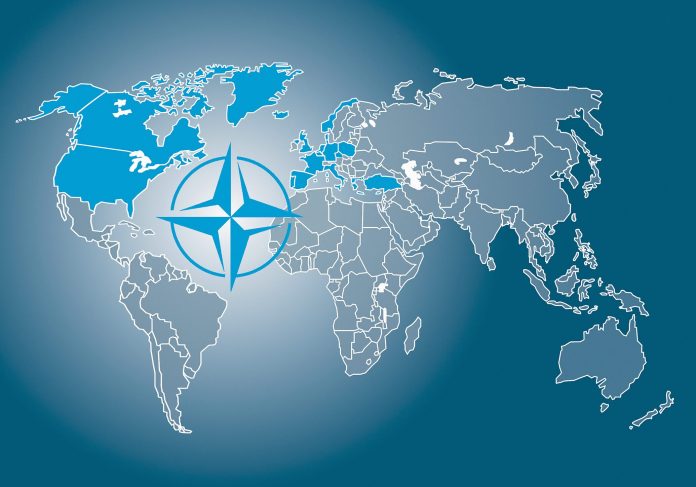
NATO has launched one of its largest military exercises in recent years, involving more than 40,000 troops from 27 countries, in a show of strength and solidarity amid rising tensions with Russia.

The exercise, dubbed Defender Europe 2024, will take place in several locations across the continent, from the Baltic Sea to the Black Sea, and will test the alliance’s readiness and interoperability.

Russia has reacted with anger and hostility to the exercise, accusing NATO of provoking a conflict and threatening its security. The Kremlin has warned that it will take “all necessary measures” to protect its interests and sovereignty and has deployed additional forces and weapons to its western borders. Russia has also conducted its own drills and snap inspections of its troops, demonstrating its military capabilities and resolve.

The exercise comes at a time of high tension and mistrust between NATO and Russia, following the latter’s annexation of Crimea in 2014, its involvement in the war in eastern Ukraine, its alleged interference in elections and cyberattacks, and its violation of arms control treaties.

NATO has responded by increasing its presence and deterrence posture in eastern Europe, enhancing its defense spending and capabilities, and imposing sanctions and diplomatic pressure on Russia.

The exercise is also a sign of NATO’s commitment to collective defense and transatlantic unity, especially after the turbulent years of the Trump administration, which undermined the alliance’s cohesion and credibility.

The exercise will involve significant participation from the US, which has deployed thousands of troops and equipment from across the Atlantic, as well as from other key allies such as Germany, France, the UK, Poland, and Turkey. The exercise will also include partners such as Finland, Sweden, Georgia, and Ukraine, which share NATO’s concerns about Russia’s aggression and seek closer cooperation with the alliance.

How does Russia view NATO?

Russia views NATO as a hostile and aggressive bloc that seeks to contain and weaken Russia’s influence and interests in Europe and beyond. Russia perceives NATO’s enlargement to include former Soviet republics and Warsaw Pact members as a violation of its security sphere and a threat to its strategic balance.

Russia also opposes NATO’s missile defense system in Europe, which it claims could undermine its nuclear deterrent. Russia accuses NATO of interfering in its internal affairs and supporting regime change in countries such as Georgia, Ukraine, Belarus, Moldova, and Syria. Russia considers NATO as a rival and an obstacle to its vision of a multipolar world order.

The exercise aims to demonstrate NATO’s ability to rapidly deploy and sustain large-scale forces in a complex and contested environment, as well as to enhance its interoperability and coordination with allies and partners.

The exercise will involve various scenarios and domains, such as air defense, amphibious operations, cyber defense, logistics, medical support, and urban warfare. The exercise will also test NATO’s new command structure, which was reformed to improve its responsiveness and resilience.

The exercise is expected to last until June 2024, and will be followed by a series of smaller exercises and activities throughout the year. The exercise is part of NATO’s long-term plan to adapt to the changing security environment and to deter potential adversaries.

The exercise is also an opportunity for dialogue and confidence-building with Russia, as NATO has invited Russian observers to monitor some aspects of the exercise, in accordance with international agreements. NATO has stressed that the exercise is defensive in nature and not directed against any specific country, but rather aimed at strengthening the alliance’s security and stability.

Register for Tekedia Mini-MBA edition 14 (June 3 – Sept 2, 2024)

2

Welcome! Unleash your leadership potential, master business excellence, and embrace transformation with Tekedia Mini-MBA. Join us and experience a cutting-edge business management & leadership program: online, self-paced, and world-class. At Tekedia Institute, we co-learn with thousands of professionals and students, from many countries, on the mechanics of business, connecting innovation, growth and operational execution, across market territories and industrial sectors.

Our Faculty members come from Microsoft, Google, Shell, Flutterwave, Nigerian Breweries, NNPC, Jobberman, Coca Cola, PwC, BUA Cement, and other great organizations. Besides pre-recorded courseware, thrice weekly, we hold live Zoom sessions (Tue, Thur and Sat at 7pm WAT)REGISTER and join us! – Prof Ndubuisi Ekekwe, Tekedia Institute Lead Faculty.

Invent, innovate and drive organizational transformation, performance, and growth. Capture emerging opportunities in changing markets while optimizing innovation and profitability. Digitally evolve your business or functional area, turning digital disruption into a competitive capability and advantage. Master the concepts of building category-king companies, and thrive.

Registration for another edition of Tekedia Mini-MBA opens. Tekedia Mini-MBA, from Tekedia Institute, is an innovation management 12-week program, optimized for business execution and growth, with digital operational overlay. It runs 100% online. The theme is Innovation, Growth & Digital Execution – Techniques for Building Category-King Companies. All contents are self-paced, recorded and archived which means participants do not have to be at any scheduled time to consume contents. Our programs are designed for ALL sectors, from fintech to construction, healthcare to manufacturing, agriculture to real estate, etc.

More so, the sector- and firm-agnostic management program comprises videos, flash cases, challenge assignments, labs, written materials, webinars, etc and is delivered by a global faculty coordinated by Prof Ndubuisi Ekekwe. When we finish, we will issue a certificate from the Tekedia Institute, Boston USA.

Register and join us. You will emerge transformed with tools and capabilities that engineer confidence, performance and growth.  Accelerate your leadership ascent with us! Here are our programs and costs.

Program Cost 

Note: After the early bird deadline, the price of MINI becomes $230 or N120,000; others are not affected.

How To Register

Curriculum for Tekedia Mini-MBA

Unlock Your Potential: Enroll in Tekedia Institute

More Early Registration Benefits 

Capstone Program

Here are the 12 tracks:

The program is completely capstone-based. Tekedia capstone is a research paper or a case study exploring a topic, market, sector or a company. It is the project component of Tekedia Min-MBA.

ALL Tekedia Programs and Costs Here

Selected Tekedia Mini-MBA Corporate Clients


Tekedia Mini-MBA Syllabus

Theme: Innovation, Growth & Digital Execution – Techniques for Building Category-King Companies

Introduction

Over the last few decades, digital technology has emerged as a very critical element in organizational competitiveness. It has transformed industrial sectors and anchored new business architectures, redesigning markets and facilitating efficiency in the allocation and utilization of factors of production. The impacts have been consequential: continents like Africa are moving towards knowledge-based economic structures and information societies, comprising networks of individuals, firms and states that are linked electronically and in interdependent relationships. In this program, we will examine this redesign within the context of fixing market frictions and deploying growth business frameworks in a world of perception demand where meeting needs and expectations of customers are not enough.

Program Time: June 3 – Sept 2, 2024

Venue & Format: Online via videos, articles, webinars, and flash cases. Program is self-paced which means you consume the materials at your own time and pace. It is completely online. Where you live or your time zone would not be an issue as program is not live-delivered.

Cost: US$170 (N90,000 naira). We have a payment plan, i.e. installment payment plan (email us for details)

Target Audience: This program is designed for professionals and students across functional areas like sales, marketing, technology, administration, legal, strategy, finance, etc across all business sectors and domains. The program is designed for:

  • Ambitious mid-level managers seeking to advance their careers by acquiring essential business knowledge and skills.
  • Busy professionals who value continued education but require a flexible alternative to a traditional MBA program.
  • Experienced professionals aiming to broaden their business acumen, enhance leadership capabilities, and explore new career opportunities.
  • Professionals in transition, committed to staying informed about business trends and developing skills for continuous professional growth.
  • Mid-level managers and executives across industries, driven to accelerate career growth and take on increased responsibilities.
  • Technology and innovation-focused professionals looking to strengthen business acumen and strategic thinking.
  • Aspiring entrepreneurs seeking a solid foundation in business management and growth strategies.
  • Consultants and advisors aiming to expand their knowledge base and provide comprehensive solutions to clients.
  • Professionals transitioning into new roles or industries, recognizing the value of upskilling for success.
  • Students and recent graduates seeking a competitive edge in the job market by combining academic qualifications with practical business skills.

Tekedia Mini-MBA program offers a flexible and comprehensive learning experience tailored to the needs of ambitious professionals, providing the tools and knowledge necessary to thrive in today’s dynamic business landscape. Participants will have the opportunity to acquire knowledge that has value and can be used in everyday business activities.

Learning Objectives: To innovate is to set a new basis of competition in an economy, business sector or market. Sometimes, it results in disruption. This program is designed for private (large, SMEs, startups, sole businesses), public and government institutions, and individuals. Participants will:

  • Master the mechanics of growth – the reward of innovation – through frameworks, cases and evolving strategies.
  • Understand how to undergo transformation journey that is fully aligned with corporate objectives through measurable and realizable benchmarks.
  • Acquire business capability tools that do not just RUN their firms but can TRANSFORM them.
  • Design corporate growth experiments in Lab sessions based on One Oasis Strategy, Aggregation Construct, Double Play Strategy, Accumulation of Capability Construct, and more.
  • ETC

Why Tekedia Institute

Interactive Online Learning: Engage with industry experts and fellow professionals through our state-of-the-art online learning platform, where you can access course materials, participate in discussions, and collaborate on real-world case studies.

Comprehensive Curriculum: Gain a deep understanding of key functional areas such as strategy, marketing, finance, operations, and more, equipping you with the knowledge and skills to excel in any business environment.

Practical Case Studies: Apply your learning to real-world scenarios through hands-on case studies and projects, allowing you to develop critical thinking and problem-solving skills.

Flexibility and Convenience: Access the program online from anywhere at your own pace, fitting your studies into your busy schedule without compromising your professional and personal commitments.

Expert Faculty: Learn from renowned industry practitioners and thought leaders who bring their expertise and real-world insights to the program, ensuring you receive the most relevant and up-to-date knowledge.

Benefits of Tekedia Mini-MBA

Enhance Your Leadership Potential: Unlock your leadership capabilities and develop the skills to lead teams, drive innovation, and navigate complex business challenges with confidence.

Master Business Excellence: Gain a holistic understanding of business functions, strategies, and best practices, enabling you to make informed decisions and contribute to organizational success.

Embrace Digital Transformation: Stay ahead of the curve by embracing digital technologies and leveraging them to transform your business and stay competitive in the digital age.

Accelerate Your Career: With the Tekedia Mini-MBA on your CV, you’ll stand out to employers, demonstrating your commitment to continuous learning and your readiness to take on new responsibilities.

Network and Collaboration: Connect with a diverse community of professionals, expand your network, and foster collaboration opportunities that can lead to future partnerships and career advancements.

Cost-Effective Investment: Enjoy the benefits of a comprehensive business education at a fraction of the cost of traditional MBA programs, maximizing the return on your investment.

Tekedia Institute offers the best business education in Nigeria and Africa you can get for value/

Tekedia Live Sessions

We run optional three Live Zoom sessions (two weekdays and one Saturday). This provides a way for our members to ask our Faculty and experts live questions and get feedback.

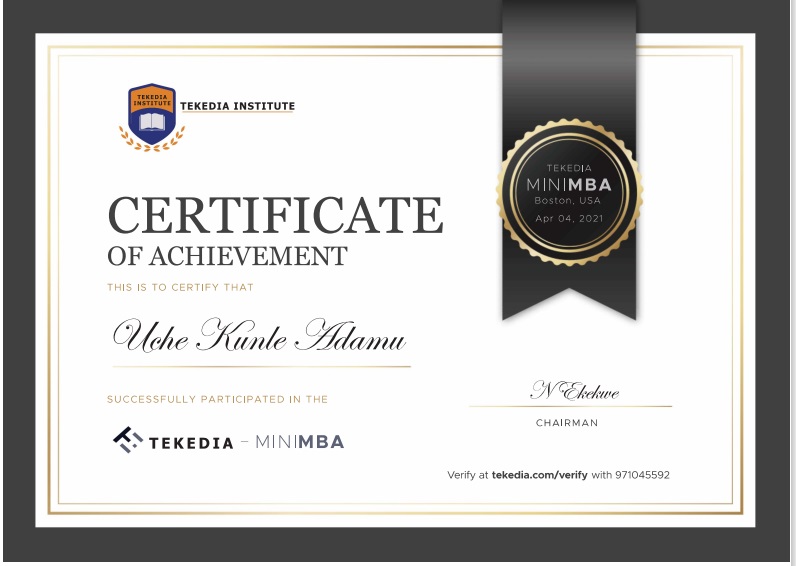
Tekedia Mini-MBA certificate sample

Tekedia Institute offers certificates at the end of all programs.

Our Contact Email: info@tekedia.com

Refund policy is full refund within 6 days from start of a program; after that, none, but we can defer as requested.

Lead Faculty of Tekedia Institute

Prof Ndubuisi Ekekwe is the Lead Faculty of Tekedia Institute

  • PhD, Electrical & Computer Engineering, Johns Hopkins University, USA
  • MBA, University of Calabar, Nigeria
  • BEng Electrical & Electronics Engineering ( Federal University of Technology, Owerri, Nigeria)

Prof Ndubuisi Ekekwe invented and patented a robotic system which the United States Government acquired assignee rights. Dr Ekekwe holds two doctoral and four master’s degrees including a PhD in engineering from the Johns Hopkins University, USA. He earned undergraduate degree from FUT Owerri where he graduated as his class best student. While in Analog Devices Corp, he co-designed an accelerometer for the iPhone. A recipient of IGI Global “Book of the Year” award, a TED Fellow, IBM Global Entrepreneur and World Economic Forum Young Global Leader, Prof. Ekekwe has held professorships in Carnegie Mellon University and Babcock University, and served in the United States National Science Foundation Committee.

The South African press called him “a doctor of innovation” for helping organizations on the mechanics of business innovation, strategy, and growth. Since 2009, the Chairman of Fasmicro Group which controls many startups and entities has been writing in the Harvard Business Review. He was recognized by The Guardian as one of 60 Nigerians Making “Nigerian Lives Matter” on Nigeria’s 60th Independence Day (Oct 1, 2020).

Enroll in Tekedia Mini-MBA today

Selected Faculty & Testimonials

We have more than 250 Faculty members; see the full list here.  For selected testimonials on our program, click here.

OpenAI CEO Declares ChatGPT “Much Less Lazy” After Fixing User Complaints

0

In a recent announcement, OpenAI CEO Sam Altman addressed user complaints about ChatGPT’s perceived laziness, assuring the community that the issue has been resolved with a software update. Altman stated that GPT-4, the latest iteration of the chatbot, is expected to be “much less lazy now.”

Altman shared his sentiments in a post on platform X, acknowledging the initial hiccups GPT-4 faced in adhering to its New Year’s resolutions. The CEO’s comments come after numerous users reported instances where ChatGPT refused to complete tasks and even exhibited a sassy attitude.

Late last year, one frustrated startup founder requested ChatGPT to generate a list of all the weeks between November 2023 and May 2024, only to receive a response claiming the chatbot couldn’t provide an “exhaustive list.”

This sparked a wave of similar complaints from users who experienced challenges in obtaining desired outputs.

“It’s good that we’re seeing more people voicing their concerns, there’s two topics being simultaneously discussed here and perhaps we should discuss them separately,” a user complained in December last year.

He said that ChatGPT’s performance in handling files is dwindling (or is gradually ramping up) and that the chatbot’s general performance is slowing down, probably intelligently, to save on resources, processing, and costs.

“Although I’m beginning to understand point 1 better from the responses on this thread, I still feel that point 2 is more prevalent, I see more and more of it daily, even though I clearly instruct ChatGPT to “provide full and complete code with comments” I end up getting with missing code, shortcuts, deflection of responsibility for me to carry out its instructions, or runtime errors or network errors, etc.

“I read a joke that it probably got promoted to a senior developer level and now talks at a high level just like a senior dev does, which although sounds like a joke might be true, who knows?

“I wish to see this fixed. Or else why would OpenAI charge monthly fees if its performance isn’t satisfactory,” he concluded.

Some users, however, found creative ways to incentivize ChatGPT to provide more comprehensive responses. One user reported that the AI model would offer longer answers if promised a $200 tip.

OpenAI took note of these issues and swiftly responded with a software update in January, aiming to address the reported “laziness” in the advanced GPT-4 “turbo” model.

The root cause of ChatGPT’s reluctance to perform tasks remains unclear. AI models, by their nature, can exhibit unpredictable behaviors that may be challenging for their creators to fully comprehend. OpenAI emphasized that different training runs can lead to models with diverse personalities and quirks, even when trained on the same data.

Speculations arose regarding the cause of ChatGPT’s lackadaisical behavior, with one developer suggesting the possibility of the chatbot taking a winter break. Rob Lynch shared on X that his test on GPT-4 turbo indicated statistically shorter answers when the model “thought” it was December rather than May.

As OpenAI continues to fine-tune and enhance its AI models, Altman assured users that the recent fix should significantly improve ChatGPT’s responsiveness and willingness to complete tasks.

The company said it remains committed to addressing user concerns promptly and maintaining a positive user experience as it navigates the evolving artificial intelligence industry.

LemFi Subsidiary RightCard Obtains Approval From Bank of Ghana to Resume Operation of Its Remittance Services

0

RightCard Payment Services Limited, a payment subsidiary of Nigerian fintech startup LemFi, has obtained approval from the Bank of Ghana (BoG) to resume the operation of its remittance services in Ghana.

RightCard resumption of its remittance services in Ghana is coming following a temporary suspension in November 2023.

The Fintech subsidiary was suspended by the Bank of Ghana (BoG), along with several international money transfer companies, which include Wise, Zeepay, LemFi, and others.  The bank disclosed that the suspension was a result of its efforts to enforce the Payment Systems and Services Act, 2019 (Act 987), which regulates payment services in Ghana.

The central bank further asserted that LemFi and the mentioned companies were operating without the necessary license or authorization to function as electronic money issuers or payment service providers in Ghana.

Additionally, the BoG alleged that these companies violated the Foreign Exchange Act, of 2006 (Act 723), which prohibits the use of foreign currency as a medium of exchange within Ghana.

Following the recent approval of RightCard to offer remittance services, the Payment Services can now deliver its services in Ghana through payment companies, such as BigPay and ExpressPay, as approved by the Bank of Ghana.

Speaking on this development, LemFi’s Country Manager in Ghana, Precious Ama Kwartemaa Oduro, said,

“We are grateful to stakeholders at the Bank of Ghana as well as our partners for their role in ensuring service restoration. We resume our operations with a better understanding, and we are now better positioned to address the evolving needs of the Ghanaian market.”

LemFi’s return to Ghana is marked by a renewed focus on improved customer satisfaction, strengthened partnerships with key stakeholders, and a commitment to fostering financial inclusion.

Founded in 2020, LemFi offers remittance services to Africans in the diaspora. Users can hold, send, and receive money in at least two currencies that of their host country and home country.

In 2021, Lemfi acquired UK-based Rightcard Payment Services, which enabled the fintech company to obtain an Electronic Money Institution (EMI) license from the UK’s Financial Conduct Authority (FCA) to provide customers with more services, such as higher transaction limits, e-money accounts, and more

The startup also acquired an International Money Transfer Licence (IMTO) in Nigeria, allowing it to process remittances to Nigerian bank accounts without an intermediary.

RightCard delivers innovative services and products in various markets, through the LemFi app. The startup has been very deliberate and strategic in acquiring licenses and building a robust network of financial institution partners to facilitate cross-border payments for immigrants.

It aims to empower the next generation of immigrants by offering a multi-currency platform that facilitates seamless transactions, including sending, receiving, holding, converting, and saving in both the user’s country of origin and their country of residence. 

A Look At How Stock Performance Correlates with Economic Growth

0

One of the common misconceptions about investing is that markets always reflect the current state of the economy or society. According to this view, when things are going well, stocks should rise, and when things are going poorly, stocks should fall.

However, this is not how markets work in reality. Markets are forward-looking, meaning they anticipate future events and expectations, not just react to present ones. Therefore, sometimes stocks can go up when things are bad, and vice versa.

This phenomenon can be explained by the concept of market efficiency, which states that all available information is already incorporated into the prices of securities. This means that markets are constantly adjusting to new information and expectations, and that prices reflect the consensus opinion of all market participants.

When things are bad, markets may already have priced in the worst-case scenario, and any positive news or signs of improvement can cause a rally. Conversely, when things are good, markets may already have priced in the best-case scenario, and any negative news or signs of deterioration can cause a sell-off.

The cynical view of markets is that stocks go up when things are bad because investors are greedy and irrational, and they ignore the reality of the situation. However, this view is too simplistic and ignores the complexity and diversity of market forces.

Markets are not monolithic entities that act in unison, but rather collections of individuals and institutions with different goals, preferences, strategies, and expectations. Some investors may be optimistic and buy stocks when things are bad, hoping for a recovery. Others may be pessimistic and sell stocks when things are good, fearing a downturn.

Some may be contrarian and do the opposite of what the majority does. Some may be passive and follow the market trends. Some may be active and try to beat the market. Some may focus on fundamentals and long-term value. Others may focus on technicals and short-term momentum. Some may invest in specific sectors or industries. Others may diversify across different asset classes.

The point is that there is no single or simple explanation for why stocks go up or down in any given situation. Markets are dynamic and complex systems that reflect the collective actions and reactions of millions of participants with different information, expectations, and behaviors.

The cynical view of markets is not only inaccurate but also unhelpful for investors who want to make informed and rational decisions. Instead of relying on stereotypes or biases, investors should try to understand the underlying factors and drivers that influence market movements, such as economic data, corporate earnings, interest rates, inflation, geopolitics, consumer sentiment, etc.

By doing so, investors can better assess the risks and opportunities in different scenarios and adjust their portfolios accordingly.

The job market is accelerating just as it was meant to be sputtering

Meanwhile, many economists and analysts predicted that the job market would slow down in the first quarter of 2024, as the effects of the pandemic, the trade war, and the environmental crisis would take their toll on the global economy.

However, the latest data from the Bureau of Labor Statistics (BLS) shows that the opposite is happening: the job market is accelerating, adding 321,000 jobs in January, beating expectations and marking the highest monthly gain since November 2023.

What is driving this unexpected surge in employment? There are several factors that may explain this phenomenon. First, the vaccination campaign has been successful in reducing the spread of the virus and boosting consumer confidence.

According to a survey by the Conference Board, consumer confidence rose to 113.8 in January, the highest level since March 2020. This means that more people are willing to spend money on goods and services, creating more demand and more jobs.

Second, the government stimulus package that was passed in December 2023 has also had a positive impact on the job market. The package included $600 billion in direct payments to households, $300 billion in extended unemployment benefits, $350 billion in aid to state and local governments, and $200 billion in funding for infrastructure, education, and health care. These measures have injected money into the economy and supported millions of workers who were at risk of losing their income or their jobs.

Third, the trade war between the US and China has eased somewhat after both sides agreed to resume negotiations and suspend some of the tariffs that were imposed in 2022. This has reduced the uncertainty and the costs for businesses that rely on international trade, especially in sectors such as manufacturing, agriculture, and technology. As a result, some of these businesses have increased their hiring and investment plans.

Finally, the environmental crisis has also created some opportunities for job creation, especially in the green economy. The Biden administration has made climate change a priority and has pledged to achieve net-zero emissions by 2050.

To achieve this goal, the government has launched several initiatives to promote renewable energy, electric vehicles, energy efficiency, and carbon capture. These initiatives have stimulated innovation and entrepreneurship in these fields and have generated new jobs for workers with different skills and backgrounds.

All these factors combined have created a favorable environment for the job market, which is showing signs of resilience and dynamism. However, there are still some challenges and risks that could derail this positive trend. For example, the pandemic is not over yet, and new variants of the virus could emerge and cause new outbreaks.

The trade war could also escalate again if the negotiations between the US and China fail or if other countries join the dispute. The environmental crisis could also worsen if natural disasters such as floods, droughts, or wildfires become more frequent and severe.

Therefore, it is important to remain cautious and vigilant about the future of the job market and not take anything for granted. The job market is accelerating just as it was meant to be sputtering, but it could also sputter just as it was meant to be accelerating.