DD
MM
YYYY

PAGES

DD
MM
YYYY

spot_img

PAGES

Home Blog Page 3772

TechWings Global Unveils Scholarship Contest for Tekedia Mini-MBA

0

The Team at TechWings Global has something amazing: “We believe in empowering the next generation of tech leaders and innovators. That’s why we are sponsoring 2 lucky individuals to participate in the upcoming Tekedia Mini MBA course starting February 5th! This is an incredible chance to gain valuable knowledge and skills in this dynamic field.”  Go here and participate if interested.

Yearly, Tekedia Institute partners with dozens of organizations and individuals, offering scholarships which enable hundreds to attend our impactful business program.

Thank you TechWings Global for your kindness and generosity. We wish you more wins in the market.

As PwC Projects a 38.8% Poverty Rate in Nigeria, I Propose a Community-Centric Development Model for Nigeria

1

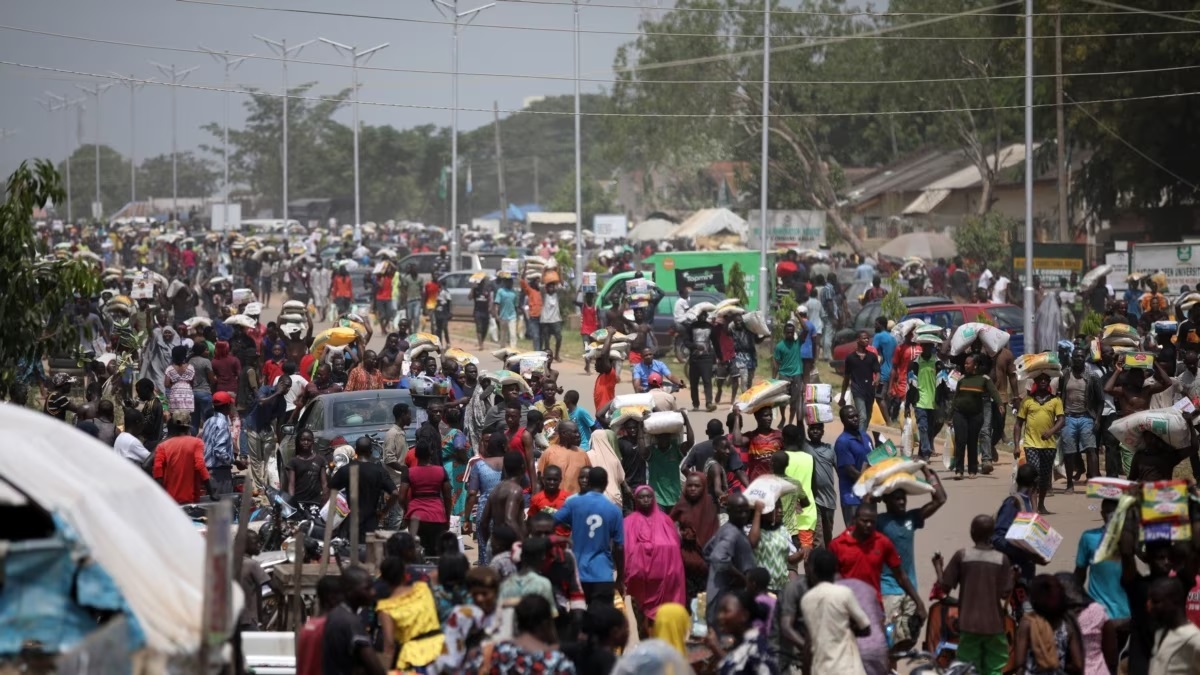
It looks very challenging with many reports thundering on the escalating poverty in Nigeria: “Multinational professional services brand of firms, PricewaterhouseCoopers International Limited (PwC), in its recent report, has forecasted Nigeria’s poverty rate to reach 38.8% in 2024.” Yet, this should not be the end of the story. Nigeria has great tools to quickly move out of this economic stasis and visioning miry clay.

The new invention of transferring money to some poor families is very strange to me. The last administration started it, and I was expecting that to be discontinued by the new government. Unfortunately, that has been sustained. What would N20,000 or whatever do to a family of six in a month?

My recommendation when Buhari introduced it is to use the funds and structure a partnership with community development unions. Michael Okpara, ex-premier of Eastern Nigeria, used that model to advance massive transformation in the region. Those rural communities can administer these funds better than bureaucrats through a consultative process which will deliver agro support with silos, farm seeds, trading, etc.

Randomly picking 500 people in a community of 5,000 for N20k transfer does not look fair and sustainable. But building mini-catalysts for those 5,000 rural people may unlock opportunities for all. And if you support those 5,000 people to do those things by themselves, as Okpara did, you will see a better outcome. Yes, poverty will likely drop in a sustained way. Check the records of our first generation leaders, they built through communities because power was localized; today, we do not even consult and that must change.

(Statistically, most rural poor citizens are farmers. If they have access to coldroom or better access to market, you can help them. The cash transfer if managed by the community unions can provide catalysts over random lottery)

Imagine a fund for rural communities. To unlock this fund, communities, send proposals on local economic plans and we will contribute 90% of your budget. NO cash transfers to individuals; YES fund transfer to community development unions to invest in mini-catalysts to lift rural people.

Nigeria Poverty Rate to Reach 38.8% in 2024 – PwC Report

Nigeria Poverty Rate to Reach 38.8% in 2024 – PwC Report

0

Multinational professional services brand of firms, PricewaterhouseCoopers International Limited (PWC), in its recent report, has forecasted Nigeria’s poverty rate to reach 38.8% in 2024.

The report signals a challenging 2024, with rising poverty levels as the cost of living continues to surge. PwC GDP projection is lower than the 3.4 percent that the Nigeria Economic Summit Group (NESG) projected.

The report states that achieving sustainable growth in 2024 requires balancing ambitious fiscal reforms with effective budget implementation while highlighting the importance of aligning fiscal and monetary policy to stabilize prices and reach target goals.

In the report, PWC highlighted seven (7) trends that will shape the Nigerian Economy in 2024 which include;

  • Improved sectoral development riding on reforms
  • Consumers may likely adjust better to evolving policy and Macro realities
  • Persisting vulnerabilities and external pressures with the potential for shocks
  • Executing fiscal reforms balancing ambition with budgetary implementation
  • Evolving monetary policy stance: Finding the right framework and instruments to achieve price stability
  • Investors will be cautiously optimistic
  • Undulating pathways to unlocking productivity in the economy

The report also highlights that debt sustainability will be a key pressure point in 2024. It is understood that Nigeria’s deficit has grown by 370% from 2015 to 2023, which has led to a high debt and debt servicing profile. Though debt stock to GDP is comparatively low at 37.1%, the debt servicing to revenue ratio remains high at 124% as of H1 2023.

In 2024, the government aims to reduce the budget deficit to around 3.9% (N9.18 trillion) of GDP, down from 6.1% in 2023, through reduced spending.

With the exchange rate volatility, servicing external debt in foreign currency becomes challenging due to exchange rate volatility and the devaluation of the naira.

Inflation increased to 28.92% in December 2023 from 28.2% in November 2023, driven by food and transportation inflation. Headline inflation may decelerate marginally to 21% in 2024. The sustained inflationary pressure may be driven by a combination of the pass-through effect of the rise in international oil prices on domestic energy costs and exchange rate pressures.

Food Inflation rose by 33.9% in December compared to the previous year, due to insecurity and climate change effects in the food-producing regions of the country.

In November 2023, the average price of 1kg of rice, yam tuber, and tomato increased by 53.1%, 79.1%, and 62.4% respectively compared to November 2022. The Food and Agriculture Organisation (FAO) projects that Nigeria may experience increased prices of staple foods such as rice, maize, cereals, etc. in 2024.

Consumer spending may be pressured in 2024 due to rising prices of goods and services (increasing food and transportation costs), coupled with lower disposable income.

However, private consumption is expected to be marginally better than in 2023. Poverty levels are projected to increase to 38.8% in 2024.

Despite the low unemployment rate in the country, low consumer spending and purchasing power remain an issue, especially in the absence of a commensurate increase in minimum wage to mitigate the inflationary growth in the economy.

Recall that the World Bank had indicated that the number of poor people in Nigeria had grown from 95 million in 2021 to 100 million in 2022, indicating the surging poverty rate in the country.

In its World Bank Nigeria Development Update, NDP, entitled ‘Turning the Corner: Time to Move From Reforms to Results’, the bank stresses the need to continue with the reform momentum to complete the reforms and to address the costs of the reforms.

It stated: “Inflation remains at record high levels for Nigeria, 27.3 percent Year-on-Year, YoY, in October 2023, partly driven by the one-off price impacts of the removal of the gasoline subsidy.

“The impact of this is especially hard on poor and vulnerable citizens. The FX market has remained volatile and in a period of continuing adjustment to the new policy approach, with significant fluctuations in the exchange rate in both the official and the parallel markets”.

However, the federal government of Nigeria conditional cash transfers and projected slight decrease in inflation are predicted to offer temporary relief in 2024.

NNPC’s $3.3 Billion Emergency Loan: Atiku Demands 5 Answers from Tinubu’s Administration

0

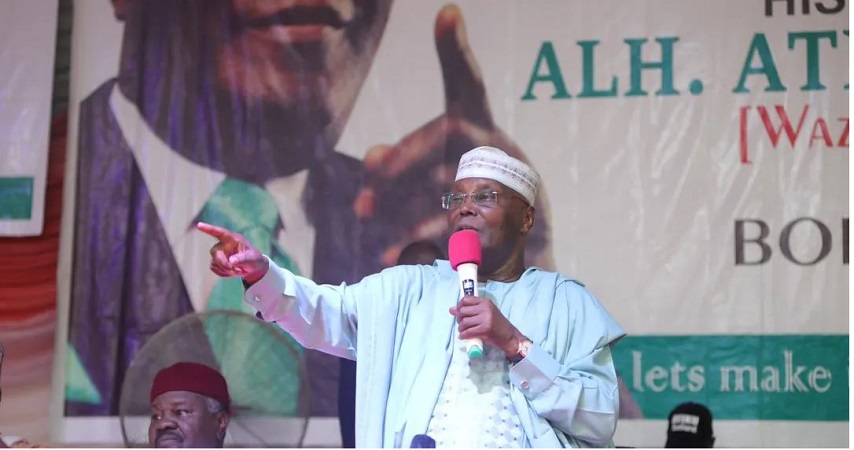
Former Vice President Atiku Abubakar has raised concerns about the lack of transparency surrounding the $3.3 billion emergency loan secured by the Nigerian National Petroleum Company (NNPC) last year from Afreximbank.

In a post titled “Tinubu’s administration owes Nigerians an explanation for the NNPC $3.3bn emergency loan,” shared on X Thursday, Abubakar called on President Bola Tinubu’s administration to clarify the framework and details of the loan, expressing curiosity over the government’s silence on the matter.

The emergency loan, secured on August 16, 2023, was intended to boost the performance of the naira in the foreign exchange market, as stated by the NNPC. The deal is supposed to be a crude-for-cash loan arranged by the African Export-Import Bank.

However, the former presidential candidate of the Peoples Democratic Party (PDP) pointed out that the Nigerian government has remained tight-lipped about the deal, with information disseminated solely through unofficial sources from the NNPC.

One notable aspect of the transaction is the involvement of a Special Purpose Vehicle (SPV) named Project Gazelle Funding Limited, incorporated in the Bahamas. Abubakar questioned the choice of registering the company in the Bahamas, given the country’s recent association with financial scandals like the Paradise Papers.

“What is even more confounding about this deal is why the Federal Government would register a company in the Bahamas, knowing full well the recent scandal of the Paradise Papers that involved that country,” he said.

According to available information, the SPV is the borrower, with NNPC as the sponsor, agreeing to repay the loan through crude oil at an interest rate slightly exceeding 12 percent, he further remarked.

Abubakar expressed concern about the details of the deal, especially given Nigeria’s daily crude production of 1.38 million barrels and the commitment to supply 90,000 barrels daily from 2024 until reaching 164.25 million barrels for loan repayment.

The former vice president highlighted a significant discrepancy in the repayment amount, estimating a staggering $12 billion based on Nigeria’s crude benchmark price of $77.96 per barrel in 2024.

“Now, this is where the details get disturbing because Nigeria’s benchmark for the sale of crude per barrel in 2024 is $77.96. A simple multiplication of that figure by 164.25 will give us a whopping $12bn,” he said.

“It is inconceivable that the Federal Government will lead the country to take a loan of $3.3b with an interest rate that is not more than 12 percent, but with estimated repayment amounting to $12bn.

“That is a humongous differential of about $7b between what is in the details of the deal on paper and what indeed is the reality.”

Abubakar emphasized the need for the federal government to address the unclear aspects of the deal, calling it into question and urging transparency.

“There are questions to be answered on the integrity of this deal, and we earnestly request the Federal Government to talk directly on these cloudy details behind the deal,” he said.

In his statement, the PDP chieftain demanded, “on behalf of the ordinary people of Nigeria, that the Federal Government provides answers to the following questions.”

  1. Has the Federal Government accessed the loan?
  2. Is the loan in the government’s borrowing plan as approved by the National Assembly?
  3. Who are the parties to the loan, and what specific roles are they expected to play?
  4. What are the conditions of the loan, including tenor, repayment terms, the collateral, and the interest rate?
  5. And, lastly, why register an SPV in the Bahamas knowing the recent scandal of the country’s notoriety for warehousing unclean assets?

Atiku is not the only Nigerian who has voiced concerns over the loan. Several analysts have said that there is more to the deal than meets the eye, and the federal government owes Nigerians some explanations. Kelvin Emmanuel, CEO of Dairy Hills, an energy expert and financial analyst, had earlier expressed concerns about the legality and implications of the loan.

Emmanuel meticulously examined the loan agreement, identifying inconsistencies that he deemed could establish a perilous precedent for the economy. He drew attention to elements like the daily allotment of crude, the overall repayment duration, the configuration of the Special Purpose Vehicle (SPV), and the management of price differentials between forward sales and spot prices.

In his analysis, Emmanuel postulated that the transaction structure might be forming a pseudo-excess crude account, potentially depriving Nigeria of the advantages associated with fluctuations in the global oil markets. He expressed disapproval of loans secured by resources and drew a parallel between the forward sales agreement and the financialization of future oil and gas assets.

“I am NOT a fan of resource-backed loans, and this forward sales agreement that is akin to financialization of future oil and gas assets is an anomaly in statecraft that the National Assembly should fight with all rigor,” Emmanuel remarked. “There is no genius in it; it is a lazy approach to getting FX dollars to improve your balance of payment position.”

As the call for transparency intensifies, the public awaits a response from the authorities to shed light on the intricacies of the NNPC’s $3.3 billion emergency loan. In December, the NNPC reportedly received $2.5 billion tranche of the loan. The company, last week, unveiled its strategy for deploying the loan.

Monero (XMR) and Binance (BNB) Struggle to Maintain Value, Pullix (PLX) on Path to $4.5M

0

The price of the Monero (XMR) crypto has been declining for a prolonged time frame, as it has met strong resistance and lower highs. This means that sellers have historically dominated the crypto, resulting in the loss of its growth.

Despite this, it could soon swing in the opposite direction. The Binance (BNB) crypto, on the other hand, displayed a sideways shift in the price trend as the market slowdown began. Yet, Pullix (PLX) has seen massive spikes in its presale momentum, and this could result in significant long-term gains.

Monero (XMR) Has a Prolonged Downtrend – Is a Recovery Above $260 Possible?

Monero (XMR) is trading below the 50-day and 200-day EMAs, showcasing a continued downtrend for a prolonged time frame. In addition to this, the Monero price has not gone so far from the EMAs, and the MACD generated a negative crossover, with the altcoin’s histogram also red, indicating bearishness.

The RSI is at 50, which is indicative of a neutral outlook for the Monero crypto. Despite this, technical oscillators support a bullish trend, emphasizing positive signs, implying that an uptrend could soon occur for the XRM crypto price. According to the Monero price prediction, it can end 2024 with a value of $265.66.

Binance (BNB) Failed to Give a Bullish Crossover – Can Its Value Increase in 2024?

Binance (BNB) has also experienced a notable shift in its value. The MACD indicator for the BNB price indicates that it has failed to give a bullish crossover. Furthermore, with the increased intensity of the bearish histograms, the Binance price momentum indicator showcases a strong bear attack during the last trading session.

While the tone of the Binance crypto price is bearish, the intraday growth and the prevailing uptrend could provide hope for a bull run above the $320 mark. Just in the past week, the BNB altcoin moved from $295.47 to $321.09. According to the Binance price prediction, the crypto can peak at $524 at this rate of growth.

Pullix (PLX) Will Dominate the DeFi Space With a Combination of Cex and Dex Elements

Pullix (PLX) is receiving increased attention with its blockchain ICO due to the vast technological improvements it will bring to the TradFi space. The platform will combine elements found in CEXs and DEXs while providing users with a unique opportunity to earn.

It will tackle liquidity challenges that have historically been the reason why DeFi has not seen mainstream adoption. Pullix will introduce advanced trading tools and enrich how users profit from their time on the platform. Anyone will be able to access margin trading or get access to institutional tools while also engaging in the Copy Trader feature.

The project’s presale is in stage 6 and has already sold 19 million tokens. Here, a single PLX token is offered at just $0.08, and the presale is close to raising $4.5 million. Stage 7 is fast approaching, with a price increase to $0.10. Analysts are also expecting the crypto to grow by 50x following its launch.

Summary

It’s clear that both Monero and Binance are trying to get back up in value, and this could occur by the end of the year. In the meantime, however, the Pullix crypto is maintaining solid momentum with its presale and is shaping up to be the hottest DeFi project in 2024.

For more information regarding Pullix’s presale see links below:

Visit Pullix

Join The Pullix Communities