DD
MM
YYYY

PAGES

DD
MM
YYYY

spot_img

PAGES

Home Blog Page 3776

JP Morgan’s Chase to Ban All Cryptocurrency Transactions in the UK Due to Increasing Crypto Scams

0

JP Morgan owned UK-based retail bank Chase moves to impose a ban on all cryptocurrency transactions made by customers in the UK due to an increase in crypto fraud and scams targeted at these customers. The bank said the ban on Crypto purchasing would be effective from October 16, 2023.

According to a statement by Chase’s spokesperson on Tuesday, the bank is committed to helping keep its customers’ money safe and secure.

“Customers will receive a declined transaction notification if they do attempt to make a crypto-related transaction… This has been done to protect our customers and keep their money safe.

“We urge all consumers to ignore phone, text or internet requests for money or access to their computer or bank accounts. Legitimate companies won’t make these requests, but scammers will,” Chase said.

Reuters reported that the bank said its decision to ban crypto transactions was due to the increasing level of crypto scams targeted at the UK citizens.

“We’ve seen an increase in the number of crypto scams targeting UK consumers, so we have taken the decision to prevent the purchase of crypto assets on a Chase debit card or by transferring money to a crypto site from a Chase account” Reuters quoted the company as saying.

According to Vanguard, several other United Kingdom banks have placed restrictions on crypto-related transactions, but this move is one of the first outright bans on the asset.

Citing data from Britain’s fraud reporting agency Action Fraud, Vanguard reported there has been a 40% increase in consumer losses to crypto fraud in the past year, surpassing the £300m for the first time.

“JP Morgan has generated more than 1.6 million customers to its Chase retail bank since launching the mobile app-based service in Britain two years ago, and plans to roll out the consumer bank in other international markets over time,” Vanguard said.

Nigeria Must Focus on the Root Cause of Naira Forex Crisis; You Do Not Ask for Thinner Cheque Book to Balance Your Books

1

Reducing the number of Bureau de Change (BDC) operators in Nigeria will not fix our forex crisis and Tope Fasua should not advocate for that. Nigeria needs to focus on the root cause of this problem, and the number of BDC is not one. The root cause is lack of parity between the supply and demand of US dollars in Nigeria, and floating Naira which I think is a bad policy, did not model that asymmetric imbalance.

Nigeria’s forex crisis, which has thrown the country’s economy into disarray – pushing the government to the limits in its search for a solution, has seen varying degrees of suggestions from experts, state and non-state actors proffering solutions.

Consequently, the Nigerian Presidential Adviser on Economic Affairs, Tope Fasua, has recommended a significant reduction in the number of Bureau de Change (BDC) operators in the country. He suggests reducing the current number of over 5,000 BDCs to approximately 200, which would amount to a 95% reduction.

He made this call while speaking at an economic policy event organized by the Abuja Chamber of Commerce and Industry. The event’s theme was “Unification of foreign exchange and the effect of fuel subsidy removal on the business community.”

Unless you bring parity to the demand and supply, Naira will continue to struggle, to settle at an optimal equilibrium. On the day this policy was announced, I wrote here that it was not well designed, just as I noted that Nigeria will return to fuel subsidies if we have not already done so, since as FX and international crude oil price continue to increase, the local price of petrol has largely remained the same, meaning that the government is paying the variance. In a full subsidy regime, we would have seen an increase at the pump price!

When you are struggling to balance your budget, you do not ask your bank for a thinner cheque book, to save cost. And Nigeria cannot think it can float Naira without controlling the air Naira operates. That “air” is production which includes old and modern factories. They supply the air for Naira to breathe and float.

Comment on Feed

Comment 1: Ndubuisi Ekekwe , I understand your view which should be the core of our solution to Nigeria FX issues. Ndubuisi Ekekwe , what will be your short term, medium term and long term strategy.

Strategy to reduce unnecessary demand, strategies to improve supply.

Prof, our supply from production might not happen overnight, but reduction of unnecessary demand might be a feasible and viable short term stray.
Ndubuisi Ekekwe , what is your take

My Response: “what will be your short term, medium term and long term strategy.” – return back to the status quo as at May 29. Use the next 6-9 months to deepen production capacity, then begin to implement these new policies. Sometimes, not doing anything may be a better solution. Yes, NOT floating Naira, immediately. I have put my ideas and I do not need to repeat them in all posts. Sure, any person can question my positions – that is demoracy.

Forex Crisis: Tope Fasua, Tinubu’s Adviser Urges Nigerian Central Bank to Reduce BDCs by 95%

0

Nigeria’s forex crisis, which has thrown the country’s economy into disarray – pushing the government to the limits in its search for a solution, has seen varying degrees of suggestions from experts, state and non-state actors proffering solutions.

Consequently, the Nigerian Presidential Adviser on Economic Affairs, Tope Fasua, has recommended a significant reduction in the number of Bureau de Change (BDC) operators in the country. He suggests reducing the current number of over 5,000 BDCs to approximately 200, which would amount to a 95% reduction.

He made this call while speaking at an economic policy event organized by the Abuja Chamber of Commerce and Industry. The event’s theme was “Unification of foreign exchange and the effect of fuel subsidy removal on the business community.”

Fasua, a prominent economist and the CEO of Global Analytics Consulting argued that the large number of BDCs creates challenges for the Central Bank of Nigeria (CBN) in terms of effective supervision. He attributed the irregularities in the foreign exchange market to the abundance of BDCs in the country.

“We need to do some structural reforms. For example, I believe we should reform the BDCs’ sector, make them stronger. You can’t manage over 5,000 BDCs selling money on the streets, it is not normal,” he said.

Fasua suggested that the CBN should provide incentives for both the BDC sector and banks to expedite the process of providing foreign exchange to Nigerians. He believes that with effective structural reforms and robust supervision, the CBN, backed by its reserves, can encourage the sector to facilitate quicker access to funds for individuals.

Furthermore, Fasua emphasized the need to clearly define the illegal forex market as a crucial step toward achieving stability in the official forex market.

Citing the United Kingdom and the United Arab Emirates, Fasua said that Nigeria’s 5,000 BDCs are more than needed, and should be curtailed to make their supervision easier for the central bank.

“We cannot manage 5,000 BDCs, maybe we should be looking at 100 or 200. In the United Kingdom as a tourism destination, they have 145 BDCs the last time I checked. In the UAE they have 130.

“So what are we doing with 5,000 BDCs? You will never be able to supervise them. How many staff would you need to look at their returns and check them? Therefore, you need large and well-established BDCs, as well as banks, to be able to fulfill the needs of the people. And then the government can be able to incentivize that market,” he said.

Nigeria’s forex crisis has spiraled nearly out of control as the government appears helpless in curtailing it. Several efforts by the CBN, including monetary policy reforms, have failed to tame the wildling tide.

Nigeria floated its currency, the naira in June – removing all control pegs around the dollar in a bid to have a unified exchange rate. However, the move has seen the naira nosedive further – racing towards N1,000 per dollar.

The Minister of Finance Wale Edun said to make progress, the country needs to clear approximately $6.8 billion in overdue forward payments in the foreign exchange market.

Economic experts have maintained that the solution lies in having sufficient forex liquidity. But currently, Nigeria is grappling with oil theft in the Niger Delta, which has reduced its oil output to 1.67 million barrels of oil and condensates per day, significantly jeopardizing its opportunity to boost its foreign reserves.

Nigeria’s oil production in the first eight months of the year falls short of the 2023 budget benchmark by more than 20 million barrels, representing a 15 percent deficit. These findings are based on the latest data from the Nigerian Upstream Regulatory Commission (NUPRC).

Nigerian Government Wasting Time Looking for Foreign Investors – Peter Obi

0

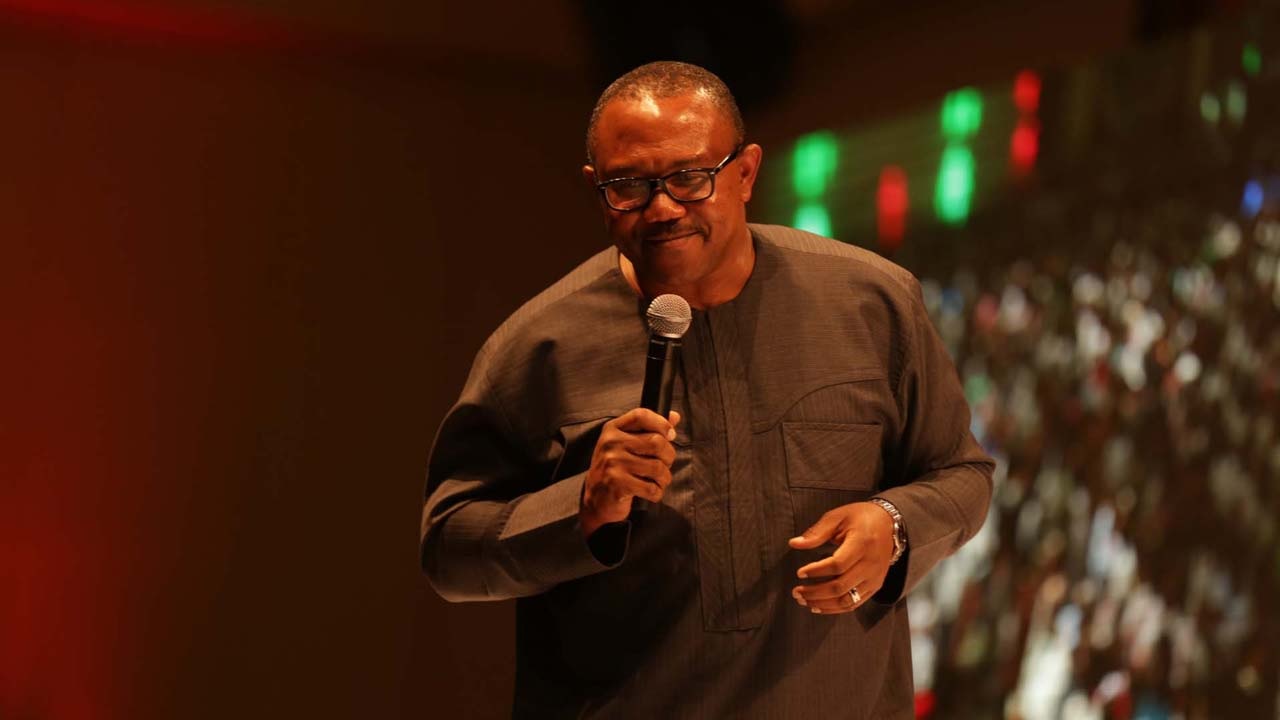
The presidential candidate of the Labour Party (LP), Mr. Peter Obi, has expressed the view that the efforts of the Federal Government to seek foreign investors abroad would be futile if the necessary business-friendly environment is not established.

Recently, there have been a lot of talks from the presidency about bringing in Foreign Direct Investments to stabilize Nigeria’s wobbling economy.

During the 78th session of the United Nations General Assembly (UNGA) in New York, President Bola Tinubu told investors on the sideline of the event to feel free and safe to invest in Nigeria.

The calls for investment in Nigeria have been ringing against the backdrop of an unfriendly business environment – led by major factors such as forex crisis, insecurity, and rising inflation.

During the Nigeria-U.S. Executive Business Roundtable, the President outlined several measures he claimed to have implemented to enhance the confidence of the global investment community in Nigeria.

“Nigeria is an opportunity that is impossible to replicate or find elsewhere in any part of the world. We have brilliant young people who both innovate and consume on a large scale. Our entrepreneurial spirit is a major part of what makes our market totally unique, aside from demography.

“Nigerians build businesses and Nigerian businesses partner with other businesses to conduct larger business. There is enough value to spread around. Be careful of what you hear about Nigeria. You may be dissuaded out of a major opportunity that others will take up. We are here for you. We will give you all the support you need to succeed and succeed abundantly,” he said.

The measures mentioned by Tinubu encompassed the establishment of a conducive fiscal, monetary, and tax policy environment. However, his tax reforms are yet to be implemented.

While addressing an event in Enugu, Obi said that foreign investors could be compared to bees seeking honey. He added that a government lacking a clear vision and direction for the country is wasting its time by pursuing foreign investors abroad.

“I came back here and told someone that you don’t go looking for foreign investors. Anyone going around looking for foreign investors is wasting everyone’s time. Foreign investors are like bees and honey. If you put honey here, how the bees will converge, no one will tell you. After the G20 meeting, Emmanuel Macron, French president flew to Bangladesh because the country had just ordered 10 Airbus 350s, so he had to go and see them. If you look at all the economic analysis, go and look at where Bangladesh will be in 2030 and up to 2050. But no one knows where we are going to be.

“A deputy governor was asked why he didn’t go to school and he said it doesn’t matter. But he filled it. He was the one who said, ‘I went to this school’, no one forced you. If you knew that schools don’t matter, you would have said, ‘I didn’t go to school’, so that we would imagine your ingenuity as someone who didn’t go to school and was able to get to that level.

“We are now in a country where people say one thing and do something else. I asked a woman to stand on the queue and she told me that whenever she stands in a queue, she doesn’t get anything. This happened to me last year. After the tribunal decided our case, I called the woman and apologized to her. We had someone going round the world and saying that the election would be the best. It was from INEC that I heard what is called ‘real time’. Suddenly, he says he can do the election anyhow. Why didn’t you tell us this before the election, so that when we are voting, we can also behave anyhow?” Obi queried.

Obi’s take on attracting FDI into Nigeria has long been voiced by economic experts, who said that investors only look at the macroeconomic framework to decide if a country is worth investing in. Currently, Nigeria’s macroeconomic indicators are said to be significantly deficient in attracting foreign investments.

Nigeria Accounted For The Highest Remittance Flow Into Sub-Saharan Africa in 2022 – World Bank

0

According to a report by the World Bank, Africa’s most populous nation Nigeria, accounted for the highest remittance flow into sub-Saharan Africa in 2022.

Remittance flow into the region reached $53 billion, and Nigeria accounted for 38% ($20.1 billion), followed by Ghana and Kenya with $4.7 and $4.1 billion respectively.

Zimbabwe recorded $3.1 billion, followed by Senegal at $2.5 billion, the Democratic Republic of Congo at $1.7 billion, Sudan at $1.5 billion, Uganda at $1.3 billion, Mali at $1.1 billion, and South Africa at $900 million.

Remittance flows to Sub-Saharan Africa grew by 6.1% in 2022 to $53 billion. The trend was largely driven by strong remittance growth in Nigeria (38%), Ghana (12%), Kenya (8.5%), Tanzania (25%), Rwanda (21%), and Uganda (17%).

Meanwhile, growth in remittances to the Middle East and North Africa fell by 3.8% to $64 billion in 2022 after posting strong growth of 12.2% in 2021. Economies in the region that saw slight gains in remittance flows included several Maghreb countries.

However, according to the World Bank report, the overall rise in remittances to the Sub-Saharan region helped several struggling African nations that are grappling with drought, floods, and debt servicing issues.

Also, the World Bank stated that compared to foreign direct investment (FDI), official development assistance (ODA), and portfolio investment flows, remittances have continued to represent an even larger source of external finance for MICs over the past year.

This is to say that remittances have become several of these countries’ most important foreign exchange earners.

Globally, the average cost of sending $200 was 6.2% in the fourth quarter of 2022, up slightly from 6% a year ago, and more than twice the Sustainable Development Goal target of 3%, according to the Bank’s Remittances Price Worldwide Database.

The World Bank revealed that Banks are the costliest channel for sending remittances, with an average cost of 11.8%, followed by post offices (6.3%), money transfer operators (5.4%), and mobile operators (4.5%). While mobile operations are the cheapest, they account for less than 1% of total transaction volume.

In 2023, remittance inflows are projected to grow by 1.7% with the outlook differentiated across regional subgroups depending on dominant host countries and the degree of exposure to higher inflation and financial volatility.

It is worth noting that while remittance flow in Africa has multifaceted impacts, ranging from economic stability to poverty reduction and improved access to healthcare, governments in this region must also consider how to manage the challenges associated with remittances to ensure their positive effects are maximized.

In this light, the Central Bank of Nigeria (CBN) has continued to urge Nigerians abroad to consider eNaira as a payment option for diaspora remittances.

In a circular addressed to the International Money Transfer Operators (IMTOs) and the public and signed by CBN’s director of Trade and Exchange Department, Ozoemena Nnaji, the CBN noted that the move was in furtherance of efforts to liberalize the payout of diaspora remittances.