DD
MM
YYYY

PAGES

DD
MM
YYYY

spot_img

PAGES

Home Blog Page 3778

Deloitte Announces Plans to Cut 100 Jobs as Part of A Restructuring Plan, Amid Deals Slowdown

0

Multinational professional services network Deloitte has announced plans to slash up to 100 jobs, as part of a restricting plan, amid the prolonged slowdown in deals activity.

The firm disclosed plans to restructure its corporate finance advisory business in order to focus on larger, sector-focused M&A activity. The company is proposing some targeted restructuring that would result in the reduction of 3% of its workforce of 27,000 in the UK.

Speaking on the restructuring plan, a  spokesperson from Deloitte UK said,

“We are considering restructuring parts of our advisory corporate finance business. This is in order to concentrate on larger, sector-focused M&A activity. As a consequence, we are proposing to close some parts of that business. We will consult on this with people in these teams over the coming weeks. This will undoubtedly be an unsettling time for those affected and we will be doing everything we can to support them”.

The move comes as Deloitte, one of the “Big Four” accounting firms, plans to focus on cost-cutting due to the slowdown in the second half of the current financial year as clients are being more cautious in their spending.

Also, the firm had warned that deals and advisory work were hit in the second half, reporting only 9% growth compared with other service lines, amid an increased caution among clients on spending and a slowdown in the M&A market.

Deloitte’s recent downsizing of its workforce comes on top of the 800 redundancies it announced in September last year, which was later reduced to about 700, as professional services firms contend with slowing demand from clients and rising costs amid a tougher economic environment.

In April last year, the Financial Times reported that Deloitte would slash around 1,200 jobs or 1.5% of its U.S. workforce. That was followed by KPMG’s announcement of laying off 5% of its workforce in June.

At the time, Richard Houston, Deloitte senior partner, and CEO, said,

Looking ahead, the UK faces a challenging year, with the ongoing cost of living concerns, slow economic growth, rising geopolitical tensions and the climate crisis. Markets are expected to remain challenging and we have adjusted our plans in response”.

Deloitte’s restructuring highlights how some of the Big Four are continuing to cut jobs into 2024, with rival EY quietly laying off dozens of staff in January. PwC also announced 600 job cuts towards the end of last year, while KPMG axed roles and froze pay for about 12,000 employees.

Notably, a number of businesses have reduced their workforce in recent times anticipating a likely economic slowdown later in the year.

Google Morphs Bard into Gemini, Intensifying Competition with OpenAI

0

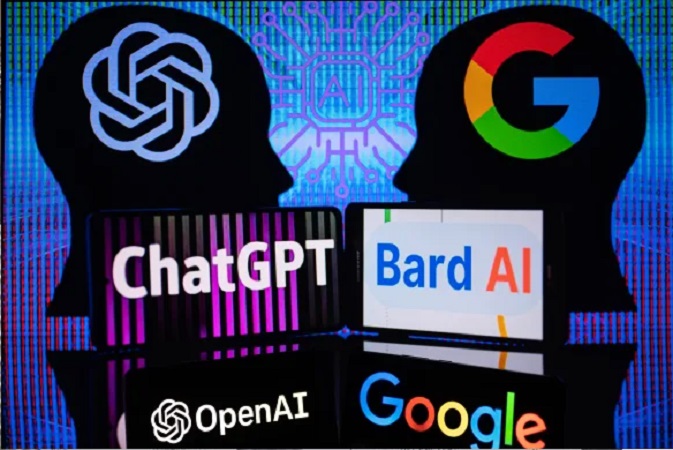
In a bid to assert dominance in the rapidly evolving landscape of artificial intelligence, Google has unveiled its latest milestone, transitioning its renowned Bard model into the groundbreaking Gemini era.

This move marks a significant leap forward in Google’s endeavor to enhance AI’s accessibility and utility across diverse domains, posing a formidable challenge to competitors like OpenAI.

“Bard has been the best way for people to directly experience our most capable models. To reflect the advanced tech at its core, Bard will now simply be called Gemini,” CEO Sundar Pichai said in a blog post.

Google’s steadfast commitment to advancing AI technologies has been underlined by its ongoing investments, recognizing AI as the linchpin for innovation across its myriad products and services. The unveiling of Gemini represents a pivotal moment in this journey, heralding a new era of state-of-the-art capabilities spanning text, image, audio, and video benchmarks.

“Gemini is evolving to be more than just the models. It supports an entire ecosystem — from the products that billions of people use every day, to the APIs and platforms helping developers and businesses innovate,” Pichai said.

At the heart of this transformation lies the Ultra 1.0 model, a groundbreaking achievement surpassing human expertise in massive multitask language understanding (MMLU). This feat, accomplished through a fusion of 57 subject areas encompassing fields such as mathematics, physics, history, law, medicine, and ethics, underscores the profound potential of AI to revolutionize knowledge acquisition and problem-solving.

The evolution from Bard to Gemini signifies more than a mere rebranding; it symbolizes a paradigm shift towards a comprehensive ecosystem designed to empower users and developers alike.

Gemini Advanced, the pinnacle of this evolution, promises unparalleled capabilities in reasoning, instruction-following, coding, and collaborative creativity. From serving as a personalized tutor to facilitating content strategy and business planning, Gemini Advanced epitomizes the transformative power of AI-driven innovation.

By integrating Gemini’s capabilities across its product spectrum, Google aims to democratize AI’s benefits on a global scale. The introduction of the Google One AI Premium plan offers users a consolidated platform to access Gemini’s full potential, augmenting popular services like Google Workspace with advanced AI features tailored to enhance productivity and creativity.

The integration of Gemini into Workspace and Google Cloud further extends its reach, catering to the diverse needs of individuals and businesses alike. From enhancing productivity in Workspace applications to empowering developers and bolstering cybersecurity measures on Google Cloud, Gemini promises multifaceted benefits across the digital ecosystem.

Crucially, Google’s strategic maneuvering in the AI arena extends beyond product enhancement to fostering a vibrant developer community. With hundreds of thousands of developers already leveraging Gemini models, Google is poised to nurture a thriving ecosystem of innovation, amplifying the impact of AI across industries and applications.

In light of Google’s ambitious foray into AI with Gemini, the competitive industry is poised for a paradigm shift. As Google intensifies its efforts to rival established players like OpenAI, the stage is set for a dynamic interplay of innovation, collaboration, and competition, ultimately driving forward the frontiers of artificial intelligence.

In the coming weeks, Google promises to unveil further insights into Gemini’s capabilities, particularly focusing on enhancements for developers and Cloud customers.

Nigeria’s food crisis: Niger State moves to enact price control law

0

The government of Niger State is making strides toward curbing food inflation by considering the implementation of a price control law, with a bill for a Price Control Board passing its first reading in the state.

The bill, presented during a recent plenary session, marks a proactive step towards alleviating the economic burdens faced by Nigerians, particularly in light of the escalating food inflation plaguing the nation.

This initiative follows a recent ruling by a high court in Lagos, mandating the federal government to regulate the prices of essential goods and services nationwide within seven days.

Sponsored by ISA Etsugaie (APC-Agaie), the bill aims to tackle the pressing issue of rising food prices, exacerbated by external factors such as insecurity and climate change. Niger State currently grapples with a food inflation rate of 29.43% year-on-year, slightly lower than the national average of 33.93% as of December 2023, according to the National Bureau of Statistics.

Etsugaie outlined the objectives of the proposed Price Control Board, emphasizing its role in monitoring price fluctuations, analyzing them in relation to economic factors, and overseeing the distribution of essential goods. The board, if established, would maintain continuous surveillance over prices, interpret market movements, and correlate them with broader developments in the state’s economy.

Following its presentation during plenary, the bill was adopted by the House and passed through the first reading, signaling initial legislative support for the measure. However, concerns have emerged regarding the potential impact of price controls on local farmers, who already face challenges due to insecurity and economic instability.

Nigeria’s soaring 33.93% food inflation has prompted the federal government to declare a state of emergency on food security. Mohammed Idris, the minister of information, announced measures including the opening of National Food Reserves to stabilize prices. Additionally, human rights lawyer Femi Falana, SAN, has taken legal action against the government over rising food prices, culminating in the recent court order to regulate prices within seven days.

The move by Niger State comes shortly after Governor Mohammed Bago imposed a ban on wholesale food purchases by traders from neighboring states, attributing price hikes to the influx of external traders exacerbating scarcity. While intended to protect local markets, economists warn that price controls may worsen the situation, potentially driving farmers and vendors out of business.

In analyzing the implications of price controls, economists also caution against unintended consequences, including market distortions and reduced incentives for agricultural production. Price ceilings could lead to shortages and black market activity, undermining the objectives of ensuring affordability and accessibility of essential goods.

Moreover, the effectiveness of price controls in addressing root causes of inflation, such as the high cost of the food supply chain and economic instability, remains uncertain. Sustainable solutions may require comprehensive strategies addressing issues like inflation, agricultural investment, insecurity, and policy reforms to foster a conducive business environment.

Analysts said achieving sustainable economic growth and addressing inflationary pressures necessitates holistic approaches that address underlying structural challenges while mitigating short-term risks.

While the Price Control Board holds promise as a mechanism for price stabilization, its success will hinge on collaborative efforts with stakeholders across the agricultural value chain.

Niger State has been urged to pave the way towards a more resilient and equitable food economy by fostering a conducive environment for sustainable agricultural production and market access.

Japan Hopes to overcome its Demographic Challenges via Tech and Immigration, as Public prosecutor ends Nord Stream Pipeline Sabotage

0

Japan is facing a serious labour shortage as its population ages and declines. The country needs to find ways to boost its workforce and productivity in order to maintain its economic growth and social stability.

One of the strategies that Japan is pursuing is to invest in technology, especially in fields such as robotics, artificial intelligence, and biotechnology. These technologies can help automate tasks, enhance skills, and create new industries. Another strategy is to open up its borders to more immigrants, who can bring in diverse talents, cultures, and perspectives.

Japan has recently relaxed its immigration policies and introduced new visa categories to attract foreign workers in various sectors. However, both strategies face challenges and limitations. Technology can also displace workers and create ethical dilemmas. Immigration can also cause social friction and cultural clashes. Japan needs to balance the benefits and risks of these strategies and ensure that they are aligned with its values and goals.

Technology can help Japan overcome some of the challenges posed by the shrinking and ageing workforce. For example, Japan is a world leader in robotics and automation, which can reduce the need for human workers in industries such as manufacturing, agriculture, and health care.

Technology can also enhance the skills and efficiency of the existing workers, by providing them with tools such as artificial intelligence, big data, and cloud computing. Technology can also create new opportunities for innovation and entrepreneurship, which can drive economic growth and competitiveness.

Immigration can also help Japan address its labour shortage, by bringing in more workers from abroad. Japan has traditionally been a closed society, with strict immigration policies and low acceptance of foreigners. However, in recent years, Japan has started to relax its immigration rules and to promote its attractiveness as a destination for foreign workers.

Japan has introduced new visa categories for skilled workers, students, and trainees, and has expanded its refugee program. Immigration can benefit Japan not only by increasing the labour supply, but also by diversifying the culture, enhancing the creativity, and strengthening the ties with other countries.

Japan’s labour crisis is a serious issue that requires urgent action. By betting on technology and immigration, Japan hopes to overcome its demographic challenges and to maintain its economic vitality. These strategies are not without risks or challenges, such as social integration, ethical dilemmas, and security concerns. However, they are necessary steps for Japan to adapt to the changing world and to secure its future.

Public prosecutor ends Nord Stream pipeline sabotage probe in Sweden

After a long and thorough investigation, the Swedish Prosecution Authority has decided to close the preliminary investigation into suspected sabotage against the Nord Stream gas pipeline. This was announced by prosecutor Mats Ljungqvist in a press release on Thursday.

Nord Stream is a gas pipeline that runs from Russia to Germany through the Baltic Sea. It has been the subject of political controversy and criticism from several countries, including the United States, which believe it increases Europe’s dependence on Russian gas and threatens the security and stability of the region.

The Public Prosecutor’s Office opened a preliminary investigation in June 2019 after receiving information that someone had attempted to sabotage the pipeline by placing explosives at its bottom. The investigation has included several countries and authorities, as well as technical and legal analyses.

Prosecutor Mats Ljungqvist says in the press release that it has not been possible to determine who is behind the suspected sabotage, or if it even took place. He also says that there is no reason to assume that there is a connection between the suspected sabotage and the recent tensions between Russia and Ukraine.

“It has been a very complicated and extensive investigation that has required large resources and cooperation with several other countries. We have not been able to find any concrete evidence or traces that point to any perpetrator or motive. Therefore, we have decided to close the preliminary investigation,” says Mats Ljungqvist.

He adds that the decision can be appealed to the Director of Public Prosecutions within three weeks, but that he does not believe that it will lead to any other assessment.

One of the most ambitious and controversial energy projects in Europe is the Nord Stream gas pipeline, which aims to connect Russia and Germany through the Baltic Sea. The pipeline is not yet completed, but it is expected to be finished in 2024, after several delays and challenges.

Once operational, it will have a capacity of 55 billion cubic meters of gas per year, which is equivalent to around 10% of the EU’s gas needs. The Nord Stream project, and how it will affect the European energy market and geopolitics.

Nord Stream 1 was completed in 2011 and has a capacity of 55 billion cubic meters (bcm) per year. Nord Stream 2 was completed in 2021 and has the same capacity, doubling the total annual capacity to 110 bcm. However, Nord Stream 2 has not entered service yet, due to political and regulatory hurdles in Germany and the European Union, as well as opposition from the United States and some Eastern European countries.

The main supporters of the project are Russia and Germany, who see it as a way to enhance their energy security and economic cooperation. Russia wants to diversify its export routes and reduce its dependence on transit countries, especially Ukraine, with whom it has had several disputes over gas prices and volumes in the past. Germany wants to secure its gas supply and reduce its reliance on coal and nuclear power, as well as benefit from lower gas prices and transit fees.

The main opponents of the project are the United States and some Eastern European countries, such as Ukraine, Poland, Lithuania and Latvia. They argue that the project will increase Europe’s dependence on Russian gas and undermine its energy solidarity and diversification. They also fear that the project will weaken Ukraine’s position.

OpenAI On the Path to Fortune 500 Due to Increasing Revenue

0

I am very jealous of how American entrepreneurs keep sending companies to Fortune Global 500 all the time while we’re just here reporting and chronicling them. I mean, ChatGPT’s OpenAI is possibly making the club soon: “Report from the Financial Times has revealed that the revenue of ChatGPT maker, OpenAI, has hit a remarkable $2 billion in revenue.”

Those kinds of requests would trigger the agent to perform the clicks, and cursor movements, document to a spreadsheet for analysis, for instance, or automatically fill out expense reports and enter them in accounting software.

According to Altman, he disclosed that 92 percent of Fortune 500 companies were using OpenAI products, including ChatGPT and its underlying AI model GPT-4, as of November last year, while the chatbot has 100mn weekly users, as Consumer and business interest in generative Al system has skyrocketed.

From Google’s Alphabet to Facebook’s Meta, and Alibaba to Tencent, America and China, respectively, have inserted themselves into the top 500 largest global companies by revenue, in the last three decades, in an unprecedented way. To tell you how great these two countries are on minting these new species of companies, within those last three decades, I am not sure any NEW UK company has joined the party. (Nigeria of course has no representative yet, ever).

Good People, when they say creative destruction, America shows it at scale. A century ago, US Steel was America’s largest company by market cap. Fifty years later, IBM ruled. In the 1980s, General Electric was the king of the market. Apple and Microsoft now run the show. They come and go. The era of OpenAI and cousins may just be starting. #respect

ChatGPT’s OpenAI Hits $2 Billion Revenue Milestone