DD
MM
YYYY

PAGES

DD
MM
YYYY

spot_img

PAGES

Home Blog Page 3778

What are the disadvantages of Bitcoin?

0

Bitcoin is a decentralized digital currency that operates without the need for a central authority or intermediary. It is powered by a network of computers that verify and record transactions in a public ledger called the blockchain. Bitcoin has many advantages, such as low transaction fees, fast and global transfers, censorship resistance, and limited supply.

However, it also has some disadvantages that potential users and investors should be aware of. Here are some of the main drawbacks of Bitcoin: Volatility: Bitcoin is known for its high price fluctuations, which can make it unpredictable and risky for long-term holders. The price of Bitcoin can change dramatically in a short period of time, depending on factors such as supply and demand, media attention, regulatory developments, technical issues, and market sentiment.

For example, in 2017, Bitcoin reached an all-time high of nearly $20,000, only to drop to below $4,000 in 2018. In 2021, it surpassed $60,000, but then fell to around $30,000 in a matter of months. Such volatility can make it difficult to plan and budget with Bitcoin, as well as expose users to significant losses if they are not careful.

Scalability: Bitcoin has a limited capacity to process transactions, which can result in congestion and delays on the network. The Bitcoin protocol limits the size of each block (a batch of transactions) to 1 megabyte, which means that only about 7 transactions can be confirmed per second on average. This is much lower than the throughput of traditional payment systems, such as Visa or PayPal, which can handle thousands of transactions per second.

As the demand for Bitcoin transactions grows, the network becomes more crowded, and the fees required to get a transaction confirmed increase. This can make Bitcoin impractical for small or frequent payments, as well as reduce its accessibility and inclusiveness for users with low income or limited resources.

Security: Bitcoin transactions are irreversible, which means that once they are confirmed on the blockchain, they cannot be undone or modified. This feature is designed to prevent fraud and double spending, but it also has some drawbacks. For one thing, it means that users are responsible for safeguarding their own bitcoins and private keys (the passwords that allow them to access their funds). If they lose their keys or their devices are hacked or stolen, they may lose their bitcoins forever.

There is no recourse or recovery mechanism for lost or stolen bitcoins, unlike with traditional financial services that offer insurance or protection. For another thing, it means that users have to trust the security and reliability of the Bitcoin network and its software. If there are any bugs, glitches, or attacks on the network, such as a 51% attack (where a malicious entity gains control of more than half of the computing power on the network), the integrity and functionality of Bitcoin could be compromised.

Regulation: Bitcoin operates in a legal and regulatory gray area, which can create uncertainty and challenges for users and businesses. Different countries and jurisdictions have different laws and rules regarding the use, taxation, and regulation of Bitcoin and other cryptocurrencies. Some are more friendly and supportive of Bitcoin, while others are more hostile and restrictive. For example, some countries like Japan and Switzerland have recognized Bitcoin as a legal tender or an asset, while others like China and India have banned or limited its use and trade.

Users and businesses have to be aware of the local laws and regulations that apply to them when using or dealing with Bitcoin, as well as the potential risks and consequences of non-compliance. Moreover, they have to be prepared for possible changes or updates in the legal and regulatory landscape, as authorities may introduce new policies or measures to address the challenges or opportunities posed by Bitcoin.

Nigerian Government Approves 25% Pay Raise for Lecturers, Academic Staff

0

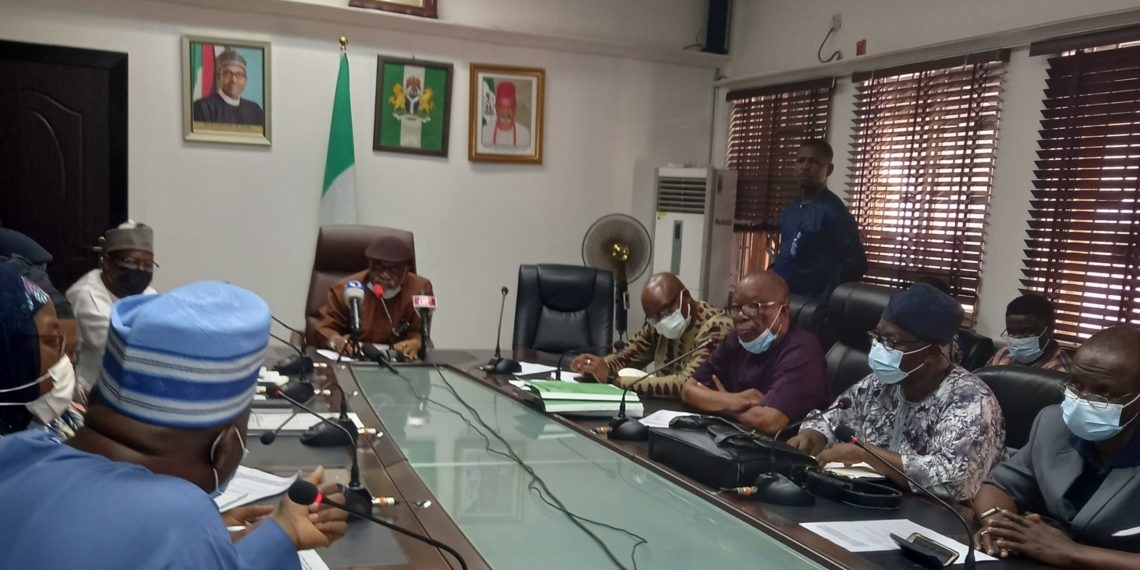
The Federal Government has approved a 25% pay increase for lecturers in all federal institutions, marking a departure from its previous stance of not raising their pay.

The decision was communicated in a circular marked: OAuGF/ SW/C/QP/1395/VOL.1/11, and dated September 21, 2023, which was issued by the office of the Auditor General of the Federation to Polytechnics and Colleges of Education.

The Auditor General said the implementation was approved by the Presidential Committee on Salaries at its 13th meeting. This is coming after the salaries of professors were raised by 35%.

The circular said that the decision was taken after taking into consideration various stages of collective bargaining.

The upward review of salaries of lecturers, professors, and academic staff has been an integral part of demands by the Academic Staff Union of Universities (ASUU), leading to repeated industrial strikes.

This circular followed a letter from the Chairman of the National Salaries, Incomes, and Wages Commission (NSIWC) dated September 14, 2023. The letter was addressed to the Minister of Education, Tahir Mamman, and conveyed the government’s decision to raise the salaries of workers in federal government institutions, including the 25% pay raise for lecturers.

According to the letter, which was signed by Ekpo Nta, Chairman of the Commission, the 23.5% earlier approved was increased to 25%.

In the letter, Nta expressed satisfaction with the positive outcomes achieved through informal discussions with the Minister. It conveyed the Commission’s commitment to supporting the Minister’s efforts to revamp the education sector. The letter also included additional circulars related to the four salary structures in universities, polytechnics, and colleges of education.

The decision seems to have brought a reprieve to the contention between the federal government and ASUU regarding the salaries of federal university lecturers.

Former Minister of Education, Adamu Adamu, had previously maintained that the Federal Government could only manage a 23.5% salary increase for all employee categories in federal universities. However, individuals in the professorial cadre were approved to receive a higher increase of 35% in their salaries.

Adamu, who initiated the controversial no work no pay policy, said last year that “A sum of N150 billion shall be provided for in the 2023 Budget as funds for the revitalization of federal universities, to be disbursed to the institutions in the first quarter of the year,” and “That a sum of N50 billion shall be provided for in the 2023 Budget for the payment of outstanding areas of earned academic allowances, to be paid in the first quarter of the year.”

But ASUU reiterated its stance that it will not accept any salary increase proposed by the Federal Government without subjecting it to collective bargaining in accordance with labor law provisions.

Do Not Turn Mohbad’s Wake Keep Procession Into Protest.

0

I love Mohbad and I miss him. I am personally pained by his death and I have shown how much pained I am by his death publicly and privately and I have constantly written about it. In fact, I am involved in some of the legal processes that have been instituted in avenging his death but this won’t stop us from calling out what appears to be wrong.

His death has become national news and different states in Nigeria have organized a wake service for him. Even Nigerians in the diaspora have honored his memory by organizing wake-keeping for him in different parts of the world but some of you are now doing too much. Some of you are hell-bent on turning an honorable course into a dishonorable one. 

Yesterday, Lagos residents organized a procession for the late Mohbad and after the procession, some of the attendees decided to move to the Lekki toll gate which is over 25 kilometers from the venue where the procession took place. Instead of dispersing to their various destinations, they decided to move to the toll gate and camped there even when the organizers publicly announced that everyone should go home and that the procession was over. 

The procession ended by 8 pm but some mischief makers moved to the Lekki toll gate and camped there until almost midnight when they were forced out by security agencies. They camped at the toll gate for hours and started constituting a nuisance and the police and other security agencies after numerous failed attempts to peacefully and civilly disperse them shot some tear gas into the air. This caused a stampede and many people sustained injuries hence the public outcry all over the social media last night that the police are beginning to attack citizens again.

People should know that Mohbad wake keep procession is not a protest; it is not a protest in any form, not even a peaceful protest, it is a wake-keeping in honor of his demise and the government will never allow mischief makers who have ill agenda and want to use this as another avenue to cause another national unrest and chaos. The government of Lagos state and the federal government is yet to recover from the Lekki toll gate protest of 2020 and the economic and public havoc that caused will never be forgotten in hurry hence why the government will never allow this procession to be hijacked and turned into a protest that will lead to loss of lives and properties. The security agencies will use any means necessary to make sure that the incident of October 2020 never repeats itself again. 

Please in honor of Mohbad’s memory and for your own safety, after every procession, it is better to disperse to your different residences so that this honorable cause will not be turned into a dishonorable event that will pitch the government against the citizens again. If it becomes chaotic, the government will declare curfew and put a stop to every other procession. 

Nigeria’s Finance Minister Statement on “Liquidity” And Saving the Naira

0

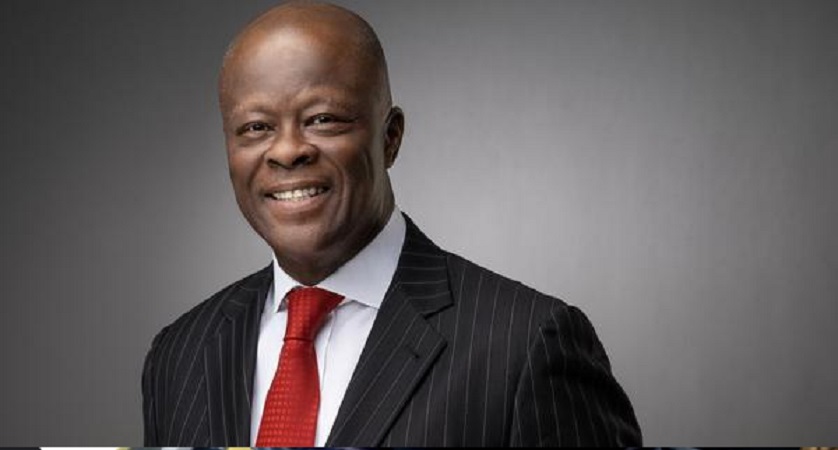
Nigeria’s Finance Minister, Wale Edun, has “said up to $6.8 billion of overdue forward payments in the foreign exchange market need to be addressed before the naira stabilizes”. He dropped the key words: “The issue we have now is that the market is not liquid enough”. Recall my position when the nation floated the currency. I posited that floating Naira without working for parity on demand and supply of US dollars is hopeless in saving Naira.

Nigeria’s Finance Minister, Adebayo Olawale Edun, has attributed the naira’s abysmal decline to the approximately $6.8 billion in overdue forward payments in the foreign exchange market, emphasizing that addressing this issue is crucial for the stabilization of the local currency.

According to Bloomberg, Edun stated that resolving these outstanding contracts would not only strengthen the naira but also facilitate additional foreign exchange inflows.

The naira’s decline has been attributed to the illiquidity across Nigeria’s FX markets – especially in the Investor & Exporter window. The naira reportedly reached the N1,000/$1 threshold in the parallel market on Thursday, as supplies from the central bank to the FX market tanks amid rising demand.

This is a vicious circle when you see that the new official rate (import export window, ~ N785/$) is now far away from the black market (N980/$) demonstrating a highly imperfect market, cushioned on the asymmetry and imbalances on demand and supply positions.

Expect the government to re-introduce fuel subsidies (directly, no backdoor) even as it brings a quasi-official FX rate back (outside the IE window). In June 2023, I wrote: “In his O’ Level textbook on economics, AO Lawal explained demand and supply and the movement of price on the demand-supply curve. If I apply what he explained in that book, floating naira with no capacity to earn USD dollars will kill Naira, because there is an asymmetric imbalance on demand and supply of USD in the Willing Buyer, Willing Seller nexus. In other words, two people may each have $100 to sell while twenty people want to buy each $100. If you do not close that number to near parity, the equilibrium point will keep shifting and I do not see how Naira will stabilize because demand outweighs supply here”

That imbalance is that $6.8 billion Mr Edun is talking about. Until we fix it, no better days for Naira.

Comment on Feed

Comment 1: It’s still basic demand and supply.
How can we have more supply of dollars? Earn it!
How can you earn it? Export more!

How can you export more? Start from commercial agric through state-led farm settlements(ekiti has a big one in Orin-ekiti built in the 80s just sitting there wasting away).

Also, fix your power generation and distribution.
Improve the rail capacity to transport goods across the country.

When the teeming youth population is gainfully employed in jobs, and goods are being exported, we won’t even talk about the exchange rate.

Also, the dollarization of the economy is illegal. Enforce this and see the demand for dollar decrease.

Economic nationalism must be the chosen ideology. Nigeria must aim for self-sufficiency(autarky).

Nigeria’s Finance Minister, Wale Edun, Blames Forex Crisis on $6.8bn Overdue Forward Payment

0

Nigeria’s Finance Minister, Adebayo Olawale Edun, has attributed the naira’s abysmal decline to the approximately $6.8 billion in overdue forward payments in the foreign exchange market, emphasizing that addressing this issue is crucial for the stabilization of the local currency.

According to Bloomberg, Edun stated that resolving these outstanding contracts would not only strengthen the naira but also facilitate additional foreign exchange inflows.

The naira’s decline has been attributed to the illiquidity across Nigeria’s FX markets – especially in the Investor & Exporter window. The naira reportedly reached the N1,000/$1 threshold in the parallel market on Thursday, as supplies from the central bank to the FX market tanks amid rising demand.

“The issue we have now is that the market is not liquid enough. We are committed to encouraging liquidity based on reforms that have been made at the moment, on the fiscal side and the monetary side. And together with the restoration of trust and confidence, we think the FX flows will return,” Edun, who accompanied President Bola Tinubu to New York for the United Nations General Assembly, was quoted as saying in an interview there.

The FX illiquidity backdrop, which has culminated in a huge economic crisis for Nigeria over the years, has defied attempts by President Bola Tinubu’s administration to address it. Reform policies such as the removal of fuel subsidy and the floating of the naira, have instead seen the embattled currency crumble further in the FX market.

The impact is loudly evident in Nigeria’s inability to fulfill its international financial obligations that require foreign exchange. Nigeria has about $7 billion backlog in FX obligations to clear with insufficient dollar inflow.

Last year, Emirates Airlines suspended its operation in Nigeria due to its inability to repatriate over $80 million in trapped revenue.

The situation stands in the way of FDIs (foreign direct investments) and PDIs (portfolio direct investments). Economists said that investors are being spooked by the lax macroeconomic framework spearheaded by the FX crisis.

So far, efforts by the federal government, such as the $3bn emergency loan the Nigerian National Petroleum Company Limited secured from Afreximbank, have failed to boost FX liquidity.

Recently, the situation has been compounded by the inactivity of the central bank, which, besides halting FX supplies to the market, has postponed its Monetary Policy Committee (MPC) meeting scheduled for September 25-26, where it’s expected to further raise interest rate to tame rising inflation.

The central bank’s inactivity is attributed to the wait for the confirmation of the newly-appointed CBN governor, Olayemi Cardoso, which has led to the resignation of the acting governor and four deputy governors.

The gap in decision-making created by this development has impacted the CBN’s supply to the FX market, opening an N230 exchange rate gap between the parallel market and the I&E window, which has been relatively stable at N770/$1.

Edun said the solution is to boost FX supply by sustaining and improving the reforms.

“The commitment is to maintain the existing reforms and improving them, improving the FX market further so the gap narrows. Looking at all options for boosting supply so the one-way bet of speculators that we are seeing at the moment is reversed,” the finance minister said.