DD
MM
YYYY

PAGES

DD
MM
YYYY

spot_img

PAGES

Home Blog Page 3779

ORDI Coin Dips While Dogecoin (DOGE) Increases in TVL Amidst Price Volatility— Pullix (PLX) is Anticipated To Rally Up Massively After It’s Launch

0

In the middle of heightened uncertainty for ORDI, the cryptocurrency has continued to lose value as it trades below critical levels in a bearish state. As this poses ORDI coin as a struggling crypto at the moment, Dogecoin refuses to receive similar attention amid heightened price volatility.

While Dogecoin price faces a series of fluctuations, the rate of buying and selling activity keeps surging. In the meantime, Pullix is showing so much potential to become the best crypto to invest in, as it accumulates impressive presale stats.

ORDI Coin Loses Momentum As It Brews Uncertainty Among Users

The scheduled ORDI upgrade on January 6, 2024, prompted a temporary halt in token activities, causing a brief spike in ORDI’s price to $77.00. However, the excitement was short-lived.

By January 29, ORDI started trading at $61.00, reflecting a 10% increase within 24 hours. Market experts made an observation that signaling a bearish trend as ORDI struggles below key moving averages, facing resistance at $65.00.

ORDI is currently losing momentum and causing uncertainty among its users as the coin is pricing way below its support level of $57.72, losing 8.37% of its value in the past seven days. Overall, ORDI crypto appears bearish, making Ordi’s growth uncertain based on the aforementioned analysis.

Pullix (PLX) Unveils Innovative Features and Profitable Prospects

Boasting a considerable user base exceeding 15,000 individuals, Pullix (PLX) has garnered significant attention, fostering widespread user engagement. With recently introduced features, such as the innovative Profit Share Model offering a distinctive incentive structure, investors are showing heightened interest in Pullix.

Emerging as the first ever novel hybrid cryptocurrency platform, Pullix takes the lead in amalgamating DeFi and CeFi elements to address liquidity challenges in both decentralized finance and exchange markets. Set to launch in a few weeks, Pullix emerges as the best crypto to invest in this year, anticipating a potential surge in its price.

Notably, Pullix proactively reinforces the stability of its native token (PLX) by allocating a substantial portion of the platform’s profits, ranging from 10% to 30%, to support this altcoin.

Given its robust statistics and promising prospects, Pullix stands out as a strong candidate for the best crypto investment this year. Currently in its seventh stage presale at $0.1, it has successfully raised over $4.9 million as it progresses into its final presale stage.

Dogecoin (DOGE) Increases In Trading Volume Despite High Price Fluctuations

Currently, Dogecoin is priced at a weekly range of $0.078 to $0.8 and has been moving sideways for the past two weeks, stuck in a narrow range between $0.077 and $0.081.

Bulls have solidified support at the lower end of this range since January 23, sparking optimism among investors who see this consolidation as a potential setup for the next upward move of Dogecoin.

With the highest point at $0.09, a clear breakthrough could lead Dogecoin back to its peak in early December. One very significant factor that might propel this reality is the trading volume of Dogecoin which has increased by 71.68% to a new high of $264 million.

In summary, Dogecoin price is experiencing a turbulent phase, awaiting a significant catalyst to break free from the current sideways trend.


For more information regarding Pullix’s presale see links below:

Visit Pullix

Join The Pullix Communities

ChatGPT’s OpenAI Hits $2 Billion Revenue Milestone

0

Report from the Financial Times has revealed that the revenue of ChatGPT maker, OpenAI, has hit a remarkable $2 billion in revenue.

The company is reported to have expressed optimism to double this figure in 2025, following strong interest from business customers seeking to use its technology to adopt generative AI tools in the workplace.

OpenAI annualized revenue topped $1.6 billion in December based on strong growth from its chatbot, ChatGPT, up from $1.3 billion as of mid-October last year. The 20% growth over two months represented in that figure a measure of the prior month’s revenue multiplied by 12-suggests that the company was able to hold onto its business momentum in selling artificial intelligence to enterprises despite a leadership crisis in November that provided an opening for rivals to go after its customers.

The remarkable growth has put OpenAI among a handful of Silicon Valley companies such as Google and Meta, that have posted revenues of $1 billion within a decade of being founded.

According to Altman, the company is currently developing a form of agent software to automate complex tasks by effectively taking over a customer’s device. The customer could then ask the ChatGPT agent to transfer data from a document to a spreadsheet for analysis, for instance, or to automatically fill out expense reports and enter them in accounting software.

Those kinds of requests would trigger the agent to perform the clicks, and cursor movements, document to a spreadsheet for analysis, for instance, or automatically fill out expense reports and enter them in accounting software.

According to Altman, he disclosed that 92 percent of Fortune 500 companies were using OpenAI products, including ChatGPT and its underlying AI model GPT-4, as of November last year, while the chatbot has 100mn weekly users, as Consumer and business interest in generative Al system has skyrocketed.

OpenAI’s Meteoric Rise

OpenAI’s generative artificial intelligence (AI) platform ChatGPT has no doubt recorded significant growth since its launch after it crossed more than 100 million monthly active users two months after launch to become the fastest-growing consumer application in history.

The chatbot has gained widespread usage over its remarkable ability to provide users with vital responses to their queries, which has to some extent simplified tasks.

Notably, the OpenAI subscription model is one of the biggest drivers boosting its revenue growth. Before rolling out its premium ChatGPT Plus model, which costs $20 per month, the platform was generating $28 million in annual revenue. In addition to deriving income from ChatGPT, OpenAI also generates revenue by offering application programming interface (API) access to its AI models.

ChatGPT’s triumph, which prompted substantial investments in artificial intelligence from major technology companies and other sectors, is expected to lead OpenAI to profitability.

As the startup scales its operations, venture capital firms are investing funds into the company, these include Sequoia Capital, Thrive Capital, K2 Global, and Andreessen Horowitz.

Fraudulent Marketing and Market Manipulation Allegedly Evident on Terraform Lawsuit, as Heidelberger Druckmaschinen reports profit decline

0

The Seoul Central District Prosecutors’ Office announced on Thursday that it has indicted Shin Hyun-Seung the former chief financial officer of Terraform Labs, a blockchain company behind the Terra stablecoin project, on charges of violating the Act on the Regulation of Conducting Fund-Raising Business Without Permission.

According to the prosecution, Han is accused of conducting a fraudulent marketing campaign for Terraform Labs’ initial coin offering (ICO) in 2018, which raised about 32 billion won ($27 million) from more than 15,000 investors. The prosecution claims that Lee misled investors by exaggerating the potential and profitability of the Terra project, as well as concealing the risks and uncertainties involved.

On Monday, a former Terra developer testified that executive members of Terraform Labs were aware the Terra stablecoin could not be used for payments due to local regulations, during Monday’s trial of former Terra members in Seoul. Terra co-founder Shin Hyun-Seung, who was present at the trial, argued that regulators had not established a clear stance on using cryptocurrency as a payment method.

The prosecution also alleges that Han used a fake identity and a foreign bank account to evade the authorities and avoid legal responsibility. Han left Terraform Labs in 2019 and has been on the run since then. He was arrested in January this year after being extradited from Montenegro.

South Korean authorities took former Terraform Labs Chief Financial Officer Han Chang-joon into custody on Thursday for earning 53.6 billion Korean won ($40 million) in unfair profits from the allegedly fraudulent marketing of the Terra stablecoin, according to local news reports.

Han’s indictment is the first case of a criminal prosecution against a major player in the Korean crypto industry, which has been under intense scrutiny and regulation by the government. The prosecution said that it will continue to crack down on illegal and fraudulent activities related to cryptocurrencies and ICOs, which pose a threat to the financial system and harm the public interest.

Do Kwon awaits extradition decision.

Do Kwon, the co-founder and CEO of Terraform Labs, is currently in custody in Singapore as he awaits a decision on his extradition to the United States. Kwon is facing charges of securities fraud, wire fraud, and money laundering for his role in the alleged $150 million Terra stablecoin scheme.

According to the indictment, Kwon and his co-conspirators deceived investors and regulators by falsely claiming that Terra tokens were fully backed by fiat reserves and audited by reputable firms. In reality, the defendants allegedly used a portion of the funds raised from the initial coin offering (ICO) to manipulate the price of Terra tokens and enrich themselves.

The U.S. Department of Justice (DOJ) announced the arrest of Kwon on January 25, 2024, after a joint investigation by the Federal Bureau of Investigation (FBI) and the Securities and Exchange Commission (SEC). The DOJ also issued a warrant for the arrest of Daniel Shin, the other co-founder of Terraform Labs, who remains at large.

Kwon’s extradition hearing is scheduled for February 15, 2024, at the Singapore High Court. If extradited, he faces up to 20 years in prison for each count of fraud and up to 10 years for money laundering. Kwon has denied any wrongdoing and has hired a team of lawyers to fight his case.

The Terra stablecoin project was launched in 2018 as a blockchain-based platform that aims to create a global payment system powered by algorithmic stablecoins. The project claims to have over 2.5 million users and more than $10 billion in transaction volume. However, the project has been under scrutiny by regulators and law enforcement agencies since last year, when several reports exposed its dubious practices and lack of transparency.

Heidelberger Druckmaschinen reports profit decline

Meanwhile, German engineering company Heidelberger Druckmaschinen AG (HDM) has announced a decline in its net profit for the third quarter of fiscal year 2023/24.

The company, which specializes in printing and packaging solutions, reported a net profit of 12 million euros, down from 18 million euros in the same period last year. The company attributed the decline to lower sales volumes, higher raw material costs and unfavorable exchange rate effects.

HDM’s revenue for the third quarter was 533 million euros, a decrease of 6% compared to the previous year. The company’s operating profit (EBITDA) was 36 million euros, down from 46 million euros in the same quarter last year. The company’s EBITDA margin was 6.8%, compared to 8.3% in the prior year period.

The company said that it faced challenging market conditions due to the ongoing COVID-19 pandemic, which affected the demand for its products and services. The company also said that it implemented various measures to reduce costs and improve efficiency, such as streamlining its product portfolio, optimizing its production network and increasing its digitalization efforts.

HDM’s CEO Rainer Hundsdörfer said that the company was confident that it would achieve its full-year targets despite the difficult environment. He said that the company expected a moderate recovery in the fourth quarter, driven by higher order intake and improved customer sentiment.

He also said that the company was well-positioned to benefit from the long-term trends in the printing and packaging industry, such as sustainability, personalization and e-commerce.

According to a report by Market Research Future, HDM is one of the leading players in the global printing machinery market, with a market share of around 15%. The report forecasts that the market will grow at a compound annual growth rate (CAGR) of 4.1% from 2019 to 2025, reaching a value of 25.8 billion US dollars by the end of the forecast period.

The report identifies HDM as one of the key innovators in the market, offering advanced technologies and solutions for various printing applications.

HDM’s full-year guidance for fiscal year 2023/24 remains unchanged. The company expects to generate revenue of between 2.1 billion and 2.2 billion euros, and an EBITDA margin of between 6% and 7%. The company also expects to achieve a positive free cash flow and a net debt reduction of at least 100 million euros.

Dollar supply drops by 6.13%, Pushing naira down to N1,479.47/$1 in NAFEM

0

Nigeria’s foreign exchange (FX) market witnessed a downturn as the Naira depreciated against the dollar on Thursday, compounding its downward spiral that has put the nation’s economy on the edge.

The decline followed a reduction in FX sales by banks, with the volume of dollars exchanged between banks and willing buyers and sellers dropping by 6.13 percent to $321.23 million compared to the previous day’s $342.22 million.

Data from the Financial Markets Dealers Quotations (FMDQ) revealed that the Naira fell by 4.10 percent, with the dollar quoted at N1,479.47 on Thursday, weaker than the N1,418.78 recorded on Wednesday at the Nigerian Autonomous Foreign Exchange Market (NAFEM).

The intraday high closed at N1,504 per dollar, slightly stronger than Wednesday’s N1,510, while the intraday low weakened to N946.82 per dollar, down from N896.28/$1 on Wednesday.

In the money market, the Nigerian Treasury Bills (NT-Bills) secondary market experienced a negative trend, marked by an increase in average yields across the curve. FSDH Research reported a significant surge in the average yield by 261 basis points (bps) to reach 14.99 percent, compared to the previous day’s 12.38 percent.

Short-term and medium-term maturities saw notable expansions of 572 bps and 509 bps, respectively, while long-term maturities witnessed a slight decline of 11 bps. The NTB for March 7, 2024 maturity bill experienced heavy selling pressure (+634 bps), whereas buying interest was observed on the NTB for August 8, 2024 (-53 bps).

Simultaneously, the Central Bank of Nigeria (CBN) conducted its scheduled Primary Market Auction on February 7, issuing NT-Bills valued at N1,000.00 billion across varying tenors. Despite higher stop rates, the auction saw robust demand, with bid-to-cover ratios settling at 0.20x (91-day), 0.38x (182-day), and 3.11x (364-day), indicating strong investor appetite.

In the Open Market Operations (OMO) bills market, there was a slight positive sentiment as the average yield across the curve dipped by 1 basis point to close at 10.07 percent. Long-term maturities also saw a marginal decline of 1 basis point, with mild buying interest noted on the OMO 10-December 2024 maturity bill.

These developments underpin the continuous volatility of Nigeria’s debt market, creating doubts for investors as the fluctuations dampen economic growth. However, the high demand observed at the Primary Market Auction despite higher stop rates suggests that investors remain interested in Nigerian debt instruments, albeit amidst the challenges posed by the FX market and other economic factors.

The fluctuations in the Naira exchange rate and the surge in average yields on NT-Bills, which reflect the ongoing volatility and uncertainties in Nigeria’s financial sector, highlight the ineffectiveness of the government’s approach in addressing the concerns.

The CBN has rolled of out a series of new policies geared toward boosting the performance of the naira in the FX market recently. The policies, accompanied by an assurance from the central bank governor Yemi Cardoso that inflation, currently sitting at over 28%, will drop to 21% in 2024, have failed to show any signs of mitigating the FX challenges.

The CBN announced that it has cleared about $3 billion in FX forwards backlog, which has been fingered as the major instigator of the naira’s weakness in the foreign exchange market. With no positive impact from these efforts, Nigerians have expressed concern that clearing all the backlogs in FX forward obligations may not be the answer to the urgently needed succor to the naira’s depreciation.

This Is How You Get Your Money When You Mistakenly Send Money To Someone in Nigeria

0

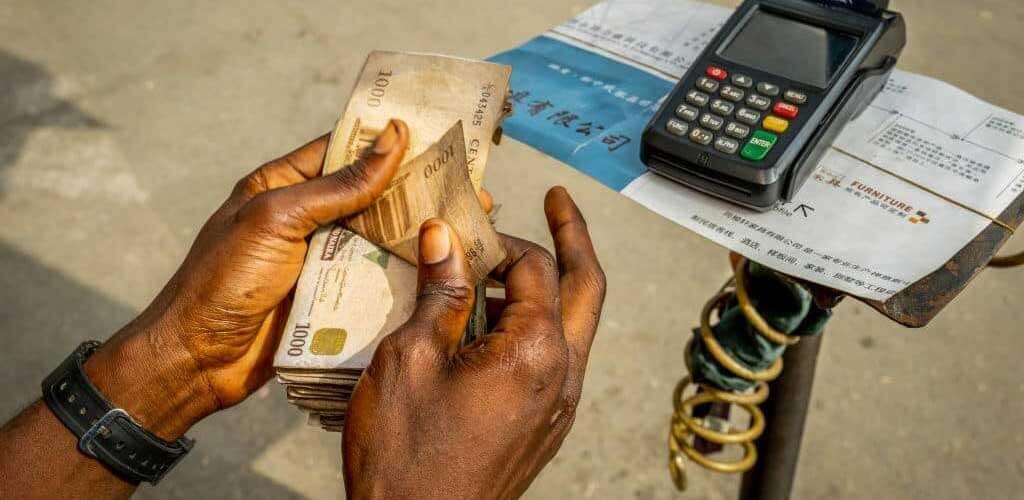
Have you tried transferring money to someone and you mistakenly mixed up the account digits and you ended up sending money to someone else whom you do not even know?

Well, I found myself in that situation yesterday when I wanted to transfer money to my staff and I mixed up the digits and I ended up transferring money to a total stranger. That got me thinking about what laws/ regulations have been put in place to cater for situations such as this. 

The Central Bank of Nigeria definitely knows that human beings are prone to error, so the chances of making mistakes during electronic transfers are high. They therefore introduced a Regulation for Instant Electronic Transfer Funds (EFT) Services in Nigeria in September 2018. This regulation of the CBN captured every error or mistake that could occur during electronic money transfer and they issued guidelines/ procedures on how affected persons; ie persons who made some mistake during electronic money transfer like sending the above figure and want a refund or sending money in error to other persons and want a refund or a failed transfer and want a reversal etc. 

According to this CBN guidelines, when a person mistakenly sends money to another person, the apex bank suggests that if the sender knows the receiver or can find out who the receiver of that erroneous transfer is, the sender should reach out to that recipient and negotiate for the refund but if the beneficiary is unknown to the sender, the sender should quickly contact his bank (which is the sending entity) and make a complaint of the erroneous transfer and the Sending Entity having received the complaint from the Customer will notify the receiver’s bank which is the Receiving Entity. Upon the notification, the Regulation provides that the Receiving Entity i.e. the receiver’s bank should immediately place a lien on the said amount in the account of the beneficiary and thereafter obtain the consent of the beneficiary to execute a refund back to the sender.

I have also heard of scenarios where a receiver of an erroneous transfer, with criminal intent, quickly withdraws all the money from his account and empties his account so that a reversal cannot be executed by his bank. The CBN in its wisdom also covered this ground in their regulatory guideline. The guideline also provides that when the funds are no longer available in the receiver’s account, the receiver’s bank should immediately notify its Customer about the transaction. The Receiving Entity is also legally obligated to charge the customer to fund the account so that the reversal can be executed and they are to also notify the Customer about the consequences of not funding the account within 24 hours, which is the attraction of sanctions and reporting the customer to the law enforcement agencies.

So according to the 2018 CBN regulatory guidelines on Electronic money transfer, if you erroneously transfer money to the wrong person, you are to reach out to the person (if that is possible) and negotiate your refund with the person but if it won’t be possible for you to reach out to the receiver, quickly contact your bank and lay the complaints with the prove of the transaction, your bank will then contact the receiver’s bank (when the receiver uses a different bank from the sender), the receiver’s bank will then execute a refund back to the sender with the consent of the receiver. 

No doubt that it is not as easy as written here, it takes days, time and a lot of back and forth for all these to be executed but these are the statutory steps to be taken when you find yourself in such a situation and you want your money back.