DD
MM
YYYY

PAGES

DD
MM
YYYY

spot_img

PAGES

Home Blog Page 3788

Welcome Learners to Tekedia Mini-MBA Edition 12

0

Good People, welcome again to Tekedia Mini-MBA edition 12. We remain thankful that you choose us to deepen your business and entrepreneurial knowledge. Thank you!

If you have any challenges, let us know; our support team is the best in the world of education with 24/7 support. They are there to provide non-academic support. For the academic ones, use our Comment section, in the class board, and our Faculty members are always available.

Over the next 12 weeks, we will be solving the equations of markets across 12 modules (strategy, law, marketing, operations, technology, etc), covering more than 100 courses:

  • 1. Innovation = Invention + Commercialization
  • 2. Great Company = Awesome Products + Superior Execution
  • 3. Business Momentum = Business Size X Growth Rate
  • Etc . Etc.

You have already seen some of these equations in the 50+ page Week 1 written material. We believe that business could be mastered in the same way we can understand natural philosophy. That is why, together, we will unravel the mechanics of business systems. Get ready for the physics of markets and the mathematics of business success!

The first LIVE lecture begins on Saturday and I will be leading it on Zoom.

Sat, Sept 16| 7pm-8.30pm WAT | Innovation, Growth and the Grand Mission of Companies – Ndubuisi Ekekwe | Zoom link in the Board.

Welcome to the #best school; we continue to receive registrations in case your friends want to join. Tell them to use this link .

  • Ndubuisi Ekekwe, MBA, PhD (Engineering), PhD (Banking / Finance)
  • Professor and Lead Faculty
  • Tekedia Institute

What Is A Zero-Knowledge Proof Technology?

0

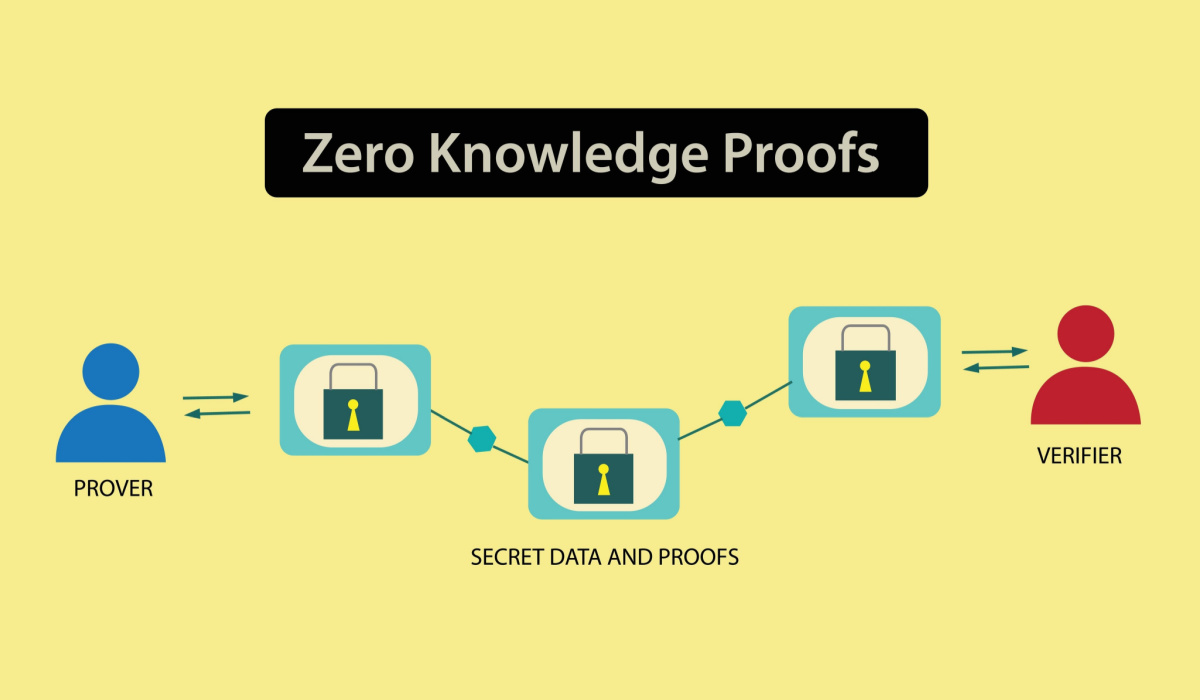
Zero-knowledge proof technology is a fascinating and powerful cryptographic technique that allows one party (the prover) to convince another party (the verifier) that a certain statement is true, without revealing any information beyond the validity of the statement itself. This may sound like magic, but it is based on rigorous mathematical principles and clever protocols that exploit the properties of randomness, encryption, and hashing.

One of the main benefits of zero-knowledge proof technology is that it enhances the security and privacy of data and transactions. For example, in a blockchain network, zero-knowledge proof technology can enable users to verify transactions without exposing their identities or the details of their transactions. This can prevent fraud, identity theft, and censorship, while also preserving the anonymity and confidentiality of the users.

Another benefit of zero-knowledge proof technology is that it reduces the computational and storage costs of verification. For example, in a cloud computing scenario, zero-knowledge proof technology can allow a client to prove to a server that they have performed a certain computation correctly, without sending the input or output data to the server. This can save bandwidth, storage space, and processing power, while also ensuring the correctness and integrity of the computation.

Zero-knowledge proof technology is important because it enables trustless and efficient verification of information and actions, without compromising security and privacy. It can also enable new forms of decentralized and distributed systems, where users can interact with each other without relying on intermediaries or authorities. Zero-knowledge proof technology is a key enabler of innovation and progress in the digital world.

In general, zero-knowledge proofs can enable more efficient, scalable, and transparent solutions that respect the privacy and sovereignty of individuals and organizations.

There are different types of zero-knowledge proofs, such as interactive, non-interactive, succinct, and zk-SNARKs. However, they all share some common features and steps. Here is a simplified overview of how a generic zero-knowledge proof works:

  1. The prover and the verifier agree on a common statement to be proved, such as “I know the secret word to open the magic door in the cave”.

  2. The prover and the verifier also agree on a common protocol to execute the proof, such as “The prover will enter the cave from one side and exit from the other side after opening the door with the secret word”.

  3. The prover generates some random inputs or secrets that are related to the statement, such as “The prover will choose either path A or B randomly before entering the cave”.

  4. The prover uses these inputs or secrets to compute some outputs or commitments that are sent to the verifier, such as “The prover will send a hash of the chosen path to the verifier”.

  5. The verifier challenges the prover by asking some questions or requests that are based on randomness, such as “The verifier will ask the prover to exit from either path A or B randomly”.

  6. The prover responds to the verifier by revealing some information or evidence that satisfies the challenge, such as “The prover will exit from the requested path after opening the door with the secret word”.

  7. The verifier verifies the response by checking whether it is consistent with the output or commitment and whether it follows the protocol, such as “The verifier will check whether the hash of the exit path matches the one sent by the prover and whether the prover could have opened the door without knowing the secret word”.

  8. The verifier accepts or rejects the proof based on whether it passes or fails the verification.

The key idea behind zero-knowledge proofs is that they rely on repeated rounds of interaction between the prover and the verifier, where each round involves some random elements that make it hard for the prover to cheat or for the verifier to learn anything. By increasing the number of rounds, the probability of a successful proof becomes higher and higher, while the probability of a false proof becomes lower and lower.

Zero-knowledge proof technology is not just a theoretical concept; it is already being used in practice by various projects and platforms. Here are some examples of zero-knowledge proof technology in action:

Zcash: Zcash is a cryptocurrency that uses zero-knowledge proofs (specifically zk-SNARKs) to enable private and anonymous transactions on a public blockchain. Zcash transactions hide the sender, receiver, and amount of each transaction, while still allowing anyone to verify their validity.

NuCypher: NuCypher is a network that provides encryption and access control services for decentralized applications. NuCypher uses zero-knowledge proofs (specifically zk-SNARKs) to enable provable delegation of decryption rights, meaning that users can grant access to their encrypted data without revealing their keys or data.

QEDIT: QEDIT is a platform that enables enterprises to collaborate on sensitive data without compromising their privacy or security. QEDIT uses zero-knowledge proofs (specifically zk-STARKs) to allow parties to verify each other’s data without disclosing it, such as proving creditworthiness, identity, or compliance.

One of the main challenges of ZKP technology is its complexity and cost. ZKP protocols require sophisticated mathematical techniques and algorithms that are not easy to understand or implement. Moreover, ZKP protocols often involve a lot of computation and communication between the prover and the verifier, which can increase the time and resources needed to execute them. For instance, some ZKP protocols require the prover to generate a large number of random challenges and responses, which can be computationally intensive and expensive.

Another issue of ZKP technology is its scalability and efficiency. ZKP protocols are usually designed for specific statements or problems, which means that they may not be suitable for general or dynamic scenarios. For example, a ZKP protocol that proves the validity of a transaction may not be able to prove the validity of multiple transactions or complex smart contracts.

Moreover, ZKP protocols may not be compatible with existing systems or standards, which can limit their interoperability and integration. For instance, a ZKP protocol that uses a different cryptographic hash function than the one used by a blockchain network may not be able to interact with it.

A third drawback of ZKP technology is its trust and security. ZKP protocols rely on certain assumptions and parameters that need to be agreed upon by both parties. However, these assumptions and parameters may not be verifiable or auditable by external parties, which can raise questions about their validity and reliability. For example, a ZKP protocol may assume that the prover has access to a secret information that is hard to guess or compute, but this assumption may not be true or provable.

Furthermore, ZKP protocols may be vulnerable to attacks or errors that can compromise their soundness or completeness. For example, a ZKP protocol may be fooled by a malicious prover who can generate a fake proof or exploit a flaw in the protocol.

Coinbase Cloud integrates Kiln platform for Native ETH Staking

0

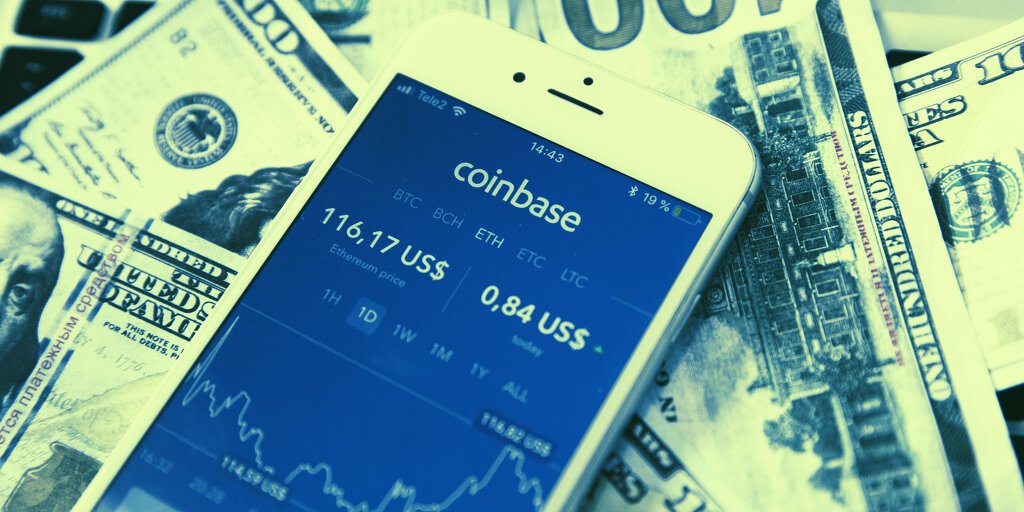
Coinbase Cloud, the cloud-based service provider of Coinbase, has announced a new partnership with Kiln, a platform that enables users to stake Ethereum (ETH) without running their own nodes. The integration will allow Coinbase Cloud customers to stake any amount of ETH below the 32 ETH threshold required for solo staking on Ethereum 2.0.

Staking is the process of locking up a certain amount of cryptocurrency in order to participate in the network’s consensus mechanism and earn rewards. Staking on Ethereum 2.0 is expected to provide higher returns and lower risks than traditional mining, as well as contribute to the network’s security and scalability.

Validators are randomly selected to propose and attest to blocks, and they receive rewards for their service. However, they also face penalties if they act maliciously or go offline. Staking on Ethereum 2.0 requires a minimum of 32 ETH per validator, and it involves some technical knowledge and responsibility.

However, staking on Ethereum 2.0 also comes with some challenges, such as the need to run a dedicated node that is online and synced at all times, the risk of losing funds due to slashing or downtime penalties, and the high entry barrier of 32 ETH (currently worth over $100,000).

Kiln aims to solve these challenges by offering a user-friendly and secure platform that allows anyone to stake ETH with just a few clicks. Kiln leverages the power of decentralized cloud computing to run validator nodes on behalf of its users, ensuring high uptime and performance. Kiln also provides a dashboard that lets users monitor their staking performance, rewards, and fees.

By integrating Kiln into its cloud service, Coinbase Cloud enables its customers to access the benefits of staking ETH without having to deal with the technical complexities or the high capital requirements. Coinbase Cloud customers can simply connect their Coinbase account to Kiln and choose how much ETH they want to stake. They can then sit back and watch their ETH earn passive income while supporting the transition to Ethereum 2.0.

Coinbase Cloud is one of the first cloud service providers to offer native ETH staking below 32 ETH, giving its customers a competitive edge in the rapidly growing Ethereum ecosystem. Coinbase Cloud and Kiln share a vision of making Ethereum more accessible and inclusive for everyone, and this partnership is a major step towards achieving that goal.

ETH staking is a way of participating in the Ethereum network and securing its transactions. By staking ETH, you are locking up your funds in a smart contract and validating blocks of transactions. In return, you receive rewards in the form of new ETH. The more ETH you stake, the more rewards you earn.

However, staking ETH on your own requires a minimum of 32 ETH, and It also requires technical skills, hardware, and constant online availability. If you don’t have enough ETH or don’t want to deal with the hassle of running your own node, you can join a staking pool or use a third-party service provider. But these options come with their own drawbacks, such as fees, trust issues, and reduced control over your funds.

That’s why Coinbase Cloud was created. With Coinbase Cloud, you don’t need to run your own node or join a pool. You simply deposit your ETH to your Coinbase Cloud account and start earning rewards. You can also withdraw your ETH at any time, subject to network conditions.

Coinbase Cloud’s ETH staking is powered by its proprietary technology that ensures security, scalability, and reliability. We use secure hardware modules to store your private keys and sign transactions. We also use multiple nodes across different regions to ensure high availability and performance. And we monitor the network 24/7 to detect and mitigate any issues.

By staking ETH on Coinbase Cloud, you can enjoy the following benefits:

Low entry barrier: You can stake any amount of ETH below 32 ETH and start earning rewards immediately.

High returns: You can earn up to 8% annualized rewards on your staked ETH, depending on the network conditions.

No fees: We don’t charge any fees for staking ETH on Coinbase Cloud. You only pay the network fees when you deposit or withdraw your ETH.

Full control: You can withdraw your ETH at any time, subject to network conditions. You can also track your staking balance and rewards on your dashboard.

Security and trust: You can trust Coinbase Cloud to keep your funds safe and secure. We are a regulated and compliant company with over 10 years of experience in the crypto industry.

Staking ETH on Coinbase Cloud also involves some risks that you should be aware of:

Network risk: The Ethereum network is undergoing a major upgrade to Ethereum 2.0, which will transition from proof-of-work to proof-of-stake. This upgrade may cause delays, disruptions, or changes in the staking process and rewards.

Lock-up risk: When you stake ETH on Coinbase Cloud, you are locking up your funds in a smart contract. This means that you cannot access your funds until the network allows withdrawals, which may take months or years.

Slashing risk: If our nodes fail to validate blocks correctly or behave maliciously, they may be penalized by the network and lose some of their staked ETH. This may affect your staking balance and rewards.

Franklin Templeton files for Spot Bitcoin ETF

0

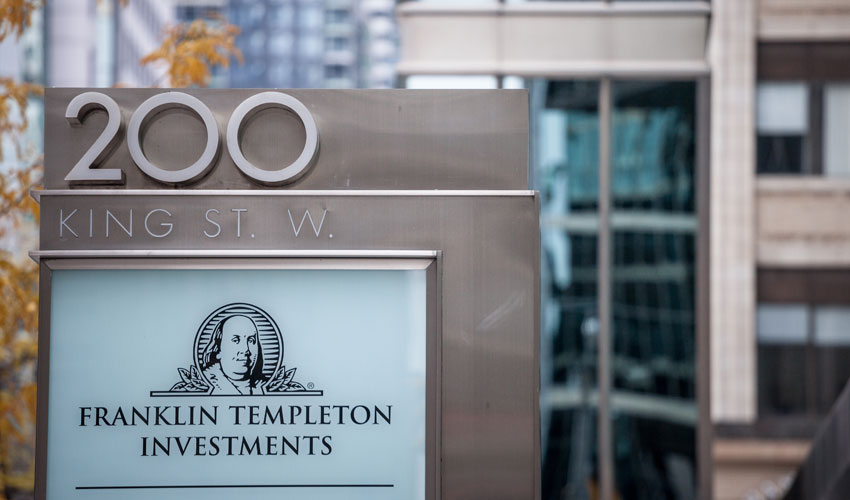
Franklin Templeton, one of the world’s largest asset managers with $1.5 trillion in assets under management, has filed for a spot exchange-traded fund (ETF) that would track the performance of bitcoin.

The fund, named Franklin Templeton Spot Bitcoin ETF, would invest in bitcoin directly through a custodian and would seek to reflect the price movements of the cryptocurrency, according to the filing with the US Securities and Exchange Commission (SEC) on Monday.

The filing comes as the SEC is reviewing several applications for bitcoin ETFs, which are seen as a potential catalyst for wider adoption and institutional demand for the digital asset. So far, the regulator has not approved any bitcoin ETFs in the US, citing concerns over market manipulation, fraud and investor protection.

Franklin Templeton said it believes that its proposed ETF would address some of the SEC’s concerns by providing investors with exposure to bitcoin in a regulated and transparent manner. The fund would use the CF Bitcoin US Settlement Price as its benchmark index, which is calculated by Crypto Facilities Ltd, a subsidiary of Kraken, one of the largest cryptocurrency exchanges.

The CF Bitcoin US Settlement Price is a daily benchmark that reflects the average price of bitcoin transactions across major spot exchanges. It is published by Crypto Facilities, a UK-based crypto derivatives platform that is regulated by the Financial Conduct Authority. Crypto Facilities is also the provider of the CME CF Bitcoin Reference Rate, which is used by the Chicago Mercantile Exchange (CME) to settle its bitcoin futures contracts.

The CF Bitcoin US Settlement Price is calculated using a volume-weighted median of the trade prices on five spot exchanges: Bitstamp, Coinbase, Gemini, itBit, and Kraken. The median is taken from a 12-hour window that spans from 3:00 p.m. to 3:00 a.m. London time. The price is denominated in US dollars and rounded to the nearest cent.

The CF Bitcoin US Settlement Price is important for traders because it determines the final value of the bitcoin futures contracts that are listed on Crypto Facilities and other platforms that use its data. For example, if you buy a bitcoin futures contract that expires on September 30, 2023, you will receive or pay the difference between the contract price and the CF Bitcoin US Settlement Price on that date. This means that you need to monitor the spot market movements and the CF Bitcoin US Settlement Price to manage your risk and profit potential.

The CF Bitcoin US Settlement Price is also used as a reference price for other crypto derivatives products, such as options, swaps, and perpetuals. It provides a reliable and transparent benchmark that reflects the true market value of bitcoin across different venues. By using this price, traders can avoid manipulation, arbitrage, and slippage that may occur on individual exchanges.

The fund would also employ various risk management and security measures, such as using multiple custodians to hold the fund’s bitcoin, conducting regular audits and reviews of the custodians’ operations and security protocols, and implementing policies and procedures to prevent unauthorized access, theft or loss of the fund’s assets. The filing did not disclose the fees, ticker symbol or listing exchange for the fund. Franklin Templeton said it would provide more details in subsequent filings.

The fund would be the first bitcoin ETF sponsored by a major asset manager, which could boost its chances of approval by the SEC. However, it would also face competition from other bitcoin ETFs that have been filed by smaller firms or that use different strategies to gain exposure to the cryptocurrency. For example, some bitcoin ETFs would invest in bitcoin futures contracts instead of spot bitcoin, which could reduce some of the risks and costs associated with holding and storing the digital asset.

Therefore, investors who are interested in investing in a bitcoin ETF should carefully compare the features and benefits of each fund before making a decision.

Apple Unveils iPhone 15 with USB-C Charging Port

0

Apple on Tuesday unveiled its iPhone 15 with a USB-C charging port, bowing to the European Union’s new rule mandating all device makers to switch to the charging port by 2024.

CNBC reported that by the time the event concluded, Apple had already commenced the sale of a USB-C adapter on its website, priced at $29.

This adapter will be essential for iPhone 15 customers who wish to connect their Lightning charging cables, which are used for current iPhones, to their new devices.

The European Union parliament voted to confirm the rule last October. Apple, Samsung, Huawei, and others were expected to change their mobile device charging ports to USB-C before 2024 in Europe to comply with the rules.

Apple said last year that it was ready to comply with the rule by moving from its proprietary Lightning charger cables to the USB-C charging port.

“USB-C has become a universally accepted standard, so we’re bringing it to iPhone,” a presenter said during the Apple launch event Tuesday.

EU officials believe the rule will reduce waste since people will not need to buy a new charger when they purchase a new device.

Besides reducing waste, the EU Commission said last year that multiple ports cost consumers a fortune. The Commission has estimated that a single charger would save about €250m ($247.3 million) for consumers.

The transition to USB-C chargers for the iPhone 15 implies that the old Lightning cables previously used by Apple users will no longer be compatible. However, many individuals already possess the appropriate cables for their laptops, headphones, and other devices. Additionally, Apple is likely to include a compatible cable in the iPhone 15 packaging.

“Although Apple has a huge installed base of lightning cable-powered devices, the ubiquity of USB-C across all consumer electronics products means that harmonizing on USB-C makes perfect sense,” Ben Wood, chief analyst at CCS Insight, said last year while predicting that iPhone 15 will come with the USB-C charger.

The rule will also apply to laptops starting from 2026, providing manufacturers with more time to make the necessary adjustments, although many of them already utilize USB-C.

Following the event on Tuesday, Apple’s shares closed down by more than 1%.

In total, 13 categories of electronic devices are expected to adapt to the rule by 2024.

Apple, which launches its newest iPhone model Tuesday, is doubling down on a pricier strategy as unit sales slow. The iPhone 15 Pro, as well as its watches and AirPods, will come with features ranging from titanium cases to more advanced cameras. The price tags for these devices will also be higher, boosting sales at a time when restricted iPhone use in China threatens to depress revenue, along with slower unit sales globally. Apple’s launch event, to be held in Cupertino, California, begins at 10 a.m. PT on Tuesday.

Qualcomm announced it will continue to supply modems for Apple iPhones — for now. Both the chipmaker and investors had expected Apple to make its own.

iPhone and iPad users are being urged to downloadan emergency software update to fix two security flaws used to install Pegasus spyware.

——–

Apple confirmed at its annual event Tuesday that the iPhone 15 will indeed feature a significant change: a universal USB-C charging port. Still, it’s clear Apple wants to keep its higher-end phones — which have become increasingly important to the company’s bottom line — at center stage. The iPhone 15 Pro and Pro Max are seeing some of the line’s most significant new features, with faster chips, lightweight titanium casing and (on the Pro Max only) a souped-up telephoto camera lens.

  • The iPhone 15 will start at $799, while the iPhone 15 Pro starts at $999, both in line with their predecessors. The iPhone 15 Pro Max will be $1,199 — $100 more than the 14 Pro Max.
  • The Apple Watch Series 9 and new Apple Watch Ultra will also feature faster chips. Both products will be carbon-neutral, and Apple says all of its products will be carbon-neutral by 2030.
  • While most of the new iPhones will be made in China, for the first time, some will also be made in India.

(LinkedIn News).