DD
MM
YYYY

PAGES

DD
MM
YYYY

spot_img

PAGES

Home Blog Page 3790

EFCC Launches Special Task Force to Combat Dollarization of Nigeria’s Economy

0

In response to the alarming escalation of dollarization within Nigeria’s economy, the Economic and Financial Crimes Commission (EFCC) has taken decisive action by establishing a Special Task Force across all its Zonal Commands to checkmate the situation.

This move comes amid growing concerns over the rapid depreciation of the naira, the nation’s currency, in the foreign exchange market, compounded by skyrocketing inflation fueled by soaring petrol costs.

The dire economic situation gripping the nation is underpinned by the precipitous decline of the naira, which in addition to other factors, has pushed inflation to unbearable levels, burdening citizens with exorbitant living expenses.

Recently, protests have erupted in various regions of the country, with Nigerians decrying the ostentatious lifestyles of political leaders who appear indifferent to the plight of the populace.

In an official statement released on Wednesday, the EFCC disclosed its proactive measures to confront the pervasive dollarization phenomenon. Dele Oyewale, the Head of Media and Publicity for EFCC highlighted the agency’s commitment to curbing currency mutilation and the illicit adoption of the dollar as a primary medium of exchange in Nigeria as the naira’s value wanes.

Ola Olukoyede, who represented the Chairman of the EFCC, inaugurated the task force in Abuja, stressing the anti-graft agency’s pivotal role in safeguarding the economy against exploitation, financial leakage, and distortions. Olukoyede reiterated the agency’s dedication to upholding existing laws aimed at preserving the stability and integrity of Nigeria’s financial system.

“We cannot allow our economy to be held hostage by the whims of a few individuals seeking to profit at the expense of the nation’s well-being,” Olukoyede declared.

The EFCC’s proactive stance has already yielded tangible results, with the apprehension of several individuals involved in nefarious activities such as issuing invoices denominated in dollars and engaging in the mutilation of the naira. While specific figures were not disclosed, these arrests signify the agency’s unwavering resolve to combat economic malfeasance and ensure compliance with legal statutes.

Furthermore, the EFCC has summoned proprietors of private universities and other institutions of higher learning that levy fees in dollars, signaling its intent to scrutinize all sectors susceptible to currency manipulation.

“The Commission is resolute in its commitment to enforcing all applicable laws designed to rejuvenate and invigorate the economy,” the statement affirmed.

Nigeria’s grappling with the multifaceted challenges posed by currency depreciation, inflationary pressures, and pervasive corruption, has seen the EFCC’s Special Task Force emerging as a pivotal instrument in safeguarding the nation’s economic interests.

Last year, the anti-graft agency raided many Bureau De Change outlets believed to be hoarding foreign currencies to the detriment of the naira.

However, the EFCC’s proactive measures have elicited a mixed response from stakeholders, with some lauding the agency’s efforts to combat economic sabotage, while others express concerns over potential unintended consequences on businesses operating within Nigeria’s already troubled economy.


Meta Announces Plans to Label AI-generated Content Across Its Platforms

0

American multinational technology conglomerate Meta has announced plans to label AI-generated content across its platforms (Facebook, Instagram, and threads) to help detect Artificially created photo, audio, and video materials.

The move comes as AI images and video generation tools continue to grow in popularity, making it difficult to distinguish between human-made and AI-created content.

While speaking at the World Economic Forum in Switzerland last month, Meta president of global affairs, Nick Clegg said the company’s effort to detect artificially generated content is the most urgent task facing the tech industry today.

He further disclosed that Meta would promote technological standards that companies across the industry could use to recognize markers in photo, video, and audio and audio material that would signal that the content was generated using AI.

As Americans head to the polls in 2024, tech companies should take action to assure users that they will be able to identify whether or not online content is authentic. In an election year like this, it’s incumbent upon us as an industry to make sure we do as much as the technology allows to provide as much visibility to people so they can distinguish between what’s synthetic and what’s not synthetic,” Clegg said.

Meta will employ various techniques to differentiate Al -generated images from other images. These include visible markers, invisible watermarks, and meta data embedded in the image files. The label set to roll out in the coming months will identify AI-generated images posted on Facebook, Instagram, and Threads.

Additionally, Meta is implementing new policies requiring users to disclose when a post is generated by artificial intelligence, with consequences for users who fail to comply.

Meta’s methods follow best practices recommended by the Partnership on Al (PAI), an industry group focused on responsible Al development. Over the next 12 months, Meta will closely monitor user engagement with labeled Al content. These insights will shape the platform’s long-term strategy.

Currently, Meta manually labels images created through its internal Al image generator with disclosures like “Imagined by AI.” Now, the company will leverage its detection tools to label Al content from other providers like Google, Microsoft, Adobe, and leading Al art platforms.

In the interim, Meta advises users to critically evaluate accounts sharing images and watch for visual Inconsistencies that may reveal computer generation.

With Meta’s recent plan to label AI-generated content across its platform, it is very crucial, as AI-generated content has stoked wide concerns in recent times. While it offers certain benefits, on the flip side, it has been used negatively to generate false information with significant implications.

As a number of important elections across the world are expected to take place this year, Meta is ensuring that its platform is not used to peddle fake news, to maintain its credibility and avoid sanctions. The company has also disclosed that it is important to enable users to distinguish what is synthetic and what is not synthetic.

Mastercard to Invest $200 Million in MTN’s Fintech Business

0

Africa’s largest mobile network operator, MTN, has announced that payments processing giant Mastercard is investing the sum of $200 million in its fintech business.

The transaction which is non-categorized in terms of the JSE Listings requirements, was originally announced on 14 August 2023 and is subject to customary closing conditions.

According to reports, MTN announced that it had signed definitive agreements detailing the transaction with Mastercard yesterday.

The deal is coming after Mastercard last year agreed to purchase a minority stake in the fintech division of MTN Group. The investment values the fintech business at $5.2 billion, implying about a 3.8% stake.

According to MTN Group president and CEO Ralph Mupita, he disclosed that the deal will be structured as a commercial partnership on payments and remittances employing Mastercard’s technical infrastructure to develop throughout Africa and an investment in a minority share.

MTN announced on Tuesday that the agreements complement the larger commercial relationship between the company and Mastercard to support the continued development and growth of technology and infrastructure. It added that the commercial relationship is a key enabler for the acceleration of the fintech business payments and remittance services.

Apart from boosting MTN’s see-through valuation, the investment could help the company’s balance sheet by temporarily substituting for dividends from subsidiaries and partly offsetting increased 2023 capital-spending guidance both affected by Forex.

Recall that Mastercard’s investment of $200 million in MTN fintech business is coming a year after MTN said it was searching for minority investors to invest in its African fintech subsidiary after separating it from the carrier’s main telecom business to maximize development in the thriving division.

The Mastercard transaction comes as MTN Group is expanding its fintech business, putting the telecoms company on a solid footing, as it prepares to separate its financial services division. MTN’s fintech structure includes the mobile money platform MoMo, insurance offerings, airtime lending, and e-commerce, as well as its network services.

In its interim financial results for the six-month period that ended in June, last year, Mn revealed that its fintech business has been flourishing, with revenue growing by 21.7% year-over-year, primarily due to growth in the wallet (+20.7%), payment and e-commerce (+54.9%) and remittance (+78.9%) industries.

It is worth noting that the Johannesburg-based company’s aspirations were boosted after obtaining a mobile banking license in Nigeria, its largest market, which allowed MTN to offer financial services to millions of new clients.

MTN has however stated that it will continue to explore opportunities for other value-enhancing partnerships and investments, subject to market conditions, with strategic partners and long-term investors.

The Nigeria Customs Revenue And Why What Matters Is The Breakdown on Import and Export

1

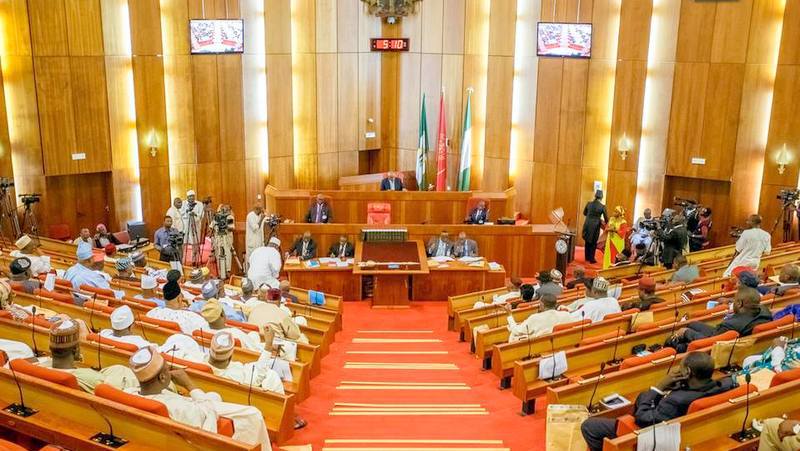
The Nigerian Senate strikes: “The Nigerian Senate has informed the Nigeria Customs Service (NCS) of a need for a potential upward revision of the agency’s revenue target for 2024. This move comes amidst growing concerns about the country’s escalating debt and its impact on the cost of living.”

I will just ask the Senate to add one provision: 80%-20% where the bulk of Customs’ revenue must come from export and not import. I know that today, more than 99% of revenue is coming from taxing imports. In other words, that our Customs is growing its revenue base is a poison pill for Nigeria. Simply, it means we are not making anything in Nigeria, but importing everything.

Please do not attack me; I have been making this point for years that there is nothing exciting that Customs is breaking yearly revenue targets since it is nothing but discovering clever ways of taxing imports, and inflating the costs of products in the nation.

As I have written here since about 2017 when I came back fully to LinkedIn, there is a clear correlation between increase in Customs revenue and de-industrialization rate in Nigeria. In other words, that P&G will fold its factories in Nigeria, and then begin to export to Nigeria, making it possible for Customs to “earn” more fees, does not make us a better country. When Michelin folded in PHC, it did not stop us from using Michelin tyres. What happens now is that we have to import the tyres – and as that happens, our Customs revenues will go up!

So, the Senate must not just give a revenue target but a distribution of the makeup of the revenue on import and export duties! If they increase the export component, we could be forced to find ways to make things locally for export.

As Nigerian Senate Moves to Increase Customs Revenue Target, Experts warn Against Over Fixation on Revenue

As Nigerian Senate Moves to Increase Customs Revenue Target, Experts warn Against Over Fixation on Revenue

0

The Nigerian Senate has informed the Nigeria Customs Service (NCS) of a need for a potential upward revision of the agency’s revenue target for 2024.

This move comes amidst growing concerns about the country’s escalating debt and its impact on the cost of living.

In a recent meeting with the House of Representatives Committee on Customs and Excise, Comptroller General Adewale Adeniyi revealed that the NCS generated a total of N3.21 trillion in revenue in 2023, falling short of its targeted sum of N3.67 trillion. This shortfall was attributed to various factors, indicating challenges in meeting ambitious revenue goals.

Chairman of the Senate Committee on Customs, Isah Jibrin, emphasized the need for the NCS to contribute significantly to reducing Nigeria’s debt burden through increased revenue generation. He stated, “Customs is one of the major providers of internally generated revenue, and as it is today, we expect them to play one of the major roles in this drive to reduce our debt burden.”

Jibrin highlighted the importance of customs concessions in sectors such as agriculture and solid minerals to stimulate economic growth. However, he also acknowledged concerns about the high level of unemployment in Nigeria, noting that while the NCS could create some jobs, it cannot address the broader issue of widespread unemployment.

One proposal under consideration is granting waivers to owners of smuggled vehicles to regularize their Customs duties payment. This move aims to provide a window for individuals to comply with regulations, albeit with certain conditions attached.

However, experts and economists are questioning the wisdom of transforming customs into a revenue-generating agency, arguing that such a strategy could have detrimental effects on the economy.

Critics argue that prioritizing customs revenue generation over trade facilitation could have negative consequences for the economy. Economic experts caution that higher customs duties on imported goods could lead to decreased demand, ultimately resulting in lower overall revenue collection for the agency.

Dr. Ifeanyi Okonkwo, an economist, expressed concern over the Senate’s emphasis on revenue generation, stating, “The duty of customs is to facilitate trade, not to generate revenue.” He warned that higher customs duties would inflate prices of imported goods, reducing consumer purchasing power and stifling economic growth.

Furthermore, Okonkwo criticized the lack of foresight among policymakers, describing their approach as “mentally lazy.” He urged the government to focus on policies that promote trade and investment rather than relying solely on customs revenue to address fiscal challenges.

They noted that the impact of higher tariffs on imported goods extends beyond consumer purchasing power. Increased tariffs can also disrupt supply chains and hinder domestic production, particularly in industries reliant on imported raw materials or machinery. Small and medium-sized enterprises (SMEs) may bear the brunt of higher tariffs, as they often lack the resources to absorb increased costs or seek alternative suppliers.

Additionally, higher tariffs can dampen foreign investment by raising the cost of doing business in Nigeria. Foreign companies may reconsider investment plans or seek opportunities in countries with more favorable trade policies, resulting in reduced capital inflows and economic growth.

Addressing the volatility of the naira exchange rate, Adeniyi highlighted the need for coordination between monetary and fiscal authorities to stabilize the currency. He proposed establishing a spot rate for customs duties payment to provide certainty for importers and facilitate better planning.

Stakeholders have emphasized the importance of adopting policies that support long-term economic growth and development. While generating revenue is essential, experts caution against prioritizing short-term gains at the expense of broader economic stability and prosperity.

The debate involves calls to balance fiscal objectives with trade facilitation and economic growth, which requires careful consideration and collaboration between policymakers, industry stakeholders, and experts. Economic experts warned that failure to strike the right balance could have far-reaching implications for Nigeria’s economic prospects and the well-being of its citizens.