DD
MM
YYYY

PAGES

DD
MM
YYYY

spot_img

PAGES

Home Blog Page 3794

UAE Lifts Visa Ban on Nigerians, Following Tinubu’s Intervention

0

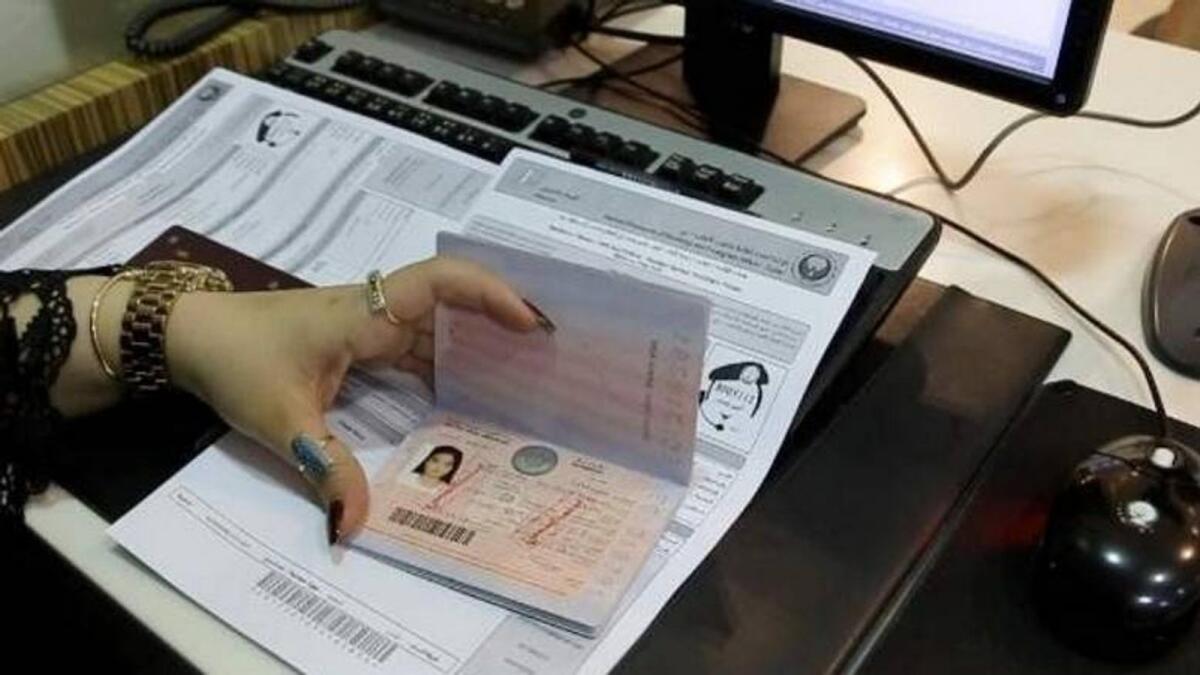
Nigerian President Bola Tinubu has reached a deal with the United Arab Emirates (UAE) to lift the visa ban it placed on Nigerians, according to a statement issued by the presidency.

The statement titled: “President Tinubu secures landmark deal with United Arab Emirates across sectors; visa ban on Nigerian travelers is lifted immediately” and was signed by Chief Ajuri Ngelale, Special Adviser to the President on Media & Publicity, said that Tinubu and the President of the UAE, Mohamed bin Zayed Al Nahyan, on Monday in Abu Dhabi, finalized the historic agreement.

It disclosed that the agreement “has resulted in the immediate cessation of the visa ban placed on Nigerian travelers.”

It could be recalled that the UAE stopped issuing visas to Nigerians late last year, following a series of issues involving Nigerians living in the oil-rich country, with some resulting in diplomatic interventions.

The UAE’s total visa ban follows earlier rules restricting visa issuance to Nigerians under the age of 40. A statement issued by the Nigerian Ministry of Foreign Affairs last September said some Nigerians “were denied entry and advised to return to their country and apply for the appropriate visas” because they ignored the rules.

Other issues, including the failure of Emirates Airlines to repatriate its trapped fund – which resulted in the company’s decision to suspend its operation in Nigeria, contributed to the dented relationship between Nigeria and the UAE.

On Sunday, Ngelale announced that Tinubu will meet with the leadership of the UAE during a technical stopover in Abu Dhabi, UAE, after the President’s departure from New Delhi, India.

The presidential spokesperson said the meeting will serve as a follow-up discussion to address specific, salient issues within the bilateral relationship after conversations held during a recent visit by the UAE Ambassador to the President at the State House in Abuja.

“The President is to address lingering bilateral issues while maximizing the opportunity of the stopover to equally advance his investment promotion objectives with high-level authorities in the public and private sectors of the United Arab Emirates,” he said.

Ngelale added that besides lifting the visa ban, the historic agreement has enabled both Etihad Airlines and Emirates Airlines to immediately resume flight schedules into and out of Nigeria, without any further delay.

“As negotiated between the two Heads of State, this immediate restoration of flight activity, through these two airlines and between the two countries, does not involve any immediate payment by the Nigerian government,” he said.

In addition, presidents Mohamed bin Zayed Al Nahyan and Tinubu established an agreed framework, which will involve several billions of U.S. dollars worth of new investments into the Nigerian economy across multiple sectors, including defense, agriculture, and others, by the investment arms of the Government of the United Arab Emirates, according to the statement.

“Additionally, President Tinubu is pleased to have successfully negotiated a joint, new foreign exchange liquidity programme between the two Governments, which will be announced in detail in the coming weeks,” he said.
The End of “Pure Payment” Startups in Africa; AI Readiness Assessment for AI Projects

0

How do you launch an AI startup if data is a very important component of that business? There are many ways, and  I will provide the main two here: 

(1) Spend tons of money at launch to collect data which will be used to improve your AI models. A good case study is Temu, an ecommerce company, which uses AI to soup recommendations on what to buy and wear. Temu spent close to $5 million during the last Super Bowl, America’s largest yearly event, to quickly collect data to improve its models. With millions on-boarded as a result of that massive media blitz, Temu has enormous data to quickly improve its technology. 

(2) Partner with a company which has tons of data. That is for OpenAI, the owners of ChatGPT. By partnering with Microsoft, ChatGPT became a category-king product which would not have been possible without the decades-old data which Microsoft provided. Indeed, besides the code, the best raw material here is the data! And I posit that there are better AI models somewhere in the universities. But those schools do not have the datasets which Microsoft has across its product lines like Xbox, Bing, etc.

If I have explained how to launch AI startups, what of a fintech company which focuses on payment (i.e. a paytech) in Africa? I can posit that starting a startup in most African markets with a clear mission to offer pure-payment is largely stale. To a large extent, in markets like Nigeria, Kenya, Ghana, etc, payment is not necessarily a major friction anymore. And if that is the case, launching a paytech company may be very hard. Indeed, the incumbents have built moats and getting to the castle may be challenging. 

So, to launch a paytech, you need to add many other goodies as part of the product. Indeed, your payment must come with other services because just collecting payment will not take you far. And as you offer those services, explore partnerships because the most important layer now is distribution. Your tech means really nothing; what matters now is scale via partnerships since pure play organic growth is harder. Simply, you have to connect into promising ecosystems, thereby offering a lot more than payments to your customers.

Such could include inventory management solutions, accounting, project management tools, etc which many of your customers can use to run their operations. In other words, you need to offer more value than the ability for users to just move money via your channel. Those channels are everywhere and adding another one may not bring growth.

That is what everyone is doing: Flutterwave is in partnership with an Indian bank even as Interswitch expands Google Pay in Nigeria.

Interswitch, a leading African integrated payments and digital commerce platform company headquartered in Lagos, has integrated Google Pay on its Payment Gateway (IPG) platform.

This integration will enable individuals and businesses in Nigeria to make a wide range of financial transactions, including in-person contactless purchases, for goods and services, peer-to-peer money transfers, and more, using their mobile devices.

In this Tekedia AI in Business Masterclass courseware [we used AI to record some of the modules], we explain what happens with AI, Data and Value in AI Projects. In my last post here , I listed some ways to launch AI startups; this short video notes the sequence to turn that data into value. Remember: the most important phase is the AI readiness assessment, and there, you examine the business case and technical feasibilities for that project.

Comment on Feed

Comment 1: What a valuable piece of content. ?
Prof, I completely agree with you.

It is very true that the most important phase is the AI readiness assessment, which involves checking for both the technical and business factors for successful AI projects.

It’s very important that development teams understand how serious this phase is.

It’s not just about technology. The most important factor is identifying valuable business problems where AI can provide significant business value and competitive advantage. Focusing on the business needs comes first. The business case justifies the investment.

Also, on the technical side,

From my opinion, focusing on data health comes first – Bad data equals bad models and so data collection, labeling, cleansing, security, monitoring has to be rigorous. I consider this part of the pain in building your own model or fine-tuning an existing one.

The importance of doing a readiness assessment cannot be overemphasized.

Difference between ETFs and Mutual Funds

0

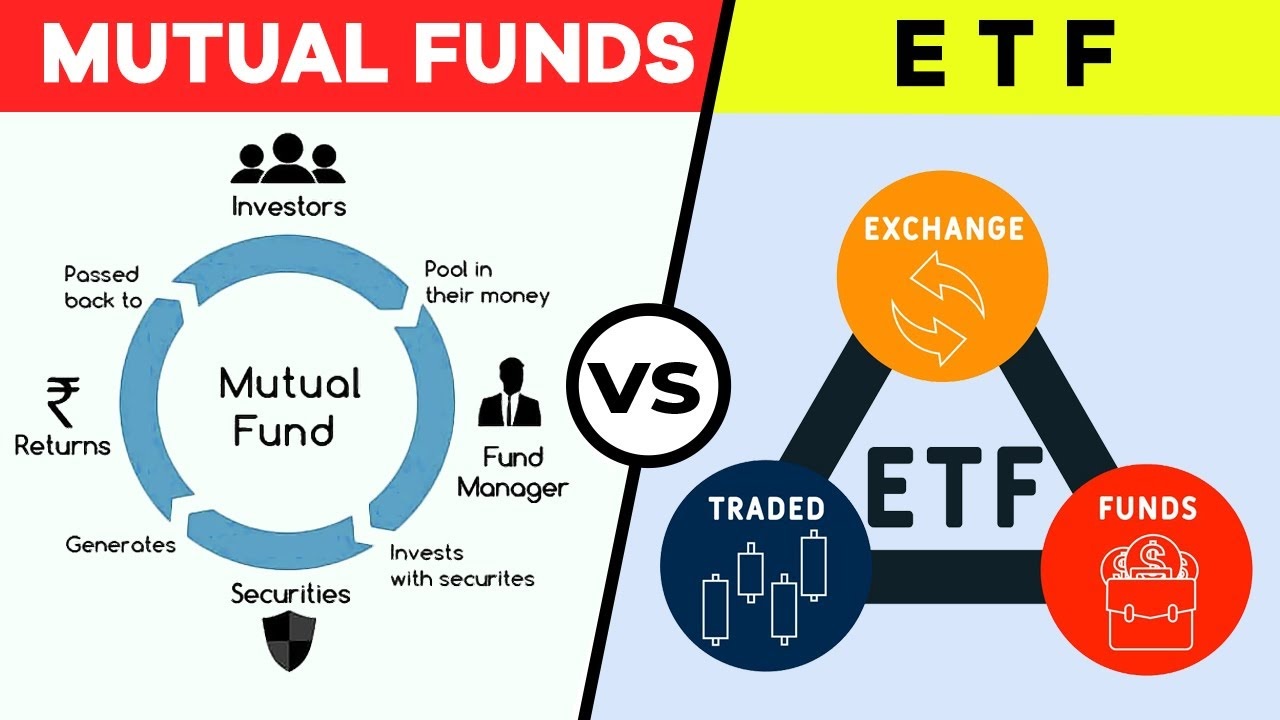
If you are looking for a way to invest your money in the stock market, you may have heard of ETFs and mutual funds. These are two types of investment vehicles that allow you to buy a basket of stocks, bonds, or other assets with one transaction. But what are the main differences between them, and which one is better for you?

ETFs, or exchange-traded funds, are funds that trade on an exchange like stocks. You can buy and sell them throughout the day, and their prices fluctuate based on supply and demand. ETFs typically have lower fees than mutual funds, as they do not have to pay for active management or marketing. ETFs also offer more transparency, as they disclose their holdings daily. ETFs can track various indexes, sectors, commodities, or themes, and some of them offer leverage or inverse exposure to the market.

Mutual funds, on the other hand, are funds that are managed by a professional fund manager who decides what to buy and sell within the fund. You can only buy and sell mutual funds at the end of the day, based on their net asset value (NAV), which is calculated by dividing the total value of the fund’s assets by the number of shares outstanding.

Mutual funds typically have higher fees than ETFs, as they have to pay for the fund manager’s expertise, research, and administration. Mutual funds also offer less transparency, as they only disclose their holdings quarterly or monthly. Mutual funds can be actively or passively managed, meaning that they can either try to beat the market or simply follow an index.

Mutual funds offer several benefits to investors, such as:

Diversification: By investing in a mutual fund, you can own a slice of many different securities, which reduces your risk and exposure to any single company or sector.

Professional management: You can rely on the expertise and experience of the fund manager, who researches and selects the securities for the fund, monitors their performance, and adjusts the portfolio accordingly.

Liquidity: You can buy or sell mutual fund shares at any time, based on the fund’s net asset value (NAV), which is calculated daily. This means you can easily access your money when you need it.

Affordability: You can start investing in a mutual fund with a relatively low amount of money, as some funds have minimum initial investment requirements as low as $100 or less.

Variety: There are thousands of mutual funds available in the market, covering different asset classes, sectors, regions, styles, and strategies. You can choose a fund that matches your risk tolerance, time horizon, and investment goals.

The choice between ETFs and mutual funds depends on your personal preferences, goals, risk tolerance, and investment style. Some of the factors to consider are:

Cost: ETFs generally have lower expense ratios than mutual funds, meaning that they charge less for managing the fund. However, ETFs also incur trading commissions when you buy and sell them, which can add up if you trade frequently. Mutual funds may have higher expense ratios, but they do not charge trading commissions. They may also have other fees, such as sales loads or redemption fees, which can reduce your returns.

Tax efficiency: ETFs are generally more tax-efficient than mutual funds, as they generate fewer capital gains distributions. This is because ETFs use a mechanism called in-kind creation and redemption, which allows them to exchange securities with authorized participants without triggering taxable events. Mutual funds, on the other hand, have to sell securities to meet redemptions or rebalance their portfolios, which can result in capital gains distributions that are passed on to shareholders.

Mutual funds are subject to capital gains taxes when they sell securities within the portfolio. These capital gains are passed on to the investors, who have to pay taxes on them, even if they did not sell their shares.

Diversification: Both ETFs and mutual funds can offer diversification benefits by allowing you to invest in a large number of securities with one purchase. However, ETFs may offer more variety and flexibility than mutual funds, as they cover a wider range of asset classes, regions, sectors, strategies, and themes. Mutual funds may be more limited in their scope and selection.

Performance: The performance of ETFs and mutual funds depends largely on the underlying securities they hold and the market conditions. However, in general, passive ETFs tend to perform better than active mutual funds over the long term, as they have lower costs and track their benchmarks more closely. Active mutual funds may outperform passive ETFs in certain market environments or niches, but they also carry more risk and uncertainty.

ETFs and mutual funds are both viable options for investors who want to diversify their portfolios and access different markets. However, they have different characteristics and advantages that suit different investors’ needs and preferences. Before investing in either one, you should do your research and compare their costs, tax implications, diversification benefits, and performance potential.

Interswitch Integrates Google Pay on Its Payment Gateway Platform, Offering Users A Flexible Additional Payment Method

0

Interswitch, a leading African integrated payments and digital commerce platform company headquartered in Lagos, has integrated Google Pay on its Payment Gateway (IPG) platform.

This integration will enable individuals and businesses in Nigeria to make a wide range of financial transactions, including in-person contactless purchases, for goods and services, peer-to-peer money transfers, and more, using their mobile devices.

Merchants and users can now add their debit and credit card details to the Google Wallet app to make online payments. Users can also pay with international cards or create virtual cards for payment at the checkout, enabling businesses to cater to their international clients.

Speaking on the Integration of Google Pay on the Interswitch payment platform, Managing Director of Digital Commerce and Merchant Acquiring at Interswitch, Muyiwa Asagba said,

“We are proud to align with Google Pay, as it exemplifies our commitment to delivering cutting-edge payment solutions that facilitate seamless transactions for businesses and their customers. By integrating Google Pay into our Payment Gateway, we are empowering businesses to harness the potential of a global customer base while ensuring secure and reliable payments.”

Interswitch also said that aside from the tokenization which guards against fraud, the Google Wallet integration also has a “Find my device” function with which users can secure their financial information in the event of a lost or misplaced device.

According to Jenny Cheng, vice president and general manager of Google Wallet, she said,

“This service is available to users in over 70 countries and territories, enabling payments through their Android phones or Wear OS devices. Users can simply add their debit and credit cards to the Google Wallet app and feel confident that their financial information is safe and secure when they’re making a purchase or catching a train”.

As Google Pay continues to evolve and expand its capabilities, it aims to provide a convenient and secure way for users to manage their digital payments and financial transactions.

The integration of Google Pay into the Interswitch gateway payment platform is indeed strategic, as it offers users additional payment methods, increasing flexibility and catering to a broader user base. This can be very beneficial for Interswitch, in retaining new customers, and attracting existing ones.

Also, the integration of Google Pay enables users to make mobile and contactless payments, which align with the growing trend of cashless transactions and reduces the need for physical payment cards.

This move can enhance Interswitch’s competitive edge in the payments and remittance market, as it now offers users a wide range of payment options.

Vitalik Buterin, FTX, Brian Armstrong, Ripple and Other Crypto News

0

Vitalik Buterin, the co-founder of Ethereum, has become the victim of a cyberattack that compromised his X account and used it to send phishing messages to his followers. The attackers managed to steal around $700,000 worth of cryptocurrencies and non-fungible tokens (NFTs) from unsuspecting users who clicked on the malicious links.

The incident was reported by Buterin on his Twitter account, where he warned his followers not to trust any messages coming from his X account until further notice. He also apologized for the inconvenience and said he was working with the X team to recover his account and prevent further damage.

FTX, a cryptocurrency exchange platform, has disclosed some of the details of its sponsorship deals with celebrities and sports teams in a recent filing with the Securities and Exchange Commission (SEC). According to the document, FTX paid millions of dollars to Shaquille O’Neal, Naomi Osaka, David Ortiz, and other famous figures to promote its brand and products.

FTX also revealed that it has agreements with Major League Baseball (MLB), the National Basketball Association (NBA), and the National Football League (NFL) to display its logo on various platforms and venues. The filing shows that FTX is investing heavily in marketing and expanding its user base in the US and abroad.

Brian Armstrong, the CEO of Coinbase, the largest cryptocurrency exchange in the US, has recently expressed his interest in flatcoins, a new type of stablecoins that are backed by fiat currencies. According to Armstrong, flatcoins could offer more stability and scalability than traditional stablecoins, which are often pegged to volatile assets like gold or cryptocurrencies.

Flatcoins could also enable faster and cheaper cross-border payments, as well as more financial inclusion and innovation. Armstrong believes that flatcoins are the “next iteration of stablecoins” and that they could play a key role in the future of the crypto industry.

A legal battle is brewing between FTX estate, the company behind the failed crypto exchange FTX, and LayerZero Labs, a blockchain startup that received $86 million from FTX estate just days before it filed for bankruptcy. FTX estate claims that the transfer was fraudulent and seeks to recover the funds, while LayerZero Labs argues that it was a legitimate investment and that FTX estate is trying to scapegoat them for its own mismanagement.

However, CEO of LayerZero, a decentralized derivatives exchange, has responded to the lawsuit filed by FTX, alleging that it is based on false allegations and misrepresentations. In a statement released on Monday, the LayerZero boss said that the suit was an attempt by FTX to stifle competition and innovation in the crypto space, and that LayerZero had not infringed any of FTX’s intellectual property rights or trade secrets.

The statement also claimed that LayerZero had developed its own technology and protocols independently, and that it had no prior knowledge or involvement with FTX’s products or services. The LayerZero boss said that he was confident that the court would dismiss the suit and vindicate LayerZero’s position.

Mocaverse, a web3 identity project developed by Animoca Brands, has secured $20 million in a funding round led by prominent investors. The project aims to create a decentralized platform for users to create, own and monetize their digital identities across various metaverse applications. Animoca Brands, a leading blockchain gaming company, plans to use the funds to expand the Mocaverse team, develop new features and partnerships, and grow the user base of the platform.

Sushi, the popular decentralized exchange and automated market maker, has announced that it will expand its operations to the Aptos blockchain, a scalable and interoperable platform for decentralized applications. According to a blog post by Sushi, the expansion will enable users to access a variety of liquidity pools, yield farming opportunities, and cross-chain swaps on Aptos, as well as benefit from its low fees and fast transactions.

Sushi stated that it aims to become a multi-chain ecosystem that supports innovation and collaboration in the decentralized finance (DeFi) space. The integration with Aptos is expected to be completed by the end of the year.

Ripple, the company behind the popular cryptocurrency XRP, has announced that some of its customers have been affected by a security incident that occurred during the acquisition of Fortress, a blockchain security firm. According to a statement from Ripple, the incident involved unauthorized access to a database containing personal information of some Fortress customers, such as names, email addresses and phone numbers. Ripple said that it has notified the affected customers and is working with law enforcement and cybersecurity experts to investigate the breach and prevent further damage.

Ripple also said that it is taking steps to enhance its security measures and protect its customers’ data. Ripple acquired Fortress in July 2023, in a deal that aimed to strengthen its position in the blockchain industry and provide more security solutions for its customers. Fortress is known for developing advanced tools for detecting and preventing cyberattacks on blockchain networks and applications. Ripple said that the acquisition was part of its vision to create a more secure and reliable global payment system using blockchain technology.

In a bizarre incident, a bitcoin user paid a staggering $500,000 in transaction fees to move just $200 worth of the cryptocurrency. The transaction, which took place on September 10, 2023, was recorded on the blockchain and sparked curiosity and speculation among the crypto community.

Some suggested that it was a mistake, while others speculated that it was a money laundering scheme or a deliberate publicity stunt. The identity and motive of the sender remain unknown, as do the fate and reaction of the recipient. This incident highlights the volatility and unpredictability of the bitcoin network, as well as the need for caution and diligence when dealing with large sums of money in digital form.