DD
MM
YYYY

PAGES

DD
MM
YYYY

spot_img

PAGES

Home Blog Page 3795

Planning for Post-Retirement: What are the Boxes You should Check?

0

It is not uncommon to see senior-level career persons fret about what their post-retirement lives have in stock for them. Retirement and post-service life are recurring thoughts in the minds of professionals in their mid and senior-level careers. Experience has shown that only very few persons maintain their social status after retirement.

Most people want to attain a level of financial liberty that can enable them to have exhilarating vacations and continue to be relevant to society, such as setting up a business and social enterprise that solves social problems and engages people. However, many people become completely very broke at the end of their careers.

There are many reasons why someone can go completely broke after retirement. The foremost among these reasons is failure to plan early. In your early and mid-career levels, it is possible to think you have a lot of time. However, time is not known to be lenient to the unprepared. Thus, it is essential for you as a salary earner to approach retirement with a lot of expectation, preparedness, and confidence.

The bitter truth is that increasing salaries or pensions will not make your dream of living a meaningful post-retirement life a reality unless you make deliberate and calculated efforts. It is important that your efforts are well-informed as much as they are deliberate. Your post-retirement planning must commence from the very first day you get your employment letter or even before then.

The following are some boxes you need to tick:

Financial intelligence/management

You need to connect with the necessity of early preparation for retirement through financial intelligence and management skills. Early awareness of financial management will help you develop good discipline and control of your finances. It is essential to prepare yourself for the financial realities that lie ahead of you so that you do not enter into the service with the wrong expectations and mindset that may result in gross disappointment and loss of morale during or at the end of your career.

Save as much as you invest

Savings and investments are often subsumed in the financial intelligence mentioned above. However, it is important to reconsider them here because your savings and investments work in line with your intention. Thus, while saving or investing your money, you need to be clear and fully convinced they are for your retirement.

Emotional Intelligence

Also important to have a successful career and post-service life is the instilment of emotional intelligence and a stable character that makes an ordinary man become exceptionally disciplined and dedicated to service.

Hone your entrepreneurial skills

While in service you can engage in some private ventures that can help you to make additional streams of income. This will not only increase your financial liberty, it also will help you to gather enough experiences outside your profession which will empower you to solve problems and commercialize your solutions in your post-retirement.

Continue to eye your post-retirement niche

It is possible that where you want to continue after retirement is completely different from where you are currently building your career. In this case, it is important that you constantly update yourself in that area. For example, after about 30 years of her career in Tennis, Serena Williams retired and took up Start-up funding which she said has been her hobby for a very long time.

Work with a mentor and professional advisor

You probably have someone within or outside your profession who seems to be living the kind of post-retirement life you dream of. You can approach this person for guidance and mentorship. There are also professionals or companies offering consultancy services for career individuals to help them to solve some of their retirement and post-retirement concerns. You should not hesitate to also reach out to benefit from this.


 

Nigerian Cross-Border Payments Startup Klasha Granted Regulatory License to Operate in Sierra Leone

0

Klasha, a global cross-border payments company, has been granted a regulatory license to operate and offer its ground-breaking Fintech services in Sierra Leone.

The Bank of Sierra Leone’s decision to include Klasha in its regulatory sandbox program demonstrates the bank’s confidence in the company’s dedication to creating innovative cross-border financial technology solutions that improve the effectiveness, usability, and security of digital transactions and cross-border payments.

With this license, Klasha will be able to conduct business in Sierra Leone and provide the people and companies in the country with its remarkable cutting-edge payment services.

The CEO of Klasha Jessica Anuna expressed excitement following the company’s license approval in Sierra Leone, which she said will accelerate its growth and expand its reach in the Mano River Union.

In her words,

“We are thrilled to have obtained this license, which will accelerate our growth and expand our reach in the Mano River Union. Sierra Leone is a vibrant and growing market, and we look forward to working with the Bank of Sierra Leone and other stakeholders to drive seamless cross-border transactions in the country”.

Kasha’s acquisition of a financial services license in Sierra Leone is part of the company’s broader strategy to expand its presence across Africa. With its innovative payment solutions, Klasha is well-positioned to address the challenges of e-commerce in Africa and drive financial inclusion on the continent.

Using Klasha, global businesses can accept payments from Africa in many African payment methods and currencies, send cross-border payments frictionlessly online, and get paid in hard currencies.

Ultimately, the company enables global businesses to scale into Africa seamlessly through its technology, allowing African consumers to access global goods and services using the African currencies and money methods they possess.

The global cross-border payments company is backed by American Express, Global Ventures, Plug and Play, Greycroft, TechStars, and Seedcamp, and has developed a payables and receivables solution for individuals and businesses that enables seamless financial flow between Africa and the rest of the world.

Klasha’s payment spans six high-growth African countries, with payouts in over 120 currencies. It is present in six African countries which include Nigeria, Kenya, Tanzania, South Africa, Uganda, and Zambia, and has carried out over 1,000,000 transactions across Africa.

Klasha has a culture of working with the best talent that delivers tasks with operational excellence and individuals who can ship products quickly and with precision.

The company’s mission is to enable businesses and consumers to transact in Africa as seamlessly as experienced on other continents.

Business Strategy & Execution at Tekedia Mini-MBA

0

He teaches as a zen-master in the world of business.  At 7pm WAT,  Tekedia Institute Faculty, Eromosele Omomhenle F.IMS , a Global ISV Solutions & Strategy Leader at Microsoft global headquarters in Redmond, USA, will teach  a session on Business Strategy & Execution. 

Whenever he comes here, we go home with a clear understanding on how to craft a strategy, execute business playbooks and outperform the market. Zoom link in the board. That link is still open for registrations if you want to join.

Tekedia Mini-MBA >> the #best teach here.

Meta’s Threads Struggles to Grow User Base Amidst Rivalry With X

0

Threads, an online social media and social networking service launched by Meta, has continued to struggle to grow its user base amid rivalry with Elon Musk X.

Reports from Insider Intelligence revealed that Threads now ranks near the bottom of the most popular social media platforms, ahead of only Tumblr, as measured by the number of U.S users.

Insider Intelligence forecasted that it expects Threads to hit 23.7 million U.S. users in 2023, while it expects X its strong rival to have 56.1 million U.S. users in 2023.  For the U.S. market, the analyst firm said Threads will continue to rank second to last among social networks through 2025.

Principal analyst at Insider Intelligence Jasmine Enberg said Threads received an initial boost from Twitter’s missteps, but it can’t rely on X defectors to continue to grow.

He said Threads needs to establish an identity that is more than an extension of Instagram or an alternative to X in order to become a major player in the social media market.

Enberg added that if Musk doesn’t backtrack on his move to introduce a monthly subscription fee to X, the move will likely alienate X users and potentially increase advertiser interest in Threads.

The decline in the number of active users on Threads is coming after the platform during its launch on July 5, saw over 10 million users join the platform.

This saw Threads earn the title of the most downloaded non-game app on its launch day.  The app appeared for many as a possible replacement for X, following Elon Musk’s incessant changes on the platform.

However, recent developments reveal a decline in user engagement on the Meta-owned social networking platform. On average, Threads users now spend merely 2.4 minutes daily on the app, marking an 80% decrease from its peak in early July.

Sensor Tower reports that people are opening the app less frequently and spending less time there, compared to when it was newly launched.

Several experts have pointed out that a lack of cultural relevance and core communities has contributed to the drop in engagement on Threads.

Speaking on the drop in active users on Threads app Meta CEO Mark Zuckerberg said he considered the drop-off normal and expected retention to grow as the company adds more features to the app.

In a bid to grow its user base and enhance retention, the company began to roll out in-demand features and key updates. It rolled out a desktop version and improved search features.

The Threads team also began to roll out new notification control options, providing users a more enhanced way to manage their app experience.

While Threads can become a significant player in the social media landscape and provide an alternative to X, its ability to replace X largely remains uncertain.

What Africa Should Do To Harness Its Huge Agricultural Potential

0

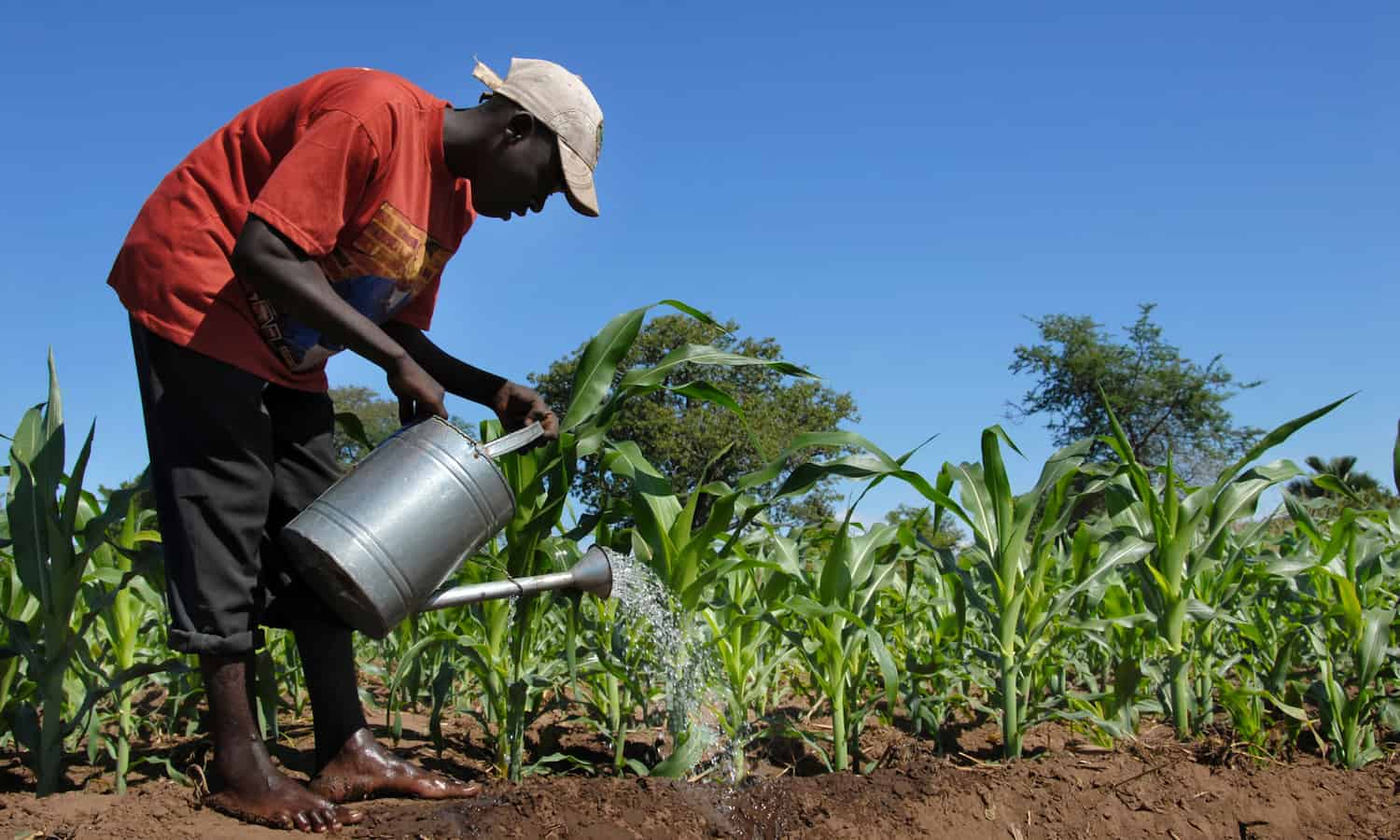
The opportunities in Agriculture are quite numerous. Over the years, there has been a growing interest in increasing investment in the agricultural sector to unlock its numerous opportunities for the betterment of humanity. Recent development in agricultural technology is significantly improving the contribution of agriculture to global wealth, with the food and agribusiness sector leading the ecosystem.

About 9 billion people are expected to inhabit the world by 2050. This raises concerns on how to attain a commensurate growth in the world’s food production by that year. According to the Food and Agriculture Organisation of the United Nations, the projected 9 billion population that world agriculture has to feed by 2050 implies that an additional agricultural investment of over 80 billion dollars is needed yearly to meet the targets for reducing poverty and the numbers of the malnourished.

Although Africa’s economy is largely agrarian, agricultural growth in the continent has been tardy compared to other parts of the world, especially countries in the global north. Africa’s Agriculture constitutes 14 percent GDP of the economy, and agricultural-related industry accounts for nearly half of all economic activities in the sub-Saharan regions.

In sub-Saharan Africa, less than 6 percent of the available two hundred million hectares of land is irrigated for agricultural productivity compared to 14 and 37 percent in Latin America and Asia respectively. Despite its huge agricultural potential, sub-Saharan Africa is the most malnourished part of the world. One in every four malnourished people in the world is from Africa.

Even though agricultural activities such as ecotourism, grain production, and animal production hold promising futures for Africa, it is evident that more needs to be done in terms of policymaking and implementation for the continent to achieve its huge agricultural potential. According to a report from McKinsey & Company in February 2019, Africa could actually produce two to three times more cereals and grains which would add 20 percent more cereals and grains to worldwide 2.6 billion tons of output and a similar increase in the production of horticulture crops, fishes and livestock could be witnessed.

Factors reported to militate against Africa’s agriculture sector include; poor financing, poor policies, poor infrastructure, high illiteracy, loss of farming character among the people, lack of access to land perennial insecurity etc. Stakeholders in the industry need to work collectively to weather these barriers that have since placed the continent at the ebb of the global food system.

More efforts should be made to encourage the use of new technologies and methodologies in agricultural activities in the continent with a particular focus on the agricultural data value chain.

While there has been no doubt an improvement in foreign investment in the agriculture of the continent over the years, there is still a scarcity of policies that protect the interest of Africans against foreign exploitation. According to the United Nations, foreign Investment contracts in Africa have captured nearly 50 million acres of land but these contracts were not always conducted diligently or openly, and local people are often overlooked as viable owners. Therefore African governments should protect the agricultural investment ecosystem of the continent through stringent policies that discourage foreign exploitation and consequently position Africa to achieve its agricultural potentials and gain massively from its plethora of natural resources.

Furthermore, more concerted efforts are needed from the agricultural stakeholders including the government, social enterprises and private investors to resolve the increasing security threats of the region which invariably affect its agricultural output in adverse ways.

Lastly, African leaders should think inwardly to locally address the impact of climate change in the continent, especially as this relates to the region’s food system.