DD
MM
YYYY

PAGES

DD
MM
YYYY

spot_img

PAGES

Home Blog Page 3797

NAFDAC Guidelines For The Registration of Pesticides Made in Nigeria

0

The National Agency For Food and Drug Administration and Control (NAFDAC) Guidelines For The Registration Of Pesticides in Nigeria are for the interest of the general public in particular and manufacturers of pesticides made in Nigeria.

This article will be looking at the provisions of these guidelines.

Definitions of Terms

“PESTICIDES” include:

– Herbicides, Insecticides, Rodenticides, Fungicides, Molluscides Nematicides, Repellents, Attractants, Insect growths regulators, Fumigants and Plant growth regulators. These are used in agriculture, public health, horticulture, and food storage.

-While some of the chemicals may be used without great hazard to health, others are so toxic that their use must be strictly controlled to protect humans, animals, and the general environment.

-Some pesticides quickly disappear or are broken down into harmless degradation products (they are environmentally friendly).Others persist after application and may breakdown to form even more poisonous products. Since unsafe levels may appear in foods, such as food crops, milk & meat products, it becomes imperative that the levels of pesticides in these products should be regulated and controlled.

– It is necessary to emphasize that, no Pesticide product shall be manufactured, imported, advertised, offered for sale, distributed or used in Nigeria unless it has been registered in accordance with the provisions of NAFDAC Act CAP N1 (LFN) 2004, other related Legislations and the accompanying Guidelines.

-NAFDAC will not entertain new applications for the registration of imported regulated products on the Federal Government Import Prohibition List and NAFDAC Banned List.

Applications

Step 1 – Documentation

The following documents are uploaded on the NAPAMS portal after successful submission, all original documents will be presented upon request :-

– The application letter and print-out of the registration form are to be accompanied with two (2) sets of the following documents are to be submitted at the Liaison Office of the Director (LOD), R & R Directorate, NAFDAC:

  1. Evidence of Business Incorporation by Corporate affairs Commission (CAC).
  1. Evidence of payment to the Agency.
  1. Contract Manufacturing Agreement (where applicable).
  1. Evidence of Registration of Brand Name with Trademark Registry in the Ministry of Industry, Trade and Investment. This should be done in the name of the owner of the Trademark/Brand name as the case may be (where applicable).
  1. Evidence of satisfactory Inspection issued by the relevant Directorate or Good 

Manufacturing Practice (GMP) certificate for product line (companies with registered products). 

  1. Label or artwork of the product (should conform to Pesticide Labelling Guidelines).
  1. A Comprehensive Certificate of Analysis. The certificate of analysis must be presented on a letter-headed paper of the Quality Control Laboratory where the sample was tested/evaluated and should contain the under listed information:

a). The brand name of the product

b). The batch number of the product

c).The manufacturing and expiry dates

d). The name, designation and signature of the analyst 

e). For more Information on the Inspection of manufacturing facility, applicants should visit the Veterinary Medicine and Allied Products Directorate section of the Agency’s website.

Step 2 – Product Approval Meeting

– Upon satisfactory Documentation review, GMP inspection of the production facility and laboratory analysis of product, products are presented for Approval Meetings. 

– For products labels with compliance issues, compliant artworks may be submitted with a commitment letter from manufacturer stating that the commercial products will be in compliance.

Step 3- Issuance of Certificate

– For products approved at the meeting, an electronic Certificate of Product Registration is issued to the Applicant.

Labelling Information

– Labelling should be informative, accurate and in conformance with the Agency’s Pesticide Registration Regulations or any other relevant Regulations.

Tariff

As directed by NAFDAC.

Notes

It should be noted that :-

– It is the responsibility of the applicant to ensure safe disposal of all expired stock in consultation with the appropriate Government bodies.

– Local field trials under appropriate tropical climatic conditions for adaptability may be required for pesticides with insufficient safety and efficacy data in Nigeria.

– Failure to comply with these requirements may result in the disqualification of the application or lead to a considerable delay in the processing of a registration application.

– A successful application will be issued a Certificate of Registration with a validity period of five (5) years.

Poverty of Hope in Nigeria

0

Nigeria is a country blessed with abundant natural and human resources, yet it remains one of the poorest and most unequal nations in the world. According to the World Bank, more than 40% of Nigerians live below the national poverty line, and the gap between the rich and the poor is widening. But beyond the material deprivation, there is another form of poverty that afflicts many Nigerians: the poverty of hope.

The poverty of hope is the lack of optimism, confidence and aspiration for a better future. It is the feeling of helplessness, frustration and despair that pervades the lives of millions of Nigerians who face daily challenges such as insecurity, corruption, poor governance, unemployment, poor education, poor health care, environmental degradation and social discrimination. The poverty of hope is the result of decades of failed policies, mismanagement, bad leadership and institutional decay that have eroded the trust and faith of the people in their government and society.

The poverty of hope is a serious threat to the development and stability of Nigeria. It undermines the social cohesion, civic engagement and human capital that are essential for economic growth and social progress. It fuels violence, crime, extremism and migration that destabilize the country and the region. It deprives Nigeria of its potential to become a prosperous and influential nation in Africa and the world.

The poverty of hope can be overcome, but it requires a collective effort from all stakeholders: the government, the private sector, the civil society, the media, the religious leaders, the traditional rulers, the youth and the citizens. It requires a vision of a new Nigeria that is inclusive, democratic, accountable, transparent, efficient, innovative and responsive to the needs and aspirations of its people.

It requires a commitment to implement policies and programs that address the root causes of poverty and inequality, and that promote human development, social justice and environmental sustainability. It requires a culture of dialogue, tolerance, solidarity and peace that respects diversity and fosters unity. The poverty of hope is not inevitable. It can be changed. It must be changed. Nigeria deserves better. Nigerians deserve better.

The other day a man was saved from committing suicide when he attempted to jump off Falomo bridge in Lagos. The video went viral on social media. Many Nigerians are going through a lot of hardship this period. The economic realities have actually made millions of Nigerians indigent. Diaspora family members are largely the social security net for those with such privileges. Businesses are going down, new jobs are unavailable, some in employment are being laid off, income is dwindling, purchasing power of people is being stifled by the day, many have cut down and cut down on their lifestyle that malnutrition has become a survival option. Mental health of many is in steep decline.

Mid- to lower middle-class population has been pushed to the poverty line. These are the realities. Beyond these hardships Nigerians face, the most critical and damning is the poverty of hope. This is near-complete uncertainty of what tomorrow holds. Nothing reduces lifespans faster. Sadly, this is the most terrible epidemic presently in Nigeria. On September 23, Senator Dino Melaye shared a video of the State Government sharing of palliative in Kogi State on his X (formerly Twitter) handle. Octogenarians queued to collect a few cups of rice and a few Naira notes (likely N1000). Check the video, and you weigh your compassion.

The Nigerian leaders must not lose sight of the duty of Government, more than anything else, is to inspire hope, by providing clear, sincere and measurable road maps that can help people predict tomorrow. It is such hope that will console millions of Nigerians going through thick and thin to bear the economic vagaries of the present. It doesn’t seem the government is doing much about this, at least it is yet to be seen.

A video of the minister of FCT, the Chief of Staff to the President Femi Gbajabiamila and Co. in the kitchen in Wike’s house was all over social media the other day. It is ok for Government officials to holiday and rest, and do what they love doing, but to show Nigerians, many of whom have not eaten, how you’re living the life in your expensive kitchen seem a bit insensitive. Beyond the Government, I really encourage Nigerians to look out for one another at this time – including those that you imagine are ok, for they may not really be ok.

This is not a time for the default quick ‘Hi’ greeting, no, try to stop by, take a handshake, look into the eyes and ask, “how are you doing?” Share the little you have with others. See if there is a child you notice around that has stopped schooling and consider assisting if you can. Pick up a habit of random charity – something for your estate gatekeepers as your drive in, something extra for your domestic staff, a can of water to a Nigerian Police (and others) officer on the road, etc. What is really nothing for you, could be life saving for another. Smile at people as much as possible. It is something to hope for.

Churches, it is important you reduce whatever form of financial demands you make on people, including payments you charge for facilities (like hall rentals, etc.), for your members. A simple appeal for support (while emphasizing that those who cannot afford should not worry), will do at this period. Help people not to feel guilty that they are not contributing as they would wish to. As much as possible, provide support for those in need. Remember how it was done during COVID! Many are in a worse state now than during COVID.

Law enforcement officers: Nigerian Police, FRSC Nigeria, Lastma, VIO, etc., please be kinder with people on the road. Motorists show humanity to officers on the road. Dear fellow Nigerians, let everybody look out for somebody, together we’ll pull through this tough period.

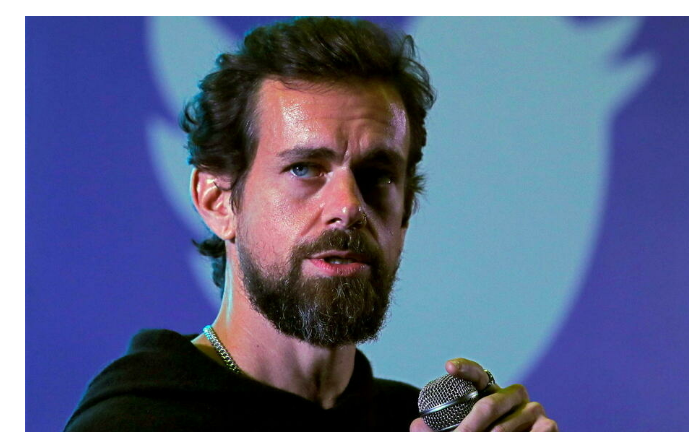
Jack Dorsey Created Twitter, Square, and Cash App, products we all use everyday

0

Jack Dorsey is one of the most influential entrepreneurs of our time. He is the co-founder and CEO of Twitter, the social media platform that has revolutionized how we communicate and share information. He is also the founder and CEO of Square, the payment company that has enabled millions of small businesses and individuals to accept credit cards and digital transactions. And he is the creator of Cash App, the mobile app that allows users to send and receive money instantly, buy and sell bitcoin, and invest in stocks.

We will explore how Jack Dorsey came up with these innovative ideas, what challenges he faced along the way, and what lessons he learned from his experiences. We will also discuss his vision for the future of technology and society, and how he balances his multiple roles and responsibilities.

Jack Dorsey’s journey as an entrepreneur began when he was a teenager. He was fascinated by maps and dispatch systems, and he taught himself how to program. He developed software for taxi companies, courier services, and emergency vehicles, and he even created his own online platform for dispatching. He dropped out of college to pursue his passion for software development, and he moved to San Francisco in 1999.

There, he met Biz Stone and Evan Williams, who were working on a podcasting company called Odeo. They invited him to join their team, and he became interested in their side project: a microblogging service that allowed users to post short messages of 140 characters or less. He suggested the name “Twitter”, inspired by the sound of birds chirping. He also came up with the idea of using the @ symbol to mention other users, and the # symbol to create topics.

Twitter launched in 2006, and it quickly gained popularity among celebrities, journalists, activists, politicians, and ordinary people. It became a global phenomenon, with over 300 million active users as of 2020. It also became a powerful tool for social change, enabling people to voice their opinions, organize movements, and spread awareness about important issues.

However, Twitter also faced many challenges, such as technical glitches, security breaches, spam, harassment, misinformation, censorship, and competition. Jack Dorsey had to deal with internal conflicts, leadership changes, boardroom battles, and shareholder pressure. He was ousted as CEO in 2008, but he returned to the role in 2015. He had to make tough decisions, such as laying off employees, shutting down Vine, acquiring Periscope, introducing new features like Moments and Fleets, and banning Donald Trump.

Despite the difficulties, Jack Dorsey remained committed to his vision of making Twitter a platform for public conversation and democratic expression. He also continued to innovate and create new products that solved real problems for people. In 2009, he founded Square, a company that offered a simple device that plugged into a smartphone or tablet and allowed anyone to accept credit card payments. He later expanded Square’s services to include online payments, invoicing, payroll, loans, cash registers, e-commerce, and more.

In 2013, he launched Cash App (formerly Square Cash), a mobile app that made sending and receiving money as easy as sending an email or a text message. He also added features that allowed users to buy and sell bitcoin, invest in stocks with as little as $1, get discounts at popular merchants with Cash Boosts, and receive direct deposits with Cash Cards.

Jack Dorsey’s products have had a huge impact on millions of people around the world. They have enabled entrepreneurs to start and grow their businesses, empowered individuals to manage their finances, and connected communities through social media. He has also been a generous philanthropist, donating hundreds of millions of dollars to causes such as COVID-19 relief, criminal justice reform, environmental protection, and universal basic income.

Jack Dorsey is not only a successful entrepreneur, but also a visionary leader, a creative thinker, and a lifelong learner. He has shown us how to turn ideas into reality, how to overcome challenges with resilience, and how to pursue our passions with purpose. He has also shown us how to balance multiple roles and responsibilities, by delegating tasks, setting priorities, and practicing mindfulness. He has inspired us to use technology for good, to make the world a better place, and to never stop dreaming.

Nigeria should be a World Leader but for poor leadership, And Its Operating in Stone Age Parameters

0

Nigeria is a country with enormous potential, endowed with abundant natural resources, a large and youthful population, and a strategic location in Africa. However, despite its advantages, Nigeria has not been able to achieve its rightful place as a world leader, due to the poor quality of its leadership. The leaders of Nigeria have failed to address the pressing challenges of poverty, insecurity, corruption, and underdevelopment that plague the nation.

Instead of pursuing a vision of progress and prosperity for all Nigerians, they have been mired in selfish interests, nepotism, and mismanagement. As a result, Nigeria is operating in stone age parameters, lagging behind other countries in terms of economic growth, social welfare, and human development.

One of the most serious challenges that Nigeria faces is poverty. According to the World Bank, Nigeria is home to the largest number of people living in extreme poverty in the world, with about 87 million people living on less than $1.90 a day. Poverty has a devastating impact on the lives of Nigerians, affecting their health, education, nutrition, and dignity.

Poverty also fuels social unrest, violence, and radicalization, as many Nigerians feel marginalized and excluded from the benefits of development. Poverty is not inevitable in Nigeria, but it is the result of poor policies, weak institutions, and corrupt practices that have prevented the equitable distribution of the nation’s wealth.

This situation is unacceptable and unsustainable. Nigeria deserves better leaders who can harness its potential and transform it into a modern and prosperous nation. Leaders who can foster unity and diversity among the various ethnic and religious groups in Nigeria. Leaders who can promote democracy and good governance, respect for human rights and the rule of law, and accountability and transparency in public affairs.

Leaders who can invest in education, health, infrastructure, and innovation, and create opportunities for the millions of young Nigerians who aspire for a better future.

Nigeria needs a new generation of leaders who can break the cycle of poor leadership and usher in a new era of positive change. Leaders who can inspire hope and confidence in the Nigerian people and restore their dignity and pride as citizens of a great nation. Leaders who can make Nigeria a world leader that contributes to global peace and security, regional integration and cooperation, and human progress and development.

Nigeria deserves better leaders who can tackle the problem of poverty and create a more inclusive and prosperous society. Leaders who can implement pro-poor policies that target the most vulnerable segments of the population, such as women, children, and rural dwellers. Leaders who can foster economic diversification and growth that creates jobs and opportunities for the millions of young Nigerians who are unemployed or underemployed. Leaders who can improve the quality and access to basic services such as health care, education, water, and sanitation, and reduce the burden of disease and illiteracy that afflict many Nigerians.

Nigeria has the potential to be a world leader, but it needs to overcome the obstacle of poor leadership. It is time for Nigerians to demand better from their leaders, and to hold them accountable for their actions. It is also time for Nigerians to take responsibility for their own destiny, and to participate actively in the democratic process. Only then can Nigeria move from operating in stone age parameters to becoming a modern and prosperous nation.

Managing People to Drive Productivity in Firms

0

Organizations exist to fix frictions in markets. In other words, when you put that signpost that you are OPEN for business, you are announcing to the world that you have the capacity to solve some problems which the market wants solved. Solving those problems will mean building and creating products and services. 

But how do you create products and services? You need to combine and recombine factors of production. That translation is very important because three cardinal things are at play: the PEOPLE, the processes and the tools. The People is the pivot upon which any organization can execute its mission. 

Join Tekedia Live today our Faculty, Ibironke Tolu-Ogunpolu, Chartered FCIPD, SPHR , educates on how we can develop an effective PEOPLE Management System in firms. Our Faculty is a leading thought-leader in this domain. A Director – People in M&A Transactions and Restructuring- in one of the finest knowledge organizations in the world and a founder of a non-profit which makes PEOPLE better. Come and learn how to win with #PEOPLE.

 Tekedia Mini-MBA >> learn from the best. Zoom link in the class board