DD
MM
YYYY

PAGES

DD
MM
YYYY

spot_img

PAGES

Home Blog Page 3799

US Securities and Exchange Commission (SEC) Pushes for an Interlocutory Appeal against Ripple

0

The US Securities and Exchange Commission (SEC) has filed a motion for an interlocutory appeal against the ruling of Judge Sarah Netburn in the ongoing lawsuit against Ripple Labs and its executives. The SEC argues that the judge erred in granting Ripple’s motion to compel the production of the SEC’s internal communications regarding Bitcoin, Ethereum, and XRP. The SEC claims that these documents are irrelevant, privileged, and burdensome to produce.

The interlocutory appeal is a legal procedure that allows a party to appeal a judge’s decision before the final judgment is issued. The SEC hopes that the Court of Appeals will reverse Judge Netburn’s order and prevent Ripple from accessing the SEC’s internal deliberations on the status of digital assets. The SEC asserts that its views on Bitcoin and Ethereum are not binding and do not affect its enforcement actions against Ripple.

The ongoing legal battle between Ripple Labs and the U.S. Securities and Exchange Commission (SEC) took a new turn, as Ripple had filed a motion to appeal the court’s denial of its access to the SEC’s internal documents regarding cryptocurrencies. Ripple argues that these documents are relevant and necessary for its defense, as they could show that the SEC did not consider XRP to be a security before filing the lawsuit. The SEC, on the other hand, contends that these documents are privileged and irrelevant, and that Ripple’s motion is an improper attempt to delay the discovery process and the trial.

Ripple, on the other hand, contends that the SEC’s internal communications are crucial to its fair notice defense. Ripple argues that the SEC failed to provide clear and consistent guidance on whether XRP is a security or not, and that the SEC’s own staff were confused about this issue. Ripple also accuses the SEC of selectively applying the securities laws to XRP, while giving a free pass to Bitcoin and Ethereum.

The interlocutory appeal is likely to delay the discovery process and prolong the litigation. It is also uncertain whether the Court of Appeals will grant the SEC’s request to review Judge Netburn’s order. The SEC has filed a motion to request an interlocutory appeal of two rulings by Judge Torres, who is presiding over the case. The first ruling is that XRP is not a security, and the second ruling is that Ripple’s programmatic sales of XRP are not securities sales. The appeal could be denied on procedural grounds or on the merits. If the appeal is granted, however, it could have significant implications for the outcome of the case and the future of XRP.

Ripple’s defense on XRP against the SEC’s interlocutory appeal is based on several arguments. First, Ripple argues that the SEC has not shown that there are substantial legal issues at stake that warrant an interlocutory appeal. Second, Ripple argues that the SEC has not shown that other judges would disagree with Judge Torres’ rulings or that an appeal would speed up the resolution of the case. Third, Ripple argues that the SEC’s motion is inappropriate because it requires the appellate court to review the application of law to evidence, which is usually reserved for final judgments.

Ripple’s defense on XRP against the SEC’s interlocutory appeal is important because it could affect the outcome of the case and the future of XRP. If the SEC’s motion is granted, it could delay the case and create uncertainty for XRP holders and users. If the SEC’s motion is denied, it could strengthen Ripple’s position and increase confidence in XRP. The final decision on whether to allow an interlocutory appeal rest with Judge Torres, who will consider both parties’ arguments and evidence.

The Ripple vs SEC lawsuit is one of the most important legal battles in the crypto space, as it could have significant implications for the future of XRP and other digital assets. The SEC alleges that Ripple and its executives sold unregistered securities in the form of XRP tokens, while Ripple argues that XRP is a currency and not a security. The case has been ongoing since December 2020, and both parties have filed several motions and countermotions in the court.

One of the main issues that the court has to decide is whether XRP falls under the definition of a security according to the Howey test, which is a four-pronged test that determines if an investment contract exists. The Howey test states that a security is an investment of money in a common enterprise with an expectation of profits derived from the efforts of others. The SEC claims that XRP meets all these criteria, while Ripple contends that XRP is a decentralized network that does not depend on Ripple’s efforts.

Another issue that the court has to consider is whether the SEC’s actions were fair and consistent with its previous statements and actions regarding other cryptocurrencies, such as Bitcoin and Ethereum. Ripple claims that the SEC has given preferential treatment to these two cryptocurrencies, which it considers as commodities and not securities, despite having similar characteristics and functions as XRP. Ripple also accuses the SEC of causing harm to XRP holders by filing the lawsuit without warning, which resulted in a massive drop in XRP’s price and market capitalization.

The outcome of the Ripple vs SEC lawsuit could have far-reaching consequences for the crypto industry, as it could set a precedent for how other digital assets are regulated and classified by the SEC. If Ripple wins the case, it could pave the way for more innovation and adoption of XRP and other cryptocurrencies, as well as provide clarity and certainty for investors and developers.

If the SEC wins the case, it could impose heavy fines and penalties on Ripple and its executives, as well as require them to register XRP as a security and comply with strict reporting and disclosure requirements. This could also affect other cryptocurrencies that may fall under the SEC’s scrutiny, and potentially stifle innovation and growth in the crypto space.

Are You Ready for the Best Show In Town? It Begins Tomorrow

0

Are you ready? The best show for professional, business, and personal economy ascension.

Date: Monday, Sept 11, 2023

Start Time: 12 noon WAT

Tickets: Get one here

Academic DJ: Ndubuisi Ekekwe


Tekedia Mini-MBA is an innovation management 12-week program, optimized for business execution and growth, with digital operational overlay. It runs 100% online. The theme is Innovation, Growth & Digital Execution – Techniques for Building Category-King Companies. All contents are self-paced, recorded and archived which means participants do not have to be at any scheduled time to consume contents. Besides, programs are designed for ALL sectors, from fintech to construction, healthcare to manufacturing, agriculture to real estate, etc.

The sector- and firm-agnostic management program comprises videos, flash cases, challenge assignments, labs, written materials, webinars, etc, and is delivered by a global faculty coordinated by Prof Ndubuisi Ekekwe. It will run from Sep 11, 2023 to end Dec 2, 2023. Tekedia Institute, Boston USA, awards certificates of achievement at the end of the program.

Provisions for Contract Manufacturing of Finished Pharma Products, Importation of Active Pharma Ingredients in Nigeria

0

Provisions for Contract Manufacturing of Finished Pharmaceutical Products

In Nigeria, members of the general public and especially organizations intending to engage in the manufacture of finished pharmaceutical products via contract manufacturing arrangements are expected to comply with a set of regulatory requirements put in place by the relevant agencies.

These regulatory requirements, put in place by the National Agency For Food and Drug Administration and Control (NAFDAC) and effective since the 3rd of February 2021, will be the focus of this article .

What are the implications of the NAFDAC Guidelines on Contract Manufacturing Of Finished Pharmaceutical Products in Nigeria?

The implications of the NAFDAC are that :-

– No regulated product should be manufactured, imported, exported, advertised, sold or distributed in Nigeria unless it has been registered in accordance with the provisions of the Food, Drugs and Related Products Act and accompanying guidelines. 

– A drug product should not be manufactured in Nigeria unless the facility has been inspected, found to comply with good manufacturing practices and an authority to manufacture pharmaceutical products is issued by NAFDAC.

– The NAFDAC Guidelines prescribe the minimum requirements to be met by parties wishing to engage in contract manufacturing of pharmaceutical products i.e. human & veterinary medicines, biologics, herbal medicine and nutraceuticals as well as medical devices

What are definitions of terms most commonly used by the guidelines?

The definitions of terms most commonly used in the guidelines are as follows :-

Contract Facility :- A site where one or more manufacturing operations take place on behalf of the contract giver.

Contract Giver :- A legal entity who has legal ownership of the finished product and who will be applying to NAFDAC for marketing authorization or entity that orders the conduct of a component of manufacturing to be carried out on their behalf by another entity.

Contract Manufacturer/Contract Acceptor :- An entity that engages in GMP activities, including implementation of oversight and controls over the manufacture of drugs to ensure quality of other parties.

Contract Manufacturing :- Manufacturing by a contract manufacturer/contract acceptor on behalf of the contract giver.

Good Manufacturing Practice(GMP) :- That part of quality assurance which ensures that pharmaceutical products are consistently produced and controlled to the quality standards appropriate to their intended use and as required by their marketing authorizations. It ensures that pharmaceutical products are manufactured so that they do not place the populace at risk.

Manufacturing :- Includes processing, packaging, holding, labeling operations, testing and quality unit operations.

Quality Agreement :- A comprehensive written agreement between parties involved in the contract manufacturing of pharmaceutical products that defines and establishes each party’s manufacturing activities in terms of how each will comply with GMP.

What are the principles guiding contract manufacturing agreements?

Some of these principles include the following :

– A manufacturer may perform all operations and activities or may engage an outside party or parties to perform some or all of the operations and activities under contract. NAFDAC shall allow product owners/manufacturers to contract some of these operations to any contract facility as defined above.

– Contract production and any other activity covered by GMP that is outsourced must be correctly defined, agreed and controlled in order to avoid misunderstandings that could result in a product or work or analysis of unsatisfactory quality.

– All arrangements for contract manufacturing including technology transfer and any proposed changes in technical or other arrangements, should be in accordance with the marketing authorization for the product concerned.

– Contract manufacturing may be undertaken only by a manufacturer who holds a valid manufacturing authorization.

What are the types of contract facilities under these guidelines?

The NAFDAC has classified contract manufacturing facilities into 2 groups for proper definition of the scope of operations and effective regulation as follows :-

Full Contract Manufacturing Facilities (FCMF) : These are establishments that do not have any product registered by NAFDAC and are only involved in contract manufacturing operations for other parties.

Partial Contract Manufacturing Facilities (PCMF) : These are establishments that are holders of market authorizations issued by NAFDAC for manufactured and are also involved in commercial contract manufacturing operations for other parties.

What are the responsibilities of parties involved in contract manufacturing under the guidelines?

Contract Manufacturing Parties

– Each party engaged in the manufacture of a drug is responsible for ensuring compliance with GMP for the manufacturing activities it performs.

– The responsible person designated by the contract giver should be party to approving or rejecting pharmaceuticals products manufactured by the contract facility, including final release except if such responsibility is otherwise established in the quality agreement.

Contract Giver

– The Pharmaceutical Quality System (PQS) of the contract giver should be include the control and review of any outsourced activities.

– The contract giver is responsible for :-

a). Assessing the legality, suitability and competence of the contract acceptor to successfully carry out the work or tests required.

b). Approval for contract activities

c). Ensuring by means of the contract that the principles of GMP incorporating QRM principles are followed to include the implementation of oversight and controls over the manufacture of pharmaceuticals to ensure quality & management of risk.

Contract Manufacturer/Acceptor

– The contract acceptor must have adequate premises, equipment, knowledge, experience and competent personnel to satisfactorily carry out the work ordered by the contract giver.

– The contract acceptor should ensure that all products or materials delivered to the facility are suitable for manufacturing of finished pharmaceutical products.

The Contract

– All arrangements for production and analysis must be in accordance with the marketing authorization and agreed by both parties.

What are the considerations required by the guidelines in documenting GMP activities in quality agreements?

– A quality agreement describes the contract giver’s and the contract acceptor’s roles and manufacturing activities under GMP.

– A well-written quality agreement should use clear language, define key manufacturing roles and responsibilities and establishes expectations for communication and providing key contracts for both parties.

– It will specify which products and/or services the contract giver expects from the contact acceptor and who has final approval for various activities.

– Quality agreements should state manufacturing services provided by contract facilities will comply with GMP.

Guidelines For The Importation of Active Pharmaceutical Ingredients (APIs) in Nigeria

The Guidelines for the importation of Active Pharmaceutical Ingredients (APIs) as released by the National Agency For Food and Drug Administration and Control (NAFDAC) is intended to provide guidance on the process for obtaining permits for  Active Pharmaceutical Ingredients (APIs) by Importers, Distributors, Brokers, Marketing Authorization Holders (MAH) who import or act as site for physical importation of APIs for own use or distribution, re-labellers, re-packers and other end users (e.g. educational, health and research institutions) in Nigeria.

This document is also intended to provide guidance for the control of APIs locally manufactured and distributed or exported out of the country.

API should not be imported into Nigeria unless the Finished Pharmaceutical Products (FPP) manufacturers, marketers, re-labelers, re-packers and other end users (e.g. Educational, health and research institutions) has been duly issued a Permit or Authorization to do so.

What are the definitions and abbreviations of important terms under the guidelines?

API(s) Active Pharmaceutical Ingredient(s)

CTD – Common Technical Document

DS – Drug Substance

ASMF (DMF) – Active Substance Master File (Drug Master File)

LOA – Letter of Access / Authorization

FPP – Finished Pharmaceutical Product

MA – Marketing Authorization

MAH – Marketing Authorization Holder

Active Pharmaceutical Ingredient (API) or Drug Substance (DS)

– A substance used in a finished pharmaceutical product (FPP), intended to furnish pharmacological activity or to otherwise have direct effect in the diagnosis, cure,  mitigation, treatment or prevention of disease, or to have direct effect in restoring,  correcting or modifying physiological functions in human beings.

Drug Master File (DMF)/Active Substance Master File (ASMF)

-A document containing complete information of an Active Pharmaceutical Ingredient or  finished drug dosage form. The drug manufacturer must include adequate information or data to demonstrate that the drug substance used for particular drug of interest will not in any way affect the safety and efficacy of the drug. The DMF contains complete and factual information on drug product chemistry, manufacture, stability, purity, impurity profile, packaging and the GMP of any human drug product. Drug Master Files consist of two parts namely open and closed parts.

What is the scope of these guidelines?

These guidelines apply to the following:

-All Drug Substances (DS) or Active Pharmaceutical Ingredients (APIs) that fall within the definition of APIs as given in this document whether manufactured locally, imported, exported, marketed, repackaged, relabeled, distributed, sold or used in the manufacture of drug products, for new products or generics in Nigeria except those materials indicated under exemption from these guidelines.

-Local manufacturers of Finished Pharmaceutical Products (FPPs) in Nigeria authorized by the Agency and intending to import APIs for manufacture of their products. 

-Applicants who import APIs solely for the purpose of sale and distribution.

-Applicants who hold wholesale authorization for distribution and sale of APIs but are not direct importers of APIs (DMF not required).

-Applicants who are manufacturers of APIs (local or foreign) that export, distribute or import APIs into Nigeria.

-Applicants or Institutions who import APIs for the purpose of Research and Development (R&D).

-Brokers who import APIs for clients.

What is the application method for API Importation permits under the Guidelines?

Applicants regarded as API manufacturers, FPP manufacturers, MAHs, Importers, Brokers, Exporters, Educational, Research or Health institutions; should submit DMF or equivalent documentation for API(s) for which permit is sought either for the purpose of distribution or to be used in the manufacture of or research into:-

-Investigational medicinal products

-New drug applications

– Abbreviated new drug applications

– Variation, Supplements or amendments to any of the above

What are the exemptions to these guidelines?

-The requirements of these guidelines do not cover the following groups of materials:

  • Biotechnology or biological active substances 
  • Immunological active substances
  • Intermediates from process of APIs manufacturing
  • Starting materials for APIs.

What is the application procedure for the issuance of permits for APIs?

The procedure for the control and issuance of permit for APIs is based on the following principles: 

-Understanding of the production and quality control for the manufacturer of the API

-Assessment of API data and information including changes and variation submitted by the API manufacturer/Applicant

-Assessment of manufacturing site(s) for compliance with GMP requirements for APIs

-Post marketing surveillance through randomized sampling and testing of APIs

-Handling complaints and recalls

-Local and external monitoring of co-agencies on complaints

What are the requirements for the documentation for Importation of APIs?

All applications for API import permit should be made through the Federal Government through the Single Trade Portal.

The following documents to support the application should be submitted through the Federal Government Single Trade E-Portal:

-An application (prepared by legal counsel) for permit to import drug substance(s) or Active Pharmaceutical Ingredient(s) should be made on the company’s letter-headed paper, signed by the Managing Director of the company or designated technical officer and addressed to: The Director-General, National Agency for Food and Drug Administration and Control (NAFDAC).

-The application letter should indicate the applicant’s address, location address of API source, the list of APIs and the purpose for which the API is required

importation, distribution, sale, manufacturing of FPP etc. 

-Separate application letters should be submitted for different sites or sources of APIs.

– Applicants should duly complete an API request e-form on the portal under section of trader/client module to indicate the name of API and source of import (name and site address of API manufacturer), API grade e.g. USP or BP., size of unit pack e.g. 25kg bag, total amount requested in Kilogram (KG) per API, commodity code number as specified by the Nigeria Customs Service.

– An API manufactured from different sites, or with different synthesis route or of different salts should be treated as separate item when entering the list of APIs in the request form.

-The DMF (open and closed parts) or equivalent documentation (e.g. Common Technical Document modules 1 and 3) from the API Manufacturer(s) should be provided. This can be scanned and uploaded as an attachment to the application.

– The file size limit for scanned documents is 2 MB but there is no limit for the total size of all attachments. The file-size of an attachment can be reduced by scanning it in black and white instead of grayscale and with a scanning resolution of maximum of 300dpi.

– Note that as a result of file size limitation for scanned document attachments, DMFs (labeled) can also be submitted in a USB flash drive to NAFDAC.

-Current GMP Certificate or evidence of GMP compliance of the actual site of API manufacture and shipment to the applicant.

Inspection

– For FPP manufacturers and non-manufacturing importers, a risk-based approach is applied for GMP inspection of the FPP manufacturing site and importer’s warehouse respectively, and this will be done following successful assessment of DMF or equivalent documentation and payment of inspection fee.

-The modalities for inspection of the manufacturing site will be communicated to the applicant and a satisfactory report of such inspection or risk assessment in lieu of site inspection will be uploaded by NAFDAC inspectors on the e-portal for further processing of the application.

Approval

-A permit which authorizes the applicant to import the API is issued after a satisfactory review of DMF or equivalent documentation, satisfactory inspection of the manufacturing plant/warehouse and payment of appropriate API import permit fee.

What are the documentary requirements for an application for Permit to Import API by Educational, Research or Health Institutions?

The following documents are to be submitted online by other applicants (Educational, Research and Health Institutions) through the Federal Government Single Trade E-Portal: 

-Covering letter signed by head of institution

-Duly completed online API application e-form

-Certificate of Analysis of API from manufacturer

-Evidence of payment for API Import Permit

– A letter of undertaking stating that the API is strictly for academic or research purposes.

-API importation by this set of applicants should not exceed 25kg per item .

– Importation of APIs by educational, research and health institutions may not require site audit or ASMF assessment. 

-However, applicants in this category must pay the appropriate fees.

What do the guidelines say about post approval requests?

– Upon an initial approval, an applicant may request for additional APIs or additional quantities of approved items by following all the steps enumerated for processing a new application.

-DMF/ASMF submission will be required for additional items but not for additional quantities of approved items.

It should be noted that all approved API import permits must be utilized within the same calendar year of issuance.and neither constitutes legal advice nor a valid lawyer/client relationship.

Shandong Province Envisage Growing its Metaverse Market to $20.5B by 2025

0

China’s Shandong province has announced its ambitious plan to become a global leader in the metaverse industry by 2025. The metaverse is a term that refers to a virtual reality environment where people can interact with each other and digital content across different platforms and devices.

The metaverse, a term coined by science fiction author Neal Stephenson in his 1992 novel Snow Crash, is a virtual reality where people can interact with each other and digital content in immersive and seamless ways. The concept has gained popularity in recent years, especially after the pandemic accelerated the adoption of online platforms and services.

According to a report by the Shandong Provincial Development and Reform Commission, the province aims to build a metaverse market worth 130 billion yuan ($20.5 billion) by 2025, accounting for 10% of the global market share. The report also outlines the key areas of development, such as metaverse infrastructure, content creation, platform operation, and application scenarios.

The province plans to support the growth of local metaverse enterprises, attract foreign investment and talent, and foster cross-industry collaboration and innovation. Some of the potential applications of the metaverse include education, entertainment, tourism, culture, sports, health care, and e-commerce.

Many tech giants, such as Facebook, Microsoft, and Nvidia, have announced their ambitions to build or support the metaverse, envisioning a future where people can work, play, socialize, and create in virtual worlds. However, they are not the only ones eyeing this emerging market. China, the world’s second-largest economy and home to more than 900 million internet users, has also expressed its interest and intention to develop its own version of the metaverse.

The report also emphasizes the need to ensure the security, privacy, and ethics of the metaverse industry, as well as to promote its positive social impact. The metaverse is widely seen as the next frontier of the digital economy, with tech giants such as Facebook, Microsoft, Tencent, and Alibaba investing heavily in its development. According to a report by Strategy Analytics, the global metaverse market is expected to reach $280 billion by 2025 and $1.5 trillion by 2030.

In August 2021, China’s Ministry of Industry and Information Technology (MIIT) issued a guideline on promoting the development of the virtual reality industry, which included a section on building a “high-quality immersive virtual world” that integrates with the physical world. The guideline also outlined some key areas of focus, such as improving the infrastructure and standards for VR devices and platforms, fostering innovation and collaboration among VR enterprises and research institutions, and cultivating VR talents and applications in various sectors.

According to a report by iResearch, a Chinese market research firm, China’s VR market size reached 54.45 billion yuan ($8.4 billion) in 2020, up 46.7% year-on-year. The report predicted that the market would grow to 216.2 billion yuan ($33.4 billion) by 2025, with a compound annual growth rate of 31.9%. The report also identified some of the leading players in China’s VR industry, such as Tencent, Alibaba, Huawei, Baidu, ByteDance, Xiaomi, Netease, and iQiyi.

These companies have been investing heavily in VR hardware, software, content, and services, aiming to capture a slice of the lucrative metaverse market. For example, Tencent, China’s largest social media and gaming company, has launched its own VR headset called Tencent Mini VR and a VR social platform called Tencent VR+. Alibaba, China’s largest e-commerce company, has developed a VR shopping platform called Buy+ and a VR content creation platform called Youku VR.

+Huawei, China’s largest telecom equipment maker, has released its own VR glasses and a VR cloud service called Huawei Cloud VR. Baidu, China’s largest search engine company, has created a VR content platform called Baidu VR and a VR operating system called DuerOS VR. ByteDance, the owner of popular short-video app TikTok, has acquired Pico Interactive, a Chinese VR headset maker. Xiaomi, one of China’s leading smartphone makers, has launched its own VR headset called Mi VR and a VR content platform called Mi VR Home. Netease, one of China’s leading online gaming companies

JP Morgan Exploring Blockchain-Based Payments

0
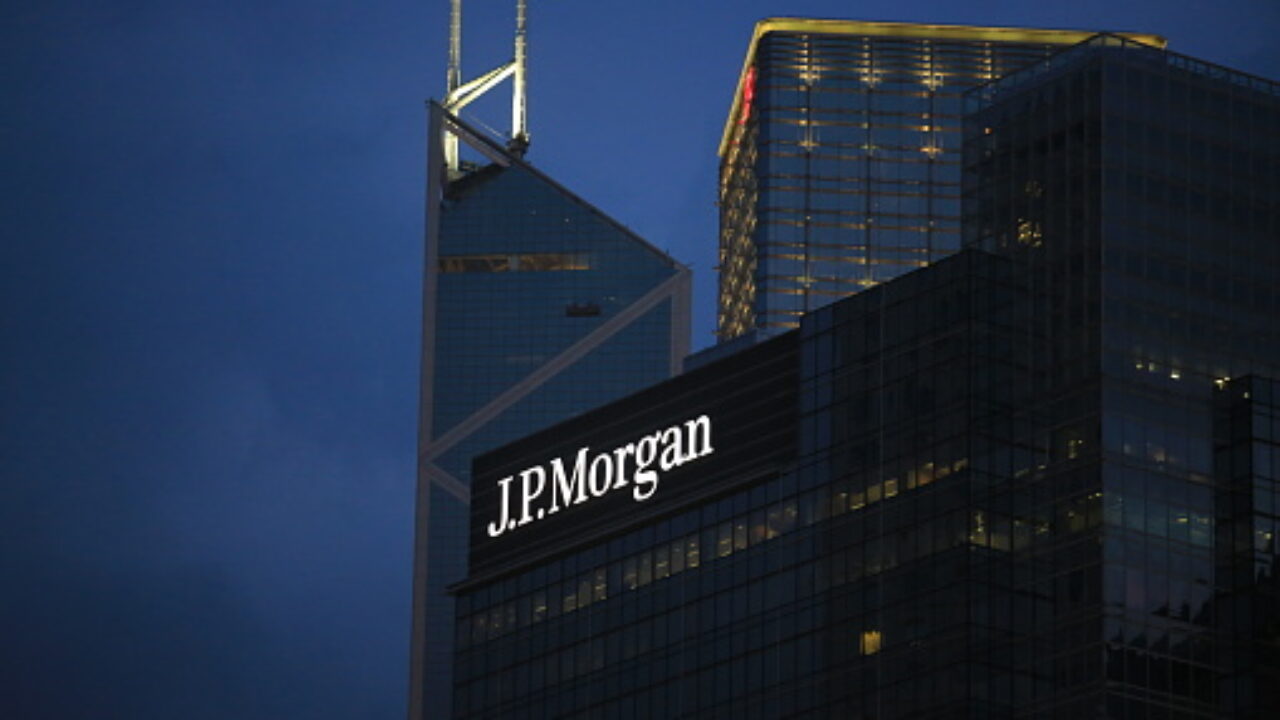
Hong Kong, October 08 2017: JPMorgan Chase & Co. building in Central, Hong Kong . JPMorgan is a Swiss global financial services company, One of big financial company in the world

JPMorgan, one of the largest banks in the world, is looking into how blockchain technology can improve its payment systems. Blockchain is a distributed ledger that records transactions in a secure and transparent way, without the need for intermediaries. Blockchain has the potential to reduce costs, increase efficiency, and enhance security for both the bank and its customers.

JPMorgan has been experimenting with blockchain since 2015, when it launched its own private network called Quorum. cis based on Ethereum, a popular public blockchain platform that supports smart contracts, or self-executing agreements that can automate business processes. Quorum allows JPMorgan to create customized applications for different use cases, such as trade finance, capital markets, and asset management.

Blockchain technology is a revolutionary innovation that has the potential to transform the way we conduct transactions, store data, and verify identities. JPMorgan, one of the world’s leading financial institutions, has been actively experimenting with blockchain since 2015, and has developed or joined several projects that aim to leverage the benefits of this technology for various purposes.

One of the most notable applications that JPMorgan has developed on Quorum is JPM Coin, a digital currency that facilitates instant cross-border payments. JPM Coin is backed by US dollars held in JPMorgan’s accounts and can be exchanged for other currencies or assets on the blockchain. JPM Coin is currently being tested by a select group of clients, and aims to improve the speed, efficiency, and security of international payments.

Quorum is a permissioned version of Ethereum, developed by JPMorgan in collaboration with other financial institutions, that aims to provide high scalability, privacy and security for enterprise applications. JPM Coin is designed to facilitate instant and secure payments between JPMorgan’s clients, using blockchain technology to reduce transaction costs and settlement times. JPM Coin is not a cryptocurrency, but a stablecoin, meaning that it is pegged to the US dollar and backed by JPMorgan’s reserves.

Unlike other stablecoins, such as Tether or USDC, JPM Coin is not available to the public, but only to JPMorgan’s institutional customers who have undergone regulatory checks and compliance procedures. JPM Coin is currently in the pilot phase, with a small number of clients testing its functionality and performance.

JPMorgan plans to expand the use of JPM Coin to other markets and currencies in the future, as well as to explore other applications of Quorum, such as tokenization of assets, smart contracts and decentralized finance. JPMorgan’s move to create its own digital currency is a significant milestone for the adoption of blockchain technology in the banking sector, as it demonstrates the potential benefits and challenges of integrating this innovative technology into existing financial systems and processes.

Blockchain technology has the potential to transform the way payments are made and processed across different platforms and systems. One of the challenges that the financial industry faces is the lack of interoperability between various payment networks, which can result in inefficiencies, delays and high costs. JPMorgan, one of the leading global banks, is exploring how blockchain can address this challenge and enable seamless and secure transactions between different payment systems.

In a recent blog post, JPMorgan’s head of blockchain research, Umar Farooq, explained how the bank is leveraging its own blockchain platform, Quorum, to create solutions that can connect different payment networks and facilitate cross-border payments. Quorum is an enterprise-grade version of Ethereum that JPMorgan developed in collaboration with other partners. It is designed to offer high scalability, privacy and security for various use cases in the financial sector.

One of the solutions that JPMorgan is developing on Quorum is the Interbank Information Network (IIN), which is a network of over 400 banks that share information and process payments using blockchain. IIN aims to reduce the friction and costs associated with cross-border payments by enabling faster and more transparent communication and verification among participating banks. IIN also allows banks to exchange data on sanctions screening, compliance checks and fraud prevention.

Another solution that JPMorgan is working on is the JPM Coin, which is a digital token that represents a fiat currency (such as US dollar or euro) and can be used for instant settlement of transactions on Quorum. JPM Coin can enable faster and cheaper transfers of value between different payment systems, such as SWIFT, PayPal or Alipay. JPM Coin can also be used for other purposes, such as tokenizing assets, issuing stablecoins or facilitating smart contracts.

JPMorgan’s blockchain initiatives demonstrate how the bank is embracing innovation and technology to improve its services and operations. By using blockchain to enable interoperability between different payment systems, JPMorgan can offer its clients more efficient, secure and cost-effective solutions for their payment needs.