DD
MM
YYYY

PAGES

DD
MM
YYYY

spot_img

PAGES

Home Blog Page 3806

Nigerian Government Moves the NIMC to the Ministry of Interior

0
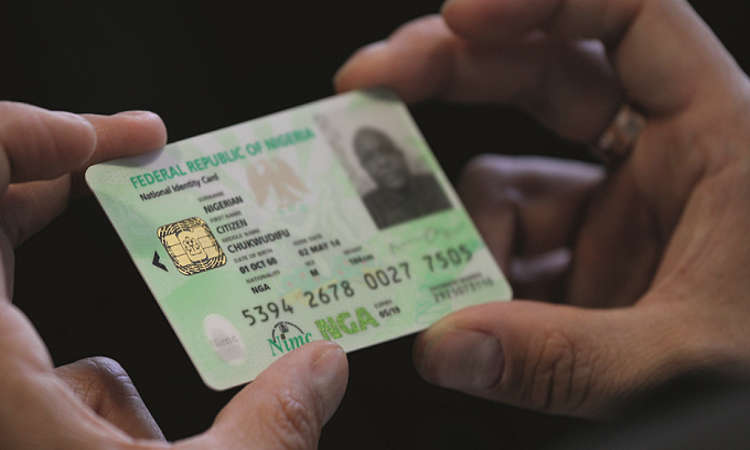
National ID Card, Nigeria

The federal government has moved the National Identity Management Commission (NIMC) to the Ministry of Interior, following a series of controversies that has characterized the operation of the institution.

The NIMC was under the Ministry of Communications, Innovation and Digital Economy – where it was tasked to link personal phone numbers to NIN under the supervision of the Nigerian Communication Commission (NCC).

In 2017, former President Muhammadu Buhari issued an order for data-collecting agencies to align their data with the NIMC. As a component of this data harmonization initiative, Professor Umar Garba Danbatta, the Executive Chairman of the Nigerian Communications Commission (NCC), directed that the data collected during SIM registration should be shared with the NIMC.

The move was aimed at enhancing the accuracy and completeness of individuals’ identity records, facilitating better coordination of data across government agencies, and improving the overall efficiency of identity management systems in Nigeria.

The agency (the NIMC) is tasked with a specific mandate in Nigeria. This mandate includes:

  • Establishing, owning, operating, maintaining, and managing the national identity database in Nigeria.
  • Registering individuals covered by the NIMC Act No. 23 of 2007.
  • Assigning a unique National Identification Number (NIN) to registered individuals.
  • Issuing General Multi-Purpose Cards (GMPC) to citizens of Nigeria and legal residents within the country.

In essence, the NIMC is responsible for creating and maintaining a comprehensive database of individuals’ identity information in Nigeria, ensuring that each person is assigned a unique identification number (NIN), and providing multi-purpose identity cards to eligible individuals, whether they are Nigerian citizens or legally residing in the country. This helps in various aspects of governance, public services, and identity verification within Nigeria.

However, the operation of the NIMC has come under heavy criticism, especially at the peak of the federal government’s push to link NIN to phone numbers.

The news that it has been moved to the Ministry of Interior was confirmed by Alao Babatunde, spokesperson to Olubunmi Tunji-Ojo, the Minister of Interior.

“I can confirm the NIMC is now domiciled in the Ministry of Interior,” Alao said. “The minister announced it during a meeting with the past comptroller-general of immigration on Tuesday.”

The statement indicates that the National Identity Management Commission (NIMC) was relocated to the Interior Ministry, possibly as part of an effort to enhance security measures related to identity data and management in Nigeria.

The move to the Interior Ministry may be seen as a strategic decision aimed at ensuring the highest level of security for the data and processes associated with identity management.

This alignment may facilitate better coordination and collaboration among various government agencies responsible for collecting and managing identity-related data.

By integrating these efforts within the Interior Ministry, the goal is likely to create a more efficient and seamless system where agencies responsible for identity data gathering and management, as well as those focused on maintaining security and protecting citizens’ lives, can work together more effectively and harmoniously. This integration could lead to improved overall security and identity management practices in the country.

“The benefit– when we say internal security, how do you secure people you don’t have their database?” Alao asked.

“It is to have the database of the people you want to secure. That helps all agencies involved with better coordination and to function better.”

The former Director General of the Bureau of Public Sector Reforms (BPSR) Dr. Joe Abah said moving NIMC to the Ministry of Communications and Digital Economy never made any sense in the first place.

“Like passports, Identity management should be with Interior,” he added.
US Congressman introduces bill to ban the Federal Reserve from creating a CBDC

0

A new bill introduced by US Congressman Warren Davidson aims to prevent the Federal Reserve from creating a central bank digital currency (CBDC). The bill, titled the “No Digital Dollar Act”, would prohibit the Fed from issuing, circulating, or distributing any digital version of the US dollar.

The bill argues that a CBDC would undermine the sovereignty of the US dollar, create privacy and security risks for consumers, and threaten the stability of the financial system. The bill also claims that a CBDC would violate the Constitution, which grants Congress the power to coin money and regulate its value.

The bill is co-sponsored by several Republican lawmakers, who share Davidson’s concerns about the potential impact of a CBDC on the US economy and national security. They argue that a CBDC would give the Fed too much power and discretion over monetary policy, and that it would enable the government to track and control every transaction made by Americans.

The bill comes as the Fed is exploring the possibility of developing a CBDC, which it calls a digital dollar. The Fed has launched a research project to study the benefits and risks of a CBDC and plans to publish a report by mid-2022. The Fed has stated that it will not issue a CBDC without consulting with Congress and the public, and that it will ensure that a CBDC would complement, not replace, cash and other forms of money.

The bill faces an uncertain future in Congress, as it is likely to face opposition from Democrats, who control both chambers. Some Democrats have expressed support for a CBDC, arguing that it would increase financial inclusion, reduce transaction costs, and enhance monetary policy effectiveness. They also contend that a CBDC would help the US maintain its global leadership in innovation and finance, as other countries are already developing their own CBDCs.

Some Democrats have expressed support for a CBDC, or a central bank digital currency, as a way to modernize the US financial system and provide more access and inclusion to the unbanked and underbanked populations. A CBDC is a digital form of fiat money that is issued and backed by the central bank and can be used as legal tender for transactions. Unlike cryptocurrencies, which are decentralized and operate on blockchain networks, a CBDC would be centralized and regulated by the government.

In a recent hearing of the House Financial Services Committee, several Democratic lawmakers voiced their interest in exploring the potential benefits and challenges of creating a US CBDC. Representative Maxine Waters, the chairwoman of the committee, said that she was “very interested” in the idea and that she had formed a task force to study it. Representative David Scott, another Democrat, said that he was “very much in favor” of a CBDC and that he believed it would help reduce the racial wealth gap and financial exclusion.

However, not everyone is convinced that a CBDC is a good idea. Some Republicans have expressed skepticism and opposition to the proposal, arguing that it would pose risks to privacy, security, and monetary sovereignty. Representative Patrick McHenry, the ranking member of the committee, said that he was “not sold” on the need for a CBDC and that he feared it would undermine the role of banks and private sector innovation. Representative Andy Barr, another Republican, said that he was “very concerned” about the implications of a CBDC for monetary policy and fiscal discipline.

The debate over a CBDC is not unique to the US. Many other countries are also exploring or developing their own digital currencies, such as China, which has already launched a pilot program for its digital yuan. The Federal Reserve, the US central bank, has been conducting research on the topic and plans to release a discussion paper later this year. The paper will outline the Fed’s goals, objectives, and criteria for evaluating a potential CBDC, as well as solicit public feedback on the issue.

A CBDC could have significant implications for the future of money and finance in the US and around the world. It could offer advantages such as faster payments, lower costs, greater financial inclusion, and more resilience to shocks. It could also pose challenges such as technical complexity, cyberattacks, privacy breaches, regulatory uncertainty, and unintended consequences for monetary policy and financial stability. The pros and cons of a CBDC need to be carefully weighed and assessed before making any decisions on whether to pursue it or not.

BNB VS BUSD – What’s The Difference?

1

 There are now two cryptocurrencies available on Binance: Binance Coin (BNB) and Binance USD (BUSD).

Given that each has unique qualities, it begs the issue of why both are seen as essential components of the Binance ecosystem.

What are the differences between BNB and BUSD, and can they be used interchangeably?

Despite the fact that Binance founded both, their goals are very different. In addition to facilitating transactions (including the conversion of BUSD to BNB) and providing trading fee incentives on the platform, BNB serves as the utility token for the Binance Exchange and Binance Smart Chain. The BUSD cryptocurrency, on the other hand, is categorized as a stablecoin with a value that is closely tied to the US dollar and is intended for usage in the cryptocurrency market.

The differences between these two cryptocurrencies are clarified by the thorough comparison that follows:

Use Cases

Binance Coin was initially only used to get rebates on trading commissions. Reducing fees by using BNB was a benefit that persisted at a 25% discount until 2022, after which it would gradually drop from 25% to 6.75% during the succeeding years. BNB’s utility was expanded with the launch of the Binance Smart Chain, which later served as the engine for the whole Binance ecosystem. Pancakeswap became as one of the most well-known initiatives thanks to its expansion, which enabled a number of other projects. BNB also acts as an authorization mechanism for transactions on the Binance Smart Chain.

The BUSD Stablecoin

BUSD, on the other hand, performs as a stablecoin since its value is inextricably linked to the US dollar. As a result, 1 BUSD seeks to precisely equal 1 USD. BUSD has a higher percentage of cash and cash equivalents, making up 96% of its reserves, compared to other stablecoins like USDT, which only have 2.9% of their reserves in cash. The redemption of 1 BUSD should theoretically result in the payment of 1 USD because the value of BUSD is directly supported by the US dollar. It’s crucial to remember that BUSD abides by strict rules and complies with the requirements of the New York State Department of Financial Services (NYDFS). BUSD has the ability to spark interest while being mostly utilized as a trading pair with other cryptocurrencies.

Corporate Support for BNB and BUSD

Binance Exchange introduced BNB as its utility token back in 2017. In contrast, Binance developed BUSD in partnership with Paxos, a financial services company based in New York. All of the US currency backing the BUSD reserves is pledged as security. It’s important to note that the establishment of BUSD came two years after that of BNB.

Stability of Value

BUSD experiences significantly fewer price volatility than BNB because it is a stablecoin. Due to Binance’s practice of buying and burning BNB tokens, which effectively reduces their supply and creates the possibility of price fluctuations, BNB’s value is more volatile. BNB is therefore the more uncertain token to possess. However, keeping BNB for a long time may result in appreciation for individuals who have faith in the Binance ecosystem.

Existing Trading Pairings  

Trading any cryptocurrency on Changehero.io is feasible using either BNB or BUSD, making it possible to convert BTC to BNB or other cryptocurrencies. BNB and BUSD are widely accepted on the site for buying a wide range of cryptocurrencies because Binance developed both of them. The price of BNB’s trading pairs can be more volatile, which could affect how much Bitcoin one buys; in contrast, the price of BUSD’s trading pairings tends to be more stable.

The AI-brewer and -blender at Coca-Cola

0

This is fascinating – the AI-brewer at Coca-Cola: “Coca-Cola closely guards its original formula, but it’s making no secret of what’s behind its latest release: artificial intelligence. The new limited-edition beverage, dubbed Coca-Cola Y3000, says “Co-Created with AI” right on the can. The company used AI to both combine flavors people associate with the future and to come up with a mood board that inspired the package design. The flavor is part of the Coca-Cola Creations line designed to appeal to younger consumers. Other major brands, including Beck’s and Mars, have similarly used AI to develop new flavors.”

  • Coca-Cola has launched Coca-Cola Y3000, a beverage the company said is the first flavor co-created with human and artificial intelligence. 
  • Coca-Cola Y3000 is the latest limited-edition flavor to launch under its Coca-Cola Creations platform and the third one to debut this year. Y3000 Zero Sugar and a full-sugar version are being launched in select markets around the world, with both options being sold in the United States.  
  • Coca-Cola started the Creations platform in 2022 to highlight the company’s signature beverage while drawing in younger consumers. So far, it has launched seven flavors.

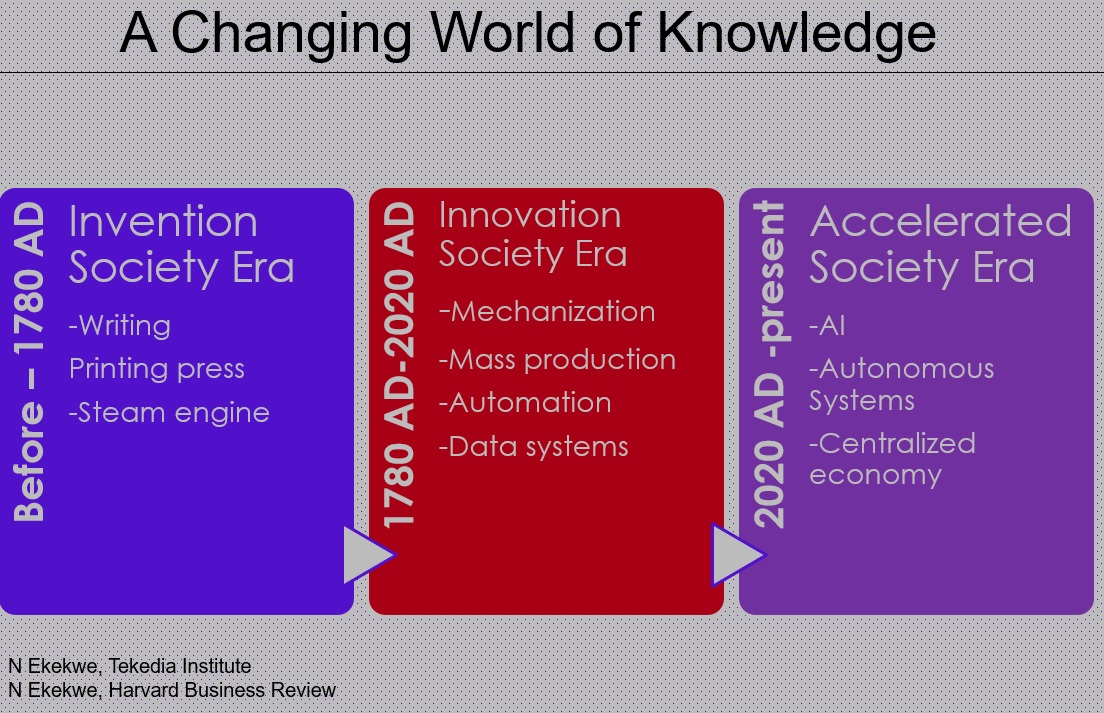
This is the new age and it is going to be amazing. Yes, the accelerated society era is here.

Portfolio Business Review on Saturday, Mecho Raises $2.4M

0

Greetings! This is a friendly reminder that H2 2023 Business Review is scheduled as follows:

Date: Saturday, Sept 16, 2023

Time: 4-6pm WAT

Zoom link: please login and get it here.

As we meet on Saturday, we report that Mecho Autotech, one of our portfolio firms, raised $2.4m today. You can read the news on TechCrunch here

New Investment Cycle will begin on Oct 2, 2023. On that date, the startups for this cycle will be published here. We will update the community once they are live.

Regards,

Tekedia Capital Team