DD
MM
YYYY

PAGES

DD
MM
YYYY

spot_img

PAGES

Home Blog Page 3808

BRICS: A Multi Polar World Order

0

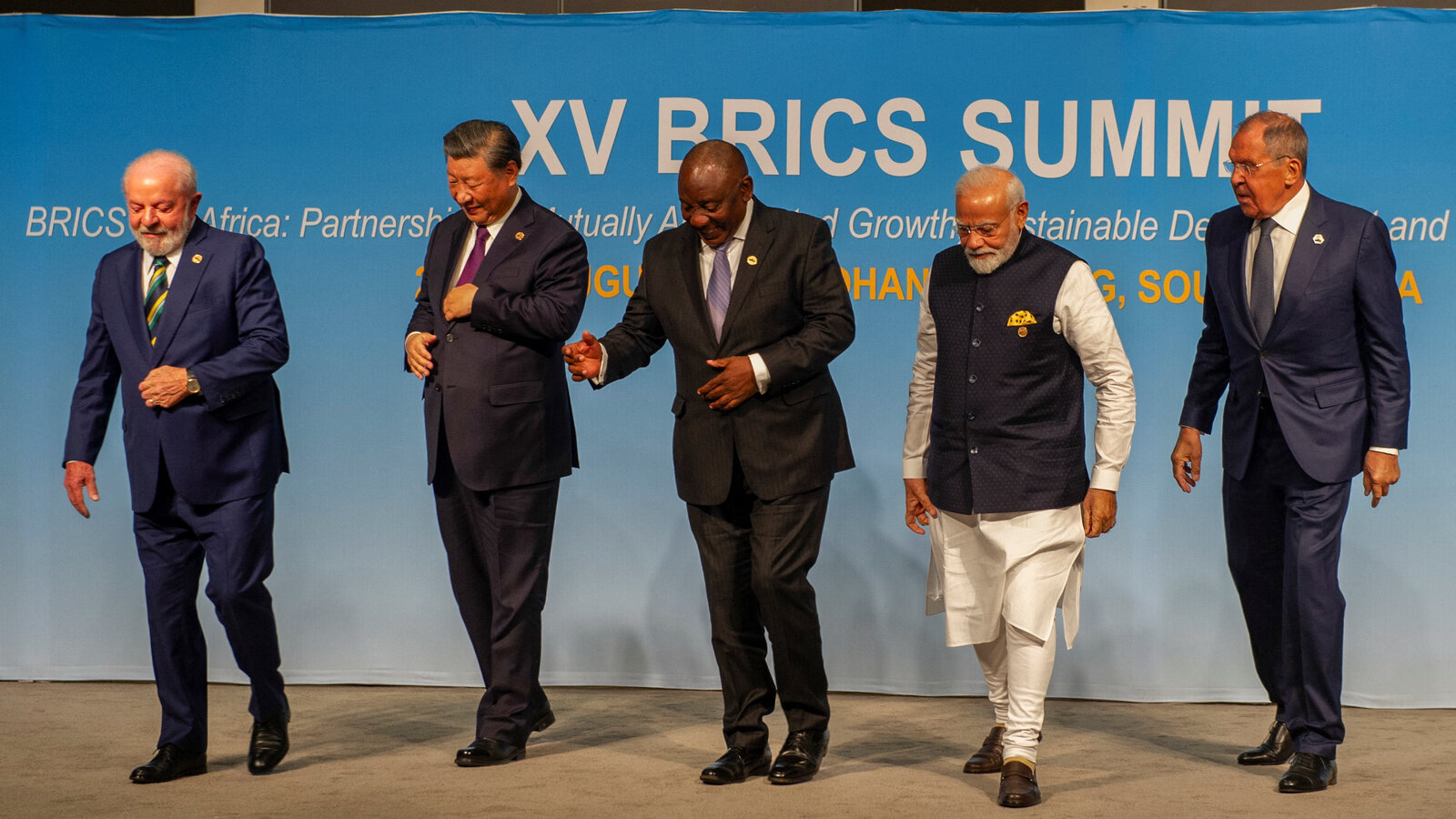
The BRICS + 6 summits, which brought together the leaders of Brazil, Russia, India, China, South Africa and six other emerging economies, concluded last week with a joint declaration that emphasized the need for multilateralism, cooperation and dialogue in addressing global challenges. However, the summit also highlighted the deepening rift between China and the US, as the two superpowers clashed over issues such as trade, human rights, cybersecurity and regional security.

China’s President Xi Jinping used the occasion to showcase his vision of a “community of shared future for mankind”, which he said was based on mutual respect, equality and win-win cooperation. He also called for the reform of the global governance system to better reflect the interests and voices of developing countries.

China bans the use of iPhones in government agencies. The order was given to officials at central government agencies not to use Apple’s iPhones and other foreign-branded devices for work or bring them into the office. The ban came at such a critical time – ahead of an Apple event next week, at which Apple is expected to launch a new line of iPhones and other Apple products. With this ban, Huawei is expected to take executive dominance in China.

So far, China and Russia are technically out of the G20 and won’t be attending this year’s summit in India. Mexico will also not be attending. And even though the Indians are hosting the summit this year, the Indian PM said he won’t be attending the United Nations General Assembly (UNGA) and didn’t give any serious reason why.

When asked what he thought was responsible for the Chinese and Russian leaders’ decision to skip the summit, India’s External Affairs Minister, Jaishankar rightly said their decision has nothing to do with India. Truly it has nothing to do with India. It has everything to do with Agreements to consolidate on BRICS and move forward without delay.

It’s like dating the wrong partner in a relationship and suddenly finding the right one. You might want to be considerate and take it easy with withdrawal, but sometimes, delay can be dangerous. It gets to a point where you just go right on ahead and call it off once and for all, so you can concentrate and build your new relationship and jointly make it succeed. This is what I believe is going on. The key BRICS arrowheads seem to have made up their minds to sever ties with the entangling old order, so they can focus more on building a formidable alternative to the aging Unipolar world order.

Can you imagine that Russia and Saudi Arabia, America’s one-time strong ally, are going ahead with their voluntary oil production cuts of 1.3 million barrels per day, despite America’s best efforts and pressure on Saudis not to go that route. Today, Senior officials from the Biden Admin are on their way to Saudi Arabia to see if they can figure out what in the world is going on.

I bet they won’t. Because, like I said earlier, it’s game on with BRICS. You can’t have that much concentration of power in one place – BRICS +6 and not put structures in place to consolidate. It’s happening before our eyes and I doubt that G20 and most of the other unipolar-affiliated organizations will ever be the same again, after this year’s events.

The US, however, was not impressed by China’s diplomatic charm offensive. The US delegation, led by Secretary of State Antony Blinken, accused China of engaging in “coercive and unfair” economic practices, violating human rights in Xinjiang and Hong Kong, undermining democracy in Taiwan and elsewhere, and threatening regional stability in the South China Sea and the Taiwan Strait. Blinken also criticized China for its lack of transparency and accountability in handling the COVID-19 pandemic and urged other countries to join the US in holding China to account.

The summit exposed the growing divergence between China and the US on their visions and values for the world order. While China seeks to expand its influence and leadership through initiatives such as the Belt and Road Initiative, the Asian Infrastructure Investment Bank and the Regional Comprehensive Economic Partnership, the US seeks to counter China’s rise and defend its primacy through alliances such as the Quad, the AUKUS and the Trans-Pacific Partnership. The two sides also have different views on issues such as climate change, nuclear proliferation, human rights and democracy.

The BRICS plus 6 summits did not result in any major breakthroughs or agreements between China and the US. Instead, it showed that the Sino-US tension has reached a new high, and that the prospects for cooperation are dimming. The summit also raised questions about the role and relevance of BRICS in a changing world.

While BRICS was originally conceived as a platform for cooperation among emerging economies with common interests and challenges, it now faces internal divisions and external pressures that undermine its cohesion and effectiveness. The BRICS plus 6 summits may have been an attempt by China to revitalize BRICS and expand its influence, but it also revealed the limits and challenges of such an endeavor.


Nigeria’s Central Bank Announces Move to Clear $10bn FX Backlog in Two Weeks

0

The Central Bank of Nigeria (CBN) is reportedly collaborating with commercial banks to clear the nation’s $10 billion foreign exchange backlog within the next two weeks.

The move comes amid the foreign exchange crisis that has seen Nigeria default on many of its international financial obligations, particularly the repatriation of revenues for multinationals operating in the country.

The FX obligations have piled up over time, reaching an estimated $10 billion and compounding the challenge of attracting Foreign Direct Investment (FDI) and Portfolio Direct Investment (PDI).

The central bank’s move to clear the backlog was reportedly disclosed by the acting governor, Folashodun Shonubi. He shared this update at a forum held on Tuesday in Lagos, during a discussion about the ongoing issues in the foreign exchange market.

According to him, the clearance of these backlogs would be accomplished through various mechanisms within the forex market. He said that banks, which have been responsible for 75% of forex transactions, will play crucial roles in ensuring the successful clearance of the backlog.

“As a matter of fact, there is a large amount of the obligations that the banks in Nigeria have already taken on. So, what happened was that at maturity, they made the foreign exchange available for those who needed to use them like importers and what have you.

“There are some customers who still have their obligations and part of the restructuring with the banks in Nigeria, is also to clear that backlog. That is something we have been discussing for a while. I expect that we will do that, within the next one or two weeks.

“What that means, therefore, is that this obligation that people keep on talking about will not be left. Today, we still intervene in the market, so it is not as if it has affected our ability to make monies available to banks in the Investors and Exporters foreign exchange market,” Shonubi said.

Nigeria’s unmet FX demand has created chaos in its business ecosystem, leaving a huge vacuum that needs to be urgently filled with significant dollar liquidity.
Last year, Emirates Airlines suspended its operation in Nigeria due to its failure to repatriate nearly $90 million of its revenue. The fund is part of millions of dollars belonging to multinationals trapped in the country due to dollar scarcity.

The $10 billion backlog originates from unfulfilled foreign exchange demands from various sectors, including investors and exporters, manufacturers, importers procuring raw materials from overseas, parents funding their children’s tuition fees abroad, Nigerians covering medical expenses abroad, and travelers obtaining Business Travel Allowances (BTAs) and Personal Travel Allowances (PTA) since 2015.

In June, the central bank announced a move to eliminate multiple exchange rates by removing control pegs around the dollar. The decision has seen the naira plunge below N920 per dollar in the parallel market, and around N744 in the Investor & Exporter window now known as the Nigerian Foreign Exchange Market (NFEM).

The apex bank has failed to effect a convergence since then, despite new policies targeting the unification of exchange rates. This backdrop has been attributed to FX illiquidity at the banks, forcing people in need of dollars to the parallel market and thereby widening the exchange rate gap between the two FX sources.

Shonubi pointed out that the CBN’s contribution to the FX market is less than 25%, and he emphasized that the significance and extent of the apex bank’s intervention in the market are sometimes overstated, especially when considering the volume of forex interventions.

“When we look at the volumes, the Central Bank of Nigeria today contributes less than 25% into the forex market. And the aim if you remember about a year and a half ago, was that the Central Bank did not want to be a regular player, but more of intervening to stabilize the rates and that is where we are going,’’ he said.

The CBN had earlier accused banks of diverting FX inflow from diaspora remittances to the parallel market, compounding the illiquidity in the I & E window.

Shonubi did not give details of how the CBN will achieve its aim to clear the $10 billion backlog in two weeks but disclosed that the banks have times three, access to more FX than the CBN.

“There is so much more foreign exchange that people don’t talk about, that is being made available through the banking system and banks are selling to their customers. It doesn’t come to the Central Bank, it doesn’t appear as part of the demand that comes to us. And it is significant. It is almost three times what we as a Central Bank make available.’’

Analysts say the move, if successful, will significantly boost naira’s performance in the FX market.

Nestcoin Announces The Raise of $1.9 Million Strategic Round, to Drive The Growth of Its Onboard Wallet

0

Nigerian web3 startup company Nestcoin, has announced the raise of $1.9 million strategic round to drive the growth of its onboard wallet, to provide solutions for future financing.

The investment round was led by Hashed Emergent, with participation from other investors which include, Adverse, Base Ecosystem Fund, Alter Global, Magic Fund, 4DX Ventures, and a few angel investors.

Speaking on the funds raised, Nestcoin Co-Founder Yele Bademosi said,

“We want our members to be involved in creating the product they want, so they can create the future they envision. We consider what we have built to be the foundation and invite our users to join our community to build the ideal financial product. Essentially, we are giving you the power to ‘Be Your Own Bank.

“We firmly believe that access to high-quality financial services should be universally available, regardless of one’s geographical location. We are committed to achieving this goal by creating a delightful and simple-to-use self-custody digital wallet”.

Nestcoin’s successful strategic funding round, backed by prominent investors and their unwavering commitment to building Onboard Wallet, highlights their dedication to democratizing financial access.

As the company prepares to launch Onboard Virtual Cards, it is poised to further simplify cryptocurrency transactions, bridging the gap between traditional and digital finance. With strong industry support and a user-centric approach, Nestcoin is paving the way for a more inclusive and equitable financial landscape.

At Nestcoin, the startup recognizes the limitations of traditional finance in providing solutions for the future. This capital will allow the company to focus its efforts on building Onboard Wallet, a borderless digital money app for anyone anywhere.

The company said it plans to launch “Onboard Virtual Cards, a service that will allow Onboard users to spend their crypto as easily as cash, making both online and in-store payments possible across more than 160 countries.

Onboard currently has over 10,000 users, according to Nestcoin, but with the ongoing crypto winter, Onboard needs users to see crypto beyond speculation; a dilemma facing the entire crypto ecosystem.

As the company prepares to launch Onboard Virtual Cards, it is poised to further simplify cryptocurrency transactions, bridging the gap between traditional and digital finance. With strong industry support and a user-centric approach, Nestcoin is paving the way for a more inclusive and equitable financial landscape.

Nestcoin’s strategic investment is coming amidst a period when crypto/Web3 startups are reeling from a severe crypto winter that has seen several crypto companies shut down. However, Nestcoin seems to have weathered the storm as it has been able to pull off this investment despite the unfriendly Web3/ Crypto climate.

Founded in 2021, Nestcoin is committed to creating equal access to economic opportunities by building products to make modern finance borderless, trusted, and delightful. The startup wants to create wealth with crypto beyond trading.

40% of Fintech Apps in Nigeria Exhibit Vulnerabilities That Could Lead to High-impact and Critical Issues – Appknox

0

Appknox, a plug-and-play security platform that helps developers, and enterprises to build a safe and secure mobile ecosystem, has said that a significant amount of Fintech apps in Nigeria have high-risk security elements.

In a recent round-table meeting, the CEO and Co-founder of Appknox, Harshit Agarwal, disclosed that 40% of Fintech apps in Nigeria are vulnerable to high-impact and critical issues.

In an analysis conducted by the firm, more than 80% of these vulnerable apps lack sufficient code obfuscation, a critical security measure.

Additionally, 60% of them have broken or disabled SSL and certificate pinning, which are essential for secure data transmission. Also, 35% are affected by network security misconfiguration and 25% indicate recording of audio and screen activity. 

Speaking on the theme of the meeting, “Next Generation Mobile App Security Empowering Cybersecurity Leaders in the Digital Age”, Appknox CEO Agarwal said,

“Any application on the internet can be hacked, it’s all about how proactively the affected organizations can find and resolve the issue as well as releasing an update.

“Using the current landscape of mobile security applications in Nigeria, the country, and Africa at large are driving many innovation and business opportunities. For this reason, it’s very critical that every growing business needs security”.

Also speaking at the meeting, the Chief Technology Officer of CED Technologies, Chukwuebuka Ume-Ezeoke said that while companies are building technology solutions that aid in simplifying mobile transactions for users, they must first recognize the need for a strong security system.

In his words,

“While companies like Appknox and CED Technologies have built a safe and secured mobile ecosystem using a system plus human approach to outsmart hackers, we believe that it is everyone’s business to think security first, recheck and double check so that businesses can be as secure as possible”.

Mr. Chukwuebuka highlighted the need for a multi-layered security approach and encouraged all stakeholders, including fintech app founders, to prioritize security.

He further noted that the meeting was put together to bring security leaders, bank executives, chief information security officers, heads of risk management, and founders of different FinTech companies to encourage everyone to take security as a top-most priority, while creating solutions that help and better the life of users.

Notably, API (Application Programming Interface) security was also discussed as a critical aspect of mobile app security.

As advancements in technology and banking solutions have brought simplicity and ease to financial services, it is worth knowing that these advancements have also created room for more modern and advanced fraud schemes.

Therefore, Fintech companies in Nigeria must treat security as an important priority when creating platforms, as failure to ensure robust security systems can risk the platforms to security breaches, resulting in loss in substantial amounts.

To mitigate these security concerns, these companies must invest in robust security measures, regular security audits, penetration testing, and user education.

Compliance with relevant regulations and standards is crucial, and partnerships with trusted third parties should be established cautiously. Continuous monitoring and rapid response to security incidents are also essential in maintaining the security of Nigerian fintech apps.

By staying vigilant and taking proactive steps to prevent security attacks, fintech companies can protect their bottom line and maintain the trust of their customers.

Atiku Calls Nigeria’s Presidential Election Petition Tribunal (PEPT) Judgment “Unacceptable”, Heads to Supreme Court

0

Former Vice President Atiku Abubakar has reacted to the judgment of the Presidential Election Petition Tribunal (PEPT), which threw his suit as well as those of others challenging the outcome of the February 25 presidential polls, out.

In a press briefing on Thursday, Atiku, who was declared the 1st runner-up by the Independent National Electoral Commission (INEC), said the court judgment failed to restore confidence in our dreams of free and fair elections devoid of human manipulations.

The PEPT quashed all the charges against President Bola Tinubu, upholding his victory. However, a large section of Nigerians have decried the judgment – calling it a miscarriage of justice.

Atiku said although he still has respect for the judiciary, the judgment is unacceptable. He said he has asked his lawyers to activate [his] constitutionally guaranteed rights of appeal to the higher court, which, in the instance, is the Supreme Court.

“It is my conviction that the electoral process in Nigeria should be devoid of untidy manipulations and that the outcome of every election should be a perfect reflection of the wishes of the electorate,” he said.

Read his full statement below:

Good afternoon, Gentlemen of the Press.

I am here today to give my official reaction to the judgment delivered yesterday by the Presidential Election Petition Court on the 2023 presidential election.

As you already know, I approached the court following the declaration by INEC that the APC and its candidate are the winners of the February 25, Presidential Election.

My decision to go to court is anchored in my belief that the court is the sanctuary of justice. The journey of my political career, as you know, holds so much to the courage and fearless decisions of our judiciary.

Indeed, I am no stranger to legal battles, and I can say that I have a fair idea of how the court system works. All through my career as a politician, I have been a fighter, and I must say that I have found the judiciary as a worthy pillar to rest on in the pursuit of justice.

The last presidential election in our country and the way it was managed by the electoral umpire, the Independent National Electoral Commission, leaves behind unenviable precedents, which I believe the courts have a duty to redress. Our gains in ensuring transparent elections through the deployment of technology was heavily compromised by INEC in the way it managed the last presidential election, and I am afraid that the judgment of the court as rendered by the Presidential Election Petition Tribunal yesterday, failed to restore confidence in our dreams of free and fair elections devoid of human manipulations.

Like I did say at the beginning of this legal battle when I instructed my lawyers to file my petition challenging the outcome of the presidential election, my ultimate goal in this pursuit is to ensure that democracy is further strengthened through the principles and processes of fair hearing.

Gentlemen of the press, I take great pains to tell you that the decision of the court of first instance on this matter utterly falls far short of that expectation. I am therefore here to tell you that, though the judgment of the court yesterday is respected, it is a judgment that I refuse to accept. I refuse to accept the judgment because I believe that it is bereft of substantial justice. However, the disappointment in the verdict of the court can never destroy my confidence in the judiciary.

Consequently, I have asked my lawyers to activate my constitutionally guaranteed rights of appeal to the higher court, which, in the instance, is the Supreme Court. It is my conviction that the electoral process in Nigeria should be devoid of untidy manipulations and that the outcome of every election should be a perfect reflection of the wishes of the electorate. I believe that such is the only way through which our democracy can have a manifest expression of its true meaning. Whether I prevail in this quest or not, the record of my effort in ensuring an order of credible elections in Nigeria shall remain for the future generations to evaluate.

On this note, I urge all my supporters to remain steadfast. I urge them to take solace in an immortal lesson I learned from my leader and mentor, the late Shehu Yar’Adua, that losing a battle is less important than losing the war. We might have lost a battle yesterday, but the war is well ahead of us. And I believe that with our hopes in God, we shall win the war of restoring confidence in our electoral system.

Distinguished ladies and gentlemen of the Press, I thank you for your attention.

Atiku Abubakar, GCON
Waziri Adamawa
Vice President of Nigeria (1999 – 2007)
2023 PDP Presidential Candidate