DD
MM
YYYY

PAGES

DD
MM
YYYY

spot_img

PAGES

Home Blog Page 3809

Tekedia Capital is a Big Force for Good, Next Investment Cycle Begins Oct 2, 2023

0

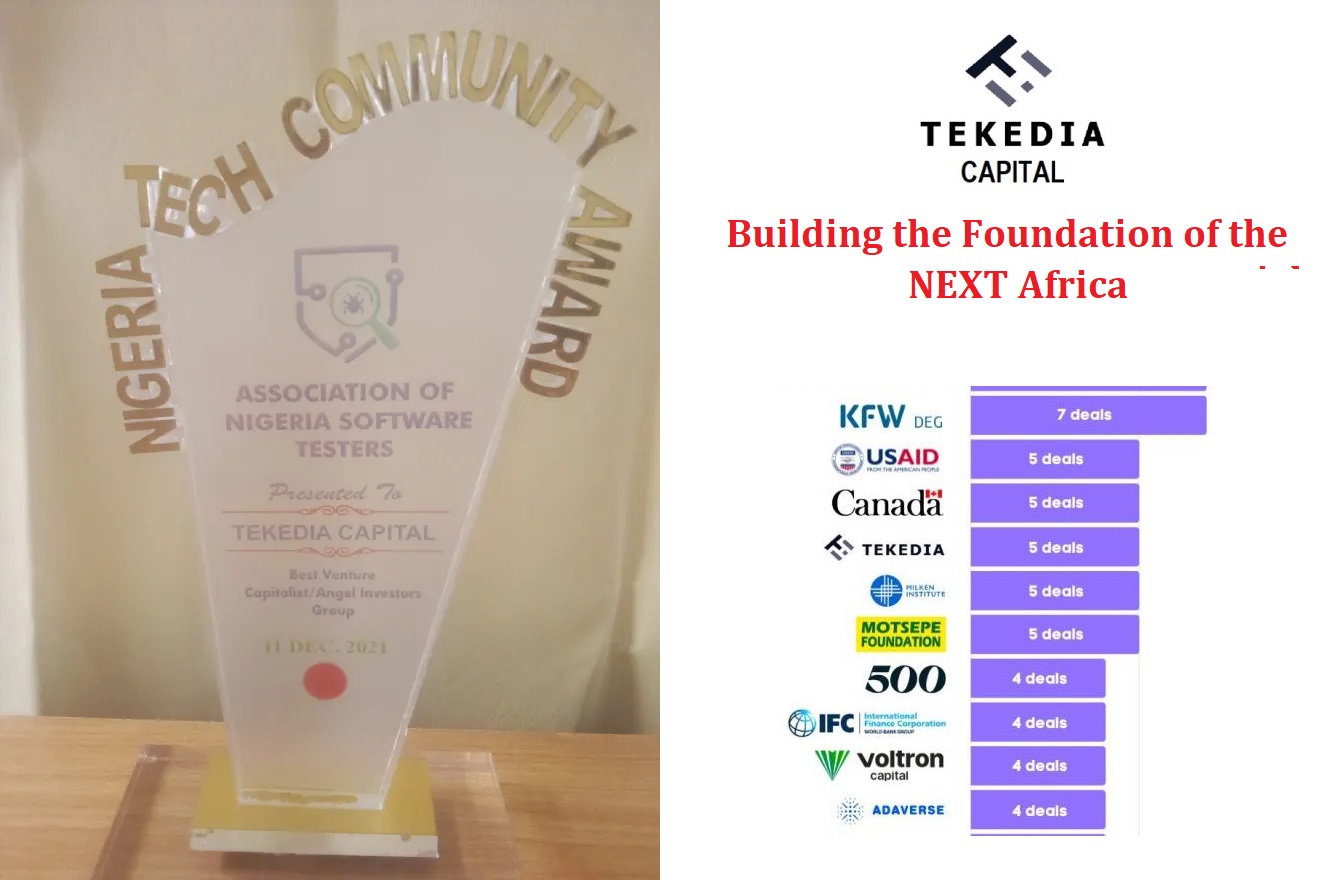
In the ranking of leading investors in Africa in the last half of the year, we were ranked #4  in Africa as we did more deals than any native African investor. Only funds from the US government, Canadian and German governments were ahead. And that counting even missed at least an extra 4 investments we did. On indigenous investors, we were #1.

Tekedia Capital is a big force for good: we invest millions of dollars yearly in early stage companies. And we have received awards from the innovators, builders and the communities. Today, with hundreds of members, we’re one of the largest investment syndicates in Africa.The next investment cycle begins Oct 2, 2023, and I welcome you to join Tekedia Capital Syndicate. We’re bringing companies you will admire. Yes, category-king companies at scale.

“Uwa bu ahia” [the world is a marketplace], an Africa axiom says. And if that is so, you need money to play it. Yes, African startups need capital, and they want you. Go here and learn how to become a member of Africa’s funder of its next future via entrepreneurial capitalism.

Ndubuisi Ekekwe,

Chairman, Tekedia Capital, USA

How AI Is Transforming Education

0

I remember coming across an article recently about having AI-powered church services with AI-inspired sermons from robots. It was a lot more vivid than this, but I’m sure you get the point. AI will make its way (with or without our approval) into nearly every aspect of human life. Let’s consider what classroom education is becoming or could look like with AI integration.

Integrating AI into education has paved the way for innovative approaches to learning and assessment. Two remarkable advancements in this realm are Intelligent Tutoring Systems (ITS) and Automated Grading. These AI-powered tools reshape how students learn, teachers instruct, and conduct assessments.

Intelligent Tutoring Systems (ITS)

Intelligent Tutoring Systems represent a paradigm shift in the education landscape. These systems leverage AI algorithms to provide personalized and adaptive learning experiences, mimicking the role of a human tutor. ITS is not a one-size-fits-all solution; it tailors instruction based on individual student needs and learning styles. And this is one thing that may not have been easy to achieve with humans. Here’s how it is making a difference.

Personalized Learning: One of the primary advantages of ITS is its ability to personalize the learning journey for each student. By analyzing data on student performance, preferences, and learning history, ITS delivers content that aligns with the student’s level of proficiency. This targeted approach ensures that students are challenged at their level while avoiding frustration.

Adaptive Feedback: It doesn’t just provide answers; it offers meaningful feedback and explanations. Students receive instant feedback on their answers, enabling them to understand and learn from their mistakes. This real-time guidance helps reinforce concepts and build a deeper understanding.

Continuous Assessment: Traditional assessments often occur at fixed intervals, leaving gaps in understanding. ITS, on the other hand, assesses students continuously. No need to wait until the end of a term or semester. This ongoing assessment allows for a more accurate representation of a student’s knowledge and progress, enabling educators to intervene when necessary.

Flexibility and Accessibility: Intelligent Tutoring Systems are accessible anytime and anywhere, breaking down barriers to education. Students can learn at their own pace, and the system adapts to their availability, making education more accessible to a diverse range of learners.

Automated Grading

The process of grading assignments and assessments can be time-consuming for educators. Automated Grading, powered by AI, streamlines this process while maintaining fairness, accuracy, and objectivity. Nice features if you ask me, and here’s how it’s impacting education.

Efficiency and Time Savings: Grading assignments and exams takes a . Automated Grading reduces this workload significantly by using AI algorithms to assess objective questions, essays, and even coding assignments. This enables teachers to focus more on providing valuable feedback and interacting with students.

Consistency and Fairness: Grading can be influenced by various factors, such as mood and personal biases. Automated Grading ensures consistency by applying the same criteria to every student’s work. This leads to fairer assessment outcomes.

Instant Feedback: Students receive immediate feedback on their assignments, allowing them to understand their mistakes and areas for improvement promptly. This feedback loop enhances the learning process and helps students make corrections before moving forward.

Data-Driven Insights: Automated Grading generates valuable data on student performance, highlighting trends, strengths, and weaknesses. Educators can use this data to tailor their instruction more effectively and address specific areas where students struggle.

Any reason we should worry?

While the integration of AI into education holds immense promise, some challenges must be addressed. Data privacy, the potential for over-reliance on technology, and the need for human interaction in learning are critical concerns. Humans will always need to connect with humans.

Striking a balance between AI-driven instruction and human guidance will be the ultimate key to providing a holistic educational experience.

How Blockchain can Transform Industries Through Transparency and Efficiency

0

Blockchain technology was once synonymous solely with cryptocurrencies like Bitcoin and the like. But it has now transcended its initial limitations to reshape various business sectors. Its decentralized and transparent nature holds immense potential for optimizing processes, enhancing security, and fostering trust.

Let’s look at how blockchain is being applied across different industries to bolster productivity and streamline operations and how forward-thinking businesses are harnessing its power.

First, let’s understand Blockchain Technology

At its core, blockchain is a decentralized digital ledger that records transactions in a secure, transparent, and immutable manner—no wonder it was first associated with just cryptocurrencies. Blockchain consists of a chain of interconnected blocks, each containing a set of transactions. Once a block is added, it cannot be altered, thus ensuring data integrity. The technology operates on a network of computers, where each participant validates and maintains the ledger.

What industries can it be applied to?

Supply Chain Management: The complex web of global supply chains often leads to opacity and inefficiencies. Blockchain brings transparency by recording every step of a product’s journey, from raw material to end consumer. This traceability can help detect and rectify bottlenecks, reduce fraud, and ensure authenticity. Walmart, for instance, employs blockchain to trace the origin of food products and enhance food safety.

Financial Services: Blockchain’s impact on finance is profound. It streamlines cross-border payments by eliminating intermediaries and reducing transaction times and costs. This is quite similar to what it was doing in cryptocurrencies already. Smart contracts, self-executing contracts with predefined rules, automate complex processes like loan approvals and trade settlements. Ripple, a blockchain-based payment protocol, aims to revolutionize real-time gross settlement systems.

Healthcare: Data security and interoperability are critical in healthcare. Blockchain allows the secure sharing of medical records among authorized parties, ensuring accuracy and privacy. Additionally, the technology aids in tracking the supply chain of pharmaceuticals, preventing counterfeit drugs from entering the market.

Real Estate: Property transactions are often marred by time-consuming paperwork and intermediaries. Blockchain simplifies the process by securely recording property ownership and transaction history. This can reduce fraud, accelerate title transfers, and enhance overall transparency.

Energy and Utilities: Blockchain transforms energy trading and management. It enables peer-to-peer energy exchanges, where consumers with excess energy can sell to others in need. This decentralized approach cuts costs, optimizes energy consumption, and promotes using renewable sources.

Retail and E-Commerce: Blockchain enhances consumer trust by validating the authenticity of products and tracking their origin. This is particularly crucial for luxury goods and products with complex supply chains. Retail giants like Overstock and Amazon are exploring blockchain applications to enhance customer experience and supply chain transparency.

Digital Identity: Traditional identity systems are vulnerable to breaches and misuse. Blockchain provides a secure and tamper-proof way to manage digital identities. Individuals can control their data and grant access to specific attributes as needed, reducing identity theft risk.

More Prospects?

This article is in no way exhaustive. The application of blockchain technology extends into a whole lot more than these. I’d say that as long as a transaction involves the exchange of value between the parties, there will be an application for this technology.

Businesses across the globe are recognizing the potential of blockchain and investing in its integration. Consortia and partnerships are being formed to develop industry-specific blockchain solutions. Governments also explore blockchain for public services such as land registration and voting systems.

As blockchain evolves, challenges like scalability and regulatory concerns must be addressed. Moreover, the collaboration between industries, governments, and technology experts will play a pivotal role in unlocking its full potential.

Australia Rejects Labor Party’s Crypto Regulation Bill

0

The Australian government has decided to reject a bill that would have introduced new regulations for the cryptocurrency industry. The bill, which was proposed by the opposition Labor Party, aimed to create a legal framework for crypto assets and service providers, as well as to protect consumers and investors from fraud and scams.

The bill was based on the recommendations of a Senate inquiry into Australia’s future as a technology and financial centre, which was released in October 2022. The inquiry found that Australia was lagging behind other countries in terms of crypto innovation and adoption, and that a lack of regulation was creating uncertainty and risk for the industry.

The bill had several key features, such as:

Defining crypto assets as digital representations of value that are secured by cryptography and can be transferred, stored or traded electronically.

Establishing a licensing regime for crypto service providers, such as exchanges, wallets, custodians and brokers, and requiring them to comply with anti-money laundering and counter-terrorism financing rules, consumer protection laws and data privacy regulations.

Creating a registration system for crypto asset issuers, such as initial coin offerings (ICOs) and security token offerings (STOs) and requiring them to disclose relevant information to investors and regulators.

Setting up a dispute resolution mechanism for crypto-related complaints and disputes between consumers, investors and service providers.

Empowering the Australian Securities and Investments Commission (ASIC) to oversee and enforce the crypto regulations and to issue guidelines and standards for the industry.

The bill was rejected by the ruling Liberal-National Coalition, which argued that the proposed regulations were too restrictive and would stifle innovation and competition in the crypto sector. The Coalition also claimed that the existing laws and agencies were sufficient to deal with the risks and challenges posed by crypto.

The government claimed that it was already working on a comprehensive approach to crypto regulation, in consultation with relevant stakeholders and regulators. The government also said that it was monitoring the global developments and best practices in crypto regulation, and that it would adopt a balanced and proportionate response that would support the growth of the sector while ensuring consumer protection and financial stability.

However, the Labor Party and some crypto experts disagreed with the Coalition’s stance, saying that the bill was necessary to provide clarity and certainty for the crypto industry, as well as to align Australia with international standards and best practices. They also warned that without proper regulation, Australia could lose its competitive edge and reputation as a crypto-friendly nation.

The rejection of the bill has sparked mixed reactions from the crypto community in Australia and abroad. Some welcomed the decision, saying that it showed the government’s support for innovation and freedom in the crypto space. Others criticized the decision, saying that it showed the government’s ignorance and indifference towards the crypto industry and its potential benefits for the economy and society.

The Labor Party said that the bill would have provided much-needed clarity and certainty for the industry, as well as enhanced consumer confidence and trust. They also said that the bill would have aligned Australia with other jurisdictions that have already implemented or are developing crypto regulation, such as the UK, Singapore, Japan, Canada, and the US.

YCombinator’s Summer 2023 List Shows That Investors LOVE AI Startups

2

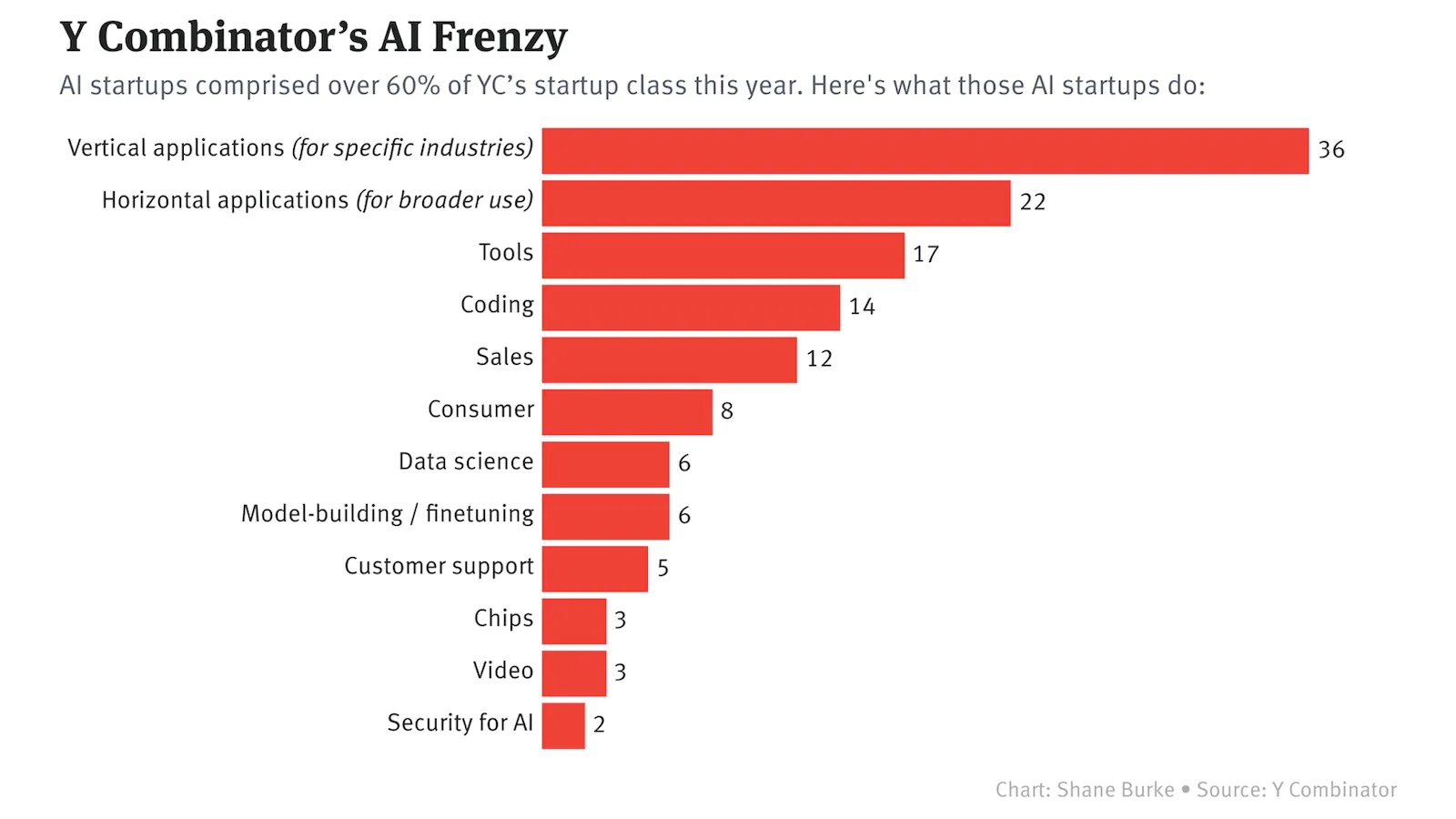
It is an intriguing data from Summer 2023 YCombinator class: of the  218 startups the US-based accelerator is backing, about 159 are broadly AI-anchored companies. The Information wrote: “This year, more than 60% of the group—or 134 startups—are building applications or tools around artificial intelligence, mostly related to large-language models, according to YC’s startup directory. In past YC groups, the percentage of startups bucketed under “AI” has trended below 20%. The huge increase demonstrates the recent fervor from founders and investors alike for this hyped-up industry.” Tekedia Capital Syndicate invested in one of these startups.

Then the shocker: of these 218 companies, only three are coming from Africa (Nigeria, Kenya/Rwanda and Congo/US/Canada)

Finding a native AI-company is challenging in Africa. To balance our portfolio for the next edition of Tekedia Capital investment cycle, as there is just no way we can present the startups to members without an AI company, we resorted to shopping at Silicon Valley, and co-invested with YCombinator.

But what is an AI company? But what is an AI company? In the simplest of terms, a company which applies the wonders of AI in any of the many things we do daily or in company operations, where AI becomes the catalyst to improve performance, reduce cost and accelerate innovation. Yes, you can have an AI application in your agro-business, retail business, ecommerce, etc. It is time for that transformation in Africa. If you are building a really good one, let me know