DD
MM
YYYY

PAGES

DD
MM
YYYY

spot_img

PAGES

Home Blog Page 3811

NATO signs key artillery ammunition contract, as US Airstrikes Iranian-backed militia in Iraq

0

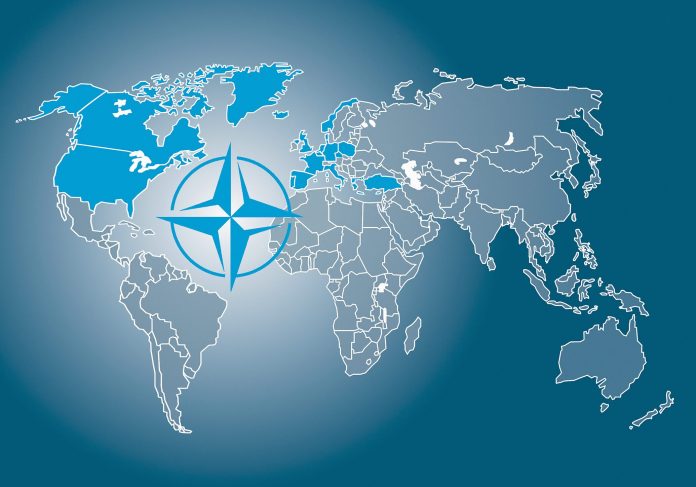
In a major boost to Ukraine’s defense capabilities, NATO has signed a contract with a leading European manufacturer to supply high-quality artillery ammunition to the Ukrainian armed forces. The contract, worth 120 million euros, was announced by NATO Secretary General Jens Stoltenberg during his visit to Kyiv on January 23, 2024.

The contract is part of NATO’s Enhanced Opportunities Partnership (EOP) with Ukraine, which aims to strengthen the interoperability and resilience of the Ukrainian military in the face of Russian aggression. The EOP also provides Ukraine with access to NATO training, exercises, and intelligence sharing.

NATO’s Enhanced Opportunities Partnership (EOP) with Ukraine is a strategic initiative that aims to deepen the cooperation and interoperability between the Alliance and its partner nation. The EOP was launched in 2014, in response to Russia’s illegal annexation of Crimea and its ongoing aggression in eastern Ukraine.

The EOP provides Ukraine with enhanced access to NATO exercises, training, and intelligence sharing, as well as political consultations and practical support. The EOP also recognizes Ukraine’s significant contributions to NATO’s operations and missions, such as in Afghanistan, Kosovo, and Iraq.

The EOP is not a path to NATO membership, nor does it imply any security guarantees from the Alliance. However, it does demonstrate NATO’s strong commitment to supporting Ukraine’s sovereignty, territorial integrity, and Euro-Atlantic aspirations.

The EOP also helps Ukraine to implement key reforms in the defense and security sector, such as strengthening civilian control, enhancing transparency and accountability, and improving interoperability with NATO forces. The EOP is based on mutual interests and shared values, and it respects Ukraine’s right to choose its own security arrangements.

The EOP is one of the most advanced forms of partnership that NATO offers to non-member countries. Only five other nations have been granted this status: Australia, Finland, Georgia, Jordan, and Sweden. The EOP reflects the high level of trust and confidence that exists between

The artillery ammunition contract is the largest single procurement deal under the EOP and will significantly enhance Ukraine’s ability to conduct effective and precise fire support missions. The ammunition, which includes 155 mm and 122 mm shells, is compatible with both NATO and Ukrainian artillery systems, and meets the highest standards of safety and reliability.

The contract also includes a provision for the transfer of technology and know-how from the European manufacturer to a Ukrainian company, which will enable Ukraine to produce its own artillery ammunition in the future. This will create jobs, boost the local economy, and reduce Ukraine’s dependence on foreign suppliers.

Stoltenberg hailed the contract as a concrete example of NATO’s unwavering support for Ukraine’s sovereignty and territorial integrity. He also reiterated NATO’s commitment to help Ukraine implement key reforms in the defense and security sector, such as improving civilian oversight, fighting corruption, and enhancing gender equality.

The contract is expected to be fulfilled by the end of 2025 and will provide Ukraine with enough artillery ammunition to sustain its operational needs for several years. The contract is funded by NATO’s Defense Capacity Building Trust Fund for Ukraine, which was established in 2015 and has received contributions from 18 NATO allies and partners.

US Airstrikes Iranian-backed militia in Iraq

The US military has conducted airstrikes against Iran-backed militia groups in Iraq, according to a statement from the Pentagon. The strikes targeted facilities used by the militia to launch drone attacks against US personnel and interests in the region. The Pentagon said the strikes were defensive and aimed at deterring future attacks.

The strikes were authorized by President Joe Biden, who said he acted to protect US personnel and partners. “We are not seeking to escalate the situation in Iraq or the region,” he said in a statement. “But we will always defend ourselves and our partners when necessary.”

The Pentagon said the strikes hit two locations in Syria and one in Iraq, near the border with Syria. The facilities were used by Kataib Hezbollah and Kataib Sayyid al-Shuhada, two of the most prominent Iran-backed militias operating in Iraq. The Pentagon said the militias have been responsible for several drone attacks against US and coalition forces in Iraq since April.

The strikes were met with condemnation from Iran and its allies, who accused the US of violating Iraq’s sovereignty and escalating tensions in the region. Iran’s foreign ministry spokesman Saeed Khatibzadeh said the US was “following a wrong path” and warned of “the consequences of such illegal acts”. Iraq’s prime minister Mustafa al-Kadhimi said he was “surprised” by the strikes and called for restraint from all parties.

The origins of the US-Iran standoff can be traced back to the 1953 coup d’état that overthrew the democratically elected Prime Minister Mohammad Mosaddegh and restored the monarchy under Shah Mohammad Reza Pahlavi. The coup was orchestrated by the CIA and the British intelligence, who feared that Mosaddegh would nationalize Iran’s oil industry and align with the Soviet Union.

The Shah ruled Iran with an iron fist, suppressing opposition and dissent, and relying on the US for military and economic support. He also embarked on a modernization and westernization program that alienated many traditional and religious sectors of Iranian society.

The Shah’s regime was toppled by the 1979 Islamic Revolution, led by Ayatollah Ruhollah Khomeini, who established an Islamic Republic based on the principle of velayat-e faqih (guardianship of the jurist). The revolution was a watershed moment in Iranian history, as it marked a rejection of foreign interference and a return to Islamic values and identity.

However, it also sparked a hostile reaction from the US, which severed diplomatic ties with Iran and imposed sanctions. The US also supported Iraq in its eight-year war with Iran, which claimed hundreds of thousands of lives on both sides.

The US-Iran standoff entered a new phase in 2002, when President George W. Bush labeled Iran as part of the “axis of evil”, along with Iraq and North Korea. Bush accused Iran of pursuing nuclear weapons and supporting terrorist groups such as Hezbollah and Hamas.

The US also accused Iran of meddling in Iraq and Afghanistan, where the US had invaded and toppled the regimes of Saddam Hussein and the Taliban. Iran denied these allegations and insisted that its nuclear program was peaceful and that its regional activities were legitimate.

The standoff reached a critical point in 2015, when Iran and six world powers (the US, China, Russia, France, Britain, and Germany) signed the Joint Comprehensive Plan of Action (JCPOA), also known as the Iran nuclear deal.

The deal required Iran to limit its nuclear activities in exchange for relief from sanctions. The deal was hailed as a diplomatic breakthrough that could pave the way for a broader dialogue and cooperation between Iran and the West.

However, it also faced fierce opposition from Israel, Saudi Arabia, and some US lawmakers, who argued that it was too lenient and did not address Iran’s ballistic missile program and its regional role.

The US and Iran have been locked in a standoff over Iran’s nuclear program and its regional influence. The Biden administration has expressed interest in reviving the 2015 nuclear deal that former president Donald Trump withdrew from in 2018, but talks have stalled over mutual demands for compliance.

The US has also accused Iran of supporting proxy groups that attack US interests and allies in the Middle East, while Iran has blamed the US for imposing crippling sanctions and fomenting instability in the region.

The US-Iran standoff is one of the most complex and consequential issues in the world today. It has implications not only for the two countries, but also for the region and the international community. It is a test of diplomacy, leadership, and vision. It is a challenge for peace, justice, and cooperation.
Interswitch Announces Strategic Expansion to Democratic Republic of Congo, Partners Multipay to Enhance The Payments Ecosystem

0

Leading African integrated payments and digital commerce platform company Interswitch, has announced its expansion to the Democratic Republic of Congo (DRC), partnering with DRC’s banking platform Multipay Congo, to enhance the payments ecosystem.

This partnership will provide innovative and secure digital payment solutions, which is a response to the evolving and expanding demands of the DRC market.

Multipay Congo will leverage Interswitch’s innovative technology to accelerate digital transformation, which will enhance financial inclusion and boost the country’s economic growth.

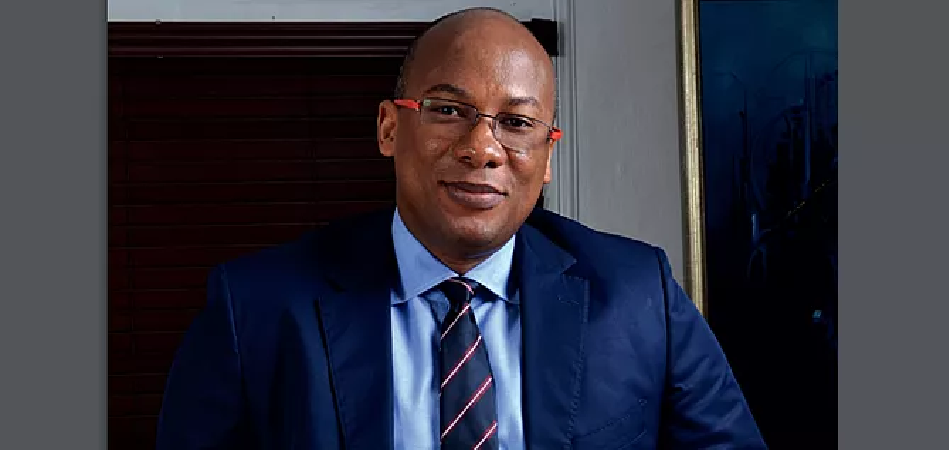
Speaking on the partnership, the Managing Director of Multipay Congo, Olivier Bueno said,

We are delighted to partner with Interswitch Limited, another pioneer and leader in the African digital payment space. This partnership will enable us to continue to pursue our ambition to actively participate in the financial inclusion objectives of the Central Bank of Congo by developing innovative, accessible, secure digital financial products and services, adapted to the needs of the population and businesses.

“By working with Interswitch, we leverage our local knowledge and skills to promote financial inclusion and economic empowerment, as well as to support the development of the digital economy in DRC and in the region.”

Also describing the partnership as a win-win for both organizations and the people of the Congo, Akeem Lawal, the Managing Director, of Payment Processing and Switching (Interswitch Purepay) said,

We are pleased to enter this partnership with Multipay Congo to bring our transformative payment solutions to the Democratic Republic of the Congo. The partnership aligns with our overarching efforts to expand our footprint across more African regions, developing and deploying innovative solutions until payments are a seamless part of everyday life on the continent.

“As part of this partnership, we will strengthen our presence in the DRC, one of Africa’s most populous and promising markets, so, we look forward to working with relevant regulators and other financial service providers to jointly provide safe, reliable, and convenient financial services to individuals and businesses in the DRC.”

Interswitch strategic partnership with Multipay Congo highlights the company’s dedication to bringing cutting-edge financial solutions to new frontiers and contributing to the economic development of the Democratic Republic of Congo.

Also, Multipay Congo will benefit from the innovative technology of Interswitch, which already operates in more than 14 African countries. By offering advanced digital payment solutions, both companies will drive the adoption of new technologies and encourage businesses and consumers to migrate to simpler, faster and more secure payment solutions.

AI is centralized, Crypto is decentralized

0

One of the most fundamental differences between artificial intelligence (AI) and cryptocurrency (crypto) is the way they are governed. AI is centralized, meaning that it is controlled by a single entity or authority, such as a company, a government, or a research institution. Crypto is decentralized, meaning that it is distributed among many nodes or participants, such as miners, validators, or users.

Why does this matter? Because centralization and decentralization have different implications for the development, innovation, and regulation of these technologies. We will explore some of the advantages and disadvantages of both approaches, and how they affect the future of AI and crypto.

Centralized AI has some benefits, such as:

Efficiency: Centralized AI can leverage economies of scale and optimize resources to achieve faster and more accurate results. For example, Google’s DeepMind can use its massive computing power and data to train its AI models on complex tasks like playing Go or chess.

Coordination: Centralized AI can coordinate its actions and goals with other agents or systems, such as humans or machines. For example, Amazon’s Alexa can integrate with various smart devices and services to provide a seamless user experience.

Accountability: Centralized AI can be held accountable for its decisions and actions by its owners or regulators. For example, Facebook’s AI can be audited and regulated by governments or courts to ensure that it complies with ethical and legal standards.

However, centralized AI also has some drawbacks, such as:

Vulnerability: Centralized AI can be vulnerable to attacks or failures that can compromise its functionality or security. For example, Tesla’s Autopilot can be hacked or malfunction due to software bugs or hardware issues.

Bias: Centralized AI can be biased or unfair due to the limitations or preferences of its creators or operators. For example, Microsoft’s Tay can be influenced by malicious users or trolls to generate racist or sexist comments.

Monopoly: Centralized AI can create monopolies or oligopolies that can stifle competition and innovation. For example, IBM’s Watson can dominate the market for cognitive computing and limit the opportunities for other players.

Decentralized crypto has some benefits, such as:

Resilience: Decentralized crypto can resist attacks or failures that can disrupt its functionality or security. For example, Bitcoin’s blockchain can withstand malicious attempts to alter or erase its transactions history.

Inclusion: Decentralized crypto can include anyone who wants to participate in its network or ecosystem. For example, Ethereum’s smart contracts can enable anyone to create or join decentralized applications (DApps) that offer various services or utilities.

Innovation: Decentralized crypto can foster innovation and diversity by allowing anyone to propose or implement new ideas or solutions. For example, Cardano’s governance system can enable anyone to vote on or fund the development of new features or improvements.

However, decentralized crypto also has some drawbacks, such as:

Scalability: Decentralized crypto can face scalability issues that can limit its performance or usability. For example, Bitcoin’s network can only process about 7 transactions per second (TPS), which is far below the demand of its users.

Complexity: Decentralized crypto can be complex and difficult to understand or use for the average person. For example, Ethereum’s gas fees can be unpredictable and confusing for newcomers who want to interact with its DApps.

Regulation: Decentralized crypto can be challenging to regulate or oversee by governments or authorities. For example, Monero’s privacy features can enable illicit activities or transactions that evade taxes or laws.

The Future of AI and Crypto

AI and crypto are two of the most disruptive and influential technologies of our time. They have the potential to transform various aspects of our society and economy, such as finance, health care, education, entertainment, and more. However, they also pose significant challenges and risks that need to be addressed and mitigated.

The question is: how will they coexist and collaborate in the future? Will they compete or complement each other? Will they converge or diverge? Will they create synergies or conflicts?

There is no definitive answer to these questions, as they depend on many factors and scenarios. However, one possible way to envision the future of AI and crypto is to consider four possible scenarios:

Scenario 1: Centralized AI + Centralized Crypto: In this scenario, both AI and crypto are controlled by centralized entities or authorities that have the power and resources to develop and deploy them. This scenario could offer high efficiency and coordination but also high vulnerability and monopoly.

Scenario 2: Centralized AI + Decentralized Crypto: In this scenario, AI is controlled by centralized entities or authorities while crypto is distributed among decentralized nodes or participants. This scenario could offer high accountability and resilience but also high bias and complexity.

Scenario 3: Decentralized AI + Centralized Crypto: In this scenario, AI is distributed among decentralized nodes or participants while crypto is controlled by centralized entities or authorities. This scenario could offer high inclusion and scalability but also high regulation and innovation.

Scenario 4: Decentralized AI + Decentralized Crypto: In this scenario, both AI and crypto are distributed among decentralized nodes or participants that have the autonomy and incentives to develop and deploy them. This scenario could offer high innovation and diversity but also high complexity and regulation.

Each scenario has its own advantages and disadvantages, opportunities and threats, benefits and costs. The future of AI and crypto will depend on how we choose or shape the scenario that best suits our needs and values. The choice is ours.

Tesla shares falls as earnings for Q4 2023 tumbled 40%

0

Tesla, the leading electric vehicle manufacturer, reported its fourth-quarter earnings for 2023 on Wednesday, January 24th. The company posted a revenue of $18.7 billion, a net income of $1.2 billion, and an earnings per share of $1.06. These figures were slightly below the analysts’ consensus estimates of $19.1 billion, $1.4 billion, and $1.12, respectively.

The company attributed the lower-than-expected results to several factors, including supply chain disruptions, chip shortages, labor costs, and increased competition from other EV makers. Tesla also faced some regulatory challenges in key markets such as China and Europe, where it faced scrutiny over its Autopilot system and battery safety.

The company said it earned $0.54 per share, down from $0.90 a year ago, and well below analysts’ expectations of $0.76. The lower earnings were attributed to higher costs, supply chain disruptions, and increased competition from rivals. Tesla is still the market leader in electric vehicles, with a market share of about 25%, according to research firm IHS Markit.

However, it faces increasing competition from traditional automakers like Ford, GM, Toyota, and Volkswagen, as well as newcomers like Lucid Motors and Rivian. These rivals have been ramping up their investments in electric vehicles, offering more models, lower prices, and better features than Tesla.

Tesla also missed its delivery target of 1.2 million vehicles for the year, delivering only 1.15 million, a 15% increase from 2022. The company blamed the shortfall on chip shortages, labor issues, and regulatory hurdles in some markets. Tesla said it expects to deliver 1.5 million vehicles in 2024 but warned that the outlook remains uncertain due to the ongoing challenges in the industry.

Elon Musk remained optimistic about the company’s long-term prospects, highlighting its innovations in battery technology, autonomous driving, and solar power. He also announced that Tesla will launch a new model, the Cybertruck, in the second half of 2024, which he said will be “the most advanced and futuristic vehicle ever made”. Musk also said that Tesla will continue to expand its global presence, especially in China and India, where it sees huge potential for growth”.

Tesla’s stock price has been volatile in recent months, as investors weigh the company’s growth prospects against its valuation and risks. Tesla is currently valued at about $800 billion, making it the most valuable car maker in the world by far. However, some analysts argue that Tesla is overvalued, given its low profitability, high debt, and legal troubles. Tesla is also facing several investigations and lawsuits from regulators and customers over its safety and quality issues.

Tesla’s earnings report comes at a critical time for the company, as it tries to maintain its competitive edge and justify its lofty valuation. The company will need to prove that it can overcome its operational challenges, deliver on its promises, and fend off its rivals in the fast-changing electric vehicle market.

Musk also highlighted some of the company’s achievements in 2023, such as reaching a 30% market share in the US EV market, achieving a 25% gross margin on its Model 3 and Model Y vehicles, and launching its Full Self-Driving subscription service. He said that Tesla was on track to achieve its long-term goal of producing 20 million vehicles per year by 2030.

Tesla’s stock price fell by 5% in after-hours trading following the earnings release, as some investors were disappointed by the company’s performance. However, some analysts maintained a bullish outlook on Tesla, citing its strong brand recognition, loyal customer base, innovation leadership, and global expansion potential.

Apple to launch a self-driving electric car in 2028

0

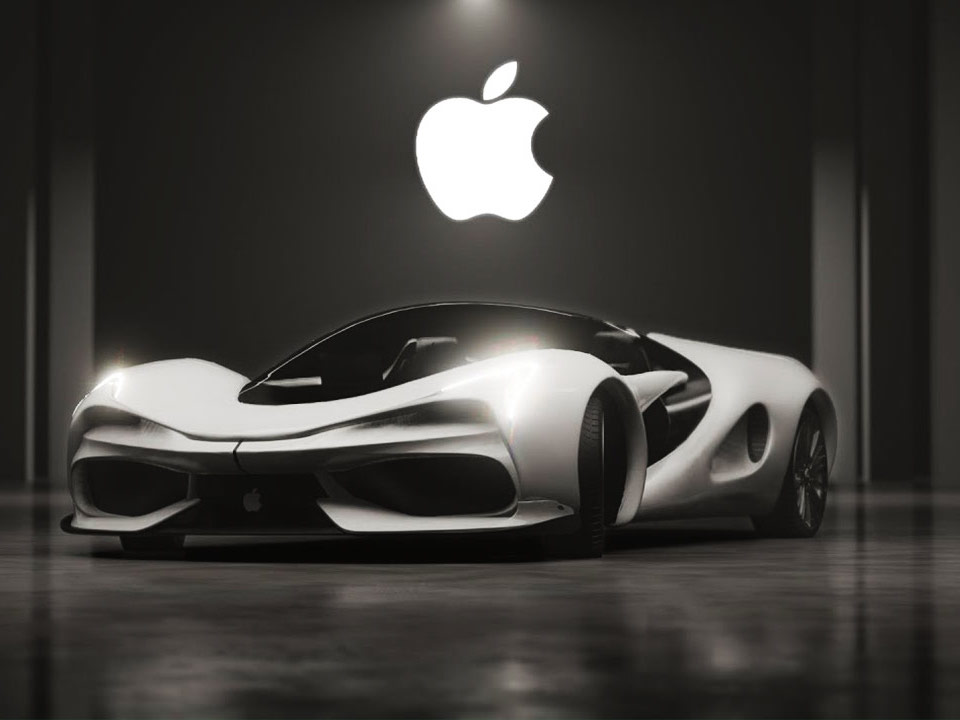
The tech giant Apple is gearing up to enter the automotive industry with a groundbreaking project: a self-driving electric car that could hit the market by 2028, according to Bloomberg.

The report, citing anonymous sources familiar with the matter, claims that Apple has been working on the car for several years under the codename Project Titan, and that it has assembled a team of experts in hardware, software, battery, and artificial intelligence to develop the vehicle.

The car is expected to feature a revolutionary battery design that would offer longer range and lower cost than the current options, as well as a sophisticated autonomous driving system that would rival or surpass those of Tesla, Waymo, and other competitors.

Apple has also been testing its self-driving technology on public roads in California since 2017, using modified Lexus SUVs equipped with sensors and cameras.

One of the main questions that arises from the news of an Apple car is how it would compare to Tesla, the leading company in the electric and self-driving car market. Tesla, founded by Elon Musk, has been producing and selling electric vehicles since 2008, and has developed a loyal fan base and a strong brand image.

Tesla has also been at the forefront of innovation in battery technology and autonomous driving software and has built a network of charging stations and service centers around the world.

However, Tesla has also faced some challenges and controversies, such as production delays, quality issues, legal disputes, and safety concerns. Some analysts have argued that Tesla’s valuation is too high and unsustainable, and that the company faces increasing competition from other automakers that are investing heavily in electric and self-driving cars. Tesla’s share price has fluctuated significantly over the years, reflecting the uncertainty and volatility of the market.

Apple, on the other hand, has a reputation for delivering high-quality products that combine design, functionality, and user experience. Apple has also been very successful in creating an ecosystem of devices and services that integrate seamlessly and generate loyal customers.

Apple has a huge cash reserve and a global reach that could give it an advantage over Tesla in terms of resources and scale. Apple also has a history of disrupting existing industries and creating new markets with its products, such as the iPod, iPhone, iPad, and Apple Watch.

However, Apple also faces some challenges and risks in entering the automotive industry. Apple has no experience in manufacturing or selling cars, and would have to deal with regulatory hurdles, safety issues, and supply chain problems.

Apple would also have to compete with not only Tesla, but also other established players in the industry, such as Toyota, Volkswagen, General Motors, Ford, Hyundai, Honda, Nissan, BMW, Mercedes-Benz, and others. Apple would also have to convince consumers that its car is worth buying over other options.

Apple has not officially confirmed or denied its plans to launch a car, but CEO Tim Cook has hinted at the company’s interest in transportation in several interviews. In 2017, he said that Apple was “focusing on autonomous systems” as “a core technology that we view as very important”.

In 2019, he said that Apple “loves to integrate hardware, software, and services, and find the intersection points of those because we think that’s where the magic occurs”.

The launch of an Apple car would mark a major shift for the company, which has been mainly focused on consumer electronics and online services in recent years. It would also pose a significant challenge to Tesla and other players in the automotive industry, which are already facing disruption from new entrants and changing consumer preferences.

However, some analysts have expressed skepticism about Apple’s ability to succeed in such a complex and competitive market. Either way, the prospect of an Apple car is generating a lot of buzz and speculation among fans, investors,
and industry watchers alike.

Apple is known for its innovation and secrecy, so it is possible that the company will surprise the world with a stunning product that will redefine the future of mobility. Or it may decide to scrap the project altogether, as it has done with other ambitious ventures in the past.