DD
MM
YYYY

PAGES

DD
MM
YYYY

spot_img

PAGES

Home Blog Page 3813

Digital Pound Legislation will provide protections to Privacy and Control

0

The UK government has announced that it will introduce legislation to regulate the use of digital pound, a new form of digital currency that will be backed by the Bank of England. The digital pound, also known as Britcoin, will be a complement to cash and bank deposits, and will aim to provide a secure and efficient way of making payments in the digital age.

According to the government, the digital pound legislation will ensure that users have adequate protections for their privacy and control over their money. The legislation will also set clear rules and standards for the providers of digital pound services, such as banks, fintech firms and payment platforms. The government said that it will consult with stakeholders and the public on the design and implementation of the digital pound system.

The government claimed that the digital pound will bring several benefits to the UK economy, such as:

Enhancing financial inclusion and access to digital payments for everyone. Supporting innovation and competition in the financial sector. Reducing costs and risks associated with cash handling and cross-border payments. Strengthening the resilience and stability of the payment system. Supporting the UK’s role as a global leader in fintech and digital finance

The government also said that it will work closely with the Bank of England, which will have the sole authority to issue and destroy digital pounds, as well as to oversee the monetary policy implications of the new currency. The Bank of England has been conducting research and experiments on the feasibility and impact of a central bank digital currency (CBDC) since 2015 and has recently established a CBDC unit to coordinate its work on the topic.

The Bank of England is exploring the possibility of creating a new form of digital money that would be issued by the central bank. This is known as a central bank digital currency (CBDC), and it could have significant implications for the future of money and payments in the UK.

A CBDC would be a new type of money that would exist alongside cash and bank deposits. It would be denominated in pounds sterling and backed by the Bank of England. Unlike cash, which is physical, or bank deposits, which are electronic, a CBDC would be digital and accessible through devices such as smartphones or computers.

The Bank of England has not decided whether to introduce a CBDC or not. It is still conducting research and experiments to understand the benefits, risks and challenges of a CBDC. The Bank is also engaging with stakeholders from the public sector, private sector and civil society to gather their views and feedback on a CBDC.

Some of the potential risks and challenges of a CBDC include:

Disrupting the banking sector by reducing the demand for bank deposits and affecting the profitability and business models of banks. Affecting privacy and data protection by creating new issues around the collection, storage and use of personal information related to CBDC transactions. Introducing operational and cyber risks by requiring a complex and secure technological infrastructure to support a CBDC.

The Bank of England is committed to ensuring that any decision on a CBDC is based on rigorous analysis and evidence. The Bank is also committed to ensuring that any CBDC would be designed in a way that respects the values and expectations of the British people, such as privacy, security and trust.

The UK is not the only country that is exploring the possibility of launching a CBDC. According to a recent survey by the Bank for International Settlements (BIS), 86% of central banks are actively researching CBDCs, 60% are experimenting with them, and 14% are deploying pilot projects. Some of the countries that have already launched or are planning to launch CBDCs include China, Sweden, Bahamas, Japan, South Korea and Nigeria.
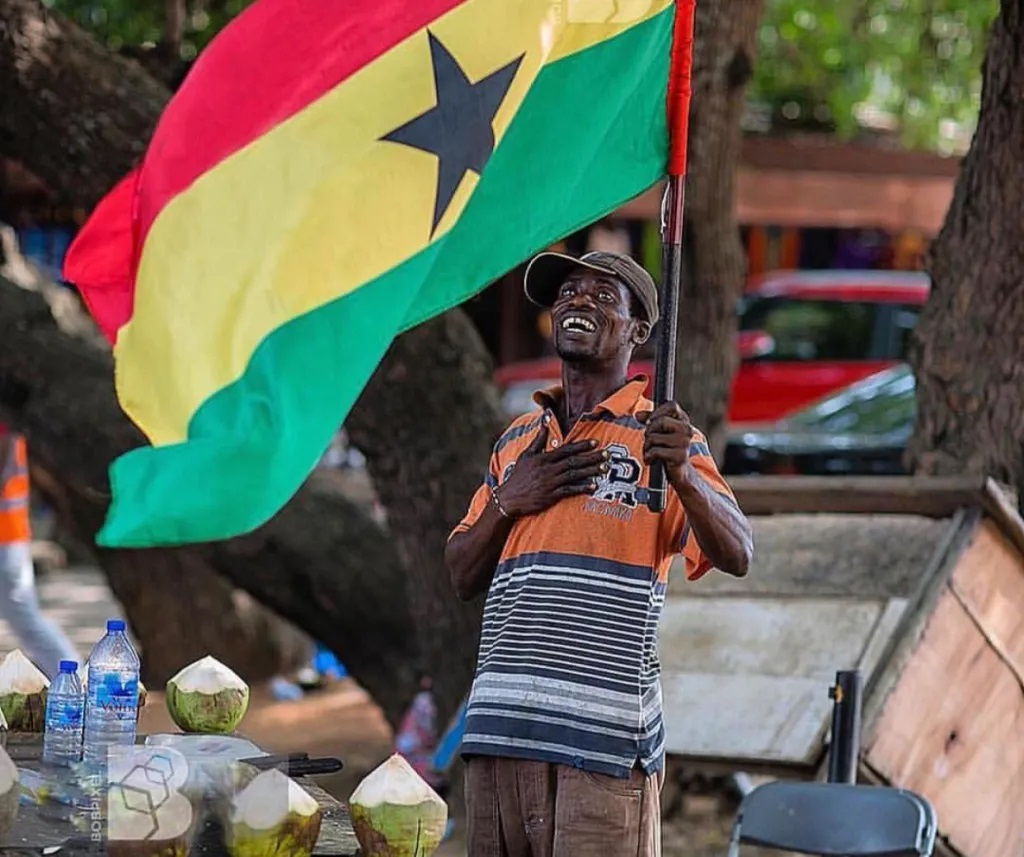

Ghana must completely abolish death penalty – Xavier Sosu

0

Ghana is one of the few countries in Africa that still retains the death penalty as a form of punishment for certain crimes. However, this practice is outdated, inhumane and ineffective. We will argue that Ghana must completely abolish the death penalty and adopt alternative measures to ensure justice and deterrence.

First, the death penalty violates the right to life, which is enshrined in the Universal Declaration of Human Rights and the African Charter on Human and Peoples’ Rights. The death penalty is irreversible and carries the risk of executing innocent people.

According to Amnesty International, at least 174 people have been exonerated from death row in the United States since 1973. How many more innocent lives have been lost in countries that lack adequate legal safeguards and transparency?

Second, the death penalty does not deter crime more than other forms of punishment. There is no conclusive evidence that the death penalty has any unique deterrent effect on crime. In fact, some studies have shown that the death penalty may actually increase the incidence of violent crimes by creating a culture of violence and devaluing human life. Moreover, the death penalty is often applied in a discriminatory and arbitrary manner, targeting the poor, the marginalized and the minorities.

Third, the death penalty is costly and wasteful. The death penalty imposes a huge financial burden on the state and the taxpayers, as it requires more resources for trials, appeals and security than other forms of punishment. The money spent on the death penalty could be better used for improving the criminal justice system, providing rehabilitation and reintegration programs for offenders, and supporting the victims and their families.

Therefore, I urge the government of Ghana to heed the call of Xavier Sosu, a human rights lawyer and a member of parliament, who has recently filed a private member’s bill to abolish the death penalty in Ghana.

This bill is supported by various civil society organizations, religious groups and international bodies. Abolishing the death penalty would be a progressive step for Ghana to uphold its human rights obligations, enhance its democratic credentials and join the global trend towards abolition.

The impact of abolishing the death penalty in Ghana

Ghana has recently joined the growing list of African countries that have abolished the death penalty for most crimes, a move that has been welcomed by human rights activists and advocates.

On 25 July 2023, Ghana’s Parliament voted to amend the country’s Criminal and Other Offences Act, 1960 and the Armed Forces Act, 1962, removing the use of capital punishment for crimes such as murder, genocide, piracy and smuggling. The only exception is for acts of high treason, which still carry the death penalty under the Constitution.

This decision is a major step forward for Ghana, which has not carried out an execution since 1993, but has continued to impose death sentences on its citizens. According to Amnesty International, seven new death sentences were handed down in Ghana in 2022, bringing the total number of people facing the death penalty in the country to 172 by the end of the year, including six women. These people are now likely to have their sentences commuted to life imprisonment once the President signs the bills into law.

The abolition of the death penalty in Ghana reflects the global trend towards ending this cruel, inhuman and degrading punishment, which violates the right to life as proclaimed in the Universal Declaration of Human Rights. As of today, 124 countries have abolished the death penalty for all crimes, and 41 others are considered abolitionist in practice as they have not carried out executions for more than 10 years.

In Africa, Ghana is the 29th country to abolish the death penalty for all or most crimes, following recent examples such as Sierra Leone, Burkina Faso, Central African Republic, Equatorial Guinea and Zambia.

The abolition of the death penalty in Ghana also shows that the country is committed to upholding human rights and respecting the dignity of its people. The death penalty is an unfair and discriminatory punishment that disproportionately affects vulnerable individuals from deprived backgrounds, who often lack access to adequate legal representation and fair trials. The death penalty also does not bring justice or closure to the victims of crime or their families, nor does it deter offenders from committing crimes.

The decision to abolish the death penalty in Ghana was initiated by Hon. Francis Xavier Sosu, a member of Parliament and a human rights lawyer, who introduced two bills to amend the relevant laws in June 2021.

He was supported by civil society organizations such as The Death Penalty Project and Amnesty International Ghana, who provided legal and technical assistance and campaigned for public awareness and support. He was also backed by President Nana Akufo-Addo, who expressed his willingness to remove the death penalty from the statute books in November 2022.

However, the abolition of the death penalty in Ghana is not complete yet. The Constitution still provides for high treason to be punishable by death, and this provision needs to be revised in order to achieve total abolition. Moreover, Ghana needs to establish an official moratorium on executions, commute all existing death sentences to prison terms, and ratify international treaties that prohibit the use of the death penalty, such as the Second Optional Protocol to the International Covenant on Civil and Political Rights.

The abolition of the death penalty in Ghana is a historic achievement that deserves recognition and celebration. It is also an opportunity for Ghana to continue its progress towards becoming a human rights champion in Africa and beyond. As Samira Daoud, Amnesty International’s West and Central Africa Director, said: “Today’s parliamentary vote is a major step by Ghana towards the abolition of the death penalty. It is also a victory for all those who have tirelessly campaigned to consign this cruel punishment to history and strengthen the protection of the right to life.”


First Transfer of a Sino Amazon / Sinosignia product successful

0

We are very happy that the first Sino Amazon / Sinosignia has been successfully transferred to its new owner.

The first transfer of ownership of a Sino Amazon has successfully taken place with a mint to OP. (Optimism)
It now displays on Opensea.

To view on Opensea CLICK HERE

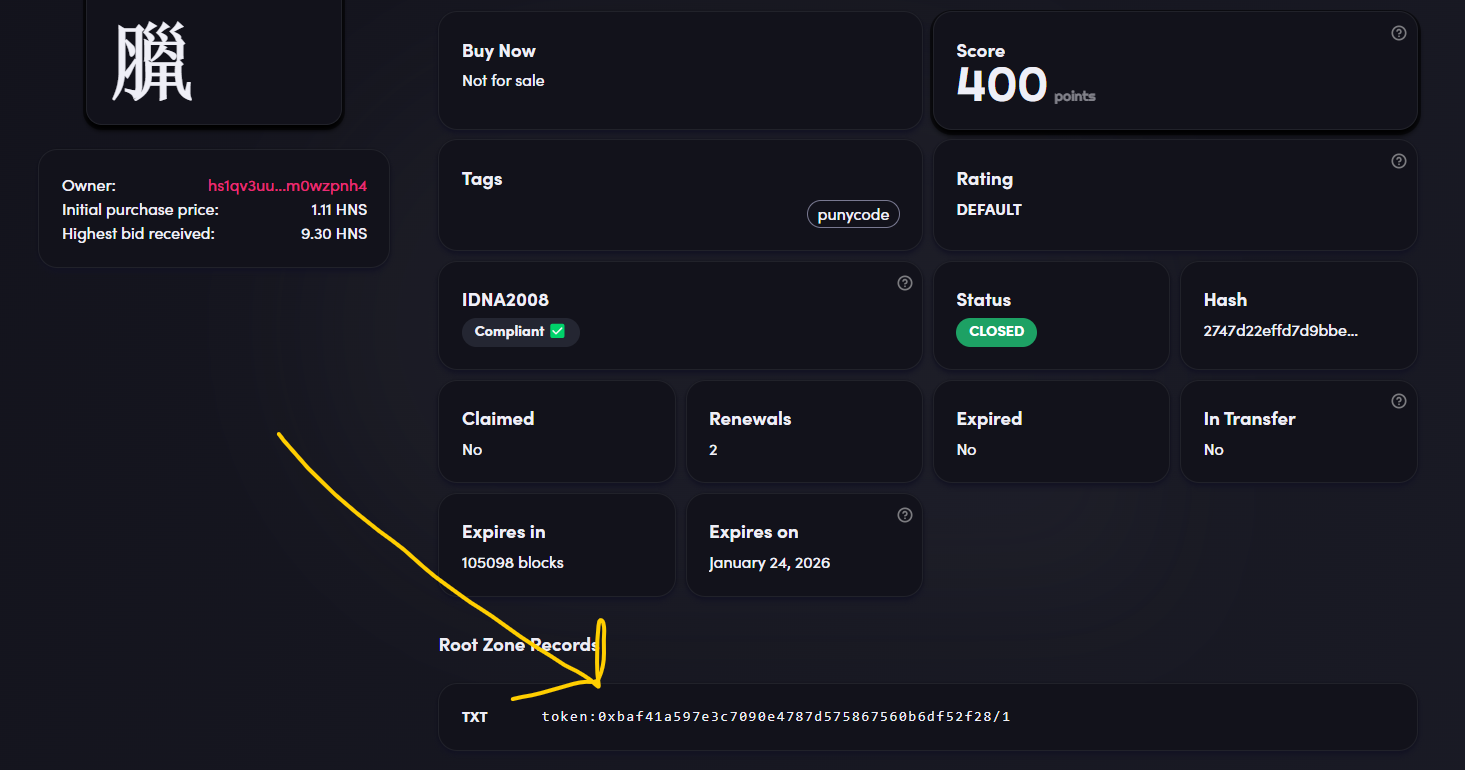
The two parts of the product ( the NFT image higher up, minted to OP, and the Web 3 domain [token] above) have been successfully paired.

This can be examined by checking the Niami system (niami.io) for xn--xx2k.

Niami reveals the embedded txt record of the Web 3 domain (token) which is the ‘0x’ hash of the Sino Amazon (a mint as an NFT type token of the female warrior image higher up).

Handshake is an almost direct copy of the Bitcoin blockchain – but since Bitcoin has attracted institutional investors like Blackrock and JP Morgan, supplying a financial product called an ‘ETF’ future costs associated with building off Bitcoin are uncertain.

Handshake is equally as secure as the Bitcoin Blockchain and never been hacked. So we can use the OP (Optimism) mint for the Sino Amazon, for ubiquity, while the Handshake blockchain side takes care of security and has a restoration path, if the OP side ever gets hacked.

For all the ‘down the rabbit hole’ folk that really, really want to know, the OP mint is ERC-1155. But because of the security on the Handshake side, it really doesn’t matter. Whatever is cheapest to mint is ok in this case.

But we don’t need to mention – combined, its just a great product – A high quality piece of art that has been through multiple AI solutions and manual adjustments…

Combined with a fully functional single character Top Level Web 3 Domain – quote Niami ‘Handshake TLDs are open for anyone to register, transparent for anyone to audit, and extensible for uses from domain names to wallet names to usernames’

You can also signal your ownership of a Sinosignia to your community by wearing it as a tattoo just as the Sino Amazons do!

There is still a few things to do before the product line can be offered at scale.

The normal ‘run’ of the series is 1000 and we did an ‘over-run’ of 109, which Sino Amazon 1070 is from.

One of the things is a HIP (Handshake Improvement Proposal), just to standardize the protocol for the embedded text that links the Sino Amazon and Sinosignia tokens.

Anybody that is familiar with Ethereum will have seen ‘EIP’ before. It’s quite similar.

As an aside – There are around 70 people outstanding who are entitled to the ‘celebratory shares’ since our celebration last year, and our release of 9ja Cosmos as an ‘extra sovereign’ business incorporated with blockchain tokens as shares.

The remaining inertia seems to be a reluctance to install or sign up to a HNS compatible wallet or market system. Wallets like Best Wallet, Coinbase, MetaMask and Trust Wallet are not very good at providing accounts for systems outside the EVM Compatible space.

With the EVM compatible space becoming ever increasingly more hacker friendly, assets that won’t reside in the same wallets as them, isn’t a bad thing. But some people will need to come out of their comfort zone to explore wallet types that accommodate more exotic assets.

Remember that part of you that took bold steps to embrace cryptocurrency and/or NFTs?

Maybe some of you have forgotten who that person is, and are now sticking to a few things you learned rather than continuing on that voyage of discovery. For this, you might need to wake that person in you again.

We also have some of that over-run that we might decide to airdrop. Sino Amazons / Sinosignias are very unique and this dual ecosystem approach hasn’t been done before.

Get a HNS compliant wallet… some FOMO is healthy!

9ja Cosmos is here…

Get your .9jacom and .9javerse Web 3 domains  for $2 at:

.9jacom Domains

.9javerse Domains

Visit 9ja Cosmos LinkedIn Page

Visit 9ja Cosmos Website

Preview our Sino Amazon/Sinosignia releases

A Handshake Improvement Proposal is a technical document that attempts to standardize a feature or protocol extension across the Handshake Ecosystem. It should be implementation-agnostic. Those wishing to propose a specific change should open an issue or pull request in the appropriate repository on Github. HIPs are not consensus, they are not law, they may never be actually implemented in production. HIPs are just solutions to common problems the Handshake Developer Community can use as a reference in their own projects. They may change over time, or be replaced with newer HIPs.

As Nigerian Banks Declare Record Profits, Manufacturing Firms Declare Losses

0

In secondary school, James Ene Henshaw’s “Jewels of the Shrine” was a memorable and intriguing book . Mr Okorie was looking for how to engineer a great burial for himself even though he did not have means stored for that. He tricked his two grandsons who never really liked him because they felt that he was a relic of the past.

He created an illusion that he was loaded with wealth which they could inherit. But only the person who could muster a great burial for him will get the goodies – and the key to his long lost heirloom. He designed an illusive rivalry system which ended up making the grandsons deliver a superb burial for him. But when they checked for the thrones, they discovered that grandpa had tricked them to give him a great burial. The man had nothing, factually!

That takes me to Nigeria where banks are declaring record profits and manufacturing companies are declaring record losses: “In its fiscal year 2023 performance report, Cadbury Nigeria Plc, a prominent multinational corporation operating in Nigeria, disclosed a substantial loss of N27.63 billion. This marked a significant downturn, representing a staggering 2,228% decline from the N1.30 billion pre-tax profit recorded in the previous fiscal year.”

Who is tricking who in Nigeria’s economy?


Comment on Feed

Comment 1: Whenever you see stats like that though alarm bells must go off! What potential sneaky trickery lies within their financial statements and MD&A reports? What did they do? Did they change amortisation schedules? Did they right down some assets? Did they fool around with unearned revenue accounts? Unscheduled goodwill?

Financial report analysis is a skill that takes not only mathematical aptitude but some general business sense and experience and some basic common sense. Always look at the numbers with a doubting eye and examine what lies beneath the facade of numbers. The truth is often stated within the MD&A reports so take those and examine them while looking at the financial statements. Often times, trickery lies beneath the numbers.

My response: Actually, it is not complicated. I have made that point before. A bank with assets of $20m in the UK or New York can book a virtual profit of N12 billion between Jan 1 and Dec 31 2023 (delta of N415 to N1,000 per $ today). But a foreign manufacturer bringing raw materials can also book a reverse. So, Cadbury could be making profit on N415/$ but could switch to losses on N1,000 purely on FX. If they imported say $30m worth of items, multiply that by N600, you will see those losses are possible.

Cadbury Nigeria Records N27.63 Billion Loss in FY 2023

Nigeria Secures $7 Billion Investment Deal with India, Boosting Economic Ties

0

In a significant stride towards attracting foreign investments, the Nigerian Federal Government has successfully secured a substantial $7 billion investment deal from India.

The official announcement was made by Mr. Gangadharan Balasubramanian, the Indian High Commissioner to Nigeria, during the 75th Republic Day celebrations on Friday night.

This development comes on the heels of India’s earlier commitment to invest $14 billion in Nigeria, pledged during the G20 Summit held in September of the previous year.

President Tinubu’s active participation in the G20 Summit proved instrumental in solidifying the $14 billion pledge aimed at bolstering the Nigerian economy and fostering stronger economic ties between the two nations.

Balasubramanian revealed that, following President Tinubu’s engagement in the G20 Summit, $7 billion of the promised investment has now been formalized through a signed agreement.

“Out of the $14 billion promised during this visit as investment into Nigerian economy, $7 billion has already been signed immediately after the visit,” he said.

During the Republic Day celebrations, the Indian High Commissioner noted the robust economic relations between India and Nigeria. He highlighted the historical and enduring ties between the two nations, dating back to before Nigeria gained independence.

“India and Nigeria enjoy strong and historical relations. With the ties dating back to before Nigeria’s independence, our bilateral relations have been nurtured by the leadership of both the countries,” he said.

Balasubramanian noted that currently, close to 150 Indian companies are operating within Nigeria, collectively contributing a substantial investment of $27 billion. This investment, primarily concentrated in the manufacturing sector, has translated into job creation, making Indian companies significant employers in Nigeria, second only to the Federal Government.

Highlighting the unique and special relationship between India and Nigeria, Balasubramanian recounted the memorable visit of H.E. Mr. Bola Ahmed Tinubu, President of the Federal Republic of Nigeria, to the G20 Summit in September 2023. He said the visit played a crucial role in consolidating bilateral ties, and as a testament to the commitment made during that summit, $7 billion of the pledged investment has already been finalized.

Furthermore, the Indian High Commissioner provided insights into the ongoing efforts to deepen business relations between India and Nigeria. He mentioned the successful visit of India’s External Affairs Minister Dr. S. Jaishankar for the Joint Commission meeting earlier in the week. During this visit, meaningful interactions took place with Nigerian leadership, the business community, and the Indian Diaspora, further strengthening the ties between the two nations.

Speaking on behalf of the Indian government, Balasubramanian expressed solidarity with Nigeria in their joint journey towards development. He conveyed the unwavering commitment of the Government of India to fortifying the ties and fostering mutually beneficial collaborations.

Adding depth to the economic perspective, Minister of Foreign Affairs, Ambassador Yusuf Tuggar, shed light on the substantial trade volume between Nigeria and India. According to the minister,

Over the last two years, the trade volume reached approximately $20 billion, comprising $14.95 billion in the formal sector and around $5 billion in the informal sector, according to the minister. This economic collaboration spans various sectors, contributing significantly to the growth and development of both nations.

As of the fourth quarter of 2021, India was the main importer of Nigeria’s crude oil. The exports of crude oil to the Asian country amounted to approximately 774.5 billion naira.

However, recent data indicates a notable shift in Nigeria’s crude oil exports. The Netherlands has overtaken India as the largest buyer of Nigerian crude oil. In the first nine months of 2023, the Netherlands purchased Nigerian crude oil worth N2.5 trillion, while India’s imports were valued at N1.6 trillion.

Analysts attribute this shift to sanctions related to the Ukraine conflict, compelling India to seek discounted Russian oil and subsequently reduce its demand for Nigerian crude.

The $7 billion investment deal with India marks a substantial achievement for Nigeria in its ongoing efforts to attract foreign investments and fortify economic ties with strategic partners. This significant financial commitment will undoubtedly contribute to Nigeria’s economic growth and development, fostering a deeper and more resilient partnership with India.