DD
MM
YYYY

PAGES

DD
MM
YYYY

spot_img

PAGES

Home Blog Page 3815

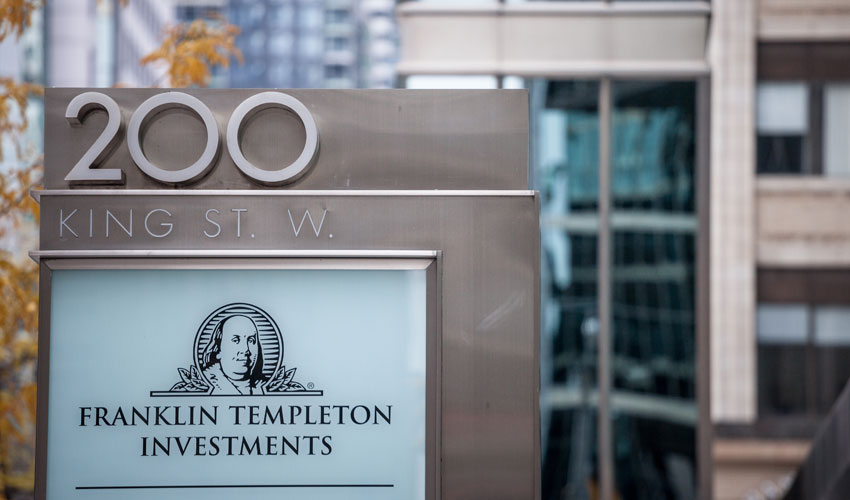
Franklin Templeton files for Spot Bitcoin ETF

0

Franklin Templeton, one of the world’s largest asset managers with $1.5 trillion in assets under management, has filed for a spot exchange-traded fund (ETF) that would track the performance of bitcoin.

The fund, named Franklin Templeton Spot Bitcoin ETF, would invest in bitcoin directly through a custodian and would seek to reflect the price movements of the cryptocurrency, according to the filing with the US Securities and Exchange Commission (SEC) on Monday.

The filing comes as the SEC is reviewing several applications for bitcoin ETFs, which are seen as a potential catalyst for wider adoption and institutional demand for the digital asset. So far, the regulator has not approved any bitcoin ETFs in the US, citing concerns over market manipulation, fraud and investor protection.

Franklin Templeton said it believes that its proposed ETF would address some of the SEC’s concerns by providing investors with exposure to bitcoin in a regulated and transparent manner. The fund would use the CF Bitcoin US Settlement Price as its benchmark index, which is calculated by Crypto Facilities Ltd, a subsidiary of Kraken, one of the largest cryptocurrency exchanges.

The CF Bitcoin US Settlement Price is a daily benchmark that reflects the average price of bitcoin transactions across major spot exchanges. It is published by Crypto Facilities, a UK-based crypto derivatives platform that is regulated by the Financial Conduct Authority. Crypto Facilities is also the provider of the CME CF Bitcoin Reference Rate, which is used by the Chicago Mercantile Exchange (CME) to settle its bitcoin futures contracts.

The CF Bitcoin US Settlement Price is calculated using a volume-weighted median of the trade prices on five spot exchanges: Bitstamp, Coinbase, Gemini, itBit, and Kraken. The median is taken from a 12-hour window that spans from 3:00 p.m. to 3:00 a.m. London time. The price is denominated in US dollars and rounded to the nearest cent.

The CF Bitcoin US Settlement Price is important for traders because it determines the final value of the bitcoin futures contracts that are listed on Crypto Facilities and other platforms that use its data. For example, if you buy a bitcoin futures contract that expires on September 30, 2023, you will receive or pay the difference between the contract price and the CF Bitcoin US Settlement Price on that date. This means that you need to monitor the spot market movements and the CF Bitcoin US Settlement Price to manage your risk and profit potential.

The CF Bitcoin US Settlement Price is also used as a reference price for other crypto derivatives products, such as options, swaps, and perpetuals. It provides a reliable and transparent benchmark that reflects the true market value of bitcoin across different venues. By using this price, traders can avoid manipulation, arbitrage, and slippage that may occur on individual exchanges.

The fund would also employ various risk management and security measures, such as using multiple custodians to hold the fund’s bitcoin, conducting regular audits and reviews of the custodians’ operations and security protocols, and implementing policies and procedures to prevent unauthorized access, theft or loss of the fund’s assets. The filing did not disclose the fees, ticker symbol or listing exchange for the fund. Franklin Templeton said it would provide more details in subsequent filings.

The fund would be the first bitcoin ETF sponsored by a major asset manager, which could boost its chances of approval by the SEC. However, it would also face competition from other bitcoin ETFs that have been filed by smaller firms or that use different strategies to gain exposure to the cryptocurrency. For example, some bitcoin ETFs would invest in bitcoin futures contracts instead of spot bitcoin, which could reduce some of the risks and costs associated with holding and storing the digital asset.

Therefore, investors who are interested in investing in a bitcoin ETF should carefully compare the features and benefits of each fund before making a decision.


Apple Unveils iPhone 15 with USB-C Charging Port

0

Apple on Tuesday unveiled its iPhone 15 with a USB-C charging port, bowing to the European Union’s new rule mandating all device makers to switch to the charging port by 2024.

CNBC reported that by the time the event concluded, Apple had already commenced the sale of a USB-C adapter on its website, priced at $29.

This adapter will be essential for iPhone 15 customers who wish to connect their Lightning charging cables, which are used for current iPhones, to their new devices.

The European Union parliament voted to confirm the rule last October. Apple, Samsung, Huawei, and others were expected to change their mobile device charging ports to USB-C before 2024 in Europe to comply with the rules.

Apple said last year that it was ready to comply with the rule by moving from its proprietary Lightning charger cables to the USB-C charging port.

“USB-C has become a universally accepted standard, so we’re bringing it to iPhone,” a presenter said during the Apple launch event Tuesday.

EU officials believe the rule will reduce waste since people will not need to buy a new charger when they purchase a new device.

Besides reducing waste, the EU Commission said last year that multiple ports cost consumers a fortune. The Commission has estimated that a single charger would save about €250m ($247.3 million) for consumers.

The transition to USB-C chargers for the iPhone 15 implies that the old Lightning cables previously used by Apple users will no longer be compatible. However, many individuals already possess the appropriate cables for their laptops, headphones, and other devices. Additionally, Apple is likely to include a compatible cable in the iPhone 15 packaging.

“Although Apple has a huge installed base of lightning cable-powered devices, the ubiquity of USB-C across all consumer electronics products means that harmonizing on USB-C makes perfect sense,” Ben Wood, chief analyst at CCS Insight, said last year while predicting that iPhone 15 will come with the USB-C charger.

The rule will also apply to laptops starting from 2026, providing manufacturers with more time to make the necessary adjustments, although many of them already utilize USB-C.

Following the event on Tuesday, Apple’s shares closed down by more than 1%.

In total, 13 categories of electronic devices are expected to adapt to the rule by 2024.

Apple, which launches its newest iPhone model Tuesday, is doubling down on a pricier strategy as unit sales slow. The iPhone 15 Pro, as well as its watches and AirPods, will come with features ranging from titanium cases to more advanced cameras. The price tags for these devices will also be higher, boosting sales at a time when restricted iPhone use in China threatens to depress revenue, along with slower unit sales globally. Apple’s launch event, to be held in Cupertino, California, begins at 10 a.m. PT on Tuesday.

Qualcomm announced it will continue to supply modems for Apple iPhones — for now. Both the chipmaker and investors had expected Apple to make its own.

iPhone and iPad users are being urged to downloadan emergency software update to fix two security flaws used to install Pegasus spyware.

——–

Apple confirmed at its annual event Tuesday that the iPhone 15 will indeed feature a significant change: a universal USB-C charging port. Still, it’s clear Apple wants to keep its higher-end phones — which have become increasingly important to the company’s bottom line — at center stage. The iPhone 15 Pro and Pro Max are seeing some of the line’s most significant new features, with faster chips, lightweight titanium casing and (on the Pro Max only) a souped-up telephoto camera lens.

  • The iPhone 15 will start at $799, while the iPhone 15 Pro starts at $999, both in line with their predecessors. The iPhone 15 Pro Max will be $1,199 — $100 more than the 14 Pro Max.
  • The Apple Watch Series 9 and new Apple Watch Ultra will also feature faster chips. Both products will be carbon-neutral, and Apple says all of its products will be carbon-neutral by 2030.
  • While most of the new iPhones will be made in China, for the first time, some will also be made in India.

(LinkedIn News).


Nigerian Government Delists 37 More Illegal Loan Apps

0

The Federal Government on Monday, through the Federal Competition and Consumer Protection Commission (FCCCPC) delisted 37 more illegal loan apps, strengthening its crackdown on the operation of unlicensed loan sharks in Nigeria.

As a result of this development, the total number of fully approved loan apps has increased to 164, up from the previous count of 154, as of the latest updates on the commission’s website on Monday.

Meanwhile, the number of loan apps with conditional approval has decreased to 38, down from the previous count of 40. Additionally, the number of apps on the commission’s watchlist has surged to 56, up from the previous count of 20.

Since last year, the FCCPC has maintained its crackdown on loan apps that are perceived to be operating without the proper legal authorization or engaged in unlawful activities.

On August 1, 2023, the FCCPC formally requested Google to remove illegal loan apps that were operating without regulatory approval or in violation of the Limited Interim Regulatory/Registration Framework and Guidelines for Digital Lending, 2022 (Guidelines), from its Play Store.

This crackdown comes in response to ongoing complaints from Nigerian borrowers about the aggressive tactics employed by these loan companies when attempting to recover outstanding loans.

See the list of 37 newly delisted loan apps below:

  1. Swiftkash App
  2. Hen Credit Loan App
  3. Cash Door App
  4. Joy Cash-Loan Up To 1,000,000 App
  5. Eaglecash App
  6. Luckyloan Personal Loan App
  7. Getloan App
  8. Easeloan Apps
  9. Naira Naija
  10. Cashlawn App
  11. Easynaira App
  12. Crediting App
  13. Yoyi App
  14. Nut Loan App
  15. Cashpal App
  16. Nairaeasy Gist Loan App
  17. Camelloan App
  18. Nairaloan App
  19. Moneytreefinance Made Easy App
  20. Cashme App
  21. Secucash App
  22. Creditbox App
  23. Cashmama App
  24. Crimson Credit App
  25. Galaxy Credit App
  26. Ease Cash App
  27. Xcredit
  28. Imoney
  29. Naira Naija
  30. Imoneyplus-Instant
  31. Nairanaija-Instant
  32. Nownowmoney
  33. Naija Cash
  34. Eagle Cash
  35. Firstnell App
  36. Flypay
  37. Spark Credit
  38. Luckyloan Personal Loan App

These loan companies typically have access to borrowers’ phone contacts and often resort to calling or sending defamatory messages about the borrower who defaulted, to these contacts.

Last week, the Nigerian Communications Commission (NCC) issued a strong warning to loan app companies regarding their unauthorized use of individuals’ phone numbers for commercial purposes. The Commission warned that individuals found engaging in such activities would face arrest and prosecution.

African Union (AU) Moves to Establish Rating Agency

0

The African Union (AU) is preparing to inaugurate a new credit rating agency for the continent in the upcoming year, to tackle concerns regarding the fairness of current credit ratings assigned to African nations, according to an official who spoke to Reuters.

The proposal follows complaints by African leaders that rating agencies have been unfair to African nations.

In July of this year, during the 5th Ordinary Session of the Specialized Technical Committee, which centered on “Improving Africa’s Access to Capital: Debt Management and the Rising Influence of Credit Rating Agencies,” AU finance ministers gave their approval to a resolution endorsing the establishment of a new agency.

This initiative was spearheaded by the African Peer Review Mechanism (APRM), a branch of the AU established last year to promote governance improvements across the continent. It is expected that the full AU executive council will also ratify this resolution in February.

Credit ratings function as a tool to evaluate the probability of a borrower defaulting and play a crucial role in determining the terms under which financial institutions and other entities extend loans.

The proposed agency, which will operate within Africa, aims to offer a new perspective on assessing the risk associated with lending to African countries.

“Our goal has not been to replace the big three…we need them to support access to international capital. Our view has been to widen the diversity of opinions,” Misheck Mutize, who serves as the lead expert for country support on rating agencies within the African Union, told Reuters.

Mutize explained that this agency would furnish investors with contextual information when they are making decisions regarding the acquisition of African bonds or extending private loans to African nations.

“Our goal has not been to replace the big three…we need them to support access to international capital. Our view has been to widen diversity of opinions.

“We know the big three follow the opinion of other smaller ratings agencies. They’ve acknowledged that other smaller ratings agencies have got an edge in understanding domestic dynamics,” Mutize said.

More than a dozen African countries presently have outstanding international bonds.

The African Union, in collaboration with member nations such as Ghana, Senegal, and Zambia, asserts that the three major credit rating agencies—Moody’s, Fitch, and S&P Global Ratings—have exhibited bias in their assessments of lending risks in African countries. They argue that these agencies tend to downgrade African nations more swiftly, especially during crises like the COVID-19 pandemic.

However, all three of the major rating agencies vigorously deny any bias and maintain that their rating methodologies remain consistent across continents.

The rating agencies are yet to comment on the development. But earlier, Ravi Bhatia, the lead analyst for sovereign ratings at S&P, affirmed that the agency applies the same criteria uniformly across all regions.

Privacy Pools is a new way to Enhance Privacy and Security in Crypto Transactions

0

Privacy and security are two of the most important features of any cryptocurrency. However, achieving both of them simultaneously is not an easy task. Most existing solutions either sacrifice privacy for security, or vice versa. For example, Bitcoin transactions are transparent and verifiable, but also expose the identities and balances of the users. On the other hand, some privacy coins use encryption or obfuscation techniques to hide the transaction details, but also introduce new risks and vulnerabilities.

That’s why a group of key crypto industry figures have recently proposed a new solution called Privacy Pools. Privacy Pools are a novel way to combine the best of both worlds: privacy and security. Privacy Pools are based on the concept of zero-knowledge proofs, which allow users to prove that they own certain assets or have performed certain actions, without revealing any other information. Privacy Pools use zero-knowledge proofs to create pools of funds that can be accessed by multiple users, without disclosing their individual identities or balances.

The main benefits of Privacy Pools are:

They enhance privacy by hiding the link between the sender and the receiver of a transaction, as well as the amount and the asset type.

They enhance security by preventing double-spending, fraud, and theft, as the funds in the pool are locked by a smart contract that can only be unlocked by valid proofs.

They enhance scalability by reducing the size and complexity of the transactions, as only the proofs need to be verified by the network.

They enhance interoperability by enabling cross-chain and cross-asset transactions, as any asset that supports zero-knowledge proofs can be pooled together.

Privacy Pools are still in the early stages of development, but they have already attracted the attention and support of some of the leading figures in the crypto industry. For example, Vitalik Buterin, the co-founder of Ethereum, has praised Privacy Pools as “a very clever idea” that could “potentially be a big win for privacy”. Similarly, Zooko Wilcox, the founder of Zcash, has expressed his interest and enthusiasm for Privacy Pools, saying that they could “enable new kinds of applications that we haven’t seen before”.

However, Vitalik Buterin, the co-founder of Ethereum, has co-authored a paper on a new protocol for improving privacy on the blockchain. The protocol, called ZKSwap, is based on zero-knowledge proofs and allows users to swap tokens without revealing their identities or balances. ZKSwap is a proposed alternative to Tornado Cash, a popular tool for anonymizing Ethereum transactions.

Tornado Cash uses a technique called zk-SNARKs, which require users to deposit and withdraw fixed amounts of tokens from a pool of funds. This limits the flexibility and efficiency of the system, as users have to wait for enough deposits and withdrawals to match their desired amounts. ZKSwap, on the other hand, uses a technique called zk-STARKs, which allow users to swap any number of tokens with any other user in a single transaction.

This reduces the gas fees and latency of the system, as well as the risk of front-running attacks. Moreover, zk-STARKs do not require a trusted setup, unlike zk-SNARKs, which means that no one can manipulate the system by generating fake proofs. ZKSwap is one of the latest efforts to enhance privacy on the blockchain, which is often seen as a trade-off with scalability and usability. By leveraging the power of zero-knowledge proofs, ZKSwap aims to provide a practical and secure solution for anonymous token swaps on Ethereum.

The paper, titled “ZKSwap: A Practical Protocol for Privacy-Preserving Token Swaps on Ethereum”, was co-authored by Vitalik Buterin, Alex Gluchowski, Barry Whitehat, Harry Roberts, and Roman Storm. The authors claim that ZKSwap is compatible with existing Ethereum standards and can be easily integrated with existing wallets and exchanges. They also provide a prototype implementation of the protocol and a security analysis of its properties.

Privacy Pools are not only a promising innovation for the crypto industry, but also a potential game-changer for the wider society. By providing a way to transact privately and securely, Privacy Pools could empower individuals and organizations to protect their financial freedom and sovereignty, while also fostering social good and economic growth. Privacy Pools could also pave the way for new use cases and business models that rely on trustless and confidential interactions, such as decentralized exchanges, lending platforms, prediction markets, voting systems, and more.

Privacy Pools are still in the research and development phase, but they have already shown their potential and value. As more crypto projects and platforms adopt and implement Privacy Pools, we can expect to see a new era of privacy and security in the crypto space.