DD
MM
YYYY

PAGES

DD
MM
YYYY

spot_img

PAGES

Home Blog Page 3820

Business Strategy & Execution at Tekedia Mini-MBA

0

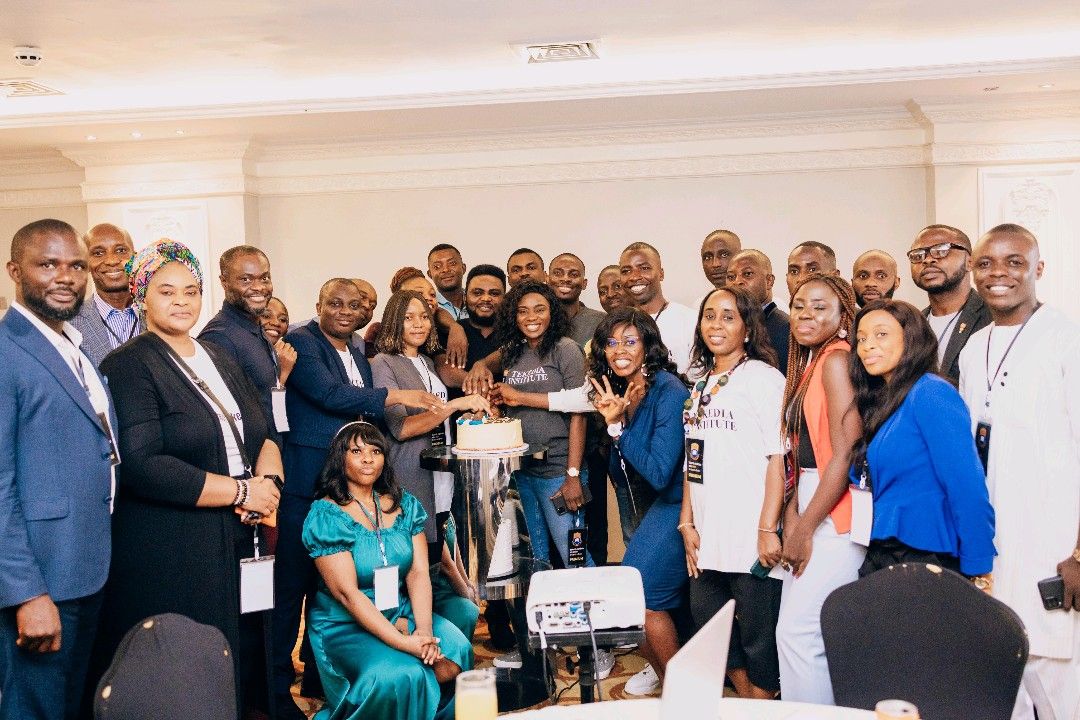
He teaches as a zen-master in the world of business.  At 7pm WAT,  Tekedia Institute Faculty, Eromosele Omomhenle F.IMS , a Global ISV Solutions & Strategy Leader at Microsoft global headquarters in Redmond, USA, will teach  a session on Business Strategy & Execution. 

Whenever he comes here, we go home with a clear understanding on how to craft a strategy, execute business playbooks and outperform the market. Zoom link in the board. That link is still open for registrations if you want to join.

Tekedia Mini-MBA >> the #best teach here.

Meta’s Threads Struggles to Grow User Base Amidst Rivalry With X

0

Threads, an online social media and social networking service launched by Meta, has continued to struggle to grow its user base amid rivalry with Elon Musk X.

Reports from Insider Intelligence revealed that Threads now ranks near the bottom of the most popular social media platforms, ahead of only Tumblr, as measured by the number of U.S users.

Insider Intelligence forecasted that it expects Threads to hit 23.7 million U.S. users in 2023, while it expects X its strong rival to have 56.1 million U.S. users in 2023.  For the U.S. market, the analyst firm said Threads will continue to rank second to last among social networks through 2025.

Principal analyst at Insider Intelligence Jasmine Enberg said Threads received an initial boost from Twitter’s missteps, but it can’t rely on X defectors to continue to grow.

He said Threads needs to establish an identity that is more than an extension of Instagram or an alternative to X in order to become a major player in the social media market.

Enberg added that if Musk doesn’t backtrack on his move to introduce a monthly subscription fee to X, the move will likely alienate X users and potentially increase advertiser interest in Threads.

The decline in the number of active users on Threads is coming after the platform during its launch on July 5, saw over 10 million users join the platform.

This saw Threads earn the title of the most downloaded non-game app on its launch day.  The app appeared for many as a possible replacement for X, following Elon Musk’s incessant changes on the platform.

However, recent developments reveal a decline in user engagement on the Meta-owned social networking platform. On average, Threads users now spend merely 2.4 minutes daily on the app, marking an 80% decrease from its peak in early July.

Sensor Tower reports that people are opening the app less frequently and spending less time there, compared to when it was newly launched.

Several experts have pointed out that a lack of cultural relevance and core communities has contributed to the drop in engagement on Threads.

Speaking on the drop in active users on Threads app Meta CEO Mark Zuckerberg said he considered the drop-off normal and expected retention to grow as the company adds more features to the app.

In a bid to grow its user base and enhance retention, the company began to roll out in-demand features and key updates. It rolled out a desktop version and improved search features.

The Threads team also began to roll out new notification control options, providing users a more enhanced way to manage their app experience.

While Threads can become a significant player in the social media landscape and provide an alternative to X, its ability to replace X largely remains uncertain.

What Africa Should Do To Harness Its Huge Agricultural Potential

0

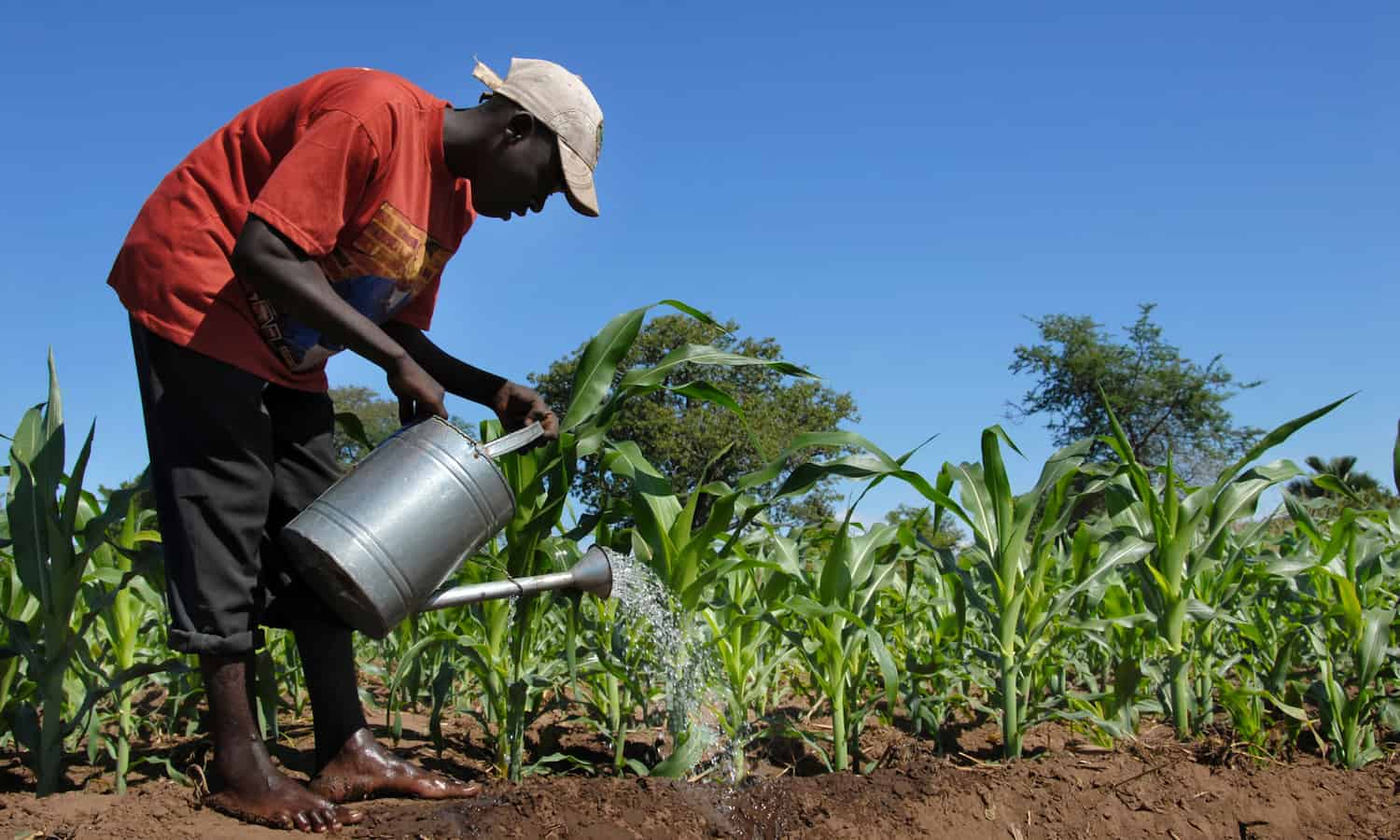
The opportunities in Agriculture are quite numerous. Over the years, there has been a growing interest in increasing investment in the agricultural sector to unlock its numerous opportunities for the betterment of humanity. Recent development in agricultural technology is significantly improving the contribution of agriculture to global wealth, with the food and agribusiness sector leading the ecosystem.

About 9 billion people are expected to inhabit the world by 2050. This raises concerns on how to attain a commensurate growth in the world’s food production by that year. According to the Food and Agriculture Organisation of the United Nations, the projected 9 billion population that world agriculture has to feed by 2050 implies that an additional agricultural investment of over 80 billion dollars is needed yearly to meet the targets for reducing poverty and the numbers of the malnourished.

Although Africa’s economy is largely agrarian, agricultural growth in the continent has been tardy compared to other parts of the world, especially countries in the global north. Africa’s Agriculture constitutes 14 percent GDP of the economy, and agricultural-related industry accounts for nearly half of all economic activities in the sub-Saharan regions.

In sub-Saharan Africa, less than 6 percent of the available two hundred million hectares of land is irrigated for agricultural productivity compared to 14 and 37 percent in Latin America and Asia respectively. Despite its huge agricultural potential, sub-Saharan Africa is the most malnourished part of the world. One in every four malnourished people in the world is from Africa.

Even though agricultural activities such as ecotourism, grain production, and animal production hold promising futures for Africa, it is evident that more needs to be done in terms of policymaking and implementation for the continent to achieve its huge agricultural potential. According to a report from McKinsey & Company in February 2019, Africa could actually produce two to three times more cereals and grains which would add 20 percent more cereals and grains to worldwide 2.6 billion tons of output and a similar increase in the production of horticulture crops, fishes and livestock could be witnessed.

Factors reported to militate against Africa’s agriculture sector include; poor financing, poor policies, poor infrastructure, high illiteracy, loss of farming character among the people, lack of access to land perennial insecurity etc. Stakeholders in the industry need to work collectively to weather these barriers that have since placed the continent at the ebb of the global food system.

More efforts should be made to encourage the use of new technologies and methodologies in agricultural activities in the continent with a particular focus on the agricultural data value chain.

While there has been no doubt an improvement in foreign investment in the agriculture of the continent over the years, there is still a scarcity of policies that protect the interest of Africans against foreign exploitation. According to the United Nations, foreign Investment contracts in Africa have captured nearly 50 million acres of land but these contracts were not always conducted diligently or openly, and local people are often overlooked as viable owners. Therefore African governments should protect the agricultural investment ecosystem of the continent through stringent policies that discourage foreign exploitation and consequently position Africa to achieve its agricultural potentials and gain massively from its plethora of natural resources.

Furthermore, more concerted efforts are needed from the agricultural stakeholders including the government, social enterprises and private investors to resolve the increasing security threats of the region which invariably affect its agricultural output in adverse ways.

Lastly, African leaders should think inwardly to locally address the impact of climate change in the continent, especially as this relates to the region’s food system.

OpenAI Announces New Feature that Enables ChatGPT to ‘Speak’, ‘Listen’ and Process Images

0

ChatGPT has gained the ability to comprehend spoken language, respond with a synthetic voice, and process images, effectively allowing it to “see, hear, and speak”, OpenAI announced on Monday.

The new feature, which is OpenAI’s biggest since the introduction of GPT-4, is being introduced amid declining usage of ChatGPT – fueled by competition.

The chatbot’s recent update enables users to engage in voice conversations through ChatGPT’s mobile app, offering a selection of five distinct synthetic voices for the bot’s responses. Additionally, users can now share images with ChatGPT, providing the capability to emphasize specific areas of interest or request analysis, for example, inquiring about the type of clouds present in an image.

OpenAI said that these updates will be gradually rolled out to paying users over the next two weeks. Voice functionality will be accessible exclusively through the iOS and Android apps, while image processing capabilities will be available across all platforms.

The launch of ChatGPT-3 late last year came with a frenzy that accelerated investment in artificial intelligence, with more companies pumping billions of dollars into the research and development of chatbots powered by AI language models.

However, the burgeoning tech has come with several concerns yet to be addressed by the industry leaders. The concerns include the use of private data.

In a report on Monday, CNBC said OpenAI directed it to the company’s guidance on voice interactions, which clarifies that OpenAI does not retain audio clips, and these clips are not employed to enhance models. However, the guidelines also note that transcriptions are regarded as inputs and may be used to improve the large-language models.

In the ever-intensifying competition of the artificial intelligence landscape, where chatbot leaders like OpenAI, Microsoft, Google, and Anthropic are vying for supremacy, a significant emphasis has been placed on feature enhancements.

Tech giants are in a race to not only roll out new chatbot applications but also introduce a slew of new features, with this summer being a particularly active period. For instance, Google has unveiled a range of updates for its Bard chatbot, while Microsoft has integrated visual search capabilities into Bing.

Earlier this year, Microsoft’s substantial additional investment of $10 billion in OpenAI solidified its position as the most substantial AI investment of the year, as reported by PitchBook. In April, OpenAI reportedly concluded a $300 million share sale, valuing the startup between $27 billion and $29 billion, with prominent investments from firms like Sequoia Capital and Andreessen Horowitz.

However, these advancements are not without their share of concerns. Experts have raised alarms about AI-generated synthetic voices, which, while providing users with a more natural experience, also hold the potential to create more convincing deepfakes. Cybersecurity experts and researchers have already begun to delve into the ways deepfakes could be exploited to infiltrate cybersecurity systems.

OpenAI, in its Monday announcement, acknowledged these concerns, emphasizing that the synthetic voices were meticulously crafted in collaboration with voice actors with whom the company had direct working relationships, rather than being sourced from unknown individuals.

Nonetheless, the release provided limited details on how OpenAI intends to use consumer voice inputs and the measures it will take to secure that data when utilized. According to the company’s terms of service, consumers maintain ownership of their inputs “to the extent permitted by applicable law.”

OpenAI is looking to roughly triple its valuation in less than a year to as much as $90 billion, The Wall Street Journal reports, citing anonymous sources. It says the artificial intelligence startup behind ChatGPT is reaching out to investors about a new share sale that would catapult OpenAI’s valuation to the $80 billion to $90 billion range. It was valued at about $29 billion in a share sale earlier this year. OpenAI is credited with intensifying interest in AI after releasing ChatGPT late last year.

Projects Not to Miss This September for High ROI – Gala Games, Tradecurve Markets, The Sandbox

0

Gala Games (GALA) and The Sandbox (SAND) are two popular GameFi projects that historically appealed to many investors. Recently, however, their value took a hit with the broader market decrease. As a result, those who want to diversify have turned to presale-stage projects like Tradecurve Markets (TCRV). However, all three altcoins are still solid opportunities for investment.

Summary

  • Gala Games can surge to a maximum point of 0.030 by the end of Q4
  • The Sandbox is projected to reach $0.54 by the end of 2023
  • Tradecurve Markets to climb 35x by the time it launches

>Register For The Tradecurve Presale<<

Gala Games (GALA) to Climb to 0.030 by the End of 2023

Gala Games (GALA) is a specialized blockchain for gaming. In its ecosystem, players accumulate cryptocurrencies through gameplay and various platform activities. The Gala Games world gives players earning opportunities as they engage with the various available titles.

Despite the rich feature set of the platform, its native token has taken a hit during the past trading sessions.

During the past week, the Gala Games crypto traded between $0.01323611 and $0.01500094. The next price barrier that the cryptocurrency needs to pass is $0.015. If it does, Gala Games can reach new heights. Based on the Gala Games price prediction, it can surge to $0.030 by the end of the year.

>Register For The Tradecurve Presale<<

Analysts Are Bullish That $0.54 Is the Next Price Target for the Sandbox(SAND)

The Sandbox (SAND) is a virtual world where activities and events are constantly being held. In addition, its popularity spiked with the rise of Metaverse-related projects. The Sandbox can provide virtual experiences that appeal to thousands of people. However, as of recently, it did take a hit from the bear market. However, analysts believe that The Sandbox crypto can recover soon.

During the past week, the value of The Sandbox cryptocurrency hovered between $0.29 and $0.30. While in the past 30 days, the crypto was down 8.1%, it could soon recover. Analysts are bullish, and according to The Sandbox price prediction, it can reach $0.54 by the end of Q4 2023.

Tradecurve Markets (TCRV) Can Surge by 35x at Launch

Tradecurve Markets (TCRV) can emerge as a project that can change the DeFi Space by implementing a hybrid approach. Users can trade any derivative, alongside cryptocurrencies, all from a single account.

In addition, no KYC procedures are required, enabling anyone to maintain full anonymity. There’s high leverage at 500:1 and a VIP account system. Advanced features include an AI-driven trading bot and protection against negative balances.

TCRV is now at Stage 5 of its presale and trades at $0.025. At launch, it can surge by 35x. In comparison, Binance’s ICO began at $0.011.

Since then, the crypto surged to $210. So far, the Tradecurve Markets presale has raised $6.1 million, and according to estimates, it can raise $12 million by the end.

For more information about the Tradecurve Markets (TCRV) presale:

Website: https://tradecurvemarkets.com/

Buy presale: https://app.tradecurvemarkets.com/sign-up

Twitter: https://twitter.com/Tradecurveapp