DD
MM
YYYY

PAGES

DD
MM
YYYY

spot_img

PAGES

Home Blog Page 3824

How ChainLink & Signuptoken.com Are Riding The Bitcoin Bull Market For Top Gains

0

In a dance of electrifying euphoria, the resurgence of the Bitcoin bull market has ignited a blazing fire of excitement within the very heart of the crypto community. Like stars in a celestial ballet, two enchanting players have gracefully stepped into the spotlight, captivating the attention of crypto enthusiasts, investors, and daring souls seeking the untamed allure of new investment horizons. Behold, the wondrous duo of ChainLink (LINK) and the awe-inspiring project known as Signuptoken.com (SIGN)!

Riding on the coattails of the resurgent Bitcoin bull market, both ChainLink and Signuptoken.com are poised to deliver remarkable performances that promise to reshape the landscape of digital currencies.

Bitcoin Bull Market: A Glimpse Of Prosperity

Bitcoin bull market is the rise in the market; this is the time majority of investors buy BTC. The recent surge in Bitcoin prices which is now at around $27k per coin with a current market cap of almost $550m, accompanied by several indicators signalling an early bull market, as reported by experts, has reignited faith in the cryptocurrency market. With Bitcoin’s value reaching new heights, it’s safe to say that the crypto market is on the brink of a prosperous era.

As Bitcoin leads the way, it paves the path for altcoins to thrive. In this scenario, ChainLink and Signuptoken.com have positioned themselves strategically to harness this momentum and create an impact.

ChainLink: Unleashing The Potential

ChainLink, often referred to as the “Oracle of decentralized finance,” has managed to captivate the crypto world’s attention with its unique proposition. This remarkable price pump has fueled speculation about the future of the coin.

Experts and analysts have ventured into LINK price predictions, suggesting that the coin’s upward trajectory is far from over. LINK hit its all-time high price of $50 around May 2021, it must increase by approximately 15 times to reach the $100 price mark.

Signuptoken.com: Seizing The Opportunity

In the midst of this Bitcoin bull market, an exciting prospect has emerged – SignUp Token (SIGN). This innovative project has raised eyebrows for all the right reasons. With a unique presale that sets it apart from other tokens, SIGN aims to offer investors an opportunity to get in on the ground floor of a promising venture.

The presale structure of SignUp Token is strategically designed to attract both early adopters and seasoned investors, resulting in the successful sale of 17 million tokens. This approach not only fosters active community engagement but also generously rewards participants, acknowledging their trust in the project’s potential. This combination renders it an alluring and promising investment opportunity.

As the Bitcoin bull market continues to drive crypto market growth, the allure of SignUp Token becomes all the more enticing. By joining the SIGN presale at its early stages, investors can position themselves for potential long-term gains earning up to 72 times profit on their investments The project’s commitment to innovation, low presale price of $0.01, and community involvement sets it apart in a crowded landscape.

For crypto enthusiasts, investors, traders, and individuals seeking to explore cryptocurrency trends and investment prospects, the current climate presents an exciting window of opportunity. By taking advantage of the potential offered by ChainLink and participating in the Signuptoken.com presale, individuals can position themselves for a rewarding journey in the world of digital assets.

Final Thought

The resurgence of the Bitcoin bull market has breathed new life into the cryptocurrency ecosystem. As the market experiences renewed growth, ChainLink and SignUp Token have emerged as potential top performers.

ChainLink’s integration of real-world data into smart contracts positions it as a linchpin for the future of decentralized finance, while Signuptoken.com’s unique presale and focus on utility-driven growth make it an attractive investment opportunity.


For more information on Signuptoken.com (SIGN):

Website: https://www.signuptoken.com

Twitter: https://twitter.com/_SignUpToken_

Telegram: https://t.me/SignUpToken

Master Design Thinking At Tekedia Mini-MBA

0

Design thinking is a human-centered approach to innovation that involves understanding users, challenging assumptions, and creating innovative solutions. It’s most useful for problems that are not clearly defined or for which a solution is not obvious.  Largely, it is a non-linear, iterative process that involves five phases: Empathize, Define, Ideate, Prototype, Test.

Tekedia Institute Mini-MBA will host a lecture on design thinking and innovation by Aderinola Oloruntoye of SAP. The lecture will take place at 7 pm WAT today, supporting an already created on-demand courseware. Our Faculty is a master of design thinking and innovation. He helps organizations translate business frictions into components, and how through Design Thinking, they can create winning solutions in markets.

Tekedia Mini-MBA  >> the best teach here. Join us here

The Moral Economy of Cement Price in Nigeria

0

In recent years, Nigeria has found itself entangled in a perplexing predicament – the exorbitant cost of cement. This indispensable construction material, vital for infrastructure development and housing, remains disproportionately expensive within the nation, creating a stark contrast to its more affordable availability in other African countries. This persistent issue has sparked numerous debates, with fingers often pointed at the two major private cement producers in Nigeria: Dangote Cement and BUA Cement. The central question in this ongoing discourse is whether these industry giants are fulfilling their ethical obligations to ease the financial burden on the struggling Nigerian populace, striving to meet their housing demands.

To grasp the moral intricacies of cement pricing in Nigeria, one must first navigate the terrain of the cement industry itself. Cement, undeniably a pivotal sector, holds far-reaching consequences for the nation’s infrastructure and the well-being of its citizens. In Nigeria, this industry is predominantly dominated by Dangote Cement, founded by Africa’s wealthiest man, Aliko Dangote, and BUA Cement, a steadily growing competitor.

Dangote Cement, with its colossal reach extending far beyond Nigeria’s borders, boasts cement plants across several African nations, solidifying its position as one of the continent’s largest cement producers. Its size and influence have elevated Dangote Cement into a decisive force, shaping not only the pricing dynamics within Nigeria but also in neighbouring countries.

BUA Cement, though smaller in scale compared to its behemoth counterpart, has been strategically increasing its market share within Nigeria. It plays a significant role in the cement landscape, providing a semblance of competition in an otherwise consolidated market.

As we delve deeper into the moral economy of cement pricing, it becomes evident that several economic forces are at play, contributing to the persistently high cost of cement in Nigeria. Production costs, a critical factor, encompass raw materials, labour, and energy expenses, all subject to fluctuations influenced by government policies, currency exchange rates, and global market dynamics. Market dominance by a select few industry giants further limits the competitive landscape, rendering pricing flexibility a challenging endeavour. Infrastructure challenges, ranging from inadequate transportation networks to an unreliable power supply, compound operational costs for cement producers, adding to the complexity of the issue.

The roles of Dangote Cement and BUA Cement in shaping the pricing landscape are central to the debate. These private companies are naturally driven by profit maximization, a fundamental tenet of their existence. However, they also carry a significant social responsibility, one that extends beyond profit margins. They are tasked with finding a delicate equilibrium between profitability and affordability, particularly in a nation like Nigeria, where housing is an acute issue.

Market competition, or the lack thereof, plays a pivotal role in price regulation. The dominance of Dangote Cement and BUA Cement not only necessitates competition between them but also entails fostering the growth of smaller, local cement producers to instigate competition and alleviate price pressures. Collaborative efforts with the government to formulate policies conducive to affordable housing and infrastructure development are equally crucial for sustainable change.

Yet, the moral imperative underpinning this issue transcends economics and market dynamics. It is rooted in the undeniable housing crisis plaguing Nigeria, where millions of citizens lack access to decent housing. High cement prices only exacerbate this crisis, rendering it a moral duty for cement producers to actively contribute to its resolution. Cement, more than just a building material, symbolizes prosperity and development, carrying the potential to directly impact the economic well-being of Nigerians.

Ethical business practices are at the heart of this moral conundrum. Cement producers must adhere to principles of fairness, transparency, and community engagement. Their actions should reflect a steadfast commitment to the betterment of society, ensuring that their profit-driven endeavours do not compromise the well-being of the Nigerian populace.

The moral economy of cement pricing in Nigeria is a multifaceted issue influenced by economic realities, market dynamics, and the actions of private producers. Dangote Cement and BUA Cement, as industry leaders, bear a weighty responsibility in addressing this challenge. Striking the elusive balance between profit-making and social responsibility is essential in a nation grappling with a housing crisis.

The moral imperative lies in creating an environment where cement prices are equitable, enabling Nigerians to access decent housing and contributing to the nation’s development. Stakeholders, encompassing government entities, industry players, and civil society, must converge and collaborate to forge a sustainable and morally sound solution to the high cost of cement in Nigeria. Only then can Nigeria build a stronger and more equitable future for all its citizens, where the foundations of prosperity are accessible to each and every one.

Mohbad’s Death: The Core Reason Record Labels Fallout With Their Artistes

1

I have so much tried to get my mind off Mohbad’s death and the events that led to his untimely demise, but honestly, I just can’t. I always find myself going back to his bullying videos, and his old music, reading up and asking those I know who are close to him what has been done and what’s the update about the so-called investigation over the cause of his death.

It is true that he is dead and buried, hence that cannot be undone but what we should be interested in is to make sure that nobody suffers the same fate as him. What the police should be interested in is dismantling the cult groups that parade themselves as record labels. Most so-called record labels in Nigeria are death traps for young artists.

It is always the case with most of these record labels that once an artiste wants to leave the label or has a different opinion with the label there will be fallout that sometimes leads to death. It happened with Runtown and his former record label boss Eric Many and it involved a series of police cases and ended up in the courtroom, a close source said that Runtown had to run for his life to avoid being killed. It happened with Kizz Daniel and his former record label G Worldwide. G Worldwide had to take an injunction from the court to stop Kiss Daniel from performing in shows or releasing new music and to have him change his name from Kiss Daniel to something else, Kiss Daniel had to change his name to Kizz Daniel.

It happened with Harrysongs with his former record label, Five Star Music, it ended in a police and court case too. These names I mentioned are some of the cases that made it to the public domain. I can tell you for free that there are hundreds of others too, some of which I and my law firm have handled; the core issues of the case always revolve around the artists wanting to leave and the label insisting that he is not going anywhere yet or that the artiste is yet to fulfill his obligations to the label. In fact, it happened with Wizkid and his former label, EME Records, a close source said that Wizkid had to forgo everything including his masters and royalties and his outstanding pay to start life afresh.

I have handled numerous cases which revolve around this issue and you need to be there to see the record label boss threatening to destroy the artiste and make sure he never does music again for wanting to leave. Some record label bosses do claim that they picked the artiste when they were nobody, made them a star and they are ungrateful for wanting to leave.

If you read music contracts, there are obligations on the side of the artiste and on the side of the record label and there are damages for any party that does not fulfill its own side of the obligation. It is a business relationship and should never be do or die. If an artiste feels he wants to exit the label and do something else before the effluxion of the contract, there are clauses in the contract that state his damages, some of the clauses include the artiste paying back some many to the record label, some include the artiste forgoing his royalties or his masters.

Some artists for the sake of peace are always ready to do anything like changing their name or never performing the songs they released under the label but the label will still ask for their heads.

This is sad, it is high time the law and legislation shine its light on the Nigerian music industry because a lot is happening there and that is why the death of Mohbad is quite significant as it has started this conversation. Many artists are now speaking up and crying for public help and we are obligated to help them before they will lose their lives like Mohbad.

President Tinubu Approves Appointment of 18 New Presidential Aides

0

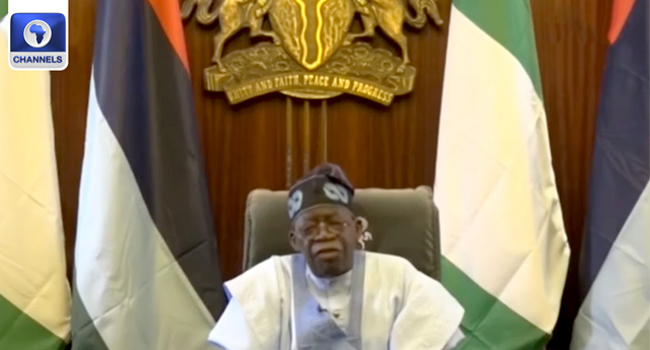
President Bola Ahmed Tinubu has approved the appointment of 18 special advisers and senior special assistant to work with him in the different sectors of the economy through the office of the Vice President and towards the actualization of the renewed hope agenda.

The names of the new presidential aides were revealed in a statement released by the Director of information, office of the vice president, Mr Olusola Abiola, on Monday in Abuja.

According to Mr Abiola, the new appointees comprised six special advisers and twelve senior special assistants all whom would work in the office of the Vice president, Kashim Shettima, to support the renewed hope agenda of the Tinubu-led administration.

Among the new presidential aides is Rukaiya El-Rufai, a financial expert and daughter of former Kaduna State Governor, Nasiru El-Rufai. Also included in the list is Hakeem Baba Ahmed, spokesperson of the Northern elder forum, Jumoke Oduwole, Kingsley Nwokocha, Bashir Maidugu among others.

The full list including the names and portfolios of the new presidential aides are here below:

  1. Rukaiya El-Rufai as Special Adviser to the president on National Economic Council (NEC) and Climate Change
  2. Tope Kolade Fasua as Special Adviser to the president on Economic matters.
  3. Aliyu Modibbo as the Special Adviser, General Duties.
  4. Hakeem Baba-Ahmed as Special Adviser, Political Matters
  5. Jumoke Oduwole, Special Adviser to the President on Presidential Enabling Business Environment Council (PEBEC) and Investment.
  6. Sadiq Wanka, Special Adviser to the President on Power Infrastructure;
  7. Usman Mohammed, Senior Special Assistant to the President on Administration and Office Coordination
  8. Kingsley Nkwocha, Senior Special Assistant to the President on Media and Communications.
  9. Ishaq Ningi, Senior Special Assistant to the President on Digital Media and Emergency Management.
  10. Peju Adebajo, Senior Special Assistant to the President, Investment and Privatisation.
  11. Mohammed Bulama, Senior Special Assistant to the President on Political/Special Duties.
  12. Kingsley Uzoma as Senior Special Assistant to the President on Agribusiness and Productivity Enhancement.
  13. Gimba Kakanda, Senior Special Assistant to the President, Research and Analytics.
  14. Temitola Adekunle-Johnson as the Senior Special Assistant to the President, Job Creation and MSMEs.
  15. Nasir Yammama, Senior Special Assistant to the President, Innovation.
  16. Zainab Yunusa, Senior Special Assistant to the President on NEC.
  17. Mariam Temitope as Senior Special Assistant to the President, Regional Development Programmes.
  18. Bashir Maidugu, Deputy State House Counsel (Senior Special Assistant to the President).