DD
MM
YYYY

PAGES

DD
MM
YYYY

spot_img

PAGES

Home Blog Page 3827

Nigeria’s Illusion of Using Interest Rates to Control Inflation

1

I have written that Nigeria must develop a new playbook on how we fight inflation in the country. Yes, our current use of interest rate is suboptimal because it is not working. Some validations on that thesis:

“Under the previous regime of the Central Bank, we have seen a continuous tightening of monetary policy, and the concept of monetary policy tightening is to increase interest rate. Our MPR is at 18.75% if monetary policy tools can tackle inflation, then inflation will have been subdued by now, given all the monetary policy tools and tightening that has taken place over the last two years This economy is not the type of economy where the interest rate can effectively fight inflation” – Director of the Centre for the Promotion of Private Enterprise (CPPE), Dr. Muda Yusuf .

“The previous administration of the CBN under the leadership of Godwin Emefiele had consistently increased the interest rate to 18.75% in July as a measure to curb inflation. However, the move seemed counterproductive as inflation rose for the sixth consecutive month in July to 24.08%. As of November, Nigeria’s inflation stands at an 18-year high of 28.2%- marking ten months of consecutive increase.” – Nairametrics

What I have written: “Note that interest rate changes do not affect consumer demand that much in Nigeria since we have a limited consumer lending system. In other words, when we change rates, we are merely affecting companies as they’re really the entities which actually borrow in Nigerian banking. 

“Yes, the irony is that only companies can actually drive production (which boosts Supply) and that is why using the increase of rates to fight inflation in Nigeria has not been effective. Contrast this with say the United States where consumer lending is massive via credit cards, etc. There when rates go up, you influence Demand significantly, making it possible to cool down inflation. Our strategy cannot mirror the US, etc with developed consumer lending because higher rates punish those who are to boost Supply which is vital for us to reduce inflation.”

Simply, I have written that increasing interest rates to fight inflation in Nigeria is a waste of time. Our consumer lending which affects demand is insignificant and that means the interest rate which affects lending is toothless.

The Central Bank of Nigeria must change its strategy. What we do doesn’t make sense. Think of it – we increase the interest rate which is designed to cool down the economy by making capital more expensive,  only for the same apex bank to release trillions of naira to the federal government, via Ways and Means, to flood the economy with cash. At the end, the Ways and Means (like the new N7.3 trillion) will cancel the impact of the interest rate hike. This has been going on for ages!

BARELY one hour after reading a letter from President Bola Tinubu, requesting for the approval of the the securitisation of the outstanding debit balance of N7.3 trillion Ways and Means from the Central Bank of Nigeria (CBN), the Senate immediately approved it.”

NIN Deadline: Millions of Bank Accounts Risk Being Blocked in Nigeria

0
National ID Card, Nigeria

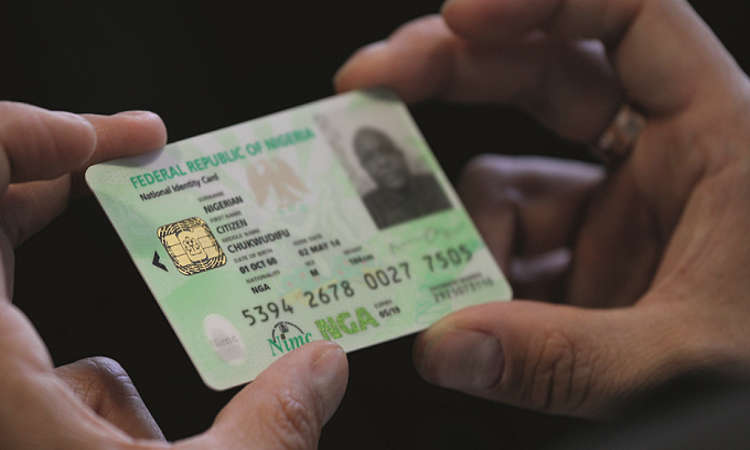
Millions of bank accounts in Nigeria, risk being blocked as the deadline for all accounts and wallets to have a Bank Verification Number (BVN) or National Identity Number (NIN) draws closer.

Recall that the Central Bank of Nigeria in a circular issued on the 1st of December, to all commercial, merchant, non-interest payment service banks, and mobile money operators, mandated that new customers get NIN linked to their accounts.

As part of its effort to promote financial system stability, the apex Bank disclosed that it had become necessary to strengthen the Know Your Customer (KYC) procedures in financial institutions under the purview of the Central Bank of Nigeria (CBN).

Accordingly, the CBN issued an amendment to Section 1.5.3 of the Regulatory Framework for Bank Verification Number (BVN) Operations and Watchlist for the Nigerian Banking Industry (The Guidelines).

In this regard, the CBN wrote,

1. It is mandatory for ALL Tier-1 bank accounts and wallets for individuals to have BVN and/or NIN.

2. It remains mandatory for Tiers 2 & 3 accounts and wallets for Individual accounts to have BVN and NIN.

3. The process for account opening shall commence by electronically retrieving BVN or NIN-related information from the NIBS’ BVN or NIMC’s NIN databases and for the same to become the primary information for onboarding of new customers, and all existing customer accounts/wallets for individuals with validated BVN shall be profiled in the NIBS’ ICAD immediately and within 24hrs of opening accounts/wallets.

For all existing Tier 1 accounts/wallets without BVN or NIN.  Effective immediately, any unfunded account/wallet shall be placed on Post No Debit or Credit until the new process is satisfied. On March 1, 2024, all funded accounts or wallets shall be placed on Post No Debit or Credit and no further transactions permitted.

To ensure uniform and full compliance, the CBN has advised the executive compliance officers, chief compliance officers, or heads of the compliance functions to acquaint themselves with the guidance notes it provided, which it said apply to all institutions being regulated.

Several banks have begun to notify their customers through direct contact solicitation, calls, SMS, and emails to get their accounts linked to their NIN.

Notably, Nigerians have been advised not to wait until a week before the deadline to start to swarm and overwhelm commercial banks, as the perfect time to do the linking is now.

It is interesting to note that a 2023 report by Enhancing Financial Innovation and Access (EFInA), revealed that 5 percent (3 million) of banked adults in Nigeria are without a BVN or NIN.

Also, a NIMC report revealed that the number of Nigerians with National Identification Numbers rose to 104.16 million as of the end of December 2023.

This signified that only 10.13 million Nigerians registered for NIN in 2023. A monthly average of enrolments revealed that 844,167 Nigerians got NIN per month in 2023, revealing that the total number of NIN registrations in 2023 is low when compared with 21.33 million that registered in 2022.

The NIMC further expressed concern that the number is a far cry from the Federal Government’s target of 2.5 million registrations per month.

Implications of Jubilee Syringe Manufacturing Company (JSM) closure on health care delivery in Nigeria

0

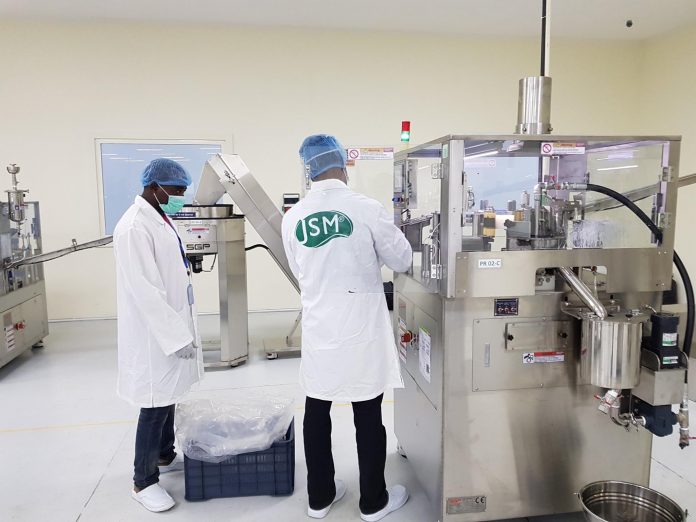
A sad news for the health sector in Nigeria and Africa as a whole: the largest syringe factory in the continent has closed down after only six years of operation. The factory, which was inaugurated in 2018 by Vice President Yemi Osinbajo, had the capacity to produce 400 million syringes per year, making it a vital source of medical supplies for the region.

The factory, located in Akwa Ibom state, was a joint venture between the state government and a Turkish company, Jubilee Syringe Manufacturing Company (JSM). It was hailed as a landmark achievement that would boost the local economy, create jobs and improve health care delivery. The factory also aimed to export its products to other African countries and beyond.

However, according to a report by Premium Times, the factory has been shut down since December 2023 due to a series of challenges that crippled its operations. Some of these challenges include:

Lack of raw materials: The factory relied on imported raw materials, mainly plastic granules, from Turkey and China. However, due to the global supply chain disruptions caused by the COVID-19 pandemic, the factory faced difficulties in sourcing and transporting these materials. The high cost of foreign exchange also made it expensive to import the raw materials.

Lack of patronage: Despite its huge production capacity, the factory struggled to find customers for its products. The Nigerian government, which was expected to be the major buyer of the syringes, did not place any orders with the factory. Instead, it continued to import syringes from other countries, mainly China and India. The factory also failed to secure contracts from other African countries or international organizations.

Lack of power supply: The factory depended on diesel generators to power its machines, as the national grid was unreliable and insufficient. However, the rising cost of diesel and the scarcity of fuel made it difficult for the factory to run its generators. The factory also faced frequent breakdowns of its machines due to power fluctuations.

Lack of skilled workers: The factory employed about 400 workers, most of whom were trained by Turkish experts. However, many of these workers left the factory due to poor working conditions, low wages and lack of incentives. The factory also had difficulties in recruiting and retaining new workers, as there was a shortage of skilled labor in the area.

The closure of the factory has left many workers jobless and many stakeholders disappointed. It has also raised questions about the viability and sustainability of such projects in Nigeria and Africa. The factory’s management has blamed the government for not supporting the factory and not creating an enabling environment for its success. The government has not commented on the matter yet.

The fate of the factory remains uncertain, as there are no clear plans to revive it or sell it to another investor. The factory’s assets are currently lying idle and deteriorating. The factory’s closure is a huge loss for Nigeria and Africa, as it deprives them of a valuable resource that could have improved their health outcomes and reduced their dependence on foreign imports.

What is Blockchain Conflict Resolution?

0

Blockchain is a technology that enables transactions to be recorded and verified on a distributed network of computers, without the need for a central authority or intermediary. Blockchain transactions are secured by cryptography and validated by consensus algorithms, making them immutable and transparent. Blockchain has many applications, such as cryptocurrencies, smart contracts, supply chain management, digital identity, and more.

However, blockchain transactions are not immune to disputes. Disputes can arise due to technical errors, human mistakes, fraud, hacking, or malicious behavior. For example, a smart contract may not execute as intended, a cryptocurrency transaction may be delayed or reversed, or a blockchain network may experience a fork or an attack. When these disputes occur, how can they be resolved in a fair and efficient way?

Traditional dispute resolution methods, such as litigation, arbitration, or mediation, may not be suitable for blockchain disputes. These methods are often costly, time-consuming, complex, and jurisdiction dependent. They may also require the disclosure of sensitive information or the involvement of third parties that may not be trusted by the blockchain participants. Moreover, traditional dispute resolution methods may not be able to enforce their decisions on the blockchain, as they rely on external authorities or intermediaries that have no power over the decentralized network.

This is where blockchain dispute resolution comes in. Blockchain dispute resolution is a new field that explores how to use blockchain technology and smart contracts to resolve disputes involving blockchain activities across borders. Blockchain dispute resolution aims to provide a fast, cheap, simple, and transparent way of settling conflicts without compromising the security and autonomy of the blockchain network.

There are different approaches to blockchain dispute resolution, but one common feature is the use of collective intelligence and incentive mechanisms. Blockchain dispute resolution systems typically allow users to propose an issue and vote on the outcome, using cryptocurrency tokens or stakes as collateral or fees. The users who vote correctly or honestly are rewarded with tokens or stakes from the users who vote incorrectly or dishonestly. This creates an incentive for users to participate in the dispute resolution process and to act rationally and fairly.

Some examples of blockchain dispute resolution systems are:

Kleros: A decentralized court system that uses a crowdsourced jury of randomly selected users to adjudicate disputes involving smart contracts, e-commerce, crowdfunding, and more.

Aragon Court: A decentralized arbitration protocol that uses a staking mechanism and a game theory model to incentivize users to become jurors and vote coherently on disputes involving Aragon organizations.

Jur: A decentralized justice protocol that uses a reputation system and a voting mechanism to enable users to resolve disputes involving online transactions, contracts, and services.

Mattereum: A decentralized legal platform that uses smart contracts and human arbitrators to enforce agreements and resolve disputes involving digital and physical assets.

Blockchain dispute resolution systems have many advantages over traditional dispute resolution methods. They can:

Reduce costs and delays by eliminating intermediaries and bureaucracy. Increase accessibility and inclusivity by allowing anyone with an internet connection and a cryptocurrency wallet to participate. Enhance transparency and accountability by recording all transactions and decisions on the blockchain. Preserve privacy and security by using encryption and pseudonymity. Ensure compliance and enforceability by using smart contracts and escrow mechanisms.

However, blockchain dispute resolution systems also face some challenges and limitations. They need to:

Address legal and regulatory uncertainties regarding their validity and recognition across jurisdictions. Ensure fairness and quality of the dispute resolution process by preventing bias, manipulation, collusion, or corruption. Balance scalability and decentralization by avoiding network congestion, high fees, or centralization risks. Improve user experience and education by providing clear guidelines, user interfaces, and feedback mechanisms.

Blockchain dispute resolution is still an emerging field that requires further research and experimentation. However, it shows great potential in creating a more efficient and effective way of resolving conflicts in the digital age. Blockchain dispute resolution is not only a technological innovation but also a social innovation that can empower users to take control of their own disputes and collaborate with others in a trustless environment.

Tekedia Academic Festival will begin on Feb 5, 2024 for 12 weeks; Register

0

The academic festival will begin on Feb 5, 2024 for 12 weeks. Join us for the 13th edition of Tekedia Mini-MBA. When I wrote in Harvard Business Review that “Mines of knowledge, not gold or diamond or silver, will connect Africa to a greater destiny and to the growth regions of the world”, my mind was on building the empires of the future via knowledge in Africa.

Tekedia Mini-MBA is an innovation management 12-week program, optimized for business execution and growth, with digital operational overlay. It runs 100% online. The theme is Innovation, Growth & Digital Execution – Techniques for Building Category-King Companies. All contents are self-paced, recorded and archived which means participants do not have to be at any scheduled time to consume contents. Besides, programs are designed for ALL sectors, from fintech to construction, healthcare to manufacturing, agriculture to real estate, etc.

Come here and let’s build MINES of Knowledge for your career, your business and your community. The early discounts will end soon.

Register today and co-learn with the #best school.