DD
MM
YYYY

PAGES

DD
MM
YYYY

spot_img

PAGES

Home Blog Page 383

OpenAI, Anthropic Weigh Using Investor Funds to Cover Billions in AI Copyright Lawsuits — FT

0

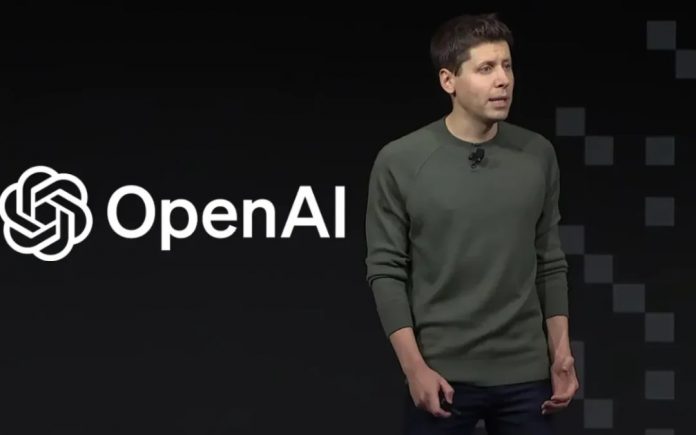
OpenAI and Anthropic, two of the world’s most prominent artificial intelligence developers, are reportedly exploring plans to use investor funds to help cover potential multibillion-dollar legal settlements tied to ongoing copyright infringement cases.

According to a report by the Financial Times on Wednesday, the companies have held internal discussions about deploying part of their venture capital and corporate funding to offset legal liabilities if courts rule that their AI models unlawfully used copyrighted materials. The report underscores growing financial and legal pressure on the AI sector as a wave of lawsuits from authors, media organizations, and entertainment companies challenge how generative AI systems were trained.

Copyright owners have filed a series of high-stakes lawsuits against technology giants, including OpenAI, Microsoft, and Meta Platforms, accusing them of scraping and reproducing protected works to train AI systems without authorization. The suits, many of them class actions filed in U.S. federal courts, allege that large language models like OpenAI’s GPT and Anthropic’s Claude have effectively copied vast quantities of text, books, and visual media from the internet without compensation.

The financial exposure from such cases could be enormous. Industry lawyers estimate potential liabilities across the AI sector could exceed tens of billions of dollars, depending on how courts interpret “fair use” exemptions and whether AI outputs are deemed derivative works.

OpenAI’s Insurance Limits and Risk Strategy

The Financial Times said OpenAI has sought to protect itself by purchasing insurance coverage for emerging AI-related risks, reportedly through Aon, a major global insurance broker. Sources familiar with the policy told the paper that OpenAI secured coverage worth up to $300 million, though another insider disputed that figure, suggesting the true amount is “significantly lower.”

Regardless of the exact figure, both sources agreed that the coverage falls far short of the potential financial exposure the company faces from ongoing and future lawsuits.

Kevin Kalinich, Aon’s global head of cyber risk, told the FT that the broader insurance market is not yet equipped to handle the scale of liabilities facing AI model developers.

“There’s not enough capacity for [AI model] providers,” he said, citing the novelty and unpredictability of AI-related claims.

Given those constraints, OpenAI is reportedly considering a form of “self-insurance” — setting aside a portion of its investor capital in a ring-fenced “captive” vehicle to manage risk internally. Captives are a common mechanism used by large corporations to insure against unique or hard-to-price risks, such as cyberattacks, environmental liability, or product failure.

The report noted that OpenAI’s investor pool includes heavyweights such as Microsoft, Thrive Capital, and Andreessen Horowitz. Any move to use investor funds for insurance or settlements would likely require their approval, given the scale of the potential financial commitments.

Anthropic’s Legal Exposure and Recent Settlement

Anthropic, another leading AI developer backed by Amazon and Google, faces similar legal battles and has reportedly begun using its own capital reserves to handle potential liabilities. The Financial Times cited a person familiar with the company’s finances who said Anthropic is partly funding a recent $1.5 billion preliminary settlement of a copyright class action brought by a group of authors in California.

The settlement, preliminarily approved by a federal judge last month, marks one of the largest copyright-related deals in AI’s short history and could set a precedent for how future claims against AI firms are resolved.

A Legal and Financial Reckoning for AI

The mounting legal challenges highlight an unresolved issue at the heart of the AI revolution — whether developers can legally use publicly available data, including copyrighted material, to train models that now power billion-dollar businesses.

AI developers have argued that their training practices fall under the U.S. legal doctrine of “fair use,” which allows limited reproduction of copyrighted works for purposes such as research and innovation. But publishers, authors, and artists say the models have created a new kind of industrial-scale copying that deprives them of compensation while generating enormous profits for tech companies.

The lawsuits also expose the gap between AI companies’ insurance protections and their real-world financial exposure. Traditional insurers have struggled to model AI-related risks due to the lack of historical precedent and the fast pace of technological change.

If OpenAI and Anthropic proceed with self-insurance strategies, it would represent a significant shift in how AI companies allocate investor capital — diverting funds meant for product development into legal defense reserves. Analysts warn that such moves could slow innovation and signal the growing financial strain the AI industry faces as it collides with copyright law.

For investors, the question now is whether AI companies can remain attractive amid rising legal uncertainty. The lawsuits are believed to be a fundamental challenge to the AI business model, and if courts decide that these models rely on unlawful data use, the entire industry will have to rethink how AI is built and trained.
Investing in Crypto Goes Full Throttle with BlockDAG’s BWT Alpine Formula 1® Team Deal, Beating Cosmos and Pudgy Penguins

0

Cosmos (ATOM) is holding steady near $4.50 while continuing upgrades to strengthen its SDK and boost chain security. Pudgy Penguins are growing their NFT influence with toy licensing and global brand expansion.

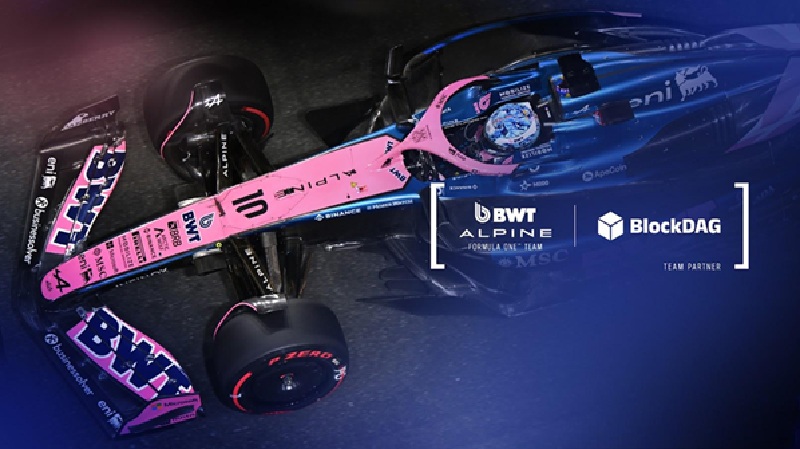
Yet, nothing compares to BlockDAG’s speed of progress and exposure. With its sponsorship of the BWT Alpine Formula 1® Team, BlockDAG (BDAG) is linking blockchain with world-class sports visibility. In the race for adoption and fame, it’s not just about tech anymore; it’s about merging presence with performance. And that’s what makes BlockDAG one of the most talked-about names for those investing in crypto right now.

Cosmos (ATOM) Price Outlook Depends on Strong Interoperability

Cosmos continues to focus on connecting blockchains through its hub-and-zone framework. The network’s design allows different chains to communicate securely while maintaining independence. Trading near $4.50, Cosmos remains stable despite ongoing market swings.

Recent developer updates show progress in consensus upgrades, new security modules, and expanded Inter-Blockchain Communication (IBC) use. These steady improvements strengthen Cosmos’ role in creating cross-chain solutions. Analysts believe a breakout could happen if Layer-1 growth slows and focus shifts to interoperability. Still, the price path largely depends on how effectively the ecosystem generates practical uses and attracts active builders.

However, Cosmos struggles with broader attention. While its technology is advanced, it stays largely confined within the crypto tech circle. Without mainstream visibility or cultural reach, it risks staying underappreciated. Cosmos’ potential is clear, but its audience remains mostly technical, leaving space for projects with stronger branding momentum to grow faster.

Pudgy Penguins Price Growth Linked to NFT Brand Expansion

Pudgy Penguins have turned into a cultural force. What started as a playful NFT series on Ethereum has evolved into a global brand seen both online and offline. With merchandise now appearing in major retailers and toy deals driving buzz, Pudgy Penguins have proven that NFTs can succeed as commercial brands.

Trading activity has picked up again as new collectors enter the scene. Analysts predict that the floor price could increase further if Ethereum regains market strength. The project’s visibility and licensing success show strong potential, though market sentiment still plays a big role.

Unlike protocol-focused projects such as Cosmos, Pudgy Penguins appeal through culture and engagement. Their value comes from emotional connection and creativity, not network utility. Still, they remain one of the most successful NFT collections, setting a standard for how Web3 creativity can move into the mainstream.

BlockDAG Converts F1® Fame into Massive Growth Momentum

When it comes to combining real-world visibility with blockchain, BlockDAG has taken the lead. While Cosmos builds cross-chain tools and Pudgy Penguins work on merchandise, BlockDAG blends both technology and branding into one power move. Its sponsorship of the BWT Alpine Formula 1® Team puts its name in front of millions of fans every race weekend.

From race car logos to on-site simulators at Grand Prix events, BlockDAG has become part of global sports entertainment. This exposure isn’t just marketing; it’s mainstream recognition that many crypto projects can only dream of. It brings authority, scale, and user awareness to the project, making it a headline choice for those actively investing in crypto.

The growth numbers tell the story. The presale has now raised over $420 million, with nearly 27 billion coins sold. The special price in batch 31 is $0.0012, while the regular batch 31 price is $0.0304, but the offer lasts only a few more days. BlockDAG has also sold 20K+ miners, gathered 312K+ holders, and attracted 3M+ X1 users; all signs of record-breaking adoption.

This expansion shows that BlockDAG’s growth isn’t hype-driven. It’s fueled by strategy and structure. Alongside its Alpine partnership, the project focuses on scalable architecture, new developer tools, and wide public engagement. Unlike Cosmos, which stays inside the tech zone, or Pudgy Penguins, which depend on community trends, BlockDAG delivers both credibility and culture. Its Formula 1® collaboration turns blockchain presence into global momentum.

Summing Up

Each project adds something unique to crypto’s evolution. Cosmos strengthens the backbone of blockchain connectivity. Pudgy Penguins expand creativity through NFT storytelling. But BlockDAG stands in a different league by merging global exposure with scalable performance.

Its Formula 1® alliance, rapid presale progress, and growing user base make it a standout option for anyone exploring investing in crypto today. While Cosmos depends on interoperability growth and Pudgy Penguins thrive on community spirit, BlockDAG merges tech, sports, and culture, fueling recognition beyond the crypto world. Among 2025’s fastest-growing cryptos, BlockDAG proves that visibility and usability together can drive unstoppable success.


Presale: https://purchase.blockdag.network

Website: https://blockdag.network

Telegram: https://t.me/blockDAGnetworkOfficial

Discord: https://discord.gg/Q7BxghMVyu

CEA Industries’ Major BNB Disclosure Amid Token’s Record Surge

0

CEA Industries Inc. (NASDAQ: BNC), a growth-oriented firm specializing in consumer markets and digital asset management, announced it now holds 480,000 BNB tokens as part of its corporate treasury strategy.

This marks a 15% increase from its previous disclosure of 388,888 BNB in September 2025, with the company acquiring an additional ~91,112 tokens since early last month at an average cost of $860 per token—totaling about $412.8 million invested.

The timing couldn’t be more bullish: BNB, the native token of the Binance ecosystem, hit a new all-time high above $1,310 during the announcement, pushing the value of CEA’s holdings to approximately $585.5–$624 million depending on exact intraday pricing.

Combined with $77.5 million in cash reserves, CEA’s total crypto and cash treasury stands at $663 million. This positions CEA as the world’s largest publicly reported corporate holder of BNB, surpassing competitors like Nano Labs holding 128,000 BNB, or 0.02% of supply.

The disclosure drove an 8% surge in BNC shares on the day, reflecting market enthusiasm for the firm’s conviction in BNB.

Strategic Focus on BNB

CEA’s approach is distinctly single-asset: Unlike diversified crypto treasuries like those holding Bitcoin or Ethereum, it concentrates solely on BNB to leverage the token’s network effects, on-chain yield opportunities, and alignment with the expanding BNB Chain ecosystem.

CEO David Namdar emphasized this in the press release: “BNB’s all-time highs are a clear validation that the global markets are waking up to the inherent value, credibility, scale, and utility of both the asset and underlying ecosystem.”

BNB’s market cap has ballooned to over $175 billion—now 33% larger than Solana’s ($127B) and nearing Tether ($177B) and XRP ($178B)—fueled by 58 million monthly active users on BNB Chain in September alone.

The firm has funded this buildup through a mix of market buys, structured purchases, and a recent private placement, with regulatory filings indicating potential for up to $750 million more via warrants. This has already made CEA the dominant player in BNB treasuries.

CEA aims to accumulate 1% of BNB’s total supply roughly 1.45 million tokens, given ~145 million circulating by December 31, 2025. Current holdings represent just 0.35% of supply, so the firm would need to add ~970,000 more BNB—potentially requiring another $1.2–1.3 billion at current prices.

If achieved, this could value CEA’s BNB stash alone at over $1.25 billion, transforming the company into a de facto “BNB balance sheet” for traditional investors seeking exposure via U.S.-listed equities.

The news amplified BNB’s ongoing rally, which has seen the token up ~5.5% in 24 hours amid broader crypto momentum. On X (formerly Twitter), the announcement sparked buzz among crypto traders and analysts, with posts highlighting CEA’s “conviction play” and potential for BNB to rival top stablecoins in market cap.

CryptosR_Us Shares of BNC climbed post-announcement, underscoring investor appetite for tokenized exposure to high-growth ecosystems like BNB Chain.

This move follows a wave of corporate crypto adoption, including firms like MicroStrategy (Bitcoin) and BMNR (Ethereum), but CEA’s BNB bet stands out for its focus on a utility-driven layer-1 chain powering DeFi, NFTs, and gaming.

Risks remain—volatility, regulatory scrutiny on Binance-linked assets, and execution on funding—but the strategy has delivered unrealized gains of ~$172–$211 million so far.


ZKsync’s Atlas Upgrade Is A Leap for Enterprise Blockchain Adoption

0

ZKsync, an Ethereum Layer-2 scaling solution developed by Matter Labs, officially launched the Atlas upgrade to its ZK Stack on October 6, 2025.

This update is specifically designed to empower enterprises and institutions by enabling the creation of sovereign, high-performance blockchains that maintain privacy and control while seamlessly interoperating with global markets and Ethereum’s ecosystem.

As blockchain adoption accelerates—exemplified by BlackRock’s BUIDL tokenized U.S. Treasury fund surpassing $1 billion in assets earlier this year—Atlas addresses key pain points like throughput bottlenecks, proof latency, and integration complexity, positioning ZKsync as a go-to infrastructure for tokenized assets, cross-border payments, and supply chain applications.

High-Performance Sequencer: A rebuilt, low-latency sequencer capable of sustaining 15,000–30,000 transactions per second (TPS), with load tests demonstrating peaks near 20,000 TPS. Handles real-time processing for global-scale operations, outperforming traditional systems like Visa avg. ~1,700 TPS by up to 10x.

Airbender Proof System: A high-speed RISC-V-based zero-knowledge (ZK) prover delivering sub-second (1-second) finality for block proofs and cross-chain settlements. Enables near-instant confirmations while keeping proving costs as low as $0.0001 per transfer, reducing barriers for high-volume institutional use.

EVM Compatibility & VM Flexibility

Full Ethereum Virtual Machine (EVM) equivalence with support for multiple virtual machines, including built-in metrics, logs, and tracing for devnets/testnets. Allows enterprises to deploy Ethereum-compatible apps without rewrites, ensuring verifiable computation and easy integration with existing DeFi liquidity.

Sovereign Chain Architecture: Customizable, self-hosted chains that connect cryptographically to Ethereum and other ZK Chains via the ZKsync Gateway. Balances private sovereignty (e.g., for compliance-sensitive data) with public interoperability, ideal for banks, fintechs, and tokenized real-world assets.

These enhancements build on ZKsync’s core ZK-rollup technology, which uses cryptographic proofs to batch and verify transactions off-chain before settling on Ethereum, inheriting its security without relying on validators.

Atlas targets the shift toward on-chain finance, where enterprises need deterministic, verifiable systems for payments and settlements. For instance, it supports the growing tokenized asset market, projected to reach trillions in value, by enabling low-latency, high-assurance transfers.

Proving costs drop dramatically, making ZK proofs viable for everyday enterprise ops—think instant cross-border remittances or real-time stock oracles as demoed in ZKsync’s 4-hour sequencer load test streaming AAPL prices.

Chains built on Atlas can remain private yet settle in seconds across networks, fostering a “network of chains” rather than a single mega-chain. Enhanced tooling simplifies launching production-ready environments, aiding regulatory compliance and rapid prototyping.

Alex Gluchowski, CEO and co-founder of Matter Labs, emphasized: “ZKsync represents the foundation for a new era of financial infrastructure, one where enterprises and institutions can operate onchain with the same sovereignty and flexibility they expect from their internal systems, but with incorruptible guarantees enforced by cryptography.”

ZKsync’s announcement post garnered over 1,400 likes and 680,000 views, highlighting the upgrade’s real-time capabilities. Ethereum’s official account praised it as a “big leap for scalability and UX,” noting how L2 advancements like Atlas enable millions of transactions verifiable on low-powered devices.

Developers and projects like SANDchain celebrated its implications for creator economies and DeFi, with one user calling it a “paradigm shift” for Ethereum’s scaling without compromise. Early speculation ties the upgrade to potential upside for ZK token price, targeting $0.10–$1 amid increased on-chain activity.

While Matter Labs notes the sequencer isn’t fully optimized yet with more improvements planned, Atlas marks a substantive step toward institutional-grade ZK infrastructure. This upgrade underscores ZKsync’s momentum in 2025, following its April security resolution and ecosystem expansions.


SoftBank Buys ABB’s Robotics Division for $5.4bn, Deepening Its Bet on “Physical AI” Revolution

0

SoftBank Group Corp. has agreed to acquire the robotics division of Swiss engineering giant ABB Ltd. for $5.4 billion, in a landmark deal that marks Masayoshi Son’s most ambitious push yet to merge artificial intelligence with physical automation.

The transaction, announced on Wednesday, represents a major reshaping of both companies’ strategic priorities. For ABB, it’s a divestment from one of its most volatile but high-profile businesses. For SoftBank, it’s a major step toward establishing what Son calls “Physical AI” — the fusion of advanced machine learning models with robotics that can act, sense, and learn in the real world.

The ABB robotics acquisition gives SoftBank immediate global scale in industrial robotics, adding roughly 7,000 employees, a network of manufacturing plants across Europe, Asia, and North America, and a portfolio of over 400,000 industrial robots deployed globally. ABB’s robotics division generated $2.3 billion in revenue last year, contributing about 7% to ABB’s total sales.

While ABB’s robotics business has long been respected for its precision automation technology, it has struggled to maintain high profit margins due to intense competition from Japan’s Fanuc and Yaskawa, and Germany’s Kuka — now owned by China’s Midea Group. ABB’s decision to sell, rather than spin off the division, came after years of underperformance and challenges in integrating its robotics operations with its core electrification and automation segments.

ABB CEO Morten Wierod, who took over in 2023, told Reuters the sale offered “immediate value” and would allow ABB to focus on higher-margin and faster-growing areas.

“We always said that robotics is a market with much higher volatility,” he said. “This transaction allows us to channel resources into electrification, automation, and digitalization — markets where we see stable long-term growth.”

The deal is expected to close between mid-2026 and late 2026, pending regulatory approvals in the European Union, Japan, and the United States. ABB will receive about $5.3 billion in cash proceeds, which Wierod said would be used to expand production capacity, develop next-generation automation technologies, and fund potential acquisitions.

For SoftBank, the acquisition continues a series of aggressive moves to secure dominance in artificial intelligence and robotics infrastructure. In March, SoftBank bought chip design startup Ampere Computing for $6.5 billion, part of a broader strategy to control the hardware powering AI systems. The company has also invested heavily in automation startups such as Berkshire Grey, AutoStore, and Brain Corp, and led a $40 billion funding round in OpenAI, the maker of ChatGPT.

Son, who has previously described himself as “obsessed with AI,” said the ABB acquisition is designed to combine SoftBank’s growing AI software ecosystem with physical robotics platforms.

“SoftBank’s next frontier is physical AI,” he said. “Together with ABB Robotics, we will unite world-class technology and talent under our shared vision to fuse Artificial Super Intelligence and robotics — driving a groundbreaking evolution that will propel humanity forward.”

Industry experts see the move as part of SoftBank’s return to high-risk, high-reward investing after a period of restraint following the Vision Fund’s multibillion-dollar losses in 2020 and 2021.

ABB Exits an Uneven Market

ABB’s robotics division was once a symbol of the company’s innovation drive, supplying robots to major automakers and electronics firms. However, the division’s performance lagged in recent years due to uneven global demand and rising costs. In 2022, ABB reported that its robotics profit margin had dropped below 10%, far lower than its automation unit’s 17%.

Zürcher Kantonalbank, which had valued the division at slightly under $4 billion ahead of a planned IPO, called the $5.4 billion sale price “an unexpectedly strong outcome.” ABB’s shares rose 2% in early Zurich trading on Wednesday, while SoftBank’s stock fell slightly by 2%, as investors digested the scale of the acquisition.

The sale will also allow ABB to exit a sector facing structural headwinds. The global robotics market — valued at around $40 billion in 2024, according to Statista — is projected to grow 14% annually, driven by AI adoption and labor shortages. But the market is also becoming crowded with new entrants from China, South Korea, and the U.S., many of whom are offering cheaper, AI-powered robots.

The Rise of “Physical AI”

Son has spent years talking about “Singularity” — the moment when AI surpasses human intelligence. With the ABB acquisition, he appears to be pivoting that vision toward tangible, machine-driven productivity. The concept of “Physical AI” involves combining advanced AI systems like OpenAI’s GPT models with robotics capable of adapting to unpredictable physical environments, from warehouses and factories to homes and hospitals.

The acquisition will likely draw scrutiny from competition regulators, especially in Europe and Japan, where industrial robotics forms a critical export sector. The European Commission is expected to assess whether the deal gives SoftBank disproportionate influence over automation supply chains, particularly given its existing stake in several robotics and chip design firms.

In Japan, the government has generally supported Son’s AI vision, viewing it as aligned with Tokyo’s “Society 5.0” initiative — a national framework to fuse digital and physical innovation. Japanese industry officials believe the ABB deal could help strengthen domestic robotics and AI industries, especially as Japan faces chronic labor shortages.

The acquisition, expected to finalize within two years, will mark one of the largest-ever robotics takeovers and a defining moment for Son’s comeback as one of the tech industry’s most daring visionaries.