DD
MM
YYYY

PAGES

DD
MM
YYYY

spot_img

PAGES

Home Blog Page 3833

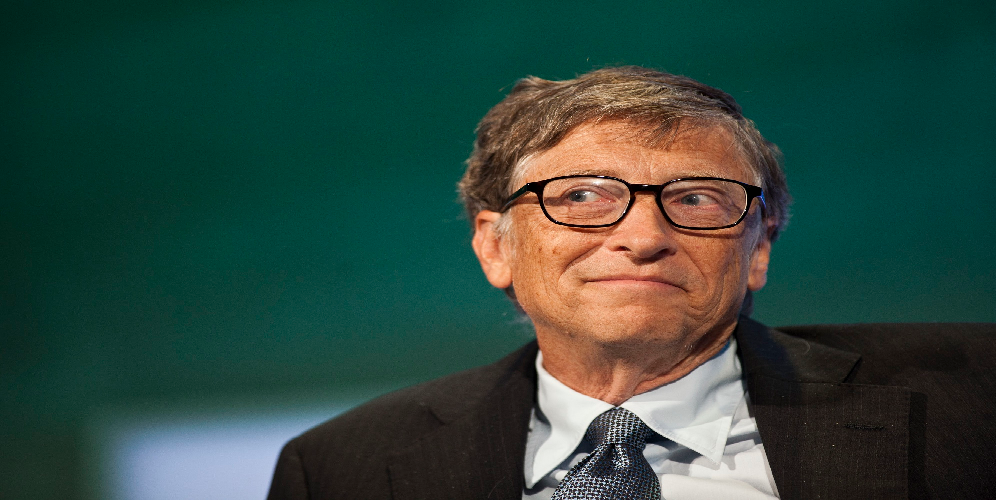
“The world will be richer with AI” – Bill Gates Advocates AI Adoption in Africa to Address Educational and Healthcare Gaps

0

At the World Economic Forum in Davos, Bill Gates, Microsoft’s co-founder, delivered a compelling message on the transformative potential of Artificial Intelligence (AI) in addressing critical gaps in education and healthcare across African nations.

Gates disclosed his commitment to funding pilot studies focused on developing AI tutors and AI doctors, highlighting the innovative solutions AI could offer to bridge educational and healthcare disparities.

Expressing concern about the technological divide between developed and developing countries, Gates emphasized the urgency of closing the gap, particularly in the realm of AI adoption. He noted the pivotal role technology could play in narrowing shortages of teachers and doctors in Africa, shedding light on ongoing efforts to tailor AI tools to the specific needs and conditions of local communities.

In Gates’ vision, AI emerges as a driving force for global productivity, with the competition between tech giants Microsoft and Google fueling its growth. Gates expressed enthusiasm about AI’s potential to elevate productivity in both white-collar and, eventually, blue-collar sectors through advancements in robotics.

“The world will be richer with AI,” Gates declared, noting the positive impact AI could have on global prosperity.

“It is so dramatic how AI improves white-collar productivity and later with robotics not yet but eventually blue-collar productivity. So that is phenomenal for the world,” he said.

The American billionaire reaffirmed Microsoft’s commitment to minimizing the typical 20-year lag in introducing AI solutions to developing countries.

“We have a huge commitment to make sure there’s not this normal 20-year lag between the rich versus developing countries. There’s a bigger teacher shortage in Africa than elsewhere, a bigger doctor shortage. And so not only will we invent new tools using AI like the ultrasound, we will provide health advice and directly, you know, in their local African language, fully tailored to the conditions in those countries,” he said.

Gates highlighted the importance of ensuring that groundbreaking technologies, such as ultrasound and AI-based health advice, are simultaneously accessible in regions facing educational and healthcare challenges.

“We will provide an AI doctor; we will provide an AI tutor and already we’ve funded lots of Africans to do pilot studies and to take the very best technology and get it out at about the same time, as they’ll happen in the rich world.

“In fact, in a few cases, rich world regulations may make it roll out slower than in countries like India or Africa. So, it’s a race, but it’s a race for good. And I couldn’t be more thrilled, you know it’s the case for my ongoing work with Microsoft. And it helps me understand how we take this into the developing countries,” Gates said.

While addressing concerns about potential job displacement due to AI, Gates pivoted the conversation toward the darker side of technology. He raised concerns about the possibility of bad actors exploiting the productivity gains from AI for nefarious purposes. Gates cautioned, “AI as a brilliant tool for people to be more productive means the bad guys will be more productive so they can do more cyber attacks so they can design weapons.”

Balancing the narrative, Gates stressed the imperative of responsible AI development. He emphasized the need to ensure that the best AI tools for cyber defense and measures against bioterrorism are in the hands of those committed to societal well-being. Recognizing the dual nature of technology, Gates acknowledged its potential for efficiency improvements while underscoring the importance of addressing potential misuse.

Gates envisions the emerging AI industry as a powerful tool to tackle societal challenges, particularly in regions where shortages of essential services persist.

The commitment to narrowing the technological gap and leveraging AI for positive advancements remains central to Gates’ vision for a more inclusive, technologically advanced world.

The promise of AI in education and healthcare stands as a beacon of hope, offering transformative solutions to longstanding issues faced by African nations.


Managing Cross Border Payments during increased scrutiny

0

Cross border payments are transactions that involve sending or receiving money across national borders. They are essential for international trade, remittances, e-commerce, and foreign investments. However, cross border payments also pose significant challenges and risks for businesses and individuals, especially in the context of increased scrutiny from regulators, law enforcement, and tax authorities.

One of the main challenges of cross border payments is compliance with the complex and diverse regulations and standards that govern different jurisdictions. These include anti-money laundering (AML), counter-terrorism financing (CTF), sanctions, tax reporting, currency controls, and data protection. Failing to comply with these requirements can result in fines, penalties, delays, or even criminal charges.

Another challenge of cross border payments is the cost and efficiency of the payment process. Depending on the payment method, channel, and intermediary, cross border payments can incur high fees, exchange rate losses, operational overheads, and long processing times. These factors can affect the profitability, cash flow, and customer satisfaction of the payment parties.

Therefore, managing cross border payments effectively requires a strategic approach that balances the trade-offs between compliance, cost, and efficiency. Some of the best practices for managing cross border payments during increased scrutiny are:

Choosing the right payment method and channel: There are various options for making cross border payments, such as wire transfers, card payments, digital wallets, blockchain-based platforms, and payment service providers (PSPs).

Each option has its own advantages and disadvantages in terms of speed, security, convenience, cost, and regulatory compliance. Therefore, it is important to evaluate the suitability of each option for the specific payment scenario and select the one that meets the needs and expectations of both the sender and the receiver.

Leveraging technology and automation: Technology and automation can help streamline and optimize the cross-border payment process by reducing manual errors, enhancing data quality, improving visibility and traceability, and facilitating reporting and reconciliation.

For example, using application programming interfaces (APIs) can enable seamless integration between different payment systems and platforms, while using artificial intelligence (AI) and machine learning (ML) can help detect fraud and anomalies in real-time.

Partnering with reputable and reliable intermediaries: Intermediaries such as banks, PSPs, and fintech companies play a crucial role in facilitating cross border payments by providing access to payment networks, infrastructure, and services. However, not all intermediaries are equally trustworthy and competent.

Therefore, it is essential to conduct due diligence on the intermediaries before engaging them for cross border payments. Some of the criteria to consider are their reputation, track record, regulatory compliance status, security measures, customer service quality, and fee structure.

Staying updated on the latest regulations and standards: Regulations and standards for cross border payments are constantly evolving and changing to address new risks and challenges in the global financial system.

Therefore, it is imperative to keep abreast of the latest developments and updates in the relevant jurisdictions and sectors. This can help avoid potential pitfalls and take advantage of new opportunities in cross border payments. Moreover, it can also help demonstrate compliance readiness and transparency to regulators, law enforcement, and tax authorities.

BMW sold 2,253,835 cars worldwide in 2023

0

BMW is one of the most successful car manufacturers in the world, with a reputation for quality, innovation and performance. In 2023, the German company sold 2,253,835 cars worldwide, a slight increase from the previous year. However, BMW faces a formidable challenger in the electric vehicle market: Tesla.

Tesla, founded by Elon Musk, has been disrupting the automotive industry with its cutting-edge technology, sleek design and environmental vision. In 2023, Tesla delivered 1,875,000 vehicles globally, a remarkable growth of 50% from 2022. Tesla also surpassed Toyota as the most valuable car company in the world, with a market capitalization of over $1.5 trillion.

It’s entirely possible that Tesla could overtake BMW in overall sales in 2024, as the demand for electric vehicles continues to rise and Tesla expands its production capacity and product portfolio. Tesla plans to launch its Cybertruck, Semi and Roadster models in 2024, as well as enter new markets such as India and Indonesia. Tesla also has a competitive advantage in battery technology, software and autonomous driving, which could give it an edge over BMW and other traditional carmakers.

BMW is not standing still, though. The company has invested heavily in electrification, aiming to have 25 electric models by 2025. BMW also has a strong presence in China, the largest car market in the world, where it sold over 800,000 cars in 2023. BMW also has a loyal customer base and a strong brand image that could help it retain its market share.

The competition between BMW and Tesla is likely to intensify in 2024 and beyond, as both companies strive to innovate and dominate the global car market. The outcome will depend on many factors, such as consumer preferences, regulations, supply chains and economic conditions. However, one thing is certain: the future of mobility is electric.

One of the biggest challenges for BMW is the transition to electric vehicles (EVs). BMW has been a pioneer in developing hybrid and plug-in hybrid models, but it has lagged behind some of its competitors in launching fully electric cars. According to Statista, BMW had only 4.9% of the global EV market share in 2020, compared to 18% for Tesla and 16.8% for Volkswagen Group.

BMW has announced that it aims to have 25 electrified models by 2023, of which more than half will be fully electric. However, this will require significant investments in research and development, production capacity, charging infrastructure, and marketing.

BMW has to contend with not only traditional rivals such as Mercedes-Benz and Audi, but also with newcomers such as Tesla, Lucid Motors, and Nio, who are challenging BMW’s leadership in innovation, design, and performance. Moreover, BMW has to adapt to the changing preferences and demands of customers in different regions, especially in China, which is now BMW’s largest market. BMW has to balance its global brand identity with local customization and differentiation.

BMW is well aware of these challenges and has devised strategies to address them. BMW is investing heavily in electrification, digitalization, and sustainability, as well as expanding its portfolio of products and services. BMW is also strengthening its partnerships with suppliers, dealers, and customers, as well as collaborating with other companies and institutions on various projects. BMW is confident that it can overcome the difficulties and maintain its position as a premium car maker in the future.

Nigeria Approves N5.1 Billion for TETFund National Research Fund

0

The Federal Government of Nigeria has greenlit the disbursement of N5.1 billion for the Tertiary Education Trust Fund (TETFund) National Research Fund 2023 Grant Cycle. 

This substantial research grant is designed to allocate funds to researchers addressing critical areas of the economy and the welfare of Nigerians. 

The approval was announced by the Minister of Education, Prof. Tahir Mamman, following the comprehensive report submitted by the TETFund National Research Fund Screening and Monitoring Committee (NRFS&MC).

Prof. Mamman elaborated on the allocation of the approved sum, delineating the distribution for various thematic areas. Notably, N3.78 million is allocated for the Science, Engineering, Technology, and Innovation (SETI) thematic group, N759,875,400.00 for Humanities and Social Science (HSS), and N583,669,300.63 for Cross-Cutting (CC). Individual grants within these categories range from N8 million to over N46 million.

The Screening and Monitoring Committee, after a meticulous screening process initiated in March 2023, recommended funding for 185 research proposals out of 4,287 Concept Notes submitted by prospective applicants.

Prof. Mamman emphasized the purpose of the research grant, stating, “The National Research Fund (NRF) Grant was introduced by TETFund to encourage cutting-edge research that explores areas relevant to the societal needs of Nigeria, such as power and energy, health, security, agriculture, employment, and wealth creation, etc., in line with its mandate.”

He further highlighted the additional impetus received under the Renewed Hope Agenda, considering the NRF Grant as a vital tool to foster economic growth and enhance the standards of living for the Nigerian people.

Here are details of the approved thematic research areas that will receive funding:

Science, Engineering, Technology, and Innovation (SETI) Thematic Category:

  • Application of the hydro-biogeochemical framework to develop a national rural water quality assurance plan for sustainable water quality management in Nigeria.
  • The development and use of doubled haploid maize lines for improved maize yield and tolerance to armyworm (Spodoptera frugiperda).
  • The development of an intelligent multi-chamber evaporative cooling preservative system for post-harvest storage of selected fruits in Nigeria.
  • The development of electric vehicles with special tracking features, among others.

Cross-Cutting Thematic Category:

  • The utilization of scrap tires and plastic wastes as an aggregate conductive material for renewable energy storage systems.
  • Development of appropriate technology for the production of aluminum alloy sacrificial anodes for applications in Nigeria’s Oil and Gas Industry.
  • Development of an economical low-voltage programmable electroporator and investigating pulse electric field for wound healing and cancer treatment.

Humanities and Social Science Category:

  • Digital financial inclusion for rural households’ consumption structure and well-being in Nigeria.
  • Creating access to library resources for students living with vision impairment in an e-learning environment in Nigerian Universities.
  • Initiatives for mitigating post-traumatic stress disorder among frontline Nigerian Army Personnel using stress inoculation therapy, among others.

This significant investment in research is said to reflect Nigeria’s commitment to advancing knowledge, fostering innovation, and addressing societal challenges for the betterment of its citizens.

Vanguard making a “terrible” mistake by ignoring the potential of Bitcoin and other Cryptocurrencies – Cathie Wood

0

Cathie Wood, the founder and CEO of Ark Invest, has criticized Vanguard’s decision to block its clients from investing in Bitcoin ETFs. In a recent interview, Wood said that Vanguard was making a “terrible” mistake by ignoring the potential of Bitcoin and other cryptocurrencies. She argued that Bitcoin was not only a store of value, but also a catalyst for innovation and social change.

Vanguard announced last week that it will not offer its customers access to Bitcoin ETFs, citing regulatory uncertainty and high volatility. This decision comes as a surprise to many investors who were hoping to gain exposure to the cryptocurrency market through a regulated and low-cost vehicle. Vanguard’s move is also in contrast to other major players such as Fidelity and BlackRock, who have expressed interest in launching their own Bitcoin ETFs or have already filed applications with the SEC.

Vanguard’s spokesperson said that the firm is “always evaluating new products and services based on client demand, but we have no plans to offer a Bitcoin ETF at this time.” The spokesperson added that Vanguard believes that “Bitcoin and other cryptocurrencies are highly speculative and do not meet our long-term investment criteria.” Vanguard also warned its customers about the risks of investing in unregulated and volatile assets, saying that they “could lose a substantial portion or even all of their investment.”

Vanguard’s stance on Bitcoin ETFs is likely to disappoint some of its customers who are looking for more diversification and innovation in their portfolios. However, the firm may also be trying to protect its reputation and avoid potential legal troubles, as the SEC has not yet approved any Bitcoin ETFs in the US and has repeatedly raised concerns about fraud, manipulation, liquidity, and custody issues. Vanguard may also be waiting for more clarity and stability in the cryptocurrency market before making any moves.

Vanguard’s decision to deny its customers access to Bitcoin ETFs may have an impact on the overall demand and price of Bitcoin, as well as on the prospects of other Bitcoin ETFs that are seeking approval from the SEC. However, it is not clear how significant this impact will be, as Vanguard’s customers may still be able to access Bitcoin through other platforms or products, such as Grayscale’s Bitcoin Trust or Coinbase’s exchange. Moreover, Vanguard’s position may change in the future if the regulatory environment and the market conditions improve.

Wood said that Ark Invest was one of the first asset managers to embrace Bitcoin and allocate a portion of its funds to the digital asset. She said that Ark Invest had benefited from the strong performance of Bitcoin, which had outperformed most traditional assets in the past decade. She also said that Ark Invest had witnessed the growth of the Bitcoin ecosystem, which included various applications and services that leveraged the blockchain technology.

Wood said that Vanguard was missing out on a huge opportunity by denying its customers access to Bitcoin ETFs. She said that Bitcoin ETFs were a convenient and low-cost way for investors to gain exposure to the cryptocurrency market, without having to deal with the technical and regulatory challenges of buying and storing Bitcoin directly. She said that Bitcoin ETFs were also a way to diversify one’s portfolio and hedge against inflation and currency devaluation.

Wood said that Vanguard’s decision was based on a lack of understanding and vision. She said that Vanguard was still stuck in the old paradigm of investing, which focused on traditional assets such as stocks, bonds, and commodities. She said that Vanguard was ignoring the fact that Bitcoin was a new asset class, with unique properties and advantages. She said that Bitcoin was more than just a digital currency, but also a network, a protocol, and a platform for innovation.

Wood said that she hoped that Vanguard would reconsider its decision and allow its customers to access Bitcoin ETFs in the future. She said that she believed that Bitcoin was here to stay, and that it would continue to grow in value and adoption. She said that she was confident that Bitcoin would eventually become a mainstream asset, and that it would transform the world of finance and beyond.