DD
MM
YYYY

PAGES

DD
MM
YYYY

spot_img

PAGES

Home Blog Page 3834

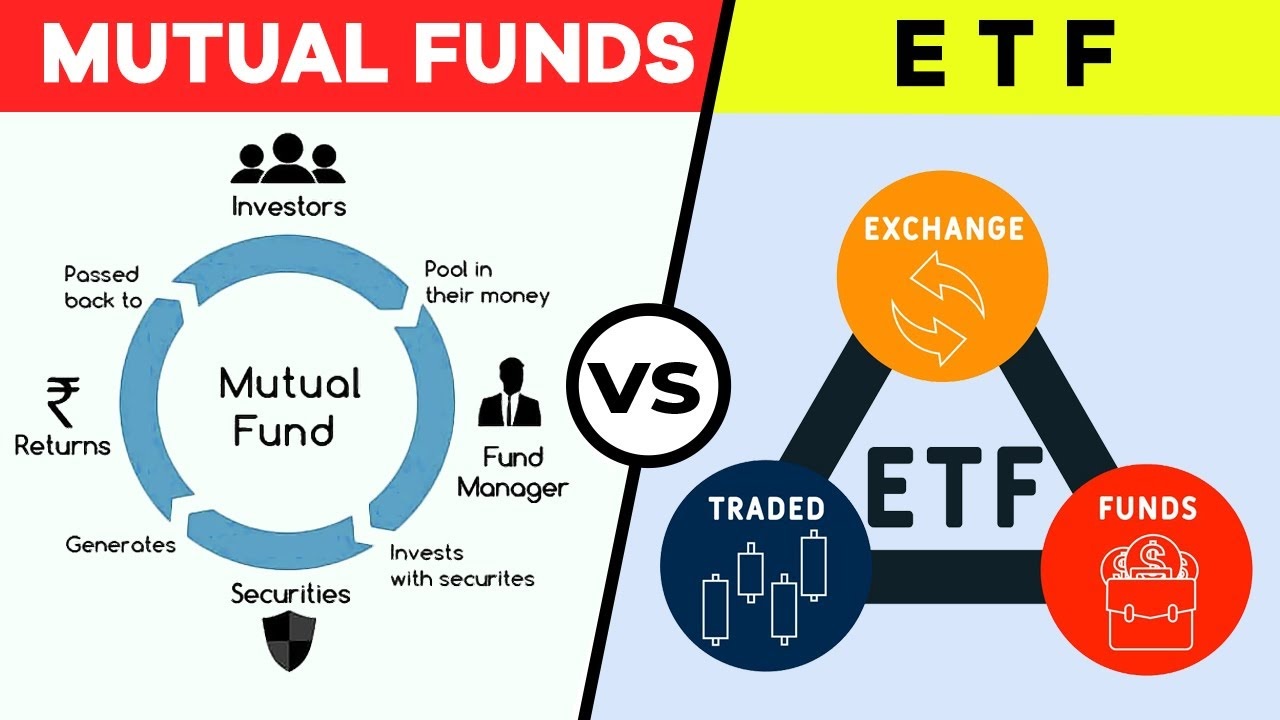
Difference between ETFs and Mutual Funds

0

If you are looking for a way to invest your money in the stock market, you may have heard of ETFs and mutual funds. These are two types of investment vehicles that allow you to buy a basket of stocks, bonds, or other assets with one transaction. But what are the main differences between them, and which one is better for you?

ETFs, or exchange-traded funds, are funds that trade on an exchange like stocks. You can buy and sell them throughout the day, and their prices fluctuate based on supply and demand. ETFs typically have lower fees than mutual funds, as they do not have to pay for active management or marketing. ETFs also offer more transparency, as they disclose their holdings daily. ETFs can track various indexes, sectors, commodities, or themes, and some of them offer leverage or inverse exposure to the market.

Mutual funds, on the other hand, are funds that are managed by a professional fund manager who decides what to buy and sell within the fund. You can only buy and sell mutual funds at the end of the day, based on their net asset value (NAV), which is calculated by dividing the total value of the fund’s assets by the number of shares outstanding.

Mutual funds typically have higher fees than ETFs, as they have to pay for the fund manager’s expertise, research, and administration. Mutual funds also offer less transparency, as they only disclose their holdings quarterly or monthly. Mutual funds can be actively or passively managed, meaning that they can either try to beat the market or simply follow an index.

Mutual funds offer several benefits to investors, such as:

Diversification: By investing in a mutual fund, you can own a slice of many different securities, which reduces your risk and exposure to any single company or sector.

Professional management: You can rely on the expertise and experience of the fund manager, who researches and selects the securities for the fund, monitors their performance, and adjusts the portfolio accordingly.

Liquidity: You can buy or sell mutual fund shares at any time, based on the fund’s net asset value (NAV), which is calculated daily. This means you can easily access your money when you need it.

Affordability: You can start investing in a mutual fund with a relatively low amount of money, as some funds have minimum initial investment requirements as low as $100 or less.

Variety: There are thousands of mutual funds available in the market, covering different asset classes, sectors, regions, styles, and strategies. You can choose a fund that matches your risk tolerance, time horizon, and investment goals.

The choice between ETFs and mutual funds depends on your personal preferences, goals, risk tolerance, and investment style. Some of the factors to consider are:

Cost: ETFs generally have lower expense ratios than mutual funds, meaning that they charge less for managing the fund. However, ETFs also incur trading commissions when you buy and sell them, which can add up if you trade frequently. Mutual funds may have higher expense ratios, but they do not charge trading commissions. They may also have other fees, such as sales loads or redemption fees, which can reduce your returns.

Tax efficiency: ETFs are generally more tax-efficient than mutual funds, as they generate fewer capital gains distributions. This is because ETFs use a mechanism called in-kind creation and redemption, which allows them to exchange securities with authorized participants without triggering taxable events. Mutual funds, on the other hand, have to sell securities to meet redemptions or rebalance their portfolios, which can result in capital gains distributions that are passed on to shareholders.

Mutual funds are subject to capital gains taxes when they sell securities within the portfolio. These capital gains are passed on to the investors, who have to pay taxes on them, even if they did not sell their shares.

Diversification: Both ETFs and mutual funds can offer diversification benefits by allowing you to invest in a large number of securities with one purchase. However, ETFs may offer more variety and flexibility than mutual funds, as they cover a wider range of asset classes, regions, sectors, strategies, and themes. Mutual funds may be more limited in their scope and selection.

Performance: The performance of ETFs and mutual funds depends largely on the underlying securities they hold and the market conditions. However, in general, passive ETFs tend to perform better than active mutual funds over the long term, as they have lower costs and track their benchmarks more closely. Active mutual funds may outperform passive ETFs in certain market environments or niches, but they also carry more risk and uncertainty.

ETFs and mutual funds are both viable options for investors who want to diversify their portfolios and access different markets. However, they have different characteristics and advantages that suit different investors’ needs and preferences. Before investing in either one, you should do your research and compare their costs, tax implications, diversification benefits, and performance potential.


Interswitch Integrates Google Pay on Its Payment Gateway Platform, Offering Users A Flexible Additional Payment Method

0

Interswitch, a leading African integrated payments and digital commerce platform company headquartered in Lagos, has integrated Google Pay on its Payment Gateway (IPG) platform.

This integration will enable individuals and businesses in Nigeria to make a wide range of financial transactions, including in-person contactless purchases, for goods and services, peer-to-peer money transfers, and more, using their mobile devices.

Merchants and users can now add their debit and credit card details to the Google Wallet app to make online payments. Users can also pay with international cards or create virtual cards for payment at the checkout, enabling businesses to cater to their international clients.

Speaking on the Integration of Google Pay on the Interswitch payment platform, Managing Director of Digital Commerce and Merchant Acquiring at Interswitch, Muyiwa Asagba said,

“We are proud to align with Google Pay, as it exemplifies our commitment to delivering cutting-edge payment solutions that facilitate seamless transactions for businesses and their customers. By integrating Google Pay into our Payment Gateway, we are empowering businesses to harness the potential of a global customer base while ensuring secure and reliable payments.”

Interswitch also said that aside from the tokenization which guards against fraud, the Google Wallet integration also has a “Find my device” function with which users can secure their financial information in the event of a lost or misplaced device.

According to Jenny Cheng, vice president and general manager of Google Wallet, she said,

“This service is available to users in over 70 countries and territories, enabling payments through their Android phones or Wear OS devices. Users can simply add their debit and credit cards to the Google Wallet app and feel confident that their financial information is safe and secure when they’re making a purchase or catching a train”.

As Google Pay continues to evolve and expand its capabilities, it aims to provide a convenient and secure way for users to manage their digital payments and financial transactions.

The integration of Google Pay into the Interswitch gateway payment platform is indeed strategic, as it offers users additional payment methods, increasing flexibility and catering to a broader user base. This can be very beneficial for Interswitch, in retaining new customers, and attracting existing ones.

Also, the integration of Google Pay enables users to make mobile and contactless payments, which align with the growing trend of cashless transactions and reduces the need for physical payment cards.

This move can enhance Interswitch’s competitive edge in the payments and remittance market, as it now offers users a wide range of payment options.

Vitalik Buterin, FTX, Brian Armstrong, Ripple and Other Crypto News

0

Vitalik Buterin, the co-founder of Ethereum, has become the victim of a cyberattack that compromised his X account and used it to send phishing messages to his followers. The attackers managed to steal around $700,000 worth of cryptocurrencies and non-fungible tokens (NFTs) from unsuspecting users who clicked on the malicious links.

The incident was reported by Buterin on his Twitter account, where he warned his followers not to trust any messages coming from his X account until further notice. He also apologized for the inconvenience and said he was working with the X team to recover his account and prevent further damage.

FTX, a cryptocurrency exchange platform, has disclosed some of the details of its sponsorship deals with celebrities and sports teams in a recent filing with the Securities and Exchange Commission (SEC). According to the document, FTX paid millions of dollars to Shaquille O’Neal, Naomi Osaka, David Ortiz, and other famous figures to promote its brand and products.

FTX also revealed that it has agreements with Major League Baseball (MLB), the National Basketball Association (NBA), and the National Football League (NFL) to display its logo on various platforms and venues. The filing shows that FTX is investing heavily in marketing and expanding its user base in the US and abroad.

Brian Armstrong, the CEO of Coinbase, the largest cryptocurrency exchange in the US, has recently expressed his interest in flatcoins, a new type of stablecoins that are backed by fiat currencies. According to Armstrong, flatcoins could offer more stability and scalability than traditional stablecoins, which are often pegged to volatile assets like gold or cryptocurrencies.

Flatcoins could also enable faster and cheaper cross-border payments, as well as more financial inclusion and innovation. Armstrong believes that flatcoins are the “next iteration of stablecoins” and that they could play a key role in the future of the crypto industry.

A legal battle is brewing between FTX estate, the company behind the failed crypto exchange FTX, and LayerZero Labs, a blockchain startup that received $86 million from FTX estate just days before it filed for bankruptcy. FTX estate claims that the transfer was fraudulent and seeks to recover the funds, while LayerZero Labs argues that it was a legitimate investment and that FTX estate is trying to scapegoat them for its own mismanagement.

However, CEO of LayerZero, a decentralized derivatives exchange, has responded to the lawsuit filed by FTX, alleging that it is based on false allegations and misrepresentations. In a statement released on Monday, the LayerZero boss said that the suit was an attempt by FTX to stifle competition and innovation in the crypto space, and that LayerZero had not infringed any of FTX’s intellectual property rights or trade secrets.

The statement also claimed that LayerZero had developed its own technology and protocols independently, and that it had no prior knowledge or involvement with FTX’s products or services. The LayerZero boss said that he was confident that the court would dismiss the suit and vindicate LayerZero’s position.

Mocaverse, a web3 identity project developed by Animoca Brands, has secured $20 million in a funding round led by prominent investors. The project aims to create a decentralized platform for users to create, own and monetize their digital identities across various metaverse applications. Animoca Brands, a leading blockchain gaming company, plans to use the funds to expand the Mocaverse team, develop new features and partnerships, and grow the user base of the platform.

Sushi, the popular decentralized exchange and automated market maker, has announced that it will expand its operations to the Aptos blockchain, a scalable and interoperable platform for decentralized applications. According to a blog post by Sushi, the expansion will enable users to access a variety of liquidity pools, yield farming opportunities, and cross-chain swaps on Aptos, as well as benefit from its low fees and fast transactions.

Sushi stated that it aims to become a multi-chain ecosystem that supports innovation and collaboration in the decentralized finance (DeFi) space. The integration with Aptos is expected to be completed by the end of the year.

Ripple, the company behind the popular cryptocurrency XRP, has announced that some of its customers have been affected by a security incident that occurred during the acquisition of Fortress, a blockchain security firm. According to a statement from Ripple, the incident involved unauthorized access to a database containing personal information of some Fortress customers, such as names, email addresses and phone numbers. Ripple said that it has notified the affected customers and is working with law enforcement and cybersecurity experts to investigate the breach and prevent further damage.

Ripple also said that it is taking steps to enhance its security measures and protect its customers’ data. Ripple acquired Fortress in July 2023, in a deal that aimed to strengthen its position in the blockchain industry and provide more security solutions for its customers. Fortress is known for developing advanced tools for detecting and preventing cyberattacks on blockchain networks and applications. Ripple said that the acquisition was part of its vision to create a more secure and reliable global payment system using blockchain technology.

In a bizarre incident, a bitcoin user paid a staggering $500,000 in transaction fees to move just $200 worth of the cryptocurrency. The transaction, which took place on September 10, 2023, was recorded on the blockchain and sparked curiosity and speculation among the crypto community.

Some suggested that it was a mistake, while others speculated that it was a money laundering scheme or a deliberate publicity stunt. The identity and motive of the sender remain unknown, as do the fate and reaction of the recipient. This incident highlights the volatility and unpredictability of the bitcoin network, as well as the need for caution and diligence when dealing with large sums of money in digital form.

Regulatory Landscape for Crypto in the United States is Complex and Uncertain

0

If you are interested in investing or trading in cryptocurrencies, you might be wondering how the US government regulates this emerging asset class. The answer is not simple, as there is no single federal agency that oversees the crypto industry. Unlike some other countries that have adopted a clear and consistent framework for crypto regulation, the US has a patchwork of different rules and agencies that oversee different aspects of the crypto industry.

Instead, there are multiple regulators at different levels of government, each with their own jurisdiction and approach.

The Securities and Exchange Commission (SEC)

The SEC is the federal agency that enforces securities laws and protects investors from fraud and manipulation. The SEC has been actively involved in regulating crypto, especially when it comes to initial coin offerings (ICOs), which are a form of crowdfunding using digital tokens.

The SEC has issued several guidance documents and enforcement actions to clarify that most ICOs are securities offerings that need to comply with registration and disclosure requirements or qualify for an exemption. The SEC has also sued several crypto platforms and issuers for violating securities laws, such as Telegram, Kik, Ripple, and Coinbase.

The SEC’s main challenge is to balance innovation and investor protection, while providing clear and consistent rules for the crypto industry. The SEC has been criticized by some crypto advocates for being too slow and restrictive in approving new products and services, such as exchange-traded funds (ETFs) and decentralized finance (DeFi) platforms.

The SEC has also faced legal challenges from some crypto entities that argue that their tokens are not securities, but rather utilities or commodities. The SEC’s authority over crypto is not absolute, as it depends on the definition and classification of digital assets, which are still evolving and contested.

The Commodity Futures Trading Commission (CFTC)

The CFTC is the federal agency that regulates the derivatives markets, such as futures, options, and swaps. The CFTC has jurisdiction over commodities, which include certain cryptocurrencies, such as Bitcoin and Ether. The CFTC has recognized crypto as a new and innovative asset class that offers potential benefits and risks for consumers and markets.

The CFTC has approved several crypto derivatives products, such as Bitcoin futures and options contracts, which are traded on regulated exchanges like CME Group and Bakkt. The CFTC has also brought enforcement actions against unregistered or fraudulent crypto platforms and schemes, such as BitMEX, Bitfinex, and Tether.

The CFTC’s main challenge is to foster a competitive and transparent market for crypto derivatives, while preventing market abuse and systemic risk. The CFTC has to coordinate with other regulators, such as the SEC and state authorities, to avoid gaps or overlaps in oversight. The CFTC also has to adapt to the rapid changes and innovations in the crypto space, such as DeFi protocols, stablecoins, and non-fungible tokens (NFTs), which may pose new regulatory questions and challenges.

The Financial Crimes Enforcement Network (FinCEN)

FinCEN is the federal agency that administers the Bank Secrecy Act (BSA), which requires financial institutions to combat money laundering, terrorist financing, and other illicit activities. FinCEN has issued guidance and rules that apply to crypto businesses that qualify as money services businesses (MSBs), such as exchanges, wallets, kiosks, and payment processors.

These businesses have to register with FinCEN, implement anti-money laundering (AML) programs, conduct customer due diligence (CDD), report suspicious transactions (SARs), and comply with record-keeping and reporting requirements.

FinCEN’s main challenge is to prevent the misuse of crypto for criminal purposes, while respecting privacy and civil liberties. FinCEN has to collaborate with other law enforcement agencies, both domestic and international, to track and disrupt illicit crypto transactions and networks. FinCEN also has to keep pace with the technological developments and innovations in the crypto space, such as privacy-enhancing tools, decentralized exchanges (DEXs), and cross-border transfers.

The Internal Revenue Service (IRS)

The IRS is the federal agency that administers the tax laws and collects taxes from individuals and businesses. The IRS has issued guidance and rules that apply to crypto transactions, The IRS treats cryptocurrencies as property for tax purposes, meaning that any gains or losses from buying, selling or exchanging cryptocurrencies are subject to capital gains tax.

The Office of the Comptroller of the Currency (OCC), which regulates national banks and federal savings associations. The OCC has recently issued guidance and approvals for banks to provide custody services for cryptocurrencies and stablecoins, as well as to participate in blockchain networks.

The Federal Reserve System (Fed), which conducts monetary policy and oversees the banking system. The Fed has expressed interest in developing a central bank digital currency (CBDC) and has launched a research project to explore its potential benefits and risks.

In addition to these federal regulators, each state has its own laws and agencies that govern crypto activities within its borders. Some states, such as New York, have enacted strict licensing requirements for crypto businesses, while others, such as Wyoming, have created more favorable regulatory environments for crypto innovation. This creates a challenge for crypto businesses that operate across multiple states, as they have to comply with different and sometimes conflicting rules.

The lack of clarity and consistency in the US crypto regulation has created uncertainty and confusion for both crypto businesses and consumers. It has also hindered the development and adoption of crypto products and services in the US market, as some businesses have decided to relocate to more crypto-friendly jurisdictions or avoid serving US customers altogether.

Moreover, it has exposed crypto users to potential legal risks and liabilities, as they may unknowingly violate some obscure or ambiguous regulations. Therefore, it is important for anyone who is involved or interested in the crypto industry to stay informed and updated on the regulatory developments in the US. While there is no definitive source of information on this topic, some useful resources include:

The official websites of the federal regulators mentioned above, where they publish their guidance, enforcement actions, speeches and press releases related to crypto.

The websites of state regulators or legislators, where they publish their laws, rules, licenses and opinions related to crypto.

The websites of industry associations or advocacy groups, such as the Blockchain Association, Coin Center or Crypto Council for Innovation, where they provide analysis, commentary and updates on crypto policy issues.

The websites of reputable news outlets or publications, such as Coindesk, Cointelegraph or Forbes Crypto, where they report on the latest news and events in the crypto space.

By keeping abreast of the regulatory landscape for crypto in the US, you can make more informed decisions about your crypto activities and protect yourself from potential pitfalls. However, you should also be aware that the regulation is constantly evolving and changing, so you should always consult a professional advisor before engaging in any crypto transactions or operations.

The Future of Crypto in Africa

0

Cryptocurrencies have been gaining popularity in Africa as a way of facilitating cross-border payments, remittances, and financial inclusion. However, the regulatory landscape for crypto assets in the continent is still unclear and fragmented.

Africa is a continent with immense potential for the adoption and development of cryptocurrencies and blockchain technology. According to a recent report by Chainalysis, Africa is the third-fastest growing region for crypto transactions, with a 12% increase in volume from July 2020 to June 2021. The report also highlights some of the key drivers and challenges for the crypto industry in Africa, such as remittances, inflation, regulation, and infrastructure.

One of the main reasons why many Africans are turning to crypto is to facilitate cross-border payments and remittances. According to the World Bank, remittances to sub-Saharan Africa totaled $48 billion in 2019, accounting for 2.6% of the region’s GDP. However, sending money to and from Africa can be costly and inefficient, with an average fee of 8.9% per transaction, well above the global average of 6.8%. Crypto platforms such as Paxful, BitPesa, and Chipper Cash offer cheaper, faster, and more accessible alternatives for remittance services, allowing users to send and receive money in various cryptocurrencies or local currencies.

Another factor that drives the demand for crypto in Africa is the high inflation and currency devaluation that plague many African countries. According to Trading Economics, the annual inflation rate in Zimbabwe reached 50% in June 2021, while in Nigeria it was 17.75%. In contrast, the inflation rate of Bitcoin is currently around 1.8% and is expected to decrease over time as the supply becomes scarcer. Crypto offers a way for Africans to preserve their purchasing power and hedge against the risks of fiat currency instability.

One of the main challenges for crypto regulation in Africa is the lack of a harmonized approach among different countries. While some countries, such as Nigeria, Kenya, and South Africa, have issued some guidelines or warnings on crypto activities, others have banned or restricted them outright, such as Algeria, Morocco, and Egypt. This creates uncertainty and confusion for both users and service providers, who may face legal risks or barriers to operate across borders.

Another challenge is the lack of capacity and resources to effectively regulate and supervise the crypto sector. Many African countries lack the technical expertise, infrastructure, and data to monitor and enforce compliance with existing laws and regulations. Moreover, some regulators may have conflicting or overlapping mandates, such as central banks, securities commissions, and financial intelligence units. This may lead to regulatory gaps or inconsistencies that could expose the sector to fraud, money laundering, terrorism financing, and other illicit activities.

However, there are also some opportunities for crypto regulation in Africa that could foster innovation and growth. One of them is the potential for regional cooperation and integration. Several regional initiatives, such as the African Continental Free Trade Area (AfCFTA), the Single African Digital Market (SADM), and the Pan-African Payment and Settlement System (PAPSS), could provide a platform for harmonizing and streamlining crypto regulation across the continent. This could reduce regulatory arbitrage, enhance market access, and promote interoperability among different crypto services.

Another opportunity is the adoption of a risk-based and proportionate approach to crypto regulation. Rather than imposing a one-size-fits-all framework that may stifle innovation or exclude certain segments of the population, regulators could tailor their rules and standards according to the specific risks and benefits of each crypto activity. This could encourage experimentation and innovation while ensuring consumer protection, financial stability, and integrity.

For example, some crypto activities may include buying and selling cryptocurrencies on an exchange platform, sending and receiving cryptocurrencies through a wallet service, or using cryptocurrencies to pay for goods and services on a merchant platform. Each of these activities may pose different levels of risk and require different levels of regulation. This could encourage experimentation and innovation while ensuring consumer protection, financial stability, and integrity.

Another challenge is the lack of adequate infrastructure and internet access that are essential for using crypto. According to Internet World Stats, only 39.3% of the African population had internet access as of June 2020, compared to 62.9% globally. Moreover, many Africans still lack access to basic financial services, such as bank accounts and mobile money platforms, which are often required for buying and selling crypto. According to the World Bank, only 43% of adults in sub-Saharan Africa had a bank account in 2017, while only 21% had a mobile money account.

Despite these challenges, the future of crypto in Africa looks bright and promising. The continent has a large and young population that is eager to embrace new technologies and innovations. The crypto industry also offers opportunities for entrepreneurship, job creation, social impact, and financial inclusion for millions of Africans. As more people become aware of the benefits and potential of crypto, and as more solutions emerge to address the existing challenges, Africa could become a leading force in the global crypto scene.

By adopting a harmonized, risk-based, and proportionate approach to crypto regulation, African countries could leverage the potential of cryptocurrencies to enhance financial inclusion, economic growth, and regional integration across the continent.