DD
MM
YYYY

PAGES

DD
MM
YYYY

spot_img

PAGES

Home Blog Page 3838

Ghana Aims to Achieve 100% Universal Energy Access to Export Electricity to Nigeria

0

The Ghanaian government is exploring ways to achieve 100% universal energy access, potentially making its power sector viable for export.

Mr. Hanson Monney, the Head of the Generation and Transmission Unit at the Ministry of Energy in Ghana, who announced the efforts during his presentation in Lagos on the 2nd Day of the Nigeria Energy Leadership Summit, said “big brother” Nigeria is their top export target.

Nigeria is Ghana’s West African neighbor with chronic power supply limitations that have lingered unsolved for decades, despite billions of dollars in investments in the power sector.

Monney said that the strategies and policy implementation are already yielding results, with Ghana having achieved a remarkable 80% to 85% universal energy access within its borders.

“So, we are working on all these things to make sure that the power system of Ghana continues to be as good as it is or even better, and then, maybe, we can be exporting more to our big brothers in Nigeria when the grid is finally settled.

“So, ladies and gentlemen, this is an overview of the Ghana power system and challenges,” he said.

Ghana’s approach involves collaboration among regulators, the private sector, and various stakeholders, with the existence of an “Integrated Power Sector Master Plan” to consolidate long-term plans for the sector.

Nigeria’s epileptic power supply, which has significantly impacted its economic growth, has passed through successive governments with different policies. Though Nigeria supplies electricity to its neighbor, Niger Republic, its meager 4,000 MW capacity has belied the country’s status as Africa’s largest economy.

The poor electricity situation in Africa’s most populous nation is evident in the frequent collapse of its national grid – throwing the entire country into darkness. The national grid has collapsed more than 100 times since 2015, despite the over N1.51 trillion intervention in the sector by the federal government.

This stands in stark contrast to Ghana, where the government is actively pursuing a range of energy solutions, including grid-based energy, mini-grids, and solar-dominated renewable energy, with the goal of achieving “Universal access to energy by 2024” as mandated by the country’s President.

However, Monney acknowledged that Ghana faces challenges ranging from gas supply to tariff, in its quest to achieve universal energy access. He said the challenges are significant especially in remote islands, riverside, or lakeside communities due to geographical constraints.

“So, now, we are trying to scale our renewable energy access, and that is how we have planned in 2022 to scale up our renewable energy program.”

He further noted that one of the primary hurdles in Ghana’s power sector is achieving financial sustainability. The government is contending with escalating debts and the procurement of excess capacity, which are impacting the country’s economy.

“There is so much debt that the government has to shore up to make sure that the system is afloat because we have procured a lot of excess capacity, which comes with attendant costs. So, these financial challenges require some policy actions to eliminate legacy debts,” he said.

With Ghana’s economy in shambles, squeezing consumers’ spending power, Monney said high electricity tariffs are a significant concern in Ghana, with a need to make electricity more affordable, especially for industries. He explained that historically, industries have been subsidizing the residential sector, and efforts are underway to rationalize tariffs to rectify this issue.

Another challenge highlighted is the security of the gas supply in Ghana. Nigeria has been a consistent supplier of gas to Ghana from the east, but additional measures are required to ensure a consistent fuel supply. Currently, Ghana is experiencing an 80-day shutdown of its gas supply, which has had a significant impact on the power sector.

Despite these challenges, Monney affirmed that the Ghanaian government is actively working to advance the electricity sector in the country.

Soludo Announces Compulsory Free Nursery to Junior Secondary Education in Anambra State Nigeria

0

Governor Charles Soludo of Anambra State has introduced a policy of free and compulsory education from nursery to Junior Secondary School (JSS 3) in public schools across the state. 

He made this announcement at Premier Primary School in Obosi, Idemili North Council Area. 

Soludo expressed his administration’s commitment to achieving inclusive education, emphasizing that no child within the school age range, from nursery to JSS 3, should be required to pay school fees or any other educational fees in the state. 

“The aim is to go back to the basics when education was used as the equalizer, such that children from poor and rich backgrounds will attend the same school and compete favorably.

“Children of school age will no longer be deprived of access to quality education. Education from nursery to JSS is free and compulsory in the state.

“This will increase the access of children to basic education and to ensure the fullest development of personality, talents, mental and physical abilities of our children.

“We will not look kindly on anyone who fails to comply with the above pronouncement,” he said.

Governor Charles Soludo also announced plans for significant infrastructure development in all government-owned schools in the state in the near future. 

He mentioned that community schools would be transformed into “smart schools” to align with the goal of providing skillful and sustainable education. 

Soludo assured that the necessary measures would be taken to ensure the effective implementation of smart schools throughout Anambra State.

Tackling the menace of out-of-school children

Soludo’s move is aimed at tackling the growing number of out-of-school children in Nigeria, which has grown to over 15 million, according to NMPI. 

The Southeast accounts for 7.6% (390,000) of the total number of out-of-school children aged 6-16 years, with Anambra having a significant share. 

The Southeast region has N12.2 billion in Universal Basic Education funds yet to be accessed. Out of this fund, N3.18 billion belongs to Anambra. 

States must provide 50% matching funds to access the grant, which comes from the 2% of Nigeria’s Consolidated Revenue Fund designated for UBE.

Several other states in the country are yet to access the UBE grant. 

United States Federal Reserve Pauses Interest Rate Hikes, Keeping Rates at 5.5%

0

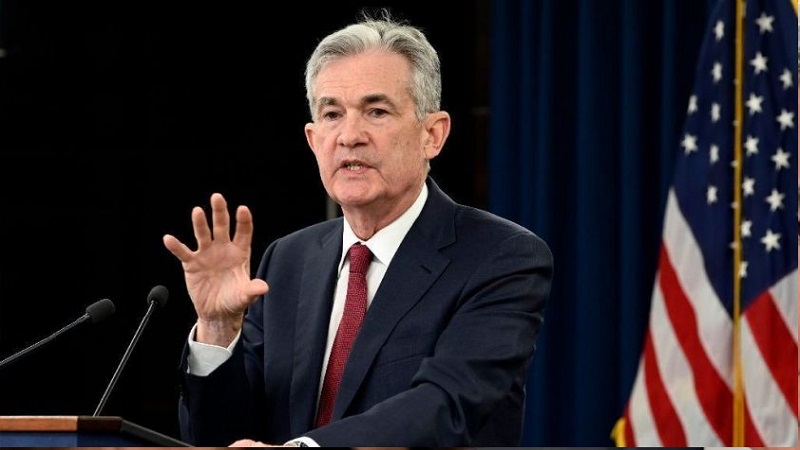
In a surprising move, the US Federal Reserve announced today that it will not raise interest rates any further, leaving them at 5.5%. This decision comes amid growing concerns about the state of the global economy and the impact of trade tensions on growth and inflation.

The Fed had previously signaled that it would continue to gradually increase interest rates to keep inflation under control and prevent the economy from overheating. However, in recent months, the Fed has faced mounting pressure from financial markets, businesses and politicians to pause or reverse its tightening cycle.

The Fed’s statement acknowledged that the economic outlook has become more uncertain and that some of the risks to growth have increased. The Fed also noted that inflation remains below its 2% target and that it will monitor incoming data closely to assess the appropriate path of monetary policy.

The Fed’s decision to pause interest rate hikes is likely to have significant implications for the US and global economy. On the one hand, it could provide some relief to borrowers, consumers and investors who have been struggling with higher borrowing costs and market volatility. On the other hand, it could also signal that the Fed is worried about the strength of the economy and that it may have to cut interest rates in the future if conditions worsen.

The Federal Reserve has recently announced its economic projections for the next six years, and the outlook is optimistic. According to the Fed, the US economy is expected to grow at a moderate pace, with low inflation and unemployment, and no signs of a recession until at least 2027.

This is good news for investors, businesses, and consumers, who can enjoy the benefits of a stable and expanding economy. The Fed’s projections are based on several factors, such as the ongoing vaccination campaign, the fiscal stimulus measures, the accommodative monetary policy, and the global recovery from the pandemic.

However, the Fed also acknowledged some risks and uncertainties that could affect its forecast. For instance, the emergence of new variants of the coronavirus, the supply chain disruptions, the labor market frictions, and the inflationary pressures. The Fed said it will closely monitor these developments and adjust its policy accordingly if needed.

The Fed’s announcement has implications for various sectors of the economy and financial markets. Here are some of the main takeaways:

Interest rates: The Fed expects to keep its benchmark interest rate near zero until 2024, and then gradually raise it to 1.8% by 2027. This means that borrowing costs will remain low for consumers and businesses for a long time, which could stimulate spending and investment. However, it also means that savers and bondholders will earn low returns on their assets.

Stock market: The Fed’s optimistic outlook could boost the confidence and optimism of investors, who may see more opportunities for growth and profits in the stock market. The low interest rates could also make stocks more attractive compared to bonds and other alternatives. However, the stock market could also face some volatility and corrections if the Fed changes its policy stance or if the economic conditions worsen.

The Fed’s outlook could affect the value of the US dollar relative to other currencies. The low interest rates could weaken the dollar, as investors may seek higher returns elsewhere. This could make US exports more competitive and increase the purchasing power of Americans abroad. However, it could also make imports more expensive and increase the trade deficit.

The Fed’s announcement has already sparked mixed reactions from various stakeholders. Some have praised the Fed for being flexible and responsive to changing economic conditions. Others have criticized the Fed for being too cautious and giving in to political pressure. The Fed’s credibility and independence may also come under scrutiny as it tries to balance its dual mandate of promoting maximum employment and stable prices.

Coinbase, Binance and SEC; FTX Promoters and Settlements

0

Coinbase and Binance are two of the most popular and influential cryptocurrency platforms in the world. They offer different services, features, and fees to their users, and they have been in the spotlight recently due to lawsuits filed by the U.S. Securities and Exchange Commission (SEC).

Coinbase is a U.S.-based platform that allows users to buy, sell, store, and trade various cryptocurrencies, such as Bitcoin, Ethereum, Solana, Cardano, and Polygon. Coinbase also operates a professional trading platform called Coinbase Pro, and a custody service for institutional investors called Coinbase Custody. Coinbase is the only publicly listed crypto exchange in the U.S., and it has over 108 million customers worldwide.

Binance is a global platform that offers a wide range of crypto services, such as spot trading, futures trading, margin trading, staking, lending, mining, and more. Binance supports hundreds of cryptocurrencies, including its own native token Binance Coin (BNB). Binance also operates several regional platforms, such as Binance US, Binance Singapore, and Binance Uganda. Binance claims to have over 300 million users across 180 countries.

The SEC has sued both Coinbase and Binance for allegedly violating securities laws by operating unregistered securities exchanges and selling unregistered digital assets. The SEC argues that most crypto tokens are securities that fall under its jurisdiction and require registration and disclosure. The SEC also accuses Binance’s CEO Changpeng Zhao of civil fraud for misleading investors about the platform’s compliance with U.S. laws.

Both Coinbase and Binance have denied the SEC’s allegations and challenged its authority over crypto activities. They have also been lobbying for clearer and fairer regulations for the crypto industry. The outcome of these lawsuits could have a significant impact on the future of crypto markets and innovation.

However, both companies have strongly rejected the SEC’s claims and questioned its jurisdiction over the crypto industry. In this blog post, we will examine the arguments of both sides and the implications for the future of crypto regulation.

Coinbase is facing a lawsuit from the SEC for offering a lending product called Lend, which would allow users to earn interest on their crypto holdings. The SEC alleges that Lend involves the sale of unregistered securities, since the users would be lending their crypto to Coinbase, which would then lend it to third parties. Coinbase argues that Lend is not a security, but a service that is similar to existing products in the market, such as BlockFi and Celsius. Coinbase also claims that it has tried to cooperate with the SEC and seek clarity on its regulatory status, but the SEC has refused to provide any guidance or explanation.

Binance is facing a similar situation, as the SEC has issued subpoenas and requests for information to several entities associated with Binance, including its US subsidiary, Binance.US. The SEC is reportedly investigating whether Binance has allowed US investors to trade crypto derivatives and other products that are subject to US securities laws, without registering with the SEC or complying with its rules.

Binance denies any wrongdoing and asserts that it operates in compliance with all applicable laws and regulations. Binance also challenges the SEC’s authority over its global operations, since it is not based in the US and does not serve US customers directly.

Ben Armstrong dismissed from FTX case as three celebrities Settle

Ben ‘BitBoy’ Armstrong, a popular cryptocurrency influencer, has been dismissed from a lawsuit filed by FTX, a leading crypto exchange, against several celebrities for allegedly promoting a fraudulent coin.

FTX sued Armstrong and three other celebrities – DJ Khaled, Floyd Mayweather Jr., and Steven Seagal – in June 2021, accusing them of endorsing and promoting Centra Tech, a company that claimed to offer a crypto debit card but was later exposed as a scam.

According to court documents, FTX reached a settlement with Khaled, Mayweather, and Seagal, who agreed to pay undisclosed amounts of money and refrain from promoting any crypto-related products or services for three years.

However, Armstrong denied any involvement with Centra Tech and filed a motion to dismiss the case, arguing that he never received any compensation from the company and that he only mentioned the coin once in a video as part of his general market analysis.

The court granted Armstrong’s motion on September 20, 2021, finding that FTX failed to show that Armstrong had any contractual or fiduciary relationship with Centra Tech or that he made any false or misleading statements about the coin.

Armstrong celebrated the dismissal on his YouTube channel, where he has over 1.3 million subscribers. He said that he was “vindicated” and that he would continue to provide honest and unbiased information about the crypto industry.

He also criticized FTX for filing a “frivolous” lawsuit and wasting his time and money. He said that he would not let FTX “bully” him or anyone else in the crypto space. FTX did not comment on the dismissal or the settlement. The exchange is one of the largest and most influential in the crypto market, with a valuation of over $18 billion and partnerships with major sports leagues and teams.

Ben Armstrong, the founder and CEO of BitBoy Crypto, has RECENTLY lost his stake in the company after a legal dispute with his former partners. According to court documents, Armstrong was accused of breaching his fiduciary duty, misappropriating funds, and engaging in fraudulent activities. The judge ruled in favor of the plaintiffs, who claimed that Armstrong had used the company’s assets for his personal benefit and ordered him to relinquish his shares and pay damages.

This is a major blow for Armstrong, who has been one of the most influential figures in the crypto space. He started BitBoy Crypto in 2018 as a YouTube channel, where he shared his insights and opinions on various cryptocurrencies and blockchain projects. He soon gained a loyal following of over 1.5 million subscribers, who dubbed him ‘the face of crypto’. He also launched a website, a podcast, a newsletter, and a merchandise line under the BitBoy Crypto brand.

Best Cryptocurrency Stocks so far in 2023

1

Crypto stocks are stocks of companies that are involved in the cryptocurrency industry or have exposure to digital assets such as Bitcoin, Ethereum, and other altcoins. Investing in crypto stocks can be a way to gain exposure to the growing crypto market without having to buy and store cryptocurrencies directly.

The year 2023 has been a remarkable one for the crypto industry, with many new developments, innovations and regulations shaping the market. Crypto stocks, which are companies that are involved in or benefit from the crypto space, have also seen impressive gains and volatility. However, crypto stocks are also subject to high volatility and regulatory uncertainty, as the crypto market is still evolving and facing many challenges.

We will look at some of the best crypto stocks to consider so fa in 2023, based on their performance, growth potential, and competitive advantage. We will also discuss some of the risks and opportunities that crypto investors should be aware of.

Coinbase Global (COIN)

Coinbase Global is the largest cryptocurrency exchange in the US and one of the most popular platforms for buying, selling, and storing cryptocurrencies. Coinbase offers access to more than 250 altcoins, as well as crypto-related products and services such as staking, lending, debit cards, and institutional custody. Coinbase also operates a professional trading platform called Coinbase Pro, and a venture capital arm called Coinbase Ventures.

Coinbase went public in April 2021 through a direct listing, becoming the first major crypto company to do so. The stock debuted at $381 per share, valuing the company at about $100 billion. However, the stock has since declined to around $200 per share, as the crypto market experienced a sharp correction in 2022.

Despite the volatility, Coinbase has shown strong growth and profitability in its financial results. In the third quarter of 2021, Coinbase reported revenue of $1.24 billion, up 406% year over year, and net income of $406 million, up 1,100% year over year. The company also had 73 million verified users, up 70% year over year, and 7.4 million monthly transacting users, up 96% year over year.

Coinbase faces competition from other crypto exchanges such as Binance, Kraken, and Gemini, as well as traditional brokers such as Robinhood and PayPal that offer crypto trading. However, Coinbase has a strong brand recognition, a loyal customer base, and a diversified revenue stream that could help it maintain its leadership position in the crypto space.

Block Inc. (SQ)

Block Inc., formerly known as Square Inc., is a fintech company that provides payment solutions for individuals and businesses. Block operates two main segments: Cash App and Seller. Cash App is a mobile app that allows users to send and receive money, buy and sell stocks and cryptocurrencies, and access banking services. Seller is a platform that provides hardware and software tools for merchants to accept payments, manage inventory, and access financing.

Block was one of the first mainstream companies to embrace Bitcoin, as it started offering Bitcoin trading on Cash App in 2018. Since then, Block has invested $220 million in Bitcoin for its own balance sheet, and launched a dedicated business unit called Square Crypto that supports Bitcoin development and innovation. Block also acquired a majority stake in Tidal, a music streaming service that plans to integrate blockchain technology and NFTs into its platform.

Block changed its name from Square in December 2021 to reflect its broader vision of building an open network for economic empowerment. The company also announced its intention to build a decentralized exchange (DEX) for Bitcoin called TBDex, which would allow users to swap between different digital assets without intermediaries.

MicroStrategy (MSTR)

MicroStrategy is a business intelligence software company that has become one of the most prominent and vocal advocates of bitcoin. The company started buying bitcoin in August 2020, and has since accumulated over 114,000 bitcoins, worth about $6.8 billion at current prices. MicroStrategy has also issued several rounds of debt and equity to finance its bitcoin purchases, making it one of the most leveraged bitcoin holders in the world. MicroStrategy’s stock price has closely followed the movements of bitcoin, rising over 300% since the start of 2020. MicroStrategy’s CEO Michael Saylor has also become a influential figure in the crypto community, promoting bitcoin as a store of value and a hedge against inflation.

Square (SQ)

Square is a fintech company that provides payment solutions, banking services and software tools for businesses and individuals. Square has been an early adopter and supporter of crypto, especially bitcoin. The company launched its Cash App in 2017, which allows users to buy, sell and send bitcoin easily and cheaply. The Cash App has been a major driver of Square’s revenue growth, generating $3.8 billion in bitcoin revenue and $42 million in bitcoin gross profit in Q3 2023. Square also holds about 8,000 bitcoins on its balance sheet, worth about $480 million at current prices. In addition to its existing products, Square is also developing a new business unit called TBD54566975, which aims to create an open-source platform for decentralized financial services.

Nvidia (NVDA)

Nvidia is a leading manufacturer of graphics processing units (GPUs), which are essential for gaming, artificial intelligence and cryptocurrency mining. Nvidia’s GPUs are in high demand by crypto miners, who use them to solve complex mathematical problems and earn rewards in various cryptocurrencies. Nvidia’s revenue from crypto mining products reached $266 million in Q3 2023, up from $175 million in Q2 2023. Nvidia also launched a new series of GPUs specifically designed for crypto mining in February 2021, called CMP (Crypto Mining Processor). Nvidia’s stock price has soared over 400% since the start of 2020, as the company has benefited from the strong demand for its products across multiple sectors.

These are some of the best crypto stocks so far in 2023, but there are many more that are worth watching and investing in. Crypto is a dynamic and fast-growing industry that offers many opportunities and challenges for investors. As always, do your own research before making any investment decisions.